


Global Sustainable Deodorant Market Size, Share, Growth Analysis By Type (Bio-enzyme, Activated Carbon, Plant-based), By End-use (Men, Women), By Region and Companies - Industry Segment Outlook, Market Assessment, Competition Scenario, Statistics, Trends and Forecast 2025-2034
- Published date: Dec 2025
- Report ID: 170925
- Number of Pages: 340
- Format:
-
keyboard_arrow_up
Quick Navigation
Report Overview
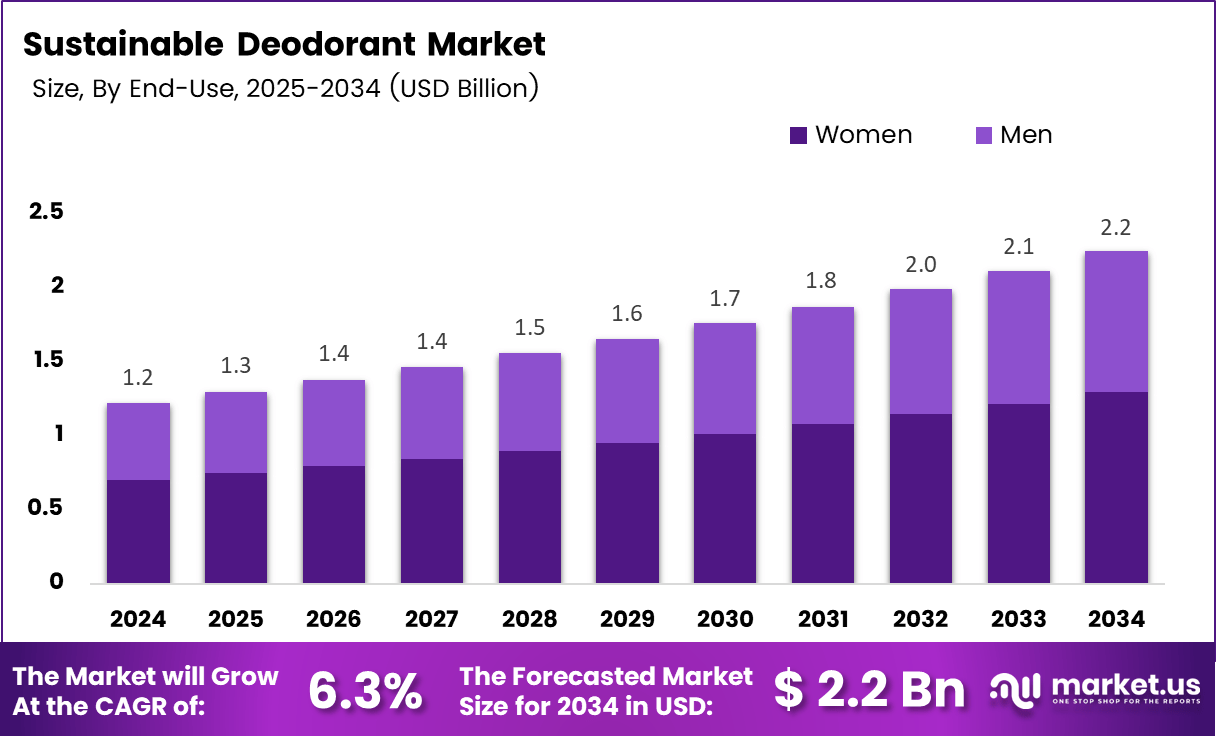
The Global Sustainable Deodorant Market size is expected to be worth around USD 2.2 billion by 2034, from USD 1.2 billion in 2024, growing at a CAGR of 6.3% during the forecast period from 2025 to 2034.
The Sustainable Deodorant Market refers to personal care deodorant products formulated with naturally derived ingredients, low environmental impact processes, and responsible packaging systems. This market aligns hygiene needs with clean beauty principles, zero waste packaging, and ethical sourcing. Consequently, demand is strengthening across eco conscious consumer segments globally.
From a market behavior viewpoint, sustainable deodorants are increasingly positioned as everyday wellness essentials rather than niche alternatives. Consumers are actively shifting toward aluminum free deodorant, plant based deodorant, and refillable deodorant solutions. Therefore, brands emphasizing skin safety, climate impact reduction, and transparency are achieving stronger shelf rotation and repeat purchase rates.
From a growth standpoint, the market is expanding alongside rising awareness of endocrine disruptors and plastic pollution. Governments and environmental agencies continue promoting reduced single use plastics and responsible chemical usage. As a result, sustainable personal care manufacturing benefits from favorable regulatory sentiment, especially within clean label cosmetics and green consumer goods frameworks.
From an opportunity lens, innovation in biodegradable packaging, compostable tubes, and waterless deodorant formats is accelerating commercialization. Retailers are prioritizing sustainable grooming products across online and specialty channels. Moreover, subscription based refill models and private label sustainable deodorants are emerging as scalable revenue pathways within the broader eco friendly personal care market.
From a policy and investment angle, sustainability aligned consumer goods increasingly qualify for green finance, tax incentives, and ESG linked Insurance programs. Governments supporting circular economy models indirectly stimulate sustainable deodorant adoption. Therefore, manufacturers complying with eco certifications and life cycle assessments are better positioned to secure institutional partnerships and long term distribution contracts.
From a certification driven credibility viewpoint, sustainability metrics strongly influence purchasing decisions. According to Survey, selected brands hold B Corp scores of 110.8, 117.9, and 86.3, reflecting verified social and environmental performance. Additionally, some certified producers donate 2% of annual sales to charity, reinforcing purpose driven branding strategies.
From a standards validation perspective, third party certifications such as 1% for the Planet, B Corp, Vegan Society, and Leaping Bunny strengthen consumer trust. According to Survey, these frameworks validate cruelty free practices, ethical sourcing, and environmental contributions. Consequently, certification backed claims are increasingly central to competitive positioning within sustainable deodorant products.
Key Takeaways
- The global Sustainable Deodorant Market is projected to reach USD 2.2 billion by 2034, expanding from USD 1.2 billion in 2024 at a CAGR of 6.3%.
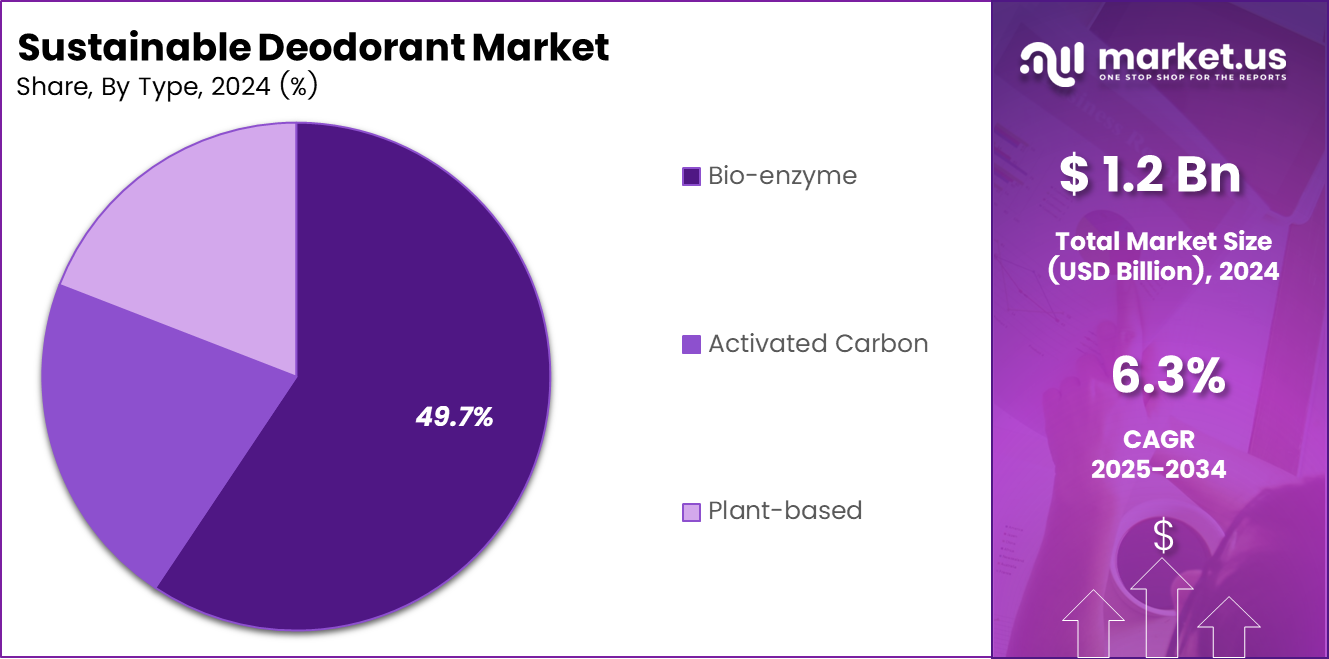
- By type, Bio enzyme represents the leading segment with a dominant share of 49.7%, reflecting strong demand for natural odor control solutions.
- By end use, the men segment accounts for the largest share at 58.3%, supported by higher daily usage and sustainable grooming adoption.
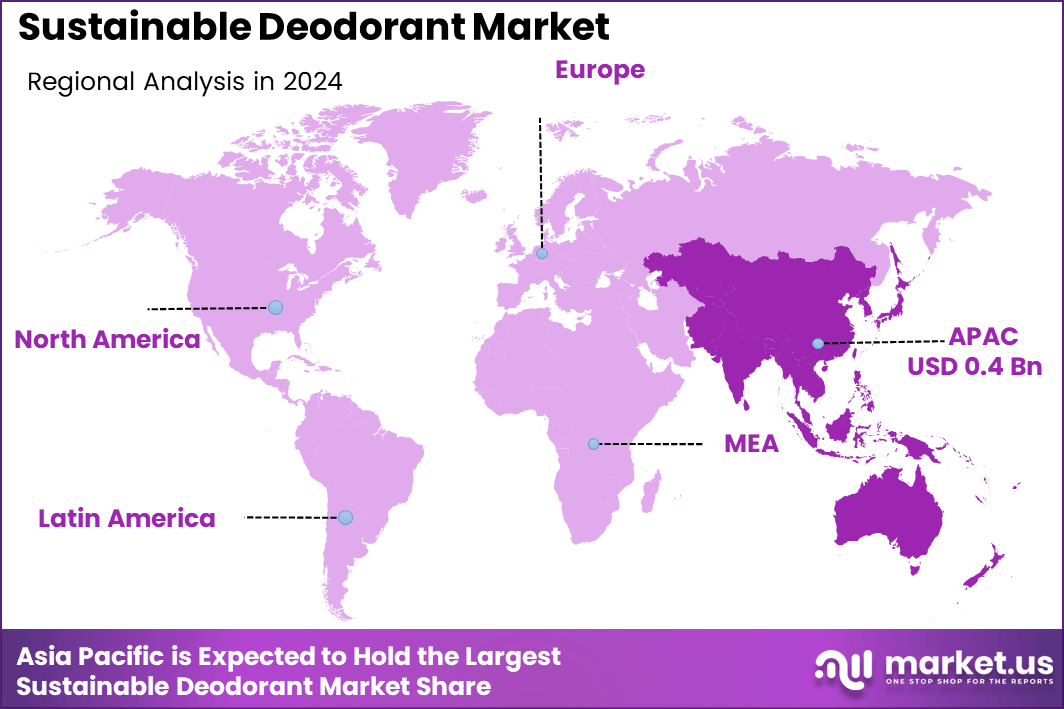
- Asia Pacific emerges as the dominant region with a market share of 39.4%, valued at approximately USD 0.4 billion in 2024.
By Type Analysis
Bio-enzyme dominates with 49.7% due to its eco-friendly formulation and growing preference for natural odor control solutions.
In 2024, Bio-enzyme held a dominant market position in the By Type Analysis segment of Sustainable Deodorant Market, with a 49.7% share. This dominance is supported by rising awareness of biodegradable ingredients. Moreover, consumers increasingly favor enzyme-based solutions because they neutralize odor naturally while aligning with sustainable personal care preferences.
Activated Carbon represents a steadily growing sub-segment, supported by its strong absorption capabilities and odor trapping properties. Additionally, brands are positioning activated carbon deodorants as toxin-free alternatives. As a result, this segment appeals to environmentally conscious users seeking effective sweat control without compromising on clean-label and sustainability expectations.
Plant-based deodorants continue to gain attention as consumers transition toward botanical ingredients. Furthermore, plant extracts resonate with users avoiding synthetic chemicals. This segment benefits from clean beauty trends and transparent sourcing narratives. Consequently, plant-based formulations are increasingly adopted by users prioritizing skin-friendly, cruelty-free, and environmentally responsible products.
By End-use Analysis
Men dominates with 58.3% driven by higher daily usage frequency and growing adoption of sustainable grooming products.
In 2024, Men held a dominant market position in the By End-use Analysis segment of Sustainable Deodorant Market, with a 58.3% share. This leadership is reinforced by increased grooming awareness among men. Additionally, brands actively market eco-conscious deodorants to male consumers seeking performance with sustainability-driven lifestyle choices.
Women represent an important and expanding end-use segment, supported by rising interest in natural personal care routines. Moreover, female consumers increasingly evaluate ingredient safety and environmental impact. As a result, sustainable deodorants formulated for sensitive skin and ethical sourcing continue to gain traction within this segment.
Key Market Segments
By Type
- Bio-enzyme
- Activated Carbon
- Plant-based
By End-use
- Men
- Women
Drivers
Rising Consumer Shift Toward Refill Based Personal Care Drives Market Growth
Rising interest in refill based personal care is a key driver for the sustainable deodorant market. Consumers are actively looking to cut down single use plastic waste, and refill systems offer a simple solution. From an analyst perspective, this shift is strongest among urban and environmentally aware buyers who prefer long term usage over disposable products.
Regulatory pressure is also shaping demand. Many countries are tightening rules around cosmetic ingredients, especially aluminum salts and synthetic fragrances. As a result, brands are reformulating products to meet cleaner standards, which supports the growth of sustainable deodorants. This regulatory push builds trust and encourages trial.
Growing awareness of carbon footprints in daily hygiene products further supports market expansion. Consumers are now considering how products are made, transported, and disposed of. Sustainable deodorants with low impact packaging and sourcing align well with these concerns.
Direct to consumer service models add another growth layer. These models allow brands to control sourcing, packaging, and communication. Analysts see transparency and traceability as strong value drivers that help sustainable deodorant brands build loyalty and repeat purchases.
Restraints
Higher Service Pricing Limits Wider Adoption in the Market
Higher pricing remains a major restraint for the sustainable deodorant market. Compared to conventional products, sustainable options often cost more due to premium ingredients and refill systems. From an analyst view, this pricing gap limits adoption among price sensitive consumers.
Another challenge is the limited supply of certified sustainable raw materials. Many natural and eco certified ingredients are not available at consistent scale. This creates supply risks and makes it harder for brands to maintain steady production while controlling costs.
Consumer skepticism also slows market growth. Some users doubt the effectiveness of natural deodorants, especially for odor protection in active lifestyles. These concerns can reduce repeat purchases if expectations are not met.
Refill and return models add operational complexity. Reverse logistics, cleaning, and redistribution require strong systems. Analysts note that these challenges increase costs and operational risks, especially for brands expanding across regions with weak return infrastructure.
Growth Factors
Personalized Formulations Open New Growth Opportunities
Personalized deodorant formulations present a strong growth opportunity. By using skin microbiome data and lifestyle insights, brands can offer tailored solutions. Analysts see personalization as a way to improve performance and address skepticism around natural products.
Corporate wellness programs offer another expansion path. Many companies are investing in employee wellbeing and sustainability. Partnering with these programs allows sustainable deodorant brands to reach large user groups through trusted workplace channels.
Zero waste retail stores also create growth potential. These stores attract eco conscious shoppers who are already aligned with refill concepts. Presence in such outlets strengthens brand positioning and education.
Eco friendly hospitality chains are another opportunity area. Hotels and resorts seeking to reduce waste are exploring refill based personal care products. Analysts expect institutional adoption to support volume growth and long term contracts for sustainable deodorant providers.
Emerging Trends
Subscription Based Refill Models Shape Market Trends
Subscription based refill services are becoming a key trend in the sustainable deodorant market. Doorstep delivery and collection make refills convenient and predictable. From an analyst view, subscriptions help brands secure recurring revenue and improve customer retention.
Ingredient innovation is also trending. Brands are increasingly using plant based antimicrobials and fermentation derived actives. These ingredients support odor control while aligning with clean label expectations.
Climate focused branding is gaining importance. Many companies now highlight climate neutrality and carbon offset programs. Verified claims help build credibility and differentiate products in a crowded market.
Together, these trends reflect a shift toward service driven, science backed, and impact focused offerings. Analysts expect brands that combine convenience, performance, and verified sustainability to gain stronger market traction.
Regional Analysis
Asia Pacific Dominates the Sustainable Deodorant Market with a Market Share of 39.4%, Valued at USD 0.4 Billion
Asia Pacific represents the leading region in the sustainable deodorant market, driven by rapid urbanization and rising awareness of eco friendly personal care. In value terms, the region accounted for 39.4% of the global share, translating to nearly USD 0.4 billion in market size. Growing middle class populations and increasing adoption of refill based hygiene products support sustained demand. Regulatory focus on clean beauty standards across key APAC countries further strengthens market penetration.
North America Sustainable Deodorant Market Trends
North America remains a mature and innovation driven market for sustainable deodorants. High consumer awareness around ingredient safety and packaging waste reduction supports steady adoption. Subscription based refill models and strong direct to consumer penetration enhance repeat purchases. The region also benefits from well established sustainability driven purchasing behavior.
Europe Sustainable Deodorant Market Trends
Europe demonstrates strong alignment with sustainable deodorant adoption due to strict cosmetic regulations and environmental policies. Consumers show high preference for aluminum free and low carbon footprint products. Refill stations and zero waste retail concepts are expanding across urban centers. This regulatory and cultural alignment supports consistent regional growth.
Middle East and Africa Sustainable Deodorant Market Trends
The Middle East and Africa market is gradually evolving, supported by rising awareness of natural personal care products. Urban consumers are increasingly shifting toward clean label deodorants. However, adoption remains concentrated in premium segments. Growing exposure to global sustainability trends is expected to improve long term demand.
Latin America Sustainable Deodorant Market Trends
Latin America shows emerging potential driven by increasing environmental awareness among younger consumers. Demand is supported by gradual acceptance of refill and low waste formats. Local sustainability initiatives and changing lifestyle preferences contribute to market expansion. Pricing sensitivity remains a key factor influencing adoption rates.
U.S. Sustainable Deodorant Market Trends
The U.S. market reflects strong demand for sustainable deodorants due to high consumer focus on ingredient transparency. Clean beauty and refill based formats are gaining traction across urban regions. Direct to consumer models improve accessibility and education. Sustainability aligned branding continues to influence purchasing decisions.
Key Regions and Countries
North America
- US
- Canada
Europe
- Germany
- France
- The UK
- Spain
- Italy
- Rest of Europe
Asia Pacific
- China
- Japan
- South Korea
- India
- Australia
- Rest of APAC
Latin America
- Brazil
- Mexico
- Rest of Latin America
Middle East & Africa
- GCC
- South Africa
- Rest of MEA
Key Sustainable Deodorant Company Insights
Ethique has established a strong foothold in the sustainable deodorant market through its commitment to zero-waste packaging and plant-based formulations that resonate with environmentally conscious consumers. The brand’s solid reputation in solid beauty bars has translated effectively into deodorants, reinforcing consumer trust. Its focus on certified cruelty-free and biodegradable ingredients is anticipated to drive continued brand loyalty and market expansion in 2024.
Wild leverages a direct-to-consumer subscription model that enhances customer retention and predictable revenue streams, differentiating it within the sustainable deodorant segment. Its innovative use of refillable pods and minimalist packaging aligns with the growing demand for reduced plastic waste. The company’s emphasis on transparency and clean formulations is expected to strengthen its competitive positioning as eco-aware grooming trends gain traction globally.
AKT has carved a niche by integrating performance with sustainability, targeting active consumers seeking long-lasting natural deodorant solutions. The brand’s focus on toxin-free ingredients without compromising effectiveness appeals to health-oriented buyers who are also environmentally mindful. Strategic marketing and partnerships within wellness communities are projected to enhance brand visibility and adoption throughout 2024 as consumers prioritize both efficacy and sustainability.
Etee differentiates itself with multifunctional products that combine sustainable packaging with eco-friendly formulations, reflecting a holistic approach to personal care. Its commitment to refillable and reusable containers aligns with circular economy principles, attracting consumers aiming to reduce their ecological footprint. Etee’s grassroots marketing and community engagement efforts are expected to support steady growth as interest in sustainable lifestyle products continues to expand across diverse demographic segments in 2024.
Top Key Players in the Market
- Ethique
- Wild
- AKT
- Etee
- Fat And The Moon
- EcoRoots
- Make Waves
- Zero Waste Store
- Going Zero Waste
- Aotearoad
Recent Developments
- In Oct 2024, Berry Global collaborated with men’s skincare brand true to launch a refillable deodorant in Poland, designed to lower environmental impact. The refillable format is estimated to reduce carbon emissions by around 53% compared to conventional single use deodorant packaging.
- In Apr 2025, Unilever acquired British sustainable deodorant brand Wild, known for its eco conscious, refillable packaging model. Under Unilever’s ownership, Wild aims to scale globally, expanding access to sustainable personal care solutions across international markets.
Report Scope
Report Features Description Market Value (2024) USD 1.2 billion Forecast Revenue (2034) USD 2.2 billion CAGR (2025-2034) 6.3% Base Year for Estimation 2024 Historic Period 2020-2023 Forecast Period 2025-2034 Report Coverage Revenue Forecast, Market Dynamics, Competitive Landscape, Recent Developments Segments Covered By Type (Bio-enzyme, Activated Carbon, Plant-based), By End-use (Men, Women) Regional Analysis North America (US and Canada), Europe (Germany, France, The UK, Spain, Italy, and Rest of Europe), Asia Pacific (China, Japan, South Korea, India, Australia, and Rest of APAC), Latin America (Brazil, Mexico, and Rest of Latin America), Middle East & Africa (GCC, South Africa, and Rest of MEA) Competitive Landscape Ethique, Wild, AKT, Etee, Fat And The Moon, EcoRoots, Make Waves, Zero Waste Store, Going Zero Waste, Aotearoad Customization Scope Customization for segments, region/country-level will be provided. Moreover, additional customization can be done based on the requirements. Purchase Options We have three licenses to opt for: Single User License, Multi-User License (Up to 5 Users), Corporate Use License (Unlimited User and Printable PDF)  Sustainable Deodorant MarketPublished date: Dec 2025add_shopping_cartBuy Now get_appDownload Sample
 -
-
- Ethique
- Wild
- AKT
- Etee
- Fat And The Moon
- EcoRoots
- Make Waves
- Zero Waste Store
- Going Zero Waste
- Aotearoad
Our Clients

- 170925
- Dec 2025






