


Market Overview
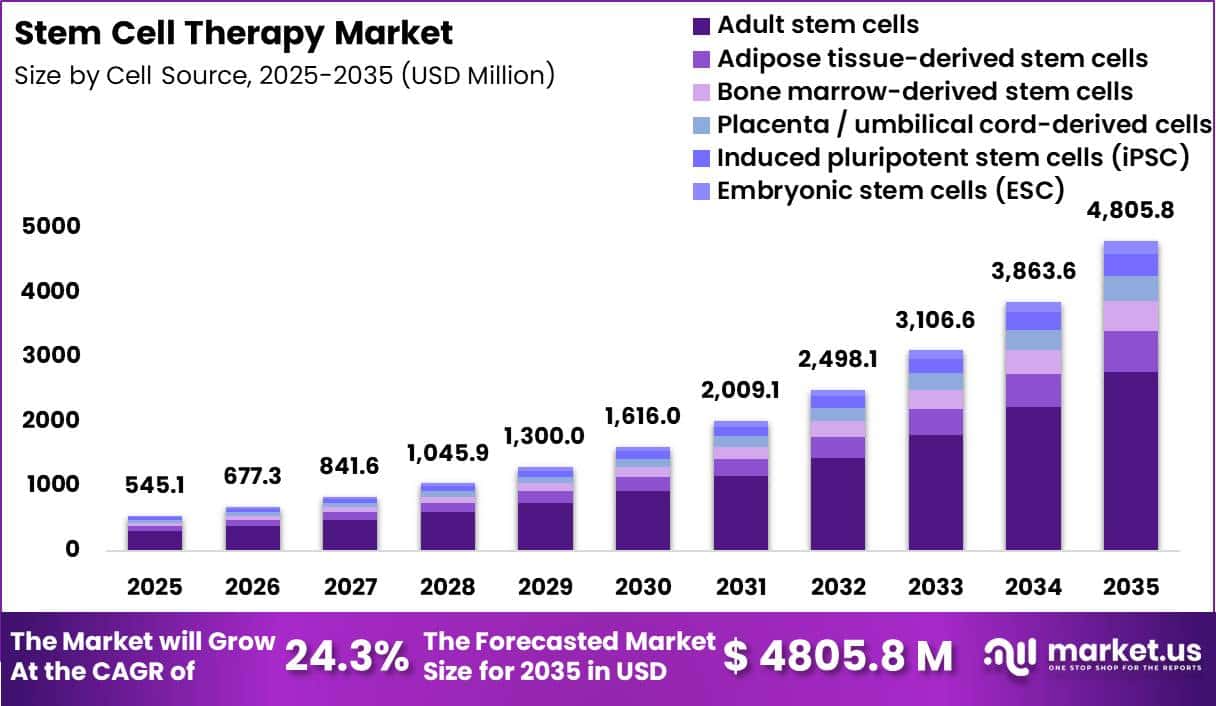
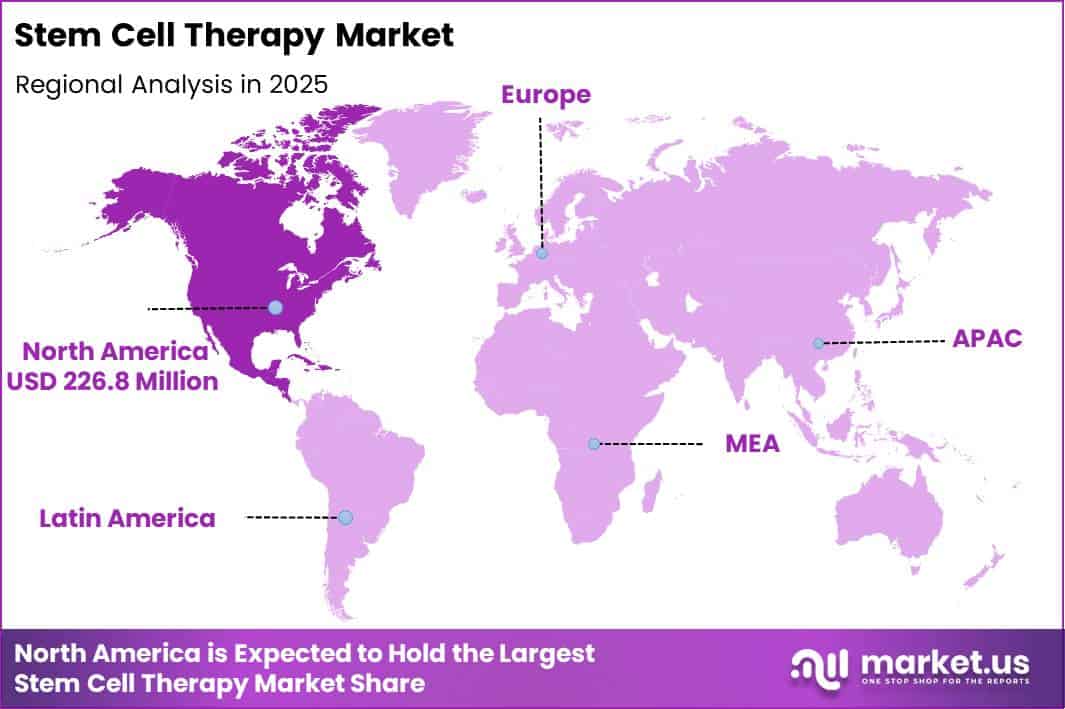
Global Stem Cell Therapy Market size is expected to be worth around US$ 4805.8 Million by 2035 from US$ 545.1 Million in 2025, growing at a CAGR of 24.3% during the forecast period from 2026 to 2035. In 2025, North America led the market, achieving over 41.6% share with a revenue of US$ 226.8 Million.
Stem cell therapy is becoming a cornerstone of regenerative medicine as healthcare systems seek long-term solutions for chronic diseases, blood disorders, immune deficiencies, and tissue repair.
According to the U.S. Food and Drug Administration (FDA), cellular and gene therapy research has expanded rapidly over the past decade, with increasing numbers of investigational products entering clinical development.
The FDA regulates these therapies through the Center for Biologics Evaluation and Research (CBER), reflecting the growing scientific and regulatory focus on regenerative medicine.
Hematopoietic stem cell transplantation remains the most established form of stem cell therapy worldwide and is routinely used to treat leukemia, lymphoma, multiple myeloma, aplastic anemia, inherited immune disorders, and other blood-related diseases.
However, the FDA emphasizes that, outside these approved indications, most stem cell therapies remain investigational and should only be administered under authorized clinical trials or approved regulatory pathways.
The agency continues to caution patients against unapproved regenerative medicine products because of documented risks including infections, blindness, and tumor formation.
Clinical research activity continues to accelerate globally. A 2025 analysis of worldwide cell therapy development identified 10,373 cell therapy clinical trials, including 4,796 stem cell therapy trials, with oncology accounting for 56.1% of all cell therapy research.
Mesenchymal stem cells represented 1,904 trials, while hematopoietic stem cells accounted for 1,550 studies, demonstrating sustained investment in regenerative medicine across multiple therapeutic areas.
Regulatory progress is also strengthening market confidence. The FDA has expanded its portfolio of approved cellular and gene therapies while utilizing programs such as the Regenerative Medicine Advanced Therapy (RMAT) designation to accelerate promising treatments for serious diseases.
These initiatives, combined with continued government-backed clinical research and increasing translational medicine efforts, are expected to support innovation and broaden the future clinical applications of stem cell therapies.
Key Takeaways
- Market Size : Stem Cell Therapy Market size is expected to be worth around US$ 4805.8 Million by 2035 from US$ 545.1 Million in 2025.
- Market Share : The market is growing at a CAGR of 24.3% during the forecast period from 2026 to 2035.
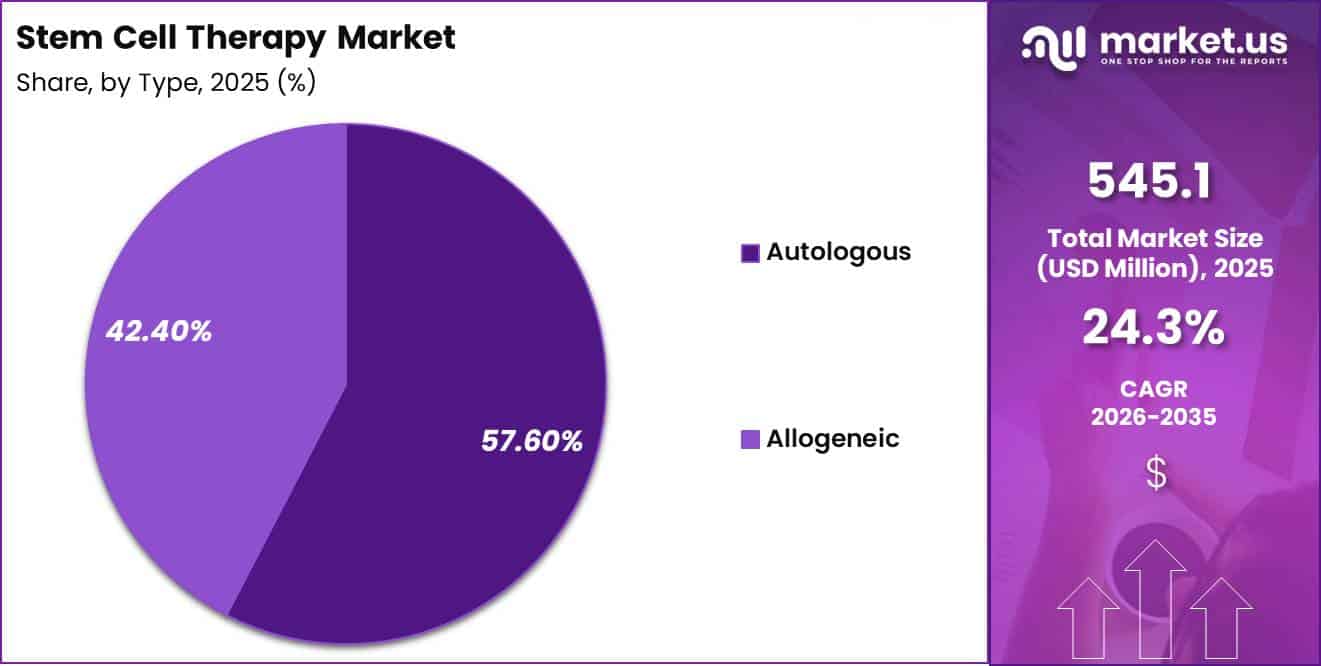
- Therapy Type Analysis : The autologous segment dominated the Stem Cell Therapy Market, accounting for 57.6% of the market share in 2025.
- Cell Source Analysis : Adult stem cells accounted for 57.7% of the Stem Cell Therapy Market in 2025, making them the leading cell source.
- Application Analysis : The hematologic disorders segment dominated the Stem Cell Therapy Market with 45.1% of the market share in 2025.
- Regional Analysis : In 2025, North America led the market, achieving over 41.6% share with a revenue of US$ 226.8 Million.
Therapy Type Analysis
The autologous segment dominated the Stem Cell Therapy Market, accounting for 57.6% of the market share in 2025. Its leadership is primarily driven by the use of a patient’s own stem cells, which minimizes the risk of immune rejection and graft-versus-host disease while improving treatment compatibility.
Autologous transplantation has become a well-established treatment option for hematologic malignancies, multiple myeloma, lymphoma, and selected regenerative medicine applications. Continuous improvements in stem cell harvesting, cryopreservation, and cell processing technologies have enhanced treatment outcomes and expanded clinical adoption.
Healthcare providers also prefer autologous therapies because they eliminate donor-matching requirements and reduce complications associated with immune incompatibility. Growing clinical experience, increasing transplant procedures, and expanding research into regenerative medicine further support the widespread adoption of autologous stem cell therapies.
According to the U.S. National Cancer Institute (NCI), autologous transplantation remains one of the principal stem cell transplant approaches used in clinical practice for several blood-related diseases.
The allogeneic segment represented 42.4% of the market in 2025. This therapy uses stem cells from compatible donors and plays a vital role in treating leukemia, aplastic anemia, inherited blood disorders, and immune diseases.
Ongoing advances in donor matching, cell banking, manufacturing, and FDA guidance for allogeneic cell products continue to strengthen the commercial outlook for this segment while supporting the development of off-the-shelf regenerative therapies.
Cell Source Analysis
Adult stem cells accounted for 57.7% of the Stem Cell Therapy Market in 2025, making them the leading cell source. Their dominance is supported by extensive clinical use, established safety profiles, and broad regulatory acceptance for treating hematologic diseases and regenerative conditions.
Adult stem cells, including hematopoietic and mesenchymal stem cells, are widely used because they can be obtained from bone marrow, peripheral blood, or other adult tissues without the ethical concerns associated with embryonic stem cells.
Government health agencies continue to recognize adult stem cells as the primary source used in approved stem cell transplantation procedures. Advances in cell isolation, expansion technologies, and transplantation protocols have further improved treatment success and increased physician confidence.
Research into regenerative medicine is also expanding the potential use of adult stem cells across multiple chronic diseases and tissue repair applications.
Among other cell sources, adipose tissue-derived stem cells accounted for 13.2%, supported by minimally invasive collection methods and regenerative applications. Bone marrow-derived stem cells represented 9.6%, remaining the standard source for hematopoietic transplantation.
Placenta and umbilical cord-derived cells held 8.1%, benefiting from increasing cord blood banking and transplantation. Induced pluripotent stem cells (iPSCs) captured 7.2%, reflecting growing research into personalized regenerative medicine.
Embryonic stem cells (ESCs) represented 4.2%, with clinical adoption remaining limited because of ethical and regulatory considerations, while research increasingly explores alternatives such as adult stem cells and iPSCs.
Application Analysis
The hematologic disorders segment dominated the Stem Cell Therapy Market with 45.1% of the market share in 2025. Stem cell transplantation has become a standard treatment for numerous blood cancers and inherited blood disorders, including leukemia, lymphoma, multiple myeloma, aplastic anemia, sickle cell disease, and thalassemia.
Rising incidences of hematologic diseases, expanding transplant centers, improved donor registries, and advances in supportive care continue to increase treatment volumes worldwide. Both autologous and allogeneic stem cell transplantation are routinely used depending on disease type and patient condition.
According to the U.S. National Cancer Institute, blood-forming stem cell transplantation remains an established therapeutic option for many hematologic malignancies and disorders, supporting sustained demand within this application segment. Continuous improvements in conditioning regimens, infection management, and post-transplant monitoring have further enhanced survival outcomes and long-term patient care.
Other important applications include musculoskeletal disorders, where stem cells are investigated for cartilage and bone regeneration, cardiovascular diseases for repairing damaged heart tissue, neurological disorders for neurodegenerative and spinal cord conditions, wounds, burns, and surgical applications for tissue regeneration, and autoimmune diseases, where stem cells help regulate immune responses.
Other indications, including ocular and hepatic disorders, continue to expand as clinical research progresses and regenerative medicine technologies advance.
Market Segmentations
By Therapy Type
- Autologous
- Allogeneic
By Cell Source
- Adult stem cells
- Adipose tissue‑derived stem cells
- Bone marrow‑derived stem cells
- Placenta / umbilical cord‑derived cells
- Induced pluripotent stem cells (iPSC)
- Embryonic stem cells (ESC)
By Application
- Hematologic disorders
- Musculoskeletal disorders
- Cardiovascular diseases
- Neurological disorders
- Wounds, burns & surgical applications
- Autoimmune
- Other indications (ocular, hepatic, etc.)
Driver
Diabetes and Autoimmune Demand Expansion Driving Stem Cell Market Growth
The addressable market is expanding as stem-cell-based programs move beyond traditional hematopoietic applications into metabolic and autoimmune disease settings with significantly larger patient populations.
This transition creates new commercial opportunities by positioning stem cell therapies as potential disease-modifying approaches rather than limited-use regenerative interventions.
Clinical-trial activity in diabetes remains active, including a January 2025 Phase II-a randomized trial evaluating autologous adipose-derived mesenchymal stem cells in adults with type 2 diabetes, with endpoints focused on insulin resistance, glycemic control, and reduced dependence on insulin or oral antidiabetic therapies.
Separately, 2025 scientific literature and case reporting highlighted advances in type 1 diabetes, including a reported case of insulin independence within three months following autologous iPSC-derived islet-like cell treatment.
These developments are commercially significant because they expand the perception of stem cell therapies from niche salvage procedures toward potential endocrine restoration platforms.
Successful translation into diabetes and autoimmune indications could substantially enlarge the future treated population, strengthen the investment case for scalable cell-therapy manufacturing, and accelerate partnerships between biotechnology companies, specialty clinics, and healthcare systems.
This driver also supports a shift in business models from low-volume transplant-focused centers toward chronic-disease referral ecosystems built around specialty endocrinology networks, longitudinal patient monitoring, and outcome-based reimbursement structures.
As clinical validation progresses and regulatory pathways mature, diabetes and autoimmune applications could provide a major CAGR uplift by creating high-value therapeutic categories beyond traditional stem cell transplantation markets.
| Driver | (~) % Impact on CAGR Forecast | Geographic Relevance | Impact Timeline |
|---|---|---|---|
| FDA-approved cell therapy expansion after Ryoncil and broader OTP pipeline validation | +2.1% | North America core, EU read-across, APAC innovation hubs | Short term (≤ 2 years) |
| Medicaid and outcomes-based reimbursement models improving high-cost therapy access | +1.6% | U.S. core, Canada spill-over, EU payer-watch markets | Medium term (2-4 years) |
| Diabetes and autoimmune regenerative programs widening addressable demand | +1.8% | North America, APAC, selected EU markets, GCC private-care corridors | Medium term (2-4 years) |
| Manufacturing scale-up in cord blood, autologous, and allogeneic platforms | +2.4% | U.S., EU bioprocess clusters, Japan, South Korea, China | Medium term (2-4 years) |
| Clinical standardization and transplant-guideline upgrades de-risking adoption | +1.3% | EU core, North America, developed APAC | Short term (≤ 2 years) |
| Crackdown on unapproved clinics shifting demand to regulated providers | +0.9% | U.S. core, EU, Australia, high-income APAC | Short term (≤ 2 years) |
Challenge
Evolving Regulatory Compliance Burden Limiting Stem Cell Therapy Expansion
Regulation does not freeze the stem cell therapy market in 2026, but evolving guidance increases operational friction through additional documentation, safety testing, and review-cycle complexities.
Agencies such as the FDA continue refining expectations around minimally manipulated cells, donor eligibility, and allogeneic cell safety testing under frameworks including HCT/P and dedicated draft guidances.
Recent clarifications around donor screening for communicable diseases, including HIV, hepatitis B and C, and other infections, increase compliance requirements by expanding testing panels per donor to 8–15 assays and requiring detailed longitudinal medical histories.
These measures raise per-donor screening costs by hundreds of dollars and add 1–3 days to pre-processing timelines, while still allowing legitimate therapies to progress through regulated pathways.
Legal reinforcement of agency authority over unproven stem cell clinics and products, including court decisions in 2024–2025 confirming regulatory oversight of direct-to-consumer and online providers, is shifting patient demand toward compliant treatment settings.
While this improves market credibility and patient safety, regulated clinics must scale operations under stricter documentation and adverse-event reporting requirements.
Collectively, these requirements reduce long-term regulatory uncertainty but create short- to medium-term friction, contributing an estimated 1.1 %-point drag on potential market growth as sponsors allocate 10–20% more resources toward regulatory affairs, quality systems, and compliance audits.
Strategically, companies must adopt compliance-by-design models by integrating donor eligibility algorithms, electronic adverse-event reporting, standardized minimal-manipulation assessments, and proactive regulatory planning to avoid repeated operational disruptions as guidelines evolve.
| Challenge | (~) % CAGR Friction Drag | Geographic Relevance | Mitigation Horizon |
|---|---|---|---|
| Complex GMP manufacturing scale-up | -1.6% | North America, EU, East Asia hubs | Long term (≥ 4 years) |
| Cell quality & viability variability | -1.3% | Global advanced therapy centers | Medium term (2-4 years) |
| Evolving regulatory compliance burden | -1.1% | US, EU, UK, Japan cores | Medium term (2-4 years) |
| Talent gap in cell & data disciplines | -0.9% | US coasts, EU clusters, APAC metros | Long term (≥ 4 years) |
| Long clinical timelines & trial risk | -1.7% | Global multicenter pipelines | Long term (≥ 4 years) |
| Ethical, safety & patient trust issues | -0.8% | Global, higher in emerging markets | Medium term (2-4 years) |
Restraints
Payer Reimbursement Friction and Limited GMP Capacity Restraining Growth
The second restraint is payer-side friction, especially in the U.S., where CMS continues to refine how it bundles preparatory procedures and manufacturing-adjacent services into product payment rather than reimbursing them separately.
This creates margin pressure for hospitals and therapy developers because tissue procurement, apheresis, chain-of-identity controls, and specialized handling costs can represent a material share of episode economics.
If reimbursement structures do not fully capture these inputs, providers may absorb a 10% to 20% shortfall in delivered-cost recovery during early commercialization phases, particularly when outlier thresholds rise faster than case-complexity reimbursement or when ASP-based payment rules incorporate manufacturer-paid services into the pricing construct.
A third major restraint is limited GMP manufacturing capacity, including constrained clean-room availability, specialized workforce shortages, and CDMO bottlenecks, which remain recurring causes of clinical and commercial delays across cell-therapy categories.
Stem cell products are particularly vulnerable because many are patient-specific or donor-specific, meaning a missed production slot can create cascading delays of 2–6 weeks between collection and infusion.
In addition, validation and technology-transfer requirements can extend launch timelines by 20–30% when manufacturing processes must be replicated across multiple facilities.
The commercial impact is significant, resulting in lower facility throughput, higher idle-capacity costs, increased scrap and deviation rates, and slower gross-margin improvement until production scale is achieved.
As a result, manufacturing capacity constraints can reduce achievable CAGR by several % points even in rapidly expanding advanced therapy markets.
| Restraint | (~) % Impact on CAGR Forecast | Geographic Relevance | Impact Timeline |
|---|---|---|---|
| FDA/approval drag | -3.0% | North America core, spillover to EU | Short term (≤ 2 years) |
| Reimbursement squeeze | -2.2% | U.S. core, select OECD markets | Short term (≤ 2 years) |
| GMP capacity limits | -2.4% | North America, EU, APAC biotech hubs | Medium term (2-4 years) |
| High COGS / batch failures | -1.9% | Global, strongest in ex-U.S. markets | Medium term (2-4 years) |
| Donor/material scarcity | -1.6% | APAC corridors, EU, Latin America | Medium term (2-4 years) |
| Safety/efficacy skepticism | -1.4% | Global, highest in regulated markets | Long term (≥ 4 years) |
Opportunity
Integrated Cell Manufacturing and CDMO Hubs Creating Growth Opportunities
Stem cell therapy commercialization is currently constrained by fragmented manufacturing, heterogeneous quality, and limited industrial-scale capacity, with separate facilities often handling isolation, expansion, and cryopreservation.
Many programs still rely on bespoke academic facilities or single-product manufacturing plants, while baseline market models assume gradual scaling of this existing framework rather than a major shift in industrial architecture.
A strategic opportunity exists in developing integrated cell manufacturing and CDMO hubs that consolidate GMP-grade production, analytics, cold-chain logistics, and regulatory CMC support within unified platforms.
These multi-tenant facilities could serve 20–30 therapy sponsors per site, similar to the manufacturing evolution observed in broader cell and gene therapy sectors. Global cell and gene manufacturing capacity is expected to expand substantially through 2030, yet dedicated stem cell manufacturing remains underdeveloped relative to potential demand.
Large-scale CDMO hubs could reduce cost of goods sold per dose by 25–35% and lower batch failure rates from 8–10% to below 3–4% through standardized processes, automated workflows, and centralized quality systems.
By 2035, 30–40 large CDMO hubs supporting stem cell therapies could generate an additional USD 20–30 billion in manufacturing-linked revenue while improving therapy developers’ gross margins by 8–12 % points and shortening scale-up timelines by 6–12 months.
This remains an opportunity rather than a current market driver because many clinical programs still depend on customized, small-scale manufacturing approaches.
However, deliberate investment in integrated hubs across North America, Europe, China, and India could reshape the cost structure and accelerate commercialization, supporting approximately 1.0 % point of incremental CAGR upside through 2035.
| Opportunity | (~) % Potential CAGR Upside | Geographic Relevance | Execution Window |
|---|---|---|---|
| Value-based stem cell care bundles | +1.5% | North America, EU, advanced APAC | Medium term |
| Geriatric frailty & longevity programs | +1.3% | North America, EU, East Asia | Medium term |
| Musculoskeletal & OA ambulatory franchises | +1.2% | North America, EU, APAC emerging | Short–Medium term |
| iPSC platform licensing & co-development | +1.4% | North America, EU, Japan | Long term |
| Integrated cell manufacturing & CDMO hubs | +1.0% | North America, EU, China, India | Medium–Long term |
| Payor-aligned RMAT fast-track pipelines | +0.8% | North America, EU | Short–Medium term |
Regional Analysis
North America dominated the global stem cell therapy market in 2025, accounting for over 41.6% of total revenue, supported by a mature biotechnology industry, advanced healthcare infrastructure, and strong regulatory oversight. The United States remains the regional leader owing to extensive clinical research, high investment in regenerative medicine, and supportive regulatory initiatives.
The U.S. Food and Drug Administration (FDA) continues to accelerate innovation through programs such as the Regenerative Medicine Advanced Therapy (RMAT) designation while ensuring the safety and efficacy of stem cell-based products through the Center for Biologics Evaluation and Research (CBER).
The region also benefits from significant government-funded research and a growing number of clinical trials evaluating stem cell therapies for oncology, neurology, cardiovascular diseases, and rare genetic disorders.
Europe represents the second-largest regional market, driven by strong public healthcare systems, collaborative research networks, and a well-defined regulatory framework.
The European Medicines Agency (EMA) classifies stem cell products as Advanced Therapy Medicinal Products (ATMPs) and provides scientific guidance to accelerate the development and commercialization of innovative regenerative therapies across the European Union.
Asia-Pacific is projected to witness the fastest growth during the forecast period, supported by expanding biotechnology investments, increasing clinical research activities, rising healthcare expenditure, and favorable government initiatives in countries such as Japan, China, South Korea, and India.
Japan’s accelerated approval pathway for regenerative medicine and increasing public-private investments have strengthened the region’s innovation ecosystem. Latin America, the Middle East, and Africa currently account for a comparatively smaller share of the global market.
However, improving healthcare infrastructure, growing awareness of regenerative medicine, increasing participation in international clinical trials, and the adoption of global regulatory standards promoted by the World Health Organization (WHO) are expected to support gradual market expansion across these emerging regions.
Key Regions and Countries
North America
- The US
- Canada
Europe
- Germany
- France
- The U.K.
- Italy
- Spain
- Russia & CIS
- Rest of Europe
Asia Pacific
- China
- India
- Japan
- South Korea
- ASEAN
- Australia & New Zealand
- Rest of Asia Pacific
Middle East & Africa
- GCC
- South Africa
- Rest of Middle East & Africa
Latin America
- Brazil
- Mexico
- Rest of Latin America
Key Player Analysis
The Stem Cell Therapy market is highly competitive, with biotechnology companies focusing on developing innovative regenerative medicines for cancer, neurological disorders, cardiovascular diseases, immune-mediated conditions, and tissue repair.
Competition is driven by advancements in stem cell technologies, clinical trial progress, scalable manufacturing, strategic collaborations, and regulatory approvals. Companies are investing heavily in research to improve treatment effectiveness, reduce manufacturing costs, and expand the commercial availability of cell-based therapies.
Mesoblast Limited is a leading developer of allogeneic (off-the-shelf) cellular medicines based on its proprietary mesenchymal lineage cell platform and has one of the industry’s most advanced late-stage pipelines.
Athersys Inc. is advancing its MultiStem® platform for neurological, cardiovascular, inflammatory, and critical care diseases. Gamida Cell Ltd. focuses on cell therapies that improve hematopoietic stem cell transplantation for blood cancers and rare blood disorders.
BrainStorm Cell Therapeutics Inc. develops autologous stem cell therapies targeting neurodegenerative diseases, while Cynata Therapeutics Ltd. is expanding induced pluripotent stem cell (iPSC)-derived mesenchymal stem cell technologies for scalable manufacturing. Pluri Inc. develops placenta-derived cell therapies using its three-dimensional cell expansion platform.
Lineage Cell Therapeutics Inc. specializes in allogeneic cell therapies for ophthalmology and neurological disorders, while Vericel Corporation has established a strong commercial position through FDA-approved regenerative cell therapies for cartilage repair and severe burn treatment.
Together, these companies continue to strengthen innovation, expand clinical applications, and accelerate the adoption of stem cell therapies globally.
Top Key Players
- Mesoblast Limited
- Athersys Inc.
- Gamida Cell Ltd.
- BrainStorm Cell Therapeutics Inc.
- Cynata Therapeutics Ltd.
- Pluri Inc.
- Lineage Cell Therapeutics Inc.
- Vericel Corporation
- Fate Therapeutics Inc.
- BlueRock Therapeutics
- Aspen Neuroscience Inc.
- Neurona Therapeutics
- Sana Biotechnology Inc.
- Orca Bio
- Stratus Therapeutics
- Others
Recent Developments
- In December 2025, Mesoblast Limited began the U.S. commercial launch of Ryoncil® (remestemcel-L) following FDA approval for pediatric steroid-refractory acute graft-versus-host disease (SR-aGVHD), marking the commercialization of the first FDA-approved mesenchymal stromal cell therapy for this indication
- In October 2025, Lineage Cell Therapeutics Inc. announced continued advancement of its OpRegen® Phase IIa clinical program for geographic atrophy secondary to age-related macular degeneration while expanding manufacturing readiness for future late-stage development, according to its corporate updates.
- In May 2025, Cynata Therapeutics Ltd. continued advancing its Cymerus® induced pluripotent stem cell (iPSC) platform through strategic collaborations and development of mesenchymal stem cell therapies targeting inflammatory and fibrotic diseases.
Report Scope
| Report Features | Description |
|---|---|
| Market Value (2025) | US$ 545.1 Million |
| Forecast Revenue (2035) | US$ 4805.8 Million |
| CAGR (2026-2035) | 24.3% |
| Base Year for Estimation | 2025 |
| Historic Period | 2020-2024 |
| Forecast Period | 2026-2035 |
| Report Coverage | Revenue Forecast, Market Dynamics, Competitive Landscape, Recent Developments |
| Segments Covered | By Therapy Type (Autologous, Allogeneic), By Cell Source (Adult stem cells , Adipose tissue‑derived stem cells, Bone marrow‑derived stem cells, Placenta / umbilical cord‑derived cells, Induced pluripotent stem cells (iPSC), Embryonic stem cells (ESC)), By Application (Hematologic disorders, Musculoskeletal disorders, Cardiovascular diseases, Neurological disorders, Wounds, burns & surgical applications, Autoimmune , Other indications (ocular, hepatic, etc.)) |
| Regional Analysis | North America – The US, Canada; Europe – Germany, France, U.K., Italy, Spain, Russia & CIS, Rest of Europe; Asia Pacific – China, India, Japan, South Korea, ASEAN, Australia & New Zealand, Rest of Asia Pacific; Middle East & Africa – GCC, South Africa, Rest of Middle East & Africa; Latin America – Brazil, Mexico, Rest of Latin America |
| Competitive Landscape | Mesoblast Limited, Athersys Inc., Gamida Cell Ltd., BrainStorm Cell Therapeutics Inc., Cynata Therapeutics Ltd., Pluri Inc. , Lineage Cell Therapeutics Inc., Vericel Corporation, Fate Therapeutics Inc., BlueRock Therapeutics, Aspen Neuroscience Inc., Neurona Therapeutics, Sana Biotechnology Inc., Orca Bio, Stratus Therapeutics , Others |
| Customization Scope | Customization for segments, region/country-level will be provided. Moreover, additional customization can be done based on the requirements. |
| Purchase Options | We have three licenses to opt for: Single User License, Multi-User License (Up to 5 Users), Corporate Use License (Unlimited User and Printable PDF) |





































