


Global Smart Electric Heaters Market Size, Share, Growth Analysis By Product Type (Smart Space Heaters, Smart Water Heaters, Smart Panel Heaters, Smart Infrared Heaters, Smart Baseboard Heaters, Smart Portable Heaters), By Application (Residential, Commercial), By Distribution Channel (Online, Offline), By Region and Companies - Industry Segment Outlook, Market Assessment, Competition Scenario, Statistics, Trends and Forecast 2026-2035
- Published date: Feb 2026
- Report ID: 179718
- Number of Pages: 217
- Format:
-
keyboard_arrow_up
Quick Navigation
Report Overview
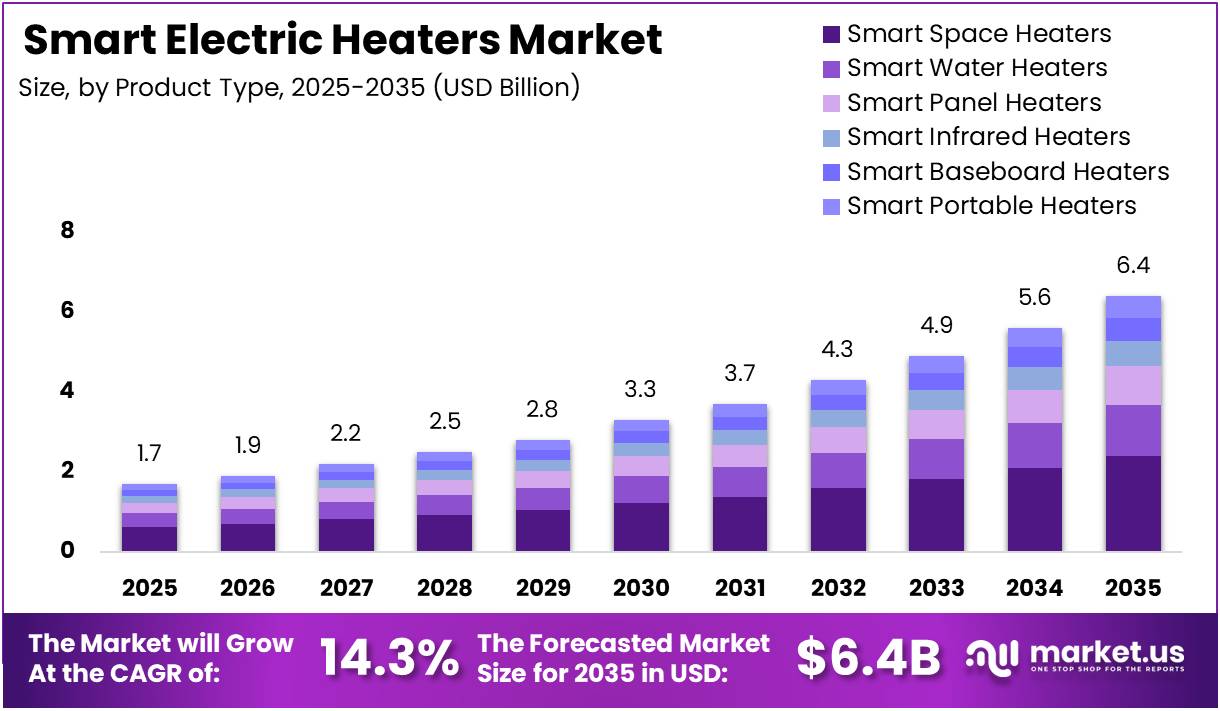
The Global Smart Electric Heaters Market size is expected to be worth around USD 6.4 Billion by 2035 from USD 1.7 Billion in 2025, growing at a CAGR of 14.3% during the forecast period 2026 to 2035.
Smart electric heaters are advanced heating devices that combine electrical heating elements with intelligent connectivity features. These products allow users to remotely monitor, schedule, and adjust temperature settings through mobile apps or voice commands. They are widely used in homes, offices, and commercial buildings for efficient and automated climate control.
The market is growing rapidly due to the global push toward smart home automation and energy conservation. Governments across regions are introducing policies and subsidies to encourage the adoption of energy-efficient appliances. Consequently, manufacturers are investing heavily in next-generation smart heater solutions aligned with these sustainability objectives.
IoT-enabled heating systems are becoming a key feature across both residential and commercial heating segments. These systems allow real-time energy monitoring, predictive scheduling, and seamless integration with platforms such as Amazon Alexa and Google Home. Moreover, rising urbanization and higher disposable income are accelerating smart heater adoption in emerging economies.
Regulatory support plays a critical role in shaping this market. Many governments are enforcing stricter energy efficiency standards for heating equipment, pushing both consumers and manufacturers toward smarter solutions. Additionally, incentive programs and rebates for energy-efficient home upgrades are creating a favorable environment for smart electric heater market growth.
According to SolarTech Online, smart thermostats and timers in electric heaters can reduce operating costs by 8% on average, with some models achieving up to 23% savings through optimized scheduling. This significant cost-saving potential is a strong motivator for consumers transitioning from conventional to smart heating systems.
According to ScienceDirect, IoT-based control of electric water heaters resulted in a 56% decrease in electricity costs and a 34% reduction in CO2 emissions compared to gas boilers. Furthermore, according to Reliant, smart water heaters save 10% to 30% more energy than conventional models, reinforcing their growing appeal among environmentally conscious buyers.
Key Takeaways
- The global Smart Electric Heaters Market was valued at USD 1.7 Billion in 2025 and is projected to reach USD 6.4 Billion by 2035.
- The market is expected to grow at a CAGR of 14.3% during the forecast period 2026 to 2035.
- By Product Type, Smart Space Heaters held the dominant share of 37.5% in 2025.
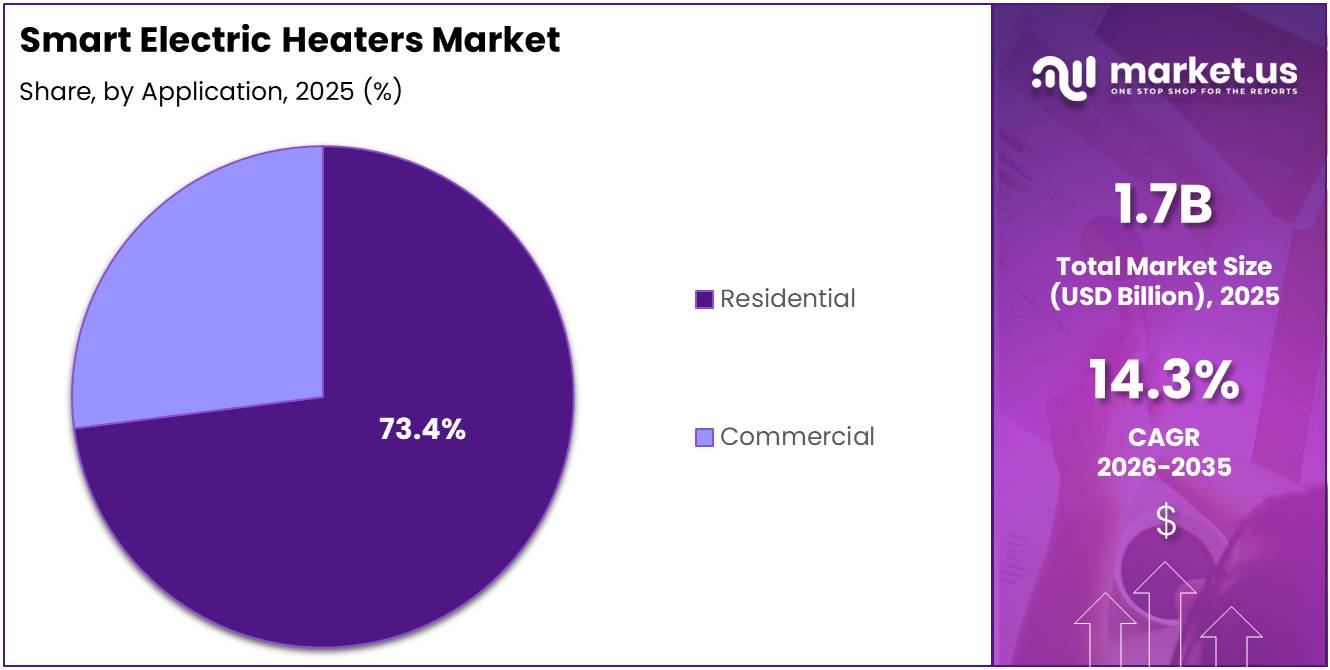
- By Application, the Residential segment led the market with a share of 73.4% in 2025.
- By Distribution Channel, the Online channel dominated with a share of 67.2% in 2025.
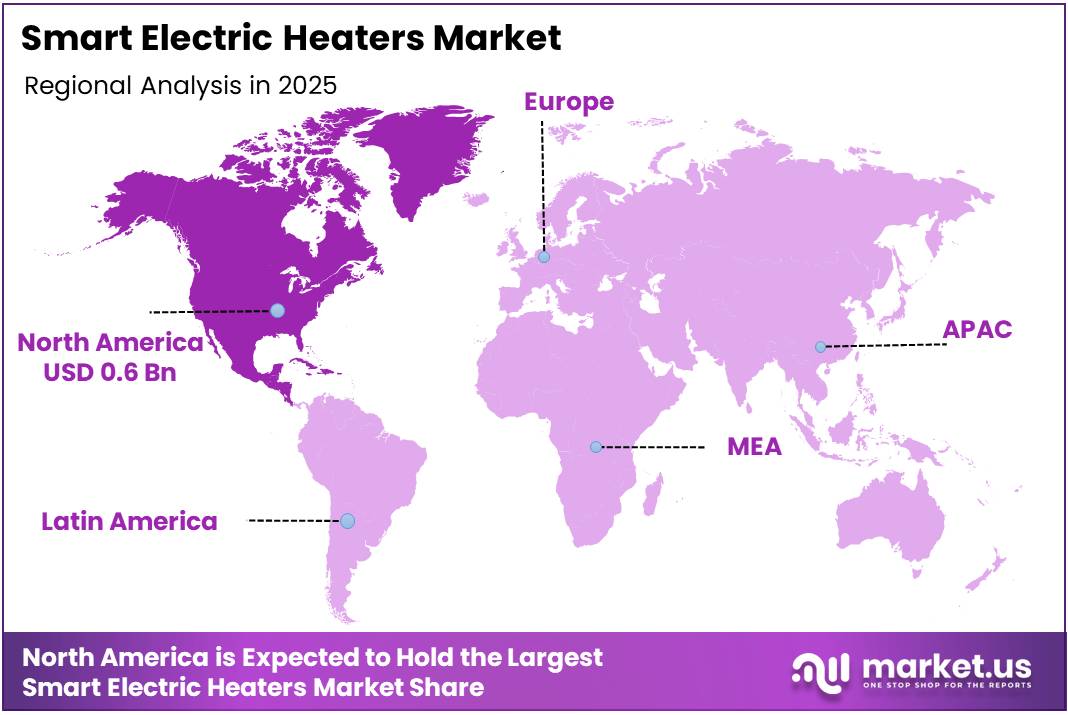
- North America was the leading region with a market share of 43.70%, valued at USD 0.6 Billion in 2025.
By Product Type Analysis
Smart Space Heaters dominate with 37.5% due to widespread residential use and high compatibility with smart home ecosystems.
In 2025, Smart Space Heaters held a dominant market position in the By Product Type segment of the Smart Electric Heaters Market, with a 37.5% share. Their compact design, ease of installation, and compatibility with smart home ecosystems make them the most preferred choice among residential consumers seeking energy-efficient and connected heating solutions.
Smart Water Heaters represent a fast-growing sub-segment driven by the need for efficient domestic hot water systems. These heaters use IoT-enabled scheduling and remote control features to minimize standby heat loss. Additionally, their ability to integrate with renewable energy sources such as solar panels further strengthens their market demand.
Smart Panel Heaters are gaining traction due to their slim profile and wall-mounted design, making them ideal for space-constrained environments. These heaters provide uniform heat distribution and are compatible with smart thermostats. Moreover, their energy-efficient operation and low maintenance requirements have made them increasingly popular in modern homes and offices.
Smart Infrared Heaters are valued for their ability to deliver instant, targeted warmth without heating the surrounding air. They are energy-efficient and well-suited for outdoor and semi-outdoor spaces. Consequently, growing interest in patio and outdoor comfort solutions has expanded the demand for smart infrared heaters in commercial and residential applications.
Smart Baseboard Heaters offer zone-based heating control and are commonly used in older residential buildings where central heating upgrades are not feasible. These heaters operate silently and provide consistent warmth along the floor level. Therefore, their compatibility with smart thermostats has made them a preferred replacement option in retrofit projects.
Smart Portable Heaters are a growing sub-segment driven by demand for flexible and space-saving heating solutions. These devices can be easily moved between rooms and controlled remotely via mobile apps. Additionally, their affordability and compact design appeal strongly to renters and consumers seeking temporary or supplemental heating in smaller spaces.
By Application Analysis
Residential dominates with 73.4% due to high consumer demand for smart home heating solutions and growing smart device adoption.
In 2025, Residential held a dominant market position in the By Application segment of the Smart Electric Heaters Market, with a 73.4% share. Growing adoption of smart home systems, increasing awareness of energy efficiency, and the convenience of remote-controlled heating have made residential spaces the primary driver of smart heater demand globally.
The Commercial segment is steadily gaining market share as businesses focus on reducing energy costs and improving workplace comfort. Smart electric heaters in offices, retail outlets, and hospitality venues enable precise temperature control and automated scheduling. Consequently, the commercial segment is expected to grow at a strong pace over the forecast period.
By Distribution Channel Analysis
Online dominates with 67.2% due to growing e-commerce penetration and digital consumer purchasing behavior.
In 2025, Online held a dominant market position in the By Distribution Channel segment of the Smart Electric Heaters Market, with a 67.2% share. The convenience of comparing products, reading reviews, and purchasing from home has driven strong consumer preference for e-commerce platforms. Moreover, attractive discounts and fast delivery options continue to fuel online sales growth.
The Offline segment includes traditional retail stores, home appliance outlets, and specialty heating equipment dealers. Consumers who prefer in-person product demonstrations and expert guidance tend to rely on offline channels. However, the rising dominance of digital retail is gradually reducing the offline segment’s overall share in the smart electric heaters distribution landscape.
Key Market Segments
By Product Type
- Smart Space Heaters
- Smart Water Heaters
- Smart Panel Heaters
- Smart Infrared Heaters
- Smart Baseboard Heaters
- Smart Portable Heaters
By Application
- Residential
- Commercial
By Distribution Channel
- Online
- Offline
Drivers
Rising Demand for Smart Home Automation and Energy-Efficient Heating Drives Market Growth
The increasing adoption of smart home automation systems is one of the primary drivers of the smart electric heaters market. Consumers are actively investing in connected devices that offer remote access and automated scheduling. Consequently, smart heaters with IoT integration are becoming an essential part of modern home energy management systems worldwide.
Rising consumer preference for energy-efficient heating solutions is another key driver shaping this market. Escalating energy costs and growing environmental awareness are pushing households and businesses to replace outdated heating systems. Therefore, smart electric heaters that optimize energy consumption and reduce utility bills are seeing strong and consistent demand growth.
The integration of IoT-enabled features for remote monitoring and control has significantly enhanced the appeal of smart electric heaters. Users can now manage heating systems from anywhere using smartphones or voice assistants. Moreover, the ability to set custom schedules and receive usage reports further supports adoption among tech-savvy and cost-conscious consumers.
Restraints
Compatibility Challenges and Limited Consumer Awareness Restrain Smart Electric Heater Adoption
Compatibility issues with existing home electrical infrastructure remain a significant restraint for the smart electric heaters market. Many older homes are not equipped to support the wiring or voltage requirements of advanced smart heating systems. Consequently, consumers often face high upgrade costs before they can install and use these connected devices effectively.
Limited consumer awareness in certain regions about the benefits of smart heating is another key restraint. In many developing markets, buyers are unfamiliar with IoT-enabled features and may perceive smart heaters as unnecessarily complex or expensive. Therefore, the lack of education and awareness campaigns continues to slow adoption in price-sensitive markets.
Additionally, high upfront product costs compared to conventional heaters can deter budget-conscious consumers. Smart electric heaters carry a premium price due to embedded sensors, wireless modules, and advanced control systems. However, manufacturers are working to offer cost-effective models and flexible financing options to reduce this barrier and expand their customer base.
Growth Factors
Urbanization in Emerging Markets and AI-Powered Heating Technologies Accelerate Market Expansion
Expansion into emerging markets with rising urbanization presents a major growth opportunity for smart electric heater manufacturers. As cities grow across Asia, Africa, and Latin America, demand for modern and energy-efficient home appliances is increasing rapidly. Moreover, a growing middle class with higher purchasing power is further driving smart heater adoption in these regions.
The development of AI-powered adaptive heating technologies is a key growth factor in this market. AI-driven systems can learn user preferences, analyze weather patterns, and automatically adjust heating schedules to minimize energy use. Consequently, the integration of machine learning into smart heaters is enabling a new level of comfort and operational efficiency.
Collaboration with smart home ecosystem providers for bundled solutions is also driving market growth. Partnerships between smart heater manufacturers and platforms like Google, Amazon, and Apple allow seamless product integration and improved user experience. Therefore, bundled offerings that combine smart heaters with thermostats and energy monitors are creating stronger consumer value propositions globally.
Emerging Trends
Voice Control, Mobile App Integration, and Compact Design Trends Reshape the Smart Heater Market
The increasing popularity of voice-controlled heating devices is a defining trend in the smart electric heaters market. Consumers are embracing smart speakers and voice assistants to manage home temperature hands-free. Moreover, leading manufacturers are ensuring their heaters are compatible with popular platforms like Amazon Alexa, Google Assistant, and Apple HomeKit to meet this demand.
Integration with mobile apps and wearable technology for real-time control is reshaping how consumers interact with heating systems. Users can now monitor energy consumption, set schedules, and receive alerts directly from their smartphones or smartwatches. Consequently, this level of connectivity is raising consumer expectations and encouraging manufacturers to invest in advanced mobile-first heater interfaces.
Demand for compact, portable, and space-saving heater designs is another strong trend emerging in this market. As urban living spaces become smaller, consumers are seeking heaters that provide efficient warmth without occupying excessive floor area. Additionally, portable smart heaters that can be moved and controlled flexibly are gaining strong traction among apartment dwellers and renters.
Regional Analysis
North America Dominates the Smart Electric Heaters Market with a Market Share of 43.70%, Valued at USD 0.6 Billion
North America held the dominant position in the global Smart Electric Heaters Market, capturing a share of 43.70% and valued at USD 0.6 Billion in 2025. The region’s leadership is driven by high smart home adoption rates, strong consumer purchasing power, and favorable regulations promoting energy-efficient appliances. Moreover, the presence of major industry players further strengthens North America’s market dominance.
Europe Smart Electric Heaters Market Trends
Europe represents a significant and growing market for smart electric heaters, driven by stringent EU energy efficiency directives and a strong push toward carbon neutrality. Countries such as Germany, France, and the UK are leading in smart home adoption. Additionally, government subsidies for energy-efficient appliance upgrades are accelerating consumer transition to smart heating systems.
Asia Pacific Smart Electric Heaters Market Trends
Asia Pacific is the fastest-growing region in the smart electric heaters market, fueled by rapid urbanization, rising incomes, and increasing awareness of energy conservation. Countries like China, Japan, and India are witnessing significant growth in smart home investments. Moreover, the expansion of local manufacturing capabilities is making smart heaters more affordable and accessible across the region.
Middle East and Africa Smart Electric Heaters Market Trends
The Middle East and Africa market is in an early growth stage, with demand driven by expanding urban infrastructure and rising disposable incomes. Smart heating adoption is gradually increasing in Gulf countries as consumers invest in modern, connected home appliances. However, limited awareness and infrastructure gaps in parts of Africa may slow market penetration in the short term.
Latin America Smart Electric Heaters Market Trends
Latin America presents emerging opportunities for smart electric heater manufacturers as urbanization accelerates in countries like Brazil and Mexico. Growing awareness of energy efficiency and improving internet connectivity are supporting smart home appliance adoption. Nevertheless, economic volatility and lower average incomes in certain countries remain challenges that may limit the pace of market growth.
Key Regions and Countries
North America
- US
- Canada
Europe
- Germany
- France
- The UK
- Spain
- Italy
- Rest of Europe
Asia Pacific
- China
- Japan
- South Korea
- India
- Australia
- Rest of APAC
Latin America
- Brazil
- Mexico
- Rest of Latin America
Middle East & Africa
- GCC
- South Africa
- Rest of MEA
Key Company Insights
Honeywell International Inc. is a leading player in the smart heating industry, offering a broad portfolio of smart thermostats and connected heating solutions. The company focuses on integrating AI and IoT technologies to deliver energy-efficient products for residential and commercial use. Honeywell’s extensive distribution network and established brand reputation provide a strong competitive advantage in the global market.
Zehnder Group specializes in premium heating and indoor climate solutions with a strong presence across European markets. The company is known for its innovative radiator and panel heater designs that combine aesthetics with smart connectivity. Moreover, Zehnder’s commitment to sustainable product development and energy efficiency aligns well with growing regulatory demands for greener heating solutions in Europe.
Haier Electronics Group Co., Ltd. is a global leader in home appliances with a growing footprint in the smart heating segment. The company leverages its strong manufacturing capabilities and smart home ecosystem to offer integrated heating solutions. Haier’s focus on affordability combined with smart features makes it a strong competitor in both emerging and developed markets worldwide.
Mitsubishi Electric Corporation brings advanced engineering expertise to the smart electric heater market through its range of high-performance heating and HVAC solutions. The company invests significantly in research and development to enhance product energy efficiency and smart connectivity. Consequently, Mitsubishi Electric’s reputation for quality and reliability positions it as a trusted choice among commercial and residential buyers globally.
Key Players
- Honeywell International Inc.
- Zehnder Group
- Haier Electronics Group Co., Ltd.
- Mitsubishi Electric Corporation
- A.O. Smith
- Siemens AG
- Danfoss
- Rheem Manufacturing Company
- Glen Dimplex
- Panasonic Corporation
Recent Developments
- February 2026 – SKYX Platforms announced the launch of its Ceiling Plug and Play SKYFAN and TURBO HEATER at Walmart, one of the leading retailers in the United States. This launch marks a major retail expansion for SKYX, bringing smart ceiling heating solutions to mainstream consumers nationwide.
- November 2025 – Infratech announced a strategic partnership with Bond, enabling users to control their electric horizontal patio heaters through the Bond Home App. This integration enhances the connected experience for outdoor heating customers using smart home platforms.
- November 2025 – Nuuk launched two new energy-efficient smart electric heaters, the HÖT BLOX OFR and HÖT BAR PTC, designed to deliver superior heating performance with lower energy consumption. The launch reflects growing consumer demand for smart, eco-friendly home heating alternatives.
- July 2025 – Parrot Uncle announced a global strategic partnership with SKYX to launch innovative Smart Turbo Heater and Ceiling Fan Solutions. This collaboration aims to expand smart home heating product availability and strengthen both companies’ market positions in the connected home appliance segment.
- June 2025 – LG Electronics acquired OSO, a premium water heating solutions provider, to strengthen its HVAC portfolio. This strategic acquisition enables LG to expand its offerings in the energy-efficient smart water heating segment globally.
- January 2025 – LED Group completed the acquisition of ATC Group, broadening its product portfolio and market reach in the lighting and electrical solutions sector. This move supports LED Group’s broader strategy to grow its presence in smart energy products.
Report Scope
Report Features Description Market Value (2025) USD 1.7 Billion Forecast Revenue (2035) USD 6.4 Billion CAGR (2026-2035) 14.3% Base Year for Estimation 2025 Historic Period 2020-2024 Forecast Period 2026-2035 Report Coverage Revenue Forecast, Market Dynamics, Competitive Landscape, Recent Developments Segments Covered By Product Type (Smart Space Heaters, Smart Water Heaters, Smart Panel Heaters, Smart Infrared Heaters, Smart Baseboard Heaters, Smart Portable Heaters), By Application (Residential, Commercial), By Distribution Channel (Online, Offline) Regional Analysis North America (US and Canada), Europe (Germany, France, The UK, Spain, Italy, and Rest of Europe), Asia Pacific (China, Japan, South Korea, India, Australia, and Rest of APAC), Latin America (Brazil, Mexico, and Rest of Latin America), Middle East & Africa (GCC, South Africa, and Rest of MEA) Competitive Landscape Honeywell International Inc., Zehnder Group, Haier Electronics Group Co., Ltd., Mitsubishi Electric Corporation, A.O. Smith, Siemens AG, Danfoss, Rheem Manufacturing Company, Glen Dimplex, Panasonic Corporation Customization Scope Customization for segments, region/country-level will be provided. Moreover, additional customization can be done based on the requirements. Purchase Options We have three licenses to opt for: Single User License, Multi-User License (Up to 5 Users), Corporate Use License (Unlimited User and Printable PDF)  Smart Electric Heaters MarketPublished date: Feb 2026add_shopping_cartBuy Now get_appDownload Sample
 -
-
- Honeywell International Inc.
- Zehnder Group
- Haier Electronics Group Co., Ltd.
- Mitsubishi Electric Corporation
- A.O. Smith
- Siemens AG
- Danfoss
- Rheem Manufacturing Company
- Glen Dimplex
- Panasonic Corporation
Our Clients

- 179718
- Feb 2026






