


Global Scalp Massager Market Size, Share, Growth Analysis By Type (Electric, Manual), By Product Type (Handheld, Helmet), By End-use (Household, Commercial), By Distribution Channel (Offline, Online), By Region and Companies - Industry Segment Outlook, Market Assessment, Competition Scenario, Statistics, Trends and Forecast 2026-2035
- Published date: March 2026
- Report ID: 181678
- Number of Pages: 363
- Format:
-
keyboard_arrow_up
Quick Navigation
Report Overview
The Global Scalp Massager Market size is expected to be worth around USD 1,401.9 Million by 2035 from USD 684.2 Million in 2025, growing at a CAGR of 7.4% during the forecast period 2026 to 2035.
The scalp massager market refers to devices designed to stimulate the scalp through mechanical vibration or manual pressure. These tools support blood circulation, promote hair follicle health, and enhance the absorption of hair care products. They are available in electric and manual formats for household and professional use.
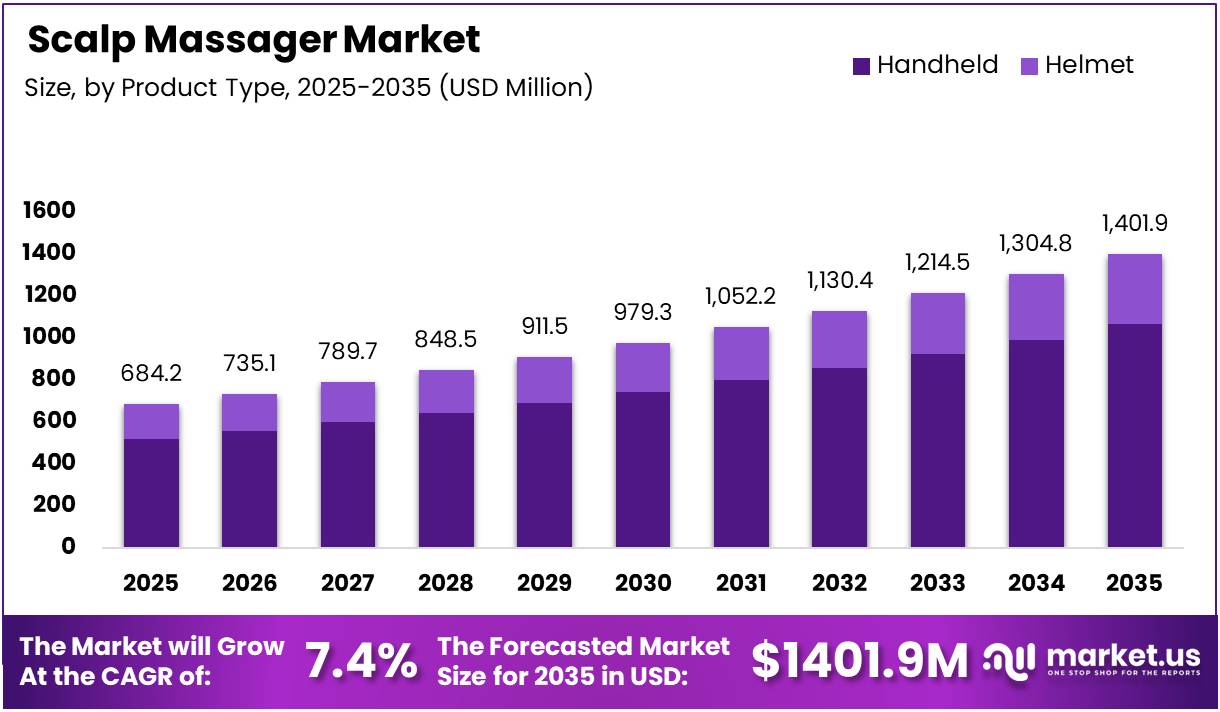
Consumer focus on scalp health as a foundation for hair growth and hair loss prevention has increased significantly in recent years. Moreover, rising stress levels have pushed more people toward at-home relaxation solutions. This growing demand for self-care products continues to drive the scalp massager market forward across both urban and suburban regions.
The market presents strong growth opportunities in product innovation. Smart features such as multiple vibration modes, waterproof designs, and heat functions are gaining consumer traction. Additionally, integration of scalp massagers with hair care product bundles is creating new revenue streams for brands across retail and e-commerce channels.
Adoption of scalp massagers in professional spa therapy and salons services is also expanding rapidly. Consequently, several governments are recognizing personal wellness tools as part of broader healthcare and wellness initiatives. This regulatory support, combined with rising disposable incomes, is encouraging more consumers to invest in scalp care devices.
According to Alibaba Product Insights, 71% of users with stress-related hair shedding reported reduced shedding within 4 months of regular scalp massager use. Furthermore, 74% of users continued using scalp massagers for stress relief and routine wellness, indicating strong behavioral stickiness among regular users.
According to arXiv research, around 70% of adults globally experience scalp-related issues, indirectly driving demand for scalp care tools. Additionally, according to a study published in PMC, daily scalp massage over 24 weeks increased hair thickness from 0.085 mm to 0.092 mm, supporting the clinical value of these devices.
According to Alibaba Product Insights, scalp massagers can increase topical product absorption by up to 41%, influencing consumer usage alongside serums like minoxidil. Therefore, the market is well-positioned for sustained growth as both clinical evidence and consumer behavior continue to validate the benefits of regular scalp massage.
Key Takeaways
- The Global Scalp Massager Market is valued at USD 684.2 Million in 2025 and is projected to reach USD 1,401.9 Million by 2035, growing at a CAGR of 7.4%.
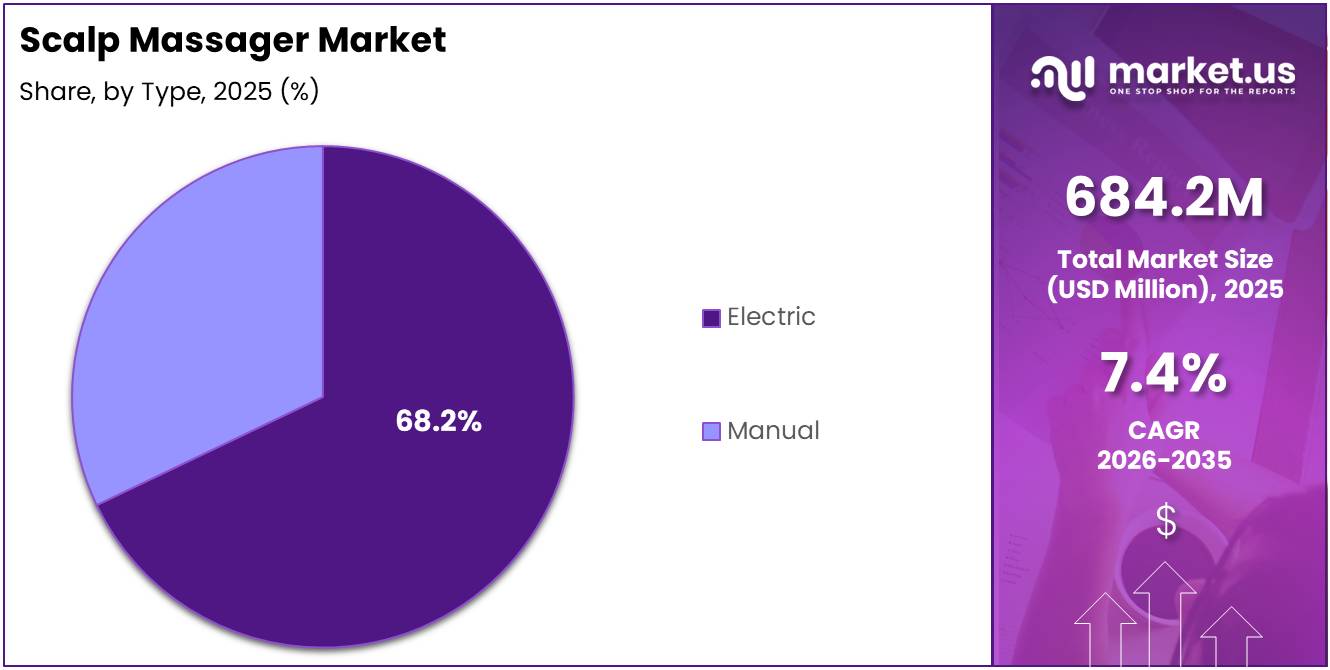
- By Type, the Electric segment dominates with a 68.2% market share in 2025.
- By Product Type, the Handheld segment holds the largest share at 76.3% in 2025.
- By End-use, the Household segment leads with a 71.9% share in 2025.
- By Distribution Channel, the Offline segment captures 65.4% of the market in 2025.
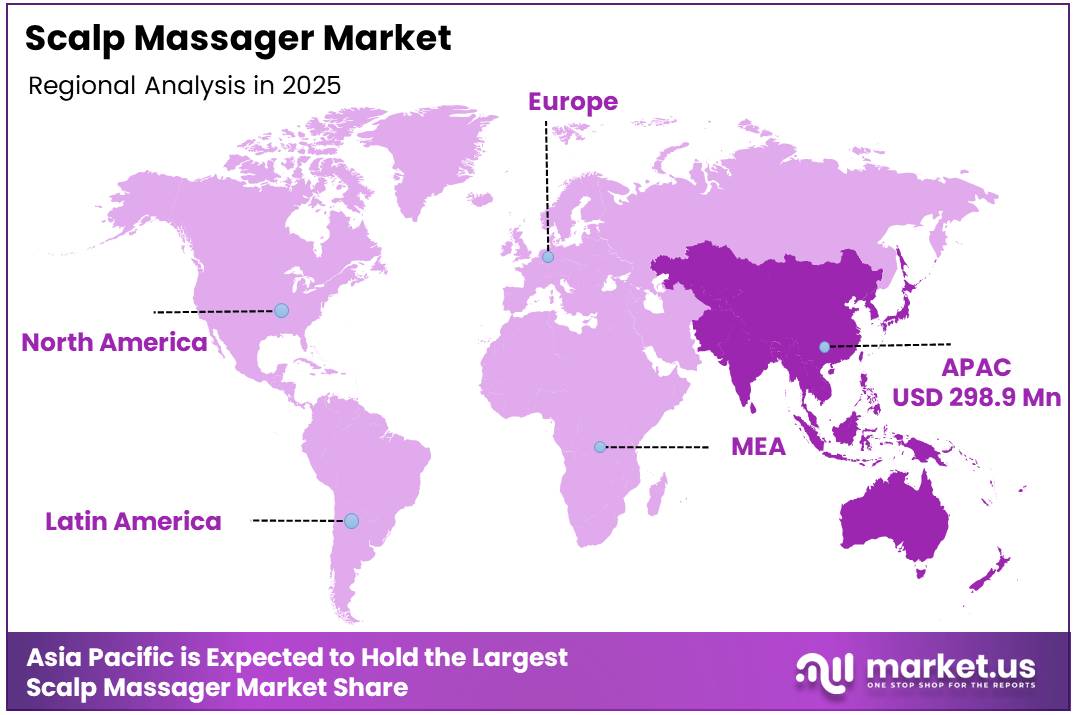
- Asia Pacific is the dominant region, accounting for 43.70% of the global market, valued at USD 298.9 Million.
By Type Analysis
Electric dominates with 68.2% due to consumer preference for automated and feature-rich scalp stimulation devices.
In 2025, Electric held a dominant market position in the By Type segment of the Scalp Massager Market, with a 68.2% share. Electric scalp massagers are widely preferred for their convenience and consistent performance. Their ability to deliver automated vibration and adjustable speed settings makes them a top choice for both household and professional scalp care routines. This segment is expected to maintain its lead through the forecast period.
Manual scalp massagers continue to serve a significant portion of the market due to their affordability and ease of use. They require no charging or batteries, making them accessible to a broad consumer base. Additionally, manual variants are frequently used during hair washing routines, supporting ongoing demand across traditional and value-sensitive consumer segments globally. Their simplicity remains a key selling point.
By Product Type Analysis
Handheld dominates with 76.3% due to its portability, ease of use, and compatibility with everyday hair care routines.
In 2025, Handheld held a dominant market position in the By Product Type segment of the Scalp Massager Market, with a 76.3% share. Handheld massagers are compact, user-friendly, and compatible with both wet and dry hair. Consequently, they are the most widely purchased format across retail and e-commerce platforms globally. Their versatility drives consistent repeat purchases among existing users.
Helmet-style scalp massagers represent a smaller but emerging product category within the market. These devices cover the entire scalp and are designed for immersive, hands-free use. Moreover, their adoption is growing in professional spas and high-end wellness centers, where full-coverage scalp therapy is increasingly offered as a premium service. Demand for helmet devices is expected to rise steadily.
By End-use Analysis
Household dominates with 71.9% due to the rising adoption of personal scalp care routines among urban consumers.
In 2025, Household held a dominant market position in the By End-use segment of the Scalp Massager Market, with a 71.9% share. Consumer adoption of home wellness tools has surged, particularly among urban professionals seeking stress relief. Therefore, household users represent the largest and most consistent buyer group in this market. Growing self-care awareness continues to strengthen this segment’s leadership position.
Commercial end-users, including professional salons, spas, and hair clinics, are increasingly investing in scalp massagers as part of premium service offerings. Consequently, this segment is growing as wellness-focused businesses expand their treatment menus. The commercial segment also drives demand for high-performance and durable devices designed for repeated professional use. Rising salon service diversification is expected to sustain this segment’s growth.
By Distribution Channel Analysis
Offline dominates with 65.4% due to strong retail networks and consumer preference for hands-on product experiences.
In 2025, Offline held a dominant market position in the By Distribution Channel segment of the Scalp Massager Market, with a 65.4% share. Brick-and-mortar retail outlets, pharmacies, and specialty wellness stores provide consumers with hands-on product experiences. Therefore, offline channels continue to be the preferred point of purchase for scalp massager buyers. In-store product demonstrations further reinforce consumer confidence and drive conversions.
Online distribution channels are gaining momentum as consumer sh
opping behavior continues to shift toward digital platforms. E-commerce platforms and brand websites offer greater product variety, customer reviews, and competitive pricing. Moreover, social media-driven purchases and influencer marketing are accelerating online sales of scalp massagers, especially among younger consumer demographics. This channel is projected to close the gap with offline sales steadily.
Key Market Segments
By Type
- Electric
- Manual
By Product Type
- Handheld
- Helmet
By End-use
- Household
- Commercial
By Distribution Channel
- Offline
- Online
Drivers
Rising Consumer Awareness About Scalp Health and Wellness Drives Market Growth
Consumer awareness about scalp health as a core foundation for hair growth and hair loss prevention has risen considerably. More individuals are recognizing that a healthy scalp environment directly supports stronger and thicker hair. Therefore, scalp massagers are increasingly viewed as practical tools for maintaining long-term scalp and hair health.
Rising stress levels across working populations have significantly increased demand for at-home relaxation solutions. Head massage tools provide a convenient and affordable way to reduce tension and promote mental relaxation. Consequently, scalp massagers have become a popular part of daily wellness routines, particularly among professionals managing high-pressure work environments.
The growing popularity of self-care and wellness routines among urban consumers is creating consistent demand for personal care tools. Social media platforms have played a key role in promoting scalp care as part of broader beauty rituals. Additionally, increasing health consciousness among millennials and Gen Z consumers is further accelerating adoption of scalp massagers.
Restraints
Limited Consumer Awareness and Traditional Preferences Restrain Market Expansion
A key restraint in the scalp massager market is the limited awareness among consumers about functional benefits beyond basic relaxation. Many potential buyers remain unaware that regular use can support hair thickness, improve circulation, and enhance product absorption. This knowledge gap reduces the overall conversion rate among first-time buyers in several markets.
A strong preference for traditional hair care practices and manual scalp massage methods also limits market growth. Many individuals, particularly in older demographics and developing regions, continue to rely on conventional techniques passed down through generations. Consequently, convincing these consumers to switch to device-based scalp massage remains a significant challenge for market players.
Moreover, the overlap between these two factors creates a compounded barrier to market expansion. Brands must invest significantly in consumer education and targeted marketing to shift entrenched perceptions and habits. Without effective outreach strategies, a notable portion of the potential consumer base will remain outside the scalp massager market’s reach.
Growth Factors
Product Innovation and Professional Adoption Create Strong Market Growth Opportunities
Product innovation represents one of the strongest growth opportunities for the scalp massager market. Manufacturers are introducing smart features such as multiple vibration modes, waterproof designs, and heat settings. These enhancements significantly improve user experience and attract a wider range of health-conscious and technology-driven consumers seeking premium scalp care tools.
The increasing adoption of scalp massagers in professional salons and spa therapy services is creating new revenue avenues for manufacturers. As wellness centers expand their service menus, demand for commercial-grade scalp massage devices is growing. Moreover, partnerships between device brands and professional beauty service providers are strengthening market presence and overall product credibility.
Integration of scalp massagers with hair care products as bundled or value-added offerings presents another significant growth opportunity. Brands are increasingly pairing massagers with serums, oils, and shampoos to increase perceived value and drive higher sales volumes. Consequently, this bundling strategy is attracting new buyers and improving overall customer lifetime value across channels.
Emerging Trends
Social Media Influence and Multi-Functional Innovation Are Shaping the Scalp Massager Market
Social media platforms and beauty influencers are playing a major role in reshaping consumer behavior around scalp care. Short-form video content showcasing scalp massage routines has driven significant product discovery and purchase intent. Therefore, influencer-led marketing has become a key driver of awareness and first-time purchases across younger consumer demographics globally.
The market is witnessing a clear shift toward compact, portable, and travel-friendly scalp massage devices. Consumers increasingly prefer personal care products that fit into busy and mobile lifestyles. Consequently, manufacturers are designing lightweight and rechargeable massagers that can be conveniently used at home, in the office, or while traveling.
Multi-functional devices that combine scalp massage with hair cleansing are emerging as a popular product category. These devices address multiple consumer needs within a single product, reducing the need for separate tools. Moreover, the growing preference for efficient all-in-one personal care solutions is encouraging manufacturers to develop more feature-rich and integrated scalp care products.
Regional Analysis
Asia Pacific Dominates the Scalp Massager Market with a Market Share of 43.70%, Valued at USD 298.9 Million
Asia Pacific holds a dominant position in the global scalp massager market, accounting for a 43.70% share valued at USD 298.9 Million in 2025. The region benefits from large consumer populations across China, Japan, South Korea, and India, where scalp health is deeply integral to daily wellness. Rising disposable incomes and strong e-commerce adoption further support growth.
North America Scalp Massager Market Trends
North America represents a significant market for scalp massagers, driven by high consumer spending on personal care and wellness products. The United States leads regional demand, with growing interest in clinically supported hair care solutions and structured self-care routines. Moreover, the region’s robust retail and digital commerce infrastructure supports consistent product availability and sales growth.
Europe Scalp Massager Market Trends
Europe is a growing market for scalp massagers, supported by increasing consumer interest in holistic wellness and premium personal care products. Countries such as Germany, France, and the United Kingdom are key demand centers in the region. Additionally, rising awareness of scalp health among European consumers is driving adoption of both manual and electric massager formats.
Latin America Scalp Massager Market Trends
Latin America presents moderate but growing demand for scalp massagers, particularly in Brazil and Mexico. Increasing urbanization and improving living standards are supporting consumer spending on personal wellness products. However, price sensitivity in certain markets and limited product awareness remain factors that moderate the pace of market growth across the region.
Middle East and Africa Scalp Massager Market Trends
The Middle East and Africa region is at an early stage of scalp massager market development but shows strong long-term potential. Rising disposable incomes in Gulf Cooperation Council countries and growing interest in premium wellness solutions are key drivers. Consequently, the region is expected to witness steady growth as consumer awareness continues to increase over the forecast period.
Key Regions and Countries
North America
- US
- Canada
Europe
- Germany
- France
- The UK
- Spain
- Italy
- Rest of Europe
Asia Pacific
- China
- Japan
- South Korea
- India
- Australia
- Rest of APAC
Latin America
- Brazil
- Mexico
- Rest of Latin America
Middle East & Africa
- GCC
- South Africa
- Rest of MEA
Key Company Insights
Breo is a globally recognized brand in the scalp massager market, known for its technologically advanced and ergonomically designed devices. The company offers a broad range of electric head massagers suited for household and professional use. Breo’s commitment to product innovation, clinical credibility, and smart design features has positioned it as a leading name in the personal wellness segment.
Heeta has built a strong niche in the scalp massager market with its affordable and highly functional handheld devices. The brand is widely known for waterproof silicone massagers that work effectively during hair washing routines. Moreover, Heeta’s competitive pricing strategy and strong presence on major e-commerce platforms have made it one of the most widely purchased brands in this category.
Vitagoods is recognized for its value-driven approach to scalp care, offering products that balance strong performance with affordability. The brand’s portfolio includes both manual and electric devices, catering to a wide range of consumer preferences. Additionally, Vitagoods has leveraged positive customer feedback and targeted digital marketing to build a loyal following across online retail channels globally.
FREATECH stands out in the scalp massager market by offering technologically enhanced devices that prioritize user comfort and effective scalp stimulation. The brand integrates multiple massage nodes and adjustable intensity settings to deliver a personalized experience. Consequently, FREATECH has gained traction among consumers seeking advanced scalp care tools and continues to expand its presence across international e-commerce platforms.
Key Players
- Breo
- Heeta
- Vitagoods
- FREATECH
- Comfier
- Scalp Spa
- MaxKare
- Ryoma
- Kieba
- Body Back Company
Recent Developments
- August 2025 – Breo launched the LumiHeal Pro, an FDA-cleared scalp massager designed to deliver clinically validated scalp stimulation. This product launch reinforced Breo’s position as an innovation-led brand in the premium scalp care segment.
- May 2025 – Mount Lai launched the Vitality Qi LED Advanced Scalp Massager, combining LED therapy with scalp massage functionality. This launch reflects the growing market trend toward multi-functional and technology-integrated personal care devices.
Report Scope
Report Features Description Market Value (2025) USD 684.2 Million Forecast Revenue (2035) USD 1,401.9 Million CAGR (2026-2035) 7.4% Base Year for Estimation 2025 Historic Period 2020-2024 Forecast Period 2026-2035 Report Coverage Revenue Forecast, Market Dynamics, Competitive Landscape, Recent Developments Segments Covered By Type (Electric, Manual), By Product Type (Handheld, Helmet), By End-use (Household, Commercial), By Distribution Channel (Offline, Online) Regional Analysis North America (US and Canada), Europe (Germany, France, The UK, Spain, Italy, and Rest of Europe), Asia Pacific (China, Japan, South Korea, India, Australia, and Rest of APAC), Latin America (Brazil, Mexico, and Rest of Latin America), Middle East & Africa (GCC, South Africa, and Rest of MEA) Competitive Landscape Breo, Heeta, Vitagoods, FREATECH, Comfier, Scalp Spa, MaxKare, Ryoma, Kieba, Body Back Company Customization Scope Customization for segments, region/country-level will be provided. Moreover, additional customization can be done based on the requirements. Purchase Options We have three licenses to opt for: Single User License, Multi-User License (Up to 5 Users), Corporate Use License (Unlimited User and Printable PDF) 
-
-
- Breo
- Heeta
- Vitagoods
- FREATECH
- Comfier
- Scalp Spa
- MaxKare
- Ryoma
- Kieba
- Body Back Company
Our Clients

- 181678
- March 2026






