


Global Plant-derived Analgesics Market By Source (Plant-Derived Opioid Alkaloids, Salicylate-Type Analgesics, Cannabinoids and Hemp-Derived Analgesics, Polyphenolic/Phenolic Extracts and Other Phytochemical Analgesics), By Route of Administration (Oral, Topical, Injectable and Others), By Application (Musculoskeletal Pain, Arthritis and Chronic Inflammatory Disorders, Neuropathic and Nerve-Related Pain, Post-Surgical and Acute Pain Management, Headache and Migraine Relief, Cancer-Related and Palliative Pain and Others), By Distribution Channel (Retail Pharmacies, E-Commerce Platforms and Hospital Pharmacies), Region and Companies – Industry Segment Outlook, Market Assessment, Competition Scenario, Trends and Forecast 2025-2034
- Published date: Jan 2026
- Report ID: 173481
- Number of Pages: 377
- Format:
-
keyboard_arrow_up
Quick Navigation
- Report Overview
- Key Takeaways
- Source Analysis
- Route of Administration Analysis
- Application Analysis
- Distribution Channel Analysis
- Key Market Segments
- Drivers
- Restraints
- Opportunities
- Impact of Macroeconomic / Geopolitical Factors
- Latest Trends
- Regional Analysis
- Key Players Analysis
- Recent Developments
- Report Scope
Report Overview
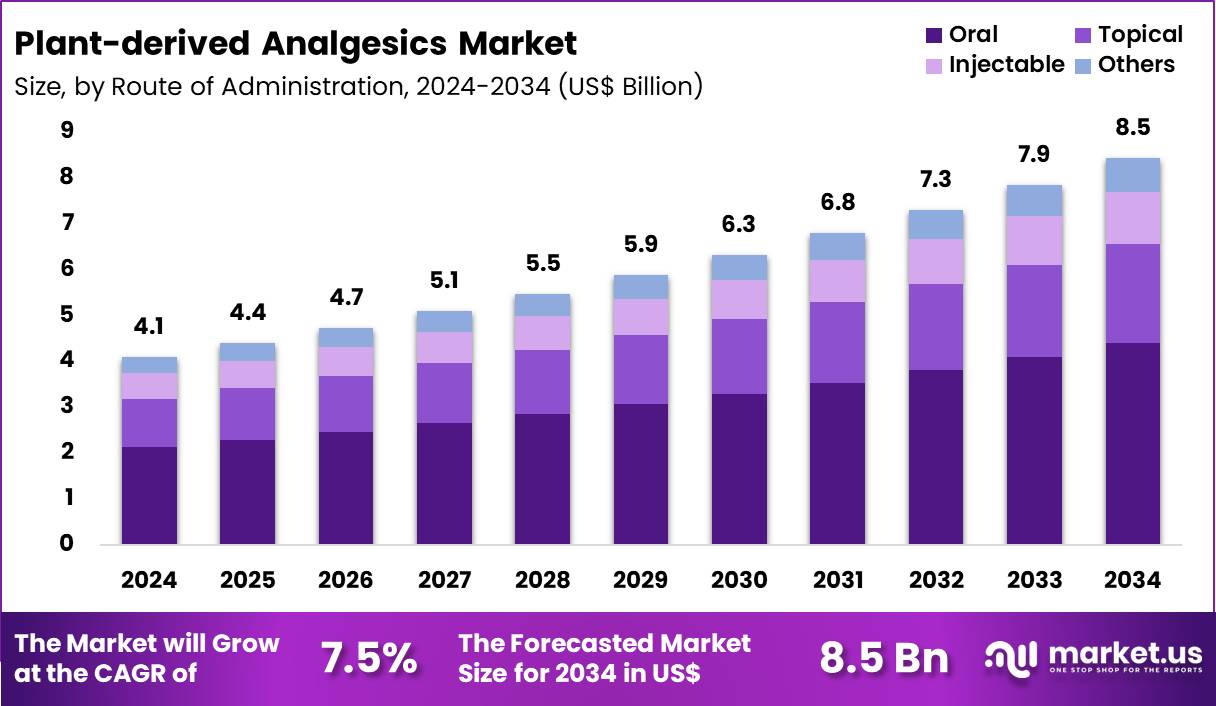
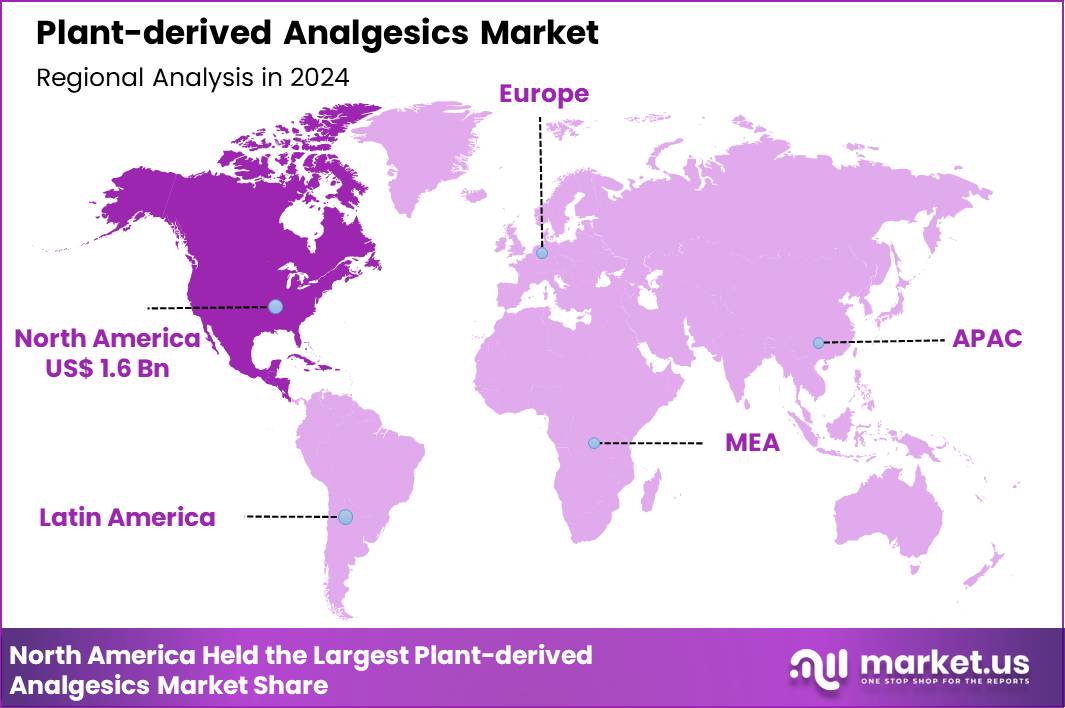
The Global Plant-Derived Analgesics Market size is expected to be worth around US$ 8.5 Billion by 2034 from US$ 4.1 Billion in 2024, growing at a CAGR of 7.5% during the forecast period 2025 to 2034. In 2024, North America led the market, achieving over 38.7% share with a revenue of US$ 1.6 Billion.
Rising prevalence of chronic pain disorders fuels demand for plant-derived analgesics that offer safer alternatives to synthetic opioids, addressing conditions such as arthritis and neuropathic pain through natural anti-inflammatory mechanisms. Consumers increasingly seek these compounds from sources like willow bark and turmeric to manage acute post-surgical discomfort, minimizing reliance on habit-forming medications.
Healthcare professionals prescribe cannabinoid-based extracts for cancer-related pain relief, leveraging their analgesic properties to improve patient quality of life without severe side effects. Pharmaceutical firms innovate formulations incorporating capsaicin from chili peppers to target localized muscle aches, providing topical relief for back pain sufferers.
Developers harness alkaloids from poppy plants in controlled doses to treat severe headaches, ensuring precise delivery that avoids gastrointestinal irritation. Such natural derivatives enable multimodal approaches that combine with physical therapy for comprehensive chronic pain management.
Pharmaceutical innovators capitalize on opportunities to formulate hybrid plant-derived analgesics that blend essential oils with modern excipients, enhancing bioavailability for neuropathic pain applications in diabetic patients. Companies explore sustained-release capsules using ginger extracts to extend relief duration in inflammatory joint conditions, meeting needs for long-term arthritis management.
These advancements facilitate development of over-the-counter gels infused with menthol from peppermint, offering quick topical solutions for minor sprains and strains. Opportunities arise in creating personalized tinctures from boswellia resin to address individualized post-operative recovery protocols, improving adherence through customized potency.
Firms pursue effervescent tablets with devil’s claw root for rapid absorption in acute migraine episodes, broadening accessibility for self-administered care. Enterprises invest in nano-encapsulated curcumin derivatives that optimize efficacy in fibromyalgia treatment, driving innovation in non-opioid chronic pain strategies.
Industry specialists advance precision extraction techniques to isolate bioactive compounds from plants, enabling tailored dosing for neuropathic and arthritic pain through pharmacogenomic integration. Developers refine abuse-resistant formulations of natural opioids, supporting safer alternatives in post-surgical and cancer pain regimens. Market leaders incorporate AI-driven screening to identify novel plant sources for anti-inflammatory agents, accelerating discovery for headache and muscle pain relief.
Innovators emphasize clean-label products free from synthetic additives, appealing to consumers seeking preventive wellness options for joint health. Companies prioritize sustainable sourcing of raw materials like willow bark, aligning with ethical standards in topical analgesic development. Ongoing collaborations between botanists and pharmacologists refine multimodal therapies that combine plant extracts with behavioral interventions, enhancing outcomes across diverse pain management applications.
Key Takeaways
- In 2024, the market generated a revenue of US$ 4.1 Billion, with a CAGR of 7.5%, and is expected to reach US$ 8.5 Billion by the year 2034.
- The source segment is divided into plant-derived opioid alkaloids, salicylate-type analgesics, cannabinoids and hemp-derived analgesics, polyphenolic/phenolic extracts and other phytochemical analgesics, with plant-derived opioid alkaloids taking the lead in 2023 with a market share of 32.3%.
- Considering route of administration, the market is divided into oral, topical, injectable and others. Among these, oral held a significant share of 52.0%.
- Furthermore, concerning the application segment, the market is segregated into musculoskeletal pain, arthritis and chronic inflammatory disorders, neuropathic and nerve-related pain, post-surgical and acute pain management, headache and migraine relief, cancer-related and palliative pain and others. The arthritis and chronic inflammatory disorders sector stands out as the dominant player, holding the largest revenue share of 38.5% in the market.
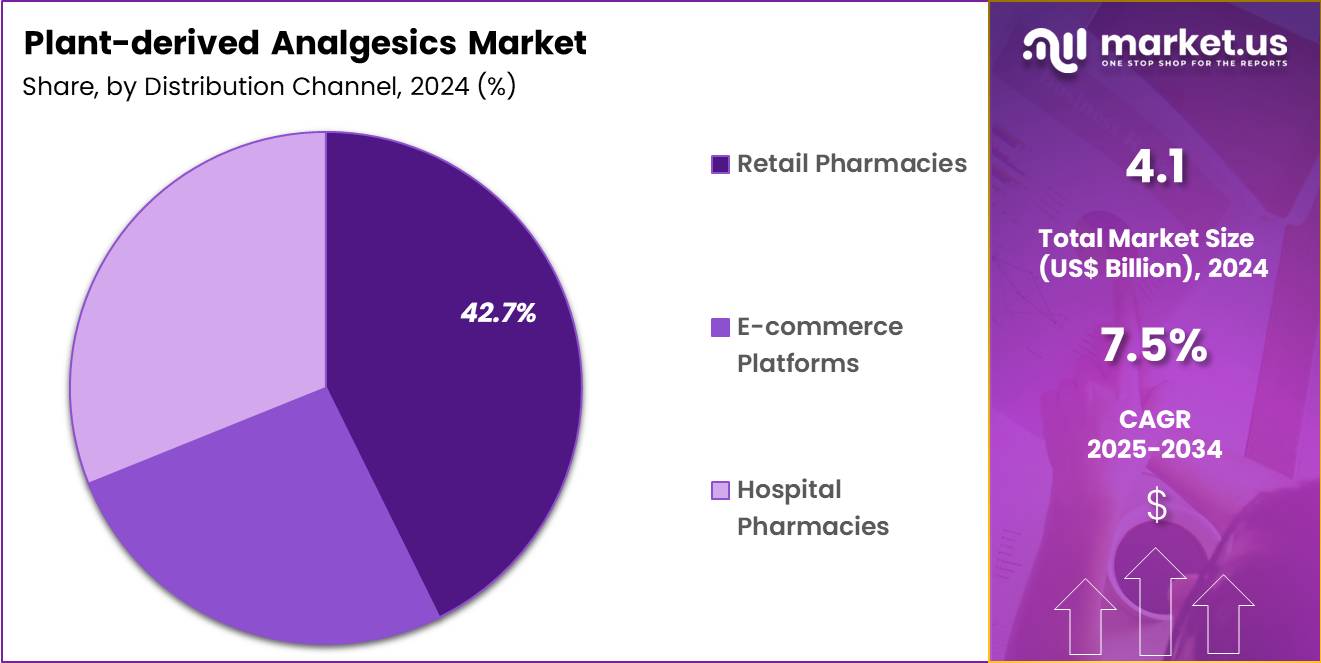
- The distribution channel segment is segregated into retail pharmacies, e-commerce platforms and hospital pharmacies, with the retail pharmacies segment leading the market, holding a revenue share of 42.7%.
- North America led the market by securing a market share of 38.7% in 2024.
Source Analysis
Plant-derived opioid alkaloids accounted for 32.3% of the plant-derived analgesics market, reflecting their established efficacy in moderate to severe pain management. Clinicians recognize these compounds for strong analgesic action supported by long-standing pharmacological evidence. Growing preference for naturally sourced pain relief options strengthens demand across regulated therapeutic use. Controlled formulation approaches improve safety perception and dosing precision.
Expanding palliative care and cancer pain management needs increase utilization. Research efforts focus on refining extraction and standardization to enhance consistency. Regulatory frameworks in several regions support medically supervised use of plant-derived opioid formulations. Patient familiarity with these agents reinforces acceptance. Pharmaceutical investments in safer delivery systems further stimulate growth. This segment is projected to expand steadily due to clinical effectiveness and therapeutic necessity.
Route of Administration Analysis
Oral administration represented 52.0% of the plant-derived analgesics market, driven by convenience and high patient compliance. Patients favor oral dosage forms for ease of use and non-invasive administration. Oral formulations support chronic pain management through consistent dosing schedules. Wide availability of tablets, capsules, and liquid extracts enhances accessibility. Healthcare providers frequently recommend oral analgesics as first-line therapy.
Cost efficiency compared to injectable options improves adoption. Advances in bioavailability enhancement improve therapeutic outcomes. Integration into daily treatment regimens supports long-term use. Strong consumer familiarity reduces barriers to initiation. This segment is anticipated to maintain dominance due to simplicity and broad acceptance.
Application Analysis
Arthritis and chronic inflammatory disorders accounted for 38.5% of the plant-derived analgesics market, reflecting the high global burden of long-term inflammatory pain. Aging populations increase the prevalence of osteoarthritis and related conditions. Patients increasingly seek plant-based alternatives to manage long-term pain with fewer systemic side effects. Anti-inflammatory properties of several phytochemicals support sustained symptom relief.
Complementary medicine adoption strengthens demand in chronic care settings. Clinicians incorporate plant-derived analgesics into multimodal pain management strategies. Rising awareness of lifestyle-related inflammation expands treatment needs. Long-term therapy requirements sustain recurring consumption. Improved clinical validation supports wider therapeutic confidence. This application segment is likely to grow due to persistent disease prevalence and demand for safer long-term pain control.
Distribution Channel Analysis
Retail pharmacies held 42.7% of the plant-derived analgesics market, reflecting strong consumer reliance on accessible distribution points. Pharmacies provide immediate availability and professional guidance for analgesic selection. Consumers value retail settings for trusted sourcing of plant-based products. Broad shelf presence enhances product visibility and brand recognition.
Pharmacist counseling improves appropriate usage and adherence. Expansion of organized pharmacy chains increases geographic reach. Regulatory oversight within pharmacies strengthens consumer confidence. Over-the-counter availability supports impulse and repeat purchases. Competitive pricing within retail environments improves affordability. Consequently, this distribution channel is expected to remain dominant due to accessibility, trust, and consumer convenience.
Key Market Segments
By Source
- Plant-derived Opioid Alkaloids
- Salicylate-type Analgesics
- Cannabinoids and Hemp-derived Analgesics
- Polyphenolic/Phenolic Extracts
- Other Phytochemical Analgesics
By Route of Administration
- Oral
- Topical
- Injectable
- Others
By Application
- Musculoskeletal Pain
- Arthritis and Chronic Inflammatory Disorders
- Neuropathic and Nerve-related Pain
- Post-surgical and Acute Pain Management
- Headache and Migraine Relief
- Cancer-related and Palliative Pain
- Others
By Distribution Channel
- Retail Pharmacies
- E-commerce Platforms
- Hospital Pharmacies
Drivers
Growing demand for natural alternatives to opioids is driving the market
The plant-derived analgesics market is propelled by the growing demand for natural alternatives to opioids, as consumers and healthcare providers seek safer options for pain management amid the ongoing opioid crisis. This demand stems from the need to reduce risks associated with opioid dependence and adverse effects, encouraging the adoption of plant-based compounds like capsaicin and menthol.
Regulatory bodies have highlighted the importance of non-opioid therapies in guidelines for chronic pain, supporting market expansion through increased research and product development. Pharmaceutical companies are investing in plant-derived formulations to meet consumer preferences for herbal remedies with anti-inflammatory properties.
Clinical studies demonstrate the efficacy of these analgesics in conditions such as neuropathic pain, driving their integration into treatment protocols. Global health organizations advocate for plant-based medicines to address pain in populations with limited access to conventional drugs. Academic institutions contribute by validating traditional uses of plants like turmeric and willow bark for analgesic effects.
Patient education on natural options enhances market penetration in both developed and developing regions. Economic factors, including the high cost of opioid-related healthcare, further justify the shift toward plant-derived solutions. According to a 2024 review published by the National Institutes of Health, chronic pain affects approximately 20% of Western populations, fueling the need for alternative therapies.
Restraints
Limited clinical evidence and regulatory challenges are restraining the market
The plant-derived analgesics market is restrained by limited clinical evidence, as many compounds lack robust human trials to support their efficacy and safety for widespread use. This scarcity of data hinders regulatory approval and physician recommendation, slowing market adoption. Regulatory agencies require extensive validation for botanical products, which often face challenges due to variability in plant sources and extraction methods.
Pharmaceutical firms encounter difficulties in standardizing formulations, leading to inconsistencies that complicate compliance with good manufacturing practices. Healthcare providers remain cautious, preferring well-established synthetic analgesics over plant-derived options with uncertain long-term effects. Global differences in regulatory frameworks create barriers for international trade and market entry.
Academic research highlights the need for more randomized controlled trials to address evidence gaps. Patient access is limited in regions with strict herbal medicine regulations, reducing market potential. Economic investments are diverted to synthetic alternatives with stronger evidence bases. According to a 2025 narrative review in the journal Nutraceuticals, few plant-derived nutraceuticals have undergone rigorous clinical testing for pain relief, with primarily preclinical data available.
Opportunities
Expansion in traditional medicine use in developing countries is creating growth opportunities
The plant-derived analgesics market offers growth opportunities through the expansion in traditional medicine use in developing countries, where herbal remedies are a primary source of pain relief for large populations. This expansion allows manufacturers to tap into established cultural practices, promoting plant-derived products for conditions like arthritis and neuropathic pain.
Regulatory reforms in these regions are facilitating the integration of traditional medicines into formal healthcare systems, opening avenues for commercialization. Pharmaceutical collaborations with local practitioners can enhance product development tailored to regional needs. Clinical research in developing countries is exploring the potential of local plants, providing evidence for global market entry.
Global health organizations support capacity building to standardize traditional formulations, boosting credibility. Academic partnerships focus on sustainable sourcing to meet growing demand without resource depletion. Patient populations in these areas benefit from affordable, accessible analgesics derived from indigenous plants.
Economic development enables investment in processing facilities for export-quality products. According to a 2025 review published in Phytochemistry Reviews, approximately 80% of the population in developing countries primarily uses traditional herbal medicine systems for healthcare.
Impact of Macroeconomic / Geopolitical Factors
Worldwide economic booms inject vital resources into natural health sectors, propelling the plant-derived analgesics market through heightened consumer spending on herbal remedies. Executives seize opportunities from expanding middle-class populations in Asia, which amplifies sales volumes for plant-based pain relievers like willow bark extracts.
Despite this momentum, soaring global inflation drives up cultivation and extraction fees, challenging smaller producers to maintain competitive edges in tight margins. Tense international relations in resource-rich areas disrupt harvesting operations, forcing delays in botanical shipments from conflict-prone suppliers. Industry leaders mitigate these setbacks by investing in vertical integration strategies, which secures raw materials and streamlines distribution networks.
Prevailing US tariffs, often reaching 10-100% on select imported pharmaceuticals from Asia, burden overseas vendors with added compliance hurdles. Homegrown enterprises capitalize on these measures by accelerating local sourcing initiatives, which nurtures supply independence and stimulates regional economies. Emerging trends in eco-friendly formulations continually bolster the market’s outlook, ensuring vibrant expansion and stakeholder value in the foreseeable future.
Latest Trends
Clinical trials of novel plant-derived compounds for pain is a recent trend
In 2025, the plant-derived analgesics market has witnessed a prominent trend toward clinical trials of novel plant-derived compounds for pain, focusing on compounds like resiniferatoxin to address intractable conditions such as cancer-related pain. This trend reflects a shift toward evidence-based validation of traditional remedies through rigorous human studies. Healthcare researchers are prioritizing plant extracts with anti-inflammatory and neuroprotective properties to complement conventional therapies.
Regulatory agencies are supporting these trials with guidance on botanical drug development to accelerate approvals. Pharmaceutical entities are investing in phase I and II studies to evaluate safety and efficacy in diverse patient groups. Clinical outcomes from these trials demonstrate potential reductions in opioid reliance, guiding future product development.
Academic institutions are contributing data on mechanisms like nerve desensitization for targeted pain relief. Patient participation in trials is increasing with awareness of natural alternatives’ benefits. Ethical considerations ensure informed consent and monitoring for adverse effects in study designs. According to a 2025 news release from the National Institutes of Health, a first-in-human trial of resiniferatoxin reduced worst pain intensity by 38% and opioid use by 57% in cancer patients.
Regional Analysis
North America is leading the Plant-derived Analgesics Market
In 2024, North America held a 38.7% share of the global plant-derived analgesics market, supported by a shift toward natural pain relief options amid concerns over synthetic opioid side effects and addiction risks, leading to greater integration of botanicals like willow bark extracts and capsaicin in over-the-counter and prescription formulations for chronic conditions.
Healthcare providers emphasized these alternatives in guidelines for arthritis and neuropathic pain management, backed by clinical evidence demonstrating their efficacy in reducing inflammation without gastrointestinal distress. Consumer demand for clean-label products surged, prompting pharmaceutical companies to expand lines of plant-based capsules and topicals that align with wellness trends and regulatory approvals for improved bioavailability.
Aging demographics amplified utilization for age-related musculoskeletal issues, while educational initiatives encouraged self-care with herbal remedies. Biotechnology advancements refined extraction methods for active compounds like salicin, ensuring potency and purity in commercial products. Collaborative efforts with herbal suppliers stabilized sourcing of raw materials, addressing supply volatility from environmental factors.
Retail expansions in pharmacies and online platforms broadened accessibility for diverse populations seeking non-addictive relief. The National Institutes of Health analysis revealed that 36.7% of U.S. adults used complementary health approaches for pain management in 2022, including plant-derived options.
The Asia Pacific region is expected to experience the highest CAGR during the forecast period
Stakeholders envision notable progression in plant-derived analgesics across Asia Pacific throughout the forecast period, as traditional medicine integrations and urbanization heighten focus on natural remedies for widespread musculoskeletal and inflammatory ailments. Clinicians incorporate herbal extracts into standard protocols for joint pain relief, optimizing dosages for elderly cohorts in high-density cities.
Governments subsidize cultivation of key botanicals like turmeric and ginger, equipping local manufacturers to scale production for domestic and export markets. Biotech firms engineer standardized formulations with enhanced absorption, tailoring them to regional dietary habits that influence efficacy. Regional health bodies conduct awareness campaigns on safe usage, empowering women in workforce-dominant economies to manage menstrual discomfort effectively.
Pharmaceutical alliances adapt global standards through joint ventures, ensuring quality control for anti-inflammatory compounds. Community programs train herbalists on modern blending techniques, bridging traditional practices with contemporary needs in rural areas. The World Health Organization highlights that 40 to 90 per cent of populations in the majority of its Member States use traditional medicine, with significant reliance in Asia-Pacific countries.
Key Regions and Countries
North America
- US
- Canada
Europe
- Germany
- France
- The UK
- Spain
- Italy
- Russia
- Netherland
- Rest of Europe
Asia Pacific
- China
- Japan
- South Korea
- India
- Australia
- New Zealand
- Singapore
- Thailand
- Vietnam
- Rest of APAC
Latin America
- Brazil
- Mexico
- Rest of Latin America
Middle East & Africa
- South Africa
- Saudi Arabia
- UAE
- Rest of MEA
Key Players Analysis
Key players in the Plant-derived Analgesics market drive growth by expanding standardized botanical formulations that deliver consistent pain relief with improved safety profiles compared with synthetic alternatives. Companies strengthen demand by investing in clinical validation and quality-controlled sourcing to build credibility with physicians and regulators.
Commercial strategies focus on portfolio diversification across oral, topical, and combination therapies to address chronic pain, inflammation, and musculoskeletal conditions. Innovation priorities include advanced extraction methods, bioavailability enhancement, and scalable manufacturing that support reliable dosing and supply continuity.
Market expansion targets regions with rising preference for natural therapeutics and supportive regulatory frameworks for herbal medicines. Himalaya Wellness operates as a notable participant through its science-backed herbal product portfolio, vertically integrated supply chain, and global distribution network that supports broad access to plant-based pain management solutions.
Top Key Players
- Pfizer Inc.
- Johnson & Johnson
- Purdue Pharma L.P.
- Teva Pharmaceutical Industries Ltd.
- Hikma Pharmaceuticals PLC
- Mallinckrodt Pharmaceuticals
- NOW Foods
- Endo Pharmaceuticals Inc.
- Jazz Pharmaceuticals
- Amneal Pharmaceuticals, Inc.
- Sun Pharmaceutical Industries Ltd.
- Tilray Brands, Inc.
- Curaleaf Holdings, Inc.
- Canopy Growth Corporation
- Charlotte’s Web Holdings, Inc.
Recent Developments
- In January 2024, Novartis completed Phase III clinical trials for SBT-100, a Mayapple derived botanical drug developed for pancreatic cancer. This milestone drives the plant derived analgesics market by reinforcing pharmaceutical confidence in plant sourced active compounds with validated clinical efficacy. Success in late stage trials highlights the scalability and regulatory viability of botanical molecules, encouraging further exploration of plant based APIs for pain modulation and oncology associated analgesia. Increased investment in plant derived therapeutics strengthens R&D pipelines and supports broader adoption of botanical compounds in evidence based pain management.
- In March 2024, Dr. Reddy’s Laboratories entered a strategic alliance with Phytopharm to co develop and commercialize Andrographis Paniculata based botanical therapies targeting respiratory infections and immune support. This collaboration drives the plant derived analgesics market by expanding clinical and commercial focus on standardized botanical drugs with multi functional benefits, including anti inflammatory and pain relieving properties. Strategic partnerships accelerate validation, formulation optimization, and market entry of plant based compounds, increasing acceptance of botanical analgesics as complementary or alternative options within mainstream pharmaceutical portfolios.
Report Scope
Report Features Description Market Value (2024) US$ 4.1 Billion Forecast Revenue (2034) US$ 8.5 Billion CAGR (2025-2034) 7.5% Base Year for Estimation 2024 Historic Period 2020-2023 Forecast Period 2025-2034 Report Coverage Revenue Forecast, Market Dynamics, COVID-19 Impact, Competitive Landscape, Recent Developments Segments Covered By Source (Plant-Derived Opioid Alkaloids, Salicylate-Type Analgesics, Cannabinoids and Hemp-Derived Analgesics, Polyphenolic/Phenolic Extracts and Other Phytochemical Analgesics), By Route of Administration (Oral, Topical, Injectable and Others), By Application (Musculoskeletal Pain, Arthritis and Chronic Inflammatory Disorders, Neuropathic and Nerve-Related Pain, Post-Surgical and Acute Pain Management, Headache and Migraine Relief, Cancer-Related and Palliative Pain and Others), By Distribution Channel (Retail Pharmacies, E-Commerce Platforms and Hospital Pharmacies) Regional Analysis North America – US, Canada; Europe – Germany, France, The UK, Spain, Italy, Russia, Netherlands, Rest of Europe; Asia Pacific – China, Japan, South Korea, India, Australia, New Zealand, Singapore, Thailand, Vietnam, Rest of APAC; Latin America – Brazil, Mexico, Rest of Latin America; Middle East & Africa – South Africa, Saudi Arabia, UAE, Rest of MEA Competitive Landscape Pfizer Inc., Johnson & Johnson, Purdue Pharma L.P., Teva Pharmaceutical Industries Ltd., Hikma Pharmaceuticals PLC, Mallinckrodt Pharmaceuticals, NOW Foods, Endo Pharmaceuticals Inc., Jazz Pharmaceuticals, Amneal Pharmaceuticals, Inc., Sun Pharmaceutical Industries Ltd., Tilray Brands, Inc., Curaleaf Holdings, Inc., Canopy Growth Corporation, Charlotte’s Web Holdings, Inc. Customization Scope Customization for segments, region/country-level will be provided. Moreover, additional customization can be done based on the requirements. Purchase Options We have three licenses to opt for: Single User License, Multi-User License (Up to 5 Users), Corporate Use License (Unlimited User and Printable PDF)  Plant-derived Analgesics MarketPublished date: Jan 2026add_shopping_cartBuy Now get_appDownload Sample
 -
-
- Pfizer Inc.
- Johnson & Johnson
- Purdue Pharma L.P.
- Teva Pharmaceutical Industries Ltd.
- Hikma Pharmaceuticals PLC
- Mallinckrodt Pharmaceuticals
- NOW Foods
- Endo Pharmaceuticals Inc.
- Jazz Pharmaceuticals
- Amneal Pharmaceuticals, Inc.
- Sun Pharmaceutical Industries Ltd.
- Tilray Brands, Inc.
- Curaleaf Holdings, Inc.
- Canopy Growth Corporation
- Charlotte's Web Holdings, Inc.
Our Clients

- 173481
- Jan 2026






