


Report Overview
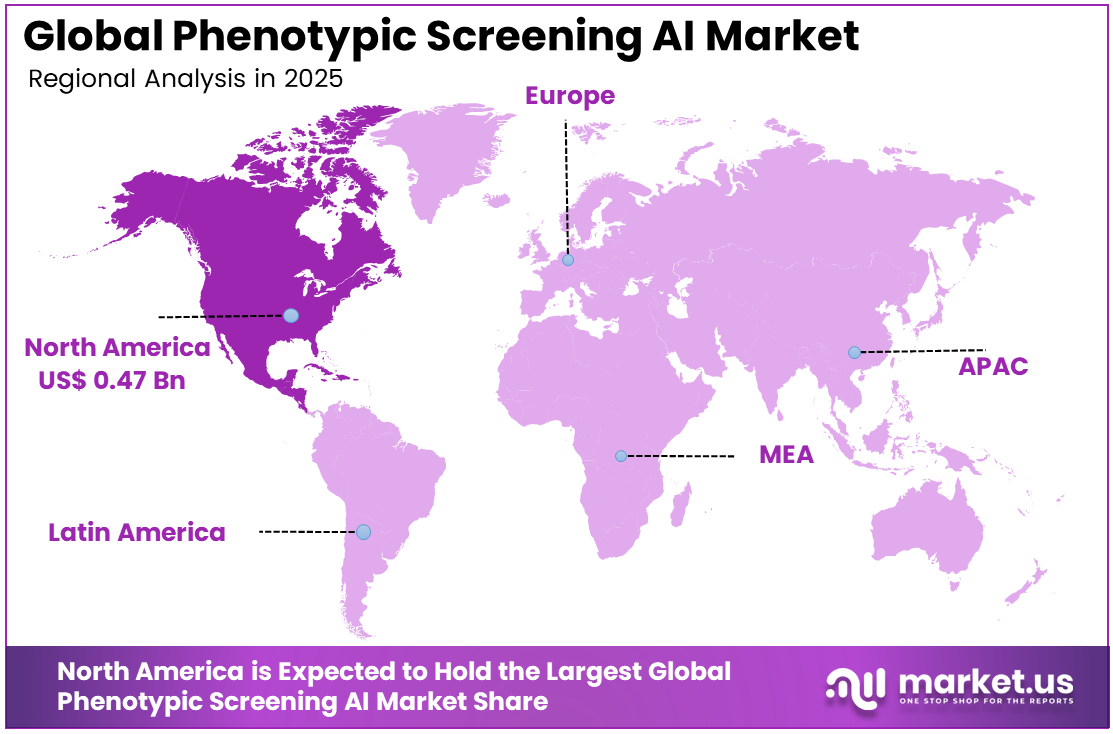
The Global Phenotypic Screening AI Market size is expected to be worth around USD 13.51 billion by 2035, from USD 1.19 billion in 2025, growing at a CAGR of 27.5% during the forecast period from 2025 to 2035. North America held a dominant market position, capturing more than a 40.3% share, holding USD 0.47 billion in revenue.
Phenotypic Screening AI refers to the use of artificial intelligence to analyze how cells respond to different compounds in laboratory settings. It focuses on observing visible changes in cell structure and behavior. This approach helps researchers identify potential drug candidates by understanding biological effects without relying only on predefined molecular targets.
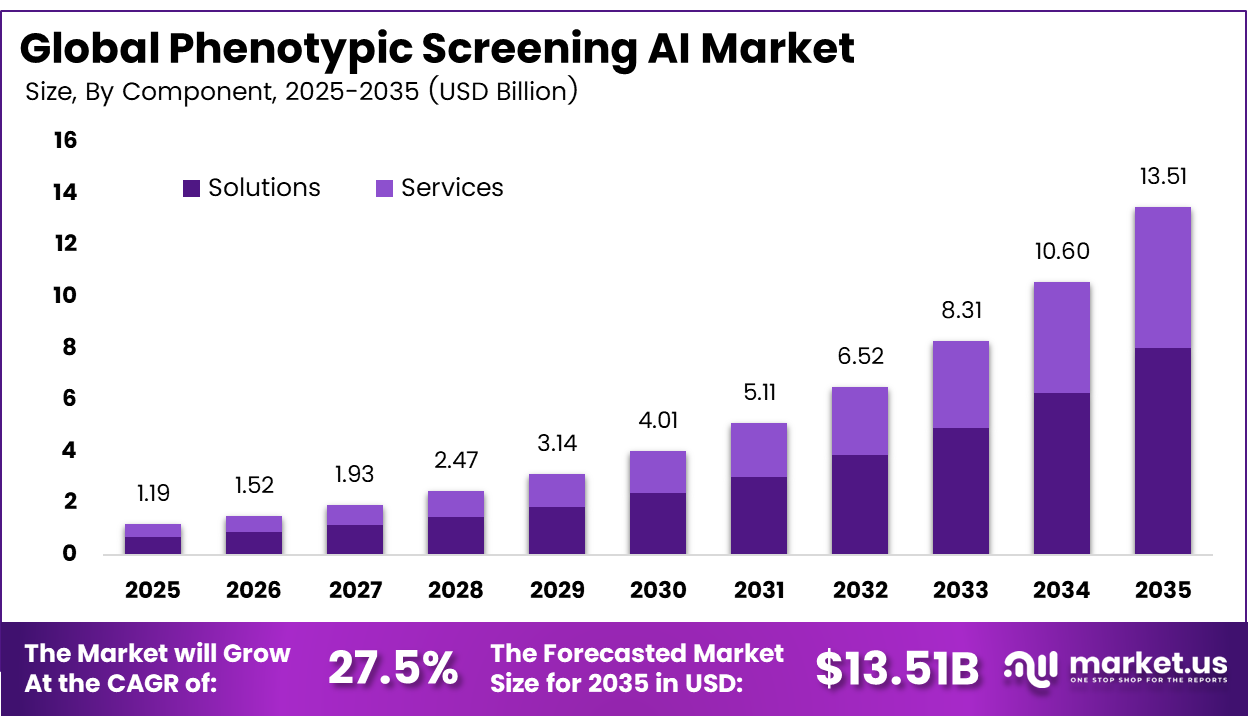
The push for phenotypic screening AI is being driven by the need to accelerate drug discovery for complex diseases such as cancer and rare disorders. Laboratories process millions of cell images each day, and AI helps reduce analysis time significantly. Since about 70% of drug projects fail because of weak early testing, this technology is improving early-stage decision-making.
The market for Phenotypic Screening AI is driven by the growing need to improve drug discovery efficiency and reduce early-stage failures. Research teams are adopting AI to analyze complex cellular data with greater speed and accuracy. The demand for better disease modeling, along with the rising use of advanced imaging technologies, is also supporting wider adoption across pharmaceutical and biotechnology research environments.
Demand for phenotypic screening AI is rising as pharmaceutical teams seek tools that reflect real disease behavior in cells more accurately. High-content screening can generate terabytes of data in a single run, making AI essential for fast and reliable interpretation. Around 60% of new screening setups now include AI to support faster clinical trial preparation.
For instance, in March 2026, Recursion expanded its phenotypic screening platform into additional rare-disease programs, signing a new multi-target collaboration with a major U.S. pharma partner. The deal leverages Recursion’s AI-driven high-throughput imaging and phenomic data to accelerate lead-optimization cycles.
Key Takeaway
- In 2025, the Solutions segment held a dominant market position, capturing a 59.3% share of the Global Phenotypic Screening AI Market.
- In 2025, the Machine Learning/Deep Learning segment held a dominant market position, capturing a 70.5% share of the Global Phenotypic Screening AI Market.
- In 2025, the Drug Discovery segment held a dominant market position, capturing a 51.4% share of the Global Phenotypic Screening AI Market.
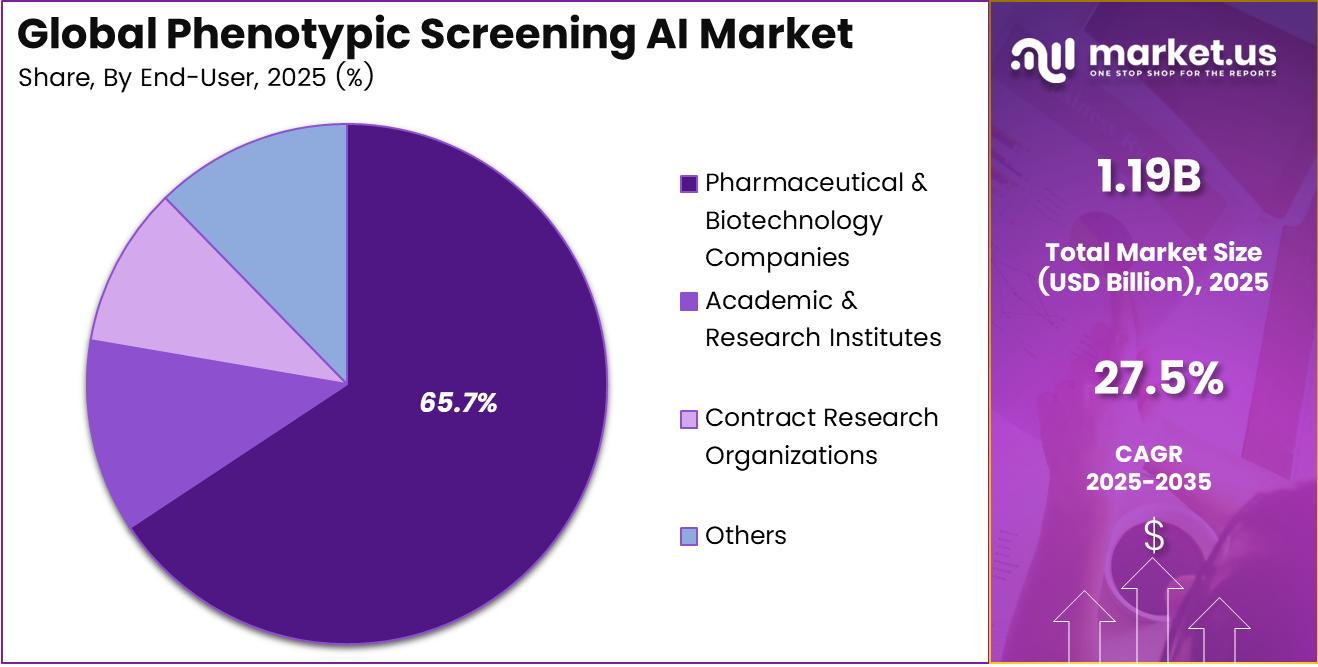
- In 2025, the Pharmaceutical & Biotechnology Companies segment held a dominant market position, capturing a 65.7% share of the Global Phenotypic Screening AI Market.
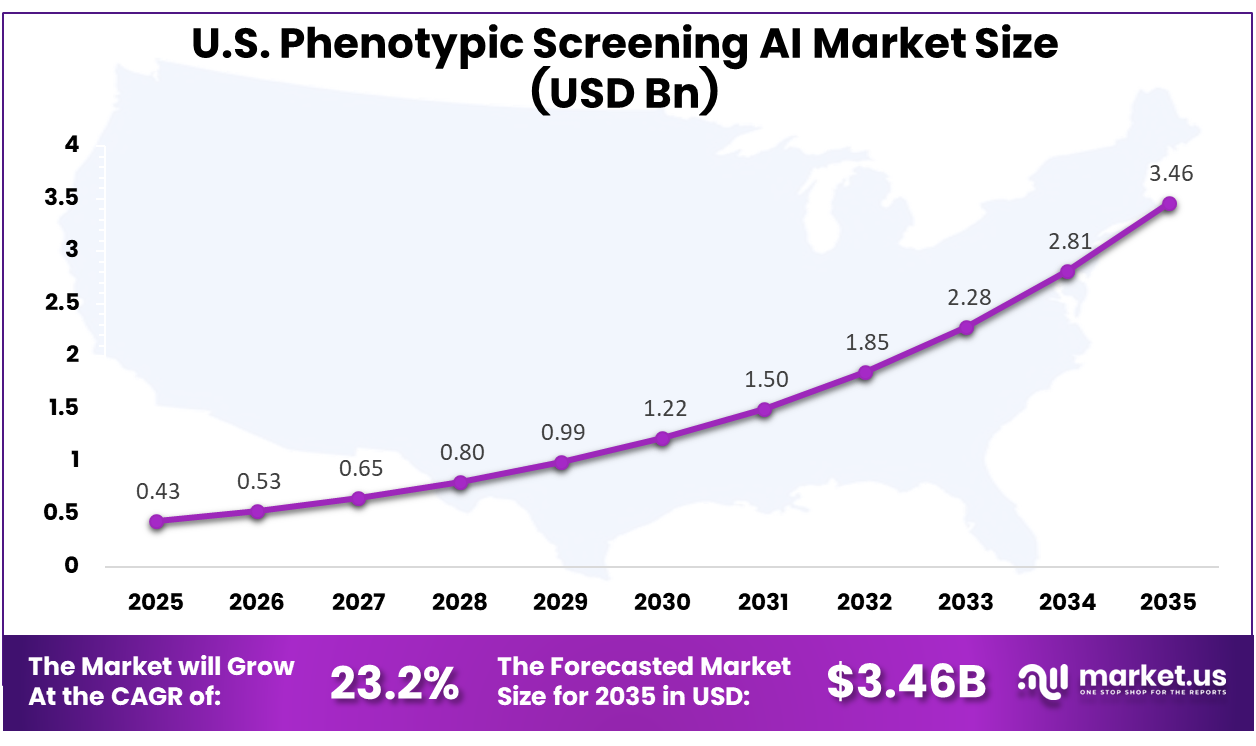
- The U.S. Phenotypic Screening AI Market was valued at USD 0.43 Billion in 2025, with a robust CAGR of 23.2%.
- In 2025, North America held a dominant market position in the Global Phenotypic Screening AI Market, capturing more than a 40.3% share.
Role of Generative AI
Generative AI is transforming phenotypic screening by creating virtual cell images from real datasets, enabling rapid testing of thousands of compounds. This approach reduces laboratory workload and saves weeks of effort. It also improves early discovery outcomes, with hit rates increasing by 30% in initial screening stages.
Generative AI also supports safer drug development by predicting potential side effects through the integration of patient cell characteristics with drug response data. This allows research teams to identify safer candidates at an earlier stage. As a result, decision-making becomes faster, more precise, and aligned with patient-specific biological conditions.
Investment and Business Benefits
Investment opportunities are emerging strongly in hybrid AI platforms that combine screening with predictive capabilities, particularly for personalized medicine. Toxicity screening is also gaining attention because nearly 90% of compounds fail on safety grounds, and AI can identify risks earlier. A new scope is also being created in agrotech and diagnostics, where phenotyping can improve outcomes.
Businesses benefit from phenotypic screening AI by reducing discovery timelines from years to months and lowering the cost of failed trials. Scientists can focus more on research decisions instead of manual data analysis, which improves productivity and innovation. Companies are also seeing 30-50% reductions in screening costs, helping convert more viable hits into commercial opportunities.
Regional Analysis
In 2025, North America held a dominant market position in the Global Phenotypic Screening AI Market, capturing more than a 40.3% share, holding USD 0.47 billion in revenue. This dominance is because the region has a strong base of pharmaceutical and biotechnology research, advanced laboratory infrastructure, and early adoption of AI in drug discovery. The presence of skilled research teams and high spending on life sciences innovation also supports growth. In addition, the region benefits from strong academic research activity and rising demand for faster, data-driven screening methods.
For instance, in February 2026, Insitro in South San Francisco showcased North American dominance by unveiling an AI platform that integrates phenotypic screening with single-cell genomics for fibrosis treatments. Their proprietary models identified novel therapeutic targets, positioning the U.S. as the epicenter for precision medicine innovation.
U.S. Phenotypic Screening AI Market Size
The market for Phenotypic Screening AI within the U.S. is growing tremendously and is currently valued at USD 0.43 billion; the market has a projected CAGR of 23.2%. The field is growing due to strong pharmaceutical research activity, rising use of AI in drug discovery, and increasing demand for faster screening methods. Research teams are adopting these tools to handle complex cell data with better speed and accuracy. Growth is also supported by advanced lab infrastructure, a higher focus on precision medicine, and the need to reduce failure rates in early-stage drug development.
For instance, in January 2026, Schrödinger, based in New York City, reinforced U.S. leadership with physics-informed AI, enhancing phenotypic screening accuracy by 40%. Collaborating with major pharma, their platform expedited compound optimization for oncology, maintaining North America’s forefront in computational drug discovery.
Key Regions and Countries
North America
- US
- Canada
Europe
- Germany
- France
- The UK
- Spain
- Italy
- Russia
- Netherlands
- Rest of Europe
Asia Pacific
- China
- Japan
- South Korea
- India
- Australia
- Singapore
- Thailand
- Vietnam
- Rest of APAC
Latin America
- Brazil
- Mexico
- Rest of Latin America
Middle East & Africa
- South Africa
- Saudi Arabia
- UAE
- Rest of MEA
Component Analysis
In 2025, the Solutions segment held a dominant market position, capturing a 59.3% share of the Global Phenotypic Screening AI Market. This dominance is due to the growing need for integrated platforms that can manage imaging, data processing, and analysis in one system. These solutions reduce manual workload and improve workflow efficiency. Laboratories prefer unified tools that simplify operations and support faster interpretation of complex biological data.
Solutions also help standardize screening processes across research teams, improving consistency and reliability in outcomes. They allow scientists to focus more on research decisions instead of repetitive tasks. As data volumes grow, these platforms provide structured insights, making them essential for handling complex phenotypic screening environments.
For instance, in March 2026, Recursion Pharmaceuticals enhanced its AI solutions platform with new image analysis modules for phenotypic assays. These updates help teams process cell data faster, turning raw observations into clear patterns. It’s a practical step that fits right into daily lab routines, making screening workflows smoother without extra hassle.
Technology Analysis
In 2025, the Machine Learning/Deep Learning segment held a dominant market position, capturing a 70.5% share of the Global Phenotypic Screening AI Market. This dominance is due to the strong ability of machine learning and deep learning models to process complex image datasets and detect patterns that are not easily visible. These technologies improve the accuracy of identifying cellular changes and enhance the quality of early research findings.
They also support continuous learning from new datasets, which strengthens prediction accuracy over time. Researchers benefit from faster data interpretation and improved decision support. As biological data becomes more complex, these technologies remain critical for extracting meaningful insights and guiding effective drug development strategies.
For instance, in February 2026, Schrödinger advanced its deep learning models for cell imaging in phenotypic screening. They focused on sharper predictions from assay visuals, helping spot drug responses early. This tweak shows how they’re refining tech to match real lab needs, step by step.
Application Analysis
In 2025, the Drug Discovery segment held a dominant market position, capturing a 51.4% share of the Global Phenotypic Screening AI Market. This dominance is due to the increasing need to speed up early-stage drug development and improve the selection of viable compounds. AI-driven screening allows researchers to evaluate multiple candidates quickly, reducing delays and improving the chances of identifying effective treatments.
Drug discovery workflows benefit from better target identification and faster validation processes. This leads to more efficient use of resources and reduced trial failures. As research focuses on complex diseases, advanced screening methods continue to play a key role in improving discovery outcomes.
For instance, in February 2026, Recursion shared strong data from its AI operating system in a rare disease program. The platform sped up drug discovery by linking phenotypic insights directly to patient outcomes, cutting guesswork in finding active compounds. Labs see real progress in tough areas like oncology.
End-User Analysis
In 2025, the Pharmaceutical & Biotechnology Companies segment held a dominant market position, capturing a 65.7% share of the Global Phenotypic Screening AI Market. This dominance is due to the high focus of pharmaceutical and biotechnology companies on improving research efficiency and reducing development risks. These organizations invest in advanced tools that help streamline screening processes and support faster innovation in drug pipelines.
They also rely on AI-driven systems to handle large datasets and improve decision-making in early research stages. This allows better allocation of resources and reduces delays in development cycles. As competition increases, these companies continue to adopt technologies that enhance productivity and research quality.
For instance, in March 2026, AstraZeneca expanded its internal AI phenotypic screening with partner tech integrations. Biotech arms now run larger assays, prioritizing top candidates efficiently. This scales up their efforts, blending big pharma resources with agile screening.
Key Market Segments
By Component
- Solutions
- Services
- AI Model Development & Training
- Integrated Screening Services (CROs)
- Consulting & Strategic Partnerships
By Technology
- Machine Learning/Deep Learning
- Natural Language Processing (NLP)
- Generative AI
- Others
By Application
- Drug Discovery
- Toxicity Screening
- Target Identification
- Personalized Medicine
- Others
By End-User
- Pharmaceutical & Biotechnology Companies
- Academic & Research Institutes
- Contract Research Organizations
- Others
Emerging Trends
High-content imaging is increasingly combined with AI to monitor cellular changes in three-dimensional models, improving accuracy by 40% compared to traditional flat screening methods. Laboratories are adopting organoid-based systems that closely replicate human tissue, enhancing the reliability of experimental outcomes and supporting more realistic drug testing environments.
AI is also being used to connect visible cell behavior with underlying genetic changes, enabling faster identification of drug targets. This integration helps researchers understand complex disease mechanisms more clearly. As a result, teams are able to discover potential therapeutic targets 25% faster, especially in areas involving complex and multi-factor diseases.
Growth Factors
The growing need for new antibiotics is driving the adoption of AI in phenotypic screening, especially as traditional methods struggle to detect resistant pathogens. AI systems can identify hidden biological patterns that are often missed by manual analysis, leading to improved outcomes and increasing success rates by 35% in difficult cases.
In addition, declining computing costs are making AI-powered screening more accessible to smaller laboratories. These organizations can now scale their research capabilities without major investments in infrastructure or workforce. This has resulted in a 50% increase in research output, enabling broader participation in advanced drug discovery efforts.
Market Dynamics
Drivers - Demand for Faster Drug Discovery
The need for faster drug discovery is a major force behind the growth of the Phenotypic Screening AI market. Research teams are under pressure to shorten development timelines and identify promising compounds earlier. AI helps improve screening speed, making it easier to move potential drug candidates forward.
It also supports better decision-making during early research stages by analyzing complex cell responses more efficiently. This reduces manual effort and helps scientists focus on selecting stronger leads. As drug pipelines become more demanding, faster and smarter screening tools are becoming more important across research environments.
For instance, in January 2026, Insitro integrated its causal-biology platform with high-throughput phenotypic assays to generate novel hypotheses for liver-fibrosis mechanisms. By combining AI-modeled cell-state transitions with automated readouts, the company accelerated the nomination of lead programs and reduced the number of experimental iterations needed, effectively compressing early-stage discovery timelines.
Restraint - High Setup Costs
High setup costs remain a key restraint for the Phenotypic Screening AI market. Building these systems often requires advanced imaging tools, software platforms, data storage capacity, and skilled professionals. For many organizations, especially smaller labs, the initial investment can be difficult to manage and may delay adoption.
The cost challenge also extends to system integration, workflow design, and ongoing model refinement. Even after deployment, regular updates and technical support are needed to maintain performance. This financial burden can limit broader use, particularly in settings where research budgets are tightly controlled.
For instance, in May 2025, Deep Genomics rolled out a new RNA-focused AI foundation model that relies on large-scale omics and phenotypic data. Deploying this model across internal projects and client collaborations demanded substantial upgrades in storage, data pipelines, and regulatory-ready validation systems, which increased the overall cost barrier for labs without existing TechBio infrastructure.
Opportunities - Rise of Cloud Solutions
The rise of cloud solutions is creating strong opportunities in the Phenotypic Screening AI market. Cloud-based platforms make it easier for research teams to store, manage, and process large volumes of imaging data without heavy dependence on local infrastructure. This improves access to advanced tools across different types of laboratories.
Cloud environments also support collaboration by allowing teams in different locations to work on shared datasets and models. This flexibility helps research move faster and supports more scalable screening operations. As labs seek lower infrastructure barriers, cloud adoption is opening new paths for wider market expansion.
For instance, in October 2025, Atomwise expanded its AI-driven virtual screening services to support more image-based and phenotypic-style endpoints through cloud-hosted models. Pharmaceutical partners could upload proprietary assay data securely and run AI-driven analyses remotely, enabling rapid iteration without having to maintain their own AI infrastructure or hire large data-science teams in-house.
Challenges - Data Privacy Concerns
Data privacy concerns are a major challenge in the Phenotypic Screening AI market, especially when sensitive biological and patient-related data are involved. Research organizations must ensure that information is stored, shared, and analyzed securely. Any weakness in protection can reduce trust in these systems.
The challenge becomes greater when cloud platforms and cross-border collaborations are part of the workflow. Different data rules and compliance expectations can make implementation more complex. Companies must balance innovation with strong governance, which adds pressure to deployment, monitoring, and long-term system management.
For instance, in September 2025, BenevolentAI worked with academic and industry collaborators to build an AI-driven pipeline for phenotypic-style disease modeling, but some partners hesitated to share granular cellular-response data due to privacy and IP worries. The company had to dedicate extra resources to anonymize datasets, control access tiers, and design governance workflows that met both scientific and legal requirements.
Key Players Analysis
One of the leading players in January 2026, Schrödinger integrated its physics-based AI engine with selected phenotypic screening workflows, enabling partners to rapidly translate phenotypic hits into mechanistic hypotheses. The move supports a growing demand for hybrid platforms that bridge phenotypic and target-based discovery, particularly in oncology and neurodegenerative disease programs.
Top Key Players in the Market
- Recursion Pharmaceuticals
- Insitro
- Schrödinger
- Deep Genomics
- Exscientia
- Atomwise
- BenevolentAI
- Cyclica
- Healx
- Phenomics Health
- Aitia (formerly GNS Healthcare)
- BioAge Labs
- TwoXAR (Aria Pharmaceuticals)
- Acellera
- Peptone
- Valo Health
- Evotec
- AstraZeneca
- Novartis
- Others
Recent Developments
- In March 2026, Deep Genomics announced a new AI-driven screening module for RNA-targeted therapeutics, combining phenotypic readouts from complex cellular models with deep-learning-based sequence-activity profiles. The module helps partners prioritize candidates based on functional phenotypes rather than purely structural or target-based metrics, strengthening its role in AI-assisted phenotypic discovery.
- In January 2026, Atomwise broadened its AI-assisted screening capabilities into phenotypic-compound linkages, using AI-driven similarity mapping between nominal SAR data and phenotypic assay responses. The enhancement helps clients repurpose existing assets and prioritize compounds with desired phenotypic profiles, rather than only target-binding metrics.
- In February 2026, BenevolentAI launched a phenotypic-module upgrade within its knowledge-graph platform, enabling partners to connect disease-relevant phenotypic signatures with mechanistic pathways and drug candidates. The update supports more robust patient-stratification and phenotype-driven target validation, reinforcing its position beyond pure target-based discovery.
Report Scope
| Report Features | Description |
|---|---|
| Market Value (2025) | USD 1.19 Billion |
| Forecast Revenue (2035) | USD 13.51 Billion |
| CAGR (2026-2035) | 27.5% |
| Base Year for Estimation | 2025 |
| Historic Period | 2020-2024 |
| Forecast Period | 2026-2035 |
| Report Coverage | Revenue Forecast, Market Dynamics, Competitive Landscape, Recent Developments |
| Segments Covered | By Component (Solutions, Services), By Technology (Machine Learning/Deep Learning, Natural Language Processing (NLP), Generative AI, Others), By Application (Drug Discovery, Toxicity Screening, Target Identification, Personalized Medicine, Others), By End-User (Pharmaceutical & Biotechnology Companies, Academic & Research Institutes, Contract Research Organizations, Others) |
| Regional Analysis | North America (US and Canada), Europe (Germany, France, The UK, Spain, Italy, and Rest of Europe), Asia Pacific (China, Japan, South Korea, India, Australia, and Rest of APAC), Latin America (Brazil, Mexico, and Rest of Latin America), Middle East & Africa (GCC, South Africa, and Rest of MEA) |
| Competitive Landscape | Recursion Pharmaceuticals, Insitro, Schrödinger, Deep Genomics, Exscientia, Atomwise, BenevolentAI, Cyclica, Healx, Phenomics Health, Aitia (formerly GNS Healthcare), BioAge Labs, TwoXAR (Aria Pharmaceuticals), Acellera, Peptone, Valo Health, Evotec, AstraZeneca, Novartis, Others |
| Customization Scope | Customization at the segment and region/country levels will be provided. Moreover, customization can be tailored to the requirements. |
| Purchase Options | We have three licenses to opt for: Single User License, Multi-User License (Up to 5 Users), Corporate Use License (Unlimited Users and Printable PDF) |





























