


Global Periodontitis Gels Market Size, Share, Growth Analysis By Type (Antibiotic, Antiseptic), By Category (Degradable, Non-degradable), By Application (Hospital, Clinic, Others), By Region and Companies - Industry Segment Outlook, Market Assessment, Competition Scenario, Statistics, Trends and Forecast 2025-2034
- Published date: Dec 2025
- Report ID: 170792
- Number of Pages: 320
- Format:
-
keyboard_arrow_up
Quick Navigation
Report Overview
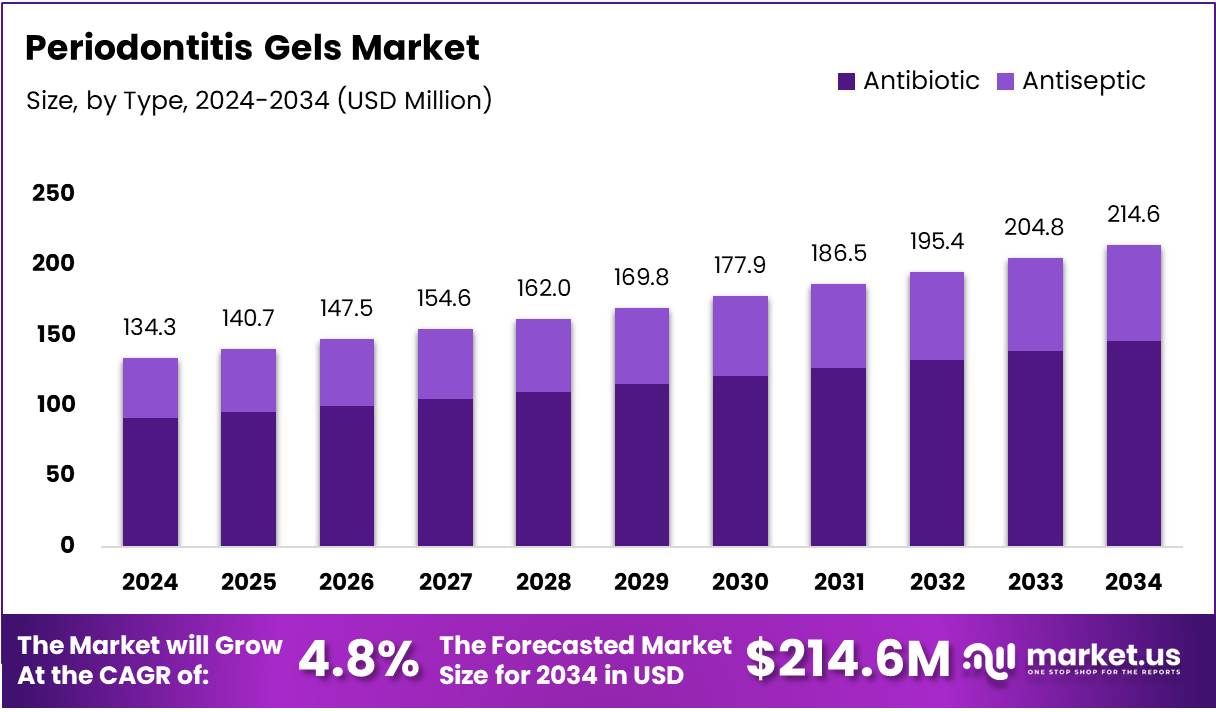
The Global Periodontitis Gels Market size is expected to be worth around USD 214.6 Million by 2034, from USD 134.3 Million in 2024, growing at a CAGR of 4.8% during the forecast period from 2025 to 2034.
The Periodontitis Gels Market represents specialized pharmaceutical formulations designed to treat periodontal disease through topical application. These therapeutic gels contain antimicrobial agents, anti-inflammatory compounds, and tissue regeneration promoters. Healthcare professionals increasingly adopt these products as minimally invasive treatment alternatives. The market encompasses prescription-grade and over-the-counter formulations targeting various periodontitis severity levels.
Market growth demonstrates significant momentum driven by rising periodontal disease prevalence worldwide. Aging populations particularly contribute to expanding patient pools requiring effective periodontal interventions. Additionally, growing awareness about oral health connections to systemic diseases accelerates demand. The market consequently experiences robust expansion as dental professionals prioritize preventive and therapeutic periodontal care solutions.
Technological advancements further propel market opportunities through innovative drug delivery systems. Manufacturers develop bioadhesive gels ensuring prolonged retention in periodontal pockets. Moreover, combination therapies integrating multiple active ingredients enhance treatment efficacy. These innovations attract both practitioners seeking better outcomes and patients demanding convenient treatment options. Subsequently, product differentiation creates competitive advantages within this evolving marketplace.
Government healthcare initiatives substantially influence market dynamics through increased dental care accessibility. Public health programs targeting oral disease prevention expand treatment infrastructure. Furthermore, regulatory agencies establish stringent quality standards ensuring product safety and efficacy. These governmental frameworks simultaneously protect consumers while encouraging pharmaceutical innovation. Consequently, regulatory compliance becomes essential for market participants seeking sustainable growth.
Investment in periodontal research receives notable government funding supporting clinical trials and product development. Healthcare authorities recognize periodontal disease as a significant public health burden. Therefore, research grants facilitate breakthrough treatments entering commercial markets. This supportive ecosystem fosters innovation while addressing unmet clinical needs within periodontal therapy.
Clinical evidence underscores the market’s substantial opportunity across diverse patient populations. According to research,it reveal that 42.2% of adults aged 30 years or older experienced total periodontitis conditions. This breakdown includes 7.8% suffering from severe periodontitis and 34.4% experiencing nonsevere periodontitis. Furthermore, periodontitis prevalence among dentate adults reaches approximately 62%, while severe periodontitis affects 23.6% of this population. These statistics collectively demonstrate massive patient populations requiring therapeutic interventions, thereby validating strong market fundamentals and sustained growth potential.
Key Takeaways
- The global Periodontitis Gels Market is projected to reach USD 214.6 Million by 2034, growing from USD 134.3 Million in 2024 at a 4.8% CAGR.
- By type, the Antibiotic segment dominated in 2024 with a market share of 65.9%, reflecting strong clinical preference.
- By category, Degradable gels led the market in 2024, accounting for 59.1% share due to higher patient convenience.
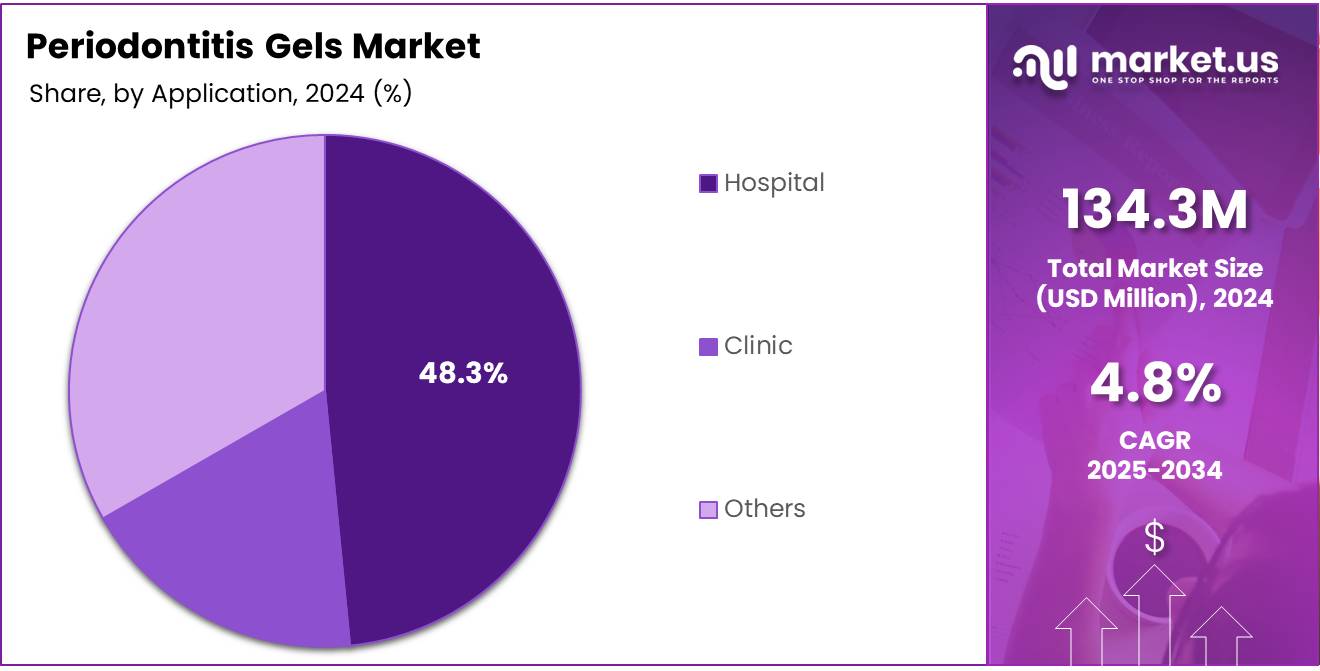
- By application, the Hospital segment held the largest share of 48.3% in 2024, driven by treatment of complex periodontal cases.
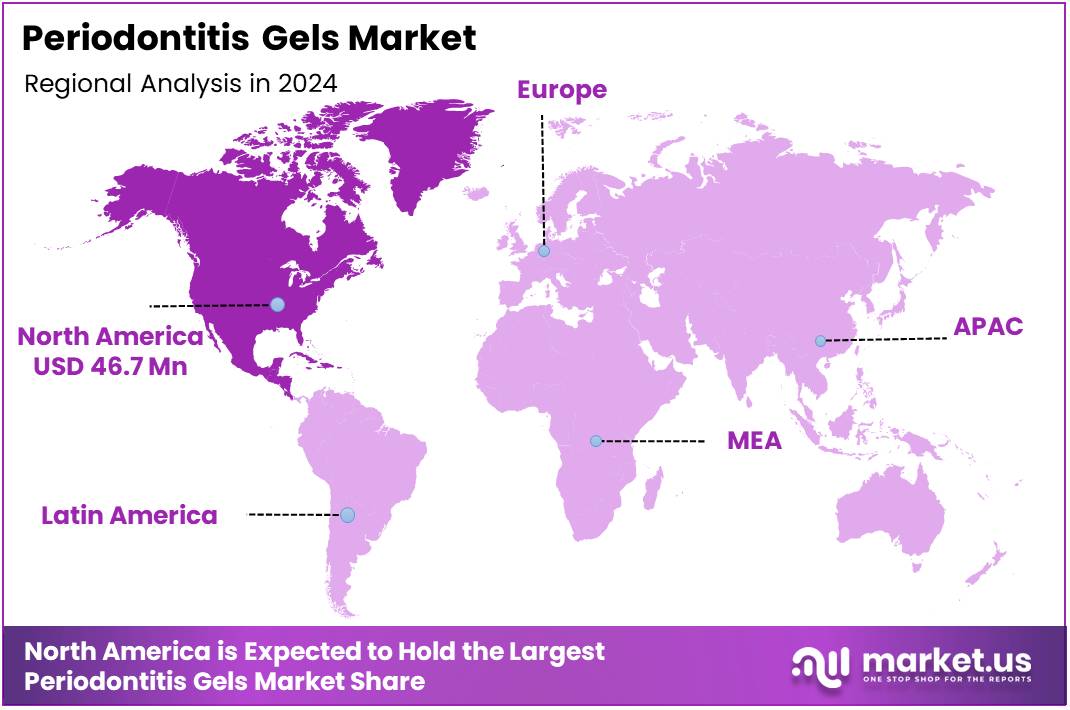
- North America emerged as the leading market with a share of 34.8%, valued at USD 46.7 Million.
By Type Analysis
In 2024, Antibiotic held a dominant market position in the By Type Analysis segment of Periodontitis Gels Market, with a 65.9% share.
Antibiotic gels command 65.9% market share due to their proven efficacy in targeting bacterial infections causing periodontal disease. These formulations contain medications like doxycycline and minocycline, which directly combat pathogenic bacteria in periodontal pockets. Dental professionals prefer them for localized treatment with minimal systemic side effects. Their sustained-release mechanism ensures prolonged antimicrobial action, reducing treatment frequency significantly.
Antiseptic gels offer a complementary alternative utilizing chlorhexidine and antimicrobial agents to reduce bacterial load and inflammation. While lacking targeted bacterial elimination, they provide broader antimicrobial coverage with lower resistance development risk. These gels serve as valuable maintenance therapy following initial treatment. Their availability without prescription makes them accessible for preventive care and mild periodontal conditions.
By Category Analysis
In 2024, Degradable held a dominant market position in the By Category Analysis segment of Periodontitis Gels Market, with a 59.1% share.
Degradable gels dominate with 59.1% share owing to superior convenience and patient-centric design. These bio-absorbable formulations eliminate removal procedures, dissolving naturally within periodontal pockets over time. This reduces clinical visits and enhances patient comfort significantly. Moreover, they ensure consistent drug release throughout healing, optimizing therapeutic outcomes. Their compatibility with natural tissue regeneration makes them attractive for modern therapy.
Non-degradable gels maintain relevance in specific clinical scenarios requiring controlled medication delivery. These formulations necessitate professional removal, allowing precise control over therapy duration. Dentists favor them when extended drug release isn’t desired or close monitoring is needed. Despite requiring additional intervention, they remain valuable for complex periodontal cases demanding customized treatment protocols.
By Application Analysis
In 2024, Hospital held a dominant market position in the By Application Analysis segment of Periodontitis Gels Market, with a 48.3% share.
Hospital settings account for 48.3% of applications due to comprehensive infrastructure and specialized periodontal departments. These facilities handle complex cases requiring advanced diagnostic equipment and multi-disciplinary approaches. Hospitals provide integrated care for patients with systemic conditions affecting periodontal health. Their capacity for managing severe infections and post-surgical complications makes them preferred for aggressive periodontitis treatment.
Clinic environments serve as accessible primary care points for routine periodontal treatments. Private dental clinics offer personalized care with shorter waiting times and flexible scheduling. These settings effectively manage mild-to-moderate cases using standardized protocols, contributing significantly to preventive care and early intervention strategies.
Others encompass community health centers, mobile dental units, and teledentistry platforms expanding accessibility. These alternative channels address underserved populations and remote areas lacking traditional infrastructure. Their growing adoption reflects increasing awareness about periodontal health and innovative delivery models.
Key Market Segments
By Type
- Antibiotic
- Antiseptic
By Category
- Degradable
- Non-degradable
By Application
- Hospital
- Clinic
- Others
Drivers
Surge in Natural and Herbal-Based Periodontitis Gel Formulations Shapes Market Trends
A notable trend in the periodontitis gels market is the increasing popularity of natural and herbal-based formulations. Consumers are gravitating toward products containing plant extracts over synthetic chemicals. Ingredients like neem, aloe vera, and tea tree oil are gaining traction for their antimicrobial properties. This shift reflects broader consumer preferences for clean-label healthcare products.
Another important trend involves integrating advanced antimicrobial and anti-inflammatory agents into gel products. Manufacturers are incorporating compounds that combat bacterial infections while reducing gum inflammation simultaneously. These multi-functional formulations offer comprehensive treatment in a single application, improving patient compliance and outcomes.
Additionally, rising collaborations between dental clinics and oral care brands are reshaping the preventive care landscape. Partnerships enable better patient education and facilitate product recommendations from trusted healthcare providers. These alliances help bridge the awareness gap while ensuring patients receive appropriate treatments early. Such collaborative approaches strengthen market positioning for manufacturers.
Restraints
Rising Demand for Personalized Oral Care Solutions with Targeted Therapeutic Gels Creates Market Opportunities
The growing preference for personalized healthcare is opening new avenues in the periodontitis gels market. Patients increasingly seek customized treatment options tailored to their specific conditions. Therapeutic gels with targeted active ingredients address individual needs more effectively than generic solutions. This trend encourages manufacturers to develop specialized products for different severity levels.
The expansion of e-commerce channels represents another significant opportunity. Direct-to-consumer platforms enable manufacturers to reach patients without traditional retail intermediaries. Online channels provide convenient access, especially in underserved areas. Digital marketing helps raise awareness while simplifying purchasing for consumers.
Dental clinics are increasingly adopting minimally invasive periodontal therapies as standard practice. These gentle approaches reduce patient discomfort and recovery time compared to surgery. Periodontitis gels fit perfectly into this philosophy, offering effective non-invasive treatment options. As more dental professionals recognize gel-based therapy benefits, clinical adoption continues growing steadily.
Growth Factors
Stringent Regulatory Approval Processes for Periodontitis Gels Across Key Markets Hinder Growth
The periodontitis gels market faces significant challenges due to strict regulatory requirements in major regions. Obtaining approval involves lengthy clinical trials, extensive documentation, and rigorous safety evaluations. These processes can take several years and require substantial financial investment, discouraging smaller manufacturers.
Regulatory bodies like the FDA and EMA maintain high standards to ensure patient safety, creating barriers for innovation. Companies must demonstrate consistent efficacy across diverse populations. This complexity delays product launches and increases development costs.
Limited awareness among patients regarding advanced periodontal treatments is another major restraint. Many individuals remain unaware that targeted gel therapies exist beyond traditional cleaning. This knowledge gap is particularly pronounced in developing regions. Patients often discover periodontal gels only during advanced disease stages. Improving patient education remains crucial for expanding market adoption.
Emerging Trends
Growing Incidence of Periodontal Diseases Globally Drives Market Expansion
The rising prevalence of periodontal diseases worldwide is significantly fueling demand for periodontitis gels. Poor oral hygiene habits and unhealthy lifestyles are contributing to higher cases of gum infections. Millions of adults suffer from moderate to severe gum disease, creating a substantial patient base requiring treatment.
Advancements in bioactive and controlled-release gel technologies are transforming treatment approaches. Modern gels deliver medications directly to affected areas over extended periods, improving outcomes. These formulations enhance drug efficacy while minimizing side effects.
There is a noticeable shift toward preventive dental care and better oral hygiene practices. People are becoming more aware of the connection between oral health and overall wellness. This growing consciousness is driving demand for effective periodontal treatments. Patients now actively seek products that prevent disease progression, boosting market growth.
Regional Analysis
North America Dominates the Periodontitis Gels Market with a Market Share of 34.8%, Valued at USD 46.7 Million
North America holds the leading position in the Periodontitis Gels Market, accounting for 34.8% of the global share and generating revenue of USD 46.7 Million. The region benefits from high awareness of periodontal diseases, early diagnosis rates, and strong adoption of adjunctive dental therapies. A well-established dental care infrastructure and regular preventive dental visits continue to support sustained demand for periodontitis gels across clinical settings.
Europe Periodontitis Gels Market Trends
Europe represents a mature and steadily growing market, supported by rising oral healthcare expenditure and an aging population prone to periodontal conditions. Strong emphasis on preventive dentistry and standardized treatment protocols drives consistent usage of topical periodontal therapies. Additionally, favorable reimbursement structures in several countries encourage patient compliance and long-term treatment adoption.
Asia Pacific Periodontitis Gels Market Trends
Asia Pacific is emerging as a high-growth region due to increasing prevalence of periodontal diseases and improving access to dental care services. Urbanization, rising disposable income, and growing awareness of oral hygiene are accelerating the shift toward non-invasive periodontal treatments. Expansion of private dental clinics further supports market penetration across key economies.
Middle East and Africa Periodontitis Gels Market Trends
The Middle East and Africa market is gradually developing, driven by improving healthcare infrastructure and growing awareness of oral health. Demand is primarily concentrated in urban areas where access to dental professionals is higher. Government initiatives aimed at strengthening healthcare systems are expected to support moderate growth over the coming years.
Latin America Periodontitis Gels Market Trends
Latin America shows steady market expansion, supported by increasing dental tourism and a growing focus on preventive oral care. Rising incidence of gum-related disorders and improving availability of dental treatments contribute to demand growth. Economic recovery in key countries is expected to enhance patient spending on specialized dental therapies.
Key Regions and Countries
North America
- US
- Canada
Europe
- Germany
- France
- The UK
- Spain
- Italy
- Rest of Europe
Asia Pacific
- China
- Japan
- South Korea
- India
- Australia
- Rest of APAC
Latin America
- Brazil
- Mexico
- Rest of Latin America
Middle East & Africa
- GCC
- South Africa
- Rest of MEA
Key Periodontitis Gels Company Insights
Lion Corporation holds a strong position in the periodontitis gels market through its extensive OTC distribution network and consumer-friendly product positioning. The company focuses on ease of application, preventive oral care, and affordability, which supports regular use among dentate adults. Continuous product enhancement and brand-driven awareness initiatives help sustain long-term demand.
KOBAYASHI Pharmaceutical emphasizes formulation differentiation and targeted engagement with dental professionals to strengthen market presence. Its gels are positioned around specific therapeutic benefits, improving patient compliance and perceived effectiveness. Educational outreach and innovation-led branding support consistent uptake in mature oral-care markets.
Daiichi Sankyo applies a pharmaceutical-grade, evidence-driven approach to the periodontitis gels segment. Strong clinical backing and regulatory alignment enhance acceptance among dentists and institutional channels. The company’s selective commercialization strategy supports premium positioning and reinforces credibility in professional oral-care settings.
Sato Pharmaceutical adopts a focused, niche-oriented strategy centered on specialized formulations and regional strength. Close collaboration with dental practitioners and controlled distribution help maintain product relevance and pricing discipline. This approach enables stable growth within targeted therapeutic segments.
Top Key Players in the Market
- Lion Corporation
- KOBAYASHI Pharmaceutical
- Daiichi Sankyo
- Sato Pharmaceutical
- MORISHITA JINTAN
- Curasept
- FREZYDERM
- DIFFLAM
- Colgate
- Parodontax
Recent Developments
- In October 2025, Phibro Animal Health Corporation launched Restoris™ piezoelectric dental gel for treating periodontal disease in dogs.This gel uses piezoelectric particles to stimulate bone growth and reduce pocket depth effectively.
- In January 2025, Orocidin A/S, a subsidiary of Nordicus Partners Corporation, launched a novel dental gel for long‑term periodontitis treatment.The gel forms a bioadhesive matrix that allows sustained release of active peptides in periodontal pockets.
- In July 2024, Oral Biolife announced a strategic partnership with Phibro Animal Health to co-develop its Ambrilux Dental Gel.This collaboration focuses on treating periodontal disease (PD) in companion animals using innovative dental solutions.
Report Scope
Report Features Description Market Value (2024) USD 134.3 Million Forecast Revenue (2034) USD 214.6 Million CAGR (2025-2034) 4.8% Base Year for Estimation 2024 Historic Period 2020-2023 Forecast Period 2025-2034 Report Coverage Revenue Forecast, Market Dynamics, Competitive Landscape, Recent Developments Segments Covered By Type (Antibiotic, Antiseptic), By Category (Degradable, Non-degradable), By Application (Hospital, Clinic, Others) Regional Analysis North America (US and Canada), Europe (Germany, France, The UK, Spain, Italy, and Rest of Europe), Asia Pacific (China, Japan, South Korea, India, Australia, and Rest of APAC), Latin America (Brazil, Mexico, and Rest of Latin America), Middle East & Africa (GCC, South Africa, and Rest of MEA) Competitive Landscape Lion Corporation, KOBAYASHI Pharmaceutical, Daiichi Sankyo, Sato Pharmaceutical, MORISHITA JINTAN, Curasept, FREZYDERM, DIFFLAM, Colgate, Parodontax Customization Scope Customization for segments, region/country-level will be provided. Moreover, additional customization can be done based on the requirements. Purchase Options We have three licenses to opt for: Single User License, Multi-User License (Up to 5 Users), Corporate Use License (Unlimited User and Printable PDF) 
-
-
- Lion Corporation
- KOBAYASHI Pharmaceutical
- Daiichi Sankyo
- Sato Pharmaceutical
- MORISHITA JINTAN
- Curasept
- FREZYDERM
- DIFFLAM
- Colgate
- Parodontax
Our Clients

- 170792
- Dec 2025






