


Global Neurocosmetics Market Size, Share, Growth Analysis By Product (Skin Care, Face Skin Care, Body Skin Care, Bath & Shower, Hair Care, Shampoo and Conditioner, Oils and Serums, Others, Color Cosmetics, Perfumes/Fragrances), By Age Group (Less Than 25 Years, 25 - 40 Years, 41 - 50 Years, 51 - 60 Years, 61 Years And Above), By End Use (Women, Men), By Distribution Channel (Offline, Online), By Region and Companies - Industry Segment Outlook, Market Assessment, Competition Scenario, Statistics, Trends and Forecast 2026-2035
- Published date: Feb 2026
- Report ID: 178017
- Number of Pages: 345
- Format:
-
keyboard_arrow_up
Quick Navigation
Report Overview
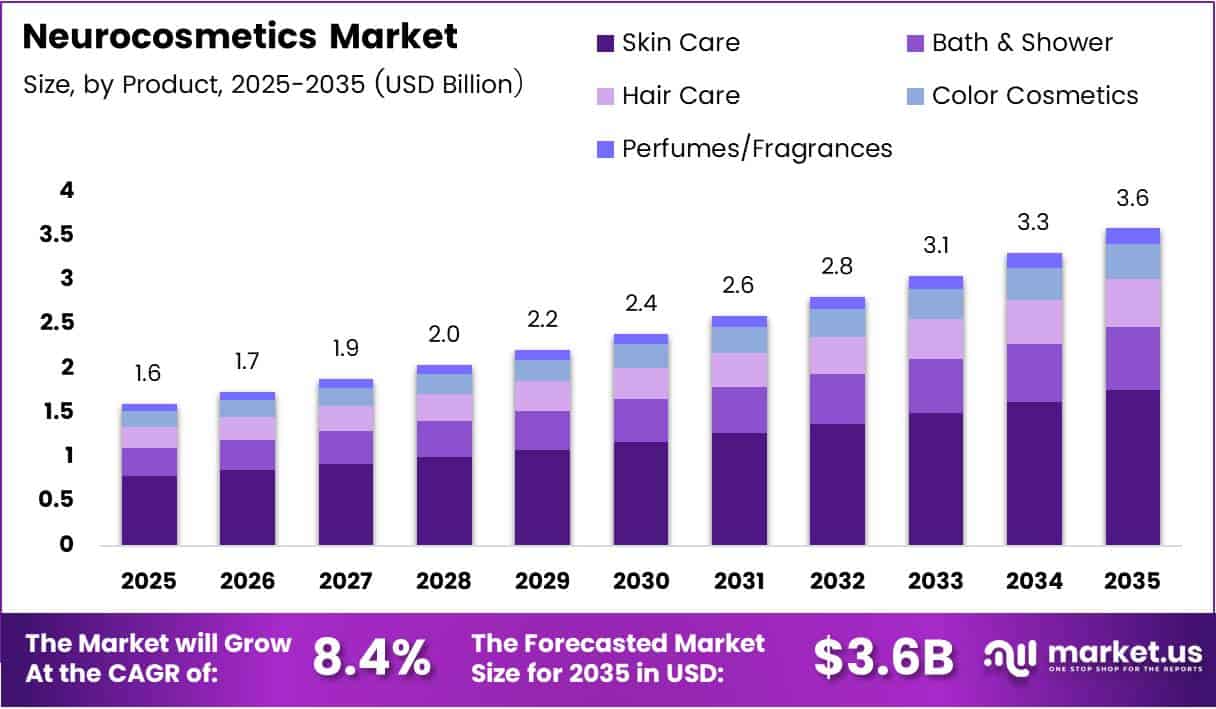
Global Neurocosmetics Market size is expected to be worth around USD 3.6 Billion by 2035 from USD 1.6 Billion in 2025, growing at a CAGR of 8.4% during the forecast period 2026 to 2035.
Neurocosmetics represents an innovative beauty category that bridges neuroscience and dermatology. These advanced skincare and cosmetic products target the skin-brain axis through neuroactive ingredients. Formulations incorporate mood-enhancing compounds, stress-reducing peptides, and sensory-optimized textures that influence emotional wellbeing alongside visible skin improvements.
The market leverages psychodermatology research to develop products addressing both physiological and psychological skin health factors. Consumers increasingly seek beauty solutions that deliver mental wellness benefits beyond traditional aesthetic outcomes. This convergence creates significant opportunities for brands integrating neuroscience-backed claims into premium product positioning.
Rising awareness of stress-induced skin conditions drives demand for neurocosmetic innovations. Manufacturers invest heavily in clinical validation studies demonstrating skin-mood correlation efficacy. Moreover, luxury beauty segments adopt neuroactive peptides and adaptogens to differentiate product portfolios in competitive markets.
Regulatory frameworks continue evolving to accommodate novel neurocosmetic ingredient claims and testing protocols. Government bodies worldwide evaluate safety standards for products targeting skin-brain pathways. Additionally, research institutions expand collaborations with beauty manufacturers to advance psychodermatology applications in consumer cosmetics.
In April 2024, Sisley Group unveiled Neuraé, its neuroscience-driven skincare brand, marking significant industry investment in neurocosmetics innovation. This launch demonstrates growing commercial confidence in mood-enhancing beauty product categories.
According to a clinical study published in Discovery Medical Science, 60% of participants experienced worsening skin conditions during stress periods, validating the physiological link between emotional states and dermatological health. Furthermore, the same research revealed that more than 80% of respondents reported their skin appearance directly affected their mood, establishing bidirectional skin-emotion connections that neurocosmetic formulations specifically target.
Key Takeaways
- Global Neurocosmetics Market valued at USD 1.6 Billion in 2025, projected to reach USD 3.6 Billion by 2035
- Market growing at CAGR of 8.4% during forecast period 2026-2035
- Skin Care segment dominates By Product category with 48.5% market share
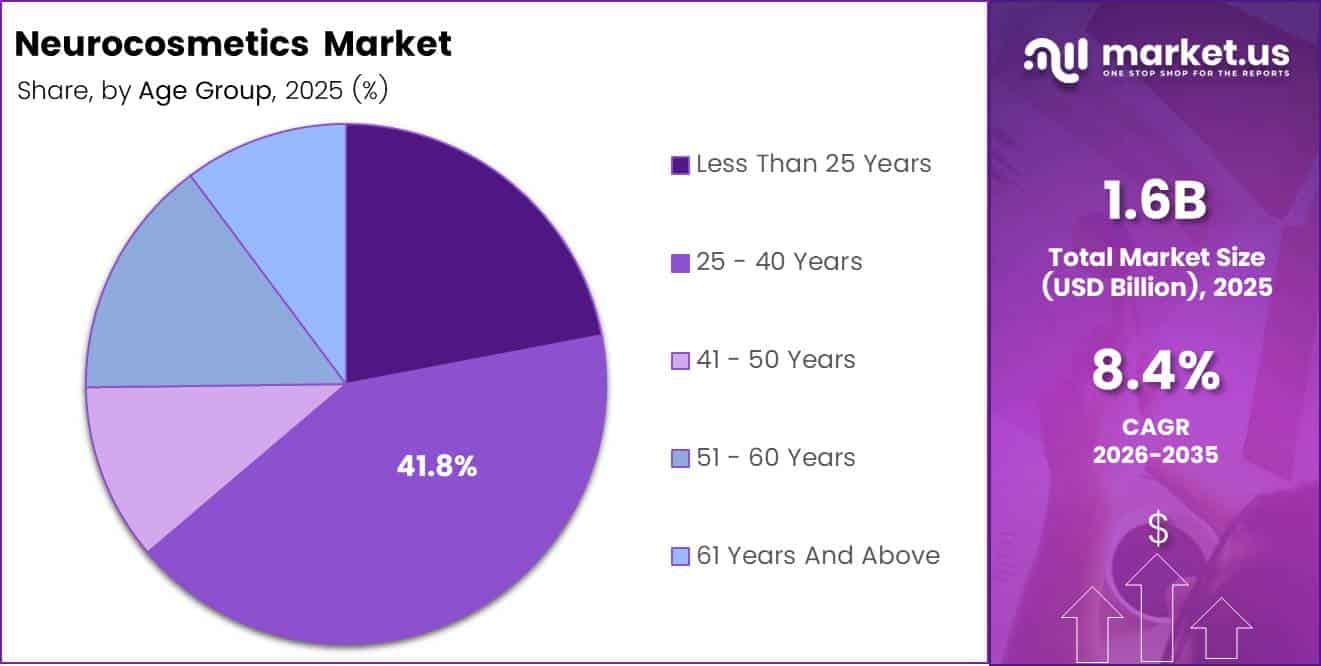
- 25-40 Years age group leads consumer adoption with 41.8% market share
- Women end users account for 72.9% of total market consumption
- Offline distribution channel holds 62.4% market share in 2025
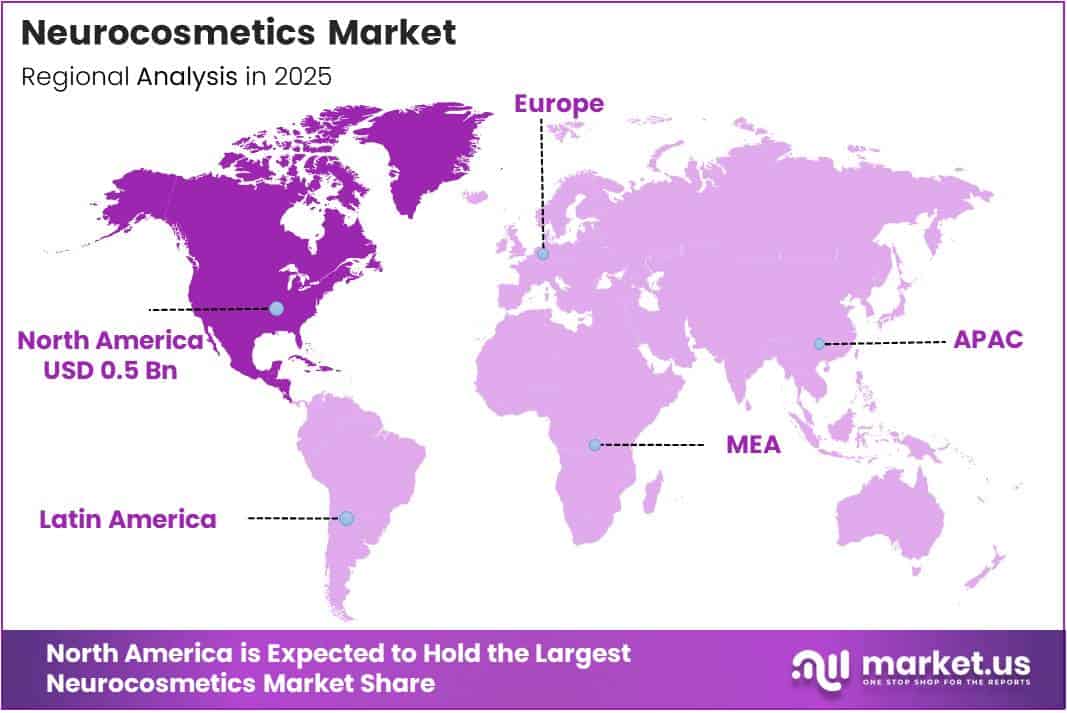
- North America dominates regional landscape with 37.40% share, valued at USD 0.5 Billion
Product Analysis
Skin Care dominates with 48.5% due to comprehensive neuroactive formulation integration.
In 2025, Skin Care held a dominant market position in the By Product segment of Neurocosmetics Market, with a 48.5% share. Consumers prioritize facial and body treatments incorporating stress-reducing peptides and mood-enhancing botanical extracts. These formulations address both visible aging concerns and emotional wellness through targeted neuroactive delivery systems. Consequently, premium brands invest substantially in developing clinically validated skin-brain axis products.
Hair Care products integrate neurocosmetic principles through scalp-focused sensory experiences and stress-mitigation ingredients. Shampoos, conditioners, oils, and serums incorporate adaptogens that promote relaxation during application rituals. Moreover, aromatic compounds stimulate positive emotional responses while delivering traditional hair health benefits. This dual-purpose positioning attracts wellness-conscious consumers seeking holistic beauty routines.
Color Cosmetics leverage neuroscience through mood-enhancing pigments and texture innovation that provides psychological confidence benefits. Formulations emphasize emotional empowerment alongside aesthetic enhancement. Additionally, sensory-optimized application experiences create positive neurological feedback loops. This category connects self-expression with emotional wellness.
Perfumes/Fragrances represent critical neurocosmetic categories, utilizing aromachology principles to trigger specific emotional states through olfactory pathway activation. Scent formulations target stress reduction, mood elevation, and confidence enhancement. Moreover, fragrance layering techniques enable personalized emotional regulation throughout daily routines.
Age Group Analysis
25-40 Years dominates with 41.8% due to heightened stress awareness and premium beauty spending.
In 2025, 25-40 Years held a dominant market position in the By Age Group segment of Neurocosmetics Market, with a 41.8% share. This demographic experiences peak professional stress levels that manifest in visible skin concerns. Furthermore, consumers in this bracket possess disposable income for premium neurocosmetic solutions.
They actively seek scientifically validated products addressing both dermatological and psychological wellness simultaneously. Moreover, this age group demonstrates highest engagement with psychodermatology research and neuroactive ingredient education. Consequently, brands prioritize product development targeting these consumers’ specific stress-skin axis concerns.
Less Than 25 Years consumers show growing interest in preventative neurocosmetic approaches driven by social media wellness trends. Younger demographics prioritize mental health awareness alongside skincare routines. However, price sensitivity limits adoption of premium neuroactive formulations. Additionally, this segment responds strongly to influencer-driven brand discovery.
41-50 Years segments increasingly adopt neurocosmetics to address stress-accelerated aging and hormonal skin changes affecting emotional wellbeing. This group seeks comprehensive solutions combining anti-aging efficacy with mood-enhancement properties. Therefore, brands develop age-appropriate formulations targeting perimenopause and midlife psychological transitions.
51-60 Years consumers seek neurocosmetic solutions for mature skin concerns while managing life-stage psychological transitions. This group values clinically proven efficacy over marketing claims. Additionally, they prioritize ingredient transparency and dermatologist-recommended formulations addressing age-specific stress manifestations.
61 Years And Above represents emerging opportunity as aging populations prioritize quality-of-life improvements through mood-enhancing beauty rituals. These consumers seek products combining therapeutic and aesthetic benefits. Moreover, this segment values accessible product formats and gentle formulations suitable for sensitive mature skin.
End Use Analysis
Women dominates with 72.9% due to established beauty consumption patterns and psychodermatology awareness.
In 2025, Women held a dominant market position in the By End Use segment of Neurocosmetics Market, with a 72.9% share. Female consumers demonstrate higher sensitivity to skin-mood correlations and actively seek products addressing emotional wellness. Moreover, women historically invest more significantly in comprehensive skincare regimens that incorporate innovative ingredient technologies. This demographic drives neurocosmetic innovation through sustained demand for mood-enhancing formulations.
Men represent the fastest-growing end-use segment as male grooming markets expand and mental wellness stigma decreases. Men increasingly recognize stress-skin connections and adopt targeted neurocosmetic solutions. Additionally, brands develop masculine-positioned products addressing male-specific psychological and dermatological needs. This segment shows substantial growth potential as awareness increases.
Distribution Channel Analysis
Offline dominates with 62.4% due to experiential retail importance and professional consultation preferences.
In 2025, Offline held a dominant market position in the By Distribution Channel segment of Neurocosmetics Market, with a 62.4% share. Consumers prefer in-person consultations when purchasing premium neurocosmetic products requiring ingredient education. Physical retail environments enable sensory product testing essential for evaluating mood-enhancing fragrance and texture claims. Consequently, specialty beauty retailers and department stores maintain competitive advantages.
Online channels experience rapid growth driven by direct-to-consumer brand strategies and digital wellness education content. E-commerce platforms provide detailed ingredient information and customer reviews supporting informed purchase decisions. Moreover, subscription models enable personalized neurocosmetic regimen delivery. However, inability to physically sample sensory attributes limits conversion rates for new customers.
Key Market Segments
By Product
- Skin Care
- Face Skin Care
- Body Skin Care
- Bath & Shower
- Hair Care
- Shampoo and Conditioner
- Oils and Serums
- Others
- Color Cosmetics
- Perfumes/Fragrances
By Age Group
- Less Than 25 Years
- 25 – 40 Years
- 41 – 50 Years
- 51 – 60 Years
- 61 Years And Above
By End Use
- Women
- Men
By Distribution Channel
- Offline
- Online
Drivers
Rising Consumer Demand for Mood-Enhancing Skincare Backed by Neuro-Scientific Ingredient Claims
Consumers increasingly prioritize holistic wellness approaches integrating mental health and physical beauty outcomes. Neurocosmetic brands leverage this trend by formulating products with clinically validated neuroactive compounds. These ingredients target stress-reduction pathways while delivering traditional skincare benefits. Consequently, premium beauty segments experience sustained demand growth.
Psychodermatology research expansion validates bidirectional skin-mood connections driving consumer confidence in neurocosmetic efficacy. According to meta-analysis published in PubMed, global pooled stress prevalence in skin disease patients reaches 39.4% across 113 studies, demonstrating widespread stress-dermatology correlations. This scientific evidence supports marketing claims and justifies premium pricing strategies.
Luxury brands differentiate product portfolios through neuroactive peptide and adaptogen integration into topical formulations. Marketing strategies emphasize emotional wellness positioning alongside visible aesthetic improvements. Moreover, sensory-optimized textures and aromachology principles enhance perceived product value. This multi-dimensional approach attracts wellness-focused consumers seeking comprehensive beauty solutions.
Restraints
Lack of Globally Standardized Regulatory Framework for Neuroactive Cosmetic Claims and Testing Protocols
Regulatory inconsistencies across international markets create compliance challenges for neurocosmetic manufacturers pursuing global expansion. Different jurisdictions maintain varying standards for substantiating skin-brain axis claims. Consequently, brands face increased legal risk and market entry barriers. This fragmentation slows innovation adoption and complicates international product launches.
High research and development investment requirements limit market entry for emerging brands lacking capital resources. Demonstrating neurocosmetic efficacy through rigorous clinical validation demands substantial financial commitments. Moreover, long-term psychodermatology studies require extensive participant pools and monitoring periods. These barriers concentrate market power among established corporations.
Testing protocol ambiguity prevents standardized efficacy comparisons between competing neurocosmetic products. Consumers struggle to evaluate genuine neurological benefits versus marketing hyperbole. Additionally, lack of regulatory clarity enables questionable claims that undermine category credibility. This uncertainty may trigger future enforcement actions affecting entire market segments.
Growth Factors
Development of AI-Personalized Neuro-Skincare Based on Stress Biomarkers and Emotional State Tracking
Artificial intelligence integration enables personalized neurocosmetic recommendations based on individual stress patterns and emotional biomarkers. Wearable technology captures physiological data correlating psychological states with skin condition fluctuations. These insights drive customized product formulations addressing specific skin-mood axis dysfunctions. Consequently, personalization enhances treatment efficacy and consumer satisfaction.
In June 2025, L’Oréal agreed to acquire majority stake in British science-based skincare brand Medik8 with approximately €1 billion enterprise value, demonstrating major industry investment in advanced dermocosmetic technologies. This acquisition signals growing commercial commitment to evidence-based neurocosmetic innovation.
Emerging markets present substantial untapped demand for hybrid wellness-beauty neurocosmetic product lines addressing local stress factors. Rapid urbanization and lifestyle changes increase psychological pressure driving skin health concerns. Moreover, rising disposable incomes enable premium beauty product adoption. Strategic collaborations between neuroscience startups and established dermocosmetic manufacturers accelerate technology transfer and market penetration.
Emerging Trends
Surge in Skin-Mood Marketing Claims Linking Sensory Texture and Fragrance to Emotional Regulation
Brands increasingly position products through sensory experience narratives emphasizing emotional state modulation. Marketing campaigns highlight texture science and aromachology principles triggering positive neurological responses. According to research published in MDPI Sensors, fragrance exposure reduced fatigue emotions by 64%, depressive emotions by 56%, and increased vitality by 66%, providing scientific validation for mood-enhancement claims.
CBD-alternative botanical neuro-actives gain adoption as manufacturers seek regulatory-compliant ingredients delivering relaxation benefits. These plant-derived compounds avoid cannabis-associated legal complexities while targeting similar neurological pathways. Consequently, mainstream brands incorporate adaptogens and nootropic botanicals. This trend expands neurocosmetic accessibility beyond niche wellness segments.
Microbiome-neuro-skin axis research investments accelerate as scientists explore gut-brain-skin connections influencing dermatological and psychological health. Probiotic-enriched topical formulations emerge addressing holistic wellness through multiple physiological systems. Moreover, multi-sensory skincare experiences combine aromachology, texture innovation, and neuroactive ingredients. These comprehensive approaches redefine beauty product expectations.
Regional Analysis
North America Dominates the Neurocosmetics Market with a Market Share of 37.40%, Valued at USD 0.5 Billion
North America leads global neurocosmetics adoption driven by advanced psychodermatology research infrastructure and high consumer wellness awareness. The region hosts numerous neuroscience-focused beauty startups and established corporations investing in skin-brain axis innovations. Strong purchasing power enables premium neurocosmetic product consumption. Moreover, sophisticated marketing emphasizing mental health benefits resonates with North American consumers. The market benefits from 37.40% share, valued at USD 0.5 Billion, reflecting dominant regional position.
Europe Neurocosmetics Market Trends
Europe demonstrates strong neurocosmetic growth through luxury beauty tradition and increasing psychodermatology clinical research. Consumers value scientifically substantiated ingredient claims and sustainable formulation practices. Regulatory frameworks evolve to accommodate neuroactive cosmetic innovations. Additionally, wellness tourism and spa industries integrate neurocosmetic treatments.
Asia Pacific Neurocosmetics Market Trends
Asia Pacific represents fastest-growing regional market driven by expanding middle class and rising stress-related skin concerns. Beauty-conscious consumers adopt innovative product categories combining traditional wellness philosophies with neuroscience. E-commerce penetration accelerates market access. Moreover, K-beauty and J-beauty influence drive neurocosmetic ingredient experimentation.
Latin America Neurocosmetics Market Trends
Latin America shows emerging neurocosmetic interest focused on natural botanical neuroactive ingredients aligned with regional biodiversity. Economic volatility limits premium product penetration to affluent urban segments. However, growing mental health awareness creates long-term market foundations. Local manufacturers explore cost-effective formulation strategies.
Middle East & Africa Neurocosmetics Market Trends
Middle East and Africa exhibit nascent neurocosmetic adoption concentrated in high-income Gulf markets and South African urban centers. Luxury retail channels introduce international brands emphasizing stress-reduction benefits. Cultural beauty traditions gradually incorporate neuroscience-backed innovations. Additionally, hot climate conditions create unique formulation requirements.
Key Regions and Countries
North America
- US
- Canada
Europe
- Germany
- France
- The UK
- Spain
- Italy
- Rest of Europe
Asia Pacific
- China
- Japan
- South Korea
- India
- Australia
- Rest of APAC
Latin America
- Brazil
- Mexico
- Rest of Latin America
Middle East & Africa
- GCC
- South Africa
- Rest of MEA
Key Company Insights
LUKSO Neurocosmetics pioneers blockchain-integrated beauty products combining neuroscience formulations with digital authenticity verification. The company develops mood-enhancing skincare leveraging transparent supply chain technology. Their innovative approach attracts tech-savvy consumers seeking scientifically validated neurocosmetic solutions. Moreover, LUKSO emphasizes sustainable ingredient sourcing aligned with wellness positioning. The brand establishes differentiation through digital-physical product integration addressing modern consumer expectations.
Justhuman specializes in clinically validated neurocosmetic formulations targeting stress-induced skin conditions through psychodermatology research applications. The company positions products as therapeutic beauty solutions backed by neurological efficacy studies. Their scientific credibility appeals to evidence-focused consumers prioritizing measurable outcomes. Additionally, Justhuman invests in customer education content explaining skin-brain axis mechanisms. This transparency builds trust in premium-priced neuroactive ingredient claims.
GINGER & ME creates plant-based neurocosmetics emphasizing natural neuroactive compounds derived from botanical sources. The brand targets environmentally conscious consumers seeking clean beauty alternatives with mood-enhancement properties. Their formulations incorporate adaptogens and aromatherapeutic ingredients promoting emotional wellness. Furthermore, GINGER & ME leverages sustainability narratives differentiating products in competitive natural beauty segments. The company expands distribution through wellness-focused retail partnerships.
Algenist Skincare develops biotechnology-derived neurocosmetic ingredients offering sustainable alternatives to traditional cosmetic actives. The company utilizes algae-based compounds demonstrating both skincare efficacy and stress-reduction properties. Their innovation pipeline focuses on sustainable manufacturing processes reducing environmental impact. Moreover, Algenist targets premium beauty consumers valuing scientific innovation and ecological responsibility. The brand maintains strong positioning in luxury neurocosmetic segments.
Key players
- LUKSO Neurocosmetics
- Justhuman
- GINGER & ME
- Algenist Skincare
- ARKANA neurocosmetics
- Sisley Cosmetics USA Inc.
- L’Oréal Group
- Estée Lauder Companies Inc.
- SkinSoul Cosmetics
- Amyris, Inc.
Recent Developments
- April 2024 – Sisley Group unveiled and launched Neuraé, its neuroscience-driven skincare brand globally, marking significant luxury beauty investment in neurocosmetics innovation. This launch demonstrates growing commercial confidence in mood-enhancing beauty product categories and establishes Sisley as neurocosmetic category leader.
- October 2025 – Sisley’s Neuraé brand expanded retail presence into Portugal through Wells stores as part of international expansion strategy. This geographic growth demonstrates accelerating demand for premium neurocosmetic products across European markets and strengthens brand accessibility.
Report Scope
Report Features Description Market Value (2025) USD 1.6 Billion Forecast Revenue (2035) USD 3.6 Billion CAGR (2026-2035) 8.4% Base Year for Estimation 2025 Historic Period 2020-2024 Forecast Period 2026-2035 Report Coverage Revenue Forecast, Market Dynamics, Competitive Landscape, Recent Developments Segments Covered By Product (Skin Care, Face Skin Care, Body Skin Care, Bath & Shower, Hair Care, Shampoo and Conditioner, Oils and Serums, Others, Color Cosmetics, Perfumes/Fragrances), By Age Group (Less Than 25 Years, 25 – 40 Years, 41 – 50 Years, 51 – 60 Years, 61 Years And Above), By End Use (Women, Men), By Distribution Channel (Offline, Online) Regional Analysis North America (US and Canada), Europe (Germany, France, The UK, Spain, Italy, and Rest of Europe), Asia Pacific (China, Japan, South Korea, India, Australia, and Rest of APAC), Latin America (Brazil, Mexico, and Rest of Latin America), Middle East & Africa (GCC, South Africa, and Rest of MEA) Competitive Landscape LUKSO Neurocosmetics, Justhuman, GINGER & ME, Algenist Skincare, ARKANA neurocosmetics, Sisley Cosmetics USA Inc., L’Oréal Group, Estée Lauder Companies Inc., SkinSoul Cosmetics, Amyris, Inc. Customization Scope Customization for segments, region/country-level will be provided. Moreover, additional customization can be done based on the requirements. Purchase Options We have three licenses to opt for: Single User License, Multi-User License (Up to 5 Users), Corporate Use License (Unlimited User and Printable PDF) 
-
-
- LUKSO Neurocosmetics
- Justhuman
- GINGER & ME
- Algenist Skincare
- ARKANA neurocosmetics
- Sisley Cosmetics USA Inc.
- L'Oréal Group
- Estée Lauder Companies Inc.
- SkinSoul Cosmetics
- Amyris, Inc.
Our Clients

- 178017
- Feb 2026






