


Global Neuro-Adaptive Learning Platforms Market Size, Share and Analysis Report By Component (Software, Services), By Deployment (Cloud-based, On-premises), By Technology (EEG (Electroencephalography) & Brain-Computer Interface (BCI), Eye-Tracking & Physiological Sensors, Others), By Application (Corporate Training & Upskilling, K-12 & Higher Education, Clinical & Therapeutic Learning, Others), By End-User (Enterprises, Educational Institutions, Others), By Regional Analysis, Global Trends and Opportunity, Future Outlook By 2025-2035
- Published date: Jan. 2026
- Report ID: 173175
- Number of Pages: 334
- Format:
-
keyboard_arrow_up
Quick Navigation
- Report Overview
- Top Market Takeaways
- Component Analysis
- Deployment Analysis
- Technology Analysis
- Application Analysis
- End-User Analysis
- Examples of Platforms and Tools
- Key Benefits
- Emerging Trends
- Growth Factors
- Driver Analysis
- Restraint Analysis
- Opportunity Analysis
- Challenge Analysis
- Key Market Segments
- Regional Analysis
- Competitive Analysis
- Future Outlook
- Recent Developments
- Report Scope
Report Overview
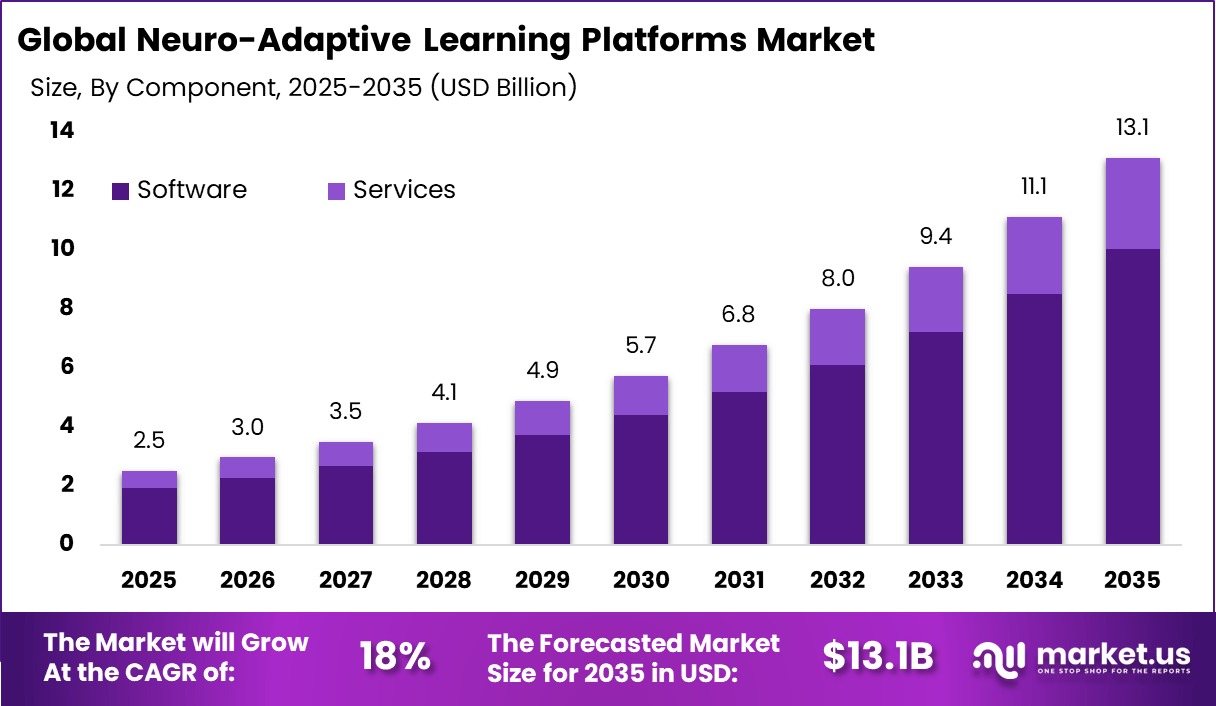
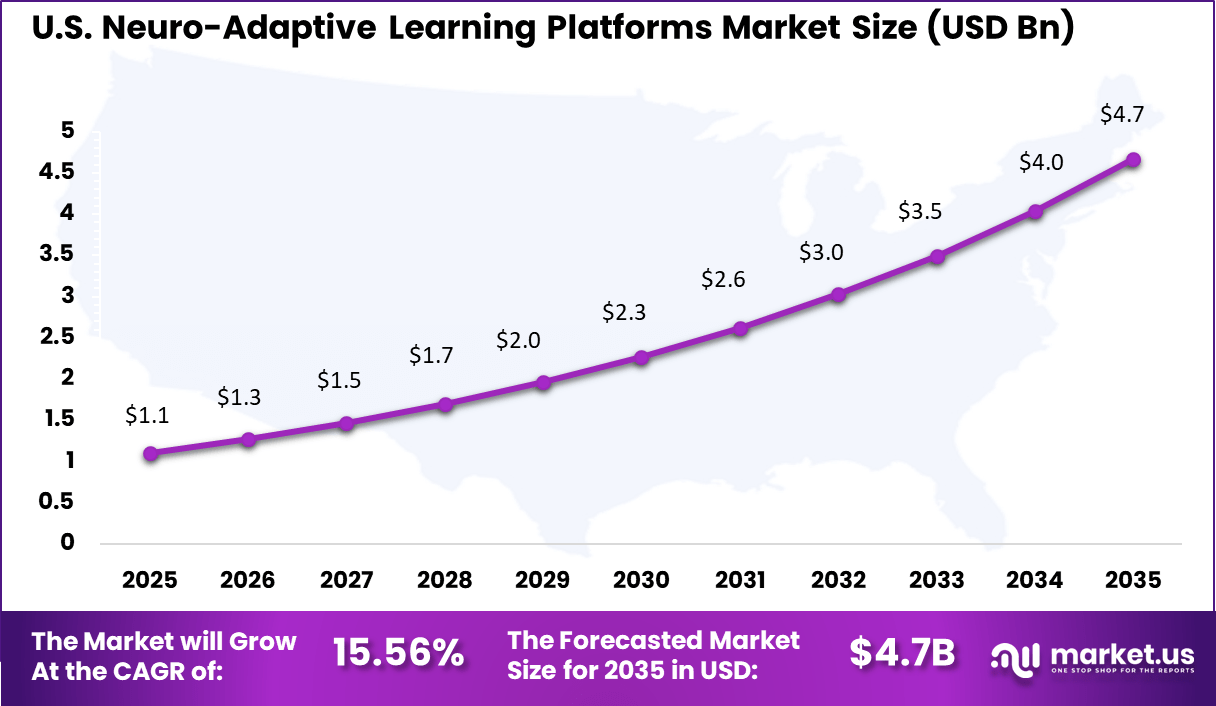
The Global Neuro-Adaptive Learning Platforms Market generated USD 2.5 billion in 2025 and is predicted to register growth from USD 3 billion in 2026 to about USD 13.1 billion by 2035, recording a CAGR of 18% throughout the forecast span. In 2025, North America held a dominan market position, capturing more than a 48.2% share, holding USD 1.20 Billion revenue.
The neuro adaptive learning platforms market refers to digital learning systems that adjust educational content based on a learner’s cognitive state, behavior, and performance. These platforms use data such as attention levels, response time, learning patterns, and feedback to personalize instruction. Neuro adaptive learning platforms are used in education, corporate training, healthcare learning, and skill development programs. Adoption supports more effective and individualized learning outcomes.
One major driving factor of the neuro adaptive learning platforms market is the increasing demand for personalized education. Learners differ in pace, comprehension, and attention span. Neuro adaptive systems adjust content delivery based on individual responses. This personalization improves learning effectiveness and retention.
Another key driver is the growing use of digital learning in academic and professional environments. Remote education and online training programs require tools that maintain learner engagement. Neuro adaptive platforms respond to disengagement and cognitive overload. This capability improves learning continuity and outcomes.
Demand for neuro adaptive learning platforms is influenced by the need to improve learning efficiency and success rates. Educational institutions and enterprises seek solutions that reduce dropout rates and improve performance. Adaptive platforms support learners who struggle with traditional methods. This demand supports steady market growth.
Top Market Takeaways
- By component, software took 76.5% of the neuro-adaptive learning platforms market, powering personalized lessons based on brain response.
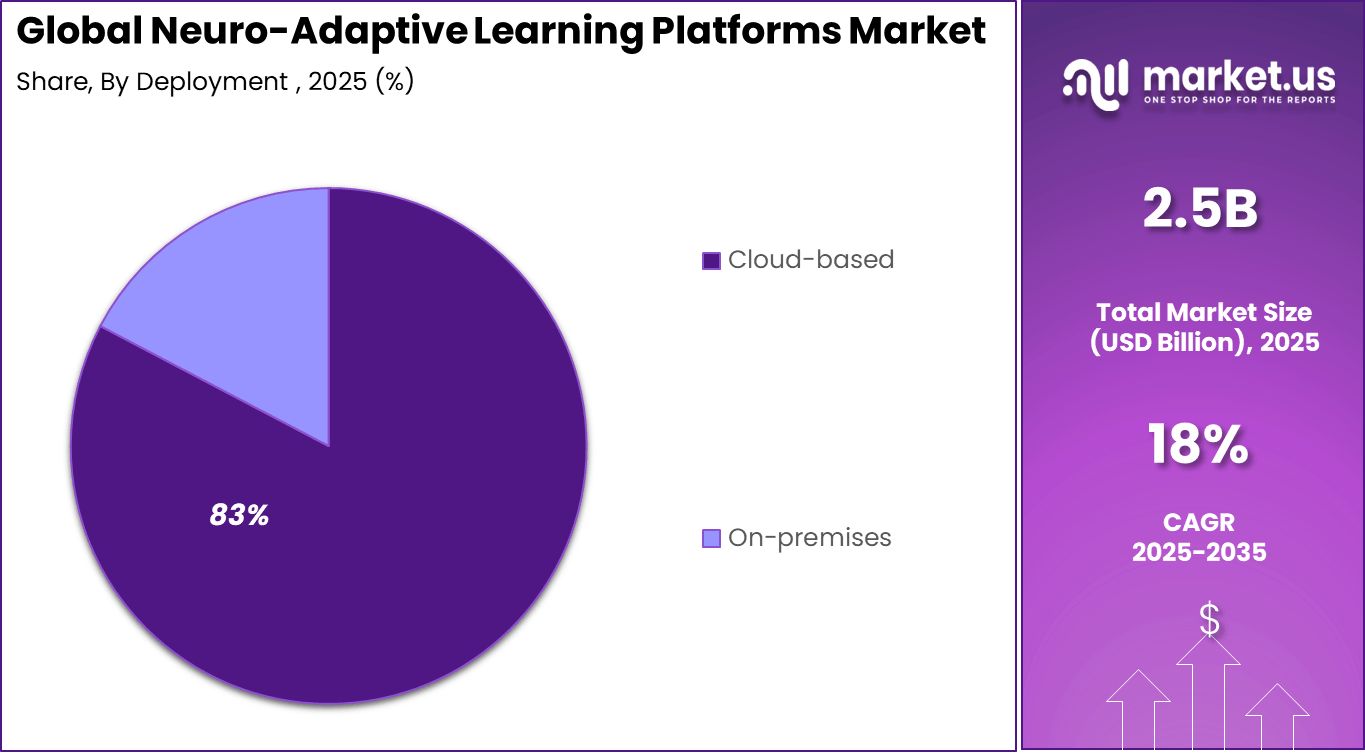
- By deployment, cloud-based solutions held 82.7% share, enabling real-time adaptation for users anywhere.
- By technology, AI and machine learning for cognitive state analysis led with 58.9%, tracking attention and fatigue via sensors.
- By application, corporate training and upskilling captured 41.7%, boosting skills through tailored employee programs.
- By end-user, enterprises accounted for 52.4%, investing in neuro-adaptive tools for workforce development.
- North America had 48.2% of the global market, with the U.S. at USD 1.10 billion in 2025 and growing at a CAGR of 15.56%.
Component Analysis
The software segment holds 76.5% of the Neuro-Adaptive Learning Platforms market, indicating that most value is created through digital learning engines and analytics layers. These software solutions collect learner interaction data and adjust content delivery based on cognitive responses.
Software platforms enable real-time personalization of learning paths, pacing, and content difficulty. Their dominance reflects the central role of algorithms and data processing in neuro-adaptive learning. From an operational perspective, software-based platforms are easier to update and scale across different user groups.
They support continuous improvement through data-driven feedback loops. The strong share of this segment highlights growing reliance on intelligent software to enhance learning effectiveness and learner engagement in digital education environments.
Deployment Analysis
Cloud-based deployment accounts for 83% of the market, showing strong preference for flexible and accessible learning platforms. Cloud deployment allows organizations to deliver neuro-adaptive learning programs across locations without complex infrastructure. Learners can access content from different devices, supporting remote and hybrid learning models.
Cloud platforms also enable rapid updates and centralized data management. This is critical for AI-driven learning systems that require frequent model tuning. The strong adoption of cloud-based deployment reflects demand for scalable, cost-efficient solutions that support continuous learning and real-time analytics.
Technology Analysis
AI and machine learning technologies for cognitive state analysis hold 58.9% of the technology segment, making them the core enablers of neuro-adaptive learning. These technologies analyze learner behavior, engagement patterns, and performance indicators to infer cognitive states. This allows the system to adjust content delivery dynamically based on learner needs.
The adoption of AI-driven cognitive analysis supports more personalized and effective learning experiences. It reduces learning fatigue and improves knowledge retention. The strong share of this technology reflects increasing confidence in AI and machine learning to support advanced learning personalization at scale.
Application Analysis
Corporate training and upskilling represent 41.7% of application demand, making it the leading use case for neuro-adaptive learning platforms. Enterprises use these platforms to train employees efficiently while addressing different learning speeds and skill levels. Neuro-adaptive systems help optimize training outcomes by focusing on individual learner strengths and gaps.
These platforms also support continuous learning in fast-changing work environments. Personalized training reduces time spent on irrelevant content and improves skill acquisition. The strong share of this application reflects enterprise focus on workforce development and productivity improvement.
End-User Analysis
Enterprises account for 52.4% of end-user adoption, highlighting strong demand from corporate organizations. Enterprises manage diverse workforces and require scalable learning solutions. Neuro-adaptive platforms help them deliver consistent yet personalized training across departments and regions.
These platforms also provide analytics to measure learning effectiveness and skill progression. This supports informed decisions on talent development strategies. The strong presence of enterprises as end users reflects growing investment in intelligent learning technologies to support long-term workforce performance and competitiveness.
Examples of Platforms and Tools
Many adaptive learning platforms use artificial intelligence to adjust lessons, but only a few include neuro based features that rely on special hardware.
General Adaptive Learning Tools (AI based)
- DreamBox Learning adjusts K to 8 math lessons in real time based on how each student responds.
- Knewton Alta focuses on mastery learning by changing content to match a learner’s strengths and gaps.
- CogniFit measures cognitive skills and offers personalized brain training programs using performance data.
Neuro Adaptive Tools (with hardware)
- Muse Headband is a non invasive EEG device that provides feedback on focus and calmness and is sometimes used in learning and attention studies.
- Tobii Dynavox uses eye tracking to understand where a learner’s attention drops during reading or learning tasks.
- Zander Labs and Samanai develop tools that detect mental states such as focus or workload using passive brain signals without needing personal calibration.
Key Benefits
- Personal learning: Each learner gets a learning experience that matches their own pace and way of learning, which is especially helpful for students with ADHD, autism, or dyslexia.
- Better engagement and memory: Lessons adjust to the learner’s ability and attention level, helping students stay interested and remember what they learn.
- Clear insights for teachers: The systems show teachers how students learn, where they face difficulties, and when they are most focused, making it easier to give the right support.
- Improved accessibility: Learning becomes more accessible for people with physical disabilities by allowing interaction through eye movement or brain signals instead of traditional inputs.
Emerging Trends
Key Trend Description Biometric Feedback Loops Wearables and sensors monitor attention, stress, and engagement to dynamically adjust learning content. Brain-Computer Interfaces Non-invasive BCIs enable direct neural input for intuitive, thought-driven learning interactions. AI Predictive Modeling Machine learning anticipates knowledge gaps and optimizes learning pace for individual cognitive styles. Neuro-Symbolic AI Hybrids Combines neural networks with symbolic reasoning for explainable, human-like adaptation. Edge Computing Deployment Local processing reduces latency for real-time personalization in low-connectivity environments. Growth Factors
Key Factors Impact Demand for Personalized Learning Traditional one-size-fits-all models fail diverse learners, driving adoption of brain-responsive systems. AI and Neuroscience Convergence Advances in decoding brain signals enable highly tailored and adaptive learning experiences. Corporate Upskilling Needs Enterprises seek efficient training tools to close skill gaps in data-driven workforces. K-12 Digital Transformation Schools invest in technology to improve outcomes and support post-pandemic recovery. Global Accessibility Push Affordable devices and cloud delivery expand access in emerging and underserved regions. Driver Analysis
Growth in the AI-powered cognitive and neuro-adaptive learning platforms market is being propelled by a strong demand for personalised and brain-aligned educational experiences that respond to individual learner needs. These platforms leverage advanced artificial intelligence, machine learning, and adaptive algorithms to analyse learner behaviour and tailor instruction in real time.
The technology supports adaptive pacing, customised content, and feedback mechanisms that align with how learners absorb information most effectively, helping organisations deliver more effective digital education and training. The shift from one-size-fits-all instruction toward personalised learning models has become a key focus for both academic institutions and corporate training programmes seeking to improve engagement and outcomes.
Restraint Analysis
A notable restraint within the AI-powered neuro-adaptive learning platforms market is the complexity of integration and ethical concerns surrounding sensitive learner data. Implementation often requires substantial technical planning to ensure compatibility between legacy systems, diverse content sources, and adaptive AI modules. Such integration can demand specialised skills and increase operational cost.
Additionally, these platforms may collect and interpret highly personal cognitive and behavioural data, raising concerns about data privacy, ownership, and misuse. Establishing robust data governance frameworks and clear consent protocols has become essential to protect learners and maintain trust, but this increases implementation complexity and slows adoption.
Opportunity Analysis
Emerging opportunities in this market stem from the widening applicability of intelligent learning systems in sectors beyond traditional education. Adaptive platforms that interpret cognitive engagement and learning behaviour can support lifelong learning, professional development, and corporate upskilling programmes.
The integration of neuro-adaptive features with AI-driven analytics and personalised learning pathways enables dynamic content delivery that aligns with individual learning preferences, goals, and cognitive responses. Continued innovation in real-time data interpretation and adaptive interfaces opens pathways for next-generation tutoring systems, cognitive engagement measurement, and enriched digital learning ecosystems in corporate, academic, and specialised training segments.
Challenge Analysis
A central challenge confronting the AI-powered neuro-adaptive learning platforms market relates to ethical oversight and the accurate interpretation of cognitive signals. As platforms increasingly incorporate biometric or brain-based data to adjust learning experiences, questions about data ownership, psychological safety, and algorithmic fairness become more prominent.
Misinterpretation of cognitive indicators, such as attention or stress levels, could lead to inappropriate content adjustments or learner frustration. Ensuring that AI systems enhance rather than undermine learner autonomy requires a balanced combination of machine intelligence and human-centred design principles, rigorous testing, and ethical governance.
Key Market Segments
By Component
- Software
- Services
By Deployment
- Cloud-based
- On-premises
By Technology
- EEG (Electroencephalography) & Brain-Computer Interface (BCI)
- Eye-Tracking & Physiological Sensors
- AI & Machine Learning for Cognitive State Analysis
- Others
By Application
- Corporate Training & Upskilling
- K-12 & Higher Education
- Clinical & Therapeutic Learning
- Military & High-Performance Training
- Others
By End-User
- Enterprises
- Educational Institutions
- Healthcare & Research Organizations
- Government & Defense
- Others
Regional Analysis
North America accounted for 48.2% share, supported by early adoption of advanced digital learning technologies across education, corporate training, and healthcare sectors. Neuro adaptive learning platforms have been used to personalize content based on learner behavior, cognitive responses, and engagement patterns.
Demand has been driven by the need to improve learning outcomes, reduce training time, and support diverse learner profiles. Strong investment in AI driven education tools and learning analytics has further strengthened adoption across the region.
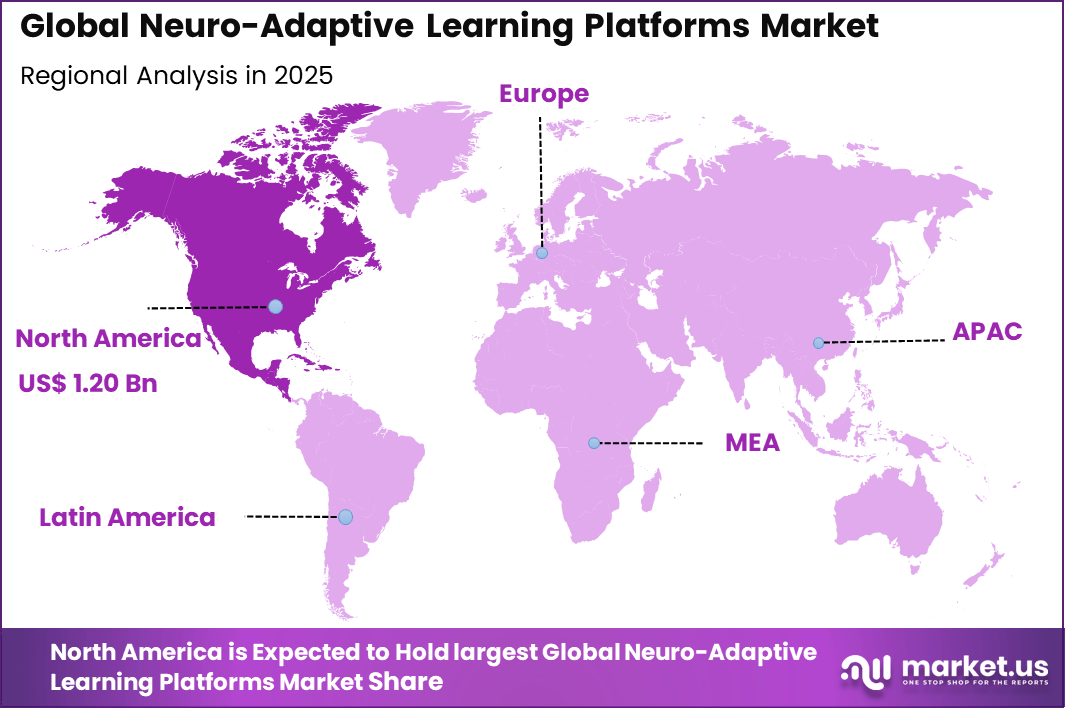
The U.S. market reached USD 1.10 Bn and is projected to grow at a 15.56% CAGR, reflecting strong demand from higher education, enterprise training, and professional certification programs. Adoption has been driven by the need to address learning gaps and improve retention through data driven personalization. Neuro adaptive platforms have helped U.S. organizations tailor content to individual learners, improving engagement and performance.
Key Regions and Countries
- North America
- US
- Canada
- Europe
- Germany
- France
- The UK
- Spain
- Italy
- Russia
- Netherlands
- Rest of Europe
- Asia Pacific
- China
- Japan
- South Korea
- India
- Australia
- Singapore
- Thailand
- Vietnam
- Rest of APAC
- Latin America
- Brazil
- Mexico
- Rest of Latin America
- Middle East & Africa
- South Africa
- Saudi Arabia
- UAE
- Rest of MEA
Competitive Analysis
The competitive landscape of the neuro adaptive learning platforms market is led by established education publishers with strong institutional reach. Pearson, McGraw Hill, Coursera, and Carnegie Learning benefit from extensive content libraries and long term relationships with schools and universities, allowing adaptive learning features to be embedded directly into structured curricula.
At the same time, specialized adaptive learning technology providers such as Area9 Lyceum, Cerego, DreamBox Learning, Sana Labs, Smart Sparrow, Knewton, and Mindojo compete by focusing on deep personalization driven by learner data and continuous performance feedback. These platforms emphasize flexible deployment, measurable learning improvement, which appeals to institutions seeking modern and responsive learning models.
Neurotechnology oriented players including Emotiv, NeuroSky, OpenBCI, and CogniFit add competitive pressure by integrating cognitive and brain signal insights into adaptive learning approaches. Differentiation increasingly depends on personalization accuracy, ease of integration with learning management systems, data privacy compliance, and proven learning outcomes.
Top Key Players in the Market
- Pearson, plc
- Coursera, Inc.
- Area9 Lyceum ApS
- Cerego, LLC
- DreamBox Learning
- Sana Labs AB
- Carnegie Learning, Inc.
- Smart Sparrow, Pty Ltd
- Knewton, Inc.
- McGraw Hill, LLC
- Emotiv, Inc.
- NeuroSky, Inc.
- OpenBCI
- CogniFit, Ltd.
- Mindojo, Ltd.
- Others
Future Outlook
Growth in the Neuro-Adaptive Learning Platforms market is expected to increase as education and training programs focus on personalized learning outcomes. These platforms adjust content and pace based on learner behavior, attention, and performance, which helps improve engagement and knowledge retention.
Rising use of digital learning in schools, universities, and corporate training is supporting adoption. Over time, better integration of cognitive science, AI, and real time feedback is likely to make learning experiences more effective and inclusive.
Recent Developments
- September, 2025: Sana Labs AB got acquired by Workday for about $1.1 billion, supercharging their AI-native Sana Learn platform for hyper-personalized tutoring and content that adapts in real-time to user performance.
- January, 2025: Pearson teamed up with Microsoft on a multiyear deal to blend AI tools with adaptive platforms, rolling out new credentials that adjust to learner needs and scale personalized training globally.
Report Scope
Report Features Description Market Value (2025) USD 2.5 Bn Forecast Revenue (2035) USD 13.1 Bn CAGR(2025-2035) 18% Base Year for Estimation 2025 Historic Period 2020-2024 Forecast Period 2025-2035 Report Coverage Revenue forecast, AI impact on Market trends, Share Insights, Company ranking, competitive landscape, Recent Developments, Market Dynamics and Emerging Trends Segments Covered By Component (Software, Services), By Deployment (Cloud-based, On-premises), By Technology (EEG (Electroencephalography) & Brain-Computer Interface (BCI), Eye-Tracking & Physiological Sensors, Others), By Application (Corporate Training & Upskilling, K-12 & Higher Education, Clinical & Therapeutic Learning, Others) Regional Analysis North America – US, Canada; Europe – Germany, France, The UK, Spain, Italy, Russia, Netherlands, Rest of Europe; Asia Pacific – China, Japan, South Korea, India, New Zealand, Singapore, Thailand, Vietnam, Rest of Latin America; Latin America – Brazil, Mexico, Rest of Latin America; Middle East & Africa – South Africa, Saudi Arabia, UAE, Rest of MEA Competitive Landscape Pearson, plc, Coursera, Inc., Area9 Lyceum ApS, Cerego, LLC, DreamBox Learning, Sana Labs AB, Carnegie Learning, Inc., Smart Sparrow, Pty Ltd, Knewton, Inc., McGraw Hill, LLC, Emotiv, Inc., NeuroSky, Inc., OpenBCI, CogniFit, Ltd., Mindojo, Ltd., Others Customization Scope Customization for segments, region/country-level will be provided. Moreover, additional customization can be done based on the requirements. Purchase Options We have three license to opt for: Single User License, Multi-User License (Up to 5 Users), Corporate Use License (Unlimited User and Printable PDF)  Neuro-Adaptive Learning Platforms MarketPublished date: Jan. 2026add_shopping_cartBuy Now get_appDownload Sample
 -
-
- Pearson, plc
- Coursera, Inc.
- Area9 Lyceum ApS
- Cerego, LLC
- DreamBox Learning
- Sana Labs AB
- Carnegie Learning, Inc.
- Smart Sparrow, Pty Ltd
- Knewton, Inc.
- McGraw Hill, LLC
- Emotiv, Inc.
- NeuroSky, Inc.
- OpenBCI
- CogniFit, Ltd.
- Mindojo, Ltd.
- Others
Our Clients

- 173175
- Jan. 2026









