


Global Mulching Material Market Size, Share, And Enhanced Productivity By Product (Organic (Barked, Shredded, or Chipped, Pine Needles, Grass Clippings, Shredded Leaves, Straw), Inorganic (Black Plastic, Landscape Fabric, Stone/Gravel, Others)), By Application (Residential Applications, Gardens (Public Garden, Corporate Gardens, Hotels and Resort Gardens), Horticulture, Others), By Sales Channel (Modern Trade, Garden Supply Stores, Online Stores, Others), By Region and Companies - Industry Segment Outlook, Market Assessment, Competition Scenario, Trends, and Forecast 2025-2034
- Published date: March 2026
- Report ID: 181867
- Number of Pages: 344
- Format:
-
keyboard_arrow_up
Quick Navigation
Report Overview
The Global Mulching Material Market is expected to be worth around USD 9.6 billion by 2034, up from USD 4.4 billion in 2024, and is projected to grow at a CAGR of 8.1% from 2025 to 2034. The mulching material market in North America accounts for 38.1%, totaling USD 1.6 Bn.
Mulching material refers to any substance placed over soil to retain moisture, regulate temperature, reduce weed growth, and improve overall soil health. These materials can be organic, such as bark, compost, and straw, or inorganic, including plastics and stones. Used widely across gardens, farms, and landscapes, mulching materials play a practical role in protecting soil while enhancing plant growth conditions.
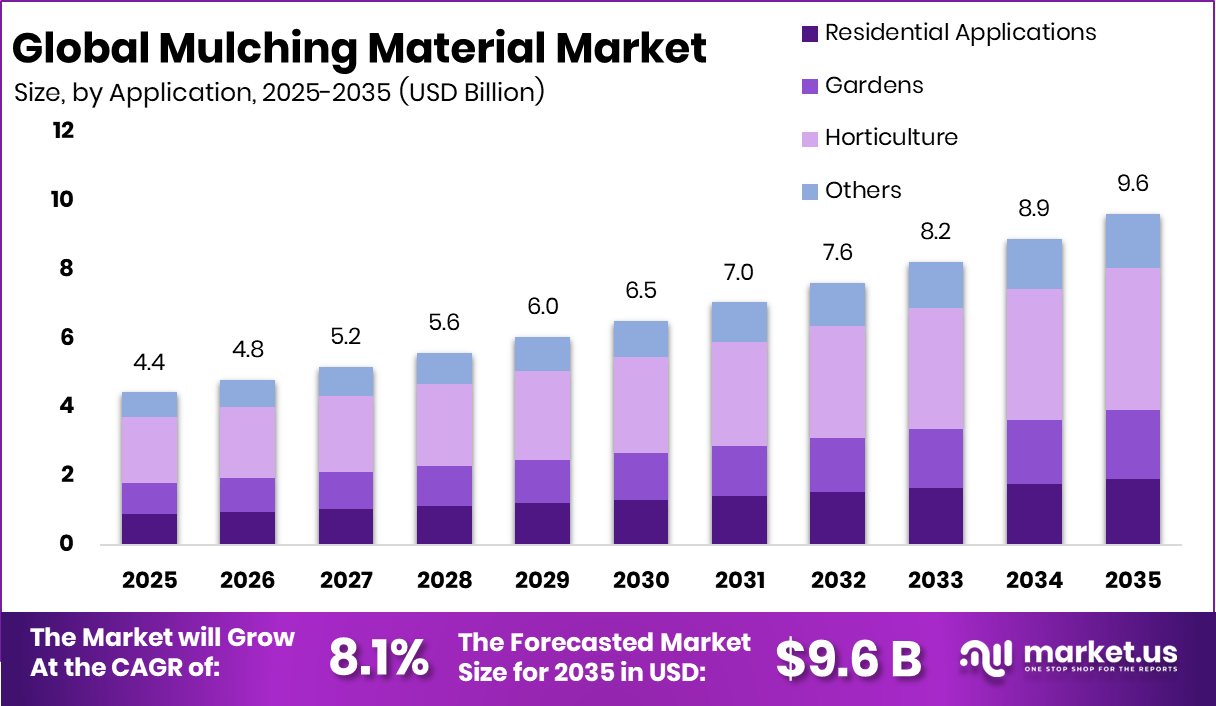
The mulching material market includes the production, distribution, and use of these materials across residential applications, gardens, horticulture, and other segments. Products are made available through modern trade, garden supply stores, online platforms, and other channels, reflecting diverse consumer access points. The market continues to evolve with changing preferences toward ease of use, sustainability, and efficiency in soil management practices.
Growth in this market is supported by increasing awareness of soil conservation and environmental care. Programs like the Texas A&M Forest Service awarding $155,000 for wildfire mitigation highlight the importance of land management, where mulching plays a role in reducing fire risks and maintaining soil stability. Such initiatives indirectly encourage the use of mulching materials in both residential and larger land applications.
Demand is driven by expanding gardening activities and the need for better crop and plant care. Policies such as California’s SB 1383, which promotes compost procurement, support the use of organic mulching materials. Additionally, funding initiatives like Avantium securing €0.76 million through the Rebiolution project indicate growing interest in sustainable material development, further strengthening demand.
Opportunities in the market are linked to innovation and wider adoption across regions. While unusual events, such as the Miami case involving $22 million found in a gardening-related business, draw attention to the scale of the gardening trade, the broader opportunity lies in developing efficient, eco-friendly mulching solutions. Expanding product accessibility through multiple sales channels and improving material performance are expected to shape future growth.
- In April 2024, Jolly Gardener, a company engaged in producing bulk and bagged mulches, soils, and soil amendments, expanded its organic product offerings in April 2024 under its “Just Natural Organics” range. These products are designed to support natural gardening and improve soil quality for fruits, vegetables, and plants. This development reflects the company’s continued focus on providing organic mulch and soil solutions while strengthening its presence in eco-friendly gardening materials.
Key Takeaways
- The Global Mulching Material Market is expected to be worth around USD 9.6 billion by 2034, up from USD 4.4 billion in 2024, and is projected to grow at a CAGR of 8.1% from 2025 to 2034.
- The Mulching Material Market shows organic products dominating with 67.3% due to eco-friendly demand growth.
- In the Mulching Material Market, horticulture applications lead with 42.8%, driven by increased gardening activities.
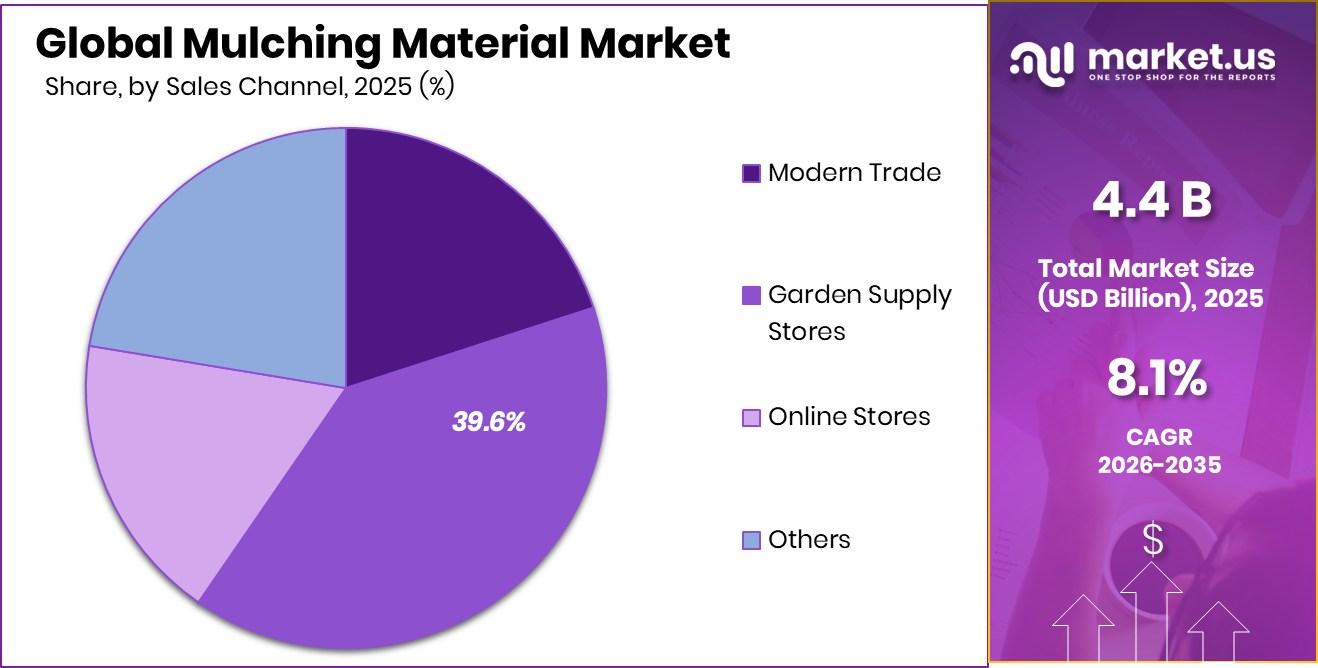
- Garden supply stores account for 39.6% sales in the Mulching Material Market, reflecting strong retail distribution.
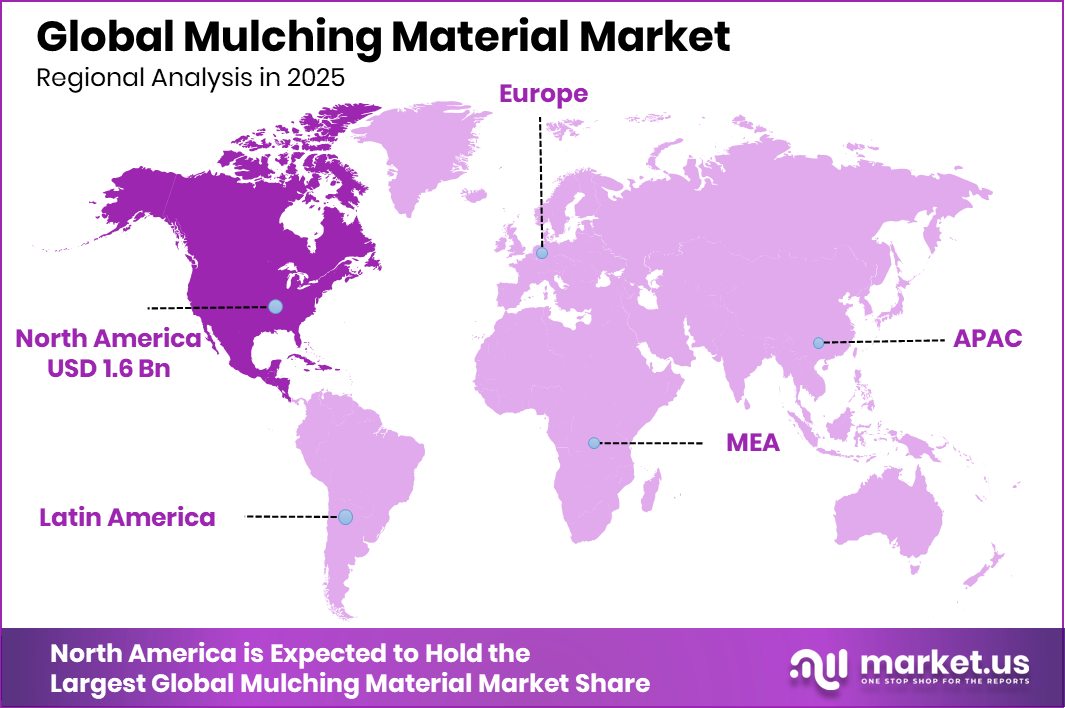
- North America dominates the mulching material market with a 38.1% share, reaching a USD 1.6 Bn valuation.
By Product Analysis
In the Mulching Material Market, organic products account for 67.3% of the total share.
In 2025, the mulching material market continues to show a strong inclination toward organic products, accounting for 67.3% of total usage. This dominance reflects growing consumer awareness around sustainable gardening practices and soil health improvement. Organic mulches such as bark, straw, compost, and wood chips not only enhance moisture retention but also enrich soil fertility over time.
Home gardeners as well as commercial landscapers are increasingly preferring biodegradable options that align with environmental goals. The shift is further supported by regulatory encouragement for eco-friendly landscaping materials. As climate-conscious choices become more mainstream, organic mulching materials are expected to maintain their lead, driven by both functional benefits and long-term ecological advantages.
By Application Analysis
Within the Mulching Material Market, horticulture applications represent 42.8% demand overall total.’
In 2025, horticulture emerges as the leading application segment in the mulching material market, holding a 42.8% share. This growth is largely fueled by the expansion of fruit, vegetable, and ornamental plant cultivation across both urban and rural areas. Mulching plays a vital role in horticulture by regulating soil temperature, suppressing weed growth, and improving crop yield quality.
With the increasing popularity of home gardening and commercial greenhouse operations, the demand for effective mulching solutions continues to rise. Farmers and gardeners are adopting mulching not only for productivity but also for water conservation, especially in regions facing irregular rainfall. This trend highlights the critical importance of mulching in modern horticultural practices.
By Sales Channel Analysis
In the Mulching Material Market, garden supply stores drive 39.6% sales channel.
In 2025, garden supply stores will remain the dominant sales channel in the mulching material market, contributing 39.6% of total sales. These stores serve as convenient access points for both amateur gardeners and professional landscapers seeking a variety of mulching options. Customers benefit from the ability to physically assess product quality, texture, and suitability for specific gardening needs. In addition, knowledgeable staff often provide guidance, helping buyers make informed decisions.
Seasonal promotions and bundled gardening products further drive in-store purchases. Despite the growth of e-commerce, many consumers still prefer in-person shopping for gardening supplies. This continued reliance on garden supply stores reinforces their importance within the overall market distribution network.
Key Market Segments
By Product
- Organic
- Barked, Shredded, or Chipped
- Pine Needles
- Grass Clippings
- Shredded Leaves
- Straw
- Inorganic
- Black Plastic
- Landscape Fabric
- Stone/Gravel
- Others
By Application
- Residential Applications
- Gardens
- Public Garden
- Corporate Gardens
- Hotels and Resort Gardens
- Horticulture
- Others
By Sales Channel
- Modern Trade
- Garden Supply Stores
- Online Stores
- Others
Driving Factors
Rising demand for sustainable soil solutions
The mulching material market is benefiting from a clear shift toward sustainable soil management practices, as both households and commercial users look for environmentally responsible solutions. Organic mulches are increasingly preferred for their ability to improve soil structure and reduce water usage. Public support is also playing a role, as seen in initiatives like HHS expanding MAHA to Head Start, adding $61.9 million to nutrition services for children and families, which indirectly promotes better agricultural and soil practices. This growing emphasis on sustainability is encouraging wider adoption of mulching materials across gardens, farms, and landscaping projects, supporting long-term soil health and efficient resource utilization.
Increasing gardening and landscaping activities globally
Rising interest in gardening and landscaping is another key factor supporting the mulching material market. Urban households, residential communities, and commercial spaces are investing more in green areas for both aesthetic and practical benefits. Mulching is widely used to maintain plant health and reduce maintenance efforts. The trend is visible across regions where home gardening and outdoor improvement activities continue to expand. Increased participation in gardening not only boosts product demand but also encourages repeat usage. As people focus more on maintaining outdoor spaces, mulching materials are becoming an essential component in routine gardening and landscaping practices.
Restraining Factors
High cost of premium mulching materials
The cost of premium mulching materials remains a challenge for wider adoption, particularly among price-sensitive consumers. Organic and processed mulch products often come with higher pricing due to sourcing, processing, and transportation factors. This can limit their use in large-scale applications or among smaller households. While quality and long-term benefits are recognized, the upfront expense may discourage frequent purchases. The pricing gap between standard and premium options continues to influence buying decisions, especially in regions where cost efficiency is a priority, thereby slowing the overall pace of market expansion.
Limited awareness in developing rural regions
Limited awareness about the benefits of mulching materials in rural and less-developed areas restricts market growth. Many users still rely on traditional soil practices without fully understanding the advantages of moisture retention, weed control, and soil protection offered by mulching. Lack of proper guidance and accessibility further contributes to lower adoption rates. Educational outreach and demonstration of practical benefits are still developing in such regions. As awareness remains uneven, the potential market in these areas is not fully realized, creating a gap between availability and actual usage of mulching materials.
Growth Opportunity
Expansion of organic mulch product offerings
There is a strong opportunity to expand organic mulch product lines to meet the growing demand for natural and eco-friendly solutions. Consumers are increasingly seeking materials that support soil health without harmful effects. Supportive actions, such as the State Agriculture Department announcing $1 million awarded to urban farms and community gardens across the state, highlight the push toward sustainable growing practices. These developments create favorable conditions for organic mulch adoption. Companies focusing on diversified organic offerings can tap into both residential and commercial demand, making this segment a key area for future growth within the mulching material market.
Growth in online gardening product sales
The expansion of online sales channels presents a significant opportunity for the mulching material market. Consumers are increasingly purchasing gardening products through digital platforms due to convenience, wider selection, and easy price comparison. Online availability allows suppliers to reach a broader customer base, including those in remote areas. This shift also supports smaller and niche product offerings that may not be easily available in physical stores. As digital adoption continues to grow, online platforms are expected to play a larger role in shaping purchasing behavior and improving access to mulching materials.
Latest Trends
Shift toward biodegradable mulch materials
A noticeable trend in the mulching material market is the move toward biodegradable options that break down naturally without harming the environment. These materials are gaining popularity among environmentally conscious users who prefer sustainable gardening practices. Biodegradable mulches reduce waste and improve soil quality over time, making them a practical choice for long-term use. This shift reflects changing consumer preferences and a broader focus on reducing environmental impact, encouraging manufacturers to develop more eco-friendly alternatives.
Innovation in eco-friendly mulch packaging
Packaging innovation is becoming an important trend, with a focus on reducing environmental footprint. Companies are exploring recyclable and minimal packaging solutions to align with sustainability goals. Improved packaging not only supports environmental efforts but also enhances product handling and storage. As consumers become more conscious of waste reduction, eco-friendly packaging is gaining importance alongside the product itself. This trend is expected to influence purchasing decisions and encourage further innovation in how mulching materials are presented and delivered to end users.
Regional Analysis
In 2025, the North America mulching material market holds 38.1% share valued at USD 1.6 Bn.
The mulching material market demonstrates varied regional dynamics across North America, Europe, Asia Pacific, the Middle East & Africa, and Latin America. North America stands as the dominating region, accounting for 38.1% of the global market, with a valuation of USD 1.6 Bn. This dominance reflects a well-established landscaping culture, widespread adoption of gardening practices, and consistent demand for mulching materials across residential and commercial applications.
Europe follows with steady market participation, supported by strong horticultural activities and sustainability-focused practices. Asia Pacific shows notable growth potential driven by increasing agricultural activities and rising awareness of soil conservation methods. Meanwhile, the Middle East & Africa region is gradually expanding, supported by improving landscaping trends and water conservation needs.
Latin America also contributes to the market through agricultural demand and expanding horticulture practices. Overall, while all regions exhibit growth opportunities, North America remains the leading contributor in both market share and value, reinforcing its dominant position in the global market for mulching materials.
Key Regions and Countries
- North America
- US
- Canada
- Europe
- Germany
- France
- The UK
- Spain
- Italy
- Rest of Europe
- Asia Pacific
- China
- Japan
- South Korea
- India
- Australia
- Rest of APAC
- Latin America
- Brazil
- Mexico
- Rest of Latin America
- Middle East & Africa
- GCC
- South Africa
- Rest of MEA
Key Players Analysis
Cowart Mulch Products Inc. demonstrates a focused operational approach within the mulching material market, emphasizing consistency in product quality and reliable supply capabilities. The company’s strength lies in its ability to cater to both bulk and customized mulch requirements, allowing it to serve a diverse customer base. Its operational stability and straightforward product positioning indicate a business model centered on efficiency and long-term customer relationships rather than aggressive diversification.
Bailey Bark Materials Inc. reflects a specialized orientation, with attention to material processing and product refinement. The company’s approach suggests a commitment to maintaining uniformity in mulch texture and composition, which is critical for end-user satisfaction. Its structured operations indicate a balance between production scale and quality control, positioning it as a dependable participant with a clear focus on core offerings.
The Scoots Company LLC presents a flexible and adaptive business structure, likely supporting varied customer preferences and order sizes. Its positioning suggests responsiveness to market needs through practical distribution and accessible product options. The company’s operational style indicates an emphasis on service efficiency and customer accessibility, contributing to its steady presence among key participants.
Top Key Players in the Market
- Cowart Mulch Products Inc.
- Bailey Bark Materials Inc.
- The Scoots Company LLC
- Ohio Mulch
- FKuR Kunststoff GmbH
- Jolly Gardener
- Woodland Mulch
- Novamont S.p.A.
- Good Earth Garden
- Renewable Fiber Inc.
- The Scotts Miracle-Gro Company
- BASF SE
Recent Developments
- In March 2024, Bailey Bark Materials Inc., a company engaged in supplying bark mulch, compost, sawdust, and landscaping materials, continued strengthening its service capabilities in March 2024 by enhancing its wood grinding and material processing services. This step supports its core work of converting waste wood into usable mulch products, improving efficiency in mulch production and supply. The development reflects the company’s focus on maintaining consistent product availability and supporting landscaping needs through in-house processing expertise.
- In 2025, The Scotts Company LLC continued investing in research and development to improve existing mulch and gardening products. The company focused on better formulations and efficient production processes, supporting its ongoing work in supplying mulching materials and related gardening solutions.
Report Scope
Report Features Description Market Value (2025) USD 4.4 Billion Forecast Revenue (2035) USD 9.6 Billion CAGR (2026-2035) 8.1% Base Year for Estimation 2025 Historic Period 2020-2024 Forecast Period 2026-2035 Report Coverage Revenue Forecast, Market Dynamics, Competitive Landscape, Recent Developments Segments Covered By Product (Organic (Barked, Shredded, or Chipped, Pine Needles, Grass Clippings, Shredded Leaves, Straw), Inorganic (Black Plastic, Landscape Fabric, Stone/Gravel, Others)), By Application (Residential Applications, Gardens (Public Garden, Corporate Gardens, Hotels and Resort Gardens), Horticulture, Others), By Sales Channel (Modern Trade, Garden Supply Stores, Online Stores, Others) Regional Analysis North America – US, Canada; Europe – Germany, France, The UK, Spain, Italy, Rest of Europe; Asia Pacific – China, Japan, South Korea, India, Australia, Singapore, Rest of APAC; Latin America – Brazil, Mexico, Rest of Latin America; Middle East & Africa – GCC, South Africa, Rest of MEA Competitive Landscape Cowart Mulch Products Inc., Bailey Bark Materials Inc., The Scoots Company LLC, Ohio Mulch, FKuR Kunststoff GmbH, Jolly Gardener, Woodland Mulch, Novamont S.p.A., Good Earth Garden, Renewable Fiber Inc., The Scotts Miracle-Gro Company, BASF SE Customization Scope Customization for segments, region/country-level will be provided. Moreover, additional customization can be done based on the requirements. Purchase Options We have three licenses to opt for: Single User License, Multi-User License (Up to 5 Users), Corporate Use License (Unlimited User and Printable PDF) 
-
-
- Cowart Mulch Products Inc.
- Bailey Bark Materials Inc.
- The Scoots Company LLC
- Ohio Mulch
- FKuR Kunststoff GmbH
- Jolly Gardener
- Woodland Mulch
- Novamont S.p.A.
- Good Earth Garden
- Renewable Fiber Inc.
- The Scotts Miracle-Gro Company
- BASF SE
Our Clients

- 181867
- March 2026






