


Global Hydrogel Face Mask Market Size, Share, Growth Analysis By Product (Mass, Premium), By Source (Natural, Synthetic), By Skin Type (Dry, Oily, Combination, Sensitive), By Application (Skin Brightening, Anti-Aging, Anti-Acne, Others), By Distribution Channel (Specialty Stores, Hypermarkets & Supermarkets, Pharmacy & Drug Stores, Online, Others), By Region and Companies - Industry Segment Outlook, Market Assessment, Competition Scenario, Statistics, Trends and Forecast 2026-2035
- Published date: Feb 2026
- Report ID: 177994
- Number of Pages: 201
- Format:
-
keyboard_arrow_up
Quick Navigation
Report Overview
Global Hydrogel Face Mask Market size is expected to be worth around USD 442.7 Million by 2035 from USD 166.9 Million in 2025, growing at a CAGR of 10.3% during the forecast period 2026 to 2035.
Hydrogel face masks represent advanced skincare delivery systems that use polymer-based gel matrices to deliver active ingredients deep into skin layers. These masks create occlusive barriers that enhance penetration and hydration retention. The technology offers superior adherence compared to traditional sheet masks.
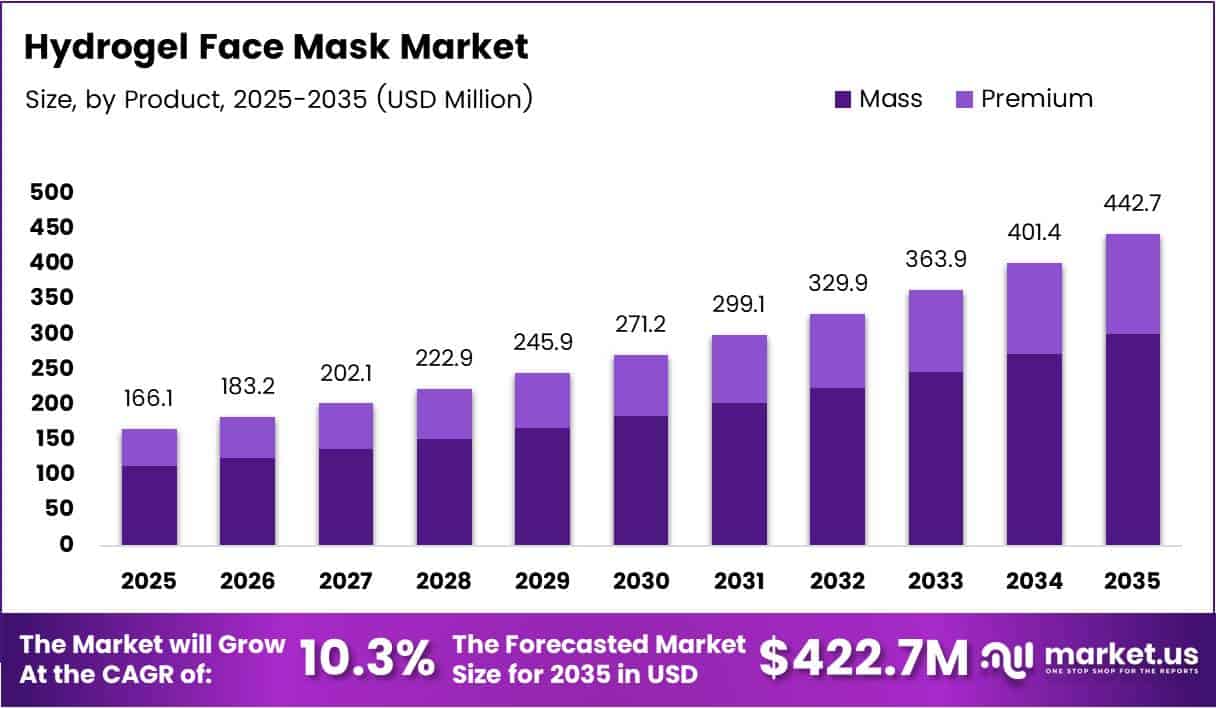
The market experiences robust expansion driven by consumer preference for intensive at-home treatments. Additionally, rising awareness about skin barrier health accelerates product adoption. Moreover, dermatology-backed formulations strengthen consumer confidence in premium hydrogel mask efficacy and safety profiles.
Growth opportunities emerge through personalized skincare solutions and AI-driven skin analysis integration. Furthermore, brands expand into men’s grooming and gender-neutral segments. Consequently, manufacturers invest in biodegradable and eco-friendly hydrogel base materials to meet sustainability demands.
Government regulations increasingly focus on cosmetic ingredient transparency and safety standards. Therefore, companies prioritize clean beauty formulations with disclosed ingredient lists. Additionally, regulatory frameworks in major markets mandate hypoallergenic testing for sensitive skin product claims.
According to Nutriadvisor, hydrogel masks increase stratum corneum hydration by 40-60% immediately after application with effects lasting 24-48 hours. Moreover, clinical testing reveals hydrogel masks reduce transepidermal water loss by 25-35% for up to 72 hours post-treatment.
According to Alibaba Product Insights, hydrogel masks showed +39.1% hydration at 20 minutes and +22.4% retention after 2 hours in clinical comparison testing. This performance demonstrates significant advantages over conventional sheet mask technologies in sustained moisture delivery.
Key Takeaways
- Global Hydrogel Face Mask Market valued at USD 166.9 Million in 2025, projected to reach USD 442.7 Million by 2035
- Market grows at a CAGR of 10.3% during forecast period 2026-2035
- Mass segment dominates By Product category with 69.1% market share in 2025
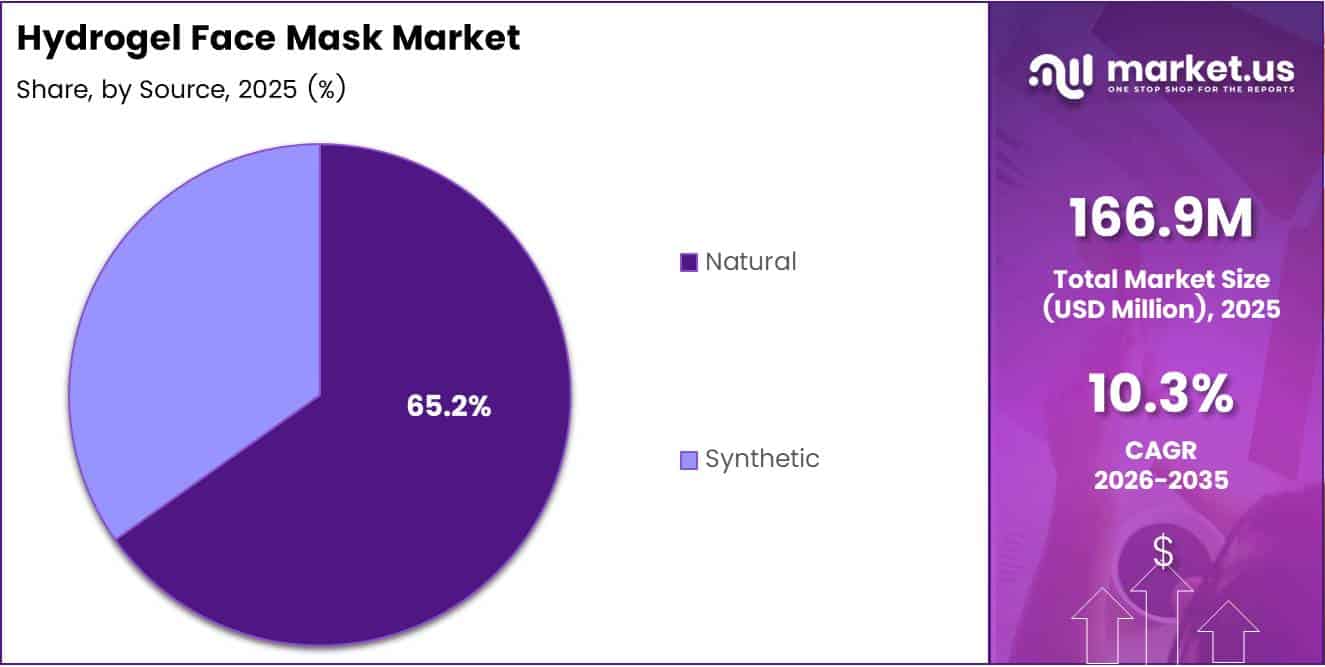
- Natural source segment leads with 65.2% share driven by clean beauty trends
- Skin Brightening application holds largest share at 56.7% reflecting consumer priorities
- Specialty Stores channel captures 34.9% distribution share in 2025
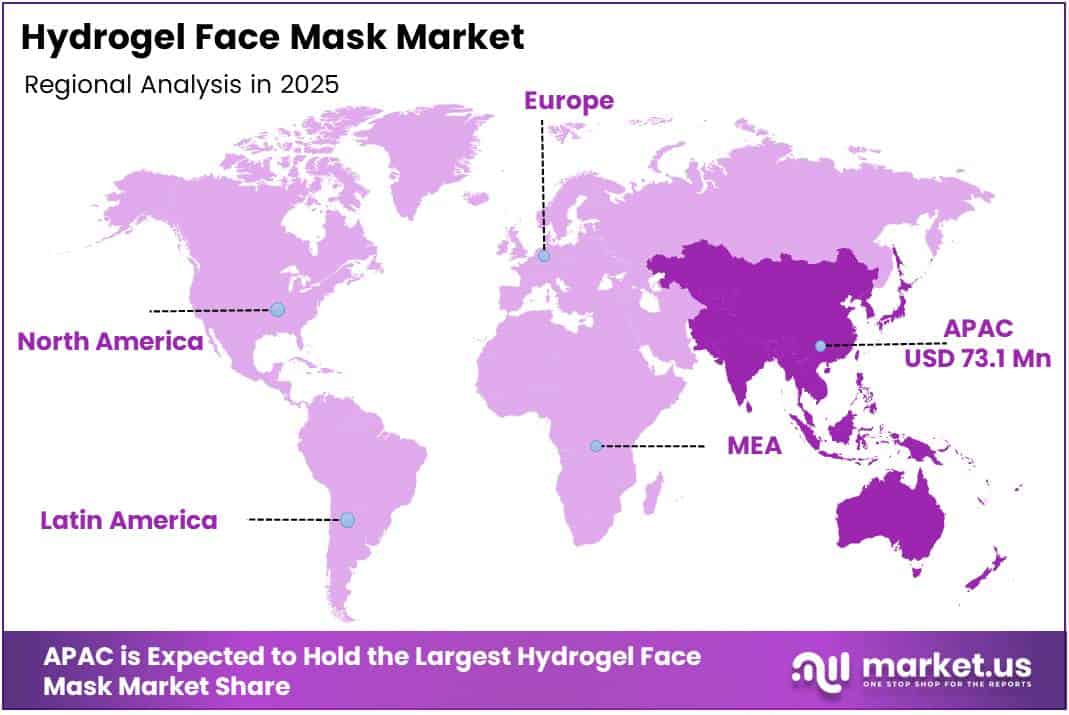
- Asia Pacific dominates regional landscape with 43.80% share valued at USD 73.1 Million
Product Analysis
Mass dominates with 69.1% due to affordability and widespread retail availability.
In 2025, Mass held a dominant market position in the By Product segment of Hydrogel Face Mask Market, with a 69.1% share. This segment attracts price-conscious consumers seeking effective skincare solutions without premium pricing. Moreover, mass brands leverage extensive distribution networks across drugstores and supermarkets. Consequently, product accessibility drives volume sales in emerging markets.
Premium segment captures growing demand from affluent consumers prioritizing dermatologist-developed formulations and luxury ingredients. These products feature advanced actives like peptides, exosomes, and microbiome boosters. Additionally, premium brands invest heavily in clinical testing and packaging innovation. Therefore, this segment commands higher margins despite lower volume penetration.
Source Analysis
Natural dominates with 65.2% due to clean beauty movement and ingredient transparency demands.
In 2025, Natural held a dominant market position in the By Source segment of Hydrogel Face Mask Market, with a 65.2% share. Consumers increasingly prioritize plant-based and bio-derived hydrogel materials over synthetic alternatives. Moreover, natural sources align with sustainability concerns and eco-conscious purchasing behavior. Consequently, brands reformulate products using bio-cellulose and algae-derived polymers.
Synthetic segment maintains relevance through superior consistency, longer shelf stability, and controlled manufacturing processes. These materials enable precise active ingredient delivery and predictable performance outcomes. Additionally, synthetic hydrogels offer cost advantages in mass production. However, environmental concerns limit growth compared to natural alternatives.
Skin Type Analysis
Dry dominates with 37.4% due to hydration-seeking consumer behavior and moisture retention benefits.
In 2025, Dry held a dominant market position in the By Skin segment of Hydrogel Face Mask Market, with a 37.4% share. This segment benefits from hydrogel technology’s proven ability to increase epidermal water content significantly. Moreover, consumers with dry skin prioritize products offering long-lasting moisture retention. Therefore, brands formulate specialized hydrogels with hyaluronic acid and ceramides.
Oily skin segment grows through oil-balancing formulations that hydrate without adding excess sebum or heavy residues. These products incorporate mattifying ingredients like niacinamide, zinc, and pore-refining actives. Additionally, lightweight hydrogel textures appeal to consumers avoiding heavy creams. Consequently, oil-control hydrogel masks address hydration needs while managing shine and enlarged pores.
Combination skin users seek dual-action masks addressing both dry and oily zones simultaneously across different facial areas. These formulations balance moisture delivery in dry cheeks while controlling sebum in T-zone regions. Moreover, multi-zone targeting technologies enable customized treatment benefits. Therefore, versatile hydrogel masks serve this complex skin type effectively.
Sensitive skin segment demands hypoallergenic formulations with minimal irritants and dermatologist testing validation for safety assurance. These products exclude fragrances, essential oils, and harsh preservatives that trigger reactions. Additionally, soothing ingredients like chamomile and colloidal oatmeal reduce inflammation. Consequently, sensitive skin formulations require extensive clinical testing before market launch.
Application Analysis
Skin Brightening dominates with 56.7% due to rising demand for even-toned complexion solutions.
In 2025, Skin Brightening held a dominant market position in the By Application segment of Hydrogel Face Mask Market, with a 56.7% share. This segment addresses hyperpigmentation concerns through ingredients like vitamin C, niacinamide, and kojic acid. Moreover, brightening claims resonate strongly across Asian markets where fair skin preferences persist. Consequently, brands prioritize melanin-inhibiting actives in hydrogel formulations.
Anti-Aging application captures mature consumers seeking wrinkle reduction and firmness improvement through peptide-infused hydrogels. These products incorporate retinol alternatives, collagen boosters, and antioxidants targeting visible aging signs. Additionally, lifting and plumping effects provide immediate cosmetic benefits. Therefore, this segment commands premium pricing through advanced anti-aging ingredient technologies.
Anti-Acne segment addresses breakout-prone skin with salicylic acid, tea tree oil, and sebum-controlling formulations. These masks target inflammation reduction while maintaining skin hydration without clogging pores. Moreover, non-comedogenic hydrogel bases ensure suitability for acne-sensitive skin types. Consequently, dermatologist recommendations strengthen consumer confidence in acne treatment efficacy.
Others category includes soothing, pore-minimizing, and post-procedure recovery masks serving specialized skincare needs. These applications address redness reduction, sensitivity relief, and post-laser treatment healing support. Additionally, calming ingredients like centella asiatica and allantoin provide therapeutic benefits. Therefore, this segment expands through medical aesthetics partnerships.
Distribution Channel Analysis
Specialty Stores dominates with 34.9% due to expert consultation and curated premium product selection.
In 2025, Specialty Stores held a dominant market position in the By Distribution Channel segment of Hydrogel Face Mask Market, with a 34.9% share. These outlets provide personalized skincare advice and demonstrate product benefits through sampling programs. Moreover, specialty retailers curate high-quality brands that build consumer trust. Consequently, educated staff drive conversions through targeted recommendations.
Hypermarkets & Supermarkets channel offers convenience and impulse purchase opportunities through mass brand visibility and high foot traffic. These large-format retailers provide one-stop shopping experiences for daily necessities and beauty products. Additionally, promotional displays and competitive pricing attract budget-conscious consumers. Therefore, this channel drives volume sales for mass-market hydrogel brands.
Pharmacy & Drug Stores segment builds credibility through healthcare associations and dermatologist endorsements for sensitive skin formulations. Consumers trust pharmacist recommendations when selecting skincare products for specific concerns. Moreover, medicinal positioning enhances product legitimacy and safety perceptions. Consequently, this channel performs well for therapeutic and hypoallergenic hydrogel masks.
Online channel expands rapidly through e-commerce platforms and direct-to-consumer brand websites offering convenience and product variety. Digital shopping enables detailed ingredient research, customer reviews, and subscription models. Additionally, social media integration drives discovery and influencer-led purchasing decisions. Therefore, online sales capture younger demographics and tech-savvy consumers seeking personalized recommendations.
Others category includes department stores and beauty boutiques offering curated luxury experiences and exclusive brand partnerships. These channels provide premium shopping environments with testers and beauty advisors. Moreover, airport duty-free stores capture international travelers seeking travel-size products. Consequently, this segment serves niche markets with specific channel preferences.
Key Market Segments
By Product
- Mass
- Premium
By Source
- Natural
- Synthetic
By Skin Type
- Dry
- Oily
- Combination
- Sensitive
By Application
- Skin Brightening
- Anti-Aging
- Anti-Acne
- Others
By Distribution Channel
- Specialty Stores
- Hypermarkets & Supermarkets
- Pharmacy & Drug Stores
- Online
- Others
Drivers
Rising Consumer Shift Toward Intensive At-Home Spa-Grade Skincare Treatments
Consumers increasingly replicate professional skincare experiences at home through advanced hydrogel mask technologies. This shift reflects changing lifestyle priorities and desire for convenient luxury self-care rituals. Moreover, pandemic-era behaviors permanently altered consumer expectations for at-home treatment efficacy. Consequently, brands invest in spa-quality formulations for retail distribution.
According to PubMed, hydrogel research output increased from approximately 350 publications in 2000 to 11,000 publications in 2024, demonstrating strong technology adoption growth. This research expansion validates hydrogel efficacy and drives consumer confidence in product performance claims across dermatology and cosmetic science communities.
Product innovation focuses on multi-sensory experiences including cooling effects, aromatherapy integration, and visible skin transformation. Additionally, social media amplifies at-home treatment trends through before-after content sharing. Therefore, manufacturers prioritize Instagram-worthy packaging and instant visible results.
Restraints
Higher Production Costs Due to Advanced Polymer and Bio-Cellulose Hydrogel Materials
Hydrogel mask manufacturing requires specialized polymer synthesis processes and controlled production environments. These technical requirements increase capital investment and per-unit production costs significantly. Moreover, bio-cellulose materials demand fermentation facilities and extended production timelines. Consequently, retail prices remain elevated compared to conventional sheet masks.
Raw material sourcing challenges affect production consistency and supply chain stability. Additionally, cold chain storage requirements for certain hydrogel formulations increase distribution expenses. Therefore, smaller brands face entry barriers due to minimum order quantities and equipment investments.
Quality control standards demand rigorous testing for hydrogel integrity, active ingredient stability, and microbiological safety. Furthermore, premium positioning limits mass market penetration despite growing consumer interest. This cost-quality trade-off constrains market expansion velocity in price-sensitive regions.
Growth Factors
Untapped Demand in Tier-2 and Tier-3 Urban Markets Across Emerging Economies
Expanding middle-class populations in secondary cities demonstrate increasing skincare expenditure and brand awareness. These markets offer significant volume growth potential as disposable incomes rise. Moreover, digital connectivity enables beauty education and product discovery beyond metropolitan areas. Consequently, brands develop region-specific formulations and pricing strategies.
According to PubMed, bio-based hydrogel superabsorbent systems demonstrate high water retention capacity while enabling active ingredient carrier functionality. This technological advantage supports product differentiation and efficacy claims. Additionally, ingredient innovation drives premium positioning and margin expansion opportunities across emerging markets.
Distribution infrastructure improvements facilitate product availability through regional retail chains and e-commerce logistics networks. Furthermore, localized marketing campaigns resonate with cultural beauty preferences and ingredient familiarity. Therefore, companies establish manufacturing facilities closer to high-growth markets reducing import costs and improving supply chain responsiveness.
Emerging Trends
Surge in Multi-Functional Hydrogel Masks Combining Skincare and Cosmetic Benefits
Modern consumers demand time-efficient products delivering multiple benefits in single applications. This trend drives formulation innovation combining hydration, brightening, anti-aging, and makeup-priming properties. Moreover, multi-functional positioning justifies premium pricing and increases purchase frequency. Consequently, brands reformulate existing products with expanded benefit claims.
In January 2026, Elurea launched a long-wear hydrogel collagen mask formulated with kojic acid for skin brightening and extended wear performance. This innovation exemplifies industry movement toward enhanced functionality and prolonged efficacy duration addressing fast-paced urban lifestyles.
Biodegradable hydrogel bases gain traction as environmental consciousness influences purchasing decisions. Additionally, water-soluble materials eliminate disposal concerns and align with circular economy principles. Therefore, sustainability becomes key product differentiation factor rather than optional feature.
Regional Analysis
Asia Pacific Dominates the Hydrogel Face Mask Market with a Market Share of 43.80%, Valued at USD 73.1 Million
Asia Pacific leads global consumption driven by established skincare routines and high beauty product penetration rates. The region’s consumers demonstrate strong affinity for innovative mask technologies and ingredient-focused formulations. Moreover, 43.80% market share reflects cultural emphasis on complexion perfection and multi-step skincare regimens. Consequently, regional brands dominate through localized product development valued at USD 73.1 Million in 2025.
North America Hydrogel Face Mask Market Trends
North America experiences steady growth through clean beauty movement adoption and dermatologist-recommended product trust. Consumers prioritize ingredient transparency and clinical efficacy validation. Moreover, premium positioning resonates with quality-conscious buyers seeking professional-grade home treatments. Therefore, specialty retailers and e-commerce channels drive distribution expansion.
Europe Hydrogel Face Mask Market Trends
Europe emphasizes sustainable packaging and natural ingredient sourcing aligned with strict cosmetic regulations. Consumers demonstrate willingness to pay premium prices for certified organic and cruelty-free formulations. Additionally, anti-aging applications dominate due to aging population demographics. Consequently, brands invest in clinical studies supporting efficacy claims.
Latin America Hydrogel Face Mask Market Trends
Latin America shows emerging adoption driven by rising disposable incomes and beauty consciousness in urban centers. However, price sensitivity limits premium segment penetration requiring affordable mass market alternatives. Moreover, tropical climate conditions create demand for oil-control and hydration-balancing formulations. Therefore, regional brands customize products for humidity and temperature considerations.
Middle East & Africa Hydrogel Face Mask Market Trends
Middle East & Africa demonstrates growing interest particularly in GCC countries where luxury beauty spending remains robust. Consumers seek brightening and anti-aging solutions addressing climate-related skin concerns. Additionally, modest fashion influences preference for facial skincare over body-focused products. Consequently, premium imported brands dominate through duty-free retail and specialty boutiques.
Key Regions and Countries
North America
- US
- Canada
Europe
- Germany
- France
- The UK
- Spain
- Italy
- Rest of Europe
Asia Pacific
- China
- Japan
- South Korea
- India
- Australia
- Rest of APAC
Latin America
- Brazil
- Mexico
- Rest of Latin America
Middle East & Africa
- GCC
- South Africa
- Rest of MEA
Key Company Insights
Amorepacific Corporation leads Korean beauty innovation through extensive research and development in hydrogel mask technologies. The company leverages traditional Asian botanical ingredients combined with modern polymer science. Moreover, strong regional distribution networks ensure dominant market presence across Asia Pacific. Consequently, Amorepacific maintains premium positioning through clinically-validated efficacy claims and luxury brand portfolios.
L’Oréal expands hydrogel mask offerings through multiple brand portfolios targeting diverse consumer segments from mass to luxury. The company invests heavily in ingredient innovation and personalized skincare solutions. Additionally, global manufacturing capabilities enable rapid market response and localized product development. Therefore, L’Oréal captures significant market share through brand diversification strategies.
Shiseido Company, Limited emphasizes scientific research and Japanese beauty heritage in hydrogel formulation development. The company focuses on anti-aging applications incorporating advanced peptides and bio-actives. Moreover, premium positioning strategies target affluent consumers seeking proven results. Consequently, Shiseido maintains strong brand loyalty through dermatologist partnerships and clinical testing transparency.
Estee Lauder leverages luxury brand equity and counter retail presence to promote premium hydrogel mask collections. The company integrates hydrogel technology into existing skincare lines rather than standalone products. Additionally, personalized beauty consultation services drive conversions through targeted recommendations. Therefore, Estee Lauder captures high-value customers willing to invest in comprehensive skincare regimens.
Key Players
- Amorepacific Corporation
- Dr. Jart
- Estee Lauder
- Garnier
- Lancome
- L’Oréal
- Peter Thomas Roth
- Shiseido Company, Limited
- TONYMOLY
Recent Developments
- November 2025 – Rini launched hydrating hydrogel face masks including Vitamin B12 hydrogel mask as part of its kids skincare line launch, expanding market reach into pediatric personal care segments with gentle formulations designed for young sensitive skin types.
- October 2025 – Rhode launched Peptide Eye Prep hydrogel eye patches formulated with caffeine and peptides, targeting under-eye concerns including dark circles, puffiness, and fine lines through targeted active ingredient delivery in convenient patch format.
- January 2026 – Elurea launched a long-wear hydrogel collagen mask formulated with kojic acid for skin brightening and extended wear performance, addressing consumer demand for multi-functional products combining hydration, brightening, and prolonged efficacy duration for busy lifestyles.
Report Scope
Report Features Description Market Value (2025) USD 166.9 Million Forecast Revenue (2035) USD 442.7 Million CAGR (2026-2035) 10.3% Base Year for Estimation 2025 Historic Period 2020-2024 Forecast Period 2026-2035 Report Coverage Revenue Forecast, Market Dynamics, Competitive Landscape, Recent Developments Segments Covered By Product (Mass, Premium), By Source (Natural, Synthetic), By Skin Type (Dry, Oily, Combination, Sensitive), By Application (Skin Brightening, Anti-Aging, Anti-Acne, Others), By Distribution Channel (Specialty Stores, Hypermarkets & Supermarkets, Pharmacy & Drug Stores, Online, Others) Regional Analysis North America (US and Canada), Europe (Germany, France, The UK, Spain, Italy, and Rest of Europe), Asia Pacific (China, Japan, South Korea, India, Australia, and Rest of APAC), Latin America (Brazil, Mexico, and Rest of Latin America), Middle East & Africa (GCC, South Africa, and Rest of MEA) Competitive Landscape Amorepacific Corporation, Dr. Jart, Estee Lauder, Garnier, Lancome, L’Oréal, Peter Thomas Roth, Shiseido Company, Limited, TONYMOLY Customization Scope Customization for segments, region/country-level will be provided. Moreover, additional customization can be done based on the requirements. Purchase Options We have three licenses to opt for: Single User License, Multi-User License (Up to 5 Users), Corporate Use License (Unlimited User and Printable PDF) 
-
-
- Amorepacific Corporation
- Dr. Jart
- Estee Lauder
- Garnier
- Lancome
- L'Oréal
- Peter Thomas Roth
- Shiseido Company, Limited
- TONYMOLY
Our Clients

- 177994
- Feb 2026






