


Global Moisturizer Market Size, Share, Growth Analysis By Type (Body Moisturizer, Face Moisturizer), By Form (Cream, Lotion, Gel), By End-user (Women, Men, Infant & Kids), By Region and Companies - Industry Segment Outlook, Market Assessment, Competition Scenario, Statistics, Trends and Forecast 2026-2035
- Published date: March 2026
- Report ID: 182001
- Number of Pages: 316
- Format:
-
keyboard_arrow_up
Quick Navigation
Report Overview
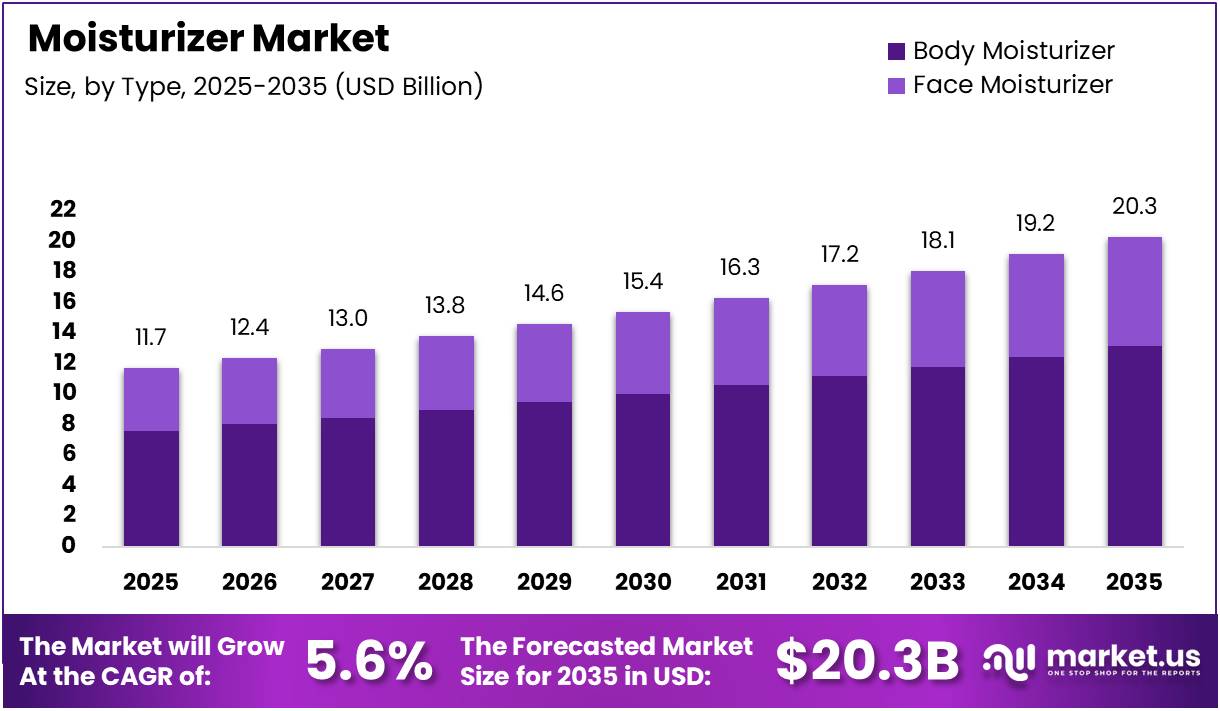
The Global Moisturizer Market size is expected to be worth around USD 20.3 Billion by 2035 from USD 11.7 Billion in 2025, growing at a CAGR of 5.6% during the forecast period 2026 to 2035.
The moisturizer market refers to the global industry focused on skincare products designed to hydrate, protect, and restore the skin’s natural moisture barrier. These products are available in multiple forms including creams, lotions, and gels, addressing a wide range of skin types and consumer needs.
Moisturizers serve consumers across all demographic groups, including women, men, and infants. Their applications extend from daily preventive skin care to targeted treatment of dryness and sensitivity. Moreover, distribution spans retail stores, pharmacies, specialty beauty outlets, and fast-growing e-commerce platforms globally.
Rising consumer awareness about skin health and personal grooming is a key driver of sustained market growth. Consumers are increasingly investing in quality moisturizing products as essential components of their daily routines. Additionally, growing urbanization and higher disposable incomes in developing economies are expanding access to both mass-market and premium moisturizer segments.
Government health bodies and dermatology associations are actively promoting skin protection and hydration as part of preventive healthcare practices. Regulatory bodies in major markets are also encouraging manufacturers to adopt cleaner formulations and transparent ingredient disclosures. Consequently, brands are restructuring their product lines to align with these evolving safety and transparency standards.
According to the International Journal of Scientific Study and Research Reviews (IJSSRR), moisturizers are the most frequently used skincare item, with 88% usage among surveyed consumers. Furthermore, according to Vogue, 96% of consumers purchased at least one skincare product, including moisturizers and serums, in the past 6 months, reflecting deep-rooted consumer engagement with the category.
According to Vogue, 98% of Gen Z consumers bought at least one skincare product in the last 6 months, signaling strong adoption among younger demographics. Additionally, according to YouGov Business, 49% of Americans aged 18 to 29 maintain a dedicated skincare regimen, further confirming robust demand growth across key consumer segments.
Key Takeaways
- The Global Moisturizer Market is valued at USD 11.7 Billion in 2025 and is projected to reach USD 20.3 Billion by 2035.
- The market is growing at a CAGR of 5.6% during the forecast period 2026 to 2035.
- By Type, the Body Moisturizer segment dominates with a 65.2% market share in 2025.
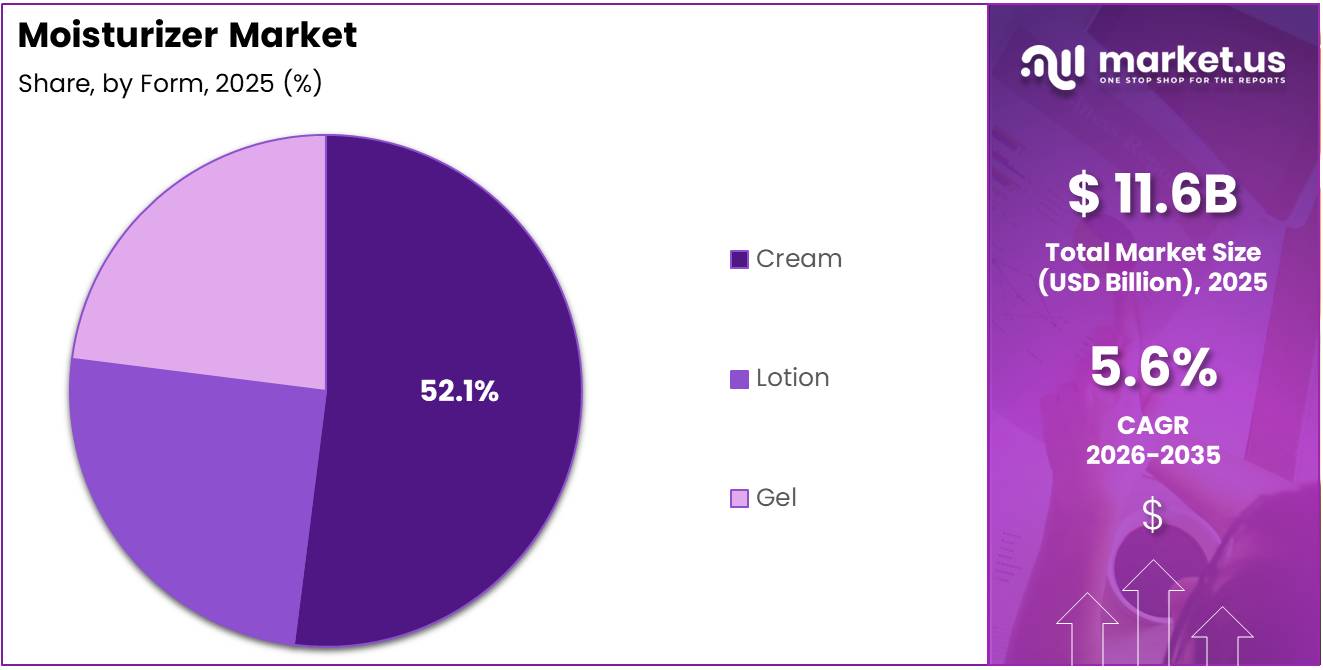
- By Form, the Cream segment holds the leading position with a 52.1% share.
- By End-user, the Women segment accounts for the largest share at 61.8%.
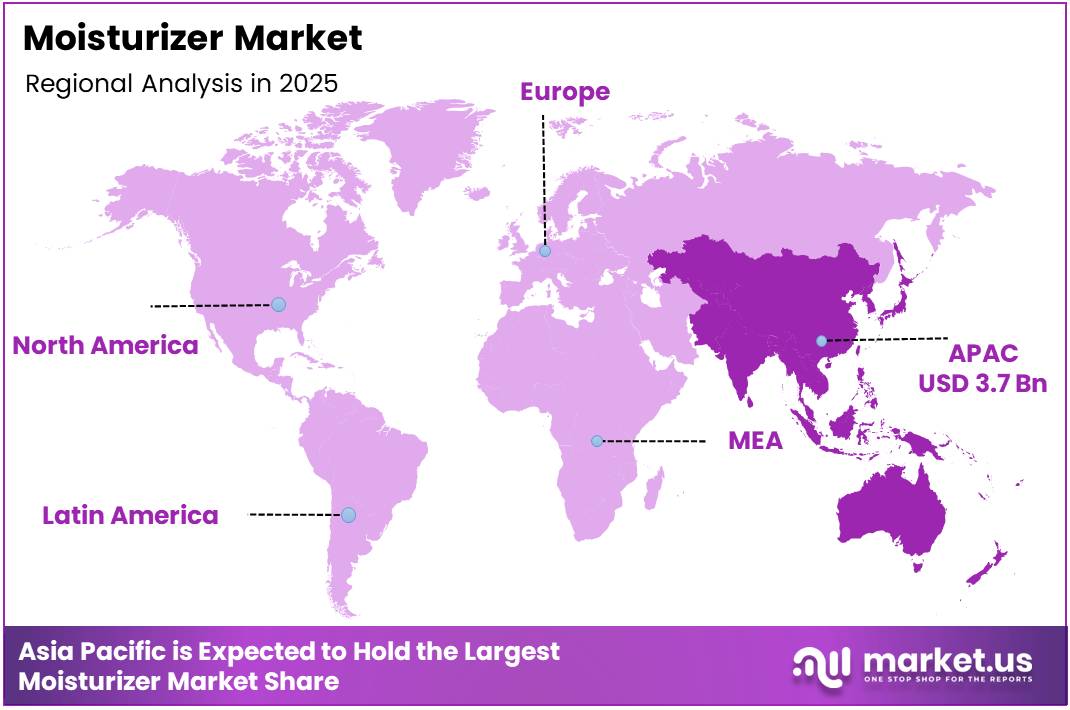
- Asia Pacific leads all regions with a 32.40% market share, valued at USD 3.7 Billion in 2025.
By Type Analysis
Body Moisturizer dominates with 65.2% due to widespread daily use and rising consumer focus on full-body skin health.
In 2025, Body Moisturizer held a dominant market position in the By Type segment of the Moisturizer Market, with a 65.2% share. Body moisturizers are widely used for daily hydration and skin protection across all age groups. Moreover, growing consumer awareness around skin barrier health has significantly boosted demand for effective full-body moisturizing solutions globally.
Face Moisturizer represents the second key sub-segment within this category. These products are specifically formulated to address facial skin concerns such as dryness, sensitivity, and premature aging. Additionally, the growing influence of dermatologists and skincare content creators has encouraged consumers to adopt dedicated facial moisturizing routines, supporting steady growth in this segment.
By Form Analysis
Cream dominates with 52.1% due to its rich texture and superior moisture retention preferred by a broad consumer base.
In 2025, Cream held a dominant market position in the By Form segment of the Moisturizer Market, with a 52.1% share. Creams are favored for their thick, nourishing consistency that provides long-lasting hydration for dry and combination skin. Moreover, their versatility across body and facial applications makes them a top choice for everyday skincare routines.
Gel moisturizers represent a growing sub-segment, especially popular among consumers with oily or acne-prone skin. Their water-based, non-greasy formulas deliver effective hydration without blocking pores. Consequently, rising demand for lightweight skincare options in warm and humid climates is accelerating the global adoption of gel-form moisturizers across multiple age groups.
By End-user Analysis
Women dominate with 61.8% due to high engagement with skincare routines and strong interest in anti-aging and hydrating products.
In 2025, Women held a dominant market position in the By End-user segment of the Moisturizer Market, with a 61.8% share. Women represent the largest and most consistent consumer group for moisturizers worldwide. Moreover, their strong interest in anti-aging benefits, hydration, and skin tone improvement continues to sustain high demand in this segment.
Men represent a fast-growing end-user group in the global moisturizer market. Rising awareness of skincare among male consumers, supported by social media and shifting grooming norms, has expanded targeted product offerings. Additionally, brands are increasingly launching gender-specific moisturizers with benefits such as post-shave hydration and oil control to capture this expanding demographic.
Infant and Kids is a specialized sub-segment centered on gentle, dermatologist-tested products formulated for sensitive young skin. Parents increasingly prefer hypoallergenic and fragrance-free moisturizers for daily use on infants and children. Consequently, the segment is experiencing steady growth as parental awareness of proper infant skincare and pediatric dermatology recommendations continues to rise globally.
Key Market Segments
By Type
- Body Moisturizer
- Face Moisturizer
By Form
- Cream
- Lotion
- Gel
By End-user
- Women
- Men
- Infant & Kids
Drivers
Rising Consumer Awareness and Urban Pollution Drive Moisturizer Market Growth
Growing consumer awareness about daily skin hydration and barrier repair is a primary driver of the moisturizer market. Consumers are increasingly building structured skincare routines that place moisturization at the core. Moreover, greater access to dermatological guidance online is reinforcing the value of consistent moisturizer use across all consumer demographics.
Expanding demand for dermatologist-recommended and sensitive-skin formulations is further accelerating market growth. Healthcare professionals are advising more patients to incorporate clinically tested moisturizers into their daily skincare practices. Consequently, brands are investing in products that meet dermatological standards and address a broader range of skin conditions and sensitivity profiles.
Increasing urban pollution levels are also intensifying the need for protective skincare solutions globally. Environmental pollutants damage the skin’s natural barrier, making effective moisturizers a daily necessity for urban populations. Additionally, the rising prevalence of pollution-related skin issues such as dryness, irritation, and sensitivity is compelling consumers to adopt regular moisturizing habits.
Restraints
Ingredient Safety Concerns and Efficacy Variability Restrain Moisturizer Market Adoption
Consumer concerns over potentially harmful ingredients in skincare formulations remain a significant restraint for the moisturizer market. Many buyers are cautious about parabens, synthetic fragrances, and chemical additives that may trigger skin reactions. Moreover, limited transparency in ingredient labeling makes it difficult for consumers to make fully informed and confident purchasing decisions.
The growing demand for clean and transparent skincare is compelling brands to reformulate products and improve disclosure practices. However, these changes require significant investment in research and product development, which can slow new launches and raise production costs. Consequently, smaller market participants may face challenges in keeping pace with evolving safety and transparency expectations.
Product efficacy variability across different skin types further contributes to consumer hesitation in the moisturizer market. A product that performs well for one skin type may be ineffective or irritating for another. Therefore, inconsistent results reduce consumer confidence, often leading to trial-and-error purchasing behavior and lower overall brand loyalty within this competitive market.
Growth Factors
Personalization, Hybrid Formulas, and Sustainable Packaging Create New Market Opportunities
The rapid expansion of personalized and AI-powered skincare recommendation platforms is generating significant growth opportunities in the moisturizer market. These tools help consumers identify the most suitable products for their unique skin conditions and concerns. Moreover, personalized experiences are improving satisfaction levels and driving higher purchase rates in the premium skincare segment globally.
Increasing demand for hybrid moisturizers that combine hydration with sun protection and anti-aging benefits is another strong growth driver. These multifunctional products offer convenience and value, especially for consumers seeking streamlined routines. Additionally, the rise of SPF-infused and retinol-enriched moisturizers is significantly broadening the product portfolio available across mass and prestige market segments.
The growing consumer focus on environmental responsibility is driving innovation in skincare packaging. Brands are adopting refillable, recyclable, and biodegradable packaging solutions to satisfy eco-conscious shoppers. Consequently, sustainable packaging has become a meaningful competitive differentiator, attracting environmentally aware buyers and enhancing brand credibility within the global moisturizer market landscape.
Emerging Trends
Barrier-Repair Ingredients, Social Media, and Minimalist Routines Shape the Moisturizer Market
The growing popularity of barrier-repair ingredients such as ceramides and hyaluronic acid is among the most prominent emerging trends in the moisturizer market. These ingredients are widely recognized for restoring skin hydration and resilience. Moreover, strong dermatologist endorsements have increased consumer confidence in science-backed formulations featuring these key actives globally.
Social media platforms and digital dermatology content are profoundly reshaping skincare purchasing decisions. Channels such as Instagram and TikTok have accelerated consumer awareness of ingredient benefits and evidence-based skincare routines. Additionally, influencers and certified dermatologists are guiding millions of consumers toward informed moisturizer choices, directly influencing product preferences across age groups worldwide.
The shift toward minimalist skincare routines is gaining strong traction among modern consumers. Many are replacing complex multi-step regimens with streamlined routines built around a few high-performance products. Consequently, demand for multi-functional moisturizers that deliver hydration, protection, and treatment benefits within a single product is rising at a notable pace globally.
Regional Analysis
Asia Pacific Dominates the Moisturizer Market with a Market Share of 32.40%, Valued at USD 3.7 Billion
Asia Pacific leads the global moisturizer market with a dominant share of 32.40%, valued at USD 3.7 Billion in 2025. Large consumer populations in China, India, Japan, and South Korea are the primary contributors to this regional dominance. Moreover, rising disposable incomes, rapid urbanization, and a deeply embedded culture of daily skincare continue to sustain robust market demand across the region.
North America Moisturizer Market Trends
North America is one of the most mature and high-value regions in the global moisturizer market, with the United States driving the majority of regional demand. Strong consumer spending on premium skincare, growing male grooming adoption, and the expanding clean beauty movement collectively support market growth. Additionally, well-established retail and digital distribution channels ensure consistent product accessibility for consumers.
Europe Moisturizer Market Trends
Europe holds a significant share of the global moisturizer market, supported by high consumer awareness and stringent cosmetic ingredient safety regulations. Key contributors include Germany, France, the United Kingdom, and Italy. Furthermore, strong demand for organic, natural, and dermatologically tested formulations, combined with the presence of established skincare heritage brands, continues to drive steady regional market growth.
Latin America Moisturizer Market Trends
Latin America is an emerging growth market for moisturizers, with Brazil and Mexico serving as the primary regional demand drivers. A growing middle class, increasing urbanization, and rising consumer interest in personal care are fueling adoption. Additionally, the rapid expansion of e-commerce and modern retail infrastructure is improving product accessibility and supporting broader market development across the region.
Middle East and Africa Moisturizer Market Trends
The Middle East and Africa region is experiencing gradual and steady expansion in the moisturizer market. Rising consumer awareness of skincare, particularly across Gulf Cooperation Council countries, is a key factor supporting demand growth. Moreover, increasing penetration of international beauty brands and the development of modern retail and digital commerce platforms are contributing to greater product adoption across the region.
Key Regions and Countries
North America
- US
- Canada
Europe
- Germany
- France
- The UK
- Spain
- Italy
- Rest of Europe
Asia Pacific
- China
- Japan
- South Korea
- India
- Australia
- Rest of APAC
Latin America
- Brazil
- Mexico
- Rest of Latin America
Middle East & Africa
- GCC
- South Africa
- Rest of MEA
Key Company Insights
L’Oreal S.A. is one of the most prominent participants in the global moisturizer market, offering a diversified skincare portfolio spanning mass and premium segments. The company invests heavily in research and development to deliver science-backed moisturizing formulations tailored to varied skin types and demographics. Moreover, its extensive global distribution network reinforces its leadership position across all major regional markets.
Estee Lauder Inc. maintains a strong presence in the premium moisturizer segment through well-recognized skincare brands targeting the luxury consumer base. The company focuses on innovation in anti-aging and advanced hydration technologies, consistently introducing high-performance products supported by clinical research. Additionally, its targeted approach to mature and professional consumers reinforces brand authority and supports sustained long-term customer loyalty.
Unilever Plc holds a significant position in the global moisturizer market through a broad range of mass-market skincare brands available across both developed and emerging economies. The company’s core strength lies in scaling affordable yet effective moisturizing products to large and diverse consumer populations. Furthermore, Unilever’s ongoing sustainability and responsible sourcing initiatives are strengthening brand relevance among eco-conscious shoppers worldwide.
The Procter and Gamble Company competes in the global moisturizer market through trusted personal care brands catering to diverse consumer needs and skin conditions. The company leverages consumer research and advanced formulation capabilities to develop moisturizers suited for various demographics and age groups. Additionally, its strong retail presence across global markets ensures broad product visibility and consistent consumer accessibility.
Key Players
- L’Oreal S.A.
- Estee Lauder Inc.
- Unilever Plc
- The Procter & Gamble Company
- Shiseido Co. Ltd.
- Beiersdorf AG
- Henkel AG & Company, KGaA
- Johnson & Johnson Private Limited
- Kao Corporation
- Coty Inc.
Recent Developments
- March 2026 – RDM Partners completed the sale of LilyAna Naturals to Skyline Beauty Group, marking a strategic ownership transition for the natural skincare brand. This deal reflects continued consolidation activity within the broader personal care and moisturizer market segment.
- January 2026 – Beiersdorf introduced NIVEA Creme Natural Touch, the first line extension of its globally recognized blue tin product. This launch reflects the company’s strategy to expand its iconic moisturizer franchise with cleaner, naturally inspired formulations for modern consumers.
- June 2025 – Kao Corporation announced the launch of two new products under its Curél brand, which specializes in skincare designed for dry and sensitive skin. The expansion reinforces Kao’s commitment to dermatologically focused moisturizing solutions targeting consumers with specific skin care needs.
- June 2025 – LG H&H Co. Ltd., a South Korean personal care company, acquired the remaining 35% stake in Los Angeles-based beauty manufacturer The Crème Shop Inc. for USD 67 million. This acquisition strengthens LG H&H’s foothold in the North American skincare and moisturizer market.
Report Scope
Report Features Description Market Value (2025) USD 11.7 Billion Forecast Revenue (2035) USD 20.3 Billion CAGR (2026-2035) 5.6% Base Year for Estimation 2025 Historic Period 2020-2024 Forecast Period 2026-2035 Report Coverage Revenue Forecast, Market Dynamics, Competitive Landscape, Recent Developments Segments Covered By Type (Body Moisturizer, Face Moisturizer), By Form (Cream, Lotion, Gel), By End-user (Women, Men, Infant & Kids) Regional Analysis North America (US and Canada), Europe (Germany, France, The UK, Spain, Italy, and Rest of Europe), Asia Pacific (China, Japan, South Korea, India, Australia, and Rest of APAC), Latin America (Brazil, Mexico, and Rest of Latin America), Middle East & Africa (GCC, South Africa, and Rest of MEA) Competitive Landscape L’Oreal S.A., Estee Lauder Inc., Unilever Plc, The Procter & Gamble Company, Shiseido Co. Ltd., Beiersdorf AG, Henkel AG & Company KGaA, Johnson & Johnson Private Limited, Kao Corporation, Coty Inc. Customization Scope Customization for segments, region/country-level will be provided. Moreover, additional customization can be done based on the requirements. Purchase Options We have three licenses to opt for: Single User License, Multi-User License (Up to 5 Users), Corporate Use License (Unlimited User and Printable PDF) 
-
-
- L'Oreal S.A.
- Estee Lauder Inc.
- Unilever Plc
- The Procter & Gamble Company
- Shiseido Co. Ltd.
- Beiersdorf AG
- Henkel AG & Company, KGaA
- Johnson & Johnson Private Limited
- Kao Corporation
- Coty Inc.
Our Clients

- 182001
- March 2026






