


Global Medicine Cabinets Market Size, Share, Growth Analysis By Product Type (Wood, Plastic, Aluminum, Stainless Steel, Others), By Category (Single Door, Multi Door), By Application (Residential, Commercial), By Region and Companies - Industry Segment Outlook, Market Assessment, Competition Scenario, Statistics, Trends and Forecast 2025-2034
- Published date: Dec 2025
- Report ID: 169913
- Number of Pages: 348
- Format:
-
keyboard_arrow_up
Quick Navigation
Report Overview
Global Medicine Cabinets Market size is expected to reach approximately USD 18.4 Billion by 2034 from USD 10.1 Billion in 2024, expanding at a CAGR of 6.2% during the forecast period from 2025 to 2034.
Medicine cabinets represent essential bathroom storage solutions designed for organizing medications, toiletries, and personal care items. These fixtures combine functionality with aesthetic appeal, serving residential and commercial spaces. The market encompasses various materials including wood, plastic, aluminum, and stainless steel options.
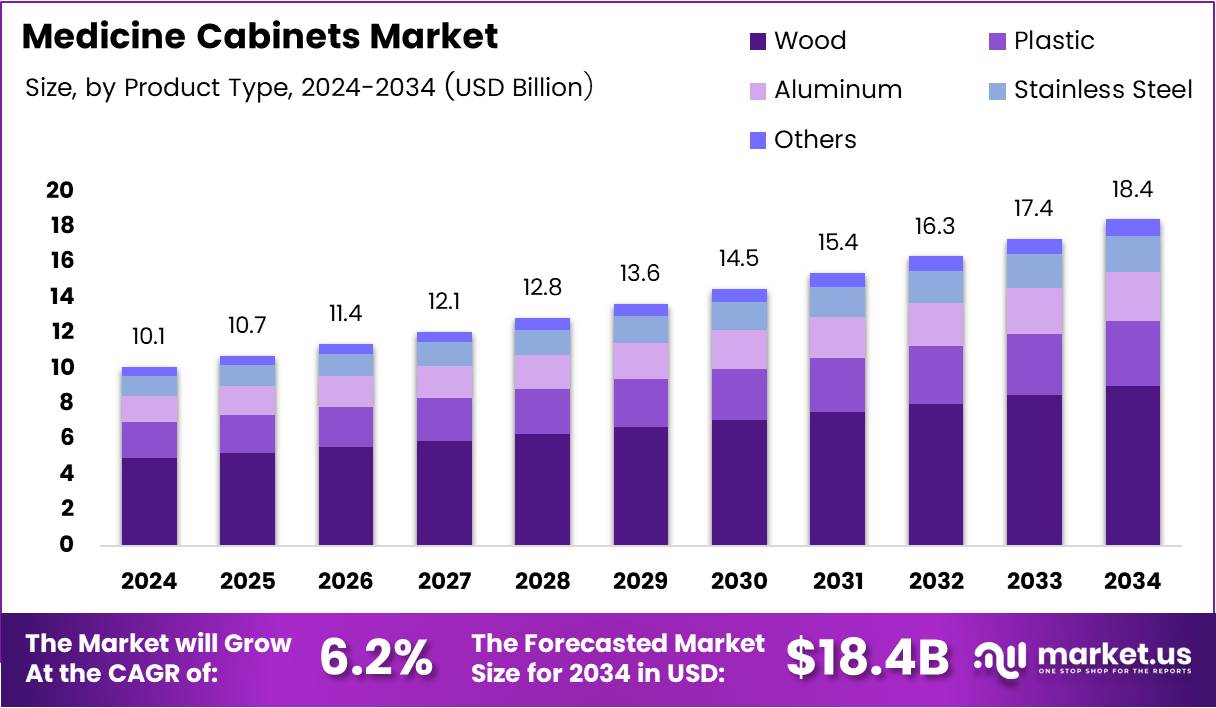
Furthermore, the medicine cabinets industry is experiencing substantial transformation driven by evolving consumer preferences and technological advancements. Modern designs integrate space-saving features, mirrored surfaces, and organizational compartments to maximize utility. Additionally, manufacturers are focusing on developing innovative products that blend seamlessly with contemporary bathroom interiors. The residential segment continues dominating market demand, accounting for substantial revenue share globally.
Moreover, rising urbanization and growing disposable incomes are accelerating market expansion across developing economies. Consequently, consumers increasingly seek multifunctional storage solutions that optimize limited bathroom space. The commercial sector, including hotels, hospitals, and office buildings, also contributes significantly to market growth. Meanwhile, e-commerce platforms are revolutionizing product distribution, making diverse cabinet options accessible to broader consumer bases.
However, the market faces challenges related to installation complexity and premium pricing for customized designs. Nevertheless, opportunities abound in smart cabinet integration featuring LED lighting, anti-fog technology, and sensor-enabled functionalities. Government regulations regarding bathroom safety standards and material certifications influence manufacturing practices. Simultaneously, sustainability initiatives are encouraging adoption of eco-friendly materials and production processes.
Additionally, research indicates medication storage remains a critical concern, with studies showing significant room for improvement. According to Research, only 28 (23.3%) households stored all medications appropriately, while 92 (76.7%) households stored at least one medication inappropriately. This highlights the importance of properly designed medicine cabinets in promoting safe medication storage practices and enhancing healthcare outcomes at home.
Ultimately, the medicine cabinets market demonstrates robust growth potential supported by innovative product development and expanding consumer awareness. Industry participants are investing heavily in research and development to introduce advanced features. Regional markets exhibit varying growth patterns influenced by construction activities, renovation trends, and housing development initiatives. The competitive landscape remains dynamic with established brands and emerging players competing for market share.
Key Takeaways
- Global Medicine Cabinets Market is projected to reach USD 18.4 Billion by 2034 from USD 10.1 Billion in 2024
- The market is expected to grow at a CAGR of 6.2% during the forecast period 2025-2034
- Wood product type segment dominates with 37.9% market share
- Single Door category holds 67.8% market share
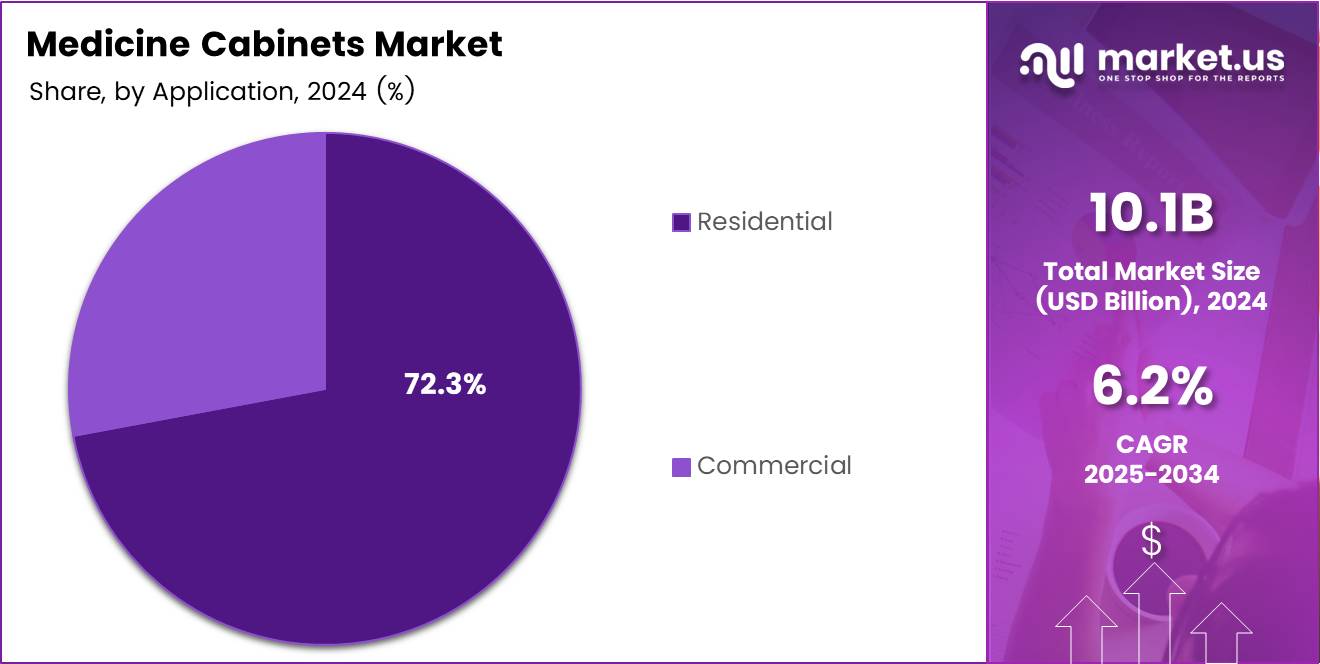
- Residential application segment leads with 72.3% market share
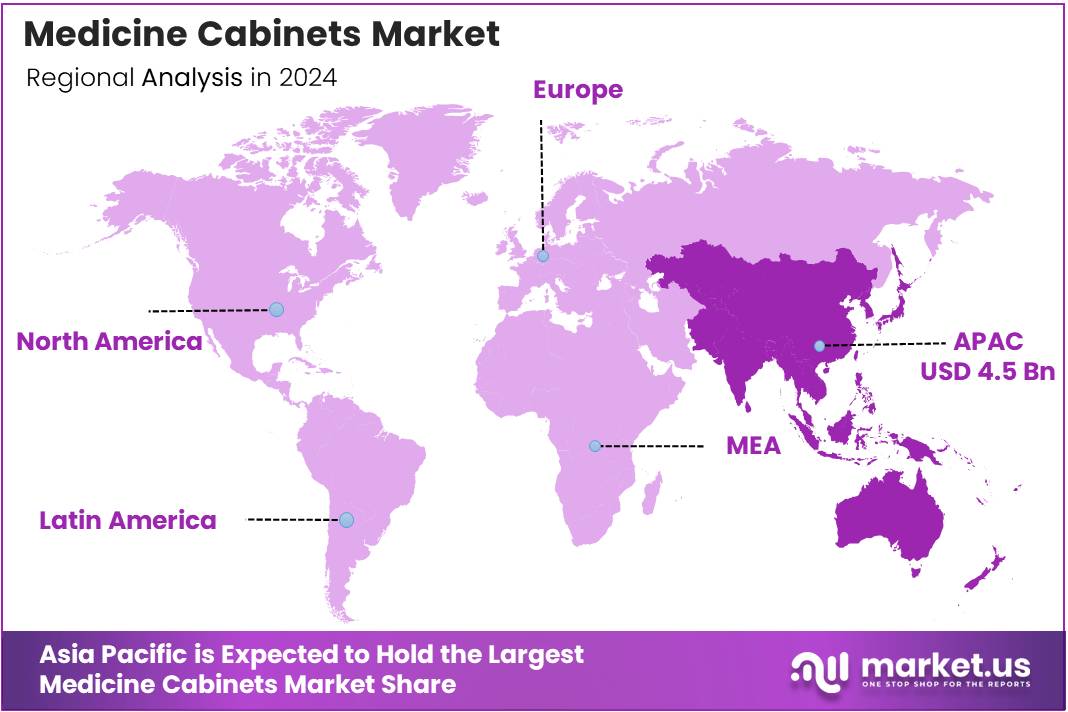
- Asia Pacific region dominates with 45.20% market share, valued at USD 4.5 Billion
By Product Type Analysis
Wood dominates with 37.9% due to its aesthetic appeal and durability.
In 2024, Wood held a dominant market position in the By Product Type Analysis segment of Medicine Cabinets Market, with a 37.9% share. Wood cabinets offer timeless elegance and superior craftsmanship that appeals to homeowners seeking premium bathroom fixtures. These products provide excellent durability and can be customized with various finishes and stains. Additionally, wood cabinets complement diverse interior design styles from traditional to contemporary aesthetics. The natural material creates warm, inviting bathroom environments while maintaining structural integrity over extended periods.
Plastic medicine cabinets represent cost-effective alternatives gaining traction among budget-conscious consumers. These lightweight options offer moisture resistance and easy maintenance characteristics ideal for humid bathroom environments. Plastic cabinets come in various colors and designs, providing flexibility for different decor preferences. Moreover, they require minimal installation effort and are particularly popular in rental properties and starter homes.
Aluminum cabinets deliver modern aesthetics with exceptional corrosion resistance and lightweight construction benefits. These products appeal to consumers preferring sleek, contemporary bathroom designs with metallic finishes. Aluminum options provide excellent value through long-lasting performance and minimal maintenance requirements. Furthermore, they integrate well with modern fixtures and fittings in updated bathroom spaces.
Stainless Steel cabinets cater to premium market segments seeking industrial-chic aesthetics and maximum durability. These high-end options resist staining, corrosion, and bacterial growth, making them ideal for healthcare facilities. Stainless steel provides unmatched longevity and maintains its appearance despite constant exposure to moisture. Other materials including composite and glass options serve niche markets with specialized requirements and design preferences.
By Category Analysis
Single Door dominates with 67.8% due to its compact design and affordability.
In 2024, Single Door held a dominant market position in the By Category Analysis segment of Medicine Cabinets Market, with a 67.8% share. Single door cabinets represent the most popular configuration for residential bathrooms due to their space-efficient design. These units perfectly suit standard bathroom dimensions and provide adequate storage for average household needs.
Additionally, single door cabinets offer straightforward installation processes and lower price points compared to multi-door alternatives. Consumers appreciate their simplicity and effectiveness in organizing essential medications and toiletries.
Multi Door medicine cabinets serve larger bathrooms and commercial applications requiring expanded storage capacity. These configurations typically feature two or three door designs that provide compartmentalized organization options. Multi-door units appeal to families with extensive medication and personal care product collections.
Moreover, they offer superior organizational capabilities with separate sections for different household members. Commercial establishments including hotels and medical facilities prefer multi-door options for their enhanced storage functionality.
By Application Analysis
Residential dominates with 72.3% due to widespread home installation and renovation activities.
In 2024, Residential held a dominant market position in the By Application Analysis segment of Medicine Cabinets Market, with a 72.3% share. Residential applications drive market growth through continuous home construction and bathroom remodeling projects globally.
Homeowners increasingly invest in quality medicine cabinets as essential bathroom fixtures during renovation initiatives. These products enhance property value while providing practical storage solutions for daily medication and toiletry needs. Furthermore, residential demand spans various housing types from apartments to luxury homes across different economic segments.
Commercial applications encompass diverse sectors including hospitality, healthcare, corporate offices, and public facilities requiring bathroom amenities. Hotels and resorts install medicine cabinets in guest rooms to enhance visitor convenience and bathroom functionality.
Healthcare facilities utilize specialized cabinets designed for clinical environments with stringent hygiene requirements. Additionally, commercial establishments prioritize durable, low-maintenance options that withstand high-traffic usage patterns and deliver long-term performance.
Key Market Segments
By Product Type
- Wood
- Plastic
- Aluminum
- Stainless Steel
- Others
By Category
- Single Door
- Multi Door
By Application
- Residential
- Commercial
Market Drivers
Rising Home Renovation and Bathroom Remodeling Activities Drive Market Expansion
Home renovation activities continue accelerating globally as homeowners invest in property upgrades and modernization projects. Bathroom remodeling represents a priority area where consumers allocate significant budgets for fixture improvements and aesthetic enhancements.
Medicine cabinets constitute essential components of bathroom renovation plans, driving consistent product demand across residential segments. Moreover, aging housing stock in developed markets requires systematic updates, creating sustained replacement demand for outdated bathroom fixtures.
Growing preference for space-saving and multifunctional storage solutions propels market growth as urban living spaces become increasingly compact. Consumers seek innovative cabinet designs that maximize limited bathroom square footage while providing adequate storage capacity.
Additionally, increasing demand for smart, sensor-enabled medicine cabinets reflects technological advancement trends in home furnishings. Furthermore, expansion of e-commerce channels for home and bath furnishings enhances product accessibility and consumer purchasing convenience significantly.
Market Restraints
High Installation Costs for Premium Cabinetry Limit Market Penetration
High installation costs for premium and customized cabinetry present significant barriers for price-sensitive consumer segments. Professional installation services add substantial expenses beyond initial product purchase prices, deterring budget-conscious buyers from premium options.
Complex mounting requirements for recessed designs necessitate wall modifications that increase overall project costs considerably. Moreover, customized cabinets command premium pricing that restricts accessibility for middle-income households despite growing interest in personalized solutions.
Limited storage capacity compared to alternative bathroom storage systems challenges medicine cabinet market growth in certain applications. Freestanding shelving units and vanity cabinets often provide greater storage volume for consumers with extensive product collections.
Additionally, wall-mounted cabinets face spatial constraints that restrict depth and width dimensions compared to floor-based storage alternatives. Some consumers perceive medicine cabinets as insufficient for comprehensive bathroom organization needs, preferring comprehensive storage solutions instead.
Growth Opportunities
Development of Modular, Customizable Designs Creates Expansion Potential
Development of modular, customizable medicine cabinet designs presents significant opportunities for market differentiation and consumer appeal. Manufacturers can offer flexible configurations that adapt to diverse bathroom layouts and individual storage requirements effectively.
Integration of anti-fog, LED lighting, and smart health monitoring features enhances product value propositions for tech-savvy consumers. These advanced functionalities transform traditional cabinets into intelligent bathroom accessories that justify premium pricing and attract innovation-oriented buyers.
Market penetration in emerging economies with expanding urban housing offers substantial growth potential for industry participants. Rising middle-class populations in developing regions demonstrate increasing willingness to invest in quality bathroom fixtures and accessories.
Additionally, adoption of sustainable materials and eco-friendly manufacturing processes aligns with growing environmental consciousness among global consumers. Green building certifications and sustainability credentials increasingly influence purchasing decisions, creating competitive advantages for environmentally responsible manufacturers.
Emerging Trends
Surge in Demand for Frameless and Minimalist Cabinet Aesthetics Shapes Market Direction
Surge in demand for frameless and minimalist cabinet aesthetics reflects evolving consumer preferences toward contemporary bathroom design styles. Clean lines and seamless integration with surrounding walls create sophisticated, uncluttered bathroom environments that appeal to modern homeowners.
Increasing popularity of recessed, wall-integrated cabinet systems demonstrates consumer desire for space-efficient solutions that maintain streamlined appearances. These flush-mounted designs eliminate visual clutter while providing essential storage functionality in compact bathroom spaces.
Growing consumer interest in touchless and voice-activated cabinet functions represents technological advancement trends in home automation integration. Smart features enable hands-free operation that enhances convenience and hygiene in bathroom environments increasingly.
Rising trend of mirror-cabinet hybrids with built-in digital displays merges traditional functionality with contemporary technology seamlessly. These innovative products display time, weather information, and health metrics while serving primary storage purposes, appealing to digitally connected consumers.
Regional Analysis
Asia Pacific Dominates the Medicine Cabinets Market with a Market Share of 45.20%, Valued at USD 4.5 Billion
Asia Pacific leads the global medicine cabinets market, commanding a dominant position with 45.20% market share valued at USD 4.5 Billion. Rapid urbanization, expanding middle-class populations, and robust construction activities drive exceptional growth across the region. China, India, Japan, and Southeast Asian nations contribute significantly through residential and commercial development projects. Moreover, increasing disposable incomes enable consumers to invest in quality bathroom fixtures and modern home improvements consistently.
North America Medicine Cabinets Market Trends
North America represents a mature market characterized by steady replacement demand and bathroom renovation activities. The United States and Canada demonstrate strong consumer preferences for premium, feature-rich cabinet options with advanced functionalities. Additionally, growing emphasis on smart home integration drives adoption of sensor-enabled and LED-equipped medicine cabinets. The region’s established distribution networks and strong e-commerce presence facilitate efficient product accessibility for consumers.
Europe Medicine Cabinets Market Trends
Europe exhibits stable market growth driven by bathroom modernization initiatives and sustainability-focused consumer preferences. Western European countries including Germany, UK, France, and Italy lead regional demand through renovation projects and new construction. European consumers prioritize eco-friendly materials and energy-efficient lighting features in cabinet selections. Furthermore, strict building regulations and safety standards influence product design and manufacturing processes across the region.
Middle East and Africa Medicine Cabinets Market Trends
Middle East and Africa demonstrate emerging market potential fueled by infrastructure development and hospitality sector expansion. Gulf Cooperation Council countries invest heavily in residential and commercial construction projects requiring quality bathroom fixtures. Growing tourism industry drives hotel development that increases commercial medicine cabinet demand significantly. However, market growth faces challenges from economic volatility and varying consumer purchasing power across different countries.
Latin America Medicine Cabinets Market Trends
Latin America shows moderate growth prospects supported by urban development initiatives and expanding middle-class populations. Brazil, Mexico, and Argentina lead regional demand through residential construction and renovation activities. Consumers increasingly seek affordable yet stylish cabinet options that balance quality with budget considerations. Additionally, improving economic conditions and rising homeownership rates contribute to gradual market expansion across the region.
Key Medicine Cabinets Company Insights
IKEA maintains a strong global presence through its extensive retail network and affordable, design-forward product offerings that appeal to budget-conscious consumers. The company leverages its flat-pack business model to deliver cost-effective solutions with easy self-installation options.
Kohler represents the premium segment with high-quality, designer medicine cabinets featuring advanced functionalities including LED lighting and smart integration capabilities. Their products emphasize luxury aesthetics and superior craftsmanship that command premium pricing in upscale residential and hospitality applications.
Bradley Corp. focuses on commercial and institutional markets, providing durable, code-compliant solutions for healthcare facilities, schools, and public buildings. Their products prioritize functionality, hygiene, and long-term performance in high-traffic environments.
Robern specializes in premium residential medicine cabinets with innovative features such as electrical outlets, magnifying mirrors, and customizable interior configurations. Meanwhile, companies like Afina Corporation, Ketchem Medicine Cabinets, Foremost Medicine Cabinet, Duravi, Strasser, and Rangaire serve diverse market segments through varied product portfolios spanning different price points and design aesthetics.
Key Companies
- IKEA
- Kohler
- Bradley Corp.
- Robern
- Afina Corporation
- Ketchem Medicine Cabinets
- Foremost Medicine Cabinet
- Duravi
- Strasser
- Rangaire
Recent Developments
- April 2025: Robern launched its innovative Presence Cabinet, featuring advanced smart technology and sensor-enabled functionalities. The new product line incorporates LED lighting, anti-fog capabilities, and touchless operation to enhance user convenience and bathroom functionality significantly.
- July 2024: MSD completed its strategic acquisition of Elanco for USD 1.3 Billion, significantly expanding its medicine cabinet product portfolio. This transaction strengthened the company’s market position and enabled enhanced distribution capabilities across multiple geographic regions globally.
Report Scope
Report Features Description Market Value (2024) USD 10.1 Billion Forecast Revenue (2034) USD 18.4 Billion CAGR (2025-2034) 6.2% Base Year for Estimation 2024 Historic Period 2020-2023 Forecast Period 2025-2034 Report Coverage Revenue Forecast, Market Dynamics, Competitive Landscape, Recent Developments Segments Covered By Product Type (Wood, Plastic, Aluminum, Stainless Steel, Others), By Category (Single Door, Multi Door), By Application (Residential, Commercial) Regional Analysis North America (US and Canada), Europe (Germany, France, The UK, Spain, Italy, and Rest of Europe), Asia Pacific (China, Japan, South Korea, India, Australia, and Rest of APAC), Latin America (Brazil, Mexico, and Rest of Latin America), Middle East & Africa (GCC, South Africa, and Rest of MEA) Competitive Landscape IKEA, Kohler, Bradley Corp., Robern, Afina Corporation, Ketchem Medicine Cabinets, Foremost Medicine Cabinet, Duravi, Strasser, Rangaire Customization Scope Customization for segments, region/country-level will be provided. Moreover, additional customization can be done based on the requirements. Purchase Options We have three licenses to opt for: Single User License, Multi-User License (Up to 5 Users), Corporate Use License (Unlimited User and Printable PDF) 
-
-
- IKEA
- Kohler
- Bradley Corp.
- Robern
- Afina Corporation
- Ketchem Medicine Cabinets
- Foremost Medicine Cabinet
- Duravi
- Strasser
- Rangaire
Our Clients

- 169913
- Dec 2025






