


Global Dihydrocitronellol Market By Source (Natural and Synthetic), By Application (Personal Care And Cosmetics, Pharmaceuticals, Home Care, Animal Feed, and Others), By Region and Companies - Industry Segment Outlook, Market Assessment, Competition Scenario, Trends and Forecast 2025-2034
- Published date: Jan 2026
- Report ID: 174548
- Number of Pages: 383
- Format:
-
keyboard_arrow_up
Quick Navigation
Report Overview
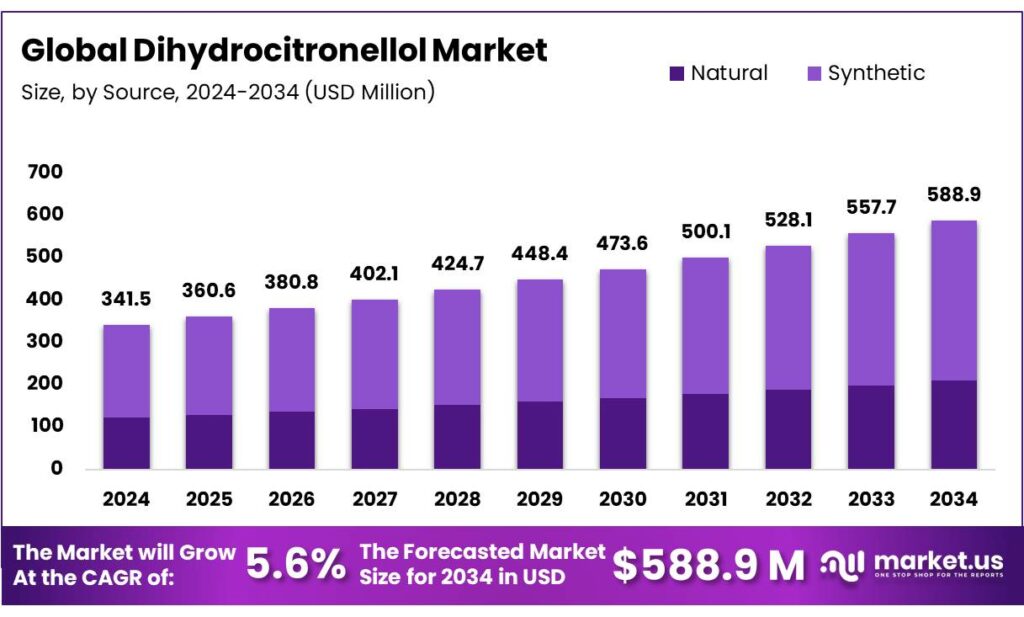
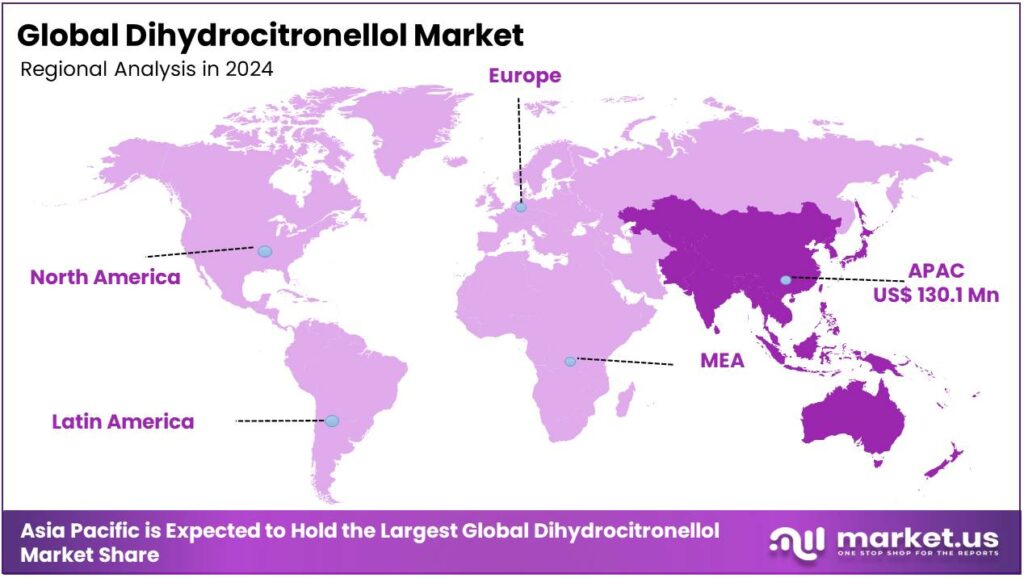
Global Dihydrocitronellol Market size is expected to be worth around USD 588.9 Million by 2034, from USD 341.5 Million in 2024, growing at a CAGR of 5.6% during the forecast period from 2025 to 2034. In 2024 Asia Pacific held a dominant market position, capturing more than a 38.1% share, holding USD 0.3 Billion in revenue.
Dihydrocitronellol, known as 3,7-dimethyloctan-1-ol or tetrahydrogeraniol, is a fatty alcohol and an organic compound with a fresh, rosy, and citrusy scent widely used as a fragrance ingredient. It is considered safe by the FDA as a food additive (GRAS); however, it can cause skin/eye irritation in some household products.
The market of the chemical is primarily driven by its widespread use in personal care and cosmetics products, where it serves as a popular fragrance ingredient due to its pleasant scent. It is widely incorporated into perfumes, shampoos, lotions, and deodorants, appealing to consumers seeking natural and subtle fragrances.
- Approximately 74% of consumers consider organic ingredients important in personal care products. This shift towards natural and organic ingredients in beauty products propels the demand for dihydrocitronellol.
Additionally, dihydrocitronellol’s growing role in home care products, including air fresheners and cleaning supplies, capitalizes on the rising demand for eco-friendly and non-toxic ingredients. Similarly, the compound’s application in insect repellents has gained momentum, as it serves as a natural alternative to synthetic chemicals such as Dihydrocitronellol.
- According to an analysis it was estimated that the individuals near the citronella candles had 42% fewer bites than controls who had no protection.
Despite its versatile applications, dihydrocitronellol faces competition from alternatives such as linalool and geraniol, which offer similar fragrance profiles at a lower cost. Similarly, geopolitical tensions and supply chain disruptions have added complexity to the market, affecting production and distribution.
Key Takeaways
- The global dihydrocitronellol market was valued at USD 341.5 million in 2024.
- The global dihydrocitronellol market is projected to grow at a CAGR of 5.6% and is estimated to reach USD 588.9 million by 2034.
- Based on the source of dihydrocitronellol, the synthetic compound dominated the market, with a market share of around 64.3%.
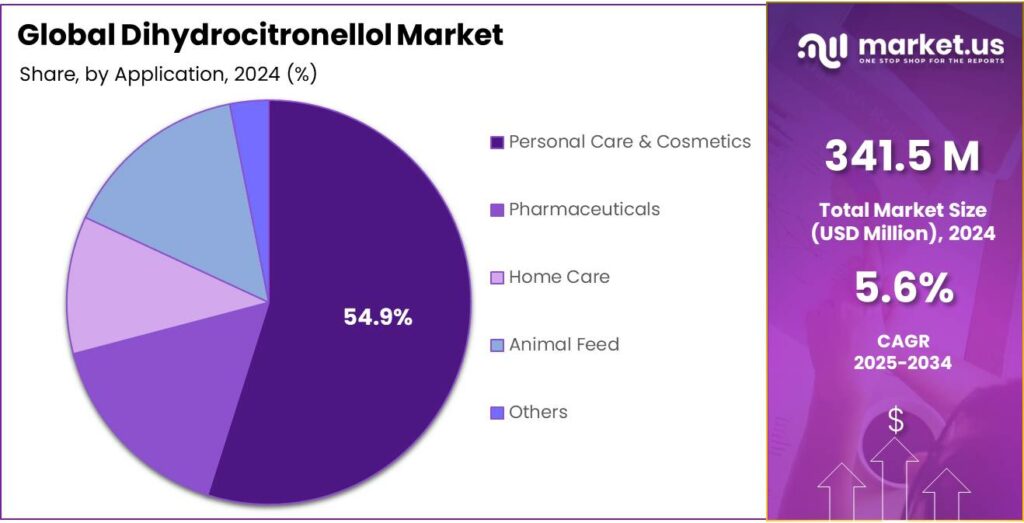
- Among the applications of dihydrocitronellol, the personal care & cosmetics sector held a major share in the market, 54.9% of the market share.
- In 2024, the Asia Pacific was the most dominant region in the dihydrocitronellol market, accounting for around 38.1% of the total global consumption.
Source Analysis
Synthetic Dihydrocitronellol Held the Largest Share in the Market.
The market is segmented based on sources of dihydrocitronellol into natural and synthetic. The synthetic dihydrocitronellol dominated the market, comprising around 64.3% of the market share, primarily due to its cost-effectiveness and availability.
The production of synthetic dihydrocitronellol is more efficient and scalable, as it can be manufactured in large quantities using chemical processes that ensure consistency in quality. In contrast, natural dihydrocitronellol is derived from plant sources such as citronella and rose, which can be subject to supply variability, seasonal fluctuations, and higher costs associated with extraction.
Additionally, synthetic dihydrocitronellol often provides a more stable fragrance profile, which is highly desirable for manufacturers aiming for uniformity in their products. The widespread use of synthetic alternatives aligns with the growing trend of chemical formulations that meet the demands for affordable yet effective fragrances, particularly in mass-market personal care, cleaning, and insect repellent products.
Application Analysis
The Dihydrocitronellol Was Mostly Utilized for the Personal Care & Cosmetics Sector.
Based on the applications of dihydrocitronellol, the market is divided into personal care & cosmetics, pharmaceuticals, home care, animal feed, and others. The personal care & cosmetics sector dominated the market, with a market share of 54.9%, due to its pleasant fragrance, skin-friendly properties, and versatility in enhancing sensory experiences.
Its ability to impart a fresh, floral, and citrus-like scent makes it ideal for applications in perfumes, shampoos, lotions, and deodorants. In contrast, its use in pharmaceuticals is limited as the compound lacks specific therapeutic properties required for various medical treatments. Similarly, while dihydrocitronellol is found in insect repellents, its use in home care products, such as cleaning solutions, is less common due to more cost-effective alternatives and its secondary role as a fragrance rather than a functional ingredient.
Additionally, its application in animal feed is minimal as there are more effective additives for animal nutrition and scent masking. Consequently, personal care remains the dominant sector for dihydrocitronellol, driven by consumer demand for effective, natural-based fragrances.
Key Market Segments
By Source
- Natural
- Synthetic
By Application
- Personal Care & Cosmetics
- Fragrances
- Deodorants
- Perfumes
- Others
- Skin Care
- Soaps & Detergents
- Others
- Fragrances
- Pharmaceuticals
- Home Care
- Animal Feed
- Others
Drivers
Expanding Personal Care and Cosmetics Industry Drives the Dihydrocitronellol Market.
The expanding personal care and cosmetics industry has significantly contributed to the growth of the dihydrocitronellol market. Dihydrocitronellol, a floral and citrus-scented compound, is commonly used as a fragrance ingredient in various products, including perfumes, lotions, shampoos, and soaps. As consumers become more discerning, brands are incorporating dihydrocitronellol due to its pleasant odor profile and its ability to enhance the overall sensory experience of personal care products.
- According to a study by the National Institutes of Health, approximately 90% of individuals worldwide use some form of personal care product daily. However, around 78% of consumers raised concerns about the potential risks related to these products. Additionally, 30.5% of the U.S. population reports irritation from scented products worn by others, tending towards subtle fragrances, such as dihydrocitronellol.
The increasing demand for cosmetic products, driven by evolving consumer preferences for natural and subtle fragrances, has propelled the use of this compound. Additionally, with the growing trend of eco-friendly and skin-friendly formulations, dihydrocitronellol’s versatile application in high-end and mass-market products has led to wider adoption.
Restraints
Competition from Alternatives Might Hamper the Demand for Dihydrocitronellol.
The demand for dihydrocitronellol faces considerable competition from alternative fragrance compounds such as linalool, citral, and geraniol, which may impede its market growth. For instance, linalool, known for its lavender-like scent, is widely used in personal care and household products due to its versatile application and established presence in the fragrance industry.
- According to a study by the National Institutes of Health, linalool consumption in the flavor and fragrance industry in North America alone has been estimated to be a million kilograms.
Similarly, citral, with its lemon-like aroma, is favored in citrus-based formulations, offering an appealing fresh fragrance at a competitive cost. Furthermore, geraniol, which has a rose-like scent, is often used in perfumes and skincare products for its pleasant floral notes. As consumers and manufacturers alike seek variety and innovation, these compounds are gaining traction, potentially reducing the market share of dihydrocitronellol in fragrance and cosmetic formulations.
Opportunity
Adoption of Dihydrocitronellol in the Home Care Products Creates Opportunities in the Market.
The rapid adoption of dihydrocitronellol in home care products presents significant opportunities for market expansion. As consumer preferences shift towards products that offer pleasant, enduring scents, dihydrocitronellol is increasingly being incorporated into air fresheners, laundry detergents, and cleaning supplies.
Its floral fragrance, known for its subtlety and freshness, enhances the sensory experience of household environments, making it a popular choice for manufacturers aiming to meet rising demand for premium home care solutions. Additionally, with growing consumer awareness around the ingredients used in cleaning products, manufacturers are opting for dihydrocitronellol due to its natural, safe, and non-toxic profile compared to harsher chemicals.
- In 2024, approximately 21% consumers in the US alone use natural cleaning products most often, compared to 17% in 2023 and 16% in 2022.
This trend is amplified by the broader movement towards eco-friendly formulations in home care items, where dihydrocitronellol’s role as a sustainable and effective fragrance compound aligns with these values. Consequently, its use is likely to continue growing across a variety of home care products, further driving demand.
Trends
Application of Dihydrocitronellol in Insect Repellents.
The application of dihydrocitronellol in insect repellents is an ongoing and increasingly popular trend, contributing to the diversification of its market use. Dihydrocitronellol has gained recognition for its ability to repel mosquitoes and other insects effectively. This compound is often integrated into sprays, lotions, and candles, offering a safer and more pleasant alternative to traditional chemical repellents, such as DEET.
- Leveraging the trend, several outdoor brands have incorporated this ingredient into their products. For instance, Odin’s Innovations had launched citronella mosquito & insect repellent liquid, and Kao Corporation published a study in which low-concentration citronella oil with L-PDMS (0.2 mg/cm2 on skin) leads to a remarkable boost of the repellence effect.
Furthermore, the growing consumer demand for environmentally friendly and non-toxic products has further accelerated the adoption of dihydrocitronellol in insect repellent formulations. As more people seek natural alternatives in personal care and outdoor products, the use of dihydrocitronellol in this category continues to gain momentum, providing new opportunities in the broader market.
Geopolitical Impact Analysis
Geopolitical Tensions Are Impacting the Dihydrocitronellol Market by Shifting Trade Flows.
The geopolitical tensions have significantly impacted the dihydrocitronellol market, with several factors influencing supply chains, production, and pricing. Increased trade restrictions, supply chain disruptions, and inflationary pressures resulting from conflicts, such as the war in Ukraine, have affected the availability and cost of raw materials needed for dihydrocitronellol production.
This has led to delays in manufacturing and increased operational costs for companies involved in the fragrance and personal care industries. Additionally, sanctions and transportation bottlenecks have made it more challenging to source key ingredients, which in turn affects the production timelines for products containing dihydrocitronellol. Similarly, the shift in global trade dynamics has prompted manufacturers to seek alternative sourcing and distribution routes, though this has led to higher procurement costs.
Furthermore, consumer behavior has been impacted, leading to a shift in demand for premium goods such as high-end fragrances and home care products, where dihydrocitronellol is commonly used. While some markets continue to prioritize natural and eco-friendly products, overall consumer spending has become more cautious, with many opting for cost-effective alternatives.
Regional Analysis
Asia Pacific Held the Largest Share of the Global Dihydrocitronellol Market.
In 2024, the Asia Pacific dominated the global dihydrocitronellol market, holding about 38.1% of the total global consumption, driven by the region’s robust demand for personal care, cosmetics, and home care products. Countries such as China, India, and Japan are major contributors, with a large and growing middle class increasingly seeking high-quality fragrances in everyday products and luxury items.
- According to the OECD, about 65% of the global middle class is expected to live in Asia by 2030, representing 3.5 billion people. As the middle-class population increases, the demand for luxury personal care products with natural ingredients, such as dihydrocitronellol, increases.
- According to the National Bureau of Statistics of China, in 2024, the nationwide per capita disposable income was 41,314 yuan, a nominal increase of 5.3% over 2023.
The rising disposable income in Asian countries has led to an expanding consumer base for products containing dihydrocitronellol, such as perfumes, shampoos, and air fresheners. Additionally, the increasing preference for natural ingredients in beauty and cleaning products has bolstered the demand for this compound, which aligns with the region’s rising awareness of eco-friendly and non-toxic alternatives.
Key Regions and Countries
- North America
- The US
- Canada
- Europe
- Germany
- France
- The UK
- Spain
- Italy
- Russia & CIS
- Rest of Europe
- APAC
- China
- Japan
- South Korea
- India
- ASEAN
- Rest of APAC
- Latin America
- Brazil
- Mexico
- Rest of Latin America
- Middle East & Africa
- GCC
- South Africa
- Rest of MEA
Key Players Analysis
Companies in the dihydrocitronellol market focus on product innovation, where they continuously improve the scent profiles and efficacy of products incorporating dihydrocitronellol, catering to evolving consumer preferences for natural and sustainable ingredients. Additionally, partnerships with well-established brands in the personal care, cosmetics, and home care sectors play a significant role in expanding their market reach.
Similarly, these players emphasize expanding distribution networks, through traditional retail and e-commerce platforms, to tap into a global audience. Furthermore, they focus on enhancing supply chain efficiency and securing reliable sourcing of raw materials for maintaining product quality and meeting growing demand.
The Major Players in The Industry
- Takasago International Corporation
- Kunshan Odowell Co., Ltd.
- Privi Speciality Chemicals Limited
- Chemical Bull Pvt. Ltd.
- Ataman Kimya Ltd.
- Florachem
- Other Key Players
Key Development
- In April 2025, Tradebe Life Sciences acquired Florachem, a U.S.-based company, to expand its international presence. Florachem was a leader in the manufacturing and distribution of concentrated fractions, extracts, and natural ingredients derived from citrus, such as citronella.
Report Scope
Report Features Description Market Value (2024) USD 341.5 Mn Forecast Revenue (2034) USD 588.9 Mn CAGR (2025-2034) 5.6% Base Year for Estimation 2024 Historic Period 2020-2023 Forecast Period 2025-2034 Report Coverage Revenue Forecast, Market Dynamics, Competitive Landscape, Recent Developments Segments Covered By Source (Natural and Synthetic), By Application (Personal Care & Cosmetics, Pharmaceuticals, Home Care, Animal Feed, and Others) Regional Analysis North America – The US & Canada; Europe – Germany, France, The UK, Spain, Italy, Russia & CIS, Rest of Europe; APAC– China, Japan, South Korea, India, ASEAN & Rest of APAC; Latin America– Brazil, Mexico & Rest of Latin America; Middle East & Africa– GCC, South Africa, & Rest of MEA Competitive Landscape Takasago International Corporation, Kunshan Odowell, Privi Speciality Chemicals Ltd., Chemical Bull, Ataman Kimya Ltd., and Other Players. Customization Scope Customization for segments, region/country-level will be provided. Moreover, additional customization can be done based on the requirements. Purchase Options We have three licenses to opt for: Single User License, Multi-User License (Up to 5 Users), Corporate Use License (Unlimited Users and Printable PDF) 
-
-
- Takasago International Corporation
- Kunshan Odowell Co., Ltd.
- Privi Speciality Chemicals Limited
- Chemical Bull Pvt. Ltd.
- Ataman Kimya Ltd.
- Florachem
- Other Key Players
Our Clients

- 174548
- Jan 2026






