Market Overview
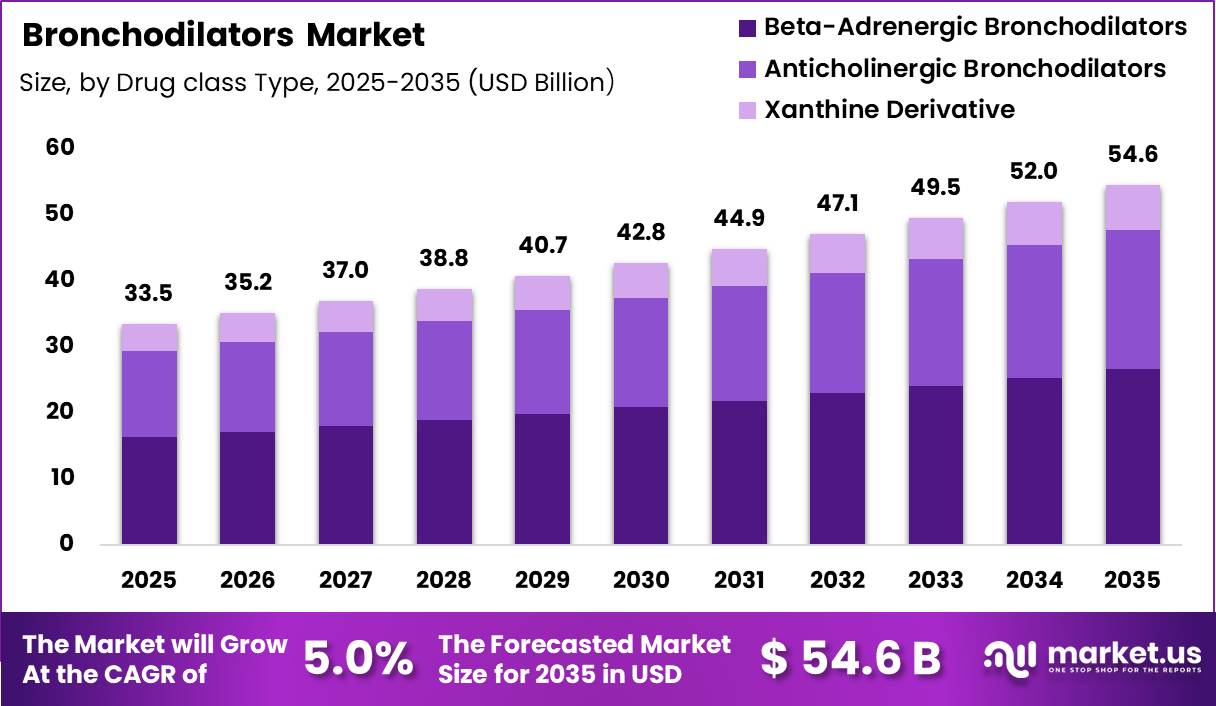
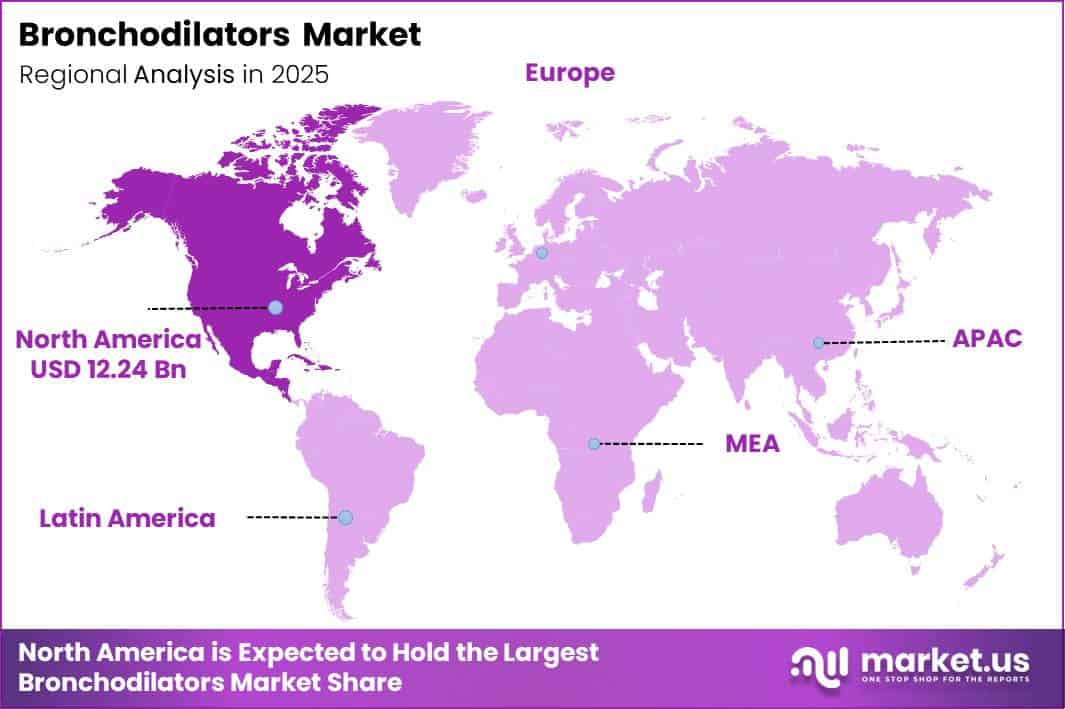
Global Bronchodilators Market size is expected to be worth around US$ 54.6 Billion by 2035 from US$ 33.5 Billion in 2025, growing at a CAGR of 5.0% during the forecast period from 2026 to 2035. In 2025, North America led the market, achieving over 36.5% share with a revenue of US$ 12.24 Billion.
The global bronchodilators market continues to expand steadily, driven by the rising prevalence of chronic respiratory diseases and increasing access to long-term inhalation therapies.
Bronchodilators are a core component in the clinical management of asthma and chronic obstructive pulmonary disease (COPD), conditions that collectively affect hundreds of millions of people worldwide.
According to the World Health Organization (WHO), asthma affects an estimated 262 million people globally, while COPD was responsible for approximately 3.2 million deaths in 2019, making it the third leading cause of death worldwide.
Bronchodilators work by relaxing airway smooth muscles, improving airflow, and reducing breathlessness. They are commonly classified into beta-2 agonists, anticholinergics, and methylxanthines, and are administered through inhalers, nebulizers, or oral formulations.
The U.S. Centers for Disease Control and Prevention (CDC) reports that nearly 25 million people in the United States live with asthma, including over 4.5 million children, highlighting sustained demand for maintenance and rescue bronchodilator therapies.
North America remains the leading regional market, supported by strong diagnosis rates, widespread inhaler adoption, and structured treatment guidelines. The National Heart, Lung, and Blood Institute (NHLBI) emphasizes that inhaled bronchodilators remain first-line therapy in national asthma and COPD management protocols.
Growing urbanization, air pollution exposure, and aging populations are expected to further reinforce global bronchodilator utilization through 2035, alongside continued improvements in inhaler technology and adherence-focused care models.
Key Takeaways
- Market Size: Bronchodilators Market size is expected to be worth around US$ 54.6 Billion by 2035 from US$ 33.5 Billion in 2025
- Market Share: The market is growing at a CAGR of 5.0% during the forecast period from 2026 to 2035.
- Drug Class Analysis: In 2025, beta-adrenergic bronchodilators dominated the market with a 48.7% share
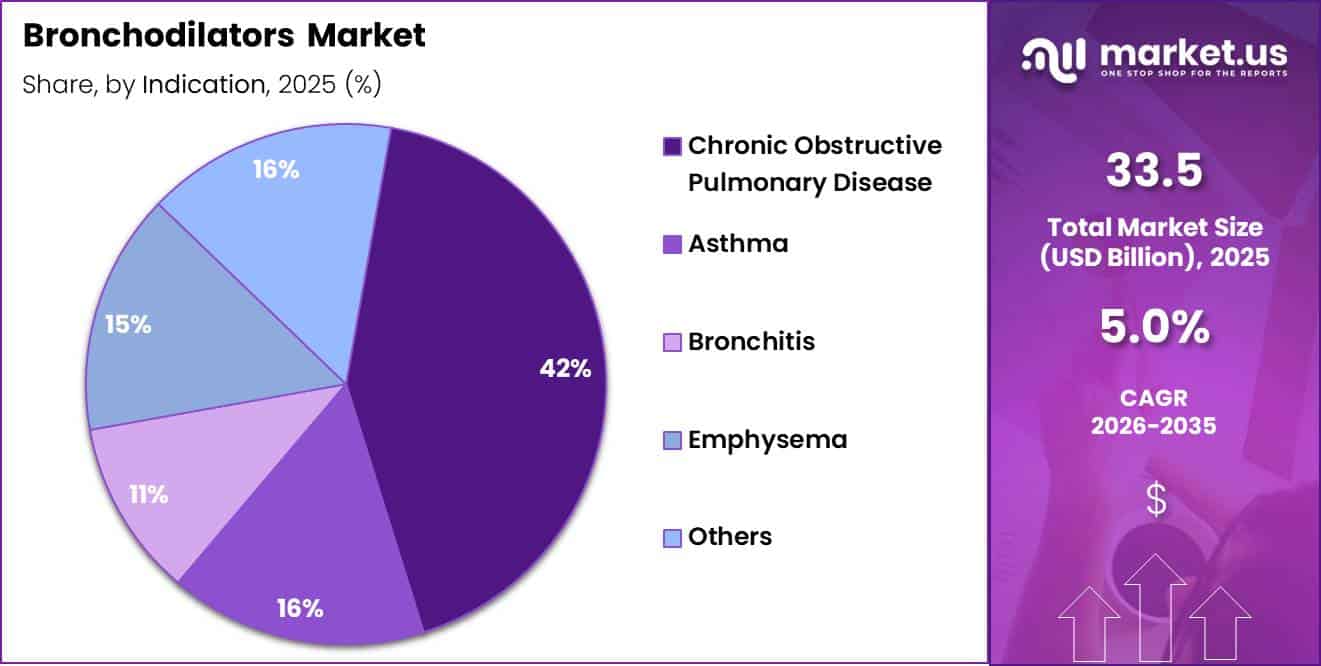
- Indication Analysis: COPD emerged as the leading indication, accounting for 46.5% of total market share
- Route of Administration Analysis: In 2025, inhalation dominated the market with a commanding 78.6% share
- Distribution Channel Analysis: In 2025, retail pharmacies led the market with a 52.3% share
- Regional Analysis: In 2025, North America led the market, achieving over 36.5% share with a revenue of US$ 12.24 Billion.
Drug Class Analysis
The bronchodilators market is segmented by drug class into beta-adrenergic bronchodilators, anticholinergic bronchodilators, and xanthine derivatives, each addressing airway obstruction through distinct pharmacological mechanisms.
In 2025, beta-adrenergic bronchodilators dominated the market with a 48.7% share, driven by their rapid onset of action, strong efficacy in relieving bronchospasm, and broad adoption across both acute and maintenance respiratory therapies.
These agents, including short-acting and long-acting formulations, are widely prescribed for asthma and chronic obstructive pulmonary disease (COPD), supporting sustained demand across hospital and outpatient settings.
Anticholinergic bronchodilators accounted for 38.7% of the market, reflecting their growing role in long-term COPD management. Their ability to reduce mucus secretion and prevent airway constriction makes them particularly effective for maintenance therapy, often in combination with beta-agonists to enhance therapeutic outcomes.
Meanwhile, xanthine derivatives held a 12.6% share, representing a smaller but stable segment. Although their use has declined due to narrower therapeutic windows and safety concerns, they remain relevant in specific patient populations and low-resource settings.
Overall, drug class diversification supports tailored treatment strategies, reinforcing steady market expansion.
Indication Analysis
Based on indication, the bronchodilators market is segmented into chronic obstructive pulmonary disease (COPD), asthma, bronchitis, emphysema, and others.
In 2025, COPD emerged as the leading indication, accounting for 46.5% of total market share, driven by rising smoking prevalence, aging populations, and increasing exposure to air pollution globally. COPD patients often require long-term bronchodilator therapy, including combination regimens, which significantly boosts prescription volumes and repeat usage.
Asthma followed closely, capturing 38.7% of the market, supported by high disease prevalence across both pediatric and adult populations. The demand for fast-acting relief medications alongside preventive long-acting therapies continues to fuel growth in this segment. Bronchitis represented 8.0% of the market, largely associated with acute exacerbations and short-term bronchodilator use.
Emphysema accounted for 5.0%, reflecting its chronic nature and frequent overlap with COPD treatment pathways. The remaining 1.8% fell under other respiratory conditions, including exercise-induced bronchospasm and rare pulmonary disorders. Collectively, the dominance of chronic respiratory indications underscores the long-term demand stability of the bronchodilators market.
Route of Administration Analysis
By route of administration, the bronchodilators market is categorized into inhalation, oral, and injectable formulations. In 2025, inhalation dominated the market with a commanding 78.6% share, reflecting its status as the preferred delivery method for respiratory therapies.
Inhaled bronchodilators provide rapid onset of action, targeted drug delivery to the lungs, and reduced systemic side effects, making them ideal for both emergency relief and long-term disease management. Metered-dose inhalers, dry powder inhalers, and nebulized solutions are widely used across hospital, homecare, and outpatient settings.
Oral bronchodilators accounted for a smaller share of the market, primarily utilized in cases where inhalation therapy is unsuitable or unavailable. While oral formulations offer ease of administration, their slower onset and higher risk of systemic adverse effects limit widespread adoption.
Injectable bronchodilators represent a niche segment, mainly reserved for severe acute exacerbations in critical care settings. The overwhelming preference for inhalation-based therapies highlights ongoing innovation in inhaler technology, dose accuracy, and patient adherence solutions, reinforcing inhalation’s dominance as the most clinically effective and commercially significant route of administration.
Distribution Channel Analysis
The bronchodilators market is segmented by distribution channel into retail pharmacies, hospital pharmacies, and online pharmacies. In 2025, retail pharmacies led the market with a 52.3% share, driven by high patient footfall, convenient access to prescription refills, and strong penetration in urban and semi-urban regions.
Chronic respiratory conditions such as asthma and COPD require continuous medication, positioning retail pharmacies as the primary dispensing point for long-term bronchodilator therapies.
Hospital pharmacies accounted for a significant portion of the remaining market, supported by inpatient treatments, emergency respiratory care, and specialist consultations.
These channels play a critical role in initiating therapy during acute exacerbations and managing severe cases. Online pharmacies, while still representing a smaller share, are experiencing steady growth due to increasing digital adoption, home delivery convenience, and competitive pricing models.
The dominance of retail pharmacies underscores their central role in chronic disease management, while the gradual expansion of digital channels signals a shift toward more patient-centric and accessible distribution models within the bronchodilators market.
Market Segmentations
By Drug Class
- Beta-Adrenergic Bronchodilators
- Anticholinergic Bronchodilators
- Xanthine Derivative
By Indication
- Chronic Obstructive Pulmonary Disease (COPD)
- Asthma
- Bronchitis
- Emphysema
By Route of Administration
- Inhalation
- Oral
- Injectable
By Distribution Channel
- Hospital Pharmacies
- Retail Pharmacies
- Online Pharmacies
Challenges
Certification Cycle Complexity
The particulate respirators market is not constrained by demand but by the regulatory complexity associated with maintaining certifications across multiple jurisdictions. Any modification to filter media, nose-foam materials, straps, packaging, or labeling can trigger additional testing, documentation updates, artwork revisions, and inventory segregation requirements across NIOSH, CE-related, and BIS-regulated markets.
Although NIOSH reduced average approval timelines from approximately 100 days in 2024 to 65 days from mid-2025, manufacturers still face a meaningful commercialization delay, as a 65-day approval process, combined with 30–45 days of internal design-freeze periods and validation across 3–5 production lots, can postpone market entry during critical procurement cycles.
In addition, channel relaunch activities can consume approximately 1.5%–2.5% of annual SKU revenue, increasing the cost of product updates and portfolio optimization.
As a result, manufacturers are increasingly adopting modular certified platforms, regional regulatory teams, and digital traceability systems to reduce approval risk and accelerate the transition from product development to commercial launch.
| Challenge | (~) % CAGR Friction Drag | Geographic Relevance | Mitigation Horizon |
|---|---|---|---|
| Generic API concentration | -0.8% | North America core, India-China API nodes, EU import channels | Medium term (2-4 years) |
| Device fill-finish bottlenecks | -0.7% | US inhalation plants, EU regulatory hubs, Japan quality networks | Medium term (2-4 years) |
| Guideline-driven portfolio complexity | -0.6% | North America core, EU5, urban APAC specialist markets | Short term (≤ 2 years) |
| Inhaler technique nonadherence | -1.0% | Global, highest in LMIC primary care and aging EU populations | Long term (≥ 4 years) |
| Respiratory care workforce gaps | -0.5% | UK-EU care systems, US outpatient networks, Gulf and ASEAN hospitals | Long term (≥ 4 years) |
| Access-tier fragmentation | -0.9% | LMIC public channels, Latin America tenders, Africa and South Asia procurement systems | Long term (≥ 4 years) |
Opportunity
Pre-COPD Case-Finding
Pre-COPD case-finding is an emerging opportunity because the current market baseline mainly serves already diagnosed asthma and COPD populations, while a large pool of symptomatic and high-risk individuals remains under-identified in primary care and community screening settings.
The GOLD 2025 framework highlights pre-COPD, PRISm, and other underdiagnosed symptomatic groups as key future intervention targets, supported by expanding use cases such as targeted spirometry and incidental findings from lung imaging programs.
Global COPD prevalence is estimated at 10.3%, with projections indicating a 23% increase in cases among adults aged 25+ by 2050, reaching nearly 600 million people, while 20%–30% of PRISm patients are expected to progress to obstructive spirometry over time.
Evidence from screening cohorts also shows that a substantial share of individuals without prior diagnosis can still exhibit airflow obstruction, reinforcing the scale of missed early disease.
The commercial opportunity lies in building earlier diagnostic-to-treatment funnels using portable spirometry, case-finding tools, and starter adherence programs that can convert patients into maintenance therapy pathways 2–5 years earlier than current practice, reduce acquisition costs by 15%–25%, and expand treated populations by 5%–8% in developed markets by 2032, supporting a structural expansion of respiratory care pathways.
| Opportunity | (~) % Potential CAGR Upside | Geographic Relevance | Execution Window |
|---|---|---|---|
| Digital inhaler platforms | +1.2% | North America, EU, Japan, urban China | Short term |
| LMIC access localization | +1.8% | India, ASEAN, Africa, LatAm | Medium term |
| Pre-COPD case-finding | +1.0% | North America, EU, China | Medium term |
| Triple-therapy step-up capture | +0.9% | US, EU5, Japan | Short term |
| Pulmonary care bundles | +1.1% | US, EU, Gulf, private APAC | Medium term |
| Roll-up in generic inhalers | +1.4% | India, MENA, Africa, LatAm | Long term |
Driver
Rising COPD burden and maintenance bronchodilator dependence
COPD remains the most structurally important demand engine because bronchodilator inhalers are still the core symptomatic therapy, and WHO now explicitly identifies inhaled bronchodilators as the most important medicines for treating COPD.
Tobacco smoking accounts for over 70% of COPD cases in high-income countries, while in low- and middle-income markets smoking contributes 30%–40% and household or ambient air pollution adds further load, which keeps incident and prevalent patient pools expanding well beyond mature Western markets.
This matters commercially because maintenance regimens generate recurring refill economics rather than sporadic acute-use volumes: once patients move from intermittent symptoms to diagnosed persistent airflow limitation, utilization shifts toward long-acting beta agonists, long-acting muscarinic antagonists, and fixed combinations with higher annual revenue per treated patient than rescue-only therapy.
The demand effect is strongest in the U.S., Europe, China, and India, where aging populations, urban exposure, and improved diagnosis widen the treated base, while payer systems continue to fund chronic management pathways rather than one-off episodes
| Driver | (~) % Impact on CAGR Forecast | Geographic Relevance | Impact Timeline |
|---|---|---|---|
| Rising COPD burden and maintenance bronchodilator dependence | +1.4% | North America core, EU, China, India, ASEAN urban belts | Long term (≥ 4 years) |
| Asthma guideline shift toward ICS-containing reliever and step-up combinations | +1.1% | North America, EU, Australia, Gulf, upper-income APAC | Medium term (2-4 years) |
| Air pollution, smoking exposure, and occupational lung risk expansion | +0.9% | China, India, Southeast Asia, Latin America, Africa spill-over | Long term (≥ 4 years) |
| New COPD maintenance classes and add-on intensification | +0.7% | U.S. core, EU follow-on, Japan, select specialty markets | Short term (≤ 2 years) |
| Genericization and affordability-led access widening in inhaled therapy | +0.8% | U.S., EU, India, Brazil, South Africa | Medium term (2-4 years) |
| Device innovation, adherence programs, and home-based delivery expansion | +0.6% | North America, EU, Japan, developed APAC | Short term (≤ 2 years) |
Restraint
Supply concentration in rescue therapy
Bronchodilator demand is recurrent, but the supply base for certain rescue formats remains fragile, creating a persistent short-term sales restraint through stock-outs, hospital rationing, and lost treatment episodes rather than purely demand-side weakness.
The FDA continues to identify manufacturing issues, discontinuations, and demand spikes as core shortage drivers, and the U.S. albuterol liquid shortage illustrated how quickly disruption escalates when a single producer exits, with Akorn’s 2023 shutdown leaving Nephron as the last U.S. manufacturer of some liquid albuterol presentations and other suppliers reporting back orders or allocation.
Even where meter-dosed retail inhalers are less affected than nebulized hospital formats, buyers react by increasing safety stock, dual sourcing, or protocol substitution, which raises working capital, pushes emergency procurement premiums into the mid-single-digit to low-double-digit range, and transfers volume to lower-margin institutional channels rather than fully monetized outpatient brands.
The strategic consequence is uneven sell-through, higher wholesaler inventory buffers, and lower forecast visibility during viral seasons or pollution spikes, particularly in U.S. acute-care settings and import-dependent markets where a 4–12 week delay in finished-dose or propellant availability can materially dent quarterly respiratory revenues.
| Restraint | (~) % Impact on CAGR Forecast | Geographic Relevance | Impact Timeline |
|---|---|---|---|
| Price erosion in mature inhalers | -1.4% | North America core, EU, Japan | Medium term (2-4 years) |
| MDI regulatory transition costs | -1.1% | EU, UK, North America spillover | Medium term (2-4 years) |
| Supply concentration in rescue therapy | -1.3% | U.S. hospitals, EU tenders, select APAC import markets | Short term (≤ 2 years) |
| Affordability and reimbursement gaps | -1.6% | LMIC APAC, Africa, LatAm, uninsured U.S. pockets | Long term (≥ 4 years) |
| Generic/device approval barriers | -1.0% | U.S., EU, Japan | Medium term (2-4 years) |
| Quality-compliance and variation burden | -0.8% | EU, North America, export manufacturing hubs in APAC | Short term (≤ 2 years) |
Regional Analysis
In 2025, North America led the market, achieving over 36.5% share with a revenue of US$ 12.24 Billion.
This dominance is supported by a high prevalence of chronic respiratory diseases such as asthma and chronic obstructive pulmonary disease (COPD), strong awareness and diagnosis rates, and widespread adoption of advanced inhalation therapies.
Favorable reimbursement frameworks, well-established healthcare infrastructure, and early uptake of combination bronchodilator therapies further strengthen regional demand.
Europe followed as a significant contributor, driven by an aging population, rising smoking-related respiratory conditions, and robust clinical guidelines supporting long-acting bronchodilator use. Countries with strong public healthcare systems continue to emphasize maintenance therapy, sustaining steady prescription volumes.
The Asia Pacific region is witnessing the fastest growth, fueled by rapid urbanization, increasing air pollution, expanding healthcare access, and improving disease awareness. Large patient pools in emerging economies and growing penetration of affordable inhaler devices are accelerating market expansion.
Meanwhile, Latin America shows moderate growth, supported by improving respiratory care access and gradual healthcare reforms. The Middle East & Africa remains an emerging market, where unmet clinical needs and rising investments in healthcare infrastructure are expected to create long-term growth opportunities for bronchodilator manufacturers.
Key Regions and Countries
North America
- The US
- Canada
Europe
- Germany
- France
- The U.K.
- Italy
- Spain
- Russia & CIS
- Rest of Europe
Asia Pacific
- China
- India
- Japan
- South Korea
- ASEAN
- Australia & New Zealand
- Rest of Asia Pacific
Middle East & Africa
- GCC
- South Africa
- Rest of Middle East & Africa
Latin America
- Brazil
- Mexico
- Rest of Latin America
Key Player Analysis
The global Bronchodilators Market is moderately consolidated, with a balanced presence of multinational pharmaceutical companies and strong generic manufacturers. The competitive landscape is characterized by steady innovation in inhalation therapies, combination drugs, and long-acting bronchodilator formulations, driven by the rising prevalence of asthma and chronic obstructive pulmonary disease (COPD).
Market maturity is advanced in developed regions, while emerging economies continue to exhibit expansion potential due to improving respiratory care access and diagnosis rates.
Innovation efforts are increasingly focused on precision medicine approaches, biomarker-guided respiratory therapy, and optimized drug delivery systems to enhance patient adherence and therapeutic outcomes.
The market structure is broadly segmented into three tiers. Tier-1 includes large multinational pharmaceutical companies with strong respiratory portfolios and global distribution networks.
Tier-2 comprises specialty and diversified generics players that compete primarily on affordability and high-volume supply. Tier-3 includes innovation-driven and regional manufacturers focusing on niche formulations and localized demand fulfillment.
Competitive dynamics are shaped by sustained R&D investments in respiratory science, particularly inhalation drug delivery and combination therapies. Companies are strengthening their positions through strategic collaborations, co-development agreements, and clinical trial partnerships aimed at accelerating product approvals.
Integration of digital health platforms, real-world evidence generation, and ecosystem-based approaches involving diagnostics and patient monitoring tools further enhances competitive differentiation across key markets.
Key players operating in the Bronchodilators Market include multinational leaders such as GSK plc, AstraZeneca, Novartis AG, Merck & Co., Inc., and Boehringer Ingelheim International GmbH, which focus on advanced respiratory pipelines and global commercialization strategies.
Generic and cost-competitive positioning is led by Teva Pharmaceutical Industries Ltd., Cipla Inc., Mylan N.V., Sun Pharmaceutical Industries Ltd., and Glenmark Pharmaceuticals Limited, which strengthen market penetration through affordable respiratory therapies. Other Key Players contribute to regional competition and pipeline diversification.
Top Key Players
- GSK plc.
- AstraZeneca
- Teva Pharmaceutical Industries Ltd.
- Cipla Inc.
- Mylan N.V.
- Merck & Co., Inc.
- Novartis AG
- Boehringer Ingelheim International GmbH.
- Sun Pharmaceutical Industries Ltd.
- Glenmark Pharmaceuticals Limited
Recent Developments
- In November 2025, Glenmark Pharmaceuticals announced launch of Nebzmart® GFB Smartules® and Airz® FB Smartules®, a nebulized triple therapy for COPD.
- In October 2025, GSK announced positive Phase III data for a next-generation low-carbon Ventolin (salbutamol) inhaler and confirmed regulatory submission plans with expected launch from 2026.
Report Scope
| Report Features | Description |
|---|---|
| Market Value (2025) | US$ 33.5 Billion |
| Forecast Revenue (2035) | US$ 54.6 Billion |
| CAGR (2026-2035) | 5.0% |
| Base Year for Estimation | 2025 |
| Historic Period | 2020-2024 |
| Forecast Period | 2026-2035 |
| Report Coverage | Revenue Forecast, Market Dynamics, Competitive Landscape, Recent Developments |
| Segments Covered | By Drug Class (Beta-Adrenergic Bronchodilators ,Anticholinergic Bronchodilators ,Xanthine Derivative) By Indication (Chronic Obstructive Pulmonary Disease (COPD) ,Asthma ,Bronchitis ,Emphysema ,Others) By Route of Administration (Inhalation ,Oral ,Injectable) By Distribution Channel (Hospital Pharmacies ,Retail Pharmacies,Online Pharmacies ) |
| Regional Analysis | North America – The US, Canada; Europe – Germany, France, U.K., Italy, Spain, Russia & CIS, Rest of Europe; Asia Pacific – China, India, Japan, South Korea, ASEAN, Australia & New Zealand, Rest of Asia Pacific; Middle East & Africa – GCC, South Africa, Rest of Middle East & Africa; Latin America – Brazil, Mexico, Rest of Latin America |
| Competitive Landscape | GSK plc. ,AstraZeneca ,Teva Pharmaceutical Industries Ltd. ,Cipla Inc. ,Mylan N.V. ,Merck & Co., Inc. ,Novartis AG ,Boehringer Ingelheim International GmbH. ,Sun Pharmaceutical Industries Ltd. ,Glenmark Pharmaceuticals Limited |
| Customization Scope | Customization for segments, region/country-level will be provided. Moreover, additional customization can be done based on the requirements. |
| Purchase Options | We have three licenses to opt for: Single User License, Multi-User License (Up to 5 Users), Corporate Use License (Unlimited User and Printable PDF) |