


Market Overview
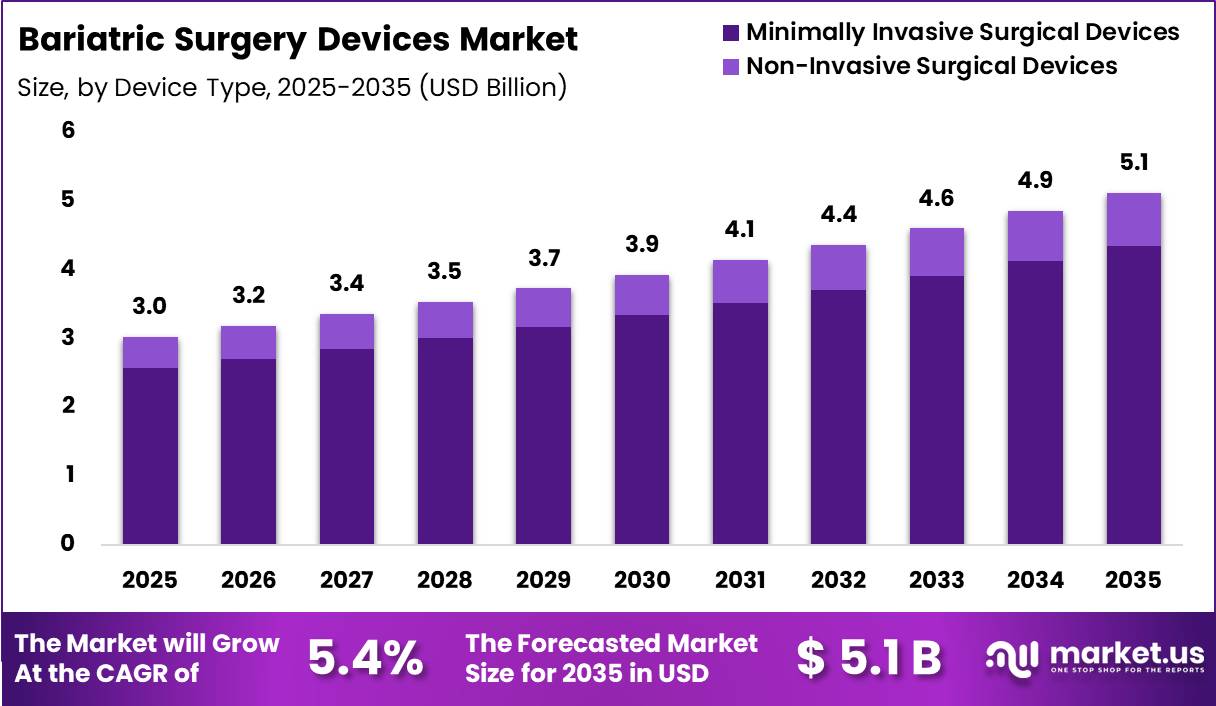
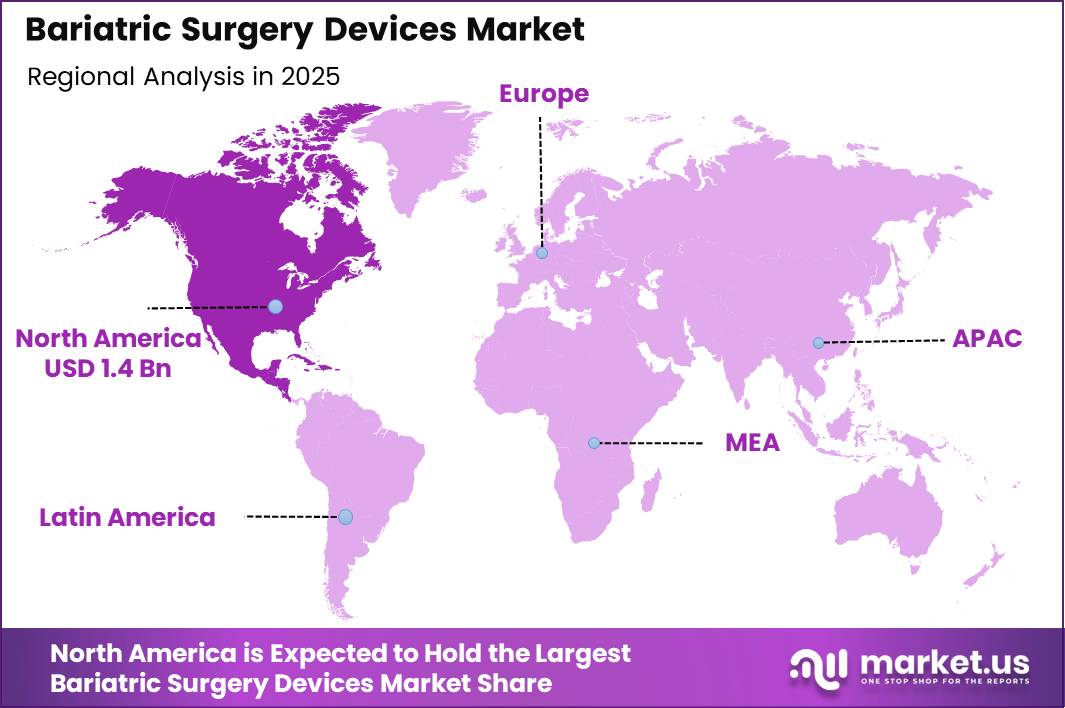
Global Bariatric Surgery Devices Market size is expected to be worth around US$ 5.1 Billion by 2035 from US$ 3.0 Billion in 2025, growing at a CAGR of 5.4% during the forecast period from 2026 to 2035. In 2025, North America led the market, achieving over 47.0% share with a revenue of US$ 1.4 Billion.
The global bariatric surgery devices market is gaining momentum as obesity rates continue to increase worldwide, driving demand for effective long-term weight management solutions. Bariatric surgery devices are used in procedures such as gastric bypass, sleeve gastrectomy, and adjustable gastric banding to help patients achieve significant and sustained weight loss.
According to the World Health Organization, more than 1 billion people worldwide were living with obesity in 2022, including approximately 890 million adults, highlighting the growing need for advanced obesity treatment options.
In addition, the Centers for Disease Control and Prevention reports that about 40.3% of U.S. adults had obesity during August 2021–August 2023, making obesity one of the country’s most significant public health challenges. Bariatric surgery has demonstrated substantial clinical benefits beyond weight reduction, including improvements in Type 2 Diabetes, hypertension, obstructive sleep apnea, and cardiovascular risk.
The National Institute of Diabetes and Digestive and Kidney Diseases states that patients typically lose 20% to 35% of their body weight, depending on the surgical procedure performed, while many experience long-term remission or improvement of obesity-related conditions. These positive clinical outcomes continue to support broader adoption of bariatric procedures in eligible patient populations.
Technological innovation is also strengthening the market, with manufacturers introducing minimally invasive laparoscopic instruments, powered stapling systems, and advanced energy devices that improve surgical precision and patient recovery.
Growing awareness of obesity treatment, favorable clinical guidelines, and expanding access to specialized bariatric centers are expected to support future demand for bariatric surgery devices. As healthcare systems increasingly prioritize the management of obesity and related chronic diseases, the market is positioned for steady growth over the coming decade.
Key Takeaways
- Market Size: The global Bariatric Surgery Devices Market was valued at US$ 3.0 Billion in 2025.
- Market Share: The global Bariatric Surgery Devices Market is projected to grow at a CAGR of 5.4% and is estimated to reach US$ 5.1 Billion by 2035.
- Device Type Analysis: Minimally Invasive Surgical Devices dominated the market, accounting for 85.0% of the total market share in 2025.
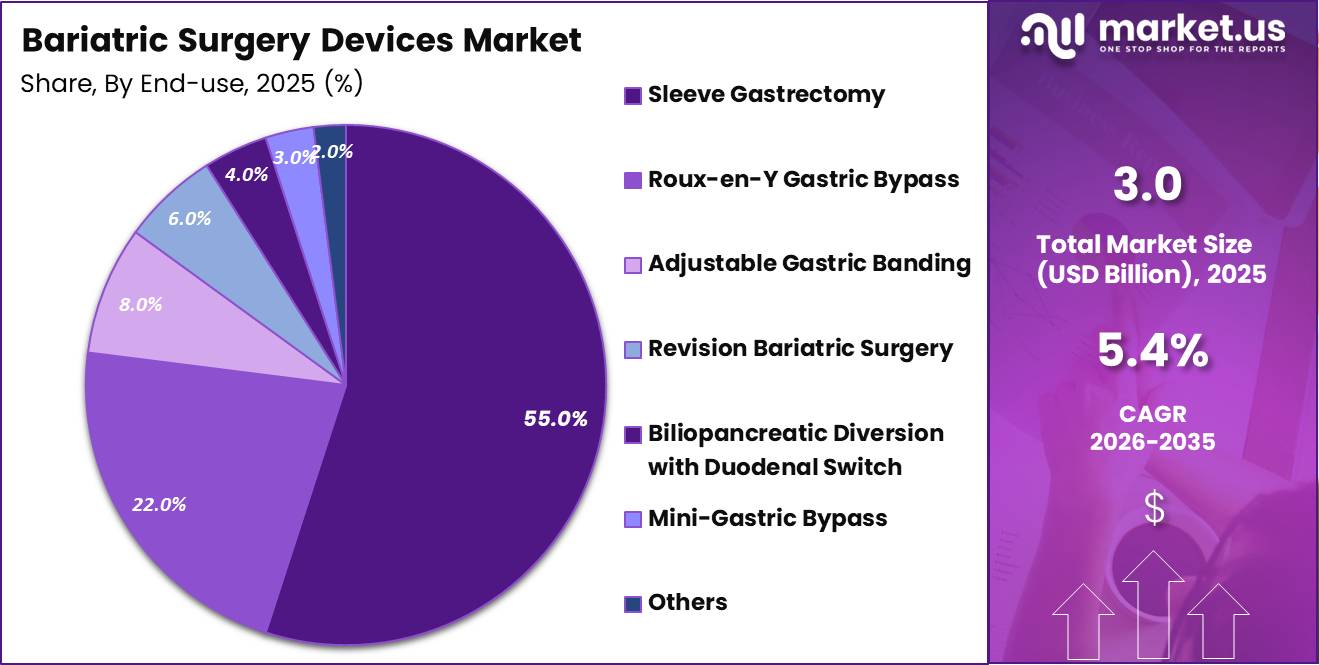
- Procedure Type Analysis: Sleeve Gastrectomy dominated the market, constituting 55.0% of the total market share.
- End User Analysis: Hospitals dominated the market, constituting 65.0% of the total market share.
- Regional Analysis: In 2025, North America led the market, achieving over 47.0% share with a revenue of US$ 1.4 Billion.
Device Type Analysis
The Device Type segment of the Bariatric Surgery Devices Market is led by Minimally Invasive Surgical Devices, which accounted for 85.0% of the market share in 2025. This dominance is driven by the widespread adoption of laparoscopic bariatric procedures, which require specialized stapling devices, trocars, energy systems, suturing instruments, and visualization equipment.
Minimally invasive techniques offer several clinical advantages, including smaller incisions, reduced blood loss, faster recovery, lower postoperative pain, and shorter hospital stays compared to traditional open surgery.
Healthcare providers increasingly prefer these devices because they improve surgical precision while reducing complications and overall treatment costs. The growing number of obesity-related surgeries worldwide and continuous technological improvements in laparoscopic instruments further support segment growth. Enhanced ergonomics, advanced energy platforms, and disposable surgical accessories have also contributed to higher procedure efficiency and patient safety.
The Non-Invasive Surgical Devices segment represented 15.0% of the market in 2025. Growth in this segment is supported by increasing interest in less invasive obesity management technologies, including gastric balloons and endoscopic weight-loss systems.
These devices are particularly suitable for patients seeking alternatives to conventional bariatric surgery or those who are not eligible for invasive procedures. Expanding clinical research and broader physician acceptance are expected to gradually strengthen demand for non-invasive bariatric solutions over the coming years.
Procedure Type Analysis
The Procedure Type segment is dominated by Sleeve Gastrectomy, which captured 55.0% of the Bariatric Surgery Devices Market in 2025. The procedure has become the preferred bariatric surgery due to its strong balance between effectiveness, safety, and relatively straightforward surgical technique.
Sleeve gastrectomy reduces stomach volume while preserving normal digestive continuity, resulting in substantial and sustained weight loss with fewer nutritional deficiencies than some alternative procedures. The operation is commonly performed using minimally invasive laparoscopic techniques, contributing to shorter hospital stays and faster patient recovery.
Increasing surgeon familiarity, favorable long-term clinical outcomes, and expanding insurance reimbursement continue to support its widespread adoption across developed and emerging healthcare systems.
Roux-en-Y Gastric Bypass accounted for 22.0% of the market and remains a preferred option for patients with severe obesity or obesity-related metabolic disorders due to its proven long-term effectiveness. Adjustable Gastric Banding represented 8.0%, while Revision Bariatric Surgery held 6.0%, reflecting the need to correct or improve previous bariatric procedures.
Biliopancreatic Diversion with Duodenal Switch contributed 4.0%, mainly for patients requiring maximum weight reduction despite higher surgical complexity. Mini-Gastric Bypass accounted for 3.0%, supported by growing clinical acceptance because of its shorter operating time and simplified surgical approach.
End User Analysis
The End User segment of the Bariatric Surgery Devices Market is primarily dominated by Hospitals, which held 65.0% of the market share in 2025. Hospitals remain the leading treatment centers because bariatric procedures require advanced operating rooms, highly skilled multidisciplinary surgical teams, specialized anesthesia services, and comprehensive postoperative care.
Large hospitals are equipped with modern laparoscopic technologies and intensive care facilities that improve patient safety during complex obesity surgeries. They also manage higher patient volumes, allowing greater utilization of advanced bariatric surgical devices.
The availability of nutrition counseling, psychological evaluation, and long-term follow-up programs within hospital settings further strengthens patient outcomes and supports sustained market demand. Increasing investments in surgical infrastructure and robotic-assisted bariatric procedures also reinforce hospital leadership within this segment.
Ambulatory surgical centers are steadily expanding their presence as minimally invasive bariatric procedures become more standardized and recovery times continue to decrease. These facilities offer lower procedural costs, efficient scheduling, and shorter patient stays, making them attractive for selected low-risk patients.
Specialty obesity treatment clinics also contribute to market growth by providing comprehensive weight-management services integrated with surgical interventions. As healthcare systems increasingly emphasize cost-effective treatment pathways and enhanced patient convenience, non-hospital healthcare facilities are expected to gain greater importance while hospitals continue to account for the majority of bariatric surgical device utilization.
Distribution Channel Analysis
The Distribution Channel segment is led by Direct Sales, which accounted for 60.0% of the Bariatric Surgery Devices Market in 2025. Leading medical device manufacturers primarily rely on direct sales teams to establish long-term relationships with hospitals and bariatric surgery centers. This approach enables manufacturers to provide technical training, clinical education, product demonstrations, maintenance support, and immediate after-sales service.
Because bariatric surgical devices are highly specialized and frequently integrated into complex operating room workflows, direct interaction between manufacturers and healthcare providers ensures proper product selection and efficient implementation. Large healthcare institutions also prefer direct procurement agreements that facilitate customized pricing, inventory management, and access to the latest surgical technologies.
Third-party distributors represent the remaining share of the market and play a significant role in expanding product availability across regional hospitals, private clinics, and smaller healthcare facilities. These distributors improve market penetration by leveraging established logistics networks and local customer relationships.
Growing demand for bariatric procedures in emerging healthcare markets continues to strengthen distributor participation, particularly where manufacturers have limited direct commercial presence. The increasing adoption of digital procurement platforms, centralized purchasing systems, and supply chain optimization initiatives is further improving product accessibility while complementing the continued dominance of direct sales channels.
Market Segmentations
By Device Type
- Minimally Invasive Surgical Devices
- Non-Invasive Surgical Devices
By Procedure Type
- Sleeve Gastrectomy
- Roux-en-Y Gastric Bypass
- Adjustable Gastric Banding
- Revision Bariatric Surgery
- Biliopancreatic Diversion with Duodenal Switch
- Mini-Gastric Bypass
By End User
- Hospitals
- Ambulatory Surgical Centers
- Bariatric Surgery Clinics
- Specialty Centers
By Distribution Channel
- Direct Sales
- Third Party Distributors
Drivers
Surgery outperforming GLP-1s in durable weight loss
Contrary to the assumption that anti-obesity drugs will fully displace surgery, 2025 comparative clinical evidence has sharpened the commercial case for bariatric intervention in severe obesity and high BMI metabolic disease.
A real-world study presented at the ASMBS 2025 meeting reported that sleeve gastrectomy and gastric bypass produced about 24% total weight loss after two years versus 4.7% for patients receiving GLP 1 therapy for at least six months, while continuous GLP 1 treatment for a full year still reached only 7% weight loss; a related NYU Langone summary using 51,085 patient records reported 26.5% weight loss for surgical patients versus 5.7% for GLP 1 prescription recipients, with tirzepatide at 8.9% after two years.
This gap changes referral economics: rather than eliminating procedures, pharmacotherapy is increasingly functioning as a triage layer that identifies non responders, relapse prone patients, and higher acuity candidates who then move into surgery programs, raising throughput for device intensive operations.
The result is favorable for bariatric device demand because hospitals and ambulatory programs can justify continued investment in powered stapling, leak mitigation technologies, and advanced laparoscopic kits when surgery remains the highest efficacy intervention for durable weight reduction and comorbidity improvement.
| Driver | (~) % Impact on CAGR Forecast | Geographic Relevance | Impact Timeline |
|---|---|---|---|
| Obesity burden and surgical eligibility expansion | +1.6% | North America core, Gulf states, Western Europe, urban APAC | Medium term (2-4 years) |
| Surgery outperforming GLP-1s in durable weight loss | +1.3% | U.S. core, Canada, EU5, private Asia hospitals | Short term (≤ 2 years) |
| Shift to sleeve-led minimally invasive stapling intensity | +1.1% | U.S., EU, Japan, South Korea, India private chains | Short term (≤ 2 years) |
| Robotic and advanced energy platform adoption | +0.9% | North America core, GCC, tertiary EU centers, premium APAC | Medium term (2-4 years) |
| Revisional and metabolic surgery case complexity | +0.8% | U.S., Western Europe, Latin America referral hubs | Medium term (2-4 years) |
| EU MDR and quality-compliance replacement cycle | +0.6% | EU core, U.K. spill-over, exporter supply chains in APAC | Short term (≤ 2 years) |
Challenges
Complex reimbursement, coding, and prior authorization friction
Reimbursement friction in bariatric surgery arises less from outright non coverage and more from complex prior authorization workflows, evolving coding rules, and heterogeneous payer criteria that introduce 60 to 120 day delays between patient eligibility determination and surgery scheduling, thereby moderating near term device utilization growth.
In the US, for example, commercial payers and Medicaid plans frequently require documentation of 6 to 12 months of supervised weight management before approving surgery, while public payers in several EU markets impose BMI thresholds with comorbidity criteria that vary by region; these policies effectively ration access and keep annual procedure growth to single digits even when obesity prevalence rises faster.
Administrative denial rates for bariatric procedures can reach 10 to 20% on first submission in some payer cohorts, and appeals add 30 to 60 days to the pathway, causing a non trivial proportion of patients to drop out or defer surgery for more than a year, which reduces realized device demand without eliminating it.
On the provider side, coding changes and periodic re bundling of DRG payments can reduce the marginal contribution margin per case by 5 to 10%, forcing hospitals to scrutinize capital acquisitions for new stapling systems or robotic platforms more carefully and stretch replacement cycles from, for example, 7 years to 9 to 10 years for major capital assets.
Together, these factors are estimated to depress the achievable global bariatric surgery devices CAGR by roughly 0.8% points compared with a scenario of streamlined, standardized reimbursement criteria; in response, leading device companies are building payer engagement teams, supporting outcomes based evidence generation, and offering economic modeling tools to hospitals, but broad harmonization of reimbursement frameworks remains a multi year, medium term endeavor.
| Challenge | (~) % CAGR Friction Drag | Geographic Relevance | Mitigation Horizon |
|---|---|---|---|
| Volatile device supply chain | -1.2% | North America, EU, APAC hubs | Medium term (2-4 years) |
| Surgical workforce constraints | -1.0% | North America, Europe, GCC, OECD APAC | Long term (≥ 4 years) |
| Reimbursement and coding friction | -0.8% | North America payers, EU public systems | Medium term (2-4 years) |
| Capital-intensive tech adoption | -0.9% | APAC, LATAM, Eastern Europe | Long term (≥ 4 years) |
| Outcome data and liability risk | -0.6% | US, EU, high-litigation markets | Medium term (2-4 years) |
| Obesity care pathway fragmentation | -0.7% | Global urban health systems | Long term (≥ 4 years) |
Restraints
Under-penetrated Bariatric Adoption and Adverse Procedure Mix
Despite rising global obesity, bariatric surgery remains dramatically under penetrated, with less than 1% of eligible patients undergoing surgery annually in some mature markets, and the procedure mix is shifting in ways that do not fully translate into device revenue maximization.
Data from U.S. registries show that total bariatric procedures were around 270,000 in 2023 with sleeve gastrectomy accounting for the majority, while global volumes in Asia and Latin America remain far below epidemiological need, partly due to limited surgical capacity, cultural hesitancy, and clinician preference for non surgical interventions.
Sleeve gastrectomy, although device intensive, is increasingly performed in high volume centers under efficiency pressures that push down per case device spend through standardization on fewer stapler types, reduced use of reinforcement, and cross specialty utilization of energy devices, while more complex and higher revenue procedures like gastric bypass or revisional surgeries grow more slowly or even decline in some markets.
At the same time, new endoscopic and less invasive interventions are nibbling at the lower risk end of the candidate pool; these procedures often use different device sets and may involve lower per case device spend than full surgical interventions, diluting revenue per treated patient even when total intervention counts rise.
This combination of structural under penetration, conservative clinical practice, and adverse procedure mix keeps the market structurally below its potential adoption curve, with operational throughput and case complexity misaligned with device vendors’ highest margin product lines, the net effect is a persistent under realization of addressable demand that exerts an estimated 0.6% drag on long term CAGR as incremental volume growth comes disproportionately from lower value or efficiency optimized procedures rather than high acuity, device rich surgeries.
| Restraint | (~) % Impact on CAGR Forecast | Geographic Relevance | Impact Timeline |
|---|---|---|---|
| GLP-1–driven demand substitution | -2.0% | North America core, Western Europe, high-income APAC | Medium term (2–4 years) |
| Stricter MDR / FDA device compliance | -1.0% | EU, UK, North America | Long term (≥ 4 years) |
| Hospital CapEx and staffing constraints | -0.8% | North America, EU, selected APAC metros | Short term (≤ 2 years) |
| Reimbursement and coverage frictions | -0.7% | North America, Latin America, EMEA emerging | Medium term (2–4 years) |
| Supply chain and component volatility | -0.5% | Global, with higher exposure in APAC manufacturing corridors | Short term (≤ 2 years) |
| Surgical procedure mix shift and under-penetration | -0.6% | Global, especially Asia and Latin America | Long term (≥ 4 years) |
Opportunity
Scaling incisionless bariatric platforms for new candidates
A major untapped opportunity sits in the migration from purely stapling led bariatric device revenue toward incisionless and hybrid endoluminal platforms that can capture patients unwilling to undergo conventional surgery, especially the large treatment gap implied by the fact that less than 1% of eligible patients currently receive bariatric surgery in a given year in the U.S. alone.
This is not a current driver because endoscopic obesity intervention remains clinically promising but commercially underpenetrated, with pivotal stage activity such as the FDA IDE backed INSPIRO study for POSE2.0 still signaling an emerging platform rather than an established market engine.
The upside comes from activating a step down care tier between anti obesity drugs and full surgery: manufacturers that build disposable suturing systems, repeat use service contracts, and ambulatory site economics could plausibly expand addressable procedure volumes by 15% to 25% in premium urban systems.
Reduce average facility cost by 20% to 35% versus inpatient bariatric pathways, and lift device gross margins by 300 to 500 basis points through proprietary consumables and software guided workflow kits. By 2030 to 2035, this white space could be especially monetizable in self pay and mixed reimbursement markets where a 60 to 90 minute incisionless procedure with same day discharge creates a new mid ticket offering rather than cannibalizing baseline surgical demand.
| Opportunity | (~) % Potential CAGR Upside | Geographic Relevance | Execution Window |
|---|---|---|---|
| Incisionless platform expansion | +2.4% | North America core, EU, Gulf, Tier-1 APAC | Medium term |
| Lower-BMI metabolic entry | +1.9% | Asia-Pacific, Middle East, EU | Short term |
| Adolescent center-of-excellence buildout | +1.4% | North America, EU, Australia, urban APAC | Medium term |
| Revision and post-GLP-1 rescue | +2.1% | North America core, EU, private Gulf | Short term |
| Robotics-led premiumization | +1.6% | U.S., Western Europe, Japan, South Korea | Medium term |
| Bundled chronic-care monetization | +2.0% | U.S., EU, GCC, private hospital APAC | Short term |
Regional Analysis
In 2025, North America led the market, achieving over 47.0% share with a revenue of US$ 1.4 Billion.
North America region’s leadership is supported by the high prevalence of obesity and related chronic diseases, including type 2 diabetes, hypertension, and cardiovascular disorders. Growing recognition of bariatric surgery as an effective long-term treatment for severe obesity has significantly increased the demand for advanced surgical devices.
The widespread availability of minimally invasive surgical technologies, including laparoscopic and robotic-assisted systems, has further improved patient outcomes, reduced hospital stays, and encouraged higher procedural volumes.
Favorable reimbursement policies, well-established healthcare infrastructure, and the presence of experienced bariatric surgeons continue to strengthen market growth across the United States and Canada.
In addition, continuous product innovation by leading medical device manufacturers and the expansion of specialized bariatric surgery centers contribute to the region’s strong market position. Increasing awareness campaigns promoting obesity management and early clinical intervention have also encouraged more patients to consider surgical treatment options.
Hospitals and ambulatory surgical centers are investing in advanced stapling devices, energy systems, and surgical instruments to enhance procedural efficiency and safety. Furthermore, ongoing clinical research evaluating improved surgical techniques and long-term patient outcomes supports the adoption of innovative bariatric technologies. These combined factors are expected to help North America maintain its leading position in the Bariatric Surgery Devices Market throughout the forecast period.
Key Regions and Countries
North America
- The US
- Canada
Europe
- Germany
- France
- The U.K.
- Italy
- Spain
- Russia & CIS
- Rest of Europe
Asia Pacific
- China
- India
- Japan
- South Korea
- ASEAN
- Australia & New Zealand
- Rest of Asia Pacific
Middle East & Africa
- GCC
- South Africa
- Rest of Middle East & Africa
Latin America
- Brazil
- Mexico
- Rest of Latin America
Key Player Analysis
The Bariatric Surgery Devices Market exhibits a moderately consolidated competitive structure, led by established medical device manufacturers alongside specialized surgical technology providers. The market has reached a mature stage in developed healthcare systems, while continued procedural innovation and expanding bariatric care programs create opportunities for differentiation.
Competition is increasingly centered on minimally invasive technologies, robotic-assisted surgery, advanced stapling systems, energy devices, and integrated visualization platforms that improve procedural precision and patient outcomes. Companies also focus on surgeon training, clinical evidence generation, and hospital workflow optimization to strengthen long-term market positioning.
Market participants operate across three strategic tiers. Global diversified device manufacturers, including Medtronic plc, Johnson & Johnson (Ethicon), Stryker Corporation, Boston Scientific Corporation, Olympus Corporation, B. Braun Melsungen AG, Smith & Nephew plc, Teleflex Incorporated, Getinge AB, and W. L. Gore and Associates, Inc., leverage extensive product portfolios, worldwide distribution networks, and established hospital relationships.
Technology-focused surgical innovators such as Intuitive Surgical, Inc., Karl Storz SE & Co. KG, and Conmed Corporation emphasize advanced visualization, robotic-assisted surgery, and precision instrumentation to enhance procedural efficiency.
Specialized bariatric companies, including Apollo Endosurgery, Inc. and Standard Bariatrics, Inc., concentrate on procedure-specific innovations that address evolving surgeon requirements and minimally invasive treatment approaches.
Competitive differentiation is driven by sustained investment in research and development, strategic collaborations with healthcare providers, continuous product refinement, and the integration of digital surgical workflows.
Companies increasingly compete by generating clinical evidence, improving device ergonomics, expanding training ecosystems, and developing comprehensive surgical solutions that support hospitals throughout the bariatric treatment pathway.
Top Key Players
- Medtronic plc
- Intuitive Surgical, Inc.
- Johnson & Johnson (Ethicon)
- Stryker Corporation
- Boston Scientific Corporation
- Olympus Corporation
- Karl Storz SE & Co. KG
- B. Braun Melsungen AG
- Apollo Endosurgery, Inc.
- Conmed Corporation
- Smith & Nephew plc
- Teleflex Incorporated
- W. L. Gore and Associates, Inc.
- Getinge AB
- Standard Bariatrics, Inc.
Recent Developments
- In 2025, Medtronic plc continued expanding its Sonicision™ 7 curved jaw ultrasonic dissection device for advanced laparoscopic procedures, including bariatric surgery, supporting greater precision and improved surgical access.
- In 2025, Intuitive Surgical, Inc. expanded global installations and regulatory clearances for the da Vinci 5 robotic surgical system, increasing adoption for minimally invasive general and bariatric procedures.
- In January 2026, Johnson & Johnson announced that its OTTAVA robotic surgical system entered clinical evaluation, strengthening its minimally invasive surgery portfolio that supports complex procedures, including bariatric surgery.
Report Scope
| Report Features | Description |
|---|---|
| Market Value (2025) | US$ 3.0 Billion |
| Forecast Revenue (2035) | US$ 5.1 Billion |
| CAGR (2026-2035) | 5.4 % |
| Base Year for Estimation | 2025 |
| Historic Period | 2020-2024 |
| Forecast Period | 2026-2035 |
| Report Coverage | Revenue Forecast, Market Dynamics, Competitive Landscape, Recent Developments |
| Segments Covered | By Device Type (Minimally Invasive Surgical Devices , Non-Invasive Surgical Devices) By Procedure Type (Sleeve Gastrectomy, Roux-en-Y Gastric Bypass ,Adjustable Gastric Banding ,Revision Bariatric Surgery , Biliopancreatic Diversion with Duodenal Switch ,Mini-Gastric Bypass ,Others) By End User (Hospitals ,Ambulatory Surgical Centers ,Bariatric Surgery Clinics ,Specialty Centers) By Distribution Channel (Direct Sales ,Third Party Distributors) |
| Regional Analysis | North America – The US, Canada; Europe – Germany, France, U.K., Italy, Spain, Russia & CIS, Rest of Europe; Asia Pacific – China, India, Japan, South Korea, ASEAN, Australia & New Zealand, Rest of Asia Pacific; Middle East & Africa – GCC, South Africa, Rest of Middle East & Africa; Latin America – Brazil, Mexico, Rest of Latin America |
| Competitive Landscape | Medtronic plc ,Intuitive Surgical, Inc. ,Johnson & Johnson (Ethicon) ,Stryker Corporation ,Boston Scientific Corporation, Olympus Corporation ,Karl Storz SE & Co. KG ,B. Braun Melsungen AG , Apollo Endosurgery, Inc. ,Conmed Corporation, Smith & Nephew plc ,Teleflex Incorporated ,W. L. Gore and Associates, Inc. ,Getinge AB ,Standard Bariatrics, Inc. |
| Customization Scope | Customization for segments, region/country-level will be provided. Moreover, additional customization can be done based on the requirements. |
| Purchase Options | We have three licenses to opt for: Single User License, Multi-User License (Up to 5 Users), Corporate Use License (Unlimited User and Printable PDF) |





































