


Global Eco Bowls Market Size, Share, Growth Analysis By Type (Single-Use Eco Bowls, Reusable Eco Bowls, Compostable Eco Bowls, Biodegradable Eco Bowls), By Material (Bamboo, Sugarcane Bagasse, Palm Leaves, Wood Pulp, Recycled Paper, PLA (Polylactic Acid), Cornstarch-based Materials, Coconut Shells, Others), By End-Use (Food & Beverage Industry, Catering & Event Services, Retail & E-commerce, Healthcare & Pharmaceuticals, Personal Care & Cosmetics, Others), By Region and Companies - Industry Segment Outlook, Market Assessment, Competition Scenario, Statistics, Trends and Forecast 2025-2034
- Published date: Dec 2025
- Report ID: 171959
- Number of Pages: 293
- Format:
-
keyboard_arrow_up
Quick Navigation
Report Overview
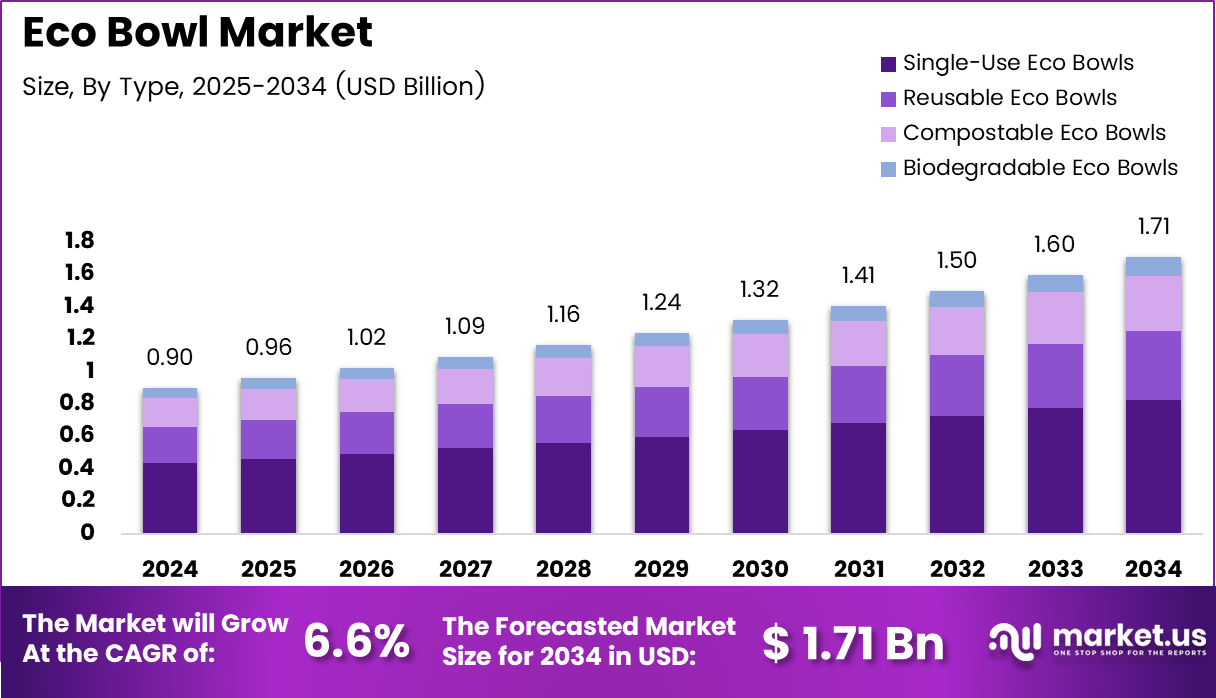
The Global Eco Bowls Market size is expected to be worth around USD 1.71 billion by 2034, from USD 0.9 billion in 2024, growing at a CAGR of 6.6% during the forecast period from 2025 to 2034.
The Eco Bowls Market refers to the segment of sustainable foodservice packaging focused on biodegradable, compostable, and non toxic bowl solutions. These products are increasingly replacing plastic and foam alternatives. Consequently, eco bowls support food safety, regulatory compliance, and sustainability goals across retail, foodservice, and institutional consumption channels.
The eco bowls market is experiencing steady growth driven by environmental accountability and changing consumer behavior. As a result, food brands and distributors are prioritizing compostable packaging to strengthen brand trust. Moreover, rising urban food consumption and takeaway culture continue to expand addressable demand across global markets.
In terms of opportunity, eco bowls benefit from favorable government policies promoting biodegradable materials. Therefore, public procurement programs increasingly prefer compostable tableware for schools and hospitals. Additionally, regulatory bans on single use plastics accelerate commercial adoption, creating scalable opportunities for certified eco friendly bowl manufacturers.
Furthermore, innovation remains central to market expansion, particularly in material engineering and thermal durability. As a result, eco bowls are evolving to handle diverse cuisines and temperature requirements. Improved structural integrity enhances usability for hot and cold foods, supporting broader adoption across foodservice applications.
From a distribution perspective, market penetration continues to widen through retail and foodservice networks. According to manufacturer disclosures, eco tableware products are sold through over 30,000 supermarkets, mass merchandisers, and club locations across more than 50 countries, reflecting strong global commercialization.
Performance characteristics further strengthen the market outlook. According to certified product study, eco bowls sustain temperatures ranging from minus 20 to 180 degrees while maintaining food integrity. Additionally, these products convert fully into soil within 90 days, supporting circular economy objectives.
Importantly, food safety remains a critical differentiator. According to material safety assessments, biodegradable eco bowls do not contaminate food unlike plastic or styrofoam. Moreover, these solutions are confirmed as 100 percent biodegradable and compostable, reinforcing regulatory alignment, consumer trust, and long term market viability.
Key Takeaways
- The global Eco Bowls Market is projected to reach USD 1.71 billion by 2034, up from USD 0.9 billion in 2024, reflecting steady market expansion.
- The market is expected to grow at a CAGR of 6.6% during the forecast period from 2025 to 2034, driven by sustainability focused food packaging demand.
- Single-Use Eco Bowls emerged as the leading type segment, accounting for a dominant share of 48.3% due to high adoption in takeaway and quick service formats.
- Sugarcane Bagasse led the material segment with a market share of 29.8%, supported by compostability, heat resistance, and agricultural availability.
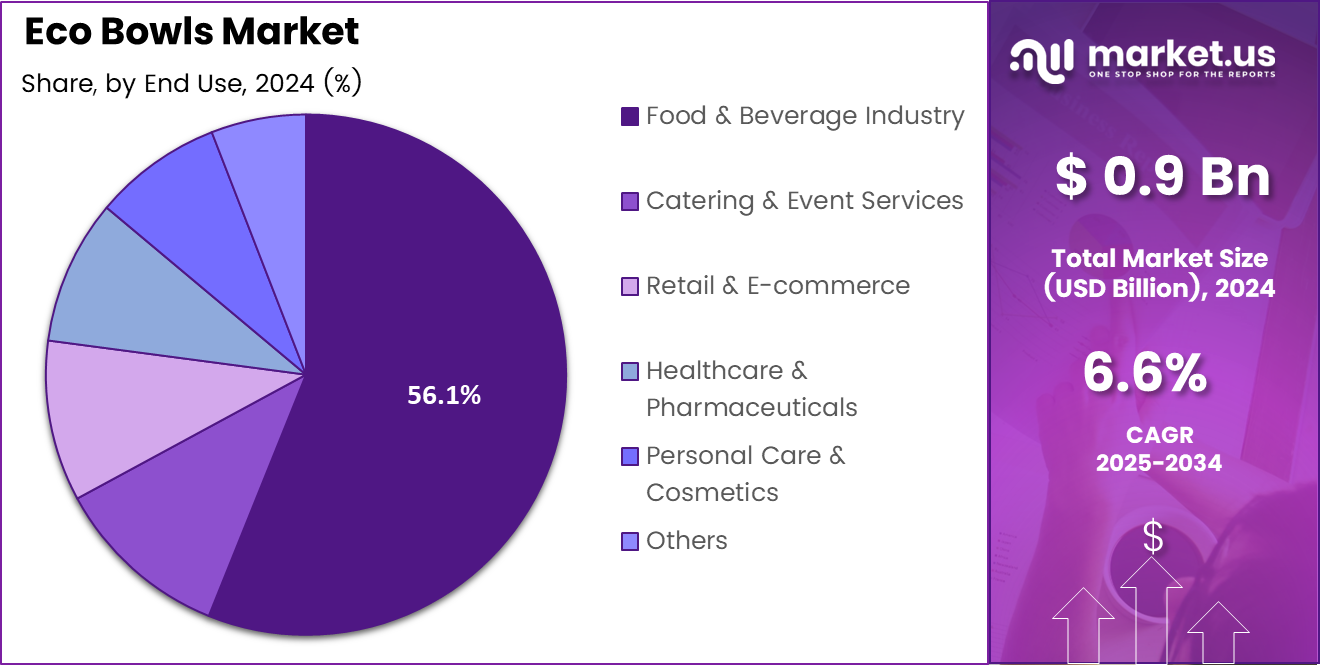
- The Food & Beverage Industry represented the largest end-use segment, holding a significant share of 56.1% driven by high volume foodservice consumption.
- Asia Pacific dominated the regional landscape with a market share of 47.9% and a valuation of USD 0.4 billion, supported by urbanization and food delivery growth.
By Type Analysis
Single-Use Eco Bowls dominates with 48.3% due to high demand for convenience-driven, disposable, and sustainable food packaging solutions.
In 2024, Single-Use Eco Bowls held a dominant market position in the By Type Analysis segment of Eco Bowls Market, with a 48.3% share. Demand accelerated as foodservice operators prioritized hygiene, portability, and compostable alternatives, especially in takeaway and quick-service formats.
Reusable Eco Bowls gained steady traction as sustainability awareness increased among consumers and institutional buyers. These products support long-term cost efficiency and waste reduction, making them suitable for cafes, households, and zero-waste dining concepts.
Compostable Eco Bowls witnessed growing adoption due to regulatory pressure on plastic waste and improved composting infrastructure. Their ability to decompose naturally positioned them as preferred solutions for environmentally compliant foodservice operations.
Biodegradable Eco Bowls expanded gradually, supported by material innovation and broader availability. They addressed sustainability goals while maintaining functional performance, particularly in mid-scale food outlets transitioning away from conventional plastics.
By Material Analysis
Sugarcane Bagasse dominates with 29.8% driven by its durability, compostability, and large-scale agricultural availability.
In 2024, Sugarcane Bagasse held a dominant market position in the By Material Analysis segment of Eco Bowls Market, with a 29.8% share. Its heat resistance and compostable nature supported widespread use in foodservice applications.
Bamboo-based eco bowls gained momentum due to rapid renewability and natural aesthetics. These bowls appealed to premium and eco-conscious brands focused on sustainability storytelling.
Palm leaf bowls experienced niche demand, supported by their chemical-free production and rigid structure. They remained popular in catering and eco-themed events.
Wood pulp materials supported affordability and recyclability, making them suitable for mass-market disposable tableware applications.
Recycled paper bowls advanced steadily as circular economy initiatives encouraged reuse of post-consumer waste materials.
PLA materials gained adoption where industrial composting facilities were available, offering a bio-based plastic alternative.
Cornstarch-based materials supported lightweight and biodegradable bowl production for short-use food applications.
Coconut shell bowls remained niche, valued for durability and artisanal appeal in specialty food presentation. Other materials contributed marginally, driven by experimental blends and localized sourcing strategies.
By End-Use Analysis
Food & Beverage Industry dominates with 56.1% due to high-volume consumption and sustainability-driven packaging transitions.
In 2024, Food & Beverage Industry held a dominant market position in the By End-Use Analysis segment of Eco Bowls Market, with a 56.1% share. Restaurants, QSRs, and delivery platforms increasingly adopted eco bowls to meet regulatory and consumer expectations.
Catering & Event Services expanded usage during large gatherings and corporate events, prioritizing compostable and visually appealing serving solutions.
Retail & E-commerce channels supported market growth by offering bundled eco tableware and private-label sustainable packaging options.
Healthcare & Pharmaceuticals adopted eco bowls selectively in cafeterias and patient meal services to align with institutional sustainability goals.
Personal Care & Cosmetics used eco bowls for product packaging and in-store experiences, reinforcing eco-friendly brand positioning.
Other end-use sectors contributed limited demand, primarily through educational institutions and community food programs emphasizing waste reduction.
Key Market Segments
By Type
- Single-Use Eco Bowls
- Reusable Eco Bowls
- Compostable Eco Bowls
- Biodegradable Eco Bowls
By Material
- Bamboo
- Sugarcane Bagasse
- Palm Leaves
- Wood Pulp
- Recycled Paper
- PLA (Polylactic Acid)
- Cornstarch-based Materials
- Coconut Shells
- Others
By End-Use
- Food & Beverage Industry
- Catering & Event Services
- Retail & E-commerce
- Healthcare & Pharmaceuticals
- Personal Care & Cosmetics
- Others
Drivers
Rising Regulatory Pressure on Single Use Plastic Foodservice Containers Drives Market Growth
From an analyst perspective, stricter rules on single use plastic containers are a major driver for the eco bowls market. Many city and national governments are limiting plastic bowls used in foodservice. As a result, restaurants and food vendors are shifting toward compostable alternatives to stay compliant and avoid penalties.
At the same time, consumers are becoming more aware of plastic waste and its environmental impact. This awareness is pushing demand for plant based and compostable food bowls made from natural fibers. Eco bowls fit well with this preference, as they are perceived as safer and more responsible choices.
Quick service restaurants are also expanding rapidly and adopting sustainable serving standards. Large chains increasingly prefer eco friendly bowls to align with sustainability goals. This creates steady volume demand and supports long term market growth.
Corporate ESG commitments further support adoption. Many food brands and retailers are setting public targets to reduce plastic usage. Eco bowls help them show visible progress. Overall, regulation, consumer behavior, restaurant expansion, and ESG focus together are strengthening demand for eco bowls across global foodservice markets.
Restraints
Higher Unit Cost of Eco Bowls Limits Market Expansion
One key restraint in the eco bowls market is their higher cost compared to traditional plastic bowls. From an analyst viewpoint, price remains a critical factor for small food outlets and cost sensitive regions. Eco bowls often require higher raw material and processing costs, which raises final prices.
Another limitation is the lack of industrial composting facilities in many developing economies. Even if bowls are compostable, proper disposal systems are not always available. This reduces the perceived value of eco bowls and slows adoption in these markets.
Performance challenges also affect usage. Some eco bowls face issues with heat resistance or moisture protection, especially for hot or liquid foods. Foodservice operators may hesitate to switch if performance is inconsistent.
In addition, supply chains for bio based materials such as bagasse and molded fiber can be unstable. Seasonal availability and agricultural dependency can disrupt production. These combined factors create operational and cost related challenges that limit faster penetration of eco bowls in price sensitive and infrastructure limited markets.
Growth Factors
Rapid Adoption by Food Delivery Platforms Creates New Growth Opportunities
The eco bowls market shows strong growth opportunities due to rising use by meal kit services and food delivery platforms. From an analyst view, these businesses focus heavily on packaging quality and sustainability. Eco bowls help them meet customer expectations for greener packaging.
Food retailers are also increasing private label sustainable packaging. By offering eco bowls under their own brands, retailers gain better control over pricing and supply. This strategy improves availability and supports wider market reach.
Innovation in design is another major opportunity. Multi compartment and leak resistant eco bowls are gaining attention as they improve food presentation and functionality. These features are especially useful for takeaway meals and delivery services.
As technology improves, eco bowls can match the performance of plastic alternatives while maintaining sustainability benefits. This opens opportunities in premium foodservice, catering, and ready to eat meals. Overall, innovation, retail participation, and delivery platform demand are expected to support steady expansion of the eco bowls market.
Emerging Trends
Use of Agricultural Waste Materials Shapes Key Market Trends
One major trend in the eco bowls market is the shift toward PFAS free and chemical free coatings. From an analyst standpoint, this responds to health concerns and regulatory focus on food safety. Buyers increasingly prefer bowls without harmful coatings.
Hybrid structures using recyclable paperboard and molded fiber are also trending. These designs balance strength, cost, and sustainability. They allow better performance while keeping environmental impact low.
Custom branding and premium appearance are becoming important. Food brands want eco bowls that look attractive and support brand identity. As a result, suppliers are offering better finishes, colors, and printing options.
The use of agricultural waste such as sugarcane, wheat straw, and bamboo fibers is another strong trend. These materials reduce reliance on wood pulp and add value to farm waste. This approach improves sustainability while supporting circular economy goals. Together, these trends are reshaping product design and buyer expectations in the eco bowls market.
Regional Analysis
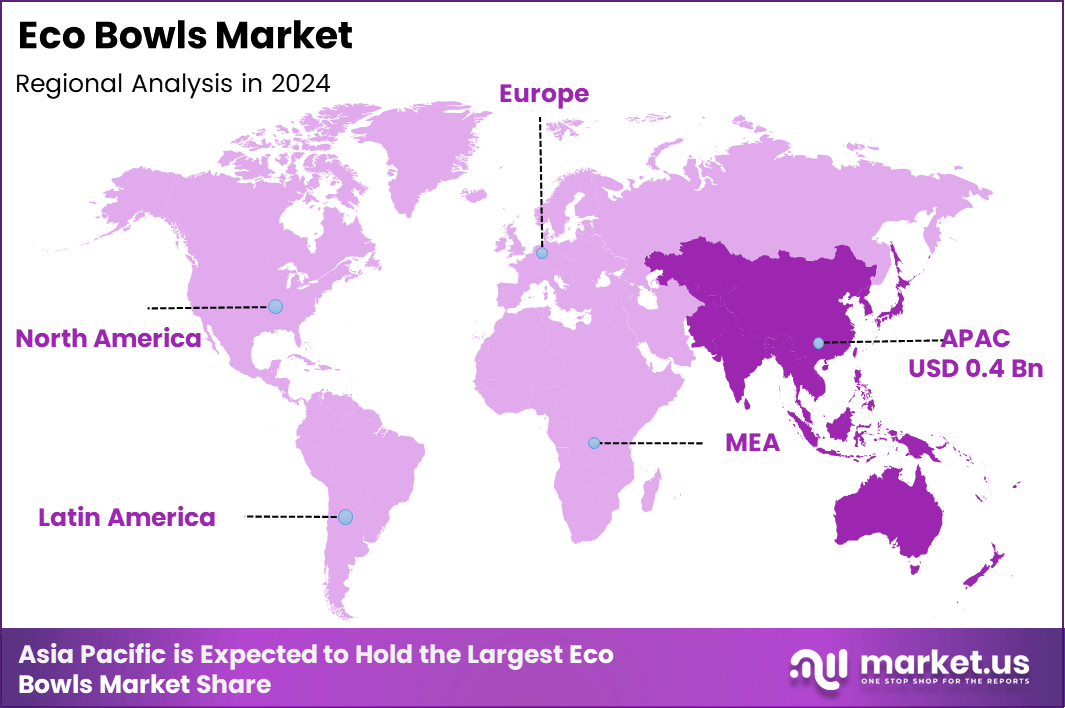
Asia Pacific Dominates the Eco Bowls Market with a Market Share of 47.9%, Valued at USD 0.4 billion
Asia Pacific held the leading position in the Eco Bowls Market, accounting for a dominant share of 47.9% and reaching a valuation of USD 0.4 billion. Growth remained supported by rising food delivery consumption, expanding urban populations, and strong regulatory focus on reducing single use plastics. Moreover, the availability of agricultural waste materials strengthened local manufacturing capabilities.
North America Eco Bowls Market Trends
North America demonstrated steady adoption of eco bowls, driven by high consumer awareness of sustainable packaging and strong enforcement of environmental regulations. Foodservice operators increasingly prioritized compostable and biodegradable tableware to align with corporate sustainability goals. Additionally, demand benefited from the rapid expansion of takeout and ready to eat food formats.
Europe Eco Bowls Market Trends
Europe continued to witness consistent growth as governments enforced strict packaging waste directives and circular economy policies. Food and beverage brands increasingly transitioned toward fiber based and compostable bowls to comply with regional sustainability mandates. Furthermore, consumer preference for plastic free dining solutions supported long term market expansion.
Middle East and Africa Eco Bowls Market Trends
The Middle East and Africa region experienced gradual growth, supported by expanding hospitality, tourism, and event catering Services. Sustainability initiatives in urban centers encouraged adoption of eco friendly food packaging. However, market penetration remained moderate due to limited composting infrastructure in several countries.
Latin America Eco Bowls Market Trends
Latin America showed emerging potential as awareness around environmental protection increased across foodservice and retail sectors. Government efforts to curb plastic waste, combined with rising urban food consumption, supported adoption. Nevertheless, cost sensitivity and uneven regulatory enforcement influenced the pace of market development.
U.S Eco Bowls Market Trends
The U.S market reflected strong demand for eco bowls, driven by state level bans on plastic disposables and increasing consumer preference for sustainable dining products. Food delivery platforms and quick service restaurants accelerated adoption. In addition, corporate sustainability commitments continued to reinforce long term demand.
Key Regions and Countries
North America
- US
- Canada
Europe
- Germany
- France
- The UK
- Spain
- Italy
- Rest of Europe
Asia Pacific
- China
- Japan
- South Korea
- India
- Australia
- Rest of APAC
Latin America
- Brazil
- Mexico
- Rest of Latin America
Middle East & Africa
- GCC
- South Africa
- Rest of MEA
Key Eco Bowls Company Insights
A strong shift toward fiber based, compostable, and circular packaging solutions, driven by regulatory pressure and foodservice sustainability commitments.
Mondi Group continues to strengthen its position by leveraging its integrated paper and packaging capabilities. The company focuses on renewable raw materials and scalable production, enabling foodservice clients to transition away from plastic bowls while maintaining performance, supply reliability, and cost efficiency across high volume applications.
Crown Holdings applies its deep expertise in sustainable packaging innovation to expand its eco friendly food packaging portfolio. Its emphasis on material efficiency, recyclability, and lightweight design supports growing demand from food and beverage operators seeking compliant and premium packaging formats aligned with environmental standards.
Huhtamaki Oyj remains a key contributor to eco bowls adoption through its strong fiber based product development and global manufacturing footprint. The company benefits from long standing relationships with foodservice brands, enabling rapid commercialization of compostable bowl solutions across quick service and takeaway segments.
Biopak differentiates itself through a sustainability led brand strategy focused on compostable, plant based food packaging. Its alignment with zero waste initiatives and composting infrastructure supports adoption among environmentally conscious food outlets, catering services, and institutional buyers prioritizing end of life responsibility.
Overall, these players collectively shape market direction by balancing sustainability performance with scalability, regulatory compliance, and evolving food consumption patterns, reinforcing the long term growth outlook of the Eco Bowls Market.
Top Key Players in the Market
- Mondi Group
- Crown Holdings
- Huhtamaki Oyj
- Biopak
- Vegware
- Eco-Products, Inc.
- Genpak, LLC
- Pactiv Evergreen Inc.
- Earthpack
- Sabert Corporation
Recent Developments
- In March 2024, SAMBAZON acquired SunOpta’s açaí and smoothie bowls business, expanding its U.S. manufacturing footprint and strengthening in house production capabilities. The acquisition is expected to unlock innovation across SAMBAZON’s bowl portfolio, including dry and savory toppings, organic fruit inclusions, and new bases featuring tropical fruits, purees, and emerging seed bowl formats.
- In April 2025, Novolex and Pactiv Evergreen Inc. completed their strategic combination, creating a leading manufacturer in food, beverage, and specialty packaging. This merger enhances scale, product breadth, and manufacturing efficiency, positioning the combined entity to better serve global consumer and foodservice packaging demand.
Report Scope
Report Features Description Market Value (2024) USD 0.9 billion Forecast Revenue (2034) USD 1.71 billion CAGR (2025-2034) 6.6% Base Year for Estimation 2024 Historic Period 2020-2023 Forecast Period 2025-2034 Report Coverage Revenue Forecast, Market Dynamics, Competitive Landscape, Recent Developments Segments Covered By Type (Single-Use Eco Bowls, Reusable Eco Bowls, Compostable Eco Bowls, Biodegradable Eco Bowls), By Material (Bamboo, Sugarcane Bagasse, Palm Leaves, Wood Pulp, Recycled Paper, PLA (Polylactic Acid), Cornstarch-based Materials, Coconut Shells, Others), By End-Use (Food & Beverage Industry, Catering & Event Services, Retail & E-commerce, Healthcare & Pharmaceuticals, Personal Care & Cosmetics, Others) Regional Analysis North America (US and Canada), Europe (Germany, France, The UK, Spain, Italy, and Rest of Europe), Asia Pacific (China, Japan, South Korea, India, Australia, and Rest of APAC), Latin America (Brazil, Mexico, and Rest of Latin America), Middle East & Africa (GCC, South Africa, and Rest of MEA) Competitive Landscape Mondi Group, Crown Holdings, Huhtamaki Oyj, Biopak, Vegware, Eco-Products, Inc., Genpak, LLC, Pactiv Evergreen Inc., Earthpack, Sabert Corporation Customization Scope Customization for segments, region/country-level will be provided. Moreover, additional customization can be done based on the requirements. Purchase Options We have three licenses to opt for: Single User License, Multi-User License (Up to 5 Users), Corporate Use License (Unlimited User and Printable PDF) 
-
-
- Mondi Group
- Crown Holdings
- Huhtamaki Oyj
- Biopak
- Vegware
- Eco-Products, Inc.
- Genpak, LLC
- Pactiv Evergreen Inc.
- Earthpack
- Sabert Corporation
Our Clients

- 171959
- Dec 2025






