


Report Overview
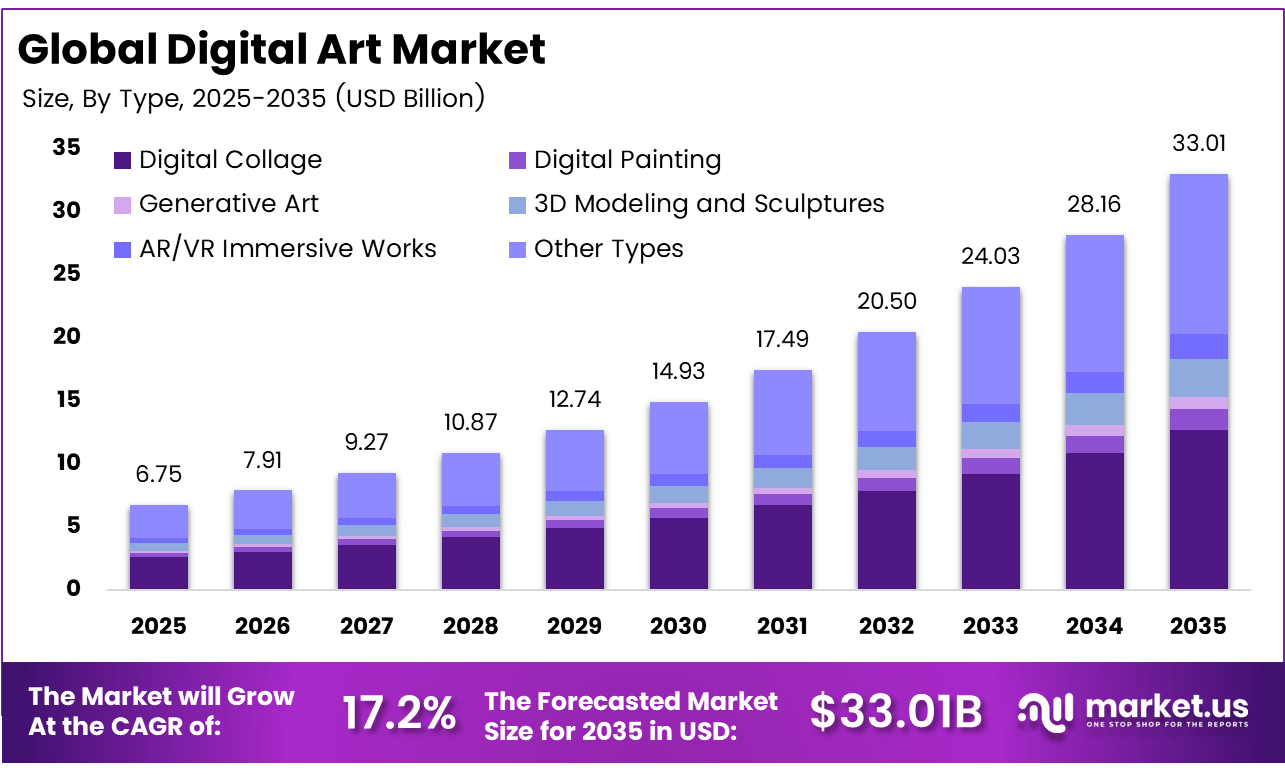
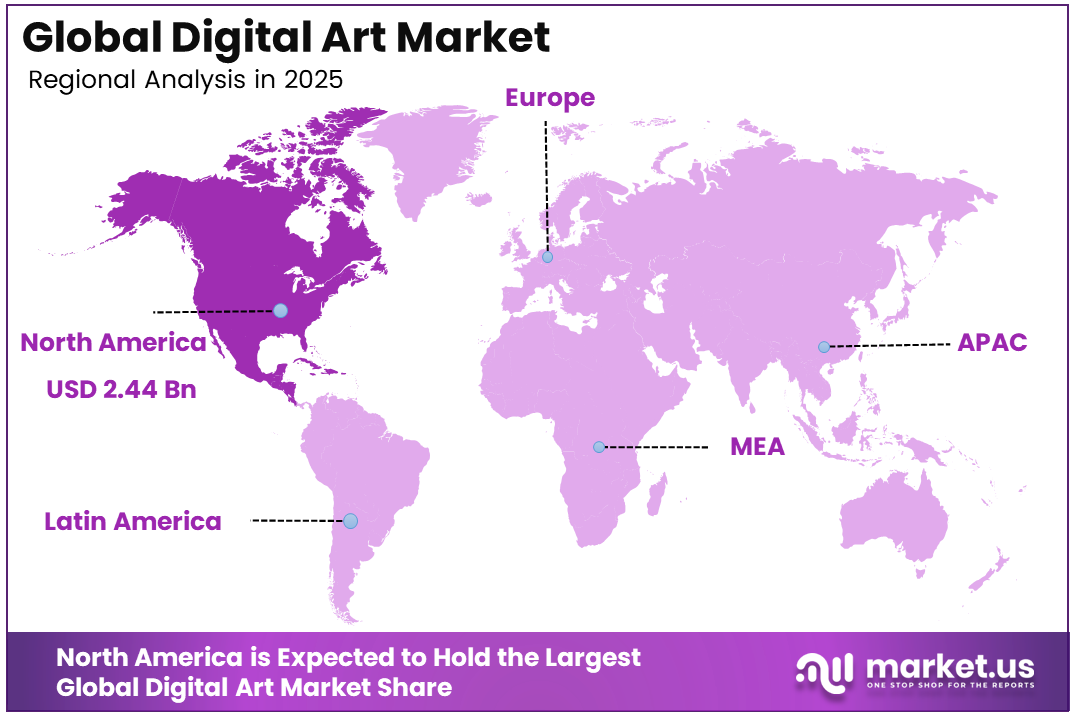
The Global Digital Art Market size is expected to be worth around USD 33.01 billion by 2035, from USD 6.75 billion in 2025, growing at a CAGR of 17.2% during the forecast period from 2025 to 2035. North America held a dominant market position, capturing more than a 36.2% share, holding USD 2.44 billion in revenue.
Digital art has become a vibrant part of today’s creative world, blending technology with human imagination in ways that feel fresh and exciting. Artists and collectors alike are drawn to its endless possibilities, from quick edits to global sharing. This shift comes from real-world changes in how people make and enjoy art.
People turn to digital art because it opens up creation to everyone without the mess of paints or expensive supplies. Young folks especially love it since around 40% of digital creators start before age 15 using simple apps on phones or tablets. Social media helps spread these works fast, letting artists connect with fans across the world in just seconds. This ease pulls in hobbyists and pros alike, making art feel fresh and reachable every day. The low cost means more people try it out, fueling a wave of new talent that keeps the field growing strong.
The market for digital art is driven by the rise of online platforms and digital engagement. Artists now share and sell work easily through social media, virtual galleries, and marketplaces, reaching global buyers without traditional barriers. More people spend time online, discovering art via apps and sites, which sparks interest among new creators and collectors. Tools from past updates, like Adobe’s AI features and DeviantArt’s sharing improvements, make creation and connection smoother, fueling wider participation and lively communities around digital works.
Demand for digital art keeps rising as people want pieces that match their fast-paced lives and easy sharing online. About 27% of Americans have come across AI-generated digital art, and 56% of those folks like it a lot, proving it appeals way beyond just experts. Regular users hunt for personal touches in art they can own and show off digitally without hassle. This pull comes from how it fits into daily routines, like customizing phone screens or virtual spaces. More eyes on platforms mean steady interest from all walks of life.
For instance, in October 2025, Canva Pty Ltd unveiled sweeping AI updates via Magic Studio, from Magic Design’s complete layout generation to DALL-E integration for high-res images. It’s turning beginners into pros overnight, boosting accessibility in digital art creation.
Key Takeaway
- In 2025, the Digital Collage segment held a dominant market position, capturing a 38.5% share of the Global Digital Art Market.
- In 2025, the 3D Illustration segment held a dominant market position, capturing a 40.7% share of the Global Digital Art Market.
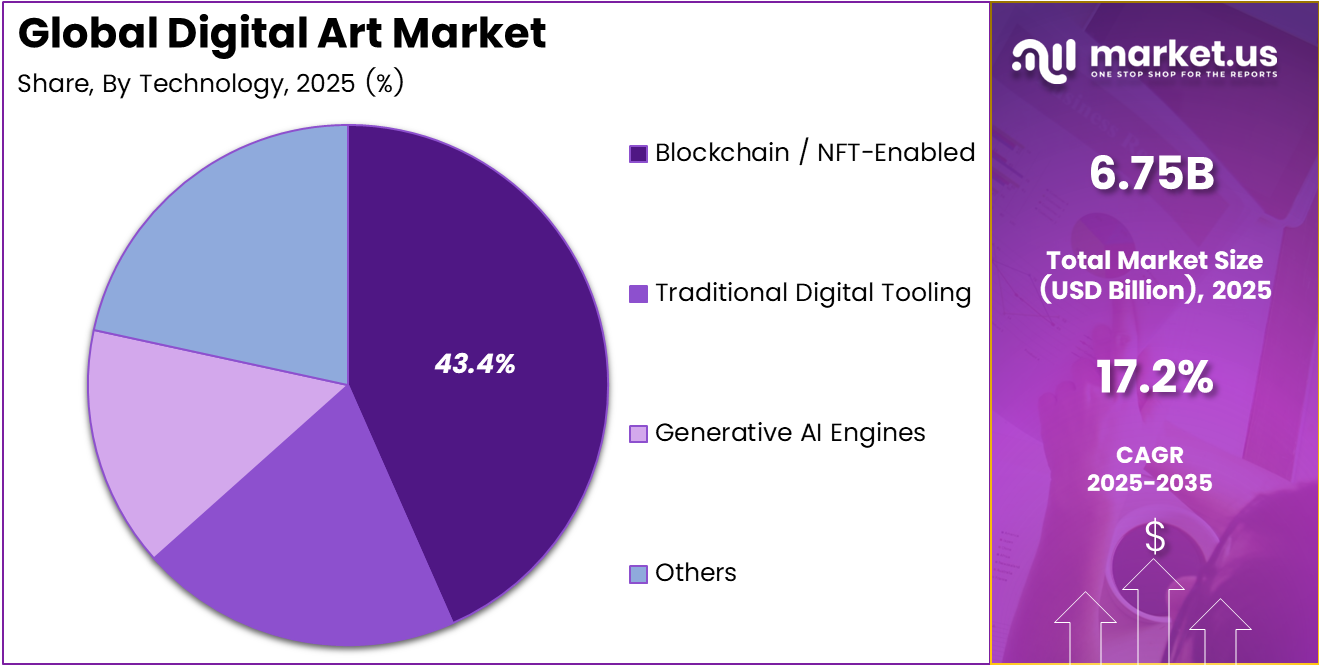
- In 2025, the Blockchain / NFT-Enabled segment held a dominant market position, capturing a 43.4% share of the Global Digital Art Market.
- In 2025, the Offline Galleries and Pop-Ups segment held a dominant market position, capturing a 64.2% share of the Global Digital Art Market.
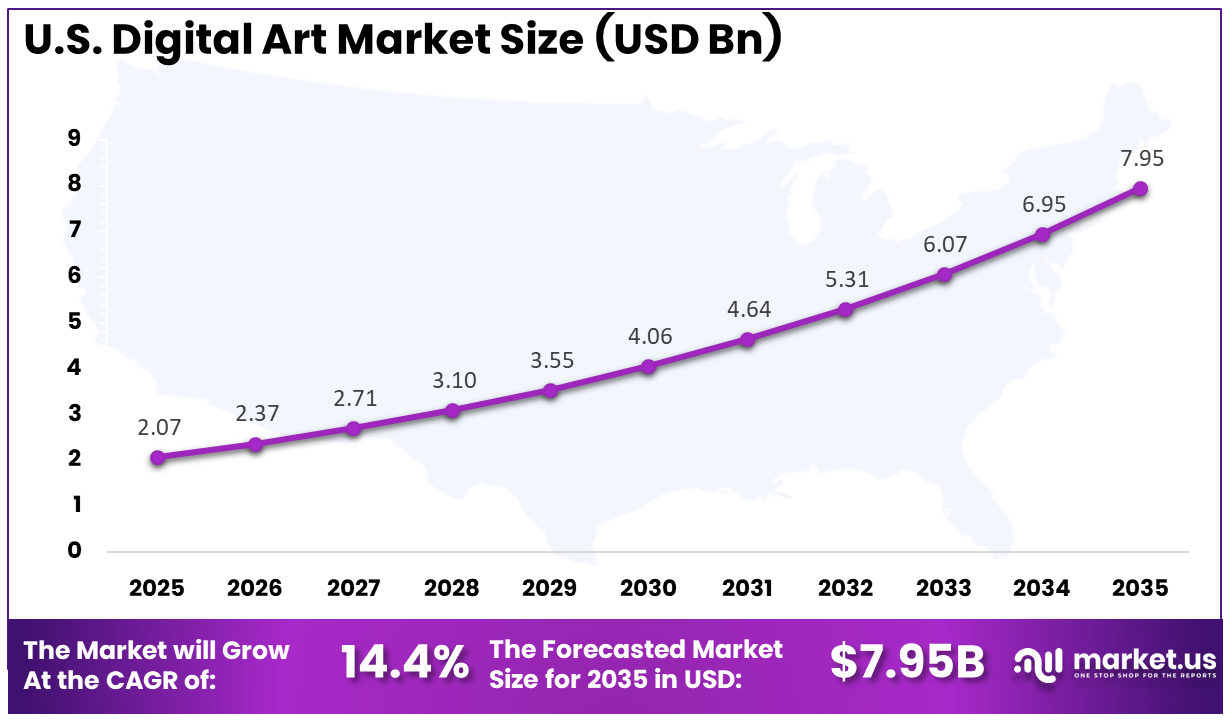
- The U.S. Digital Art Market was valued at USD 2.07 billion in 2025, with a robust CAGR of 14.4%.
- In 2025, North America held a dominant market position in the Global Digital Art Market, capturing more than a 36.2% share.
Role of Generative AI
Generative AI has become a real game-changer for digital artists, letting them turn simple text ideas into stunning visuals in minutes. Artists tell me they save hours on rough sketches, focusing instead on refining emotions and unique twists that only humans can add. About 29% now mix these tools into daily work, boosting output by roughly 25% without losing that personal spark.
It feels like having a smart assistant in the studio, one that suggests wild color blends or patterns you might not think of alone. Still, 53.6% of creators insist their own vision drives the final piece, proving AI sparks ideas rather than stealing the show. This shift opens doors for experimentation, making art feel fresh and alive.
Investment and Business Benefits
Investors spot chances in digital collectibles and trading platforms where art moves like shares but starts cheaper for all. Fractional ownership lets small players join high-end deals without huge cash outlays. More than half of big art buyers now snap up digital items, moving past just physical pieces. Tech shifts keep young collectors hooked, promising ongoing buzz. Platforms make it simple to track value changes, turning art into a smart portfolio add-on for many.
Businesses tap digital art for ads that grab attention and lift clicks plus sales on social feeds. Skipping prints cuts expenses, and tweaks fit any screen size right away. One brand noted 25% better engagement from posts with lively animated visuals. It builds brand stories that stick with viewers longer than flat images. Teams update campaigns fast to match trends, keeping everything current and sharp without reprint delays.
Regional Analysis
In 2025, North America held a dominant market position in the Global Digital Art Market, capturing more than a 36.2% share, holding USD 2.44 billion in revenue. This dominance is due to its advanced technological infrastructure, high digital adoption rates, and robust presence of leading creative platforms and marketplaces. The region benefits from a mature ecosystem of digital artists, collectors, and investors, underpinned by strong institutional support for creative industries and a culture of innovation. Additionally, North America hosts several prominent NFT platforms and digital galleries, which have accelerated the monetization and global visibility of digital art.
For instance, in December 2025, Behance analyzed top projects to identify key creative trends, showcasing dynamic motion design, sections, and Pro features that elevate digital portfolios. This underscores New York’s creative hub status and North American leadership in curating and presenting cutting-edge digital artwork globally.
U.S. Digital Art Market Size
The market for Digital Art within the U.S. is growing tremendously and is currently valued at USD 2.07 billion; the market has a projected CAGR of 14.4%. The market grows fast due to tech hubs like Silicon Valley and New York that mix artists with big investors. Tools from companies like Adobe and Procreate make creating easy on any device, so more people jump in from gaming to ads. Young buyers love NFTs for owning unique pieces online, and social media spreads art quickly to global fans. Events blend screens with real exhibits, pulling crowds who chat and buy on site. Demand rises as schools teach digital skills and remote work frees time for side gigs in art. Brands need fresh visuals for ads and virtual worlds, hiring local talent non-stop.
For instance, in October 2025, Adobe Inc. unveiled groundbreaking AI innovations at Adobe MAX, including generative audio/video tools in Firefly and new Creative Cloud features that empower creators with precise control over digital art production. This positions Adobe as a leader in AI-driven creative tools, reinforcing U.S. dominance in the digital art market by making advanced capabilities accessible to every creator and streamlining ideation to distribution workflows.
Key Regions and Countries
North America
- US
- Canada
Europe
- Germany
- France
- The UK
- Spain
- Italy
- Russia
- Netherlands
- Rest of Europe
Asia Pacific
- China
- Japan
- South Korea
- India
- Australia
- Singapore
- Thailand
- Vietnam
- Rest of APAC
Latin America
- Brazil
- Mexico
- Rest of Latin America
Middle East & Africa
- South Africa
- Saudi Arabia
- UAE
- Rest of MEA
Type Analysis
In 2025, the Digital Collage segment held a dominant market position, capturing a 38.5% share of the Global Digital Art Market. With free tools on phones and computers, more creators jump in daily, sharing on social media where likes turn into sales. This hands-on yet digital style feels personal and quick, drawing crowds tired of plain images. Buyers see the creativity in every layer, boosting demand as platforms reward unique visuals. Growth comes from its low entry barrier, letting hobbyists turn pro fast.
This segment grows because collage fits our fast-scroll world, where bold mixes stand out in feeds. Young artists experiment without high costs, pulling in global fans who collect what feels real amid perfect edits. Galleries spotlight these works for their storytelling vibe, and online shops see steady buys from niche fans. As remote work rises, more people craft at home, feeding the cycle. It’s thriving on that human touch in a screen-heavy space, keeping shares and sales climbing.
For instance, in October 2025, Midjourney Inc. enhanced its AI engine for digital collage styles, blending surreal elements with retro vibes in seconds. Creators generate dreamy montages from text prompts, sparking viral shares on art platforms. This speeds up ideation, letting hobbyists produce pro-level collages daily and tap into trending aesthetics effortlessly.
Medium Analysis
In 2025, the 3D Illustration segment held a dominant market position, capturing a 40.7% share of the Global Digital Art Market. Software updates make modeling simpler, so artists build worlds buyers can almost touch, sparking excitement. This growth ties to gaming booms and virtual reality needs, where depth sells stories better than 2D. Clients pay more for that wow factor, and creators share renders online to hook viewers fast. It’s exploding because tech lowers skill gaps while raising output quality.
Demand surges as brands use 3D for product visuals that feel real online. Freelancers thrive on platforms linking them to projects, and education pushes 3D classes hard. Collectors chase limited drops that shine in augmented reality apps. With events showing massive prints, buzz spreads, and encouraging more work. Growth roots in its versatility across industries, making artists versatile earners in a visual-first economy.
For instance, in September 2025, Autodesk Inc. launched neural enhancements in Sketchbook at AU 2025, aiding 3D sketches with AI-guided perspective. Users draw lifelike models more easily, ideal for game concepts and product visuals. The tool cuts learning curves, helping artists deliver immersive illustrations faster for clients in entertainment.
Technology Analysis
In 2025, the Blockchain / NFT-Enabled segment held a dominant market position, capturing a 43.4% share of the Global Digital Art Market. Artists earn royalties on every resale, fixing old issues where creators lost out. Platforms make minting simple, so newcomers list work worldwide overnight. This trust builds a hot collector base chasing rare drops, fueling flips and values. Growth hits from viral sales stories that pull in curious buyers, testing the waters.
It keeps rising as security fears fade with better wallets and laws. Communities form around drops, turning art into social events. Big names join, validating the space for everyday collectors. Tools now integrate easy payments, cutting barriers. This segment booms on empowerment, giving artists control and a steady income in a borderless market.
For instance, in October 2024, OpenSea partnered with ArtBlocks for custom NFT engines on blockchain. Generative artists deploy collections more easily, with better royalties baked in. This expands access, letting more hit main markets and ride community hype for sustained tech adoption.
Sales Channel Analysis
In 2025, the Offline Galleries and Pop-Ups segment held a dominant market position, capturing a 64.2% share of the Global Digital Art Market. Events let buyers chat with makers, building bonds that lead to buys. Pop-ups pop up in cool spots, creating urgency with limited runs. This channel grows as people crave real-world escapes from screens, blending tech previews with live vibes. High-end sales happen here, where touch and talk seal deals.
Growth continues with hybrid shows mixing VR tries and physical prints. Cities host more art walks, drawing crowds that spill into purchases. Younger buyers mix online hunts with in-person thrills, keeping venues packed. It’s the human connection driving loyalty, as stories from events spread far online. This timeless draw ensures a steady rise amid digital floods.
For instance, in July 2025, SuperRare Labs Inc. opened the OFFLINE gallery in New York with the Mythologies exhibit. Fifteen artists showed digital works on massive screens, blending NFTs with live talks. Pop-up events drew crowds, converting online fans to buyers through immersive physical displays.
Key Market Segments
By Type
- Digital Collage
- Digital Painting
- Generative Art
- 3D Modeling and Sculptures
- AR/VR Immersive Works
- Other Types
By Medium
- 2D Illustration
- 3D Illustration
- Animation and Motion Graphics
- AR/VR Interactive
- Others
By Technology
- Blockchain / NFT-Enabled
- Traditional Digital Tooling
- Generative AI Engines
- Others
By Sales Channel
- Online Marketplaces
- Offline Galleries and Pop-Ups
Emerging Trends
Interactive AI art that responds to viewers is picking up fast, turning static images into living experiences on screens or VR setups. Shows featuring this have jumped 25% lately, drawing crowds who want to touch and shape the work themselves. It pulls in younger folks hooked on digital worlds.
Text-to-image tech now fuses styles effortlessly, like blending ancient sketches with neon glows for something totally new. Around 45.7% of artists call it a top helper, speeding up the path from brain to canvas. This mix keeps human creativity at the heart while pushing boundaries in ways we never imagined.
Growth Factors
Rising need for tailored visuals in gaming and ads fuels the boom, as AI handles repetitive tasks, so creators chase bold concepts. Peer reviews on AI-enhanced pieces often lift their appeal by 50%, helping them shine in crowded galleries or online feeds. Demand just keeps pulling more talent in.
Cloud platforms make high-end tools free for anyone with internet, leveling the field for beginners and pros alike. These services grab 65% of usage, sparking ideas from every corner. It’s exciting to see how this access turns hobbyists into serious players overnight.
Market Dynamics
Drivers - Growing Online Platforms and Digital Engagement
Online platforms have opened doors for artists to share and sell their work directly with people around the world. Social media sites let creators post portfolios, show their process through videos, and connect with fans in real time, making art easy to find and enjoy. This direct path skips old barriers like galleries and builds a lively community that draws in new collectors who like buying online.
The rise of these tools means more everyday people can discover digital art without leaving home. Artists gain fans globally, and buyers feel part of the creative world by following updates and joining talks. Such easy access keeps drawing fresh faces to the scene.
For instance, in October 2025, Adobe launched AI tools in Photoshop and Firefly for faster creation and sharing across Creative Cloud apps. Artists gain precision in editing and ideation, making it simpler to produce and post digital art online. Such updates drive platform use and global reach for creators.
Restraint - High Costs and Technical Barriers
High costs for tools like tablets and paid software keep many new artists from starting strong. While some basic apps cost little, better ones need monthly fees or big one-time buys that add up fast. This setup favors those with money for gear, leaving others behind.
Steep learning curves in these programs also slow down beginners without tech skills or training. Mastering layers, brushes, and features takes real time and practice, which can feel too much for hobbyists. Such hurdles cut down the number of people who join and stay in digital art creation.
For instance, in December 2025, Clip Studio Paint continues to offer pro brushes and multi-page tools, but mastering its full set requires time and device power beyond basic setups. Updates focus on core drawing without easing steep entry costs. Such demands limit newcomers without strong tech backgrounds.
Opportunities - Expanded Use in Immersive Digital Experiences
Virtual spaces like metaverses let art come alive in ways flat screens cannot match. Tools such as VR and AR let people walk through art spaces or see pieces blend with real life, making experiences deeper and more fun. Brands and groups use this to host events that pull in crowds who want more than flat images.
Interactive setups open new ways for artists to earn by teaming up on projects or live shows in these spaces. As tech gets better, more folks seek out art that responds and feels real, growing chances for creators to reach fresh eyes. This path promises steady ways to show and sell work in exciting formats.
For instance, in March 2025, Meow Wolf announced its first New York immersive art space at Pier 17, mixing physical and digital environments for interactive experiences. Nearly 500 artists collaborate on 50,000 sq ft of explorable worlds. This expands digital art into engaging, game-like venues for new audiences.
Challenges - Intellectual Property and Regulatory Uncertainty
Owning a digital token does not always mean full control over the art itself, as laws differ by place and lag behind tech changes. Artists worry about copies or misuse since blockchain proof falls short without clear rules on rights. This gap shakes trust for makers and buyers alike.
Fast tech shifts leave old copyright rules behind, making it hard to stop theft or settle disputes across borders. Platforms and creators face risks from unclear ownership transfers and scams that prey on confusion. Stronger guidelines would help build a safer space for all in the market.
For instance, in December 2024, Verisart integrated Art Blocks Engine into Shopify for minting generative art NFTs with flexible payments. While aiding ownership proof, it underscores gaps in legal enforcement across regions. Creators still face IP misuse risks despite blockchain certificates.
Key Players Analysis
One of the leading players in February 2025, Wacom Co. Ltd., debuted the redesigned Intuos Pro tablet and Yuify software at CES, packing precision pressure sensitivity and AI-powered digital asset protection. Creators now have top-tier tools to safeguard their work while pushing creative boundaries.
Top Key Players in the Market
- Adobe Inc.
- Epic Games Inc. (ArtStation)
- Savage Interactive Pty Ltd (Procreate)
- Behance LLC
- DeviantArt Inc.
- OpenSea (Ozone Networks Inc.)
- Nifty Gateway LLC
- SuperRare Labs Inc.
- Rarible Inc.
- Foundation Labs Inc.
- Midjourney Inc.
- Clip Studio Paint (Celsys Inc.)
- Corel Corporation
- Canva Pty Ltd
- Autodesk Inc. (Sketchbook)
- Wacom Co. Ltd.
- Daz 3D Inc.
- Thinkwell Group LLC
- Meow Wolf Inc.
- Bridgewater Studio LLC
- Verisart Inc.
- ArtBlocks Inc.
- Others
Recent Developments
- In October 2025, Adobe Inc. rolled out game-changing AI tools at Adobe MAX, including Firefly’s generative audio and video features that let creators craft digital art with unprecedented control. This San Jose powerhouse continues to lead the digital art revolution, making pro-level tools accessible to everyone.
- In January 2025, Celsys Inc. (Clip Studio Paint) launched version 4.0, introducing Puppet Warp for quick 2D posing, BVH mocap import, and direct 3D painting. These upgrades are a boon for animators and illustrators, keeping CSP at the forefront of digital drawing innovation.
Report Scope
| Report Features | Description |
|---|---|
| Market Value (2025) | USD 6.75 Billion |
| Forecast Revenue (2035) | USD 33.01 Billion |
| CAGR (2026-2035) | 17.2% |
| Base Year for Estimation | 2025 |
| Historic Period | 2020-2024 |
| Forecast Period | 2026-2035 |
| Report Coverage | Revenue Forecast, Market Dynamics, Competitive Landscape, Recent Developments |
| Segments Covered | By Type (Digital Collage, Digital Painting, Generative Art, 3D Modeling and Sculptures, AR/VR Immersive Works, Other Types), By Medium (2D Illustration, 3D Illustration, Animation and Motion Graphics, AR/VR Interactive, Others), By Technology (Traditional Digital Tooling, Blockchain / NFT-Enabled, Generative AI Engines, Others), By Sales Channel (Online Marketplaces, Offline Galleries and Pop-Ups) |
| Regional Analysis | North America (US and Canada), Europe (Germany, France, The UK, Spain, Italy, and Rest of Europe), Asia Pacific (China, Japan, South Korea, India, Australia, and Rest of APAC), Latin America (Brazil, Mexico, and Rest of Latin America), Middle East & Africa (GCC, South Africa, and Rest of MEA) |
| Competitive Landscape | Adobe Inc., Epic Games Inc. (ArtStation), Savage Interactive Pty Ltd (Procreate), Behance LLC, DeviantArt Inc., OpenSea (Ozone Networks Inc.), Nifty Gateway LLC, SuperRare Labs Inc., Rarible Inc., Foundation Labs Inc., Midjourney Inc., Clip Studio Paint (Celsys Inc.), Corel Corporation, Canva Pty Ltd, Autodesk Inc. (Sketchbook), Wacom Co. Ltd., Daz 3D Inc., Thinkwell Group LLC, Meow Wolf Inc., Bridgewater Studio LLC, Verisart Inc., ArtBlocks Inc., Others |
| Customization Scope | Customization at the segment and region/country levels will be provided. Moreover, customization can be tailored to the requirements. |
| Purchase Options | We have three licenses to opt for: Single User License, Multi-User License (Up to 5 Users), Corporate Use License (Unlimited Users and Printable PDF) |





























