


Market Overview
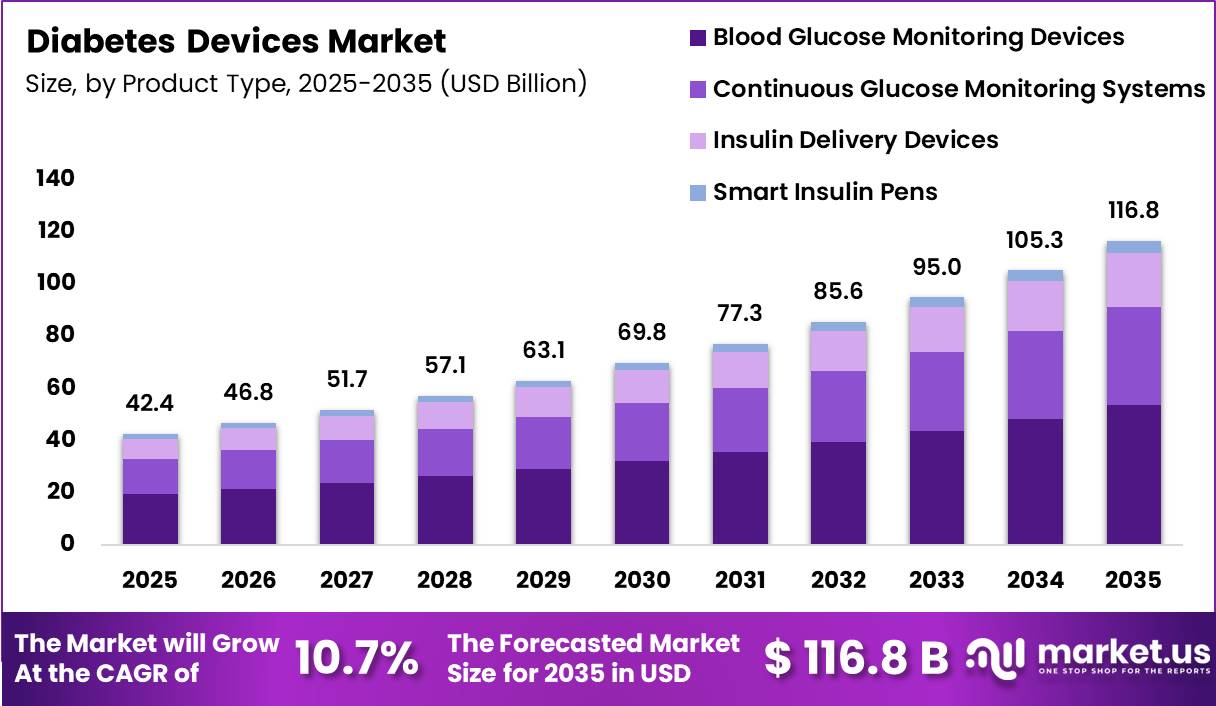
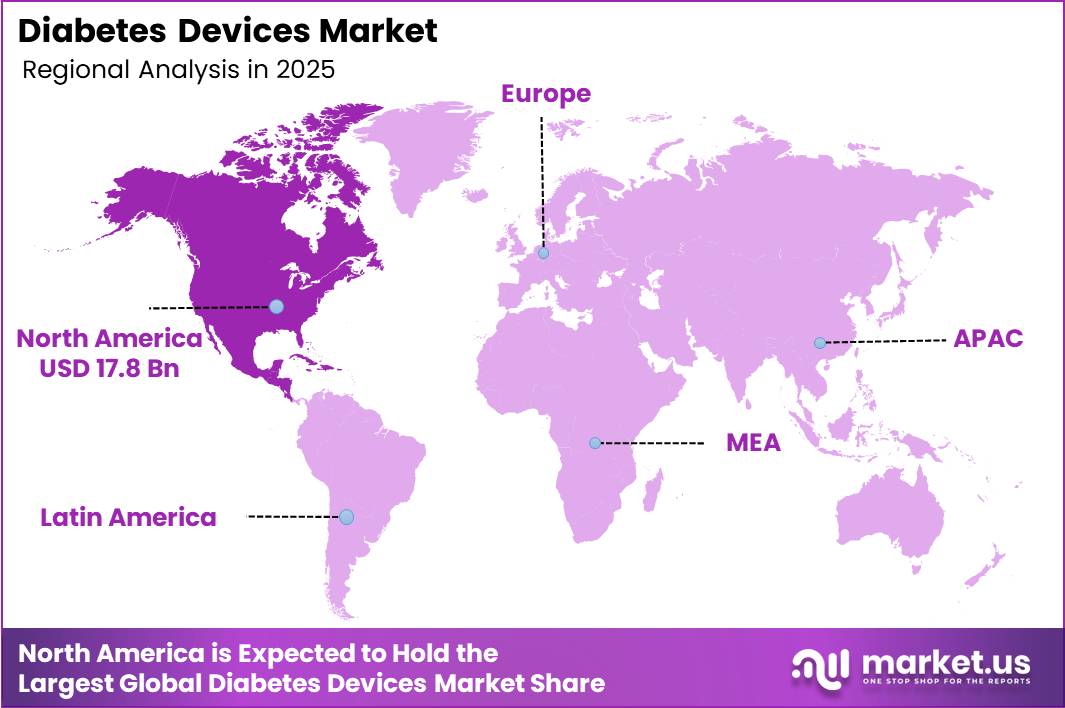
Global Diabetes Devices Market size is expected to be worth around US$ 116.8 Billion by 2035 from US$ 42.4 Billion in 2025, growing at a CAGR of 10.7% during the forecast period from 2026 to 2035. In 2025, North America led the market, achieving over 42.0% share with a revenue of US$ 17.8 Billion.
The global Diabetes Devices Market is witnessing sustained growth as healthcare systems increasingly adopt advanced technologies to improve diabetes management and reduce long-term complications. The market includes continuous glucose monitoring (CGM) systems, blood glucose monitoring devices, insulin pumps, smart insulin pens, and integrated digital diabetes management platforms.
Rising diabetes prevalence, growing awareness of early glucose monitoring, and expanding access to connected medical technologies are driving demand across hospitals, clinics, and home-care settings.
According to the World Health Organization (WHO), approximately 830 million people worldwide were living with diabetes in 2022, compared with 200 million in 1990, highlighting the rapidly increasing need for effective monitoring and treatment solutions.
In 2022, 14% of adults aged 18 years and older were living with diabetes, while 59% of adults aged 30 years and above with diabetes were not receiving medication, emphasizing the importance of accessible diagnostic and therapeutic devices.
In the United States, the Centers for Disease Control and Prevention (CDC) estimates that 40.1 million people had diabetes in 2023, representing 12.0% of the population, with 11.0 million cases remaining undiagnosed. These figures continue to encourage investments in earlier detection and continuous disease monitoring.
Technological innovation is transforming diabetes care through wearable CGMs, automated insulin delivery systems, smartphone-connected devices, and cloud-based data analytics that enable personalized treatment decisions. The CDC notes that CGMs provide real-time glucose measurements, trend analysis, and alerts for high or low glucose levels, improving patient self-management and supporting clinical decision-making.
As healthcare providers increasingly prioritize preventive care and remote patient monitoring, diabetes devices are expected to play an increasingly important role in improving clinical outcomes and enhancing quality of life worldwide.
Key Takeaways
- Market Size: Global Diabetes Devices Market size is expected to be worth around US$ 116.8 Billion by 2035 from US$ 42.4 Billion in 2025.
- Market Share: The market is growing at a CAGR of 10.7% during the forecast period from 2026 to 2035.
- Product Type: The Blood Glucose Monitoring Devices segment dominates the diabetes devices market, accounting for 46.0% of the market share in 2025.
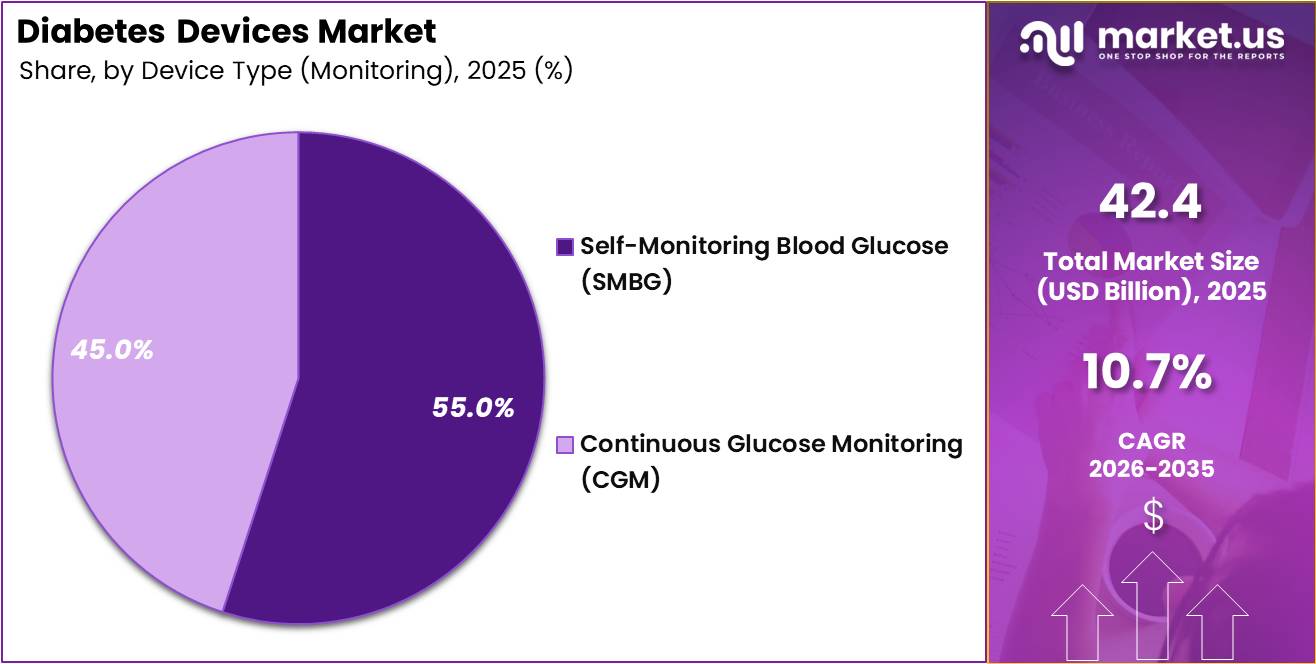
- Device Type (Monitoring): The Self-Monitoring Blood Glucose (SMBG) segment holds the largest share of the monitoring devices market, accounting for 55.0% in 2025.
- Device Type (Insulin Delivery): The Insulin Pens segment dominates the insulin delivery devices market with 52.0% of the market share in 2025.
- End User: Home Care Settings dominate the diabetes devices market, accounting for 62.0% of the market share in 2025.
- Application: The Type 2 Diabetes segment dominates the diabetes devices market with 79.0% of the market share in 2025.
- Distribution Channel: Retail Pharmacies account for the largest share of the diabetes devices market, representing 48.0% in 2025.
- Regional Analysis: In 2025, North America led the market, achieving over 39.0% share with a revenue of US$ 1.0 Million.
Product Type Analysis
Blood Glucose Monitoring Devices segment dominates the diabetes devices market.
The Blood Glucose Monitoring Devices segment dominates the diabetes devices market, accounting for 46.0% of the market share in 2025. Its leadership is driven by the growing global prevalence of diabetes and the need for frequent glucose monitoring to support effective disease management.
Blood glucose meters remain widely used because they are affordable, portable, and suitable for both home and clinical settings. Healthcare providers continue to recommend routine glucose monitoring to optimize treatment decisions, reduce the risk of complications, and improve long-term glycemic control.
Increasing awareness of diabetes self-management, expanding reimbursement programs, and continuous improvements in meter accuracy and connectivity further strengthen demand across developed and emerging healthcare markets.
The Continuous Glucose Monitoring (CGM) Systems segment represents 32.0% of the market and is expanding rapidly as patients and clinicians increasingly adopt real-time glucose tracking technologies that reduce reliance on frequent finger-stick testing.
Insulin Delivery Devices account for 18.0%, supported by growing insulin-dependent patient populations and advances in precision dosing technologies. Meanwhile, Smart Insulin Pens, with a 4.0% share, are gaining traction by integrating digital connectivity, dose tracking, and mobile application support, helping improve medication adherence and enabling more personalized diabetes management.
Device Type (Monitoring) Analysis
The Self-Monitoring Blood Glucose (SMBG) segment holds the largest share of the monitoring devices market, accounting for 55.0% in 2025. SMBG devices remain the primary choice for millions of diabetes patients because they offer reliable, cost-effective, and convenient glucose monitoring.
These systems are extensively used in home care, outpatient clinics, and hospitals to support daily diabetes management. Their broad availability, relatively low acquisition cost, and compatibility with established treatment protocols continue to sustain strong adoption.
Government initiatives promoting diabetes awareness and improved access to diagnostic devices also contribute to the continued dominance of SMBG systems across both developed and emerging healthcare markets.
The Continuous Glucose Monitoring (CGM) segment accounts for the remaining 45.0% of the monitoring market and continues to record robust growth due to technological advancements in wearable sensors and digital health integration. CGM devices provide continuous real-time glucose readings, trend analysis, and predictive alerts that enable proactive diabetes management.
Increasing physician preference for continuous monitoring, expanding reimbursement coverage, and growing patient demand for minimally invasive technologies are accelerating adoption. Integration with smartphones, insulin pumps, and cloud-based monitoring platforms further enhances clinical decision-making while improving patient convenience and long-term glycemic outcomes.
Device Type (Insulin Delivery) Analysis
Insulin Pens segment dominates the insulin delivery devices market.
The Insulin Pens segment dominates the insulin delivery devices market with 52.0% of the market share in 2025. Their widespread adoption is supported by ease of use, dosing accuracy, portability, and improved patient comfort compared with conventional syringes. Disposable and reusable insulin pens simplify insulin administration while encouraging better treatment adherence among individuals requiring daily insulin therapy.
Healthcare professionals increasingly recommend insulin pens because they reduce dosing errors and improve convenience across home care and outpatient settings. Continuous product innovation, including ergonomic designs and dose-memory features, further strengthens their position in the diabetes care landscape.
The Insulin Pumps segment continues to expand as automated insulin delivery technologies become increasingly integrated with continuous glucose monitoring systems. These devices enable personalized insulin administration and better glycemic control while reducing glucose variability for patients with intensive insulin therapy requirements.
Meanwhile, Insulin Syringes remain an essential segment due to their affordability, widespread availability, and continued use in hospitals and resource-limited healthcare settings. Although their market share is gradually declining with the adoption of advanced delivery technologies, syringes continue to serve patients requiring economical insulin administration and support healthcare systems where access to premium devices remains limited.
End User Analysis
Home Care Settings dominate the diabetes devices market.
Home Care Settings dominate the diabetes devices market, accounting for 62.0% of the market share in 2025. The growing preference for home-based diabetes management, combined with increasing patient awareness and technological advancements in portable monitoring and insulin delivery devices, has significantly expanded adoption in residential settings.
Patients increasingly prefer self-monitoring and self-administration of insulin due to convenience, reduced healthcare costs, and improved independence. The availability of user-friendly glucose monitoring systems, connected mobile applications, and telehealth support further strengthens home-based disease management. Rising healthcare expenditures and efforts to reduce hospital visits also contribute to sustained growth in this segment.
Hospitals & Clinics remain a significant end-user segment, supporting newly diagnosed patients, acute diabetes management, and complex insulin therapy requiring continuous clinical supervision. Healthcare facilities continue to rely on advanced monitoring systems and insulin delivery technologies to optimize inpatient treatment and reduce diabetes-related complications.
Meanwhile, Ambulatory Care Centers are witnessing increasing adoption of diabetes devices due to their expanding role in chronic disease management, routine follow-up care, and preventive healthcare services. Their ability to provide efficient outpatient diabetes monitoring and treatment while reducing hospitalization supports continued market expansion across this segment.
Application Analysis
Type 2 Diabetes segment dominates the diabetes devices market.
The Type 2 Diabetes segment dominates the diabetes devices market with 79.0% of the market share in 2025. The high prevalence of type 2 diabetes worldwide, driven by aging populations, sedentary lifestyles, obesity, and changing dietary habits, continues to generate substantial demand for glucose monitoring and insulin delivery devices.
Patients with type 2 diabetes increasingly utilize monitoring technologies to support medication management, lifestyle modifications, and long-term glycemic control. Growing screening initiatives, earlier diagnosis, and expanding access to diabetes management technologies further reinforce the segment’s leadership across developed and developing healthcare systems.
The Type 1 Diabetes segment represents a substantial share of the market due to lifelong insulin dependence and the widespread adoption of continuous glucose monitoring systems and advanced insulin delivery technologies. Patients with type 1 diabetes typically require frequent glucose monitoring and intensive insulin therapy, supporting sustained demand for innovative diabetes devices.
Meanwhile, Gestational Diabetes continues to experience steady growth as maternal health screening programs expand globally and healthcare providers emphasize early diagnosis during pregnancy. Increasing awareness regarding pregnancy-related diabetes management and improved prenatal care are encouraging broader utilization of monitoring devices throughout gestational diabetes treatment.
Distribution Channel Analysis
Retail Pharmacies dominated the largest share of the diabetes devices market.
Retail Pharmacies account for the largest share of the diabetes devices market, representing 48.0% in 2025. Their dominance is supported by extensive geographic presence, immediate product availability, and strong consumer accessibility.
Patients frequently purchase blood glucose meters, test strips, insulin pens, lancets, and related diabetes management products through retail pharmacy networks because of convenience and pharmacist guidance.
Growing prescription fulfillment services, chronic disease management programs, and partnerships with healthcare providers continue to strengthen this distribution channel. Expanding reimbursement coverage and increasing consumer preference for community-based healthcare access also contribute to sustained market leadership.
Hospital Pharmacies continue to play a critical role by supplying diabetes devices for inpatient treatment, emergency care, and patients initiating insulin therapy under medical supervision. These pharmacies ensure access to specialized monitoring equipment and advanced insulin delivery technologies for clinical settings.
Meanwhile, Online Pharmacies are experiencing rapid growth as digital healthcare adoption expands globally. Consumers increasingly prefer online purchasing because of competitive pricing, home delivery, subscription refill programs, and broader product availability. Improvements in e-commerce infrastructure, digital prescriptions, and remote healthcare services are expected to further accelerate the adoption of online distribution channels.
Key Market Segments
Product Type
- Blood Glucose Monitoring Devices
- Continuous Glucose Monitoring (CGM) Systems
- Insulin Delivery Devices
- Smart Insulin Pens
Device Type (Monitoring)
- Self-Monitoring Blood Glucose (SMBG)
- Continuous Glucose Monitoring (CGM)
Device Type (Insulin Delivery)
- Insulin Pens
- Insulin Pumps
- Insulin Syringes
End User
- Home Care Settings
- Hospitals & Clinics
- Ambulatory Care Centers
Application
- Type 2 Diabetes
- Type 1 Diabetes
- Gestational Diabetes
Distribution Channel
- Retail Pharmacies
- Hospital Pharmacies
- Online Pharmacies
Drivers
CGM first care protocols accelerating sensor penetration.
The strongest near-term driver is the formal shift of diabetes technology from specialist-use adjunct to earlier-line standard of care.
The 2026 ADA standards moved continuous glucose monitoring toward use at diagnosis and at any stage for people who can benefit, while automated insulin delivery became the preferred insulin-delivery option for many insulin users, including adults with type 2 diabetes. That matters commercially because guideline inclusion shortens clinician hesitation, improves payer justification, and expands prescribing outside endocrinology into broader primary-care channels.
The volume effect is supported by the underlying disease pool: the IDF reported 589 million adults living with diabetes globally in 2024/2025-equivalent tracking, with 252 million still undiagnosed and more than 3 in 4 adults with diabetes living in low- and middle-income countries.
In parallel, diabetes-related health expenditure exceeded $1 trillion in 2024, which strengthens the economic case for monitoring technologies that can reduce acute events and improve therapy titration. In business-model terms, this driver shifts revenue mix toward recurring consumables and data-enabled subscriptions, because every new CGM user adds a multi-cycle sensor revenue stream rather than a one-time hardware sale.
| Driver | (~) % Impact on CAGR Forecast | Geographic Relevance | Impact Timeline |
|---|---|---|---|
| CGM-first care protocols accelerating sensor penetration | +2.1% | North America core, EU5, Japan, South Korea, urban China | Short term |
| AID expansion into type 2 diabetes widening pump addressability | +1.7% | U.S. core, Western Europe, Australia, high-income APAC | Short term |
| Medicare and reimbursement broadening device affordability | +1.4% | U.S. core, EU reimbursement markets, select APAC public-pay systems | Short term |
| Diabetes prevalence and obesity load enlarging diagnosed base | +1.9% | APAC corridors, Middle East, Latin America, North America spill-over | Medium term |
| Longer-wear sensors and OTC formats improving unit economics | +1.3% | U.S., EU, developed APAC, self-pay urban markets globally | Medium term |
| Interoperable ecosystems enabling modular therapy upgrades | +1.1% | U.S. core, EU digital-health markets, innovation-led APAC | Medium term |
Challenges
Reimbursement process and prior-authorization friction in access.
Coverage breadth for CGM and related diabetes technologies has improved, especially in Medicare, but reimbursement execution remains an everyday challenge because eligibility documentation, prior authorization, DME channel rules, and recurring visit requirements still create leakage between clinical intent and device activation.
Medicare policy requires documented qualification, FDA-indicated prescribing, and face-to-face follow-up at least every six months, while United Healthcare Medicare Advantage introduced prior authorization requirements from September 2024 for long-term personal CGMs in non-Type 1 indications.
Operationally, these are not hard access bans but throughput frictions that can add 7 to 21 days to fulfillment, increase administrative touches per patient episode, and raise abandonment or delay rates enough to remove about 60 basis points from peak market CAGR, especially in Type 2 expansion cohorts where paperwork sensitivity is higher and provider offices lack reimbursement specialists.
Sustained growth therefore depends on manufacturers building payer ops capabilities, digital documentation tools, DME coordination teams, denial analytics, and indication-specific evidence packages because reimbursement scale in diabetes devices is now determined as much by process efficiency as by clinical efficacy.
| Challenge | (~) % CAGR Friction Drag | Geographic Relevance | Mitigation Horizon |
|---|---|---|---|
| Sensor quality volatility | -1.4% | North America core; EU quality markets; APAC volume manufacturing corridors | Medium term (2-4 years) |
| Cybersecure architecture burden | -1.1% | U.S. regulatory core; EU digital-device markets; developed APAC connected-care hubs | Medium term (2-4 years) |
| Specialist care bottlenecks | -0.9% | U.S. secondary care networks; Western Europe aging systems; emerging-market urban clusters | Long term (≥ 4 years) |
| Interoperability integration drag | -0.8% | North America AID markets; EU digital health hubs; Japan, South Korea, Australia | Medium term (2-4 years) |
| Component sourcing fragility | -0.7% | APAC electronics corridors; North America assemblers; EU device OEM bases | Short term (≤ 2 years) |
| Reimbursement workflow friction | -0.6% | U.S. Medicare and MA channels; selected private-insurance markets | Medium term (2-4 years) |
Restraints
High upfront device and recurring consumable costs.
The economics of advanced diabetes devices continue to present significant challenges for both healthcare payers and patients. Insulin pumps, continuous glucose monitoring (CGM) systems, and hybrid closed-loop technologies require substantial upfront investments for hardware, followed by recurring costs for sensors, infusion sets, and other consumables.
In high-income countries, annual consumable expenses can range between USD 1,500 and USD 3,000 per patient. In many emerging economies, these costs remain equivalent to several months of household income despite gradual price reductions, limiting widespread adoption.
Since 2023, manufacturers have experienced rising production costs driven by higher prices for semiconductors, medical-grade plastics, electronic components, and transportation. These pressures have resulted in list price increases of approximately 8–15% for selected CGM sensors and insulin pump consumables.
However, reimbursement policies have not fully compensated for these higher costs, increasing out-of-pocket expenses for patients. Consequently, many individuals continue to rely on lower-cost alternatives such as finger-stick blood glucose meters and insulin pens.
Healthcare payers are also facing growing budgetary pressure as diabetes prevalence continues to rise faster than device reimbursement budgets. Many reimbursement programs therefore restrict coverage of advanced systems to patients with poorly controlled diabetes, delaying broader adoption.
These affordability constraints slow replacement cycles, reduce market penetration, and limit overall device demand, particularly in middle-income countries, thereby moderating the long-term growth potential of the global diabetes devices market.
| Restraint | (~) % Impact on CAGR Forecast | Geographic Relevance | Impact Timeline |
|---|---|---|---|
| EU MDR/IVDR compliance drag | -1.3% | EU, U.K., EFTA | Medium term (2–4 years) |
| High upfront device & consumable costs | -1.1% | North America, EU, parts of APAC | Long term (≥ 4 years) |
| Supply chain fragility in sensors & pumps | -0.9% | North America, EU, APAC corridors | Short term (≤ 2 years) |
| Reimbursement and coverage fragmentation | -1.0% | U.S., emerging APAC, LATAM, MEA | Medium term (2–4 years) |
| Digital & data interoperability constraints | -0.7% | Global, especially OECD markets | Long term (≥ 4 years) |
| Patient adherence and training gaps | -0.6% | Global, more acute in EMs | Long term (≥ 4 years) |
Opportunity
Low-Cost Diabetes Device Stacks for LMIC Mass Adoption.
Expanding diabetes device access in low- and middle-income countries (LMICs) represents a significant future market opportunity rather than a current growth driver. Most industry forecasts continue to rely on premium-device adoption in high-income countries, while substantial untapped demand exists across LMICs, where nearly four out of five adults with diabetes reside.
Despite the large patient population, adoption of advanced diabetes management devices remains limited due to high out-of-pocket costs, fragmented healthcare systems, inadequate specialist availability, and weak cold-chain and distribution infrastructure.
Globally, approximately 589 million adults are living with diabetes, including nearly 252 million who remain undiagnosed. Around 90% of these undiagnosed individuals are located in LMICs, highlighting a vast addressable market.
Manufacturers can unlock this opportunity by introducing affordable diabetes management solutions, including simplified continuous glucose monitoring (CGM) devices, entry-level patch pumps, connected insulin pens, and intermittent sensor bundles priced 40% to 70% below premium offerings.
These products can be supported through pharmacy-based financing, tele-endocrinology services, and local manufacturing or assembly, which can reduce landed costs by 10% to 20%.
Global diabetes-related healthcare expenditure exceeded USD 1.015 trillion in 2024, creating strong incentives for governments and payers to invest in cost-effective technologies that improve glycemic control and reduce hospitalizations. Successful execution of an LMIC-focused strategy could generate an additional 2.7% points of CAGR through 2035 by expanding adoption across a substantially larger patient base.
| Opportunity | (~) % Potential CAGR Upside | Geographic Relevance | Execution Window |
|---|---|---|---|
| OTC CGM for non-insulin T2D | +2.4% | North America core, EU, APAC urban | Short term (≤ 2 years) |
| Closed-loop in public systems | +1.9% | UK, Nordics, EU, Australia, Canada | Medium term (2-4 years) |
| LMIC low-cost device stacks | +2.7% | India, ASEAN, MENA, LatAm, Africa urban | Medium term (2-4 years) |
| Pregnancy and postpartum pathway | +1.3% | India, China, Middle East, UK, U.S. | Short term (≤ 2 years) |
| Modular interoperable ecosystems | +1.6% | U.S., EU, Japan, South Korea | Medium term (2-4 years) |
| Device-plus-data risk contracts | +1.5% | U.S., Germany, UK, Gulf states | Long term (≥ 4 years) |
Regional Analysis
North America Dominates the Diabetes Devices Market.
In 2025, North America accounted for the largest share of the diabetes devices market, capturing more than 42.0% of global revenue and reaching approximately US$ 17.8 billion. The region’s leadership is supported by the high prevalence of diabetes, strong healthcare expenditure, widespread adoption of advanced medical technologies, and favorable reimbursement systems.
The United States remains the primary growth engine, driven by increasing use of continuous glucose monitoring (CGM) systems, insulin pumps, and connected diabetes management platforms. Growing awareness of early diabetes diagnosis, regular glucose monitoring, and personalized disease management further strengthens market demand.
In addition, the presence of leading medical device manufacturers, continuous product innovation, and integration of digital health technologies contribute significantly to regional market expansion.
Healthcare providers across North America are increasingly adopting smart diabetes management solutions that combine wearable sensors, mobile applications, and cloud-based data analytics to improve patient outcomes and reduce long-term complications.
Government initiatives supporting diabetes prevention, disease surveillance, and access to innovative treatment technologies continue to encourage device adoption across hospitals, clinics, and homecare settings. Rising cases of obesity and Type 2 diabetes among adults and younger populations also sustain demand for glucose monitoring and insulin delivery devices.
Furthermore, ongoing investments in artificial intelligence-enabled monitoring systems, remote patient management, and interoperable healthcare infrastructure are accelerating the transition toward connected diabetes care, reinforcing North America’s position as the leading regional market throughout the forecast period.
Key Regions and Countries
North America
- The US
- Canada
Europe
- Germany
- France
- The U.K.
- Italy
- Spain
- Russia & CIS
- Rest of Europe
Asia Pacific
- China
- India
- Japan
- South Korea
- ASEAN
- Australia & New Zealand
- Rest of Asia Pacific
Middle East & Africa
- GCC
- South Africa
- Rest of Middle East & Africa
Latin America
- Brazil
- Mexico
- Rest of Latin America
Key Player Analysis
The diabetes devices market is moderately consolidated, with leading companies competing through technological innovation, integrated diabetes management platforms, and expanding digital healthcare capabilities.
Competitive intensity is increasing as manufacturers focus on improving the accuracy, connectivity, and ease of use of glucose monitoring and insulin delivery systems. Continuous investments in digital health, artificial intelligence, and remote patient monitoring are reshaping competition, while regulatory approvals and global commercialization strategies remain key differentiators.
Dexcom Inc. and Abbott Laboratories continue to strengthen their market positions through advanced continuous glucose monitoring (CGM) technologies, frequent product enhancements, and connected mobile health ecosystems. Medtronic plc focuses on integrated insulin pump and CGM solutions, emphasizing automated insulin delivery and workflow integration for patients and healthcare providers.
Roche Diabetes Care advances digital diabetes management by combining blood glucose monitoring devices with cloud-enabled data platforms to support personalized treatment decisions. Meanwhile, Insulet Corporation expands its competitive position through innovation in tubeless insulin pump technology and user-friendly automated insulin delivery systems.
Beyond these leading participants, Novo Nordisk A/S, Sanofi S.A., Ypsomed Holding AG, Becton, Dickinson and Company, Ascensia Diabetes Care, Senseonics Holdings Inc., Terumo Corporation, Arkray Inc., B. Braun Melsungen AG, and Lifescan Inc. continue to compete through research and development, strategic partnerships, product innovation, and ecosystem-based competition.
These companies are expanding connected care solutions, enhancing interoperability with digital platforms, and strengthening collaborations with healthcare providers to improve patient outcomes and reinforce their positions in the evolving diabetes devices market.
Top Key Players
- Dexcom Inc.
- Abbott Laboratories
- Medtronic plc
- Roche Diabetes Care
- Novo Nordisk A/S
- Sanofi S.A.
- Ypsomed Holding AG
- Insulet Corporation
- Becton, Dickinson and Company
- Ascensia Diabetes Care
- Senseonics Holdings Inc.
- Terumo Corporation
- Arkray Inc.
- B. Braun Melsungen AG
- Lifescan Inc.
Recent Developments
- In December 2025, Dexcom launched the Dexcom G7 15-day CGM system in the United States, with initial availability through durable medical equipment (DME) providers for adults aged 18+.
- In December 2025, Abbott’s Instinct CGM sensor (developed exclusively for Medtronic) entered full U.S. commercial rollout as part of the MiniMed 780G interoperable insulin pump system.
- In December 2025, Medtronic began full U.S. commercial launch of the MiniMed 780G system integrated with Abbott’s Instinct CGM sensor following FDA interoperability clearance.
- In February 2026, Senseonics launched a combined system integrating Eversense 365 CGM with Sequel Med Tech insulin delivery for automated diabetes management.
Report Scope
| Report Features | Description |
|---|---|
| Market Value (2025) | US$ 42.4 Billion |
| Forecast Revenue (2035) | US$ 116.8 Billion |
| CAGR (2026-2035) | 10.7% |
| Base Year for Estimation | 2025 |
| Historic Period | 2020-2024 |
| Forecast Period | 2026-2035 |
| Report Coverage | Revenue Forecast, Market Dynamics, Competitive Landscape, Recent Developments |
| Segments Covered | By Product Type (Blood Glucose Monitoring Devices, Continuous Glucose Monitoring (CGM) Systems, Insulin Delivery Devices, Smart Insulin Pens), By Device Type (Monitoring) (Self-Monitoring Blood Glucose (SMBG), Continuous Glucose Monitoring (CGM)), By Device Type (Insulin Delivery) (Insulin Pens, Insulin Pumps, Insulin Syringes), By End User (Home Care Settings, Hospitals & Clinics, Ambulatory Care Centers), By Application (Type 2 Diabetes, Type 1 Diabetes, Gestational Diabetes), By Distribution Channel (Retail Pharmacies, Hospital Pharmacies, Online Pharmacies) |
| Regional Analysis | North America – The US, Canada; Europe – Germany, France, U.K., Italy, Spain, Russia & CIS, Rest of Europe; Asia Pacific – China, India, Japan, South Korea, ASEAN, Australia & New Zealand, Rest of Asia Pacific; Middle East & Africa – GCC, South Africa, Rest of Middle East & Africa; Latin America – Brazil, Mexico, Rest of Latin America |
| Competitive Landscape | Dexcom Inc., Abbott Laboratories, Medtronic plc, Roche Diabetes Care, Novo Nordisk A/S, Sanofi S.A., Ypsomed Holding AG, Insulet Corporation, Becton, Dickinson and Company, Ascensia Diabetes Care, Senseonics Holdings Inc., Terumo Corporation, Arkray Inc., B. Braun Melsungen AG, Lifescan Inc. |
| Customization Scope | Customization for segments, region/country-level will be provided. Moreover, additional customization can be done based on the requirements. |
| Purchase Options | We have three licenses to opt for: Single User License, Multi-User License (Up to 5 Users), Corporate Use License (Unlimited User and Printable PDF) |





































