


Global Cosplay Costume Market Size, Share, Growth Analysis By Application (Video Game Costumes, Movie Costumes, Individuals, Others), By End User (Unisex, Men, Women, Kids), By Distribution Channel (Online Sales Channel, Supermarket/Hypermarket, Specialty Stores, Others), By Region and Companies - Industry Segment Outlook, Market Assessment, Competition Scenario, Statistics, Trends and Forecast 2025-2034
- Published date: Jan 2026
- Report ID: 173243
- Number of Pages: 367
- Format:
-
keyboard_arrow_up
Quick Navigation
Report Overview
The Global Cosplay Costume Market size is expected to be worth around USD 15.9 Billion by 2035, from USD 6.3 Billion in 2025, growing at a CAGR of 9.7% during the forecast period from 2026 to 2035.
The Cosplay Costume Market encompasses specialized apparel and accessories enabling enthusiasts to embody fictional characters from anime, manga, video games, and comics. This niche industry serves passionate consumers seeking authentic representation through detailed costume designs. Moreover, it bridges entertainment and fashion sectors while fostering creative communities globally. The market continues expanding through convention culture and digital content creation platforms.
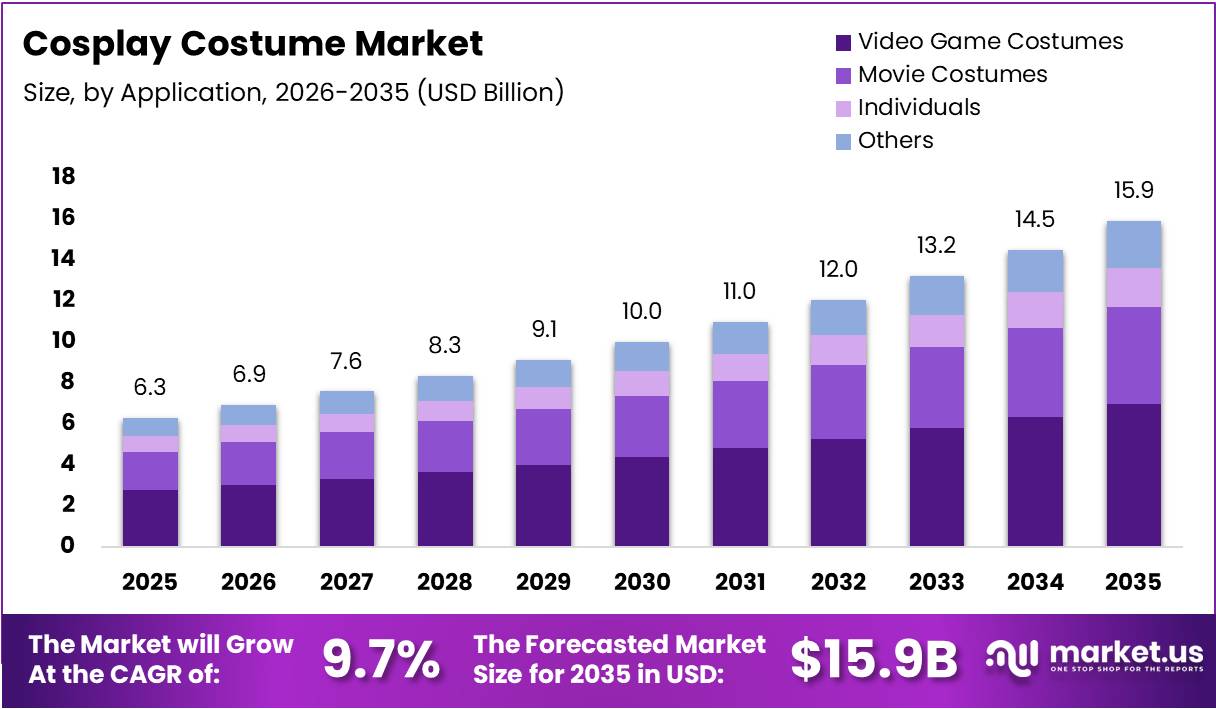
Market growth demonstrates remarkable momentum as pop culture conventions proliferate worldwide. Furthermore, social media platforms amplify visibility, driving demand for high-quality costumes and character accessories. The industry benefits from increasing mainstream acceptance of geek culture and cosplay communities. Additionally, e-commerce platforms facilitate easier access to specialized materials and ready-made costumes for enthusiasts.
Significant opportunities emerge through customization services and premium product segments targeting dedicated practitioners. Companies can leverage augmented reality for virtual try-ons and design previews. Moreover, sustainable materials present differentiation potential as environmentally conscious consumers prioritize eco-friendly options. Collaboration with entertainment franchises creates licensing opportunities for authentic character reproductions.
Government support varies across regions, with cultural ministries recognizing cosplay’s creative and economic contributions. Some countries provide grants for cultural events featuring costume competitions and artistic exhibitions. However, regulations remain minimal, primarily addressing safety standards for materials and fire-retardant requirements. Intellectual property considerations influence licensed merchandise production and distribution channels.
Market demographics reveal compelling insights about consumer behavior and spending patterns within this specialized segment. According to research, 64% of cosplayers identify as female, highlighting strong gender representation. Purchase frequency shows 42.9% create 1-2 new costumes annually, while 32.1% produce 3-4, and 25% create 5 or more pieces yearly. Spending analysis indicates 32.1% invest $101-200 per costume, with 27.7% allocating $201-400 for individual creations.
Investment intensity increases for signature pieces, as 21.6% report their most expensive costume costing $401-600, while 36.1% spent $201-400 on premium creations. Convention participation drives additional revenue streams, with 70% of makers spending $100 or more at events. These statistics underscore robust consumer commitment and sustainable market potential for specialized costume providers.
Key Takeaways
- The Global Cosplay Costume Market is projected to reach USD 15.9 Billion by 2035 from USD 6.3 Billion in 2025, growing at a CAGR of 9.7%.
- Video Game Costumes dominate the market with a 43.7% share by application in 2025.
- Unisex costumes lead the end-user segment with a 42.3% share in 2025.
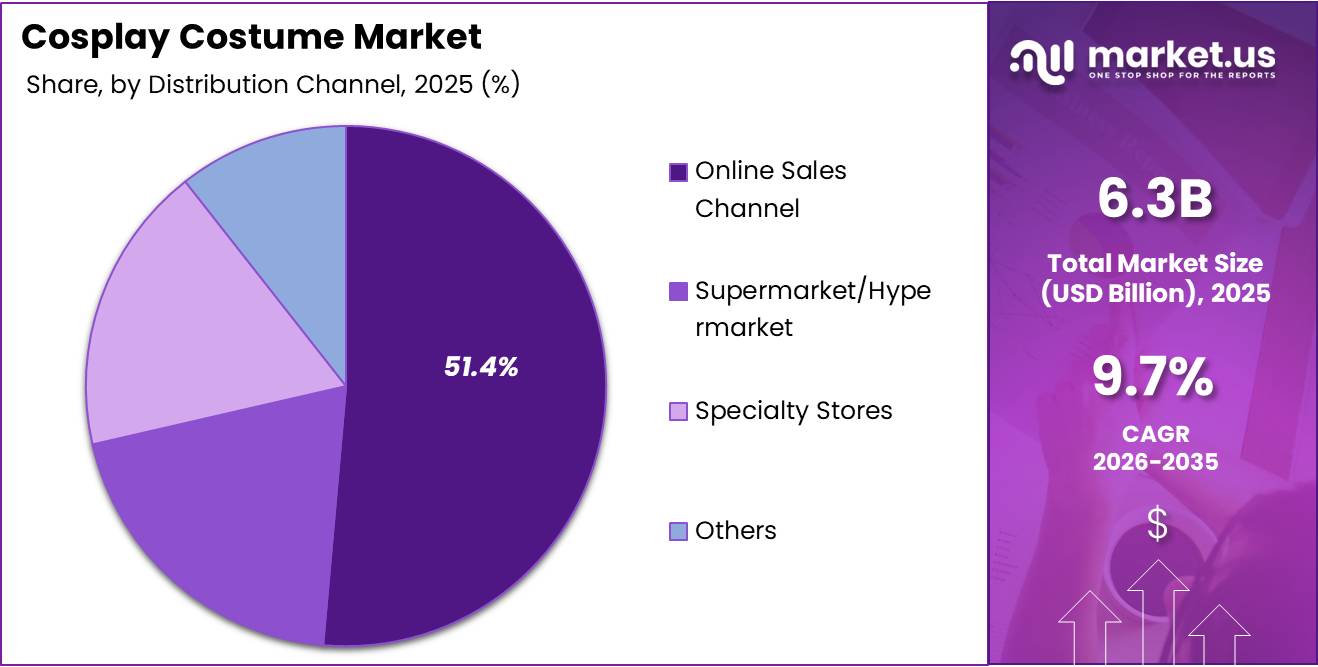
- Online Sales Channel holds a 51.4% share in distribution channels as of 2025.
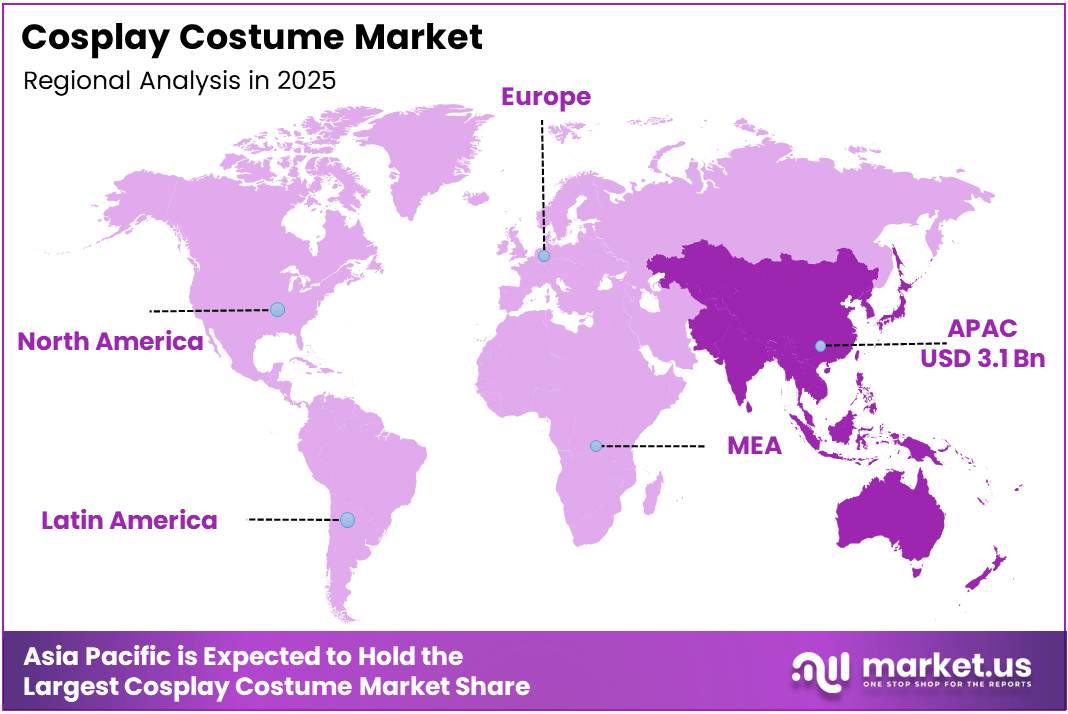
- Asia Pacific leads the regional market with 49.6% share, valued at USD 3.1 Billion.
By Application Analysis
Video Game Costumes dominates with 43.7% due to its widespread popularity and strong fan engagement across gaming communities.
In 2025, Video Game Costumes held a dominant market position in the By Application Analysis segment of Cosplay Costume Market, with a 43.7% share. The gaming industry’s exponential growth has created passionate fan bases who eagerly recreate their favorite characters.
Popular franchises like Final Fantasy, League of Legends, and Overwatch drive consistent demand. Gaming conventions and esports events further amplify this segment’s prominence, encouraging enthusiasts to invest in detailed, authentic costumes that celebrate beloved virtual heroes.
Movie Costumes represent a significant portion of the market, driven by blockbuster franchises and superhero films. Marvel and DC universes, along with iconic sci-fi properties, inspire cosplayers to replicate cinematic characters. The theatrical nature of movie costumes appeals to collectors and convention attendees who value screen-accurate details and recognizable designs that create instant connections with fellow fans.
Individuals seeking custom or original character designs contribute uniquely to market diversity. This segment includes original character creators and cosplayers who prefer personalized interpretations. These customers often require bespoke services and specialized materials, representing a premium market niche that values creativity and individuality over franchise recognition.
Others encompass anime costumes, historical recreations, and niche cultural representations. This diverse category serves specialized communities including anime conventions, historical reenactment groups, and cultural festivals, maintaining steady demand through dedicated enthusiast networks worldwide, driven by fan engagement and collectible value.
By End User Analysis
Unisex dominates with 42.3% due to its versatile appeal and broader target audience across demographics.
In 2025, Unisex held a dominant market position in the By End User Analysis segment of Cosplay Costume Market, with a 42.3% share. Gender-neutral designs accommodate diverse body types and preferences, making cosplay more accessible and inclusive. Many iconic characters feature armor, robes, or uniforms that transcend traditional gender specifications.
Men constitute a substantial market segment with distinct preferences for superhero, warrior, and action-oriented characters. Male cosplayers often seek muscular padding, armor pieces, and weapon accessories. This demographic shows strong purchasing power at conventions and demonstrates willingness to invest in high-quality, detailed costumes that showcase craftsmanship and authenticity for competitive cosplay events.
Women represent a dynamic segment with diverse character preferences spanning magical girls, fantasy heroines, and powerful protagonists. Female cosplayers frequently demand intricate details, flowing fabrics, and accessories that emphasize elegance and character accuracy. This segment drives innovation in costume construction techniques and materials that balance aesthetics with comfort and durability.
Kids form an emerging segment as younger generations embrace cosplay culture through family-friendly conventions and school events. Parents purchase costumes for Halloween, birthday parties, and themed celebrations, prioritizing safety, comfort, and age-appropriate designs that introduce children to creative expression through character portrayal.
By Distribution Channel Analysis
Online Sales Channel dominates with 51.4% due to its convenience and extensive product variety.
In 2025, Online Sales Channel held a dominant market position in the By Distribution Channel Analysis segment of Cosplay Costume Market, with a 51.4% share. E-commerce platforms offer unparalleled selection, competitive pricing, and global accessibility that traditional retail cannot match. Customers browse detailed product images, read reviews, and compare options conveniently from home.
Supermarket/Hypermarket channels provide accessible entry points for casual cosplayers and seasonal costume shoppers. These outlets capitalize on high foot traffic during Halloween and holiday seasons, offering budget-friendly options and popular character costumes. The convenience of one-stop shopping attracts families and impulse buyers who prioritize immediate availability over specialized selections or premium quality.
Specialty Stores cater to dedicated cosplayers seeking expert guidance, premium materials, and unique pieces. These retailers employ knowledgeable staff who understand costume construction and character accuracy. Physical interaction with fabrics and accessories allows quality assessment before purchase, attracting serious hobbyists willing to pay premium prices for superior craftsmanship and personalized service.
Others include convention vendors, pop-up shops, and direct-from-manufacturer sales that serve specific communities. These channels offer exclusive designs, limited editions, and immediate gratification at events where cosplayers gather, creating unique purchasing opportunities that complement mainstream distribution methods effectively.
Key Market Segments
By Application
- Video Game Costumes
- Movie Costumes
- Individuals
- Others
By End User
- Unisex
- Men
- Women
- Kids
By Distribution Channel
- Online Sales Channel
- Supermarket/Hypermarket
- Specialty Stores
- Others
Drivers
Strong Global Fan Engagement Around Movies, Games, Anime, and Streaming IPs Drives Market Growth
The cosplay costume market is experiencing significant growth driven by passionate fan communities worldwide. Movies, video games, anime, and streaming platform content have created massive followings that fuel demand for authentic character costumes. Fans increasingly want to embody their favorite characters from popular franchises, creating a thriving market for cosplay apparel.
International cosplay events and fan expos are drawing larger crowds each year. These gatherings provide dedicated spaces for enthusiasts to showcase their costumes, meet fellow fans, and celebrate shared interests. The growing frequency and scale of these conventions directly boost costume purchases and rentals.
Social media platforms have amplified the influence of cosplay creators and influencers. These digital personalities showcase elaborate costumes, provide tutorials, and inspire millions of followers to participate in cosplay culture. Their content reaches global audiences and normalizes costume creation as a legitimate hobby.
Character-based identity expression has become increasingly important for community belonging. Cosplay offers individuals a way to connect with others who share similar interests while expressing creativity and passion. This emotional connection to characters and communities sustains ongoing demand for quality costumes across diverse demographics.
Restraints
Complex Licensing and Intellectual Property Restrictions Limit Market Expansion
The cosplay costume market faces significant challenges related to intellectual property rights and licensing agreements. Entertainment companies and character owners maintain strict control over their copyrighted designs, limiting legitimate manufacturers who can produce official costumes. These restrictions create barriers for smaller producers and increase costs for consumers seeking legally authorized merchandise.
Many cosplayers create handmade costumes to avoid licensing issues, but this limits mass market growth. Commercial sellers must navigate complex legal frameworks to offer character-specific costumes, often requiring expensive licensing deals with multiple studios and IP holders. This complexity reduces product availability and creates uncertainty in the supply chain.
Beyond legal challenges, practical constraints also hinder market growth. Detailed cosplay costumes require significant skill to wear properly and maintain over time. Intricate designs with multiple components, heavy materials, or delicate embellishments demand expertise that casual participants may lack. This complexity can discourage first-time buyers.
The time investment needed for costume maintenance also presents obstacles. Cleaning, repairing, and storing elaborate costumes requires dedicated effort and resources. These ongoing demands may prevent occasional users from making purchases, limiting the market primarily to dedicated enthusiasts willing to invest substantial time alongside their financial commitment.
Growth Factors
Expansion of Licensed Merchandise Partnerships With Entertainment Studios Creates Growth Opportunities
The cosplay costume market holds substantial growth potential through strategic partnerships between manufacturers and entertainment studios. Official licensing agreements provide legitimacy and quality assurance that attract consumers willing to pay premium prices. These collaborations enable producers to offer authentic designs that closely match on-screen characters, expanding market reach.
Ready-to-wear cosplay options represent a significant opportunity for market expansion. First-time participants often feel intimidated by complex costume creation, creating demand for convenient, pre-made solutions. Offering complete costume sets that require minimal assembly lowers entry barriers and attracts casual fans who want quick participation without extensive crafting skills.
Rental and subscription-based business models are emerging as viable alternatives to outright purchases. These services allow consumers to access expensive costumes temporarily for specific events, reducing financial commitment while maintaining variety. Subscription models create recurring revenue streams while helping users regularly refresh their cosplay wardrobes without storage concerns.
Corporate and brand-sponsored cosplay campaigns present untapped revenue sources. Companies increasingly recognize cosplay’s marketing potential for product launches, promotional events, and brand awareness initiatives. Partnering with brands to create sponsored costumes or promotional appearances opens new revenue channels beyond traditional consumer sales, diversifying market income streams.
Emerging Trends
Growing Preference for High-Accuracy Replicas Inspired by Original Character Designs Shapes Market Trends
The cosplay costume market is evolving toward greater authenticity and precision. Consumers increasingly demand high-accuracy replicas that closely match original character designs from source materials. This trend pushes manufacturers to invest in detailed research, quality materials, and precise construction techniques. The emphasis on screen-accurate costumes elevates production standards across the industry.
Modular and mix-and-match costume components are gaining popularity among experienced cosplayers. These flexible systems allow users to customize their looks, create multiple character variations, and replace damaged pieces without purchasing complete new outfits. Modular designs also reduce storage requirements and improve cost-efficiency for frequent participants.
Cosplay photography, competitions, and online showcases have become central to the hobby’s culture. Social media platforms and dedicated cosplay websites provide venues for enthusiasts to display their work, receive recognition, and connect with communities. This visibility drives quality improvements as participants seek impressive costumes for digital presentation and competitive events.
Advanced manufacturing technologies are transforming costume creation processes. 3D printing enables precise reproduction of armor, props, and accessories that were previously difficult to craft. Innovative fabric techniques including digital printing, thermoplastics, and LED integration allow creators to achieve effects impossible with traditional methods. These technological advancements expand creative possibilities and improve costume realism significantly.
Regional Analysis
Asia Pacific Dominates the Cosplay Costume Market with a Market Share of 49.6%, Valued at USD 3.1 Billion
Asia Pacific stands as the dominant force in the global cosplay costume market, commanding a market share of 49.6% with a valuation of USD 3.1 billion. The region’s leadership is primarily attributed to the deep-rooted anime and manga culture, particularly in Japan, South Korea, and China. The proliferation of comic conventions, anime exhibitions, and gaming tournaments across major cities has significantly bolstered demand for high-quality costumes and accessories.
North America Cosplay Costume Market Trends
North America represents a significant and mature market for cosplay costumes, driven by the widespread popularity of comic conventions and the growing acceptance of geek culture in mainstream entertainment. The region benefits from high disposable incomes and a strong consumer base willing to invest in premium, custom-made costumes and professional-grade accessories.
Europe Cosplay Costume Market Trends
Europe exhibits steady growth in the cosplay costume market, supported by an expanding convention circuit and increasing participation in gaming and anime-related events across major cities. The region’s diverse consumer base demonstrates growing interest in character portrayal from both Western and Eastern pop culture franchises, contributing to sustained market development.
Middle East and Africa Cosplay Costume Market Trends
The Middle East and Africa region represents an emerging market for cosplay costumes, with gradual adoption driven by youth demographics and increasing exposure to global entertainment content. Growing convention activities in urban centers and rising internet penetration are facilitating awareness and participation in cosplay culture.
Latin America Cosplay Costume Market Trends
Latin America showcases promising growth potential in the cosplay costume market, fueled by passionate fan communities and expanding anime and gaming conventions across countries like Brazil, Mexico, and Argentina. The region’s enthusiastic adoption of Japanese pop culture and affordable costume alternatives continue to drive market accessibility and participation.
Key Regions and Countries
North America
- US
- Canada
Europe
- Germany
- France
- The UK
- Spain
- Italy
- Rest of Europe
Asia Pacific
- China
- Japan
- South Korea
- India
- Australia
- Rest of APAC
Latin America
- Brazil
- Mexico
- Rest of Latin America
Middle East & Africa
- GCC
- South Africa
- Rest of MEA
Key Cosplay Costume Company Insights
The global Cosplay Costume Market in 2025 continues to witness significant competition among established players and emerging brands, each bringing unique strengths to serve the growing community of cosplay enthusiasts worldwide. The market has evolved beyond simple costume reproduction to encompass high-quality craftsmanship, authentic character portrayals, and innovative design approaches that cater to both amateur and professional cosplayers.
Rubie’s Costume Company maintains its position as a dominant force in the costume industry, leveraging decades of experience and extensive licensing agreements to offer officially authorized cosplay options. Their widespread distribution network and brand recognition make them a go-to choice for mainstream cosplay consumers seeking reliability and accessibility.
Xcoser has carved out a substantial niche by focusing on pop culture properties and gaming characters, delivering meticulously crafted costumes that appeal to dedicated fans. Their attention to detail and commitment to screen-accurate reproductions have established them as a trusted name among serious cosplayers who demand authenticity.
RoleCosplay distinguishes itself through competitive pricing without compromising quality, making cosplay more accessible to newcomers and budget-conscious enthusiasts. Their diverse catalog spanning anime, gaming, and film franchises positions them strategically to capture various market segments.
Cossky UK brings a European perspective to the market, offering tailored sizing options and region-specific shipping advantages that resonate with international customers. Their focus on both ready-made and custom cosplay solutions provides flexibility for different customer preferences and budgets, contributing to their growing market presence.
Top Key Players in the Market
- Rubie’s Costume Company
- Xcoser
- RoleCosplay
- Cossky UK
- Spreepicky
- Elope
- Yaya Han
- Uwowo Cosplay
- Dtaku Plan
Recent Developments
- In June 2025, Fira X Wear launched an official My Hero Academia costume line inspired by UA High School sports uniforms, targeting anime fans seeking screen-accurate and performance-styled cosplay apparel.
- In September 2024, Rubies introduced the official The Boys costume collection, expanding its licensed portfolio to meet rising demand for adult superhero and anti-hero cosplay.
Report Scope
Report Features Description Market Value (2025) USD 6.3 Billion Forecast Revenue (2035) USD 15.9 Billion CAGR (2026-2035) 9.7% Base Year for Estimation 2025 Historic Period 2020-2024 Forecast Period 2026-2035 Report Coverage Revenue Forecast, Market Dynamics, Competitive Landscape, Recent Developments Segments Covered By Application (Video Game Costumes, Movie Costumes, Individuals, Others), By End User (Unisex, Men, Women, Kids), By Distribution Channel (Online Sales Channel, Supermarket/Hypermarket, Specialty Stores, Others) Regional Analysis North America (US and Canada), Europe (Germany, France, The UK, Spain, Italy, and Rest of Europe), Asia Pacific (China, Japan, South Korea, India, Australia, and Rest of APAC), Latin America (Brazil, Mexico, and Rest of Latin America), Middle East & Africa (GCC, South Africa, and Rest of MEA) Competitive Landscape Rubie’s Costume Company, Xcoser, RoleCosplay, Cossky UK, Spreepicky, Elope, Yaya Han, Uwowo Cosplay, Dtaku Plan Customization Scope Customization for segments, region/country-level will be provided. Moreover, additional customization can be done based on the requirements. Purchase Options We have three licenses to opt for: Single User License, Multi-User License (Up to 5 Users), Corporate Use License (Unlimited User and Printable PDF) 
-
-
- Rubie’s Costume Company
- Xcoser
- RoleCosplay
- Cossky UK
- Spreepicky
- Elope
- Yaya Han
- Uwowo Cosplay
- Dtaku Plan
Our Clients

- 173243
- Jan 2026






