


Global Camping Sleeping Bags Market Size, Share, Growth Analysis By Product Type (Mummy Sleeping Bags, Rectangular Sleeping Bags, Double Sleeping Bags, Backpacking Sleeping Bags), By Temperature Rating (Three-Season Sleeping Bags, Summer Sleeping Bags, Winter Sleeping Bags), By Material (Synthetic Sleeping Bags, Down Sleeping Bags, Hybrid Sleeping Bags), By Size (Adult Sleeping Bags, Kids Sleeping Bags), By Region and Companies - Industry Segment Outlook, Market Assessment, Competition Scenario, Statistics, Trends and Forecast 2025-2034
- Published date: Dec 2025
- Report ID: 172103
- Number of Pages: 397
- Format:
-
keyboard_arrow_up
Quick Navigation
Report Overview
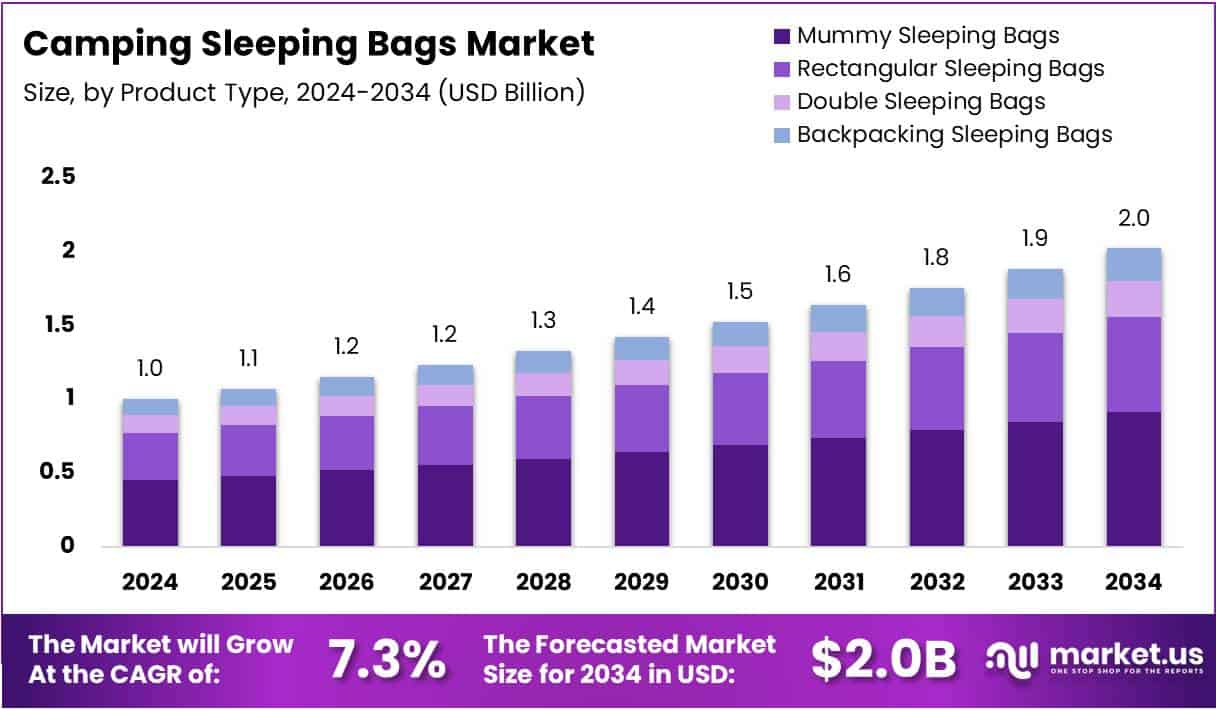
The Global Camping Sleeping Bags Market size is expected to be worth around USD 2.0 Billion by 2034, from USD 1.0 Billion in 2024, growing at a CAGR of 7.3% during the forecast period from 2025 to 2034.
The Camping Sleeping Bags Market represents a dynamic segment within outdoor recreation equipment, encompassing products designed for temperature regulation and comfort during camping activities. This market continues evolving through technological advancements in insulation materials, design innovations, and sustainability initiatives. Consumer preferences increasingly favor lightweight, compact solutions that balance performance with portability across diverse climatic conditions.
Market growth demonstrates strong momentum driven by rising outdoor recreation participation and adventure tourism expansion, positioning camping sleeping bags as a core category within the recreational and outdoor products ecosystem. Urbanization further fuels demand as consumers seek nature-based experiences for wellness and stress relief, while the shift toward experiential spending continues to support sustained revenue opportunities for manufacturers and retailers.
Product innovation focuses significantly on temperature-rated designs, particularly lightweight options featuring comfort ratings around 10°C to 15°C (50°F to 59°F). These compact configurations appeal especially to warm-weather backpackers prioritizing portability without compromising thermal efficiency. Additionally, fill power specifications distinguish quality tiers, ranging from 600 to 650 for good performance, 700 to 750 for very good insulation, and 800 to 950+ representing top-tier quality standards.
Price segmentation reveals distinct consumer categories with varying requirements and investment capabilities. Budget-conscious buyers access synthetic car-camping bags priced $50–$120, suitable for temperatures above 50°F/10°C+, though these weigh 5–7 lb (2.3–3.2 kg) with 2–3 season lifespans. Mid-range options costing $120–$250 feature 550–650 fill down or premium synthetic mummy designs weighing 2.5–3.5 lb (1.1–1.6 kg) lasting 5–7 years. Premium segments priced $250–$500+ offer 750–900 fill down bags weighing merely 1.5–2.2 lb (0.7–1 kg), targeting frequent long-distance hikers demanding superior performance.
Government initiatives promoting outdoor recreation access and environmental conservation bolster market expansion through infrastructure development and public land management programs. However, regulatory frameworks increasingly mandate sustainable manufacturing practices and material sourcing transparency, pushing manufacturers toward eco-friendly alternatives and circular economy models.
Consumer purchasing behavior underscores strong market potential, with 76 percent indicating camping gear features on their holiday shopping lists. Specifically, sleeping bags capture 35 percent of purchase intentions, following tents at 37 percent and alongside camp kitchen essentials at 33 percent, reflecting consistent demand across core camping equipment categories throughout seasonal purchasing cycles.
Key Takeaways
- Global Camping Sleeping Bags Market valued at USD 1.0 Billion in 2024, expected to reach USD 2.0 Billion by 2034, growing at a CAGR of 7.3%.
- Mummy Sleeping Bags lead the market with a 45.8% share in the By Product Type segment in 2024.
- Three-Season Sleeping Bags dominate the By Temperature Rating segment with a 42.1% share.
- Synthetic Sleeping Bags account for 55.2% of the By Material segment due to affordability and wet-weather performance.
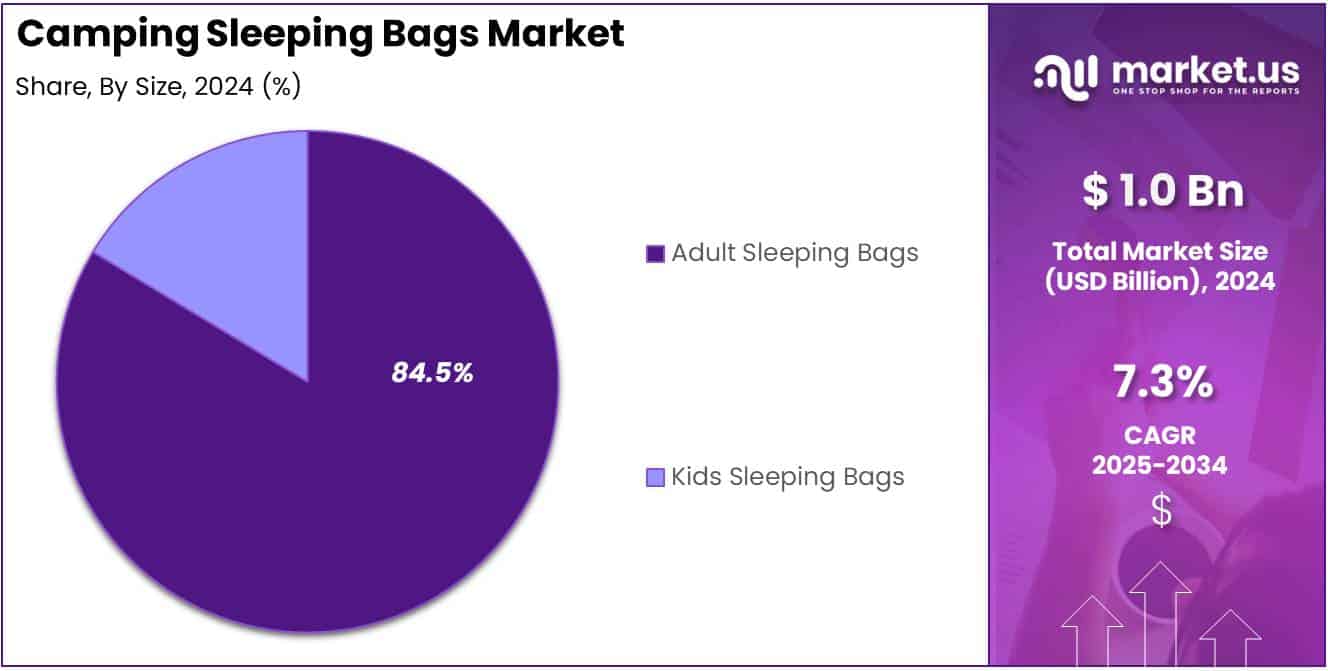
- Adult Sleeping Bags hold a dominant 84.5% share in the By Size segment, reflecting the adult camping demographic.
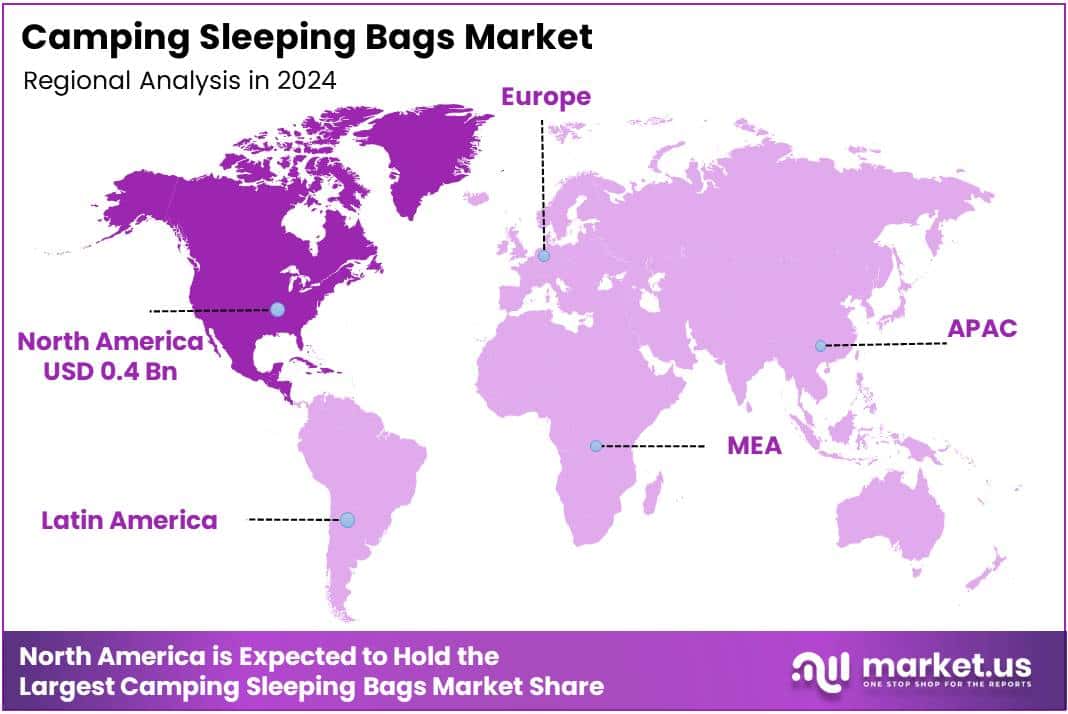
- North America leads with 45.2% market share, valued at USD 0.4 Billion, driven by strong outdoor recreation culture and e-commerce adoption.
Product Type Analysis
Mummy Sleeping Bags dominate with 45.8% due to their superior heat retention and lightweight design.
In 2024, Mummy Sleeping Bags held a dominant market position in the By Product Type Analysis segment of Camping Sleeping Bags Market, with a 45.8% share. These bags feature a tapered design that minimizes air pockets and maximizes thermal efficiency, making them ideal for cold-weather camping. Their lightweight construction appeals to backpackers and hikers who prioritize portability without compromising warmth.
Rectangular Sleeping Bags continue to attract casual campers who value spaciousness and comfort over weight considerations. Their box-like shape provides ample room for movement during sleep, accommodating various sleeping positions. Many families prefer these bags for car camping and recreational outdoor activities where weight is less critical. They are often made with durable materials that are easy to clean, making them ideal for occasional use.
Double Sleeping Bags cater to couples and families seeking shared sleeping arrangements during camping trips. These bags offer bonding experiences while maintaining warmth through shared body heat. Manufacturers increasingly design these products with convertible features that allow separation into individual bags when needed. Some models also include extra pockets and compartments for convenience, enhancing the camping experience.
Backpacking Sleeping Bags serve adventure enthusiasts who undertake multi-day treks and require ultra-lightweight gear. These bags balance insulation, compressibility, and weight, typically featuring advanced materials that reduce pack volume. Their specialized design supports long-distance hikers who must carry all equipment on their backs. Many backpacking bags also incorporate water-resistant fabrics and streamlined designs to withstand harsh weather conditions.
Temperature Rating Analysis
Three-Season Sleeping Bags dominate with 42.1% due to their versatile performance across spring, summer, and fall conditions.
In 2024, Three-Season Sleeping Bags held a dominant market position in the By Temperature Rating Analysis segment of Camping Sleeping Bags Market, with a 42.1% share. These bags offer optimal performance in temperatures ranging from 20°F to 50°F, making them suitable for most camping scenarios. Their versatility eliminates the need for multiple sleeping bags, providing excellent value for recreational campers who explore different seasons and climates throughout the year.
Summer Sleeping Bags appeal to warm-weather campers and festival-goers who require minimal insulation during hot months. These lightweight bags feature breathable fabrics and partial zippers that enhance ventilation while preventing overheating. Their compact size and affordable pricing make them popular among budget-conscious consumers and occasional campers seeking basic protection.
Winter Sleeping Bags serve extreme-weather adventurers who camp in sub-zero temperatures and harsh mountain environments. These heavily insulated bags incorporate advanced materials like high-loft down or synthetic fibers that trap body heat effectively. Specialized features including draft collars, insulated hoods, and reinforced zippers ensure survival and comfort during frigid nights in challenging wilderness conditions.
Material Analysis
Synthetic Sleeping Bags dominate with 55.2% due to their affordability and reliable performance in wet conditions.
In 2024, Synthetic Sleeping Bags held a dominant market position in the By Material Analysis segment of Camping Sleeping Bags Market, with a 55.2% share. These bags utilize polyester fibers that maintain insulating properties even when damp, offering crucial advantages in humid climates and rainy environments. Their lower price point compared to down alternatives makes them accessible to entry-level campers and families purchasing multiple bags simultaneously.
Down Sleeping Bags attract serious outdoor enthusiasts who prioritize weight savings and exceptional warmth-to-weight ratios. Natural down insulation provides superior compressibility, allowing these bags to pack smaller than synthetic alternatives. Premium goose or duck down offers unmatched loft and longevity, justifying higher initial investments for committed backpackers and mountaineers seeking top-tier performance.
Hybrid Sleeping Bags combine synthetic and down materials to optimize performance characteristics while addressing each material’s limitations. Manufacturers strategically place water-resistant synthetic insulation in moisture-prone areas like footboxes, while utilizing down in torso sections for maximum warmth. This innovative approach delivers balanced performance that appeals to discerning consumers seeking versatile, all-conditions sleeping solutions.
Size Analysis
Adult Sleeping Bags dominate with 84.5% due to the predominant adult demographic participating in camping activities.
Adult Sleeping Bags held a dominant market position in the By Size Analysis segment of Camping Sleeping Bags Market in 2024, with an 84.5% share. These bags accommodate individuals ranging from 5’6″ to 6’6″ in height, with regular and long sizing options available. The substantial market share reflects camping’s popularity among adult demographics who engage in recreational outdoor activities, weekend getaways, and adventure tourism experiences throughout various life stages.
Kids Sleeping Bags serve the youth camping market, including family camping trips, scout organizations, and outdoor education programs. These smaller bags feature child-friendly designs with vibrant colors, character themes, and age-appropriate insulation levels. Parents appreciate the affordability and specialized features that introduce children to outdoor activities and foster appreciation for nature from early ages.
Key Market Segments
By Product Type
- Mummy Sleeping Bags
- Rectangular Sleeping Bags
- Double Sleeping Bags
- Backpacking Sleeping Bags
By Temperature Rating
- Three-Season Sleeping Bags
- Summer Sleeping Bags
- Winter Sleeping Bags
By Material
- Synthetic Sleeping Bags
- Down Sleeping Bags
- Hybrid Sleeping Bags
By Size
- Adult Sleeping Bags
- Kids Sleeping Bags
Drivers
Surge in Outdoor Adventure Activities and Camping Enthusiasts Globally Drives Market Growth
The camping sleeping bags market is experiencing significant momentum driven by growing interest in outdoor recreational activities worldwide. More people are seeking adventure experiences and nature-based tourism, creating strong demand for quality camping gear. This shift toward outdoor lifestyles has encouraged families and individuals to invest in reliable sleeping equipment for comfort during their trips.
Technological improvements in thermal insulation materials are reshaping product offerings in this market. Manufacturers now use advanced synthetic fibers and down insulation that provide superior warmth while remaining lightweight. These innovations enhance safety during cold-weather camping and improve overall user comfort, making sleeping bags more versatile for consumers.
The rise of e-commerce platforms has transformed how consumers access camping sleeping bags. Online retail channels offer extensive product varieties, detailed specifications, and competitive pricing. This digital accessibility allows shoppers to compare features easily and make informed purchasing decisions. E-commerce penetration has particularly benefited niche and premium brands by connecting them directly with global audiences.
Restraints
Seasonal Demand Fluctuations Affecting Year-Round Market Stability
The camping sleeping bags market faces challenges due to limited consumer awareness regarding advanced product technologies. Many potential buyers remain unfamiliar with benefits of lightweight materials, compact designs, and specialized insulation systems. This knowledge gap prevents customers from appreciating value-added features and often leads them toward basic options. Without proper education, manufacturers struggle to differentiate premium products and justify higher price points.
Seasonal demand patterns create significant instability for camping sleeping bag businesses. Sales typically peak during spring and summer months when camping activities are most popular, while winter periods see dramatic declines. This fluctuation makes inventory management challenging for retailers and manufacturers alike. Companies must carefully balance production schedules to avoid excess inventory during slow periods or shortages during peak seasons. The cyclical nature affects cash flow and limits consistent revenue streams throughout the year.
Growth Factors
Expansion of Eco-Friendly and Sustainable Material-Based Sleeping Bags
The camping sleeping bags market presents substantial growth opportunities through environmentally sustainable products. Consumers increasingly prefer gear made from recycled materials, organic fabrics, and responsibly sourced insulation. Manufacturers embracing eco-friendly production methods can tap into this expanding customer segment. Sustainable sleeping bags appeal particularly to younger, environmentally aware adventurers who prioritize green credentials alongside performance.
Multi-functional sleeping bags with convertible features represent another promising opportunity. Modern campers seek versatile gear that adapts to various situations, such as sleeping bags converting into blankets or wearable garments. These innovative designs provide better value and reduce the need for multiple products. Features like detachable hoods and adjustable insulation layers enhance practicality for budget-conscious consumers.
Adventure tourism continues gaining momentum worldwide, creating expanded demand for camping equipment. Destinations promoting hiking and wilderness experiences attract millions of tourists annually. This growth in adventure travel directly benefits the sleeping bags market as travelers require reliable gear for outdoor stays, further driving consumer awareness and purchases.
Emerging Trends
Adoption of Smart Sleeping Bags with Temperature Regulation Technology
The camping sleeping bags market is witnessing emerging trends that reshape consumer preferences and product innovation. Smart sleeping bags equipped with temperature regulation technology are gaining attention among tech-savvy outdoor enthusiasts. These advanced products feature built-in sensors and heating elements that automatically adjust warmth levels. App connectivity allows users to control settings remotely, ensuring optimal comfort throughout the night.
Ultralight and compact sleeping bags are becoming increasingly popular, especially among serious hikers and backpackers. Weight-conscious adventurers prioritize gear that minimizes pack burden without compromising warmth or durability. Manufacturers are responding with sleeping bags using cutting-edge materials that compress into remarkably small packages while maintaining excellent insulation properties for extended trips.
Customization options are emerging as another significant trend in the market. Consumers now seek sleeping bags tailored to their specific preferences regarding size, color, and insulation levels. Some brands offer personalized embroidery, custom sizing for different body types, and modular designs where users select components based on intended use. This personalization enhances customer satisfaction and builds brand loyalty.
Regional Analysis
North America Dominates the Camping Sleeping Bags Market with a Market Share of 45.2%, Valued at USD 0.4 Billion
North America holds a commanding position in the global camping sleeping bags market, accounting for 45.2% of the market share and valued at USD 0.4 billion. The region’s dominance is driven by a strong outdoor recreation culture in the United States and Canada, well-established retail and e-commerce distribution channels, and high consumer spending on premium camping equipment. Rising participation in adventure tourism and growing demand for sustainable, eco-friendly sleeping bags further strengthen the market’s growth trajectory across North America.
Europe Camping Sleeping Bags Market Trends
Europe represents a significant market supported by extensive camping infrastructure and a rich outdoor heritage across countries like Germany, France, and Scandinavia. The region’s consumers prioritize lightweight, compact, and thermally efficient products suitable for diverse climatic conditions. Growing emphasis on sustainability has increased demand for sleeping bags made from recycled materials and eco-friendly insulation, aligning with stringent environmental regulations and conscious consumer preferences throughout the region.
Asia Pacific Camping Sleeping Bags Market Trends
The Asia Pacific region is experiencing rapid growth driven by urbanization, rising middle-class populations, and increasing interest in outdoor activities among younger demographics in China, Japan, Australia, and South Korea. E-commerce expansion has enhanced product accessibility, while social media influence and government tourism initiatives are encouraging camping participation. Improved camping infrastructure and growing adventure sports popularity further support the market’s positive development across the region.
Middle East and Africa Camping Sleeping Bags Market Trends
The Middle East and Africa market is gradually developing with niche opportunities in desert camping and safari tourism, particularly in the UAE, South Africa, and Kenya. The region’s diverse geography creates demand for specialized sleeping bags designed for extreme temperatures. While challenges include limited infrastructure and price sensitivity, increasing tourism investment and rising outdoor activity awareness present promising growth opportunities for market expansion.
Latin America Camping Sleeping Bags Market Trends
Latin America represents an emerging market with potential driven by diverse natural landscapes and growing eco-tourism in Brazil, Argentina, Chile, and Peru. The expanding middle class and increased exposure to outdoor lifestyle trends through digital media support market development. Despite economic volatility and infrastructure limitations, ongoing tourism improvements and environmental consciousness continue to create favorable conditions for steady market growth in the region.
Key Regions and Countries
North America
- US
- Canada
Europe
- Germany
- France
- The UK
- Spain
- Italy
- Rest of Europe
Asia Pacific
- China
- Japan
- South Korea
- India
- Australia
- Rest of APAC
Latin America
- Brazil
- Mexico
- Rest of Latin America
Middle East & Africa
- GCC
- South Africa
- Rest of MEA
Key Camping Sleeping Bags Company Insights
The global camping sleeping bags market in 2024 is witnessing robust growth, driven by increasing outdoor recreational activities and rising consumer preference for high-performance gear.
AMG Group continues to strengthen its market presence through innovative designs focused on durability and thermal efficiency, catering to both casual campers and adventure enthusiasts. The company’s emphasis on lightweight materials has positioned it as a preferred choice among backpackers seeking compact and reliable sleeping solutions.
The Coleman Company, Inc. remains a dominant player, leveraging its long-standing brand reputation and extensive distribution network. Its diverse product range, covering mummy, rectangular, and double sleeping bags, meets varying consumer needs across different climates, ensuring consistent market traction. The company’s focus on affordability without compromising on quality has helped maintain strong consumer loyalty globally.
Columbia Sportswear emphasizes technological innovation and premium materials in its camping sleeping bag offerings. By integrating advanced insulation and moisture-resistant fabrics, the company appeals to outdoor enthusiasts prioritizing comfort and performance. Its brand recognition in sportswear and outdoor apparel also reinforces trust among consumers, enabling cross-category growth.
Exxel Outdoors leverages a value-driven approach by providing competitively priced sleeping bags with reliable functionality. The company targets recreational campers and families, offering user-friendly designs suitable for seasonal and occasional use. Its focus on accessibility and practical features has contributed to steady adoption in North America and emerging outdoor markets.
Top Key Players in the Market
- AMG Group
- The Coleman Company, Inc.
- Columbia Sportswear
- Exxel Outdoors
- Gerlert
- Jack Wolfskin
- Johnson Outdoors
- Kefi Outdoors
- Kelty
- NEMO Equipment, Inc.
Recent Developments
- In June 2025, Anta Sports completed the acquisition of Jack Wolfskin, strengthening its footprint in the global outdoor apparel and equipment market. This strategic move is expected to enhance Anta’s product portfolio and expand its international reach.
- In March 2025, EXPED introduced the DeepSleep collection, a new lineup of eco‑friendly synthetic sleeping bags. The collection is designed to perform across multiple temperature ranges, offering versatility for different outdoor seasons and sustainable outdoor experiences.
- In July 2024, Therm‑a‑Rest announced the launch of its new Boost 650 sleeping bag for Spring 2025. The product features innovative WarmZip technology, delivering improved warmth and comfort specifically tailored for backpackers and camping enthusiasts.
Report Scope
Report Features Description Market Value (2024) USD 1.0 Billion Forecast Revenue (2034) USD 2.0 Billion CAGR (2025-2034) 7.3% Base Year for Estimation 2024 Historic Period 2020-2023 Forecast Period 2025-2034 Report Coverage Revenue Forecast, Market Dynamics, Competitive Landscape, Recent Developments Segments Covered By Product Type (Mummy Sleeping Bags, Rectangular Sleeping Bags, Double Sleeping Bags, Backpacking Sleeping Bags), By Temperature Rating (Three-Season Sleeping Bags, Summer Sleeping Bags, Winter Sleeping Bags), By Material (Synthetic Sleeping Bags, Down Sleeping Bags, Hybrid Sleeping Bags), By Size (Adult Sleeping Bags, Kids Sleeping Bags) Regional Analysis North America (US and Canada), Europe (Germany, France, The UK, Spain, Italy, and Rest of Europe), Asia Pacific (China, Japan, South Korea, India, Australia, and Rest of APAC), Latin America (Brazil, Mexico, and Rest of Latin America), Middle East & Africa (GCC, South Africa, and Rest of MEA) Competitive Landscape AMG Group, The Coleman Company, Inc., Columbia Sportswear, Exxel Outdoors, Gerlert, Jack Wolfskin, Johnson Outdoors, Kefi Outdoors, Kelty, NEMO Equipment, Inc. Customization Scope Customization for segments, region/country-level will be provided. Moreover, additional customization can be done based on the requirements. Purchase Options We have three licenses to opt for: Single User License, Multi-User License (Up to 5 Users), Corporate Use License (Unlimited User and Printable PDF)  Camping Sleeping Bags MarketPublished date: Dec 2025add_shopping_cartBuy Now get_appDownload Sample
 -
-
- AMG Group
- The Coleman Company, Inc.
- Columbia Sportswear
- Exxel Outdoors
- Gerlert
- Jack Wolfskin
- Johnson Outdoors
- Kefi Outdoors
- Kelty
- NEMO Equipment, Inc.
Our Clients

- 172103
- Dec 2025






