Market Overview
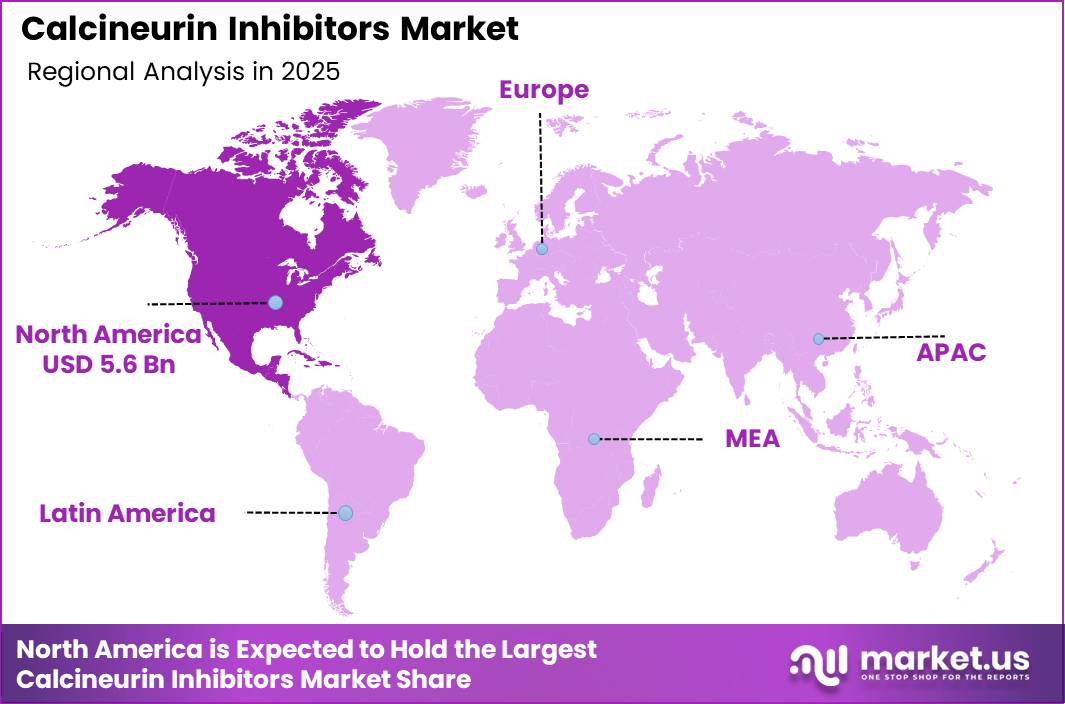
The Global Calcineurin Inhibitors Market size is expected to be worth around US$ 34.9 Billion by 2035 from US$ 13.3 Billion in 2025, growing at a CAGR of 10.2% during the forecast period from 2026 to 2035. In 2025, North America led the market, achieving over 42.5% share with a revenue of US$5.6 Billion.
Calcineurin inhibitors are a well-established class of immunosuppressive drugs primarily used to prevent organ transplant rejection and manage several autoimmune and inflammatory disorders. These agents work by inhibiting calcineurin, a calcium-dependent phosphatase that activates T-lymphocytes, thereby reducing immune system activity.
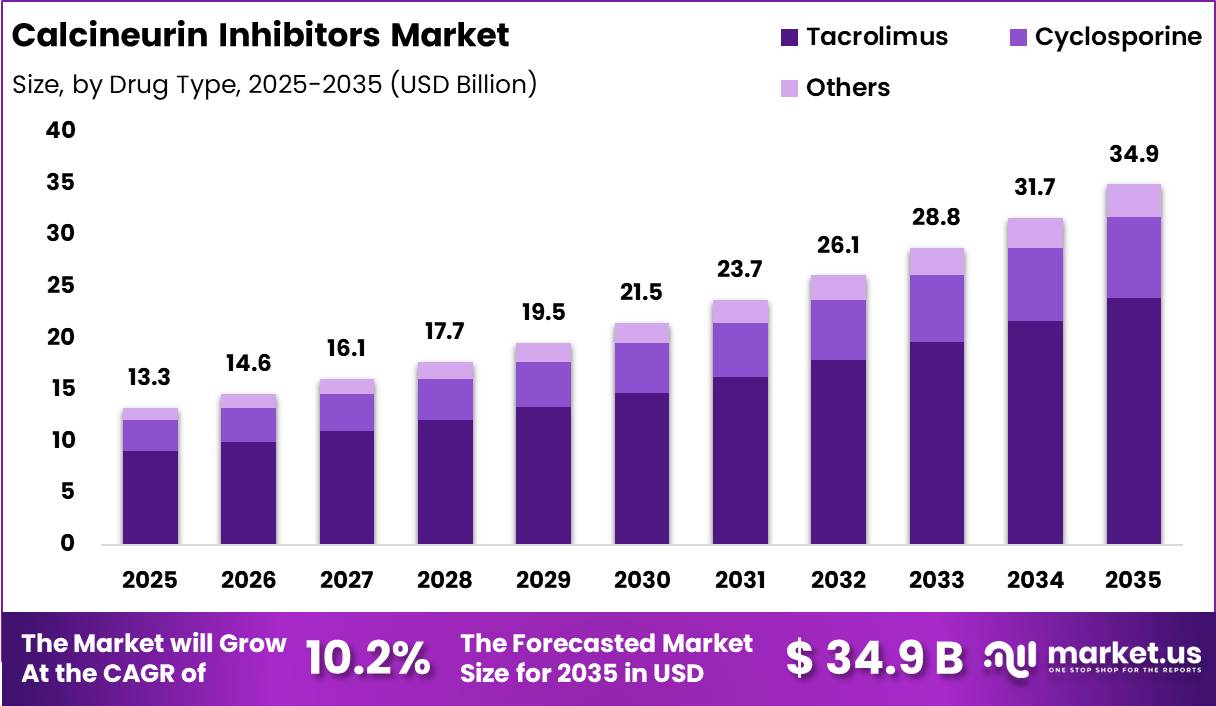
Tacrolimus and cyclosporine remain the most widely prescribed calcineurin inhibitors due to their proven effectiveness in kidney, liver, heart, and lung transplantation as well as selected dermatological and rheumatological conditions. Continuous improvements in therapeutic drug monitoring, optimized dosing strategies, and expanded clinical applications are supporting broader adoption in healthcare settings.
The increasing global burden of organ failure and autoimmune diseases continues to strengthen demand for calcineurin inhibitors. According to the U.S. Health Resources and Services Administration (HRSA), more than 48,000 organ transplants were performed in the United States in 2024, marking the highest annual total recorded.
The U.S. Food and Drug Administration (FDA) continues to approve and monitor immunosuppressive therapies to ensure their safety and effectiveness in transplant medicine. Additionally, the National Institute of Diabetes and Digestive and Kidney Diseases (NIDDK) reports that chronic kidney disease affects more than 35 million U.S. adults, contributing to the growing need for kidney transplantation and long-term immunosuppressive treatment.
Trusted clinical guidelines from organizations such as the National Institutes of Health (NIH) and transplant societies continue to emphasize calcineurin inhibitors as a cornerstone of post-transplant care. Ongoing research into improved formulations, personalized immunosuppressive regimens, and combination therapies is expected to further enhance patient outcomes while minimizing adverse effects and long-term toxicity.
Key Takeaways
- Market Size: Calcineurin Inhibitors Market size was US$ 13.3 billion in 2025.The market is estimated to grow to US$ 34.9 billion by 2035.
- Market Share: The Compound Annual Growth Rate (CAGR) of the market from 2026 to 2035 will be 10.2%.
- By Drug Type: Tacrolimus has the largest market share, accounting for 68.5% of total sales.
- By Formulation: Oral, accounting for 54.2% of total revenue.
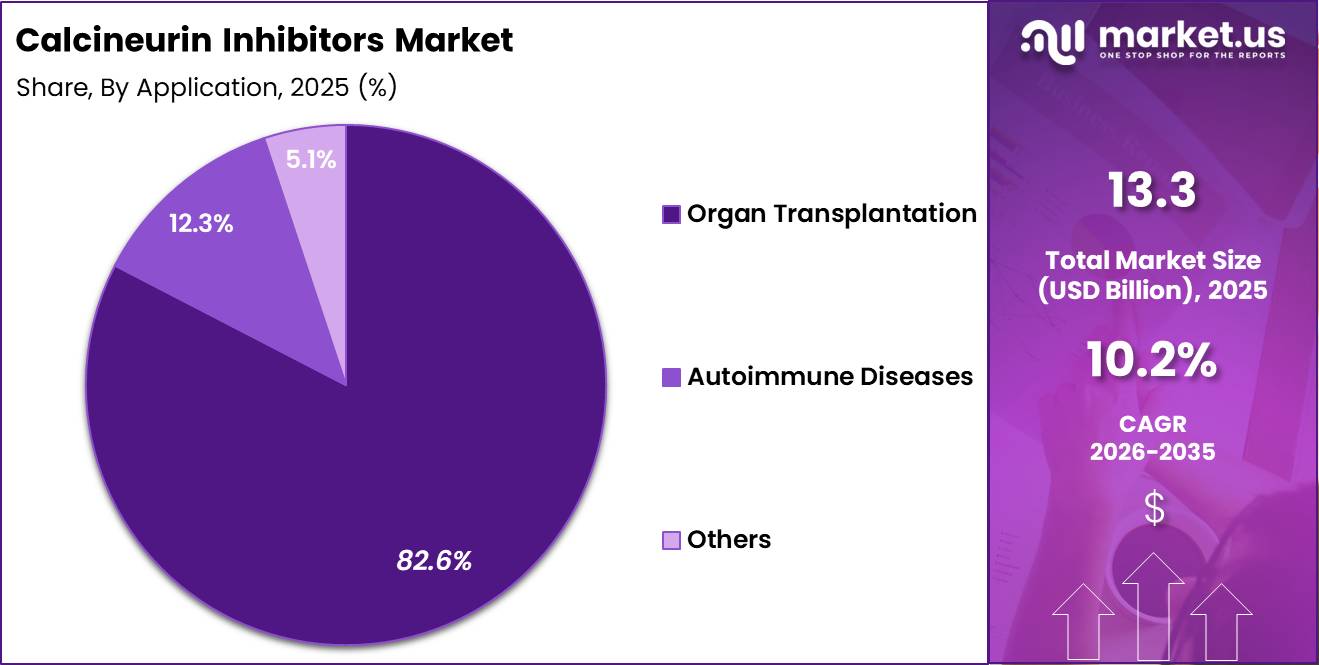
- By Application: Organ Transplantation leads the segment, accounting for 82.6% of total revenue.
- By End User: Hospitals leads the segment, accounting for 62.8% of total revenue.
- Regional: North America is the dominant regional market, accounting for 42.5% of global sales.
Drug Type Analysis
The Drug Type segment of the Calcineurin Inhibitors Market is led by Tacrolimus, which accounted for 68.5% of the market share in 2025. Its dominance is primarily attributed to its widespread use as the preferred immunosuppressive therapy in solid organ transplantation, including kidney, liver, heart, and lung transplants.
Tacrolimus offers superior efficacy in reducing acute organ rejection and has become a standard component of maintenance immunosuppressive regimens. Continuous improvements in extended-release formulations, therapeutic drug monitoring practices, and physician familiarity further support its extensive adoption. Growing transplant procedures worldwide and established clinical guidelines continue to reinforce the leading position of tacrolimus in the market.
Cyclosporine represented 22.4% of the market in 2025. Despite being one of the earliest calcineurin inhibitors, it continues to be prescribed for transplant recipients and autoimmune disorders such as rheumatoid arthritis, psoriasis, and severe dry eye disease. Its long-established clinical profile ensures continued demand, particularly in patients who require alternative treatment strategies.
The Others segment captured 9.1% of the market and includes less frequently used or specialized calcineurin inhibitor formulations. Ongoing research into optimized immunosuppressive therapies, personalized treatment approaches, and improved safety profiles is expected to support steady growth across these niche therapeutic options over the forecast period.
Formulation Analysis
The Formulation segment of the Calcineurin Inhibitors Market was dominated by Oral formulations, which held 54.2% of the market share in 2025. Oral capsules and tablets remain the preferred choice for long-term immunosuppressive therapy because they offer convenient administration, high patient compliance, and suitability for chronic maintenance treatment following organ transplantation.
Most transplant recipients require lifelong immunosuppressive medication, making oral formulations the standard approach for outpatient care. Continuous development of extended-release products and optimized dosing regimens has further strengthened the adoption of oral calcineurin inhibitors across healthcare settings.
Injectable formulations accounted for 24.6% of the market in 2025. These formulations are primarily used during the immediate post-transplant period or when oral administration is not feasible due to critical illness or gastrointestinal complications. Their rapid therapeutic action makes them essential in hospital-based transplant management.
Topical formulations represented 13.1% of the market, supported by increasing use in dermatological conditions such as atopic dermatitis, eczema, and certain inflammatory skin disorders. Their ability to deliver localized immunosuppression while minimizing systemic exposure has expanded their clinical application.
The Others segment contributed 8.1% of market revenue and includes specialized dosage forms developed for targeted therapeutic requirements. Continued innovation in drug delivery technologies is expected to improve treatment flexibility and broaden future formulation options.
Application Analysis
The Application segment of the Calcineurin Inhibitors Market was overwhelmingly dominated by Organ Transplantation, accounting for 82.6% of the market share in 2025. Calcineurin inhibitors remain the cornerstone of immunosuppressive therapy following kidney, liver, heart, lung, and pancreas transplantation due to their proven ability to prevent graft rejection and improve long-term transplant survival.
Rising numbers of organ transplant procedures, expanding transplant programs, improved donor availability, and continuous advances in post-transplant care have significantly contributed to sustained demand. International clinical guidelines continue to recommend calcineurin inhibitors as part of standard immunosuppressive regimens, reinforcing their dominant market position.
The Autoimmune Diseases segment captured 12.4% of the market in 2025. Calcineurin inhibitors are increasingly prescribed for managing conditions such as psoriasis, rheumatoid arthritis, lupus nephritis, nephrotic syndrome, and severe atopic dermatitis, particularly in patients who do not respond adequately to conventional therapies. Growing awareness of autoimmune disorders and expanding treatment options continue to support this segment’s growth.
The Others segment represented 5.0% of the market and includes various off-label and specialized therapeutic applications requiring immune system modulation. Ongoing clinical research evaluating calcineurin inhibitors across emerging indications is expected to create additional opportunities, supporting the gradual expansion of these specialized applications throughout the forecast period.
End User Analysis
The End User segment of the Calcineurin Inhibitors Market was led by Hospitals, which accounted for 62.8% of the market share in 2025. Hospitals serve as the primary centers for organ transplantation, post-operative care, and the initiation of immunosuppressive therapy, making them the largest consumers of calcineurin inhibitors.
Comprehensive transplant programs, specialized multidisciplinary teams, advanced monitoring facilities, and access to intensive care services enable hospitals to manage complex transplant patients effectively. Therapeutic drug monitoring, dose adjustments, and management of potential adverse effects further strengthen the reliance on hospital-based treatment.
Rising transplant volumes, expanding tertiary healthcare infrastructure, and increasing investments in specialized transplant centers continue to support hospital dominance.
Specialty clinics represent the second-largest end-user segment, driven by long-term follow-up care for transplant recipients and the management of autoimmune diseases requiring continuous immunosuppressive treatment. These facilities provide regular therapeutic monitoring and individualized treatment adjustments while reducing the burden on large hospitals.
The Homecare Settings segment is steadily expanding as stable transplant patients increasingly receive long-term oral immunosuppressive therapy outside hospital environments. Improved patient education, telemedicine services, and remote monitoring technologies have supported this transition.
The Others segment includes ambulatory care centers and research institutions that contribute to specialized treatment and clinical investigations, further supporting overall market development.
Market Segmentations
By Drug Type
- Tacrolimus
- Cyclosporine
- Others
By Formulation
- Oral
- Injectable
- Topical
- Others
By Application
- Organ Transplantation
- Autoimmune Diseases
- Others
By End User
- Hospitals
- Transplant Centers
- Specialty Clinics
- Others
Driver
Expanding CNI Applications Driving Long-Term Immunosuppression Demand
Calcineurin inhibitors remain the backbone of maintenance immunosuppression in renal transplantation, and that matters commercially because each additional transplant creates a multiyear to lifelong therapy annuity rather than a short-course prescription stream.
NCBI identifies CNIs as the cornerstone of renal-transplant immunosuppression, while the 2024 Global Observatory report recorded 173,727 solid-organ transplants worldwide, up 2% versus 2023, and NIDDK reports 27,332 kidney transplants in the United States in 2023, with 90,323 people still on the U.S. kidney waiting list as of November 2024.
This expands market volume through initiation demand, chronic refill persistence, therapeutic drug monitoring, and regimen switching within the class, especially in North America, Europe, Japan, and selected APAC centers where transplant infrastructure is deepest.
The CAGR uplift is strongest in kidney-led protocols because graft longevity economics still favor continuous immunosuppression despite long-run nephrotoxicity concerns, making a roughly 2.1% incremental contribution to forecast growth reasonable for 2026 baselines.
The strongest non-transplant growth catalyst is the guideline-led expansion of CNI use in lupus nephritis, where KDIGO 2024 explicitly recommends initial therapy for active Class III/IV disease using glucocorticoids plus mycophenolic acid analogs, low-dose intravenous cyclophosphamide, belimumab combinations, or mycophenolic acid analogs plus a CNI when eGFR is not severely impaired, defined as above 45 ml/min per 1.73 m2.
KDIGO also states that CNI-including regimens may be preferred in patients with relatively preserved kidney function and nephrotic-range proteinuria, and maintenance can continue with triple regimens including a CNI; the guideline cites voclosporin, tacrolimus, and cyclosporine, and notes total initial plus maintenance immunosuppression duration should be at least 36 months.
Commercially, this shifts CNIs from rescue or selective use into more protocolized nephrology pathways, expands prescriber depth beyond transplant specialists, and increases duration-weighted revenue per treated lupus nephritis patient; that supports an estimated 1.8% CAGR contribution, with the fastest adoption likely in the US, Europe, China, and East Asia where biopsy-led renal pathways and specialty infusion/oral combination management are better established.
| Driver | (~) % Impact on CAGR Forecast | Geographic Relevance | Impact Timeline |
|---|---|---|---|
| Transplant procedure expansion sustaining lifelong tacrolimus-based demand | +2.1% | North America core, EU5, Japan, South Korea, urban China, Gulf hubs | Medium term |
| Lupus nephritis guideline shift toward CNI-included combination regimens | +1.8% | US, Europe, China, East Asia, tertiary centers in LATAM/MENA | Short term |
| CKD and diabetes burden enlarging the immunology-nephrology treatment funnel | +1.2% | US core, APAC high-diabetes corridors, Middle East spill-over | Medium term |
| Steroid minimization and renal-response targeting improving CNI positioning | +1.0% | US and EU specialty centers, East Asia transplant and nephrology networks | Short term |
| Generic access and protocol standardization widening treated patient volumes | +0.9% | India, China, LATAM, Southeast Asia, public-hospital channels | Medium term |
| Monitoring intensity, nephrotoxicity risk, and alternative therapies capping upside | -1.4% | Global, strongest in US/EU reimbursed specialty markets | Short term |
Challenge
Cold-Chain Challenges Increasing Calcineurin Inhibitor Supply Complexity
Formulation and distribution of calcineurin inhibitors exhibit pronounced sensitivity to storage conditions and physical stability—illustrated by crystallization risks and injectable discontinuities—which create an estimated 0.8 % point drag on potential CAGR via increased wastage rates, tighter cold-chain requirements, and localized stock imbalances rather than outright market contraction.
For example, certain oral solutions and liquid formulations demonstrate phase or crystal changes under modest deviations from labeled temperature ranges, such as excursions above 25–30°C or prolonged exposure to fluctuating humidity, leading to non-uniform drug distribution that can drive dosing errors of 10–20% and necessitate batch-level recall or destruction.
In high-temperature regions and last-mile distribution networks, empirical spoilage or write-off rates for temperature-sensitive pharmaceuticals can sit in the 3–6% range of shipped volume; with calcineurin inhibitors used in graft-critical settings, operators often respond by overstocking 10–15% buffer inventory and increasing shipment frequency, raising logistics cost per dose by 5–10% and complicating pharmacy-level replenishment cycles.
Permanent discontinuation of injectable cyclosporine and intermittent oral supply disruptions have forced treatment centers to redesign protocols, shifting toward alternative formulations or molecules and introducing transient switching costs and risk-management overhead without eliminating underlying demand.
Over a 2–4 year horizon, strategic mitigation focuses on more robust solid oral dosage forms, improved packaging with higher thermal stability, expanded use of temperature-monitoring IoT devices in transit, and regional warehousing strategies designed to cut average delivery lead times from 5–7 days to 2–3 days.
Collectively, these can compress wastage rates below 2–3% and stabilize product availability, yet in the current period they remain partially implemented, leaving cold-chain and formulation sensitivity as a medium-term operational friction rather than a fully resolved issue.
| Challenge | (~) % CAGR Friction Drag | Geographic Relevance | Mitigation Horizon |
|---|---|---|---|
| Bioprocess yield volatility | -1.3% | North America, EU, APAC pharma hubs | Long term (≥ 4 years) |
| Complex QC & assay demands | -0.9% | North America core, EU regulatory hubs | Medium term (2-4 years) |
| Cold-chain & formulation sensitivity | -0.8% | Global transplant centers, dermatology clusters | Medium term (2-4 years) |
| Regulatory evolution & pharmacovigilance | -1.1% | North America, EU, Japan, emerging BRICS | Long term (≥ 4 years) |
| Talent & biomanufacturing skill gap | -0.7% | APAC expansion corridors, LATAM, MENA | Long term (≥ 4 years) |
| Episodic supply shocks & molecule concentration | -0.6% | North America, EU, selected APAC importers | Short term (≤ 2 years) |
Restraints
Safety Monitoring Burden Limiting Calcineurin Inhibitor Adoption Growth
A second structural restraint arises from the inherently narrow therapeutic index and intensive safety‑monitoring requirements of systemic calcineurin inhibitors, which raise both operating costs and access friction in transplant and autoimmune indications.
As agents that suppress T‑cell activation and cytokine production, drugs like cyclosporine and tacrolimus carry well‑documented risks of nephrotoxicity, hypertension, infections, and malignancies, necessitating frequent therapeutic drug monitoring, renal function tests, and blood pressure control.
In practical terms, many transplant centers operate monitoring protocols requiring trough‑level assays every 1–2 weeks in the first 3–6 months post‑transplant, then monthly or quarterly thereafter, combined with regular creatinine and liver function tests, which can add 10–15 additional outpatient encounters per patient in year one and incremental lab expenditures of USD 800–1,500 per patient annually in the US and comparable figures in the EU.
From a market‑growth perspective, these safety‑linked operating costs materially influence payor and provider decisions: for instance, in autoimmune conditions where biologics or small‑molecule JAK inhibitors offer more convenient oral or subcutaneous dosing with possibly lower monitoring burdens, some systems implicitly cap calcineurin inhibitor utilization by embedding higher monitoring cost assumptions in cost‑effectiveness models, leading to formulary tiering or step‑therapy rules that delay initiation by 6–12 months and depress adoption curves by 10–20% versus clinical need.
This dynamic compresses manufacturer margins because hospital and specialty clinic customers often demand discounted acquisition pricing to offset upstream monitoring costs; a 5–10% net price discount to secure inclusion in transplant or rheumatology protocols can trim operating margins by 150–250 basis points, especially where gross margins were initially modeled above 60%.
Over the 2–4 year medium‑term horizon, as transplant volumes grow modestly and autoimmune prevalence rises, this monitoring burden will still subtract roughly 1.2 % points from potential CAGR by constraining incremental patient additions and reinforcing conservative dosing practices, most acutely in North America, the EU, and APAC tertiary‑care corridors that adhere strictly to immunosuppression safety standards.
| Restraint | (~) % Impact on CAGR Forecast | Geographic Relevance | Impact Timeline |
|---|---|---|---|
| Black box and malignancy risk overhang | -1.5% | North America core, EU, Japan | Medium term (2–4 years) |
| Complex immunosuppressant safety and monitoring burden | -1.2% | North America, EU, APAC hospital corridors | Medium term (2–4 years) |
| API and sterile fill–finish supply fragility | -1.0% | EU, North America, APAC manufacturing hubs | Short to medium term (≤ 4 years) |
| Drug pricing controls and reimbursement squeeze | -1.3% | EU, North America, selected LATAM | Long term (≥ 4 years) |
| Intensifying pharmacovigilance and real-world evidence demands | -0.8% | North America, EU, Japan, advanced APAC | Medium to long term (2–≥ 4 years) |
| Competitive pipeline pressure from alternative immunomodulators | -1.0% | Global, with emphasis on US/EU tertiary centers | Long term (≥ 4 years) |
Opportunity
Topical CNI Repositioning Expanding Dermatology Treatment Opportunities
Topical calcineurin inhibitors such as tacrolimus ointment and pimecrolimus cream are well established as steroid‑sparing agents for atopic dermatitis (AD), particularly in sensitive areas like the face and flexures, but their commercial trajectory has been structurally constrained for nearly two decades by an FDA boxed warning on theoretical malignancy risk and consequent prescriber reluctance, even though multiple observational and meta‑analytic datasets now show little to no increase in cancer risk compared with controls.
Prevalence studies suggest that AD affects up to 20 % of children and up to 10 % of adults, corresponding to more than 200 million people globally, yet topical CNIs typically capture only a fraction of moderate‑to‑severe cases and remain underused in adults, skin‑of‑color populations, and off‑label indications such as vitiligo, genital lichen sclerosus, and facial psoriasis where long‑term steroid exposure is problematic.
As high‑quality evidence from large cohorts consistently shows that cancer risk with topical CNIs is not materially elevated, regulators and professional societies are increasingly revisiting risk communication, which opens a white‑space opportunity to reposition topical CNIs as chronic maintenance and proactive therapy rather than “second‑line salvage” drugs.
Strategic levers include label and guideline updates, DTC and HCP education focused on safety, and portfolio extension into fixed‑dose combinations with emollients or low‑dose steroids; if these steps expand CNI share by even 5–10 % of the moderate‑to‑severe AD segment in high‑income markets and unlock more consistent maintenance dosing, they could add roughly 300–500 million incremental patient‑treatment‑years through 2035, supporting around 1.0 % point CAGR uplift above baseline as revenue mixes shift from episodic flares to long‑duration regimens.
| Opportunity | (~) % Potential CAGR Upside | Geographic Relevance | Execution Window |
|---|---|---|---|
| Lupus nephritis & nephrology expansion | +1.3% | North America, EU, East Asia | Short–Medium term |
| Topical CNIs repositioning in dermatology | +1.0% | North America, EU, GCC, East Asia | Short term |
| Transplant access & reimbursement optimization | +1.2% | North America, Latin America, Emerging APAC | Medium term |
| Next-gen CNIs & fixed-dose combos | +0.9% | North America, EU, Japan | Medium–Long term |
| Pediatric & adolescent immune disorders | +0.8% | North America, EU, East & South Asia | Medium term |
| Digital adherence & long-acting delivery models | +0.7% | North America, EU, Urban APAC | Long term |
Regional Analysis
In 2025, North America led the market, achieving over 42.5% share with a revenue of US$5.6 billion.
North America region’s dominance is primarily driven by its advanced organ transplantation infrastructure, high prevalence of autoimmune diseases, and widespread adoption of immunosuppressive therapies.
The United States represents the largest contributor within the region due to a significant number of kidney, liver, heart, and lung transplant procedures performed annually, creating sustained demand for calcineurin inhibitors such as tacrolimus and cyclosporine. In addition, the presence of well-established transplant centers, favorable reimbursement policies, and strong clinical guidelines supports consistent utilization of these therapies.
Increasing awareness regarding long-term transplant management and continuous patient monitoring further strengthens market growth. North America also benefits from substantial investments in pharmaceutical research, enabling the development of improved formulations with enhanced efficacy and safety profiles.
Regulatory support from agencies such as the U.S. Food and Drug Administration (FDA) encourages innovation while maintaining rigorous quality standards for immunosuppressive medications. Furthermore, the region hosts several leading pharmaceutical companies actively engaged in expanding their transplant and autoimmune disease portfolios through product enhancements and lifecycle management strategies.
Rising healthcare expenditure, improved access to specialty care, and a growing aging population susceptible to chronic diseases continue to reinforce North America’s leadership, making it the most influential regional market for calcineurin inhibitors during the forecast period.
Key Regions and Countries
North America
- The US
- Canada
Europe
- Germany
- France
- The U.K.
- Italy
- Spain
- Russia & CIS
- Rest of Europe
Asia Pacific
- China
- India
- Japan
- South Korea
- ASEAN
- Australia & New Zealand
- Rest of Asia Pacific
Middle East & Africa
- GCC
- South Africa
- Rest of Middle East & Africa
Latin America
- Brazil
- Mexico
- Rest of Latin America
Key Player Analysis
The global Calcineurin Inhibitors Market is moderately consolidated, with a mix of multinational pharmaceutical innovators and established generic drug manufacturers competing across organ transplantation and autoimmune disease treatment. Market competition is driven by product efficacy, long-term safety profiles, regulatory approvals, pricing strategies, and the ability to ensure consistent global supply.
Companies are increasing investments in research and development to improve formulations, expand therapeutic indications, and enhance patient adherence through convenient dosage forms. Strategic collaborations with healthcare providers, transplant centers, and research institutions are further strengthening market positioning while accelerating clinical development and commercialization.
Leading participants include Astellas Pharma Inc., Novartis AG, AbbVie Inc., Pfizer Inc., Mylan N.V. (Viatris), Teva Pharmaceutical Industries Ltd., Sun Pharmaceutical Industries Ltd., Dr. Reddy’s Laboratories Ltd., Cipla Inc., Lupin Limited, LEO Pharma A/S, Glenmark Pharmaceuticals Ltd., Akorn Inc., Bausch Health Companies Inc., Sandoz International GmbH, and Others.
These companies are actively pursuing competitive strategies centered on expanding R&D capabilities, introducing innovative tacrolimus and cyclosporine formulations, and improving manufacturing efficiency to meet increasing global demand. Partnerships with biotechnology firms, academic institutions, and healthcare organizations are supporting clinical research and accelerating regulatory pathways.
Product innovation remains a major differentiator, particularly in topical and extended-release formulations designed to improve therapeutic outcomes and patient compliance. Additionally, companies are integrating digital workflows, advanced manufacturing technologies, and robust distribution ecosystems to optimize supply chains and strengthen market access.
Ecosystem-based competition, supported by strategic alliances and comprehensive patient support programs, is becoming increasingly important as manufacturers seek to enhance treatment accessibility, reinforce physician engagement, and maintain long-term competitive advantages in the evolving calcineurin inhibitors market.
Top Key Players
- Astellas Pharma Inc.
- Novartis AG
- AbbVie Inc.
- Pfizer Inc.
- Mylan N.V. (Viatris)
- Teva Pharmaceutical Industries Ltd.
- Sun Pharmaceutical Industries Ltd.
- Dr. Reddy’s Laboratories Ltd.
- Cipla Inc.
- Lupin Limited
- LEO Pharma A/S
- Glenmark Pharmaceuticals Ltd.
- Akorn Inc.
- Bausch Health Companies Inc.
- Sandoz International GmbH
- Others
Recent Developments
- In October 2025, Viatris (formerly Mylan N.V.) completed the acquisition of Aculys Pharma, gaining exclusive commercialization rights for pitolisant and Spydia® in Japan and selected Asia-Pacific markets, strengthening its specialty pharmaceutical portfolio.
- In February 2026, Astellas Pharma Inc. entered a global strategic collaboration with Vir Biotechnology to co-develop and commercialize VIR-5500, reinforcing its commitment to innovative immunology and specialty therapeutics.
- In May 2026, Sun Pharmaceutical Industries Ltd. announced the presentation of long-term pivotal clinical data for UNLOXCYT™ (cosibelimab-ipdl), reflecting the company’s continued investment in specialty medicines and immunology-focused innovation.
- In July 2026, Novartis AG received U.S. FDA traditional approval for Fabhalta® (iptacopan) for primary IgA nephropathy, expanding its nephrology and immune-mediated disease portfolio through a first-in-class complement pathway inhibitor.
Report Scope
| Report Features | Description |
|---|---|
| Market Value (2025) | US$ 13.3 Bn |
| Forecast Revenue (2035) | US$ 34.9 Bn |
| CAGR (2026-2035) | 10.2% |
| Base Year for Estimation | 2025 |
| Historic Period | 2020-2024 |
| Forecast Period | 2026-2035 |
| Report Coverage | Revenue Forecast, Market Dynamics, Competitive Landscape, Recent Developments |
| Segments Covered | By Drug Type(Tacrolimus ,Cyclosporine ,Others)By Formulation(Oral ,Injectable ,Topical ,Others)By Application(Organ Transplantation ,Autoimmune Diseases ,Others)By End User(Hospitals ,Transplant Centers, Specialty Clinics ,Others) |
| Regional Analysis | North America – The US, Canada; Europe – Germany, France, U.K., Italy, Spain, Russia & CIS, Rest of Europe; Asia Pacific – China, India, Japan, South Korea, ASEAN, Australia & New Zealand, Rest of Asia Pacific; Middle East & Africa – GCC, South Africa, Rest of Middle East & Africa; Latin America – Brazil, Mexico, Rest of Latin America |
| Competitive Landscape | Astellas Pharma Inc. ,Novartis AG ,AbbVie Inc. ,Pfizer Inc. ,Mylan N.V. (Viatris) ,Teva Pharmaceutical Industries Ltd. ,Sun Pharmaceutical Industries Ltd. ,Dr. Reddy’s Laboratories Ltd. ,Cipla Inc. ,Lupin Limited ,LEO Pharma A/S ,Glenmark Pharmaceuticals Ltd. ,Akorn Inc. ,Bausch Health Companies Inc. ,Sandoz International GmbH, Others |
| Customization Scope | Customization for segments, region/country-level will be provided. Moreover, additional customization can be done based on the requirements. |
| Purchase Options | We have three licenses to opt for: Single User License, Multi-User License (Up to 5 Users), Corporate Use License (Unlimited User and Printable PDF) |