


Report Overview
The Global Body Worn Insect Repellent Market size is expected to be worth around USD 1123.4 Million by 2034, from USD 478.9 Million in 2024, growing at a CAGR of 8.9% during the forecast period from 2025 to 2034.
The Body Worn Insect Repellent Market refers to products applied or attached directly to the body, such as sprays, patches, bands, and lotions, designed to repel insects and prevent bites. These solutions are gaining traction across regions due to rising vector-borne diseases and increasing outdoor recreational activities among consumers.
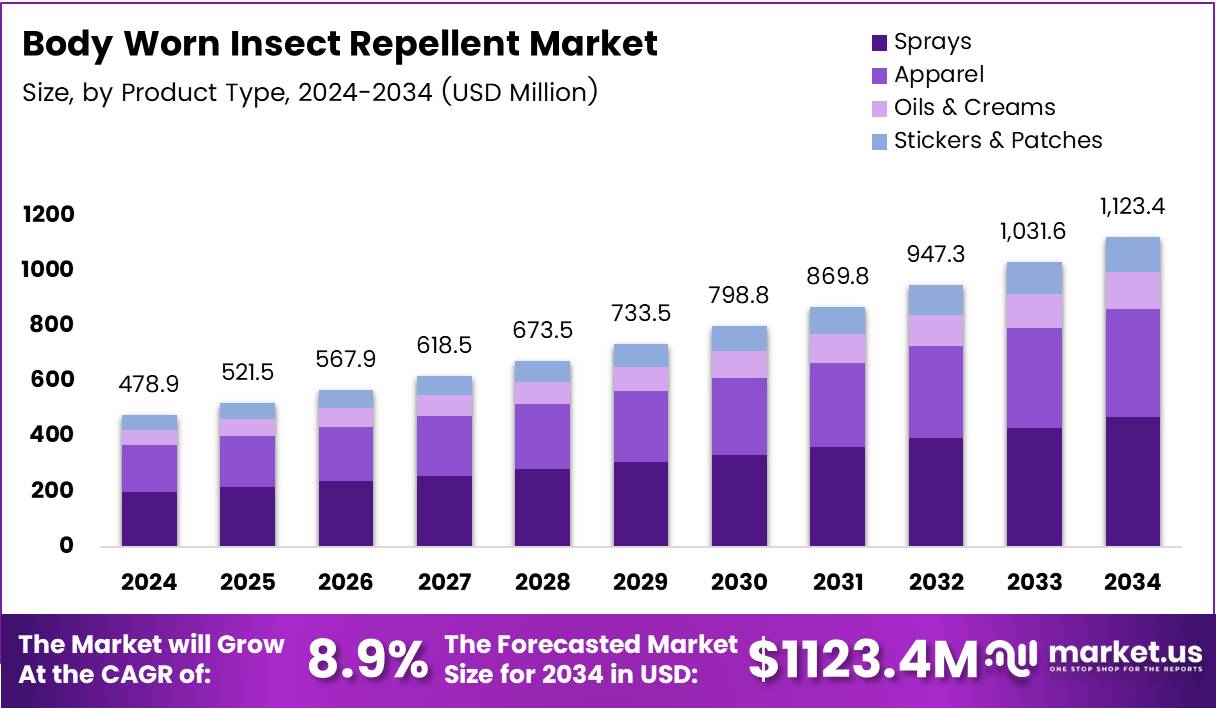
The market demonstrates steady growth potential driven by health awareness and eco-friendly product innovations. Consumers increasingly prefer DEET-free and natural alternatives that align with sustainable living trends. Consequently, manufacturers are investing in bio-based formulations and wearable technologies, fostering product differentiation and expanding the global market reach.
Moreover, expanding tourism and outdoor leisure activities significantly fuel demand for long-lasting repellents. Governments are also supporting vector-control initiatives to combat diseases like malaria and dengue, indirectly encouraging product adoption. These policies, combined with innovations in skin-safe and child-friendly repellents, are creating notable commercial opportunities for both established and emerging brands.
Additionally, regulatory bodies are tightening standards for efficacy and safety testing, which is expected to raise product credibility. Government-backed awareness campaigns are emphasizing preventive care, stimulating consumer spending on personal protection solutions. This regulatory clarity can attract private investment and promote research partnerships for advanced insect-repelling technologies.
However, market credibility challenges persist due to inconsistent testing and unverified claims. According to an industry report, only 23% of body-worn “natural” patch products underwent independent efficacy testing, and 41% of botanical wearable patch marketing claims lacked scientific support. This indicates a trust gap and highlights the urgent need for standardized regulatory enforcement and transparent product validation.
Key Takeaways
- The Global Body Worn Insect Repellent Market is projected to reach USD 1,123.4 Million by 2034, growing from USD 478.9 Million in 2024 at a CAGR of 8.9%.
- Sprays dominate the market by product segment with a 45.8% share in 2024, driven by convenience and fast action.
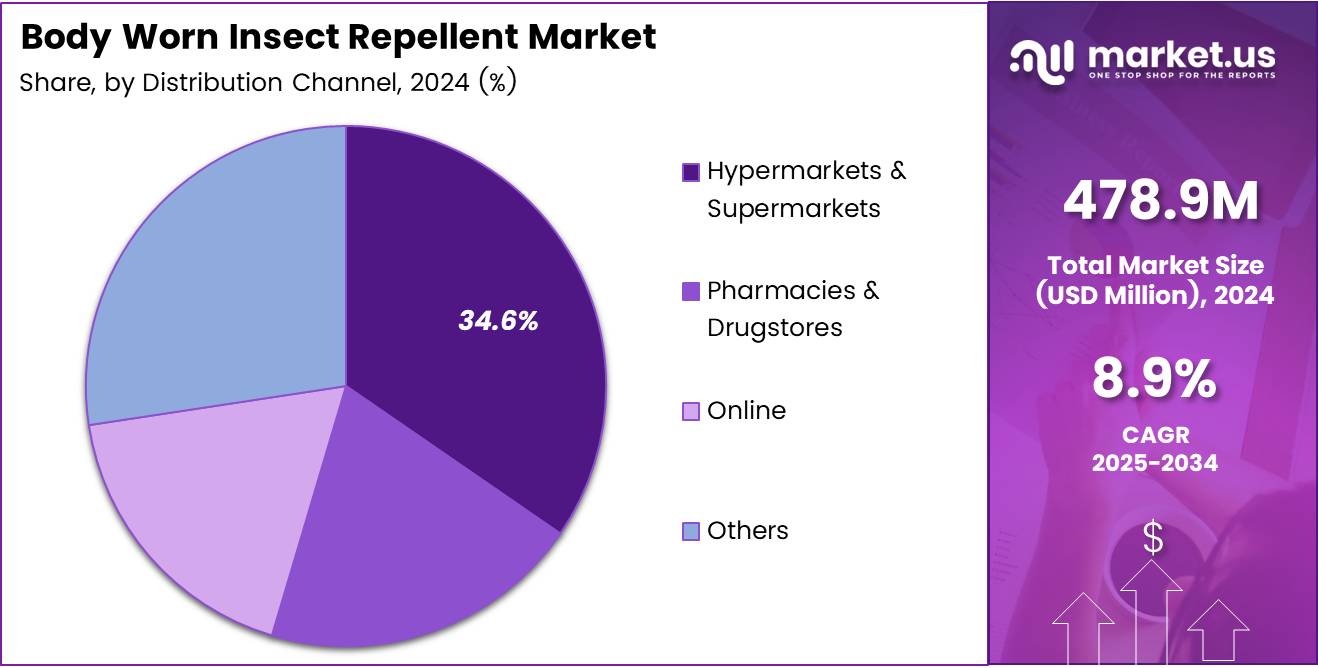
- Hypermarkets & Supermarkets lead the distribution channel segment with a 34.6% share, offering wide product accessibility.
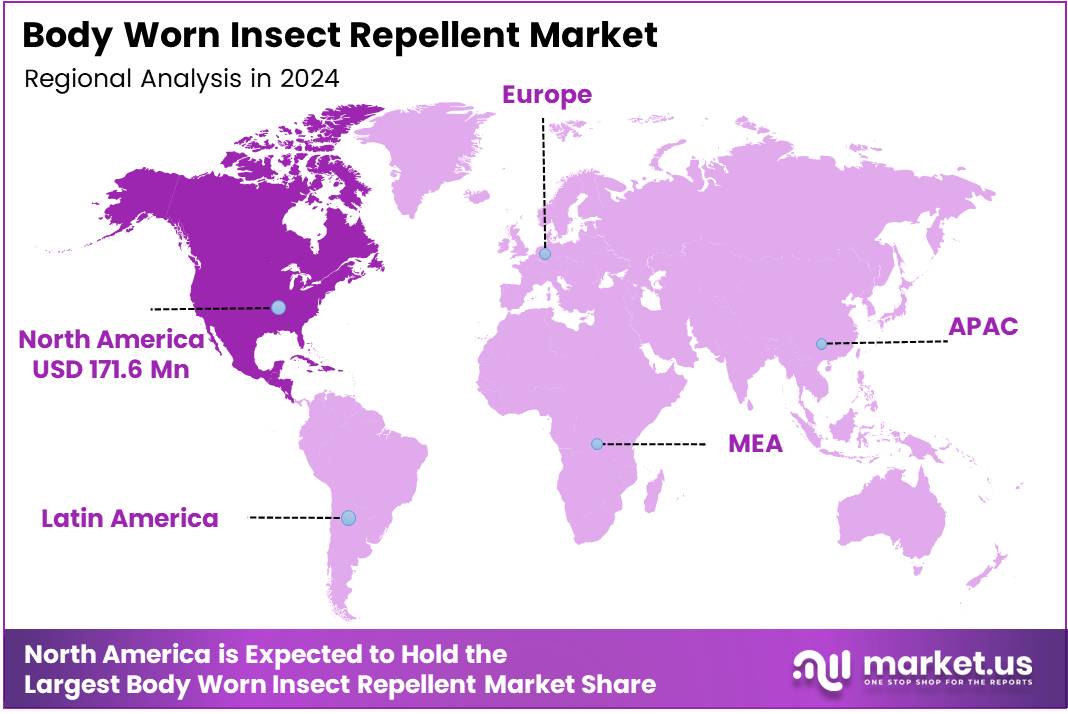
- North America holds the largest regional share of 35.9%, valued at USD 171.6 Million in 2024.
- Key players include S.C. Johnson & Son, Inc., Spectrum Brands Holdings, Inc., Reckitt Benckiser Group plc, and 3M Company.
By Product Analysis
Sprays dominate with 45.8% due to their convenience, fast action, and wide consumer acceptance across all age groups.
In 2024, Sprays held a dominant market position in the By Product Analysis segment of the Body Worn Insect Repellent Market, with a 45.8% share. Their quick application, even coverage, and immediate effectiveness make them the most popular choice for outdoor activities, camping, and daily use. Consumers appreciate their portability and compatibility with various repellant formulations, driving steady demand globally.
Apparel products are gaining attention as a sustainable and long-lasting protection method. These include insect-repellent clothing infused with permethrin or plant-based treatments, offering prolonged defense without frequent reapplication. Growing awareness among travelers and outdoor enthusiasts fuels this segment’s growth, as consumers seek non-chemical alternatives for continuous protection.
Oils & Creams remain a trusted choice for individuals with sensitive skin who prefer direct skin application. Formulated with natural ingredients like citronella and eucalyptus, these products appeal to eco-conscious buyers. They offer personalized control over protection levels and are increasingly adopted in regions with high mosquito prevalence.
Stickers & Patches are emerging as innovative and child-friendly repellents. Their no-contact application and long-lasting effects make them ideal for infants and outdoor recreation. The growing trend of wearable wellness solutions continues to boost adoption among families and travelers.
By Distribution Channel Analysis
Hypermarkets & Supermarkets dominate with 34.6% due to their product accessibility and trusted shopping experience.
In 2024, Hypermarkets & Supermarkets held a dominant market position in the By Distribution Channel segment of the Body Worn Insect Repellent Market, with a 34.6% share. These retail giants attract large consumer traffic, ensuring visibility and variety for different brands. The availability of discounts and combo offers further strengthens their dominance among cost-conscious shoppers.
Pharmacies & Drugstores serve as reliable points for consumers seeking medically approved repellents. These outlets often carry dermatologist-recommended products, appealing to families prioritizing safety. The growing consumer trust in pharmacy-sold insect repellents, especially in urban regions, continues to support this channel’s expansion.
Online sales are rapidly expanding as e-commerce platforms enable global product availability. Consumers benefit from price comparison, detailed reviews, and doorstep delivery. The rise of subscription-based insect repellent packs and influencer-driven marketing campaigns enhances product awareness and convenience, especially among young, digital-first buyers.
Others include local retail stores, camping gear shops, and departmental outlets that cater to niche and rural markets. These channels play an important role in remote areas where online access is limited. Their personalized service and regional brand familiarity continue to sustain localized demand for insect repellent products.
Key Market Segments
By Product
- Sprays
- Apparel
- Oils & Creams
- Stickers & Patches
By Distribution Channel
- Hypermarkets & Supermarkets
- Pharmacies & Drugstores
- Online
- Others
Drivers
Rising Consumer Shift Toward DEET-Free and Natural Insect Repellent Formulations Drives Market Growth
The global body-worn insect repellent market is gaining traction as consumers increasingly prefer DEET-free and natural formulations. Concerns about chemical exposure and health effects are encouraging people to choose products made from herbal and plant-based ingredients such as citronella, eucalyptus, and lemongrass oils.
Growing outdoor activities like hiking, camping, and adventure travel in mosquito-prone regions are fueling demand for convenient wearable repellents. These products offer long-lasting protection and comfort, making them popular among travelers and outdoor enthusiasts.
Additionally, the rising number of vector-borne diseases such as malaria, dengue, and Zika virus is boosting the use of body-worn repellents as a preventive measure. Consumers are becoming more health-conscious and proactive about personal protection.
Technological advancements are also shaping the market. Innovative patches, wristbands, and smart wearables with built-in repellent functions are attracting modern consumers who seek both style and functionality. This shift toward natural and tech-enhanced solutions is expected to sustain strong market growth in the coming years.
Restraints
Limited Product Efficacy Duration Leading to Frequent Reapplication Concerns Restrains Market Growth
Despite growing demand, the body-worn insect repellent market faces several challenges. One key restraint is the limited duration of product effectiveness, which requires frequent reapplication or replacement. This reduces convenience and may discourage regular use among consumers.
Regulatory challenges also pose a major hurdle. Strict standards regarding chemical ingredients, labeling, and safety approvals vary across regions, often slowing product launches and market entry. Manufacturers must meet these complex requirements to ensure compliance and consumer trust.
Another concern is skin sensitivity and allergic reactions caused by certain active ingredients. Some users experience irritation or discomfort, especially when repellents are applied directly to the skin or worn for extended periods. This issue reduces consumer confidence and limits adoption among sensitive users.
Together, these restraints highlight the need for longer-lasting, safer, and better-regulated formulations to build stronger consumer acceptance in the market.
Growth Factors
Expansion of Herbal and Essential Oil-Based Wearable Repellent Product Lines Creates Growth Opportunities
The body-worn insect repellent market presents significant growth opportunities through the expansion of herbal and essential oil-based product lines. With increasing demand for chemical-free alternatives, brands can capitalize on natural ingredients to appeal to health-conscious consumers.
Smart and sensor-enabled repellents are another promising area. Wearables that can detect mosquito activity and release controlled amounts of repellent offer both efficiency and innovation, particularly for outdoor enthusiasts. This integration of technology enhances user convenience and product appeal.
Emerging markets in Africa, Southeast Asia, and Latin America also offer strong potential due to higher mosquito-borne disease prevalence and limited product penetration. Targeted marketing and affordable options can drive adoption in these regions.
Collaborations with healthcare providers and the tourism industry can further support awareness campaigns promoting preventive use. Such partnerships will help expand distribution networks and strengthen the market presence of body-worn insect repellents globally.
Emerging Trends
Surge in Eco-Certified and Biodegradable Body-Worn Repellent Innovations Shapes Market Trends
Recent trends in the body-worn insect repellent market highlight the growing shift toward eco-certified and biodegradable products. Consumers are increasingly favoring sustainable solutions that minimize environmental impact while ensuring safety and effectiveness.
Fashion-driven repellents such as bracelets, anklets, and clip-ons are gaining popularity for their dual appeal—style and functionality. These wearable formats are especially popular among younger consumers and travelers seeking convenient protection options.
Technological innovation also plays a key role, with the use of microencapsulation and controlled-release systems providing longer and more consistent protection. These technologies enhance performance and reduce the need for frequent application.
Additionally, the rapid growth of online sales channels has made portable and travel-friendly repellents more accessible worldwide. E-commerce platforms enable brands to reach broader audiences, boosting product visibility and consumer engagement. Together, these trends are redefining how users perceive and purchase insect repellent wearables.
Regional Analysis
North America Dominates the Body Worn Insect Repellent Market with a Market Share of 35.9%, Valued at USD 171.6 Million
The North American region leads the global body worn insect repellent market, capturing a substantial 35.9% share, valued at approximately USD 171.6 million. This dominance is attributed to the high consumer awareness regarding vector-borne diseases, increased outdoor recreational activities, and strong demand for innovative and eco-friendly repellent solutions. Furthermore, regulatory support for safe and effective formulations has driven product adoption across the U.S. and Canada, solidifying the region’s leadership in the global landscape.
Europe Body Worn Insect Repellent Market Outlook
The European market shows steady growth, supported by growing health consciousness and an emphasis on personal hygiene and wellness. Rising incidences of insect-borne infections during warmer months and a preference for natural, non-toxic repellents are influencing purchasing behavior. Increased tourism and outdoor sports activities across Southern and Western Europe further contribute to the region’s expanding market base.
Asia Pacific Body Worn Insect Repellent Market Trends
The Asia Pacific region is witnessing rapid market expansion driven by rising awareness about mosquito-borne diseases such as dengue and malaria. Growing urbanization, coupled with climate conditions favorable for insect proliferation, boosts the demand for personal protection solutions. Emerging economies like India, China, and Southeast Asian nations are key contributors, with increasing disposable incomes supporting the shift toward branded and long-lasting repellent products.
Middle East and Africa Body Worn Insect Repellent Market Analysis
The Middle East and Africa region is experiencing gradual growth as awareness of preventive healthcare and vector-borne disease control improves. The tropical and semi-arid climates in many parts of the region heighten insect activity, driving the adoption of body worn repellents. Governments and health organizations are also promoting public health campaigns, which is likely to further enhance market penetration in the coming years.
Latin America Body Worn Insect Repellent Market Insights
In Latin America, the market is developing steadily, supported by high exposure to mosquito-borne diseases such as Zika, dengue, and chikungunya. Countries like Brazil and Mexico are at the forefront of consumption, with consumers increasingly favoring convenient, wearable repellent formats. The growing retail network and expansion of outdoor leisure activities are expected to sustain positive market momentum across the region.
Key Regions and Countries
North America
- US
- Canada
Europe
- Germany
- France
- The UK
- Spain
- Italy
- Rest of Europe
Asia Pacific
- China
- Japan
- South Korea
- India
- Australia
- Rest of APAC
Latin America
- Brazil
- Mexico
- Rest of Latin America
Middle East & Africa
- GCC
- South Africa
- Rest of MEA
Key Body Worn Insect Repellent Company Insights
S.C. Johnson & Son, Inc. remains one of the most influential companies in the global body worn insect repellent market in 2024, supported by deep brand recognition, diversified product formats, and global retail penetration. The company continues to benefit from consumer trust in family-safe formulations, and its scale gives it pricing power even in regions with growing regulatory pressure on active ingredients.
Spectrum Brands Holdings, Inc. maintains a strong competitive stance through its established outdoor and personal protection portfolio, with a focus on durable, activity-oriented repellents positioned toward outdoor enthusiasts. Its strategy emphasizes multi-channel distribution, including mass retail and e-commerce, which supports volume growth in both mature and emerging mosquito-borne disease regions.
Reckitt Benckiser Group plc leverages its global health and hygiene positioning to drive premiumization in wearable repellents, particularly through formulations marketed around safety, dermatological testing, and long-lasting protection. The company’s brand equity and marketing muscle allow it to capture higher-margin segments where consumers are willing to pay for perceived clinical backing.
3M Company remains relevant in the space by aligning insect repellent technology with its materials and skin-contact know-how, especially in patches, wearables, and specialized outdoor-use formats. Although not purely a consumer lifestyle brand in this category, 3M benefits from trust in performance and is well placed to serve institutional, travel, and adventure-driven demand where reliability and compliance are critical.
Top Key Players in the Market
- S.C. Johnson & Son, Inc.
- Spectrum Brands Holdings, Inc.
- Reckitt Benckiser Group plc
- 3M Company
- ExOfficio LLC
- Insect Shield, LLC
- Godrej Consumer Products Limited
- Tender Corporation
- Sawyer Products, Inc.
- Dabur India Limited
Recent Developments
- In July 2024: OFF! (by SC Johnson) partnered with The Weather Company / The Weather Channel App to introduce the innovative “OFF!Cast Mosquito Forecast™” feature. This in-app tool provided real-time mosquito activity forecasts, helping users plan outdoor activities more safely and comfortably.
- In February 2024: Kao Corporation and Earth Corporation announced a strategic collaboration in mosquito control, leading to the development of the “ARS Mos Shooter” spray. The product was scheduled for launch in July 2024 in Thailand, aiming to offer enhanced protection and convenience against
Report Scope
| Report Features | Description |
|---|---|
| Market Value (2024) | USD 478.9 Million |
| Forecast Revenue (2034) | USD 1123.4 Million |
| CAGR (2025-2034) | 8.9% |
| Base Year for Estimation | 2024 |
| Historic Period | 2020-2023 |
| Forecast Period | 2025-2034 |
| Report Coverage | Revenue Forecast, Market Dynamics, Competitive Landscape, Recent Developments |
| Segments Covered | By Product (Sprays, Apparel, Oils & Creams, Stickers & Patches), By Distribution Channel (Hypermarkets & Supermarkets, Pharmacies & Drugstores, Online, Others) |
| Regional Analysis | North America (US and Canada), Europe (Germany, France, The UK, Spain, Italy, and Rest of Europe), Asia Pacific (China, Japan, South Korea, India, Australia, and Rest of APAC), Latin America (Brazil, Mexico, and Rest of Latin America), Middle East & Africa (GCC, South Africa, and Rest of MEA) |
| Competitive Landscape | S.C. Johnson & Son, Inc., Spectrum Brands Holdings, Inc., Reckitt Benckiser Group plc, 3M Company, ExOfficio LLC, Insect Shield, LLC, Godrej Consumer Products Limited, Tender Corporation, Sawyer Products, Inc., Dabur India Limited |
| Customization Scope | Customization for segments, region/country-level will be provided. Moreover, additional customization can be done based on the requirements. |
| Purchase Options | We have three licenses to opt for: Single User License, Multi-User License (Up to 5 Users), Corporate Use License (Unlimited User and Printable PDF) |





































