


Global Beach Hotels Market Size, Share, Growth Analysis By Age (Under 25, 26-45, 46-55, Over 55), By Demographic (Male, Female, Kid), By Nationality (Domestic, International), By Booking Channel (Phone Booking, Online Booking, In Person Booking, Others), By Region and Companies - Industry Segment Outlook, Market Assessment, Competition Scenario, Statistics, Trends and Forecast 2025-2034
- Published date: Jan 2026
- Report ID: 173483
- Number of Pages: 334
- Format:
-
keyboard_arrow_up
Quick Navigation
Report Overview
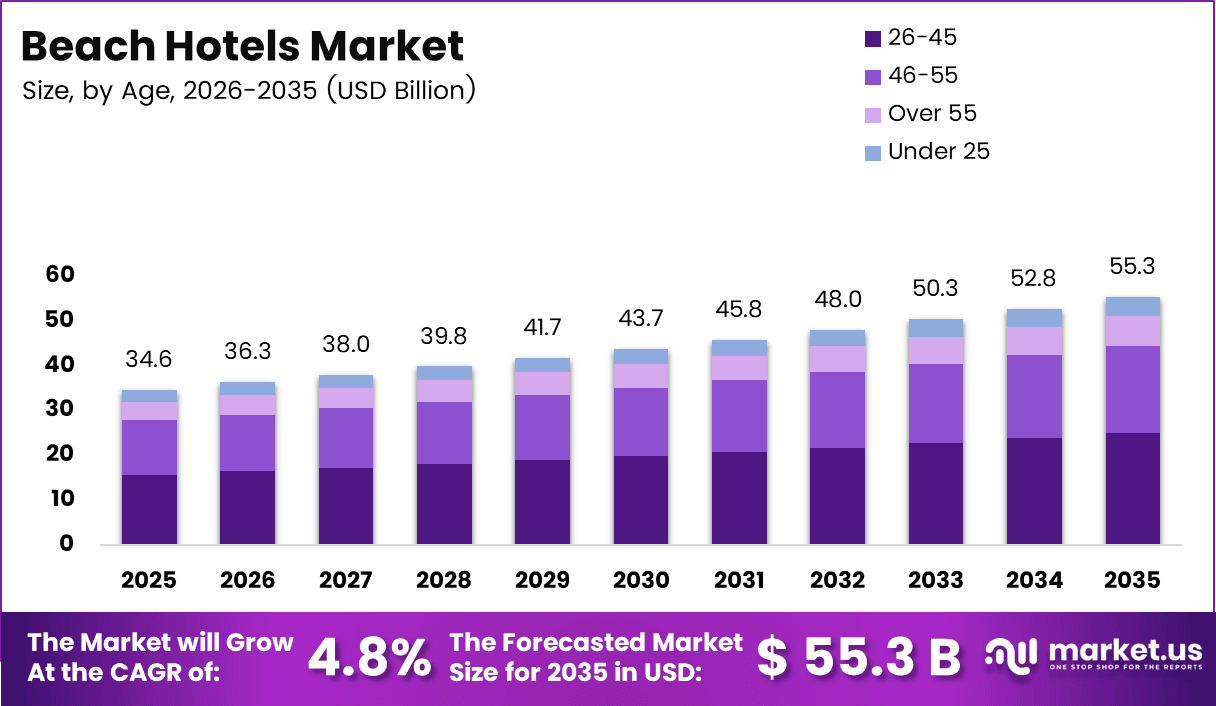
The Global Beach Hotels Market size is expected to be worth around USD 55.3 billion by 2035, from USD 34.6 billion in 2025, growing at a CAGR of 4.8% during the forecast period from 2026 to 2035.
The Beach Hotels market refers to hospitality properties located directly along coastlines or elevated scenic beachfront areas, offering immersive ocean-oriented stays. These hotels emphasize leisure, relaxation, and destination experiences, while catering to premium tourism demand. Consequently, beach hotels combine accommodation, recreation, wellness, and local culture within naturally attractive coastal settings.
The Beach Hotels market continues to evolve as travel preferences shift toward experiential and nature-centric tourism. Gradually, travelers prioritize scenic access, privacy, and wellness over conventional city stays. As a result, beachfront resorts increasingly position themselves as lifestyle destinations rather than simple lodging facilities.
Market growth remains supported by rising global leisure travel, improving air connectivity to island destinations, and increasing disposable income. Meanwhile, extended-stay tourism and remote work flexibility encourage longer beachfront vacations. Additionally, premium travelers actively seek secluded resorts that blend luxury, sustainability, and authentic coastal environments.
Opportunities further emerge through sustainable resort development and eco-conscious operations in sensitive coastal ecosystems. Governments increasingly support regulated coastal tourism to drive employment and foreign exchange. Consequently, zoning policies, environmental clearances, and coastal protection rules are shaping responsible investment across emerging and established beach destinations.
Public sector involvement plays a vital role by funding shoreline conservation, tourism infrastructure, and destination branding programs. Moreover, regulatory frameworks now emphasize low-density construction and carbon-neutral operations. These measures improve long-term asset value while aligning beach hotels with sustainable tourism standards and evolving traveler expectations.
Luxury, privacy, and experiential design increasingly define modern beachfront developments. According to hospitality development disclosures, select resorts are designed with 40 villas and suites positioned on scenic hillsides, offering uninterrupted ocean views. Such layouts reflect demand for exclusivity, space optimization, and immersive coastal aesthetics.
Sustainability-driven models are gaining traction across island destinations. According to the Tetiaroa Society, 35 carbon-neutral villas on Tetiaroa Atoll demonstrate how heritage preservation and luxury coexist. Protected under long-term stewardship, these developments highlight the growing role of environmental governance in shaping high-end beach hospitality.
Similarly, established Caribbean resorts emphasize integrated landscapes and low-rise density. Barbados, 88 suites and cottages spread across 12 acres incorporate plunge pools and wraparound balconies. These configurations enhance privacy, visual openness, and guest engagement with natural surroundings.
Overall, the Beach Hotels market is transitioning toward premium, sustainable, and experience-led growth. With supportive regulations, rising eco-tourism demand, and innovative resort formats, beachfront hospitality remains positioned for long-term expansion across global coastal tourism corridors.
Key Takeaways
- The global Beach Hotels Market is projected to expand from USD 34.6 billion in 2025 to USD 55.3 billion by 2035, registering a CAGR of 4.8% during 2026–2035.
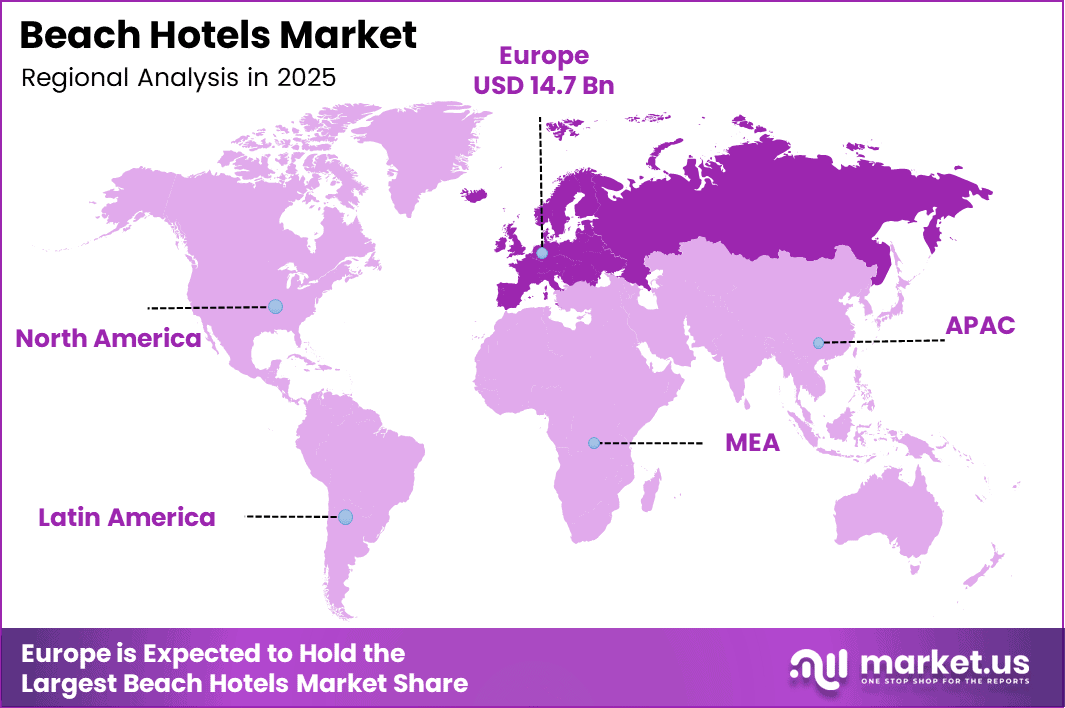
- Europe dominates the Beach Hotels Market with a leading share of 42.6%, accounting for a market value of USD 14.7 billion.
- By Age segmentation highlights Under 25 as the leading group, followed by 26–45, 46–55, and Over 55 segments shaping demand patterns.
- By Demographic segmentation is led by Male travelers, with Female and Kid segments contributing through leisure and family-oriented travel demand.
- Domestic travelers dominate the By Nationality segment, while International travelers support premium beachfront demand and longer stay durations.
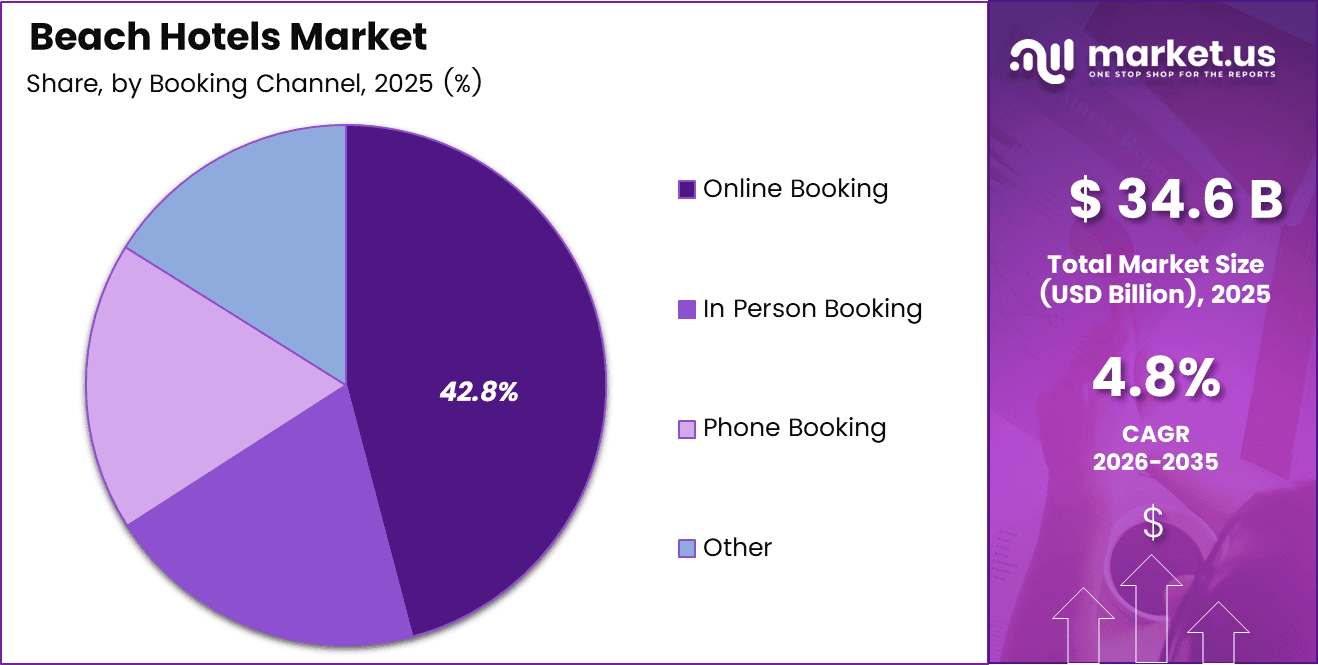
- Online Booking leads the By Booking Channel segment, ahead of Phone Booking, In Person Booking, and Others, reflecting digital-first travel behavior.
By Age Analysis
Under 25 dominates the By Age segment due to higher travel frequency, social media influence, and preference for experiential beach stays.
In 2025, Under 25 held a dominant market position in the By Age Analysis segment of the Beach Hotels Market, with a leading share. This group increasingly prioritizes affordable beachfront access, vibrant social settings, and experience driven travel. Moreover, growing student travel, budget friendly packages, and influencer driven destination discovery continue to support demand.
The 26–45 age group represents a strong revenue contributing segment supported by stable incomes and family travel patterns. This segment increasingly prefers premium beach resorts with amenities such as private beaches, wellness services, and child friendly facilities. Consequently, flexible booking options and bundled vacation offerings improve adoption.
The 46–55 segment demonstrates consistent demand driven by leisure focused travel and wellness oriented stays. Travelers in this category value comfort, privacy, and personalized services. As a result, beach hotels offering spa access, quieter environments, and curated experiences continue to attract this demographic.
The Over 55 segment reflects steady growth supported by retirement travel and longer stay durations. This group favors safety, accessibility, and scenic beachfront locations. Therefore, senior friendly infrastructure and relaxed hospitality environments strengthen engagement.
By Demographic Analysis
Male dominates the By Demographic segment supported by higher solo travel frequency and business leisure extensions.
In 2025, Male held a dominant market position in the By Demographic Analysis segment of the Beach Hotels Market, with a leading share. This segment benefits from rising solo travel trends and flexible work cultures. Additionally, adventure activities and nightlife proximity enhance appeal.
Female travelers increasingly influence booking decisions through group travel and wellness tourism. This segment values safety, curated experiences, and aesthetic properties. As a result, beach hotels focusing on wellness retreats and experiential design gain traction.
The Kid segment remains indirectly influential through family travel decisions. Demand grows through resorts offering child friendly amenities, supervised activities, and safe beachfront access. Consequently, family oriented beach hotels maintain steady occupancy.
By Nationality Analysis
Domestic dominates the By Nationality segment driven by short haul travel and regional tourism promotion.
In 2025, Domestic held a dominant market position in the By Nationality Analysis segment of the Beach Hotels Market, with a leading share. This segment benefits from lower travel costs and weekend tourism. Furthermore, domestic tourism campaigns encourage frequent beach visits.
International travelers contribute to premium demand and longer stays. This segment prioritizes iconic beach destinations and luxury services. Therefore, global connectivity and visa friendly policies support gradual growth.
By Booking Channel Analysis
Online Booking dominates the By Booking Channel segment due to convenience and price transparency.
In 2025, Online Booking dominated the By Booking Channel segment of the Beach Hotels Market, supported by widespread digital adoption. Travelers increasingly rely on platforms offering instant price comparisons, real time availability, and flexible cancellations. Moreover, rising smartphone usage and mobile-first booking behavior continue to accelerate channel growth.
Phone Booking remains relevant for guests seeking personalized assistance and tailored travel planning. This channel is especially preferred for premium beachfront stays, customized packages, and complex itineraries. As a result, many beach hotels continue investing in trained reservation teams to support high-value and relationship-driven bookings.
In Person Booking caters mainly to walk-in guests and last-minute travelers visiting coastal destinations. This channel benefits from spontaneous tourism, short leisure trips, and local travel patterns. Beach hotels in high-footfall locations maintain front-desk flexibility to capture immediate demand and optimize occupancy during peak seasons.
Other booking channels, including corporate tie-ups and travel agents, support niche demand segments. These channels are commonly used for group travel, incentive tourism, and bundled holiday packages. Their role remains important in stabilizing demand, particularly during off-peak periods and organized travel seasons.
Key Market Segments
By Age
- Under 25
- 26-45
- 46-55
- Over 55
By Demographic
- Male
- Female
- Kid
By Nationality
- Domestic
- International
By Booking Channel
- Phone Booking
- Online Booking
- In Person Booking
- Others
Drivers
Rising Preference for Experiential Coastal Vacations Drives Market Growth
The beach hotels market continues to grow as travelers increasingly seek experiences rather than just accommodation. Many tourists now prefer coastal vacations that combine relaxation with wellness activities, local culture, and authentic surroundings. Beach hotels that offer yoga sessions, cultural events, and nature-based experiences attract travelers looking for meaningful stays.
Another strong driver is the steady rise in both international and domestic beach tourism. Airline route expansion and improved air connectivity to coastal destinations make beach locations easier and faster to reach. This directly supports higher occupancy levels for beach hotels across established and emerging destinations.
Consumer spending on premium leisure travel is also increasing. Travelers are more willing to pay for comfort, privacy, and high-quality services. Resort-style beach hotels benefit from this trend as guests choose beachfront views, private villas, and curated experiences over budget stays.
In addition, the expansion of all-inclusive and destination-style beach resorts supports market growth. These properties offer accommodation, dining, entertainment, and activities in one place, appealing to families and long-stay travelers. This model improves revenue stability and encourages repeat visits.
Restraints
High Land Acquisition Costs in Coastal Areas Limit Market Expansion
One of the main restraints in the beach hotels market is the high cost of land in prime coastal and island locations. Beachfront properties require significant upfront investment, which limits new hotel development, especially for small and mid-sized operators. High land prices also increase overall project risk.
Maintenance costs further add pressure on profitability. Coastal environments cause faster wear and tear due to salt air, humidity, and strong winds. Hotels must invest regularly in repairs, landscaping, and infrastructure upgrades to maintain service quality and safety standards.
Climate change is another growing concern for beachfront properties. Rising sea levels, coastal erosion, and frequent storms increase operational risks. Extreme weather events can lead to property damage, temporary closures, and higher insurance costs.
These environmental risks also affect investor confidence and long-term planning. Hotels must allocate funds for climate-resilient designs and protective measures, which raises development and operating costs. Together, high land expenses and environmental vulnerability act as key restraints on market growth.
Growth Factors
Development of Eco Friendly Beach Hotels Creates New Growth Opportunities
Sustainability presents strong growth opportunities for the beach hotels market. Travelers increasingly prefer eco-friendly hotels that follow green tourism standards. Beach hotels using renewable energy, water conservation systems, and plastic-free operations attract environmentally conscious guests.
Another opportunity lies in the rising demand for long-stay and work-from-beach concepts. Remote work trends encourage professionals to combine work with leisure in coastal settings. Hotels offering reliable internet, quiet workspaces, and extended stay packages benefit from this shift.
Emerging beach destinations in Asia Pacific and Latin America also offer untapped potential. These regions have long coastlines, improving infrastructure, and growing tourism promotion. Early investment in these markets allows hotel operators to capture demand before competition intensifies.
Strategic partnerships further strengthen growth prospects. Collaborations with travel technology platforms improve booking visibility, while partnerships with luxury lifestyle brands enhance brand image. These alliances help beach hotels reach wider audiences and deliver premium guest experiences.
Emerging Trends
Integration of Wellness Focused Amenities Shapes Market Trends
Wellness-focused offerings are becoming a major trend in the beach hotels market. Properties increasingly include ocean therapy programs, spa retreats, and yoga sessions to meet guest demand for relaxation and health-focused travel. These services add value and encourage longer stays.
Smart hotel technologies are also gaining popularity. Contactless check-in, mobile room controls, and personalized digital services improve guest convenience and safety. Beach hotels adopting these technologies enhance efficiency while meeting modern traveler expectations.
Boutique hotel and lifestyle-oriented beach hotels are rising in demand. Travelers prefer unique designs, personalized service, and intimate settings over large conventional resorts. This trend supports smaller, experience-driven properties with strong brand identity.
There is also a growing focus on local culture. Hotels highlight locally inspired architecture, regional cuisine, and cultural activities. This approach creates authentic guest experiences and helps destinations preserve local heritage while strengthening the overall appeal of beach hotels.
Regional Analysis
Europe Dominates the Beach Hotels Market with a Market Share of 42.6%, Valued at USD 14.7 Billion
Europe leads the Beach Hotels market, accounting for a dominant 42.6% share, with the market valued at USD 14.7 billion. This leadership is supported by strong coastal tourism across Southern and Mediterranean Europe, mature hospitality infrastructure, and consistent international tourist inflows. Favorable regulatory frameworks and sustainable coastal development policies further reinforce long-term market stability.
North America Beach Hotels Market Trends
North America represents a well-established beach hotels market driven by high domestic travel demand and premium beachfront destinations. Strong consumer spending on leisure travel, coupled with demand for luxury and experiential stays, supports steady market performance. Coastal redevelopment initiatives and infrastructure investments continue to enhance resort accessibility.
Asia Pacific Beach Hotels Market Trends
Asia Pacific is emerging as a high-growth region due to expanding middle-class populations and rising international tourism. Increasing investments in coastal resorts, island tourism, and eco-friendly beachfront developments are reshaping the market. Government-backed tourism promotion and improved air connectivity further accelerate regional adoption.
Middle East and Africa Beach Hotels Market Trends
The Middle East and Africa region is witnessing gradual growth supported by luxury coastal developments and destination-led tourism strategies. Governments are actively promoting beach tourism through infrastructure expansion and regulatory reforms. Premium beachfront resorts and integrated leisure destinations are key growth enablers.
Latin America Beach Hotels Market Trends
Latin America shows steady expansion driven by natural coastal assets and increasing foreign tourist arrivals. Investments in resort modernization and sustainable beachfront development are improving market attractiveness. Tourism-led economic initiatives and growing regional connectivity continue to support long-term growth.
U.S. Beach Hotels Market Trends
The U.S. beach hotels market benefits from strong domestic tourism, diversified coastal destinations, and high occupancy levels. Demand remains supported by experiential travel, wellness-focused beachfront stays, and long-weekend travel patterns. Regulatory emphasis on coastal preservation shapes responsible market expansion.
Key Regions and Countries
North America
- US
- Canada
Europe
- Germany
- France
- The UK
- Spain
- Italy
- Rest of Europe
Asia Pacific
- China
- Japan
- South Korea
- India
- Australia
- Rest of APAC
Latin America
- Brazil
- Mexico
- Rest of Latin America
Middle East & Africa
- GCC
- South Africa
- Rest of MEA
Key Beach Hotels Company Insights
Marriott International, Inc. continues to strengthen its global beach hotel portfolio by leveraging scale, brand diversification, and loyalty-driven demand. In 2025, its beachfront presence benefits from consistent capital-light expansion, experiential resort positioning, and strong cross-selling through its global distribution ecosystem. This approach supports sustained occupancy across leisure-heavy coastal destinations.
Hilton Worldwide Holdings Inc. maintains a solid position in the beach hotels market through asset-light management contracts and resort-focused brand extensions. Its emphasis on standardized service quality, digital guest engagement, and destination-integrated amenities enhances traveler confidence. Consequently, Hilton’s beach properties align well with both premium leisure travelers and long-stay vacation demand.
Hyatt Hotels Corporation remains strategically focused on upscale and luxury beachfront resorts, particularly within all-inclusive and lifestyle-oriented formats. In 2025, Hyatt’s beach hotel strategy emphasizes experiential travel, wellness integration, and curated guest journeys. This positioning supports higher average daily rates while attracting experience-driven international travelers.
Accor S.A. demonstrates a diversified beachfront strategy by combining luxury, premium, and lifestyle brands across mature and emerging coastal markets. Its focus on localized design, sustainability frameworks, and mixed-use hospitality developments enhances long-term asset value. As a result, Accor effectively captures varied traveler segments within the global beach hotels landscape.
Top Key Players in the Market
- Marriott International, Inc.
- Hilton Worldwide Holdings Inc.
- Hyatt Hotels Corporation
- Accor S.A.
- InterContinental Hotels Group (IHG)
- Others
Recent Developments
- In Jan 2026, Hyatt completed the divestment of its remaining 14 all-inclusive Playa resorts across Mexico, the Dominican Republic, and Jamaica to Tortuga Resorts, following its USD 2.6 billion acquisition of Playa Hotels & Resorts.
- In April 2025, The Loren Group announced the acquisition of the iconic Elbow Beach Hotel and Fritholme Garden Residences in Bermuda, strengthening its luxury hospitality and residential presence. The deal builds on the success of The Loren at Pink Beach, which has been a flagship luxury property on the island since 2017.
Report Scope
Report Features Description Market Value (2025) USD 34.6 billion Forecast Revenue (2035) USD 55.3 billion CAGR (2026-2035) 4.8% Base Year for Estimation 2025 Historic Period 2020-2024 Forecast Period 2026-2035 Report Coverage Revenue Forecast, Market Dynamics, Competitive Landscape, Recent Developments Segments Covered By Age (Under 25, 26-45, 46-55, Over 55), By Demographic (Male, Female, Kid), By Nationality (Domestic, International), By Booking Channel (Phone Booking, Online Booking, In Person Booking, Others) Regional Analysis North America (US and Canada), Europe (Germany, France, The UK, Spain, Italy, and Rest of Europe), Asia Pacific (China, Japan, South Korea, India, Australia, and Rest of APAC), Latin America (Brazil, Mexico, and Rest of Latin America), Middle East & Africa (GCC, South Africa, and Rest of MEA) Competitive Landscape Marriott International, Inc., Hilton Worldwide Holdings Inc., Hyatt Hotels Corporation, Accor S.A., InterContinental Hotels Group (IHG), Others Customization Scope Customization for segments, region/country-level will be provided. Moreover, additional customization can be done based on the requirements. Purchase Options We have three licenses to opt for: Single User License, Multi-User License (Up to 5 Users), Corporate Use License (Unlimited User and Printable PDF) 
-
-
- Marriott International, Inc.
- Hilton Worldwide Holdings Inc.
- Hyatt Hotels Corporation
- Accor S.A.
- InterContinental Hotels Group (IHG)
- Others
Our Clients

- 173483
- Jan 2026






