


Market Overview
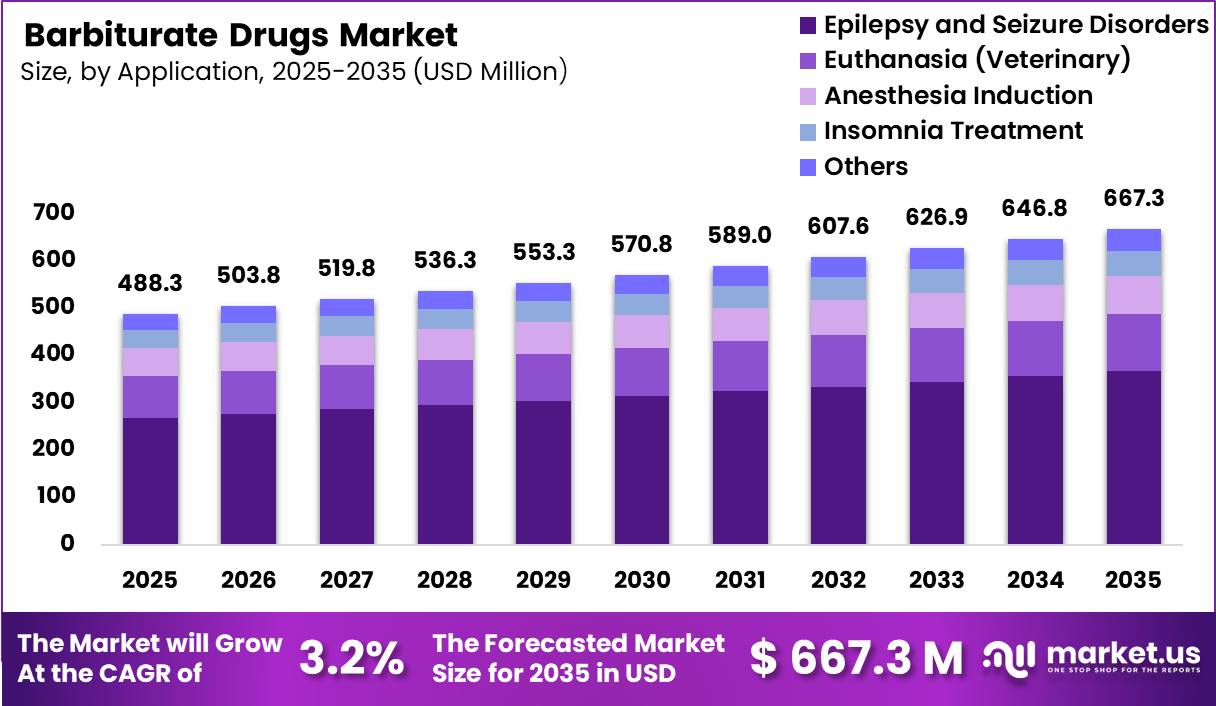
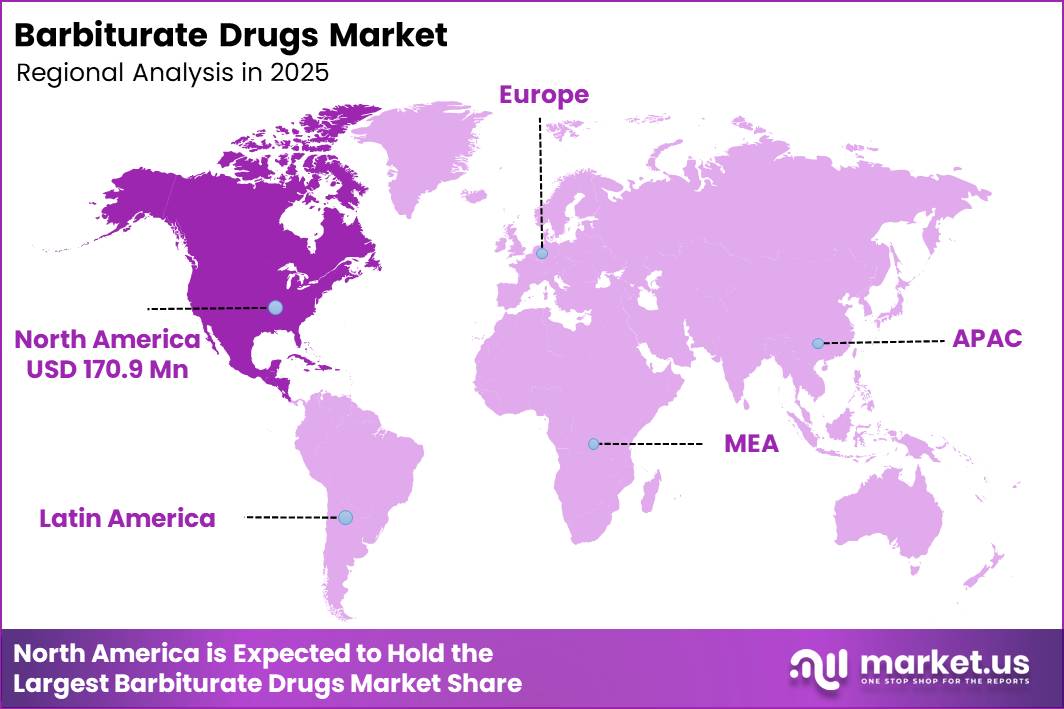
Global Barbiturate Drugs Market size is expected to be worth around US$ 667.3 Million by 2035 from US$ 488.3 Million in 2025, growing at a CAGR of 3.2% during the forecast period from 2026 to 2035. In 2025, North America led the market, achieving over 35.0% share with a revenue of US$ 170.9 Million.
Barbiturate drugs continue to hold an important position in specialized therapeutic areas despite the broader transition toward newer sedative and anticonvulsant agents. These medications remain clinically relevant in seizure management, anesthesia induction, intensive care sedation, and emergency neurological interventions.
According to the World Health Organization (WHO), epilepsy affects nearly 50 million people globally, with approximately 5 million new diagnoses recorded annually, sustaining the demand for effective antiepileptic therapies, including phenobarbital in resource-constrained healthcare settings.
Phenobarbital remains one of the most widely recognized barbiturates and is included in treatment protocols for neonatal seizures and refractory epilepsy. Healthcare authorities and clinicians continue to rely on selected barbiturate formulations because of their proven efficacy, long-established safety profiles under supervised use, and cost advantages in several low- and middle-income countries.
The WHO also recognizes barbiturates among controlled medicines that are essential for anesthesia, anticonvulsant therapy, and perioperative care, highlighting the need for balanced policies that ensure patient access while maintaining strict monitoring frameworks.
Clinical evidence indicates that barbiturates are still employed in the management of status epilepticus, neurocritical care, and specialized surgical procedures. Approved agents such as phenobarbital are administered in dosage ranges of 60–200 mg per day in adults depending on therapeutic requirements, while pediatric dosing is adjusted according to body weight.
Continued advancements in hospital infrastructure, critical care capabilities, and neurological treatment pathways are expected to support sustained utilization of barbiturate-based therapies worldwide.
Key Takeaways
- Market Size : Barbiturate Drugs Market size is expected to be worth around US$ 667.3 Million by 2035 from US$ 488.3 Million in 2025.
- Market Share : The Market is growing at a CAGR of 3.2% during the forecast period from 2026 to 2035.
- Drug Type Analysis : Long-Acting Barbiturates dominated the Barbiturate Drugs Market in 2025, accounting for 65% of the total market share.
- Application Analysis : Epilepsy and Seizure Disorders emerged as the leading application segment in the Barbiturate Drugs Market, capturing 55% of the market share in 2025.
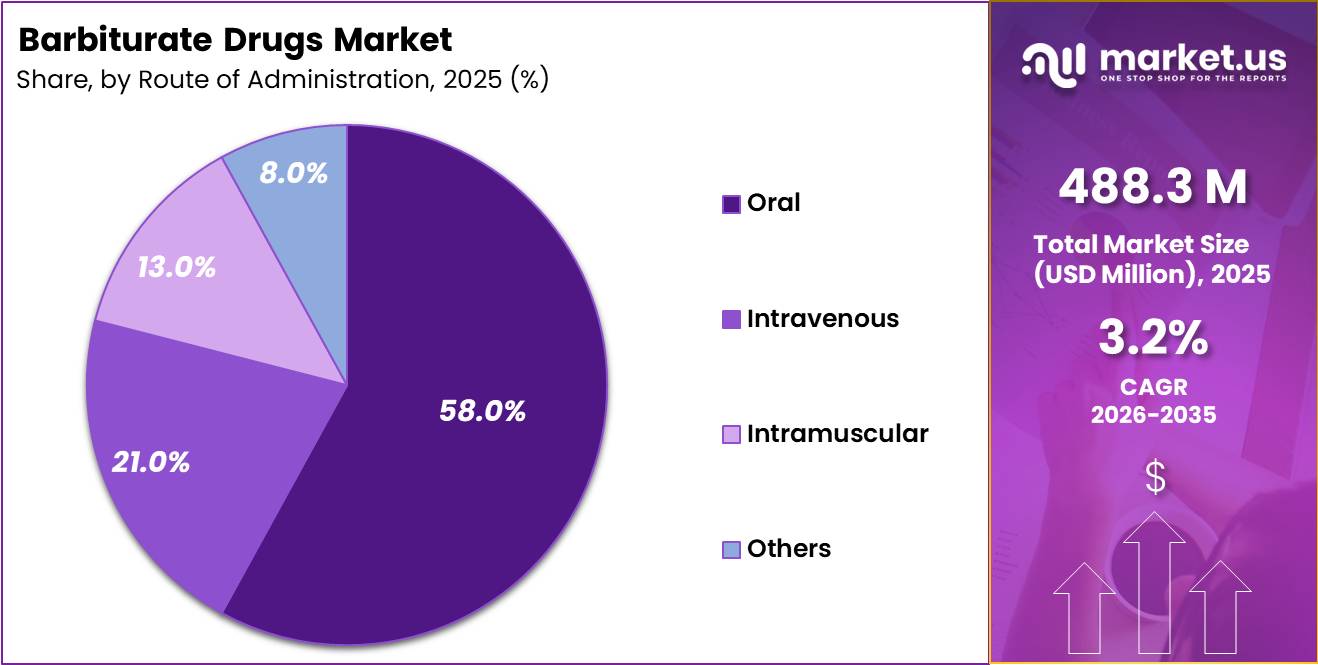
- Route of Administration Analysis : The Oral segment dominated the Barbiturate Drugs Market in 2025, accounting for 58% of the total market share.
- End User Analysis: Hospitals dominated the Barbiturate Drugs Market acquiring 48% of the total market share in 2025.
- Regional Analysis : In 2025, North America led the market, achieving over 35.0% share with a revenue of US$ 170.9 Million.
Drug Type Analysis
Long-Acting Barbiturates dominated the Barbiturate Drugs Market in 2025, accounting for 65% of the total market share. Their leading position is attributed to their prolonged therapeutic effects, making them highly suitable for the management of epilepsy, seizure disorders, and long-term neurological conditions.
Drugs such as phenobarbital continue to be widely prescribed due to their effectiveness, established clinical profile, and affordability, particularly in developing healthcare systems. The sustained action of these medications reduces the frequency of dosing, improving patient adherence and treatment outcomes. Increasing demand for cost-effective anticonvulsant therapies also supports segment growth.
Short-Acting Barbiturates represented 22% of the market in 2025. These drugs are primarily used in anesthesia, sedation, and certain emergency medical procedures where rapid onset and shorter duration of action are required. Their use remains significant in hospital and surgical settings.
Ultra-Short-Acting Barbiturates accounted for 13% of the market share. These agents are mainly utilized for anesthesia induction and critical care applications due to their fast-acting properties. Growing demand for specialized anesthetic agents in surgical procedures is expected to sustain demand across this segment.
Application Analysis
Epilepsy and Seizure Disorders emerged as the leading application segment in the Barbiturate Drugs Market, capturing 55% of the market share in 2025. The dominance of this segment is driven by the continued use of barbiturates, particularly phenobarbital, in the treatment of epilepsy and seizure-related conditions.
These drugs remain important therapeutic options in several regions because of their proven efficacy, affordability, and availability. The increasing prevalence of neurological disorders worldwide and growing awareness regarding seizure management further support segment expansion.
Euthanasia (Veterinary) accounted for 18% of the market share in 2025, supported by the use of barbiturates in humane animal euthanasia procedures and veterinary practices. Anesthesia Induction held a 12% share, reflecting the continued demand for barbiturates in surgical and emergency settings requiring rapid sedation.
Insomnia Treatment contributed 8% of the market, although utilization has declined with the availability of newer sleep medications. The Others segment represented 7% of the market and includes applications in intensive care, neurological emergencies, and specialized therapeutic procedures. Expanding healthcare services continue to create opportunities across these applications.
Route of Administration Analysis
The Oral segment dominated the Barbiturate Drugs Market in 2025, accounting for 58% of the total market share. Oral formulations are widely preferred because they offer convenience, ease of administration, and improved patient compliance, especially for long-term treatments involving epilepsy and seizure disorders.
Oral barbiturates are commonly prescribed in outpatient settings and are considered practical for chronic disease management. Their cost-effectiveness and widespread availability also contribute to their strong market position. Increasing adoption of oral medications in both developed and emerging healthcare markets further supports segment growth.
Intravenous administration represents an important segment of the market, particularly in hospitals and emergency care facilities. Intravenous barbiturates are used extensively in anesthesia induction, intensive care units, and acute neurological conditions due to their rapid onset of action and precise dosage control. They are especially valuable in critical situations where immediate therapeutic effects are required.
Intramuscular administration accounts for a comparatively smaller share but remains relevant in specific clinical scenarios where intravenous access may not be readily available. This route is mainly utilized in emergency settings and selected veterinary applications. Continued advancements in healthcare delivery are expected to maintain demand across all administration routes.
End User Analysis
Hospitals dominated the Barbiturate Drugs Market in 2025, holding 48% of the total market share. Their leadership is primarily attributed to the high utilization of barbiturate drugs in intensive care units, surgical departments, neurology centers, and emergency medicine settings.
Hospitals serve as the primary treatment centers for epilepsy management, anesthesia induction, and critical neurological care, driving substantial demand for these medications. The availability of advanced medical infrastructure and specialized healthcare professionals further strengthens hospital-based consumption.
The Veterinary segment represents a significant portion of the market due to the use of barbiturates in animal anesthesia, sedation, and euthanasia procedures. Clinics also contribute notably to market demand, particularly in outpatient neurology and specialized treatment services. Ambulatory Surgical Centers are increasingly adopting barbiturate drugs for selected surgical interventions owing to the growth in minimally invasive procedures.
Research Laboratories constitute another important segment as barbiturates continue to be utilized in scientific studies and pharmaceutical development activities. The Others category includes rehabilitation centers, academic institutions, and specialized healthcare facilities. Expanding healthcare networks and rising treatment accessibility are expected to support growth across all end-user segments.
Market Segmentations
By Drug Type
- Long-Acting Barbiturates
- Short-Acting Barbiturates
- Ultra-Short-Acting Barbiturates
By Application
- Epilepsy and Seizure Disorders
- Euthanasia (Veterinary)
- Anesthesia Induction
- Insomnia Treatment
- Others
By Route of Administration
- Oral
- Intravenous
- Intramuscular
- Others
By End User
- Hospitals
- Veterinary Clinics
- Ambulatory Surgical Centers
- Research Laboratories
- Others
Opportunity
Neuro CNS Expansion via Gut Brain Axis Repositioning
This opportunity represents one of the most structurally significant untapped pivots available to butyrate drug developers, because while the gut brain axis is an established scientific concept, no pharmaceutical grade butyrate molecule has yet achieved a regulatory filing for any central nervous system CNS or neurodegenerative indication making this a white space of considerable commercial magnitude.
As of mid 2026, a Phase 2 randomized, double blinded, placebo controlled clinical trial of oral tributyrin (500 mg t.i.d. for 90 days) is actively enrolling patients with Parkinson’s disease with mild cognitive impairment (PD MCI) or Parkinson’s disease dementia (PDD), following Phase 1 data demonstrating [11C] butyrate PET evidence of direct brain engagement, improved cognition scores, and systemic anti inflammatory effects.
This represents the first clinical validation that an orally administered butyrate prodrug can achieve blood brain barrier penetration and measurable CNS target engagement, a pharmacokinetic barrier that had historically suppressed investment in this pathway.
The addressable population is substantial: approximately 10 million people globally live with Parkinson’s disease, and clinical evidence correlates lower fecal butyrate levels with greater PD symptom severity, while sodium butyrate supplementation in animal models reduces alpha synuclein aggregation, protects dopaminergic neurons, and normalizes sleep architecture.
Beyond Parkinson’s, higher dietary butyrate intake is independently associated with better cognitive function outcomes, and butyrate’s HDAC inhibitory mechanism stimulates brain derived neurotrophic factor (BDNF) expression and neuroplasticity a pharmacological axis with direct therapeutic relevance to Alzheimer’s disease, anxiety disorders, and age related cognitive decline.
The neurodegenerative drugs market is a multi billion dollar adjacency where a single approved butyrate CNS indication could unlock licensing, copromotion, and platform expansion economics that dwarf the current GI centric butyrate revenue base; companies that initiate IND filings for CNS butyrate formulations by 2027.
2028 will be best positioned to claim regulatory exclusivity and capture what is currently an uncontested indication category, potentially adding an incremental +3.2 percentage points above the baseline CAGR trajectory if a Phase 3 CNS program achieves proof of concept by 2030 2031.
| Opportunity | (~) % Potential CAGR Upside | Geographic Relevance | Execution Window |
|---|---|---|---|
| Neuro-CNS Expansion via Gut-Brain Axis Repositioning | +3.2% | North America, EU, Japan | Medium term (2–4 years) |
| Precision Oncology — Butyrate + Checkpoint Inhibitor Combination Regimens | +2.8% | North America core, EU, APAC emerging | Medium term (2–4 years) |
| Hematological Orphan Drug Entry — Sickle Cell & Thalassemia HbF Induction | +2.1% | Sub-Saharan Africa, South Asia, North America, EU | Short-to-Medium term (≤ 3 years) |
| Advanced Drug Delivery Monetization — Colon-Targeted Nanoparticle Prodrug Platforms | +2.5% | North America, EU, China | Long term (≥ 4 years) |
| Metabolic Syndrome & Cardiometabolic Adjacency — T2D and Obesity Indication Expansion | +1.9% | North America, APAC, Middle East | Medium term (2–4 years) |
| Microbiome Companion Diagnostics + Butyrate Pharmacomicrobiomics Licensing | +1.5% | EU, North America, South Korea, Japan | Long term (≥ 4 years) |
Driver
Butyrate’s HDAC Inhibition Mechanism Fueling Oncology Drug Pipeline Expansion
Butyrate’s role as a natural histone deacetylase HDAC inhibitor a mechanism validated by four FDA approved HDAC inhibitor drugs (vorinostat, romidepsin, belinostat, and panobinostat) positions it as a foundational reference compound in a pipeline that now encompasses 40+ active players and 50+ clinical stage pipeline therapies.
The HDAC inhibitor pipeline remains robustly active heading into 2026, with next generation agents such as abexinostat (Xynomic Pharmaceuticals) in Phase III for renal cell carcinoma, quisinostat in Phase II for uveal melanoma, and entinostat being explored in Hodgkin lymphoma, each drawing mechanistic credibility from the butyrate class pharmacological framework.
For butyrate itself, the oncological evidence base is extensive: peer reviewed research confirms that butyrate inhibits tumor cell proliferation in a dose and time dependent manner across colon, esophageal, lung, liver, and breast cancer cell lines, while activating GPR109A, GPR41, and GPR43 receptors and disrupting mitochondrial transmembrane potential to activate the caspase cascade and promote tumor cell apoptosis.
Furthermore, elevated fecal butyric acid levels have been associated with extended progression free survival and sustained immunotherapy benefits in solid tumors including lung cancer, while butyrate enhances anti PD 1 therapy efficacy via CD8+ T cell activation a mechanistic bridge to the booming immuno oncology sector.
The strategic implication for manufacturers is a reformulation opportunity: pharmaceutical companies developing butyrate based oncology adjuncts are leveraging combination therapy positioning alongside checkpoint inhibitors, structurally shifting commercial strategy from stand alone drug to combination IND filing, which unlocks orphan drug designation pathways and associated seven year exclusivity protections, dramatically improving return on pipeline economics for drug developers.
| Driver | (~) % Impact on CAGR Forecast | Geographic Relevance | Impact Timeline |
|---|---|---|---|
| IBD/GI Disease Burden Driving Butyrate Adjunct Therapy Adoption | +2.2% | North America core, Western EU (Germany, France, Italy, Spain), APAC emerging corridors (Japan, South Korea) | Short term (≤ 2 years) |
| Butyrate’s HDAC Inhibition Mechanism Fueling Oncology Drug Pipeline Expansion | +1.9% | North America core, EU innovation hubs (Germany, Belgium), APAC (China, Japan) | Medium term (2–4 years) |
| Gut-Brain Axis Research Unlocking Neuropsychiatric Indications for Butyrate | +1.5% | North America core, EU (Netherlands, UK, Germany), APAC (Australia, Japan) | Medium term (2–4 years) |
| Advanced Drug Delivery & Microencapsulation Resolving Bioavailability Barriers | +1.8% | North America, EU (Poland pharma corridor, Germany), APAC (India, China) | Short to Medium term |
| Metabolic Syndrome & T2D Prevalence Creating New Clinical Indication Pathways | +1.3% | North America, EU, Middle East & Africa, South America spill-over | Medium term (2–4 years) |
| Microbiome Therapeutics Regulatory Maturation Enabling Commercialization | +1.6% | North America (FDA pathway), EU (EMA ATMP framework), APAC (Japan PMDA) | Long term (≥ 4 years) |
Challenge
Mature plant quality fragility
A core challenge in barbiturate and phenobarbital supply is the reliance on older, lower volume manufacturing lines where product economics do not always justify aggressive modernization, creating a chronic quality risk profile rather than an outright shutdown dynamic.
The FDA identifies manufacturing quality weakness and difficulty recovering from disruptions as central shortage drivers, which is especially relevant for mature injectable and tablet products with narrow supplier depth.
In practical terms, a single deviation, failed media fill, particulate excursion, or batch OOS event can remove 8 to 16 weeks of sellable inventory from a plant with only 1.2x to 1.5x safety stock coverage, pushing fill finish utilization above 85% and lifting per batch compliance overhead by roughly 6% to 10%, which translates into an estimated 1.1% point drag on the market’s achievable 2026.
Growth path as buyers delay tenders, carry buffer stock, and qualify alternates more slowly than underlying demand expands. The strategic adjustment is sustained capex into digital batch monitoring, preventive maintenance, dual analytical release methods, and regional second site qualification, typically requiring 24 to 48 months because site remediation, validation, and regulator facing change control cannot be compressed without raising recall or warning letter risk.
| Challenge | (~) % CAGR Friction Drag | Geographic Relevance | Mitigation Horizon |
|---|---|---|---|
| Mature plant quality fragility | -1.1% | North America core, EU sterile sites, India API nodes | Medium term (2-4 years) |
| Episodic phenobarbital stockouts | -0.8% | UK channels, LMIC epilepsy markets, hospital tenders | Short term (≤ 2 years) |
| Low-margin supplier concentration | -1.0% | Global generics base, LATAM tenders, Africa public buyers | Long term (≥ 4 years) |
| Tight impurity compliance burden | -0.6% | US FDA filings, EU GMP hubs, export-oriented APAC plants | Medium term (2-4 years) |
| Neurology specialist capacity gap | -0.7% | Sub-Saharan Africa, South Asia, rural LATAM corridors | Long term (≥ 4 years) |
| Clinical substitution drift | -0.9% | High-income neurology markets, tertiary hospitals, payer-led systems | Medium term (2-4 years) |
Restraints
Controlled substance compliance drag
Barbiturates sit inside tightly controlled medicine frameworks, so growth is constrained not only by demand but by licensing, quota management, prescription monitoring, storage security, and import authorization friction.
WHO’s 2025 guideline explicitly frames these products as medicines that must balance access with diversion control, which in practice raises documentation load, slows tender participation, and limits channel expansion in lower capacity health systems.
In commercial terms, this pushes lead times outward by weeks rather than days when permits, narcotics declarations, or local forecasting approvals are misaligned, and it lowers effective market velocity because distributors and hospitals hold narrower formularies for controlled agents than for ordinary generics.
The CAGR drag is estimated at about 1.1% points because even where clinical need exists, demand conversion into billable volume is capped by compliance throughput, especially across Latin America, parts of Africa, and multi jurisdiction EU distribution where national competent authority rules remain non harmonized in execution.
| Restraint | (~) % Impact on CAGR Forecast | Geographic Relevance | Impact Timeline |
|---|---|---|---|
| Controlled-substance compliance drag | -1.1% | North America core, EU, LATAM, MEA | Medium term |
| Thin API and fill-finish base | -1.4% | North America, EU, APAC export hubs | Medium term |
| Recurrent phenobarbital stockouts | -0.9% | EU, UK, selected APAC, SSA import markets | Short term |
| Legacy generic price erosion | -1.0% | North America core, EU, India-led supply corridors | Long term |
| Clinical substitution pressure | -1.3% | North America, EU, Japan, urban APAC | Medium term |
| Sterile/quality remediation risk | -0.8% | North America, EU, APAC manufacturing nodes | Short term |
Regional Analysis
North America dominated the Barbiturate Drugs Market in 2025, accounting for more than 35.0% of the global market and generating revenue of US$ 170.9 million. The region’s leadership is supported by well-established healthcare infrastructure, strong availability of prescription medicines, and the presence of major pharmaceutical manufacturers.
Demand for barbiturate drugs in North America remains steady due to their continued use in epilepsy treatment, anesthesia, intensive care units, and emergency neurological procedures. Growing healthcare expenditure and increasing access to specialized medical services further contribute to market growth in the region.
Europe represents another significant market for barbiturate drugs, driven by advanced hospital systems, supportive regulatory frameworks, and ongoing demand for anticonvulsant and anesthetic medications. Countries such as Germany, France, and the United Kingdom maintain consistent utilization of these drugs in specialized clinical settings.
The Asia Pacific region is expected to witness notable growth during the forecast period owing to expanding healthcare infrastructure, rising awareness regarding neurological disorders, and increasing pharmaceutical manufacturing activities.
Emerging economies, including China and India, are investing heavily in healthcare facilities and improving access to essential medicines. Meanwhile, Latin America and the Middle East & Africa are experiencing gradual market expansion supported by improving healthcare services and increasing treatment accessibility.
Key Regions and Countries
North America
- The US
- Canada
Europe
- Germany
- France
- The U.K.
- Italy
- Spain
- Russia & CIS
- Rest of Europe
Asia Pacific
- China
- India
- Japan
- South Korea
- ASEAN
- Australia & New Zealand
- Rest of Asia Pacific
Middle East & Africa
- GCC
- South Africa
- Rest of Middle East & Africa
Latin America
- Brazil
- Mexico
- Rest of Latin America
Key Player Analysis
The barbiturate drugs market is characterized by the presence of established pharmaceutical manufacturers with strong capabilities in generic drug production, regulatory compliance, and global distribution networks. Companies such as Pfizer Inc., Sumitomo Pharma Co. Ltd., and Oak Pharmaceuticals Inc. maintain a presence in specialized therapeutic segments, supporting the availability of barbiturate formulations used in anesthesia, seizure management, and critical care applications.
Hikma Pharmaceuticals PLC, Viatris Inc. (formerly Mylan N.V.), and Teva Pharmaceutical Industries Ltd. play an important role in supplying cost-effective generic medicines across developed and emerging markets.
Their broad manufacturing capacity and extensive distribution channels help ensure continuous access to essential medications. Lannett Company Inc. focuses on generic pharmaceutical products, strengthening supply availability in selected regional markets.
Meanwhile, Sun Pharmaceutical Industries Ltd. leverages its global manufacturing footprint and diversified portfolio to expand its presence in hospital and specialty care settings. Strategic investments in quality standards, product availability, and regulatory approvals continue to shape competition within the barbiturate drugs market.
Top Key Players
- Pfizer Inc.
- Sumitomo Pharma Co. Ltd.
- Oak Pharmaceuticals Inc.
- Hikma Pharmaceuticals PLC
- Mylan N.V. (Viatris Inc.)
- Teva Pharmaceutical Industries Ltd.
- Lannett Company Inc.
- Sun Pharmaceutical Industries Ltd.
- Akorn Inc.
- Novartis AG
- Bayer AG
- Merck KGaA
- Bausch Health Companies Inc.
- Amneal Pharmaceuticals LLC
- Apotex Inc.
- Others
Recent Developments
- In April 2026, Sun Pharmaceutical Industries Ltd. signed a definitive agreement to acquire Organon & Co. in an all-cash transaction valued at approximately US$11.75 billion, including debt. The acquisition expands Sun Pharma’s footprint in women’s health, biosimilars, and established medicines across more than 140 countries and represents the largest overseas acquisition by an Indian pharmaceutical company.
- In December 2025, Pfizer Inc. entered an exclusive global licensing agreement with YaoPharma for YP05002, an investigational GLP-1 receptor agonist for weight management. Pfizer agreed to pay US$150 million upfront, with potential milestone payments reaching US$1.94 billion, strengthening its obesity-treatment pipeline.
- In November 2025, Viatris Inc. reported the integration of Aculys Pharma into its business and confirmed expansion of its innovative medicines portfolio in Japan, including rights to pitolisant and Spydia®, as part of its regional growth strategy in neurology and specialty therapeutics.
Report Scope
| Report Features | Description |
|---|---|
| Market Value (2025) | US$ 488.3 Million |
| Forecast Revenue (2035) | US$ 667.3 Million |
| CAGR (2026-2035) | 3.2 % |
| Base Year for Estimation | 2025 |
| Historic Period | 2020-2024 |
| Forecast Period | 2026-2035 |
| Report Coverage | Revenue Forecast, Market Dynamics, Competitive Landscape, Recent Developments |
| Segments Covered | By Drug Type (Long-Acting Barbiturates, Short-Acting Barbiturates, Ultra-Short-Acting Barbiturates), By Application (Epilepsy and Seizure Disorders, Euthanasia (Veterinary), Anesthesia Induction, Insomnia Treatment, Others), By Route of Administration (Oral, Intravenous, Intramuscular, Others), By End User (Hospitals, Veterinary Clinics, Ambulatory Surgical Centers, Research Laboratories, Others) |
| Regional Analysis | North America – The US, Canada; Europe – Germany, France, U.K., Italy, Spain, Russia & CIS, Rest of Europe; Asia Pacific – China, India, Japan, South Korea, ASEAN, Australia & New Zealand, Rest of Asia Pacific; Middle East & Africa – GCC, South Africa, Rest of Middle East & Africa; Latin America – Brazil, Mexico, Rest of Latin America |
| Competitive Landscape | Pfizer Inc. , Sumitomo Pharma Co. Ltd. , Oak Pharmaceuticals Inc. , Hikma Pharmaceuticals PLC , Mylan N.V. (Viatris Inc.) , Teva Pharmaceutical Industries Ltd. , Lannett Company Inc. , Sun Pharmaceutical Industries Ltd. , Akorn Inc. , Novartis AG , Bayer AG , Merck KGaA , Bausch Health Companies Inc. , Amneal Pharmaceuticals LLC , Apotex Inc. , Others |
| Customization Scope | Customization for segments, region/country-level will be provided. Moreover, additional customization can be done based on the requirements. |
| Purchase Options | We have three licenses to opt for: Single User License, Multi-User License (Up to 5 Users), Corporate Use License (Unlimited User and Printable PDF) |





































