


Global Ballet Pointe Shoes Market Size, Share, Growth Analysis By Type (Adults, Children), By Application (Ballet Schools, Ballet Companies, Hobbies and Lessons), By Region and Companies - Industry Segment Outlook, Market Assessment, Competition Scenario, Statistics, Trends and Forecast 2025-2034
- Published date: Nov 2025
- Report ID: 167771
- Number of Pages: 346
- Format:
-
keyboard_arrow_up
Quick Navigation
Report Overview
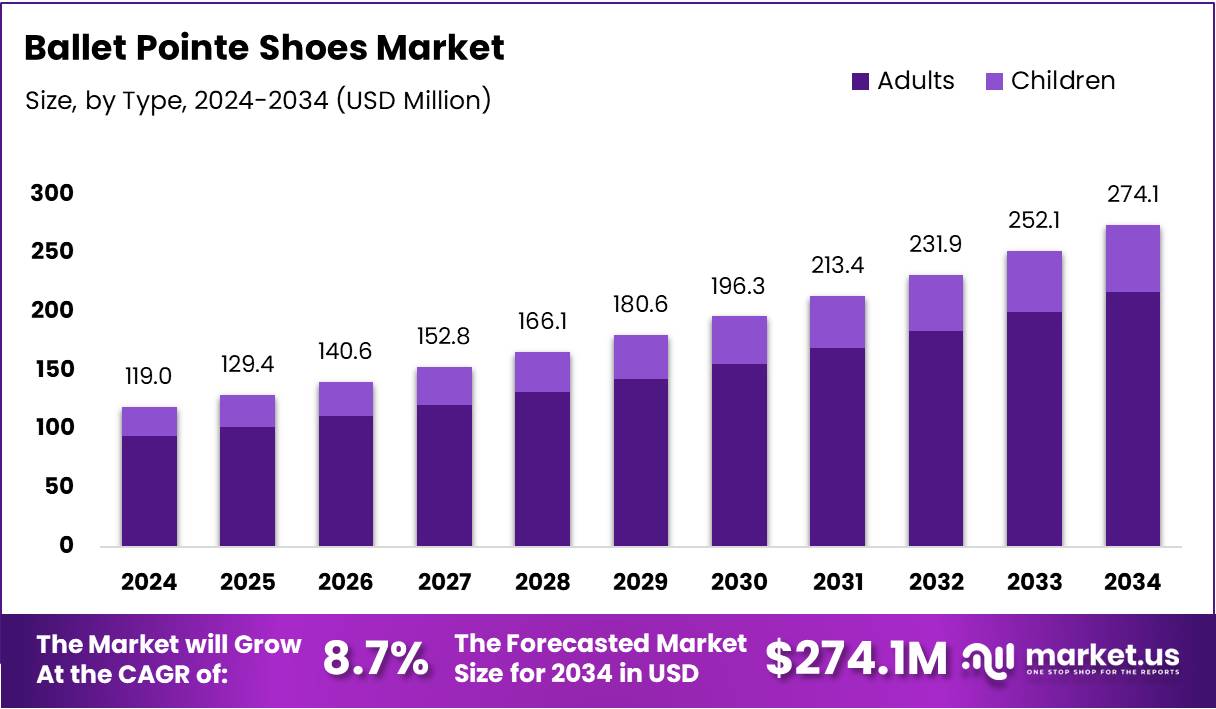
The Global Ballet Pointe Shoes Market size is expected to be worth around USD 274.1 Million by 2034, from USD 119.0 Million in 2024, growing at a CAGR of 8.7% during the forecast period from 2025 to 2034.
The Ballet Pointe Shoes Market is experiencing steady growth as participation in structured ballet training increases worldwide. Rising interest among young dancers and expanding performing arts programs continue to support consistent demand. As consumer expectations shift toward comfort and durability, manufacturers focus on lightweight materials and improved support features.
Moreover, the market benefits from cultural development programs and ongoing government investment in dance training infrastructure. These initiatives increase the number of ballet learners, strengthening purchasing cycles. This environment creates opportunities for brands offering ergonomic shaping, responsive shank designs, and refined construction techniques that enhance balance and reduce fatigue during extended practice sessions.
Additionally, evolving performance standards push dancers to rely on higher-quality footwear to execute complex choreography. As a result, innovation becomes a key factor in market competitiveness. Producers increasingly adopt sustainable fabrics, advanced adhesives, and shock-absorbing elements that improve comfort. These upgrades help training institutes optimize their operational costs while supporting dancer well-being.
Digital transformation further enhances market accessibility. Online sales channels offer precise sizing tools, quicker delivery options, and wider product visibility for both beginners and professionals. This shift encourages direct consumer engagement and supports global distribution. Consequently, e-commerce continues to reshape buying preferences and streamline supply chains across the Ballet Pointe Shoes Market.
Long-term growth is supported by consistent enrollment in examination-based ballet programs. As students advance to higher levels, purchase frequency naturally increases, creating predictable consumption patterns. This trend enables training centers and retailers to plan inventory strategically, especially during peak recital seasons when replacement cycles accelerate due to intensive practice schedules.
According to industry estimates, A professional dancer typically uses 100–120 pairs of pointe shoes each season, while major institutions can consume around 2,000 pairs annually. Students usually begin pointe work between ages 11 and 13, reinforcing an early and long-term demand base.
Material composition trends also shape product development. A standard pair contains 40–60% textiles and 20–40% structural components, while toe pads reduce impact forces by 15–30% depending on thickness and material. These factors indicate the importance of safety, performance efficiency, and frequent replacements within the Ballet Pointe Shoes Market.
Key Takeaways
- Global market expected to reach USD 274.1 Million by 2034, growing from USD 119.0 Million in 2024.
- Market grows at a strong 8.7% CAGR during 2025–2034.
- The Adults segment dominates the Type category with a 79.2% share.
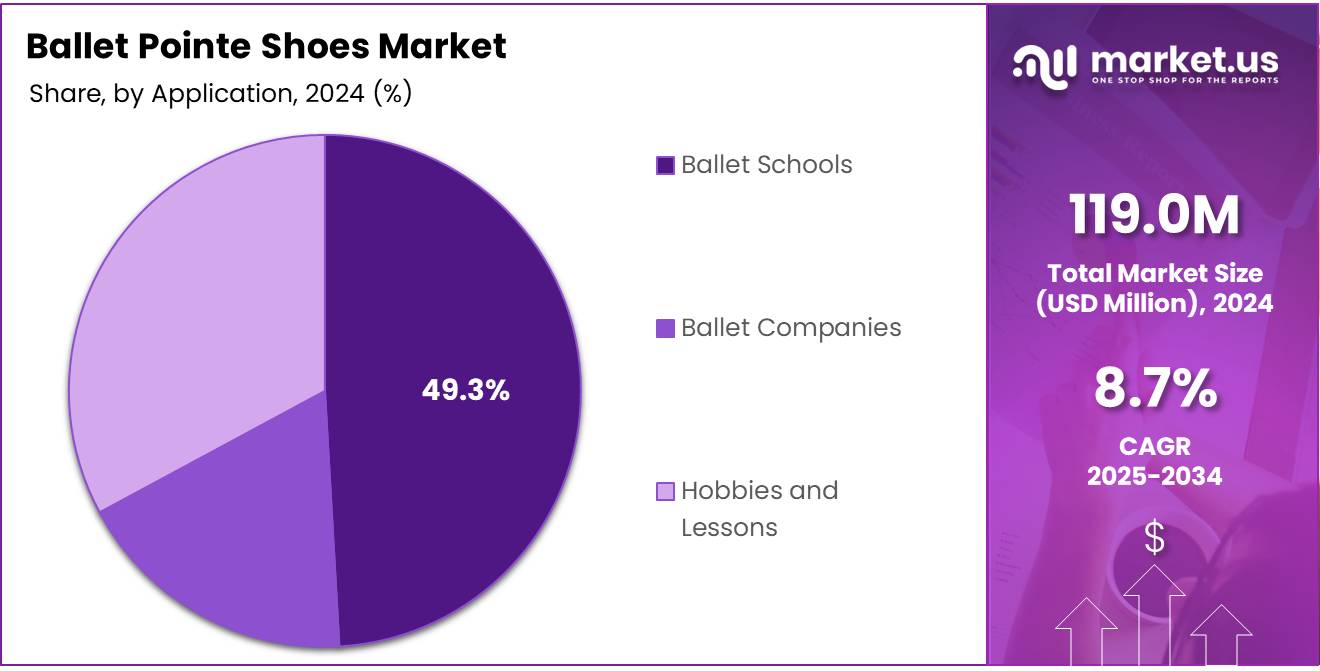
- Ballet Schools lead the Application segment with a 49.3% share.
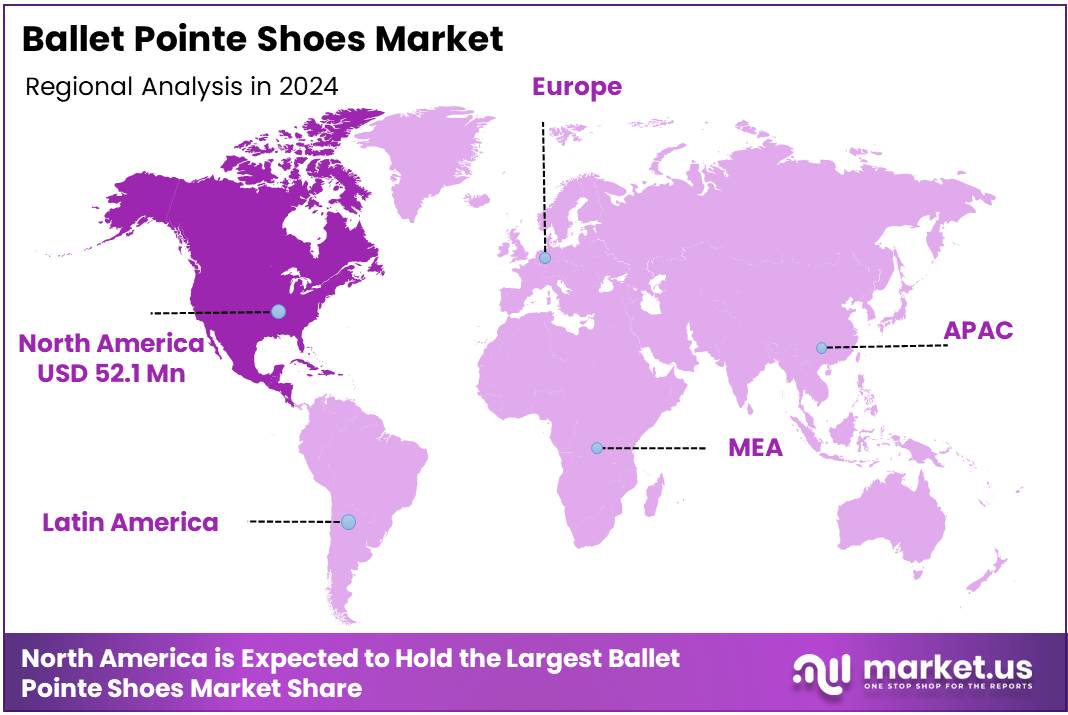
- North America remains the leading regional market with a 43.8% share valued at USD 52.1 Million.
By Type Analysis
Adults dominate with 79.2% driven by higher participation and professional usage.
In 2024, Adults held a dominant market position in the By Type segment of the Ballet Pointe Shoes Market, with a 79.2% share. This leadership is supported by strong adoption across professional dancers who require durable, high-quality pointe shoes. Frequent training sessions also increase replacement cycles, boosting consistent product demand.
In 2024, Children represented the second sub-segment within the By Type segment of the Ballet Pointe Shoes Market. Growth continues as younger students increasingly join structured ballet programs. Rising interest in arts-based education further encourages early training, leading to recurring purchases as children quickly outgrow their footwear sizes and require beginner-friendly materials.
By Application Analysis
Ballet Schools dominate with 49.3% due to structured learning programs and recurring bulk demand.
In 2024, Ballet Schools held a dominant market position in the By Application segment of the Ballet Pointe Shoes Market, with a 49.3% share. Their consistent intake of students drives continuous product turnover. Training intensity also supports frequent replacement needs, making schools a major contributor to stable and predictable market consumption.
In 2024, Ballet Companies accounted for a key share in the By Application segment. Professional companies prioritize premium-quality pointe shoes developed for precision, stage performance, and extended rehearsals. Their requirement for advanced support and customization boosts the demand for high-grade materials, reinforcing their role in driving innovation within the pointe shoe industry.
In 2024, Hobbies and Lessons formed a growing sub-segment in the By Application analysis. Rising participation in recreational dance and adult learning programs expands this category steadily. Consumers in this segment prefer comfortable, flexible, and cost-effective designs, supporting wider product availability and enhancing accessibility for beginners exploring ballet for personal enrichment.
Key Market Segments
By Type
- Adults
- Children
By Application
- Ballet Schools
- Ballet Companies
- Hobbies and Lessons
Drivers
Growing Global Participation in Recreational and Professional Ballet Drives Market Growth
The Ballet Pointe Shoes Market is expanding steadily as more people worldwide join recreational and professional ballet programs. This rising participation encourages higher demand for quality pointe shoes, especially among beginners and advanced students. As ballet schools grow enrollment, manufacturers benefit from consistent year-round sales.
Additionally, investments in performing arts infrastructure are strengthening the market. Many countries are upgrading theaters, cultural centers, and training studios to support larger dance communities. These improvements create a more structured ecosystem for dancers, which increases the need for reliable pointe shoe supplies and enhances brand visibility across regions.
The market is also supported by the growing popularity of ballet-inspired fitness and training programs. Fitness enthusiasts are adopting ballet-based workouts for posture, strength, and flexibility, which drives interest in ballet gear. While not every participant uses pointe shoes, this trend increases awareness of ballet culture and indirectly boosts demand.
Restraints
Limited Custom Fit Options Affecting Professional Performance Needs Restrains Market Growth
The Ballet Pointe Shoes Market faces challenges due to limited custom-fit options, especially for advanced and professional dancers. Pointe shoes require precise fitting to support balance, reduce injury risks, and improve performance. When customized options are limited, dancers may struggle to find shoes that match their foot shape, which lowers satisfaction and slows repeat purchases.
Another major restraint is the lack of standardized sizing across brands. Each manufacturer uses different sizing methods, making it difficult for dancers to choose the correct fit, especially when buying online. This inconsistency often leads to product returns, reduced consumer confidence, and a slower buying process for new learners entering the market.
These fit-related issues create hesitations among buyers, particularly parents of young dancers who may not understand the sizing variations. As a result, the market experiences delays in purchase decisions and higher dependency on in-store fittings, which limits growth in online sales channels. Overall, inconsistent sizing and limited customization options remain key challenges that restrict the market’s full potential.
Growth Factors
Expansion of Eco-Friendly Pointe Shoe Materials and Sustainable Designs Drives Market Growth
The Ballet Pointe Shoes Market is witnessing new growth opportunities as brands increasingly explore eco-friendly materials. Companies are shifting toward sustainable fabrics and biodegradable components to reduce waste. This transition appeals to environmentally conscious dancers and studios, encouraging wider adoption of green product lines. As more dancers prefer sustainable options, manufacturers gain room to innovate responsibly.
At the same time, advancements in custom 3D-printed pointe shoes are opening strong prospects. These solutions offer a personalized fit by analyzing foot structure and pressure points. As a result, dancers experience better comfort and reduced injury risk. This technology also allows brands to differentiate themselves with premium, customized offerings that support long-term loyalty among professional and amateur dancers.
Moreover, the expansion of ballet training programs in emerging markets is strengthening demand. Countries in Asia, Latin America, and the Middle East are investing in dance education and cultural programs. With more students enrolling in formal ballet training, the need for durable, entry-level, and performance-grade pointe shoes continues to rise. This development creates fresh revenue streams for global manufacturers and helps broaden the market’s geographical presence.
Emerging Trends
Surge in Lightweight Hybrid Pointe Shoe Constructions Drives Market Trends
The Ballet Pointe Shoes Market is witnessing strong traction toward lightweight hybrid constructions. This trend is growing as dancers increasingly look for shoes that deliver better balance, smoother transitions, and reduced foot strain. Manufacturers are responding by blending advanced textiles, flexible shanks, and durable reinforcements to create shoes that enhance comfort without compromising performance.
At the same time, demand for vegan and non-toxic pointe shoes is rising across global markets. More dancers are becoming aware of material safety and sustainability, leading brands to introduce cruelty-free fabrics and chemical-free adhesives. This shift aligns with a broader move toward wellness and ethical consumption, encouraging companies to expand their eco-friendly product portfolios.
Another key trend shaping the market is the adoption of sensor-integrated pointe shoes. These smart designs help dancers track weight distribution, alignment, and technique in real time. As digital training tools gain popularity, both institutions and individual performers are turning to connected footwear to support precision training. This technological integration also opens new opportunities for product differentiation.
Regional Analysis
North America Dominates the Ballet Pointe Shoes Market with a Market Share of 43.8%, Valued at USD 52.1 Million
North America leads the Ballet Pointe Shoes Market due to strong ballet culture and well-developed training infrastructure. The region holds a dominant 43.8% market share, valued at USD 52.1 Million, supported by high participation rates and rising demand for premium performance footwear. Growth is further driven by advanced material adoption and consistent replacement cycles.
Europe Ballet Pointe Shoes Market Trends
Europe maintains a significant position in the market, driven by long-standing artistic traditions and structured ballet education systems. Demand rises as professional and recreational dancers seek durable and comfortable pointe shoes. The region also observes increasing interest in sustainable materials and enhanced fit customization.
Asia Pacific Ballet Pointe Shoes Market Trends
Asia Pacific is expanding rapidly, supported by rising ballet enrollment among children and young adults across urban regions. Growing cultural exposure and social media influence are increasing awareness of ballet as a structured discipline. Investments in dance academies and better product availability strengthen regional market growth.
Middle East & Africa Ballet Pointe Shoes Market Trends
The Middle East & Africa market is steadily emerging due to rising performing arts initiatives and higher consumer interest in Western dance forms. Expanding training institutes and urban lifestyle changes are contributing to increased demand. Although smaller, the region shows consistent long-term growth potential.
Latin America Ballet Pointe Shoes Market Trends
Latin America records moderate growth supported by community dance programs and growing youth participation. Rising accessibility to imported pointe shoes and expanding recreational training boost market presence. Increasing awareness of formal ballet training continues to support regional development.
Key Regions and Countries
North America
- US
- Canada
Europe
- Germany
- France
- The UK
- Spain
- Italy
- Rest of Europe
Asia Pacific
- China
- Japan
- South Korea
- India
- Australia
- Rest of APAC
Latin America
- Brazil
- Mexico
- Rest of Latin America
Middle East & Africa
- GCC
- South Africa
- Rest of MEA
Key Ballet Pointe Shoes Company Insights
In 2024, BLOCH strengthened its position as a top global player through consistent innovation in lightweight pointe shoe engineering. The company continued expanding its product lines focused on durability and foot support, which helped attract both professional dancers and training academies. Its broad retail presence further reinforced brand visibility across major markets.
Só Dança maintained steady momentum in 2024 by emphasizing improved comfort technologies and premium materials. The brand’s ability to balance performance, cost efficiency, and fit customization supported its growth among intermediate and advanced dancers. Its continuous expansion in North America and Latin America also contributed to its global market relevance.
Sansha Group advanced its competitive edge by leveraging diversified manufacturing capabilities and wide international distribution. In 2024, the company focused on broadening its pointe shoe offerings with models designed for varying foot shapes. This enabled Sansha to maintain strong resonance with dance schools and budget-conscious consumers worldwide.
Capezio Ballet Makers remained a well-recognized name in the pointe shoe landscape, supported by its long-standing craftsmanship and heritage. Throughout 2024, the brand focused on enhancing product consistency and fit, which reinforced loyalty among professional dancers. Capezio’s strategic retail and e-commerce improvements also helped sustain its global footprint.
Top Key Players in the Market
- BLOCH
- Só Dança
- Sansha Group
- Capezio Ballet Makers
- Wear Moi
- Suffolk Dance
- Gaynor Minden
- Repetto
- Grishko (Nikolay)
Recent Developments
- In July 2025, Ingrid Silva launched a new pointe shoe brand to solve the long-standing issue of limited shade options for darker skin tones.
This move expanded inclusivity in ballet footwear by offering culturally diverse color ranges with professional-grade performance. - In August 2025, Bloch introduced the Flexus line with two new models designed with adaptive paste technology for improved foot molding.
These models, Kaia and Skye, also feature a flexible shank that enhances articulation and reduces break-in time. - In January 2024, Bloch completed the acquisition of RP Collection, strengthening its product portfolio and specialty pointe shoe capabilities.
This acquisition allowed Bloch to integrate premium craftsmanship techniques and broaden offerings for advanced dancers. - In May 2024, Gaynor Minden released the Lyra pointe shoe featuring a vegan microfiber sole and new Premium Weave satin.
The launch targeted dancers seeking sustainable, durable, and ethically designed pointe footwear with enhanced comfort.
Report Scope
Report Features Description Market Value (2024) USD 119.0 Million Forecast Revenue (2034) USD 274.1 Million CAGR (2025-2034) 8.7% Base Year for Estimation 2024 Historic Period 2020-2023 Forecast Period 2025-2034 Report Coverage Revenue Forecast, Market Dynamics, Competitive Landscape, Recent Developments Segments Covered By Type (Adults, Children), By Application (Ballet Schools, Ballet Companies, Hobbies and Lessons) Regional Analysis North America (US and Canada), Europe (Germany, France, The UK, Spain, Italy, and Rest of Europe), Asia Pacific (China, Japan, South Korea, India, Australia, and Rest of APAC), Latin America (Brazil, Mexico, and Rest of Latin America), Middle East & Africa (GCC, South Africa, and Rest of MEA) Competitive Landscape BLOCH, Só Dança, Sansha Group, Capezio Ballet Makers, Wear Moi, Suffolk Dance, Gaynor Minden, Repetto, Grishko (Nikolay) Customization Scope Customization for segments, region/country-level will be provided. Moreover, additional customization can be done based on the requirements. Purchase Options We have three licenses to opt for: Single User License, Multi-User License (Up to 5 Users), Corporate Use License (Unlimited User and Printable PDF) 
-
-
- BLOCH
- Só Dança
- Sansha Group
- Capezio Ballet Makers
- Wear Moi
- Suffolk Dance
- Gaynor Minden
- Repetto
- Grishko (Nikolay)
Our Clients

- 167771
- Nov 2025






