


Report Overview
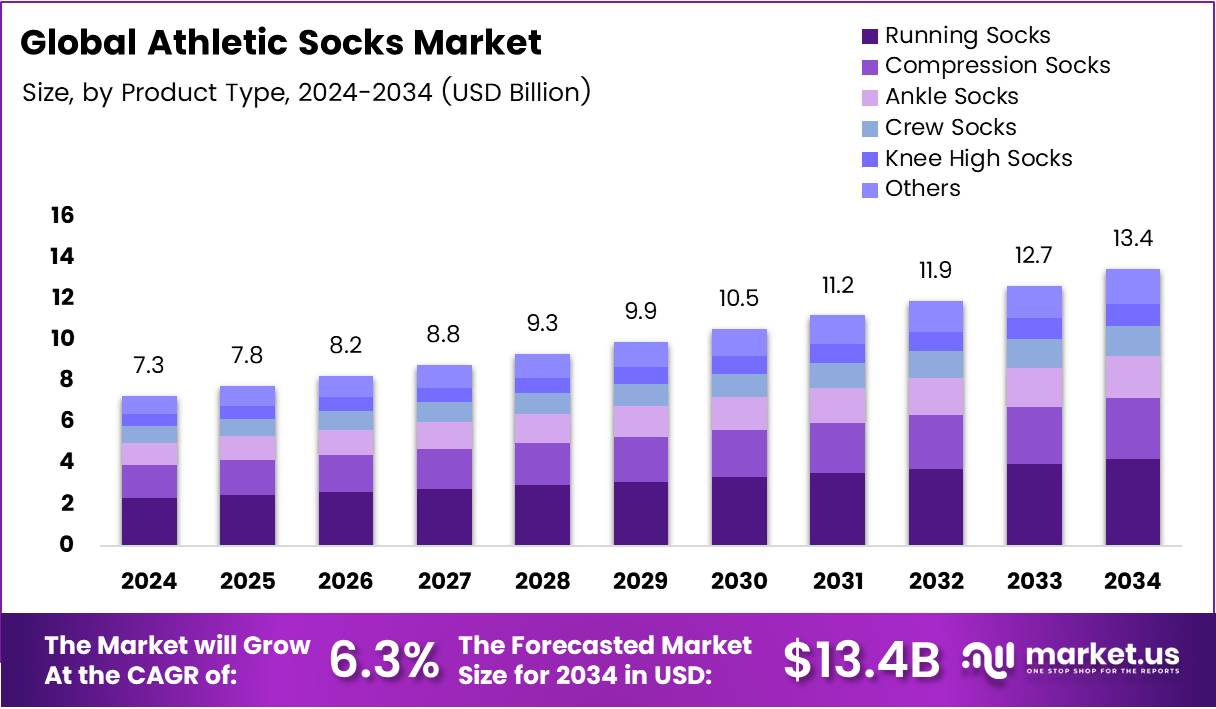
The Global Athletic Socks Market size is expected to be worth around USD 13.4 Billion by 2034, from USD 7.3 Billion in 2024, growing at a CAGR of 6.3% during the forecast period from 2025 to 2034.
The Athletic Socks Market represents a dynamic and evolving segment within the sports apparel industry. It focuses on high-performance socks designed for comfort, durability, and enhanced athletic efficiency. These socks incorporate advanced fabrics, moisture-wicking technologies, and ergonomic designs to support diverse sports activities, from running to fitness training and outdoor performance.
Over recent years, the market has witnessed robust growth driven by rising fitness awareness and participation in organized sports. Increasing consumer preference for functional apparel that improves endurance and reduces fatigue continues to boost demand. Additionally, the global surge in gym memberships and home workouts post-pandemic has created new growth pathways for athletic wear brands.
Moreover, innovation in textile engineering and sustainable materials plays a crucial role in shaping the future of athletic socks. Companies are introducing eco-friendly fibers, compression features, and seamless stitching to enhance foot comfort and reduce environmental impact. This technological evolution aligns with growing consumer expectations for sustainable and performance-driven sports gear.
Government initiatives promoting health and wellness have also positively impacted the market. Programs encouraging physical activity, school sports funding, and public fitness infrastructure development are expanding the addressable customer base. Regulations ensuring product quality and labeling transparency further enhance consumer trust and encourage premium product adoption across regions.
In terms of market opportunity, the rise of e-commerce and direct-to-consumer sales has accelerated accessibility to performance socks globally. Digital retail platforms are enabling personalized recommendations and expanding brand visibility, especially among younger demographics seeking both functionality and style in athletic apparel.
According to a primary survey highlighted by Sporting Goods Intelligence, 73% of athletes believe the right socks significantly enhance performance, underlining the importance of comfort and technology integration in product design. Furthermore, around 60% of sock buyers are male, emphasizing gender-based preference patterns shaping purchase behavior and product segmentation within the Athletic Socks Market. This evolving consumer insight reflects the market’s transition toward high-value, performance-oriented, and design-driven innovation that continues to fuel steady global expansion.
Key Takeaways
- The Global Athletic Socks Market is valued at USD 7.3 Billion (2024) and projected to reach USD 13.4 Billion by 2034, growing at a CAGR of 6.3% (2025–2034).
- Running Socks dominate the Product Type segment with a 31.5% share, driven by strong demand from runners and fitness enthusiasts.
- Cotton Socks lead the Material Type segment with a 32.8% share, owing to their comfort and breathability advantages.
- Running and Jogging represent the largest Sports Category, holding 34.9% of the global market due to widespread participation.
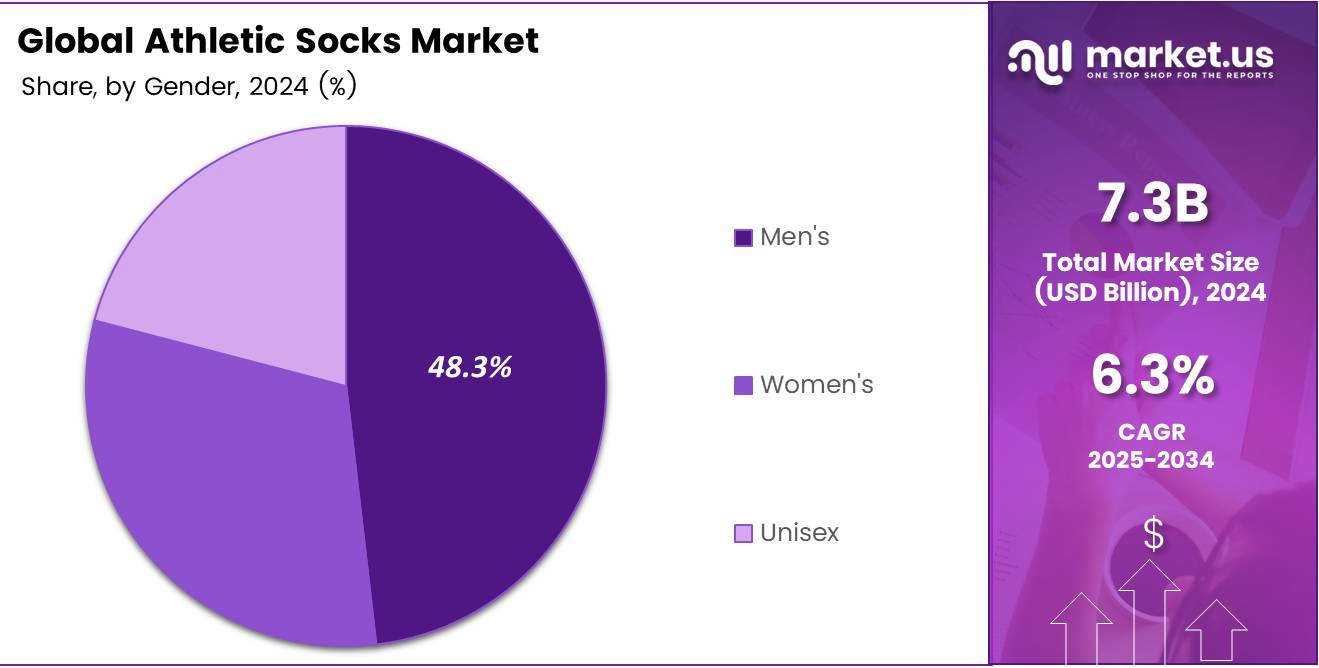
- Men’s segment dominates the Gender category with a 48.3% market share, supported by high male participation in sports activities.
- Specialty Sports Stores account for the largest Distribution Channel share at 34.7%, driven by personalized service and product variety.
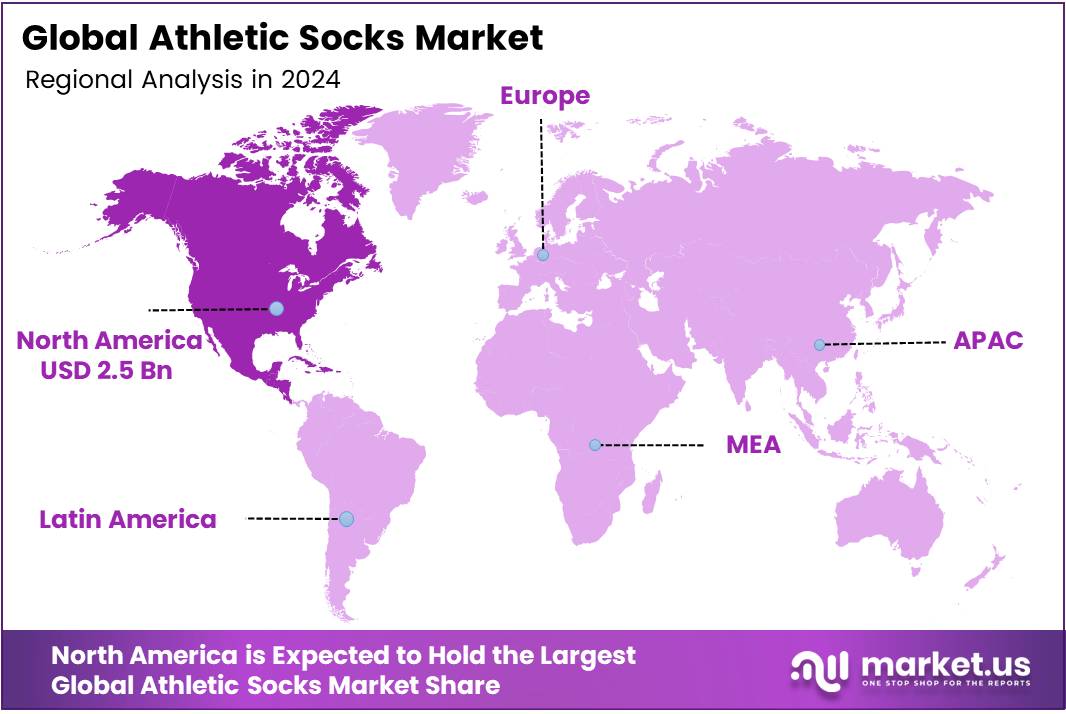
- North America leads regionally with a 34.8% share, valued at approximately USD 2.5 Billion, reflecting strong athletic culture and premium product adoption.
By Product Type Analysis
Running Socks dominate with 31.5% due to their widespread use among athletes and fitness enthusiasts.
In 2024, Running Socks held a dominant market position in the By Product Type segment of the Athletic Socks Market, with a 31.5% share. Their popularity stems from enhanced comfort, breathability, and moisture-wicking properties, which improve running performance and prevent blisters during intensive workouts.
Compression Socks are gaining traction owing to their benefits in enhancing blood circulation and reducing muscle fatigue. Athletes use them to accelerate recovery and improve endurance. The growing adoption in both professional and amateur sports contributes significantly to the segment’s steady growth.
Ankle Socks remain a preferred choice for casual sports and gym activities. Their low-cut design offers flexibility and lightweight comfort, making them suitable for everyday training and warm-weather sports. Increased usage among runners and gym-goers supports this segment’s expansion.
Crew Socks continue to attract users seeking a balance between style and protection. They offer ankle and calf support while maintaining breathability. Their versatility across multiple sports categories enhances their market share steadily.
Knee High Socks serve niche users, particularly in soccer, football, and compression therapy. Their usage for injury prevention and muscle support strengthens their market relevance.
Others include innovative designs such as toe and grip socks. They cater to specialized sports and yoga, where performance stability and comfort are crucial.
By Material Type Analysis
Cotton Socks dominate with 32.8% due to comfort, affordability, and high skin breathability.
In 2024, Cotton Socks held a dominant market position in the By Material Type segment of the Athletic Socks Market, with a 32.8% share. Their soft texture and moisture absorption properties make them a staple for casual and professional athletic wear.
Synthetic Fiber Socks are witnessing increased adoption for their superior elasticity and quick-drying characteristics. Designed for high-performance activities, they help regulate temperature and minimize odor, making them a preferred choice for long-duration sports.
Wool Socks appeal to users participating in outdoor sports or cold-weather training. Known for their insulation and natural moisture management, they ensure warmth without compromising comfort, driving consistent market demand.
Blended Socks combine the best of natural and synthetic materials to balance comfort, durability, and performance. These socks offer multi-weather usability, attracting athletes looking for versatile gear.
Others include eco-friendly and bamboo fiber socks. Their growing acceptance among sustainability-focused consumers is expanding the segment’s future prospects.
By Sports Category Analysis
Running and Jogging dominate with 34.9% due to widespread global participation in endurance sports.
In 2024, Running and Jogging held a dominant market position in the By Sports Category segment of the Athletic Socks Market, with a 34.9% share. Rising health awareness and marathon events have boosted demand for performance-oriented running socks.
Fitness and Training socks cater to gym-goers and cross-fit enthusiasts. Their design emphasizes cushioning and sweat control, providing comfort during high-intensity sessions. The rise of home workouts and fitness culture supports this segment’s momentum.
Basketball socks remain integral for athletes seeking ankle protection and improved traction. Their padded design minimizes injuries and enhances stability during swift movements, strengthening their appeal among professional players.
Soccer/Football socks are essential for professional and amateur players. Offering support and breathability, they help reduce blisters and muscle fatigue, driving steady demand across regions.
Others include sports like tennis, cycling, and hiking. Their growing popularity among recreational athletes continues to widen the athletic socks consumer base.
By Gender Analysis
Men’s segment dominates with 48.3% due to higher sports participation and product availability.
In 2024, Men’s held a dominant market position in the By Gender segment of the Athletic Socks Market, with a 48.3% share. The segment’s dominance is driven by a larger male consumer base in running, gym, and outdoor sports.
Women’s segment shows rapid growth due to increasing female participation in fitness and sports activities. Brands are introducing women-specific designs that emphasize comfort, style, and color preferences, enhancing this segment’s growth potential.
Unisex socks appeal to consumers looking for versatile and gender-neutral products. Their adaptability across age groups and sports disciplines makes them a practical choice for general athletic use.
By Distribution Channel Analysis
Specialty Sports Stores dominate with 34.7% due to product variety and personalized service.
In 2024, Specialty Sports Stores held a dominant market position in the By Distribution Channel segment of the Athletic Socks Market, with a 34.7% share. These stores offer expert guidance, premium quality, and brand variety, attracting both professional and amateur athletes.
Online Retailers are growing rapidly due to the convenience of home delivery and access to diverse product ranges. E-commerce platforms also provide user reviews and discounts, encouraging frequent purchases.
Department Stores continue to maintain steady traction, offering easy accessibility and trusted brand availability. Their physical presence allows consumers to assess quality before buying.
Sports Apparel Outlets strengthen sales through brand-specific experiences and loyalty programs. Consumers prefer these outlets for authentic merchandise and exclusive product lines.
Others include hypermarkets and local distributors. Their affordability and regional accessibility contribute to consistent, small-scale sales.
Key Market Segments
By Product Type
- Running Socks
- Compression Socks
- Ankle Socks
- Crew Socks
- Knee High Socks
- Others
By Material Type
- Cotton Socks
- Synthetic Fiber Socks
- Wool Socks
- Blended Socks
- Others
By Sports Category
- Running and Jogging
- Fitness and Training
- Basketball
- Soccer/Football
- Others
By Gender
- Men’s
- Women’s
- Unisex
By Distribution Channel
- Specialty Sports Stores
- Online Retailers
- Department Stores
- Sports Apparel Outlets
- Others
Drivers
Increasing Demand for Compression and Recovery Socks Drives Market Growth
The athletic socks market is growing as more people are engaging in sports, fitness training, and outdoor activities. Rising participation in gyms, running events, and recreational sports has boosted the demand for high-performance socks that provide comfort and support during physical activities.
The popularity of athleisure wear is another strong driver. Consumers are choosing athletic socks not just for sports but also for daily use due to their comfort, design, and versatility. This trend is merging fashion with functionality and supporting steady market expansion.
Technological advancements are also shaping the market. Modern socks with moisture-wicking and odor-control fabrics help keep feet dry and fresh, making them ideal for active lifestyles. These innovations are enhancing user experience and brand differentiation.
Furthermore, compression and recovery socks are witnessing strong demand from both athletes and health-conscious consumers. These socks improve blood circulation, reduce muscle fatigue, and assist in post-exercise recovery—driving significant market growth across all regions.
Restraints
Market Saturation Among Established Sportswear Brands Limits Growth
The athletic socks market faces challenges due to strong competition among well-known sportswear brands. Established players dominate retail shelves, making it difficult for new or smaller brands to enter and grow. This market saturation often slows innovation and price flexibility.
Environmental concerns over synthetic fiber use also pose restraints. Many athletic socks are made from polyester and nylon, which contribute to microplastic pollution. As sustainability awareness rises, consumers are becoming more cautious about buying products made from non-biodegradable materials.
In emerging economies, price sensitivity remains a major challenge. Consumers in these markets often prioritize affordability over advanced features or premium materials. This limits the adoption of high-end athletic socks and affects profit margins for manufacturers.
Together, these factors create a competitive and cost-sensitive environment that restricts rapid market expansion.
Growth Factors
Rising Adoption of Sustainable and Recycled Materials Offers Growth Opportunities
The expansion of e-commerce and direct-to-consumer channels is creating new growth avenues for the athletic socks market. Online platforms allow brands to reach a wider audience, offer personalized promotions, and engage directly with fitness-conscious customers.
Sustainability trends are opening major opportunities. Companies adopting eco-friendly materials like recycled polyester, organic cotton, or bamboo fibers are attracting environmentally aware consumers. This shift aligns with global sustainability goals and builds stronger brand loyalty.
Customization and the integration of smart textiles are also emerging opportunities. Brands are exploring socks embedded with sensors that monitor foot pressure, temperature, or activity levels, enhancing athletic performance and injury prevention.
Additionally, the growing participation of women and youth in sports is fueling demand for stylish and functional athletic socks. Targeting these segments with innovative designs and comfort-focused features can drive long-term market growth.
Emerging Trends
Adoption of Smart Socks with Embedded Sensors for Performance Tracking Shapes Market Trends
The athletic socks market is witnessing strong trends toward eco-friendly and biodegradable collections. Consumers are seeking sustainable options that combine comfort with environmental responsibility, pushing brands to develop greener products.
Collaborations between sportswear brands and fashion designers are also influencing trends. These partnerships are blending performance technology with fashionable aesthetics, making athletic socks a lifestyle statement beyond sports use.
The demand for 3D-knitted and seamless construction is increasing as consumers prioritize comfort, durability, and advanced fit. These manufacturing techniques reduce friction, improve elasticity, and enhance overall product performance.
Another major trend is the rise of smart socks with embedded sensors that track movement, pressure, and posture. These innovations appeal to tech-savvy athletes seeking data-driven insights to optimize training and performance, signaling a shift toward smart athletic wear.
Regional Analysis
North America Dominates the Athletic Socks Market with a Market Share of 34.8%, Valued at USD 2.5 Billion
The North American athletic socks market leads globally, holding a significant 34.8% share, valued at approximately USD 2.5 billion. The region’s dominance is driven by a strong culture of sports participation, active lifestyle trends, and rising consumer preference for performance-enhancing and sustainable sportswear. The presence of an extensive retail network and rapid adoption of premium and customized sock varieties further propel the market’s expansion across the U.S. and Canada.
Europe Athletic Socks Market Trends
The European athletic socks market is witnessing consistent growth supported by increasing health consciousness and the popularity of outdoor sports and fitness activities. Consumers in the region show a strong preference for high-quality, breathable, and eco-friendly fabrics, which has encouraged innovation in product design. Additionally, the growing influence of athleisure fashion across countries like Germany, France, and the U.K. continues to boost market demand.
Asia Pacific Athletic Socks Market Trends
The Asia Pacific region is emerging as a high-growth market due to the rising participation in sports, fitness, and recreational activities among younger populations. Rapid urbanization, increasing disposable incomes, and the growing influence of Western fitness culture are driving sales. Markets such as China, India, and Japan are becoming manufacturing hubs as well as key consumer bases, fostering both domestic and international brand penetration.
Middle East and Africa Athletic Socks Market Trends
The Middle East and Africa (MEA) athletic socks market is expanding gradually, supported by increasing awareness of fitness and wellness across urban centers. Countries like the UAE and South Africa are experiencing rising demand for athletic apparel and accessories due to improved living standards and government-led sports initiatives. Moreover, the growing retail presence of international brands is enhancing accessibility and driving consumer adoption.
Latin America Athletic Socks Market Trends
The Latin American market shows steady growth, driven by a strong cultural affinity toward sports such as football and running. Countries like Brazil and Mexico are witnessing a surge in demand for durable and comfortable athletic socks that support active lifestyles. Additionally, the increasing penetration of online retail and local manufacturing capabilities is helping the region capture a larger share of the global athletic socks market.
Key Regions and Countries
North America
- US
- Canada
Europe
- Germany
- France
- The UK
- Spain
- Italy
- Rest of Europe
Asia Pacific
- China
- Japan
- South Korea
- India
- Australia
- Rest of APAC
Latin America
- Brazil
- Mexico
- Rest of Latin America
Middle East & Africa
- GCC
- South Africa
- Rest of MEA
Key Athletic Socks Company Insights
The global athletic socks market in 2024 continues to see robust competition and innovation among leading sportswear companies, each leveraging brand strength, technology, and sustainability to capture market share.
Nike Inc. maintains a dominant position through its extensive product portfolio, integrating advanced materials such as moisture-wicking fibers and targeted compression zones. The company’s focus on performance-driven design and eco-friendly manufacturing aligns with consumer preferences for both functionality and sustainability, further reinforcing its leadership in the segment.
Adidas AG emphasizes innovation and sustainability, introducing athletic socks made from recycled polyester and ocean plastics under its “End Plastic Waste” initiative. The brand continues to attract professional athletes and fitness enthusiasts alike with its balance of comfort, durability, and fashion-oriented designs that enhance athletic performance and lifestyle appeal.
Under Armour remains focused on performance enhancement through its signature technologies, such as anti-odor treatments and arch support integration. The company’s continuous investments in research and development enable it to deliver high-quality, specialized socks tailored to training, running, and high-impact sports, strengthening its foothold in the premium market segment.
PUMA SE leverages its strong brand identity and partnerships with global sports icons to expand its athletic socks range. Its emphasis on style, comfort, and affordability appeals to both casual users and athletes, while the company’s growing focus on sustainable materials positions it favorably in the evolving sportswear landscape.
Together, these players continue to shape the global athletic socks market through innovation, branding, and consumer-centric strategies.
Top Key Players in the Market
- Nike Inc.
- Adidas AG
- Under Armour
- PUMA SE
- ASICS Corporation
- New Balance Athletics
- Reebok International Limited
- Stance Inc.
- Balega International
- Swiftwick LLC
Recent Developments
- In Sep 2024: Renfro Brands completed the acquisition of the iconic apparel brand Soffe. This strategic move aims to strengthen Renfro’s portfolio and expand its presence in the activewear market.
- In Mar 2025: Russell Athletic® and For Bare Feet announced a new licensing partnership. The collaboration will introduce a premium sock collection blending Russell’s heritage with For Bare Feet’s craftsmanship.
Report Scope
| Report Features | Description |
|---|---|
| Market Value (2024) | USD 7.3 Billion |
| Forecast Revenue (2034) | USD 13.4 Billion |
| CAGR (2025-2034) | 6.3% |
| Base Year for Estimation | 2024 |
| Historic Period | 2020-2023 |
| Forecast Period | 2025-2034 |
| Report Coverage | Revenue Forecast, Market Dynamics, Competitive Landscape, Recent Developments |
| Segments Covered | By Product Type (Running Socks, Compression Socks, Ankle Socks, Crew Socks, Knee High Socks, Others), By Material Type (Cotton Socks, Synthetic Fiber Socks, Wool Socks, Blended Socks, Others), By Sports Category (Running and Jogging, Fitness and Training, Basketball, Soccer/Football, Others), By Gender (Men’s, Women’s, Unisex), By Distribution Channel (Specialty Sports Stores, Online Retailers, Department Stores, Sports Apparel Outlets, Others) |
| Regional Analysis | North America (US and Canada), Europe (Germany, France, The UK, Spain, Italy, and Rest of Europe), Asia Pacific (China, Japan, South Korea, India, Australia, and Rest of APAC), Latin America (Brazil, Mexico, and Rest of Latin America), Middle East & Africa (GCC, South Africa, and Rest of MEA) |
| Competitive Landscape | Nike Inc., Adidas AG, Under Armour, PUMA SE, ASICS Corporation, New Balance Athletics, Reebok International Limited, Stance Inc., Balega International, Swiftwick LLC |
| Customization Scope | Customization for segments, region/country-level will be provided. Moreover, additional customization can be done based on the requirements. |
| Purchase Options | We have three licenses to opt for: Single User License, Multi-User License (Up to 5 Users), Corporate Use License (Unlimited User and Printable PDF) |





































