


Market Overview
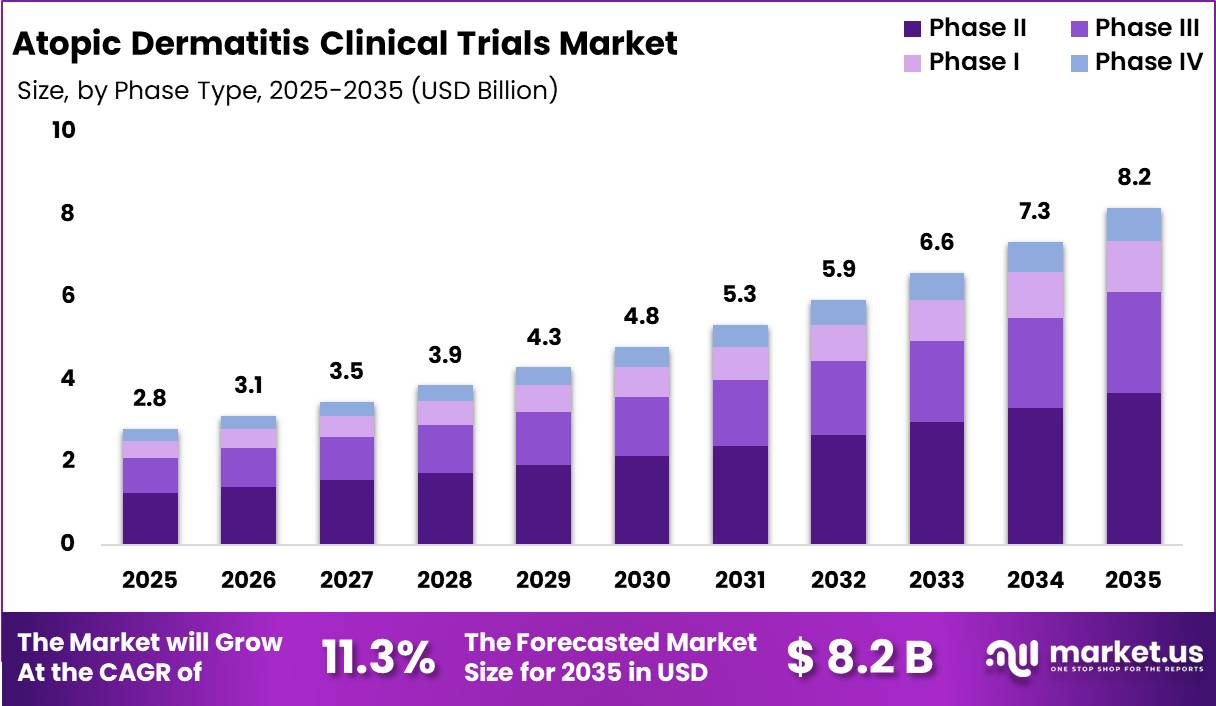
Global Atopic Dermatitis Clinical Trials Market size is expected to be worth around US$ 8.2 Billion by 2035 from US$ 2.8 Billion in 2025, growing at a CAGR of 11.3% during the forecast period from 2026 to 2035. In 2025, North America led the market, achieving over 45.0% share with a revenue of US$ 1.3 Billion.
Atopic dermatitis (AD), commonly called eczema, is a chronic inflammatory skin condition that causes persistent itching, redness, dryness and cracked skin. The disease often begins in infancy sometimes as early as 2–6 months of age and while many children outgrow it by adulthood, some have lifelong symptoms. It is associated with a dysfunctional skin barrier and immune system dysregulation.
Clinical trials are formal, regulated research studies that test the safety and effectiveness of new treatments in people. For atopic dermatitis, these studies include interventional trials for new therapies (such as biologics and small molecules) as well as observational studies on disease progression and outcomes. Participants may receive investigational medications under controlled conditions, often at no cost, and contribute to advancing medical care for this condition.
Numerous clinical research efforts have led to the approval of targeted therapies for example, the Janus kinase (JAK) inhibitor CIBINQO (baricitinib) was studied in three controlled clinical trials enrolling a total of 1,615 patients across multiple countries, demonstrating efficacy and safety for adults and adolescents with moderate-to-severe AD.
Clinical research in AD continues to expand, exploring innovations such as biologics that block key inflammatory pathways (e.g., IL-4/IL-13) and novel topical or systemic agents. These trials are critical for identifying treatments that can reduce itch, improve quality of life, and manage this complex immune-mediated skin disease.
Key Takeaways
- Market Size: The global Atopic Dermatitis Clinical Trials Market was valued at US$ 2.8 Billion in 2025.
- Market share: The global Atopic Dermatitis Clinical Trials Market is projected to grow at a CAGR of 11.3% and is estimated to reach US$ 90.3 Billion by 2035.
- Phase Type Analysis: Phase II dominated the market, accounting for 45.0% of the total market share in 2025.
- Sponsor Type Segmentation Analysis: Pharmaceutical and Biotechnology Companies dominated the market, constituting 65.0% of the total market share..
- Molecule Type Segmentation Analysis: Biologics dominated the market, constituting 50.0% of the total market share
- Route of Administration Segmentation Analysis: Injectable (Subcutaneous, Intravenous) dominated the market, accounting for 45.0% of the total market share.
- Age Group Segmentation Analysis: North America emerged as the leading regional market, contributing 45.0% of the global Atopic Dermatitis Clinical Trials Market revenue in 2025.
By Phase Segmentation Analysis
The Atopic Dermatitis Clinical Trials Market, when segmented by clinical phase, reflects a strong concentration in mid- to late-stage development, highlighting the industry’s focus on efficacy validation and regulatory readiness. In 2025, Phase II trials dominate the market with a 45.0% share, driven by the growing number of novel molecules progressing beyond early safety assessments.
Phase II studies play a critical role in dose optimization, proof-of-concept validation, and patient stratification, particularly for moderate-to-severe atopic dermatitis, making them a central investment area for sponsors.
Phase III trials account for 30.0% of the market, supported by the advancement of promising biologics and small molecules into large-scale, multicenter studies required for regulatory approval. These trials involve broader patient populations and longer durations, contributing to higher costs and significant market value.
Phase I trials represent 15.0%, focusing on first-in-human safety, tolerability, and pharmacokinetics, primarily for innovative immunomodulatory therapies. Meanwhile, Phase IV studies hold a 10.0% share, emphasizing post-marketing surveillance, long-term safety, and real-world effectiveness. Overall, the phase segmentation underscores a mature and steadily advancing clinical pipeline.
By Sponsor Type Segmentation Analysis
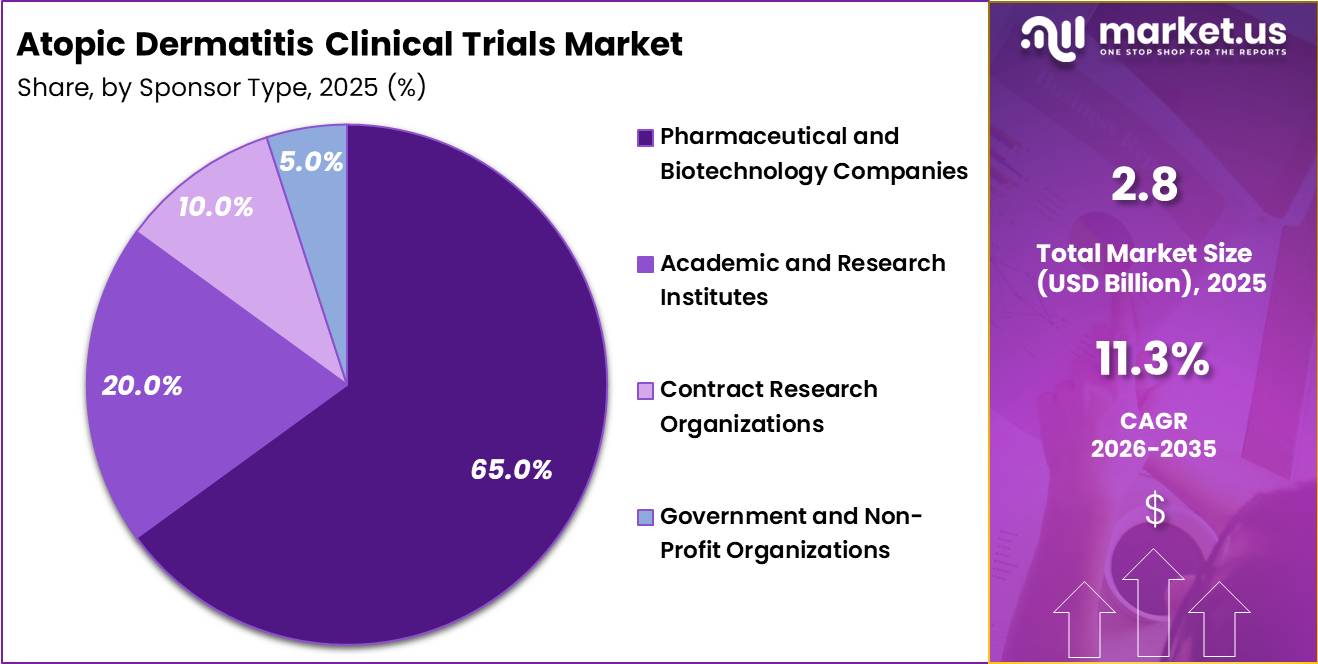
Sponsor type segmentation reveals the dominant role of industry-led research in the Atopic Dermatitis Clinical Trials Market. In 2025, pharmaceutical and biotechnology companies lead with a 65.0% market share, driven by substantial R&D investments, robust clinical pipelines, and strong commercialization objectives.
These sponsors focus heavily on advanced biologics, JAK inhibitors, and targeted immunotherapies, often funding large-scale Phase II and Phase III trials. Academic and research institutes contribute 20.0% of the market, playing a crucial role in early-stage research, disease mechanism studies, and investigator-initiated trials. Their work often lays the scientific foundation for later industry-sponsored development.
Contract Research Organizations (CROs) account for 10.0%, reflecting their growing involvement in trial management, patient recruitment, data monitoring, and regulatory compliance services, particularly as trial complexity increases.
Government and non-profit organizations hold a 5.0% share, supporting trials focused on public health priorities, pediatric populations, and underserved patient groups. This segmentation highlights a market largely driven by commercial sponsors, complemented by academic and public-sector contributions.
By Molecule Type Segmentation Analysis
By molecule type, the Atopic Dermatitis Clinical Trials Market is increasingly shaped by innovation in targeted therapies. In 2025, biologics dominate the segment with a 50.0% market share, reflecting their strong clinical efficacy in moderate-to-severe disease.
Monoclonal antibodies targeting specific immune pathways, such as interleukins involved in inflammation, have demonstrated superior outcomes compared to conventional therapies, driving extensive clinical trial activity.
The dominance of biologics is further supported by their ability to address unmet needs in patients who are refractory to topical or systemic treatments. Small molecules form the remaining share of the market, benefiting from oral administration, lower manufacturing costs, and ease of scalability.
These molecules, including kinase inhibitors, are increasingly represented in early- and mid-phase trials due to their potential for rapid development and patient convenience. Additionally, emerging molecule types, such as novel peptides and combination therapies, are gradually entering the clinical pipeline. Overall, molecule type segmentation reflects a balanced pipeline, with biologics leading value generation and small molecules driving volume and accessibility.
By Route of Administration Segmentation Analysis
Route of administration plays a significant role in shaping clinical trial design and patient adherence in the Atopic Dermatitis Clinical Trials Market. In 2025, injectable routes, including subcutaneous and intravenous administration, dominate with a 45.0% market share. This dominance is largely attributed to the high prevalence of biologic therapies, which require parenteral delivery to ensure bioavailability and therapeutic efficacy.
Injectable therapies are commonly evaluated in moderate-to-severe patient populations, where systemic intervention is necessary. Oral administration represents a substantial portion of ongoing trials, supported by the development of small-molecule inhibitors that offer greater convenience and improved patient compliance.
Topical routes continue to play a critical role, particularly in mild-to-moderate disease segments, where creams, ointments, and gels remain first-line therapies. Emerging delivery approaches, such as long-acting injectables and novel transdermal systems, are also being explored. Overall, the route of administration segmentation reflects a shift toward systemic treatments while maintaining strong interest in patient-friendly delivery options.
By Age Group Segmentation Analysis
Age group segmentation highlights the demographic focus of ongoing research in the Atopic Dermatitis Clinical Trials Market. In 2025, adults aged 18–64 years dominate the market with a 55.0% share, driven by higher diagnosis rates, greater disease severity reporting, and increased participation in clinical studies. Adult patients often present chronic and treatment-resistant forms of atopic dermatitis, making them a primary target for advanced systemic therapies and biologics.
Pediatric populations represent a significant and growing segment, as atopic dermatitis commonly manifests in early childhood. Clinical trials in children and adolescents focus on safety, age-appropriate dosing, and long-term outcomes, although regulatory and ethical considerations can slow recruitment.
The geriatric population accounts for a smaller share but is gaining attention due to rising life expectancy and increasing recognition of atopic dermatitis in older adults. Overall, age group segmentation underscores a strong adult-centric trial landscape, alongside expanding efforts to address unmet needs across pediatric and elderly populations.
Market Segmentations
By Phase
- Phase II
- Phase III
- Phase I
- Phase IV
By Sponsor Type
- Pharmaceutical and Biotechnology Companies
- Academic and Research Institutes
- Contract Research Organizations
- Government and Non-Profit Organizations
By Molecule Type
- Biologics
- Small Molecules (JAK Inhibitors, PDE4 Inhibitors)
- Others
By Route of Administration
- Injectable (Subcutaneous, Intravenous)
- Oral
- Topical
By Age Group
- Adult (18-64 years)
- Pediatric (0-17 years)
- Geriatric (65+ years)
Driver
Biologic class expansion beyond dupilumab benchmark
Dupilumab remains the reference asset in moderate to severe AD because its label already spans patients aged 6 months and older, includes use with or without topical corticosteroids, and has mature long term safety exposure in adults and children, which effectively sets the control standard for new registrational and post approval studies.
That benchmark no longer suppresses trial creation; instead, it expands it, because lebrikizumab entered the US competitive set in 2024 and is now also embedded in European regulatory pathways for adolescents and adults, forcing sponsors to design more differentiated head to head, switch, maintenance, and long term extension studies rather than simple placebo controlled proof of concept programs.
The commercial logic is strong: once a class leader establishes physician confidence and payer familiarity, follow on assets can justify investment by targeting better durability, cleaner dosing intervals, improved responder maintenance, or narrower cytokine specificity, which increases the number of protocol types per molecule.
In practice, that raises trial market demand across biomarker testing, central labs, ophthalmic safety review, immunogenicity work, and comparator drug supply, supporting an estimated +2.4 percentage point lift to forward clinical trial CAGR in 2026 to 2028.
| Driver | (~) % Impact on CAGR Forecast | Geographic Relevance | Impact Timeline |
|---|---|---|---|
| Biologic class expansion beyond dupilumab benchmark | +2.4% | North America core, EU core, Japan, South Korea, China urban centers | Short term (≤ 2 years) |
| Pruritus-first and IL-31 pathway validation improving endpoint design | +1.8% | US, EU5, Japan, selective APAC specialty centers | Short term (≤ 2 years) |
| Pediatric age-band expansion opening infant and child enrollment pools | +2.1% | US core, Canada, Western Europe, Australia | Medium term (2-4 years) |
| Oral and topical non-biologic diversification reducing mechanism concentration risk | +1.6% | US, EU, China, South Korea, India spill-over | Medium term (2-4 years) |
| Global site-network broadening and protocol decentralization | +1.3% | North America core, EU, Canada, APAC corridors | Short term (≤ 2 years) |
| Safety-monitoring burden and comparator intensity raising trial complexity | +0.9% | US and EU core, Japan, high-regulation markets | Long term (≥ 4 years) |
Challenge
Endpoint Heterogeneity Burden
Atopic dermatitis trials still absorb material execution drag because disease activity is measured through partially overlapping but non identical instruments such as EASI, vIGA/IGA, pruritus scales, body surface area thresholds, rescue medication rules, and flare definitions, which raises screen failure risk, complicates cross study comparability, and forces sponsors to power for multiple clinically meaningful outcomes rather than one dominant endpoint.
In 2026 this typically translates into protocol amendments, larger adjudication loads, 5% to 10% higher sample size buffers, and database lock delays of roughly 4 to 8 weeks for multinational studies, especially when adult, adolescent, and infant cohorts are stacked in one development architecture.
The friction does not stop trials from launching, but it reduces portfolio efficiency because every extra endpoint layer adds monitoring visits, statistical multiplicity management, and country specific reviewer negotiation, requiring sponsors to standardize endpoint hierarchies, centralize assessor training, and build modular master protocol templates that can preserve interpretability across topical, biologic, and oral immune modulating assets.
| Challenge | (~) % CAGR Friction Drag | Geographic Relevance | Mitigation Horizon |
|---|---|---|---|
| Endpoint Heterogeneity Burden | -1.2% | North America core, EU regulatory hubs, Japan, Korea | Medium term (2-4 years) |
| Pediatric Enrollment Complexity | -1.0% | U.S., EU5, high-income APAC pediatric centers | Medium term (2-4 years) |
| Diversity Recruitment Friction | -0.9% | U.S. multicenter networks, UK, urban LATAM hubs | Medium term (2-4 years) |
| Site Capacity Concentration | -1.1% | U.S. Sunbelt clusters, Western Europe, selected APAC metros | Short term (≤ 2 years) |
| Protocol Complexity Inflation | -1.3% | Global Phase II-III programs | Medium term (2-4 years) |
| Biomarker Translation Gaps | -0.8% | U.S. translational centers, EU immunology hubs, Japan | Long term (≥ 4 years) |
Restraints
JAK safety-screen burden
The oral JAK class remains a structurally constraining trial segment because FDA boxed warning requirements still emphasize risks of major adverse cardiovascular events, cancer, thrombosis, and death for the class, while EMA recommendations restrict use in older or risk factor heavy populations unless no suitable alternatives exist, which pushes sponsors to narrow inclusion criteria, add cardiovascular and malignancy risk stratification, intensify informed consent language, and expand adjudication workflows before randomization even starts.
In practical trial terms, that usually reduces screen to randomization conversion, lengthens screening windows, and shifts studies toward younger or lower risk patient pools that are smaller and more competitive, especially when dupilumab and newer biologic programs already occupy much of the moderate to severe investigator ecosystem.
For a typical mid stage atopic dermatitis program, this restraint can plausibly add 10% to 18% more screening volume, extend first patient in to full enrollment by roughly 3 to 6 months, and raise medical monitoring and pharmacovigilance overhead by 5% to 9%, which in turn depresses program throughput, delays milestone recognition for CROs and sponsors, and justifies an estimated -1.4 percentage point drag on market CAGR through the near term.
| Restraint | (~) % Impact on CAGR Forecast | Geographic Relevance | Impact Timeline |
|---|---|---|---|
| JAK safety-screen burden | -1.4% | North America core, EU, Japan | Short term (≤ 2 years) |
| Rising trial execution costs | -1.2% | US core, EU, major APAC hubs | Short term (≤ 2 years) |
| Protocol complexity creep | -1.0% | Global multicenter | Medium term (2-4 years) |
| Pediatric enrollment friction | -0.9% | US, EU5, urban APAC | Medium term (2-4 years) |
| GCP transition compliance drag | -0.8% | EU, US, cross-border networks | Short term (≤ 2 years) |
| Biomarker and endpoint heterogeneity | -0.7% | Global R&D corridors | Long term (≥ 4 years) |
Opportunity
Pediatric first platform trials
This is an opportunity rather than a baseline driver because most current AD trial activity still follows the conventional adult first sequence, while FDA guidance explicitly supports earlier pediatric planning, including study initiation after initial adult efficacy and safety signals and attention to children younger than 2 years, creating a monetizable white space for sponsors and CROs that can build reusable pediatric master protocols, age stratified endpoints, and formulation pathways ahead of competitors.
With children showing annual diagnosed prevalence up to 22.6% in some settings versus adult prevalence up to 17.1%, the recruitable untreated and under studied.
Pool is structurally large, and a pediatric first operating model could reasonably cut protocol start up by 6 to 9 months, reduce per asset duplication across age cohorts by 15% to 20%, and lift sponsor wallet share through bundled PK, safety, device usability, and long term extension modules, supporting an estimated +2.4% point CAGR upside above baseline for trial service providers that institutionalize this model by 2028.
| Opportunity | (~) % Potential CAGR Upside | Geographic Relevance | Execution Window |
|---|---|---|---|
| Pediatric-first platform trials | +2.4% | North America core, EU, Japan | Short term (≤ 2 years) |
| Biomarker-enriched recruitment | +1.9% | US, EU, South Korea, UK | Short term (≤ 2 years) |
| Hybrid decentralized dermatology trials | +2.1% | US core, EU, Australia | Medium term (2-4 years) |
| Asia-led site network expansion | +2.7% | China, India, South Korea, SEA | Medium term (2-4 years) |
| Adjacent indication basket studies | +1.6% | US, EU, APAC developed | Medium term (2-4 years) |
| Trial-as-data monetization layer | +1.4% | US, EU, global sponsor hubs | Long term (≥ 4 years) |
Regional Analysis
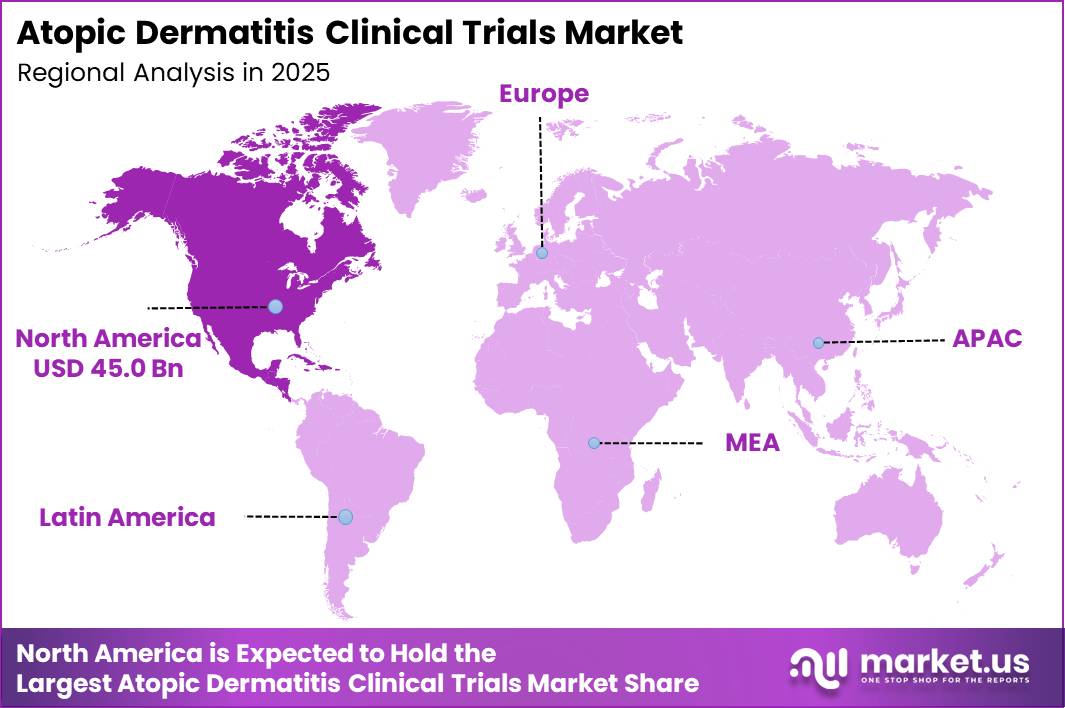
In 2025, North America led the market, achieving over 45.0% share with a revenue of US$ 1.3 Billion.
The North America leadership is primarily driven by a high prevalence of atopic dermatitis, strong patient recruitment capabilities, and a well-established clinical research ecosystem. The presence of major pharmaceutical and biotechnology companies, coupled with advanced trial infrastructure and experienced contract research organizations (CROs), continues to accelerate trial initiation and execution across the United States and Canada.
Supportive regulatory frameworks and strong funding for dermatology research further reinforce North America’s market strength.
Europe represents the second-largest regional market, supported by increasing government-backed research programs, rising awareness of chronic inflammatory skin disorders, and active participation in multinational clinical trials. Countries such as Germany, the UK, and France play a key role due to robust healthcare systems and growing adoption of innovative biologics and targeted therapies.
The Asia Pacific region is expected to witness the fastest growth over the forecast period, driven by a large patient population, improving clinical research infrastructure, and cost-effective trial operations in countries like China, India, and South Korea.
Meanwhile, Latin America and the Middle East & Africa are gradually expanding, supported by increasing trial outsourcing and rising investments in dermatology research, though they currently contribute a smaller market share compared to developed regions.
Key Regions and Countries
North America
- The US
- Canada
Europe
- Germany
- France
- The U.K.
- Italy
- Spain
- Russia & CIS
- Rest of Europe
Asia Pacific
- China
- India
- Japan
- South Korea
- ASEAN
- Australia & New Zealand
- Rest of Asia Pacific
Middle East & Africa
- GCC
- South Africa
- Rest of Middle East & Africa
Latin America
- Brazil
- Mexico
- Rest of Latin America
Key Player Analysis
The Atopic Dermatitis Clinical Trials Market is moderately consolidated, with competition concentrated among a limited number of multinational pharmaceutical companies while a growing cohort of biotechnology firms drives innovation.
The market has entered a late-development and optimization phase, marked by an expanding pipeline of targeted biologics and small molecules. Competitive differentiation increasingly centers on disease-modifying therapies, precision immunology, biomarker-guided trial design, and genetics-informed patient stratification rather than symptomatic management alone.
Large multinational pharmaceutical companies form the first tier, leveraging global clinical infrastructure, regulatory expertise, and scale to advance late-stage programs. This tier includes Pfizer Inc., Sanofi S.A., Eli Lilly and Company, AbbVie Inc., Bristol‑Myers Squibb Company, Amgen Inc., Novartis AG, and Merck KGaA.
The second tier consists of specialty dermatology and immunology-focused players such as Incyte Corporation, UCB S.A., LEO Pharma A/S, and Galderma S.A., which emphasize niche expertise and differentiated mechanisms.
Innovation-driven biotechs including Dermira Inc., Apogee Therapeutics Inc., and ASLAN Pharmaceuticals Limited focus on early-stage innovation and targeted clinical validation.
Across tiers, competition is shaped by R&D intensity, strategic collaborations, and integrated clinical workflows that align biomarkers, diagnostics, and precision-medicine platforms to accelerate development and improve trial outcomes.
Top Key Players
- Pfizer Inc.
- Sanofi S.A.
- Eli Lilly and Company
- AbbVie Inc.
- Bristol-Myers Squibb Company
- Amgen Inc.
- Incyte Corporation
- UCB S.A.
- LEO Pharma A/S
- Galderma S.A.
- Novartis AG
- Merck KGaA
- Dermira Inc.
- Apogee Therapeutics Inc.
- ASLAN Pharmaceuticals Limited
Recent Developments
- In March 2025, Bristol-Myers Squibb advanced multiple immune pathway inhibitors including OX40 and STAT6-targeting programs through ongoing early-stage atopic dermatitis clinical trials.
- In March 2025, UCB S.A. continued Phase 3 clinical development of dual cytokine inhibitors targeting IL-13 and IL-31 pathways in atopic dermatitis programs.
- In June 2026, AbbVie Inc. was reported to be pursuing a $10.9 billion acquisition of Apogee Therapeutics to gain access to the IL-13 inhibitor zumulokibart, expected to enter Phase 3 atopic dermatitis trials in 2026.
Report Scope
| Report Features | Description |
|---|---|
| Market Value (2025) | US$ 2.8 Billion |
| Forecast Revenue (2035) | US$ 8.2 Billion |
| CAGR (2026-2035) | 11.3% |
| Base Year for Estimation | 2025 |
| Historic Period | 2020-2024 |
| Forecast Period | 2026-2035 |
| Report Coverage | Revenue Forecast, Market Dynamics, Competitive Landscape, Recent Developments |
| Segments Covered | By Phase (Phase II ,Phase III ,Phase I ,Phase IV ) By Sponsor Type (Pharmaceutical and Biotechnology Companies , Academic and Research Institutes ,Contract Research Organizations ,Government and Non-Profit Organizations)By Molecule Type (Biologics ,Small Molecules (JAK Inhibitors, PDE4 Inhibitors) ,Others) By Route of Administration (Injectable (Subcutaneous, Intravenous) ,Oral ,Topical) By Age Group (Adult (18-64 years) Pediatric (0-17 years) ,Geriatric (65+ years)) |
| Regional Analysis | North America – The US, Canada; Europe – Germany, France, U.K., Italy, Spain, Russia & CIS, Rest of Europe; Asia Pacific – China, India, Japan, South Korea, ASEAN, Australia & New Zealand, Rest of Asia Pacific; Middle East & Africa – GCC, South Africa, Rest of Middle East & Africa; Latin America – Brazil, Mexico, Rest of Latin America |
| Competitive Landscape | Pfizer Inc. ,Sanofi S.A. ,Eli Lilly and Company ,AbbVie Inc. ,Bristol-Myers Squibb Company ,Amgen Inc. ,Incyte Corporation ,UCB S.A. ,LEO Pharma A/S ,Galderma S.A. ,Novartis AG ,Merck KGaA , Dermira Inc. , Apogee Therapeutics Inc. ,ASLAN Pharmaceuticals Limited |
| Customization Scope | Customization for segments, region/country-level will be provided. Moreover, additional customization can be done based on the requirements. |
| Purchase Options | We have three licenses to opt for: Single User License, Multi-User License (Up to 5 Users), Corporate Use License (Unlimited User and Printable PDF) |





































