


Report Overview
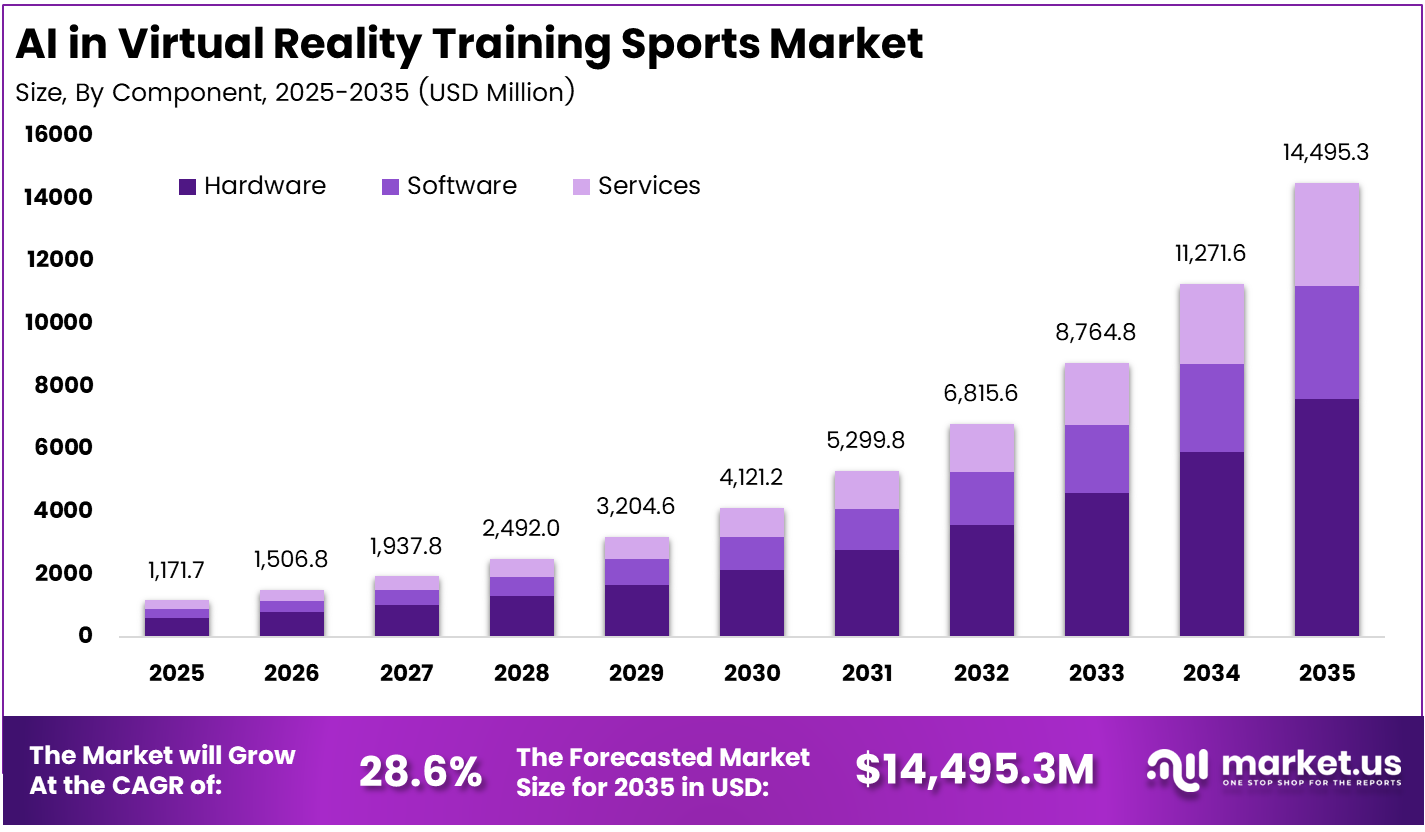
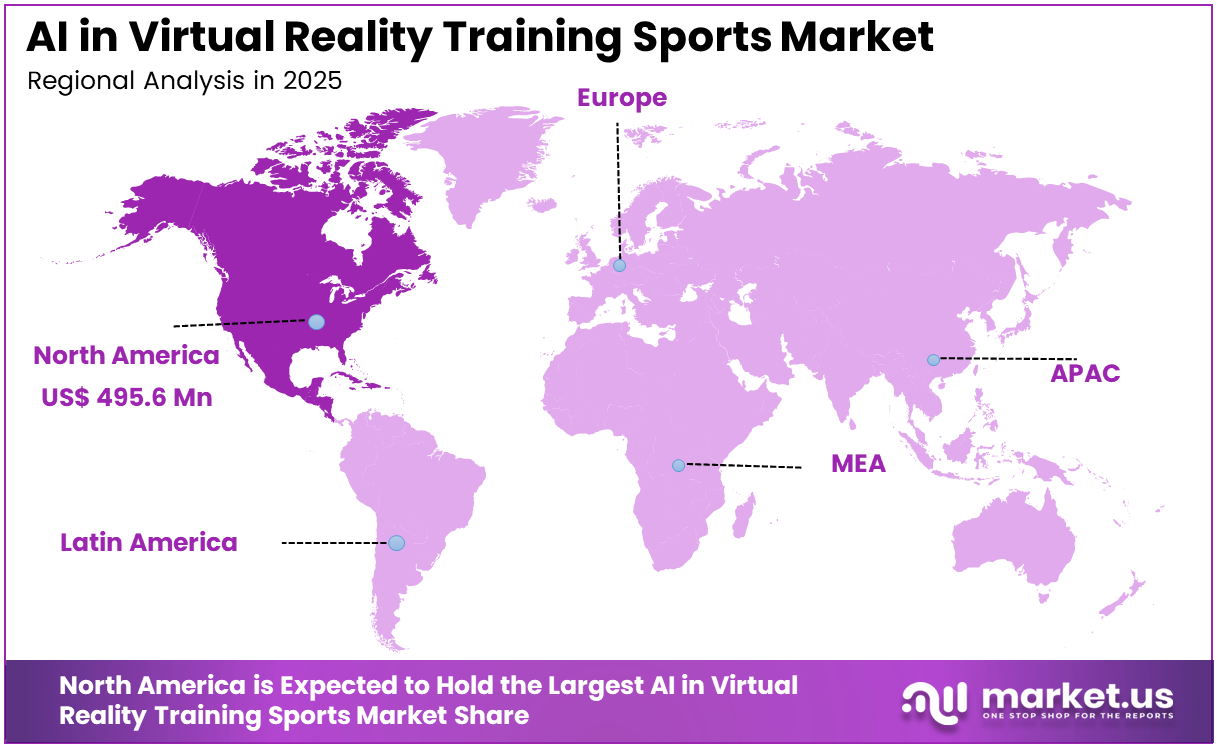
The Global AI in Virtual Reality Training Sports Market size is expected to be worth around USD 14,495.3 million by 2035, from USD 1,171.7 million in 2025, growing at a CAGR of 28.6% during the forecast period from 2025 to 2035. North America held a dominant market position, capturing more than a 42.3% share, holding USD 495.6 million in revenue.
AI plays a key part in virtual reality training for sports by tracking movements, eye focus, and reactions in real time to offer instant feedback and scores. Systems use motion capture and AI to match actions against perfect models, helping athletes fix errors on the spot. Studies show these setups boost team cooperation by 22% and overall play by 17%, with clear gains in decision making and visual skills that carry over to real matches. VR makes practice feel real while letting players repeat tough scenarios safely.
Coaches turn to AI-VR training to cut injury risks, repeat key plays more often, and get deeper insights from data. Virtual drills let athletes face high-pressure moments without full physical strain, unlike regular scrimmages. AI spots small flaws in technique that video alone misses, and it recreates rare events like bad weather plays. These tools also standardize coaching for big teams, ensuring everyone gets the same quality practice. Teams see up to 20% better tactical work from regular use.
The market for AI in virtual reality training sports is driven by the rising need for personalized workouts that cut injury risks and lift athlete skills. Coaches use real-time data from VR sessions to tweak drills for each player, making practice more effective without physical strain. Teams see faster progress as AI spots patterns and simulates game pressure safely, drawing in pros and amateurs alike. Demand grows with tech advances that make training smarter and accessible anywhere.
Demand for AI-VR in sports training has grown from elite trials to team sports like soccer and tennis, with tools now common for decisions and skills. Reviews note a wide range of immersive systems in use, and over 50% of pros already use VR for practice. Headset shipments are rising fast, supporting sports apps on the same gear. Clubs report 20% tactical gains, which pulls in more users at all levels.
For instance, in March 2025, Strivr launched custom VR modules for sports teams and athletes, achieving 75% retention rates vs traditional methods. NFL squads use it for immersive scenario practice, underscoring California’s role in scaling AI-VR for peak performance worldwide.
Key Takeaway
- In 2025, the Hardware segment held a dominant market position, capturing a 52.4% share of the Global AI in Virtual Reality Training Sports Market.
- In 2025, the Immersive VR Training Systems segment held a dominant market position, capturing a 70.3% share of the Global AI in Virtual Reality Training Sports Market.
- In 2025, the On-Premises segment held a dominant market position, capturing a 62.8% share of the Global AI in Virtual Reality Training Sports Market.
- In 2025, the Computer Vision segment held a dominant market position, capturing a 41.7% share of the Global AI in Virtual Reality Training Sports Market.
- In 2025, the Football segment held a dominant market position, capturing a 30.5% share of the Global AI in Virtual Reality Training Sports Market.
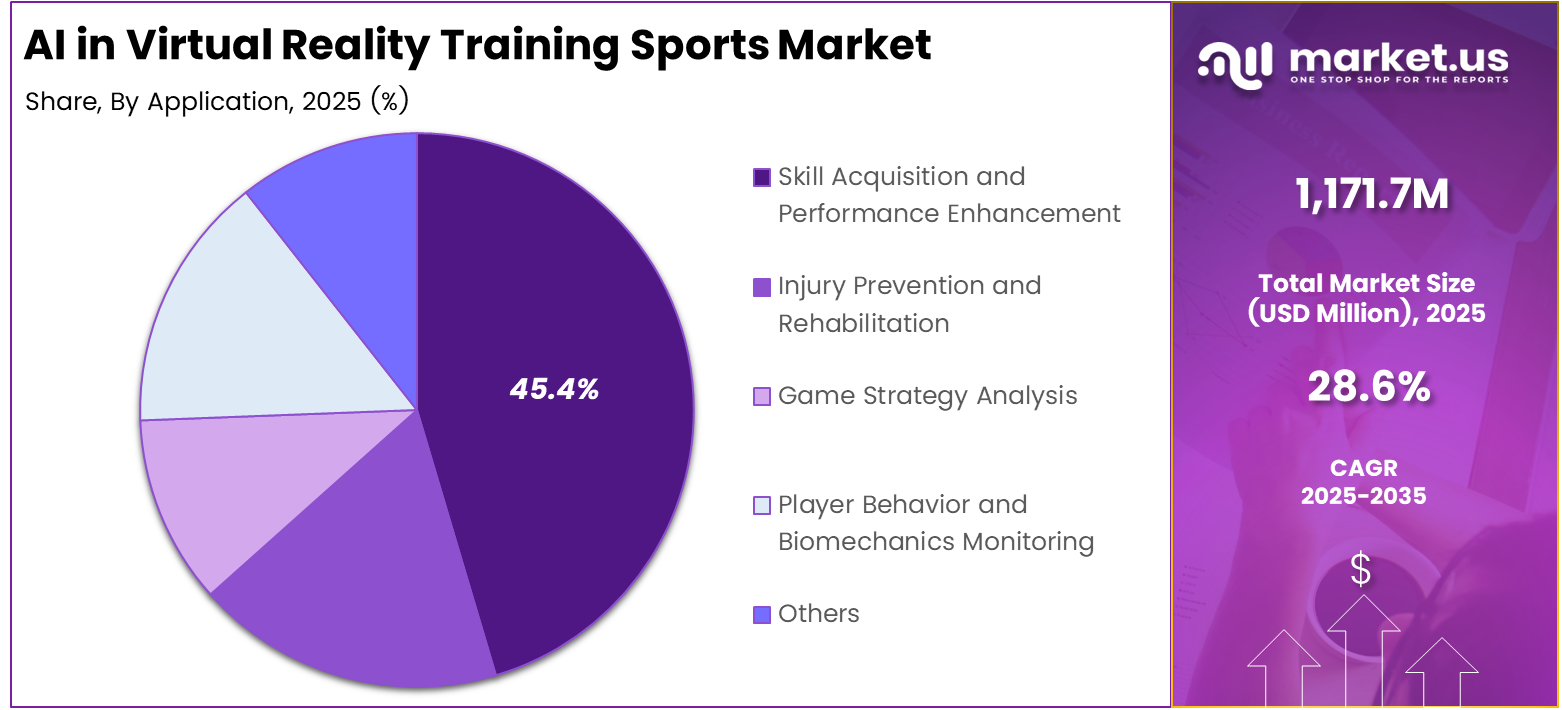
- In 2025, the Skill Acquisition and Performance Enhancement segment held a dominant market position, capturing a 45.4% share of the Global AI in Virtual Reality Training Sports Market.
- In 2025, the Professional Sports Teams and Clubs segment held a dominant market position, capturing a 52.9% share of the Global AI in Virtual Reality Training Sports Market.
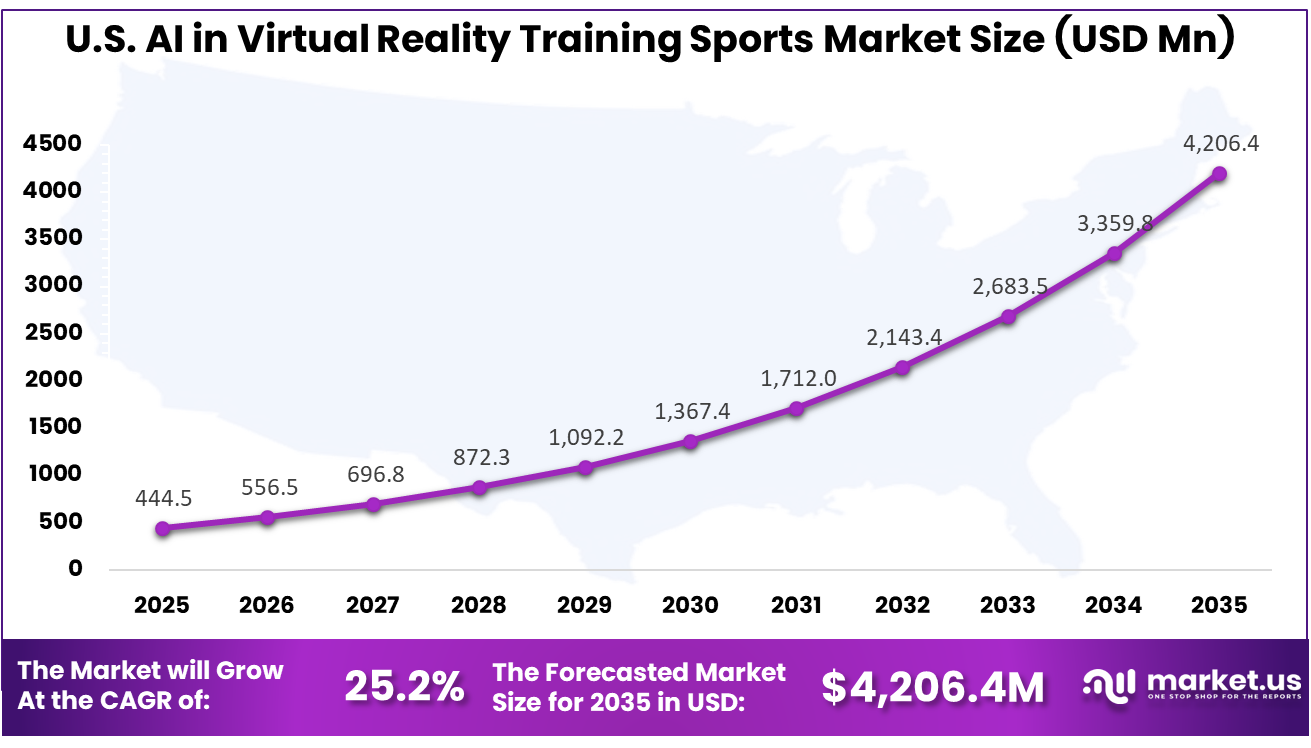
- The U.S. AI in Virtual Reality Training Sports Market was valued at USD 444.5 Million in 2025, with a robust CAGR of 25.2%.
- In 2025, North America held a dominant market position in the Global AI in Virtual Reality Training Sports Market, capturing more than a 42.3% share.
Role of Generative AI
Generative AI steps in to craft lifelike training worlds inside VR headsets, letting athletes face rare game moments like sudden rain or packed crowds without leaving the gym. Coaches love how it tweaks drills on the fly based on a player’s weak spots, sharpening decisions under pressure. One study found players improved reaction times by 25% after just weeks of these sessions.
This tech also breaks down complex moves into simple steps, showing athletes exactly where they slip up through instant replays. It feels personal, almost like having a sharp-eyed mentor whispering tips mid-practice. Teams report 30% fewer errors in real matches thanks to this focused feedback loop.
Investment and Business Benefits
Investors eye software for training packs like defense reads or rehab modules, plus data tools for safe biometric storage. Modular libraries let clubs buy targeted content with coach dashboards. Crossovers to schools or wellness widen appeal. Anonymized data from many users builds stronger AI. Over 50% of pros adopting means steady subscription cash flow.
Clubs save on travel and rentals by shifting some drills virtual, keeping skills sharp during breaks. Vendors lock in teams with update fees for new plays and stats. Data pools improve models over time. VR aids rehab, too, with gains in strength and function. Teams gain 20% on-field edge from tactical boosts.
Regional Analysis
In 2025, North America held a dominant market position in the Global AI in Virtual Reality Training Sports Market, capturing more than a 42.3% share, holding USD 495.6 million in revenue. This dominance is due to advanced tech hubs and heavy investments by major leagues like the NFL, NBA, and MLB in VR for player performance and fan draws. Strong infrastructure supports quick AI-VR rollout, with startups and giants pushing wearables and analytics. Coaches adopt it for safe drills that cut injuries and sharpen tactics. High sports culture and data focus drive widespread use.
For instance, in the 2025 U.S. Open, Sportsbox AI analyzed fans’ golf swings in 15 seconds using AI-powered 3D motion capture, providing instant pelvis and chest rotation metrics. This fan engagement initiative highlights North American dominance in VR/AI sports analytics, bridging professional training tech with consumer experiences.
U.S. AI in Virtual Reality Training Sports Market Size
The market for AI in Virtual Reality Training Sports within the U.S. is growing tremendously and is currently valued at USD 444.5 million. The market has a projected CAGR of 25.2%. The market is growing due to rising demand for data-driven athlete development and injury prevention through personalized VR programs. Pro leagues like the NFL and NBA invest heavily in immersive systems for safe, repeatable drills that boost skills without physical strain. Advances in computer vision and wearables enable real-time feedback, while tech-savvy coaches embrace VR for a competitive edge. This blend cuts training costs and speeds performance gains across football and more.
For instance, in June 2025, Strivr Advanced enterprise VR adoption with custom training modules for sports and the workforce, achieving high retention rates. NFL teams and retailers use Strivr for immersive scenarios, solidifying U.S. leadership in AI-VR sports performance training.
Key Regions and Countries
North America
- US
- Canada
Europe
- Germany
- France
- The UK
- Spain
- Italy
- Russia
- Netherlands
- Rest of Europe
Asia Pacific
- China
- Japan
- South Korea
- India
- Australia
- Singapore
- Thailand
- Vietnam
- Rest of APAC
Latin America
- Brazil
- Mexico
- Rest of Latin America
Middle East & Africa
- South Africa
- Saudi Arabia
- UAE
- Rest of MEA
Component Analysis
In 2025, the Hardware segment held a dominant market position, capturing a 52.4% share of the Global AI in Virtual Reality Training Sports Market. This segment is driven by the rising adoption of VR headsets, motion trackers, haptic devices, and sensor-based wearables in professional and semi-professional training environments. Sports organizations increasingly rely on high-fidelity visuals, accurate motion capture, and real-time feedback to replicate match-like scenarios. Improvements in headset resolution, lighter form factors, and reduced motion sickness are supporting longer training sessions and wider athlete acceptance.
Growth in this segment is also supported by falling hardware costs and broader availability of commercial-grade VR equipment. Training centers prefer owning physical devices to maintain consistent performance data and reduce dependency on shared infrastructure. Hardware upgrades aligned with AI-driven analytics enable more precise biomechanics tracking, making physical systems a core foundation of immersive sports training ecosystems.
For instance, in July 2025, Rezzil partnered with Premier League clubs for VR hardware setups using Meta Quest headsets and sensors. Teams equip players with trackers on their legs to mimic real kicks in immersive drills. This hardware boost helps repeat high-pressure football moments safely, cutting injury risks while sharpening decisions. Adoption grows as pros see faster skill gains from precise motion capture gear.
Type Analysis
Immersive VR training systems represent 70.3% of market adoption due to their ability to simulate real-world match pressure in a controlled environment. These systems place athletes inside interactive scenarios where decision-making, reaction time, and spatial awareness can be trained repeatedly without physical risk. Coaches value immersive setups because they allow scenario replay and performance comparison across sessions.
The demand for immersive systems is growing as sports increasingly rely on data-led performance improvement. AI-powered simulations adapt difficulty based on athlete behavior, making training more personalized. This approach supports consistent skill development, especially for tactical sports where positioning, anticipation, and timing directly influence match outcomes.
For instance, in July 2025, Burnley FC tested Rezzil’s immersive VR for live game recreations at Turf Moor. Fans and players dive into panoramic stadium views with crowd noise via Meta Quest. It recreates full matches for decision training. Clubs expand this type for a cognitive edge in tight spots. Growth ties to real performance lifts.
Deployment Mode Analysis
On-premises deployment holds 62.8% share as professional teams prefer full control over training data, system performance, and network reliability. Sports organizations often handle sensitive athlete performance metrics that require secure storage and restricted access. Local deployment ensures uninterrupted sessions without latency issues that can affect real-time VR experiences.
Another growth factor is the integration of VR systems with existing training infrastructure, such as biomechanics labs and video analysis rooms. On-premises setups allow customization to specific sports and coaching philosophies. Teams also benefit from predictable operating costs and long-term system ownership, which aligns well with structured training programs.
For instance, in June 2025, Strivr set up on-premises VR labs for NFL and NBA teams. Custom rooms with dedicated servers run private training sessions without cloud delays. Teams deploy hardware onsite for daily drills on decision-making. This mode thrives for secure, instant access during camps.
Technology Analysis
Computer vision contributes 41.7% of technology adoption due to its role in analyzing player movement, posture, and spatial positioning within virtual environments. AI-driven vision models interpret body mechanics without excessive wearable sensors, improving comfort during training. Coaches use this data to identify inefficiencies in technique and movement patterns.
This technology is expanding as camera accuracy and processing speeds improve. Computer vision enables automated feedback, reducing reliance on manual observation. Its ability to track multiple players simultaneously supports team-based simulations, making it highly valuable for tactical drills and coordinated play analysis.
For instance, in September 2025, Sportsbox AI added computer vision to its 3D golf swing app with Google Gemini. Single-camera tech scans poses for AI chat feedback on thousands of swings. Golfers get instant form fixes. It grows in sports for markerless analysis anywhere.
Sport Type Analysis
In 2025, the Football segment held a dominant market position, capturing a 30.5% share of the Global AI in Virtual Reality Training Sports Market. This dominance is due to the sport’s strong focus on tactical awareness, spatial decision-making, and reaction speed. VR-based training allows players to rehearse formations, passing lanes, and defensive positioning without physical fatigue. AI adapts scenarios based on player roles, offering position-specific learning.
The growth of football-focused VR training is also linked to injury prevention. Athletes can mentally rehearse match situations during recovery periods. This continuous cognitive training supports consistent performance improvement while reducing physical strain, making VR an effective tool for long-season management.
For instance, in July 2025, Rezzil powered Burnley FC’s VR football friendlies against Lazio. Live stadium recreations train reactions with real match data. Players kick in virtual crowds. Football leads as tactics demand endless scenario reps. Clubs scale it league-wide.
Application Analysis
In 2025, the Skill Acquisition and Performance Enhancement segment held a dominant market position, capturing a 45.4% share of the Global AI in Virtual Reality Training Sports Market. Athletes can practice complex skills such as timing, coordination, and situational awareness without external distractions. AI systems adjust drills based on progress, ensuring balanced skill development.
This application is expanding because it delivers measurable improvement through data-driven feedback. Coaches can track learning curves and identify strengths and gaps early. The ability to train mental and physical aspects together makes VR an efficient complement to traditional field-based sessions.
For instance, in June 2025, Rezzil advanced football skills for Premier League recoveries and youth. VR drills build confidence in injury rehab and basics. Cognitive gains show in matches. Apps focus here for targeted gains.
End-User Analysis
In 2025, the Professional Sports Teams and Clubs segment held a dominant market position, capturing a 52.9% share of the Global AI in Virtual Reality Training Sports Market. This dominance is due to higher budgets and structured performance programs. These organizations invest in advanced training tools to gain competitive advantages and extend the athlete’s career longevity. VR training fits well into high-performance environments where marginal gains matter.
Teams value VR systems for consistent training quality across seasons. AI-based insights support evidence-led coaching decisions and individualized training plans. As competition intensifies across leagues, professional clubs continue to adopt immersive technologies to improve preparation, reduce injury risk, and enhance overall team performance.
Key Market Segments
By Component
- Hardware
- Software
- Services
By Type
- Immersive VR Training Systems
- Non-Immersive VR Training Systems
- Semi-Immersive VR Training Systems
By Deployment Mode
- On-Premise
- Cloud-Based
By Technology
- Machine Learning
- Deep Learning
- Computer Vision
- Natural Language Processing
- Others
By Sport Type
- Football
- Basketball
- Cricket
- Tennis
- Golf
- Baseball
- Others (Hockey, Boxing, Athletics)
By Application
- Skill Acquisition and Performance Enhancement
- Injury Prevention and Rehabilitation
- Game Strategy Analysis
- Player Behavior and Biomechanics Monitoring
- Others
By End-User
- Professional Sports Teams and Clubs
- Sports Academies and Training Centers
- Individual Athletes
- Research Institutions
Emerging Trends
One big shift sees AI layering live stats onto VR views, so players see their speed or positioning as they move through simulations. This real-time insight lets them correct habits instantly, making practices feel dynamic and responsive. Coaches love how it bridges the gap between virtual reps and game-day performance.
Haptic suits are gaining ground too, adding touch sensations to VR to mimic ball impacts or tackles. This deepens immersion, helping athletes build muscle memory more naturally. As gear gets lighter and cheaper, more programs are experimenting, noticing steadier skill gains across training blocks.
Growth Factors
Rising interest in injury prevention drives adoption, as AI scans biomechanics in VR to flag risks before they happen. Players stay in peak form longer, with programs reporting smoother comebacks from tweaks. This focus on smart recovery keeps rosters deeper and seasons stronger.
Tech getting easier to use pulls in everyday athletes, not just pros, sparking wider experimentation. Affordable headsets and simple apps mean local clubs can run pro-level drills, sparking enthusiasm at all levels. It creates a ripple where better tools lead to more motivated players chasing bigger goals.
Market Dynamics
Drivers - Personalised Training Boost
AI in virtual reality tailors workouts to each athlete’s past actions and needs, adjusting drills right away for better results. Coaches quickly see weak spots through data and create focused plans, so players sharpen skills without needing the whole team around. This approach cuts injury risks from overuse and makes sessions feel just like real games, letting athletes repeat hard plays safely until they get them right. Teams spend less time on setup and more on real growth, building confidence that shows up in matches.
Real game-like setups help athletes handle pressure and improve reaction times with instant feedback on moves. Practice turns routine into smart steps forward, as trainers use insights to personalise every drill. Every day use boosts mental toughness and decision-making, carrying over to actual play without physical wear.
For instance, in January 2025, Beyond Sports rolled out its AI Virtual Pro feature, which crafts adaptive opponents that study player habits and tweak challenges in real time for sharper, custom soccer drills. This setup lets athletes face tailored defences that match their style, boosting decision skills without live opponents. Coaches now fine-tune sessions based on live feedback from VR matches.
Restraint - High Setup Costs
Starting with AI VR systems means a large initial outlay for gear and software, which strains budgets for many sports programs. Smaller clubs and local teams often stay with simple methods, as they lack funds for ongoing updates and maintenance. This keeps advanced tools out of reach for most everyday groups right now. Training staff to use the equipment takes extra time, pulling hours away from actual practice.
The high prices and broad use remain limited among average teams. Upfront spending covers not just hardware but also setup and learning curves for users. Programs must balance these costs against long-term gains, often choosing traditional ways instead. Steady funding needs slow down wider rollout until tech becomes cheaper.
For instance, in March 2025, Strivr grew its XR platform for sports teams, but high costs for enterprise headsets and AI software kept rollout limited to big programs facing budget strains. Smaller clubs eyed the immersive learning yet held back due to setup and maintenance expenses. Expansion waits on price drops for wider reach.
Opportunities - Wider Skill Access
AI VR lets players in far-off places train like top athletes by recreating any field or weather condition without travel. Newcomers get pro-style practice reps, helping talent from all areas rise evenly. Schools and clubs join in as tools get easier to use and share. Safe sessions speed injury recovery while keeping minds sharp on skills.
Team drills happen without needing the same space, fitting tight schedules better. VR supports motor learning and body control rebuilding after injuries, closing the gap to full play return. Remote access opens doors for group work anytime, boosting overall growth. More groups see daily wins as access spreads.
For instance, in July 2025, Rezzil launched the first VR matchday broadcast with Burnley FC, streaming pre-season games into Meta Quest headsets worldwide. Fans and remote players relive full stadium action with crowd noise, aiding skill practice anywhere. This opens pro-level reps to global users without travel.
Challenges - User Discomfort Issues
Some athletes face nausea or dizziness from VR, which shortens sessions and breaks focus. Not everyone handles long, immersive time well, so trainers limit drills to avoid dropouts. This limits full use across teams. Matching virtual actions to real body feelings proves hard, causing headaches after repeated attempts.
Coaches monitor closely and mix in rest, but it disrupts the steady training rhythm. Sensory mismatches between eyes and balance signals spark these issues, worsening with speed or length. Better headset designs and short bursts help, yet full fixes take time. Ongoing tweaks aim to ease problems for wider comfort.
For instance, in June 2025, Sportsbox AI pushed its 3D motion capture deeper into majors with swing reports, yet some golfers faced dizziness from rapid angle shifts in VR reviews. Beta tests included rest prompts and smoother views to cut session halts. Ongoing fixes aim for longer, nausea-free analysis.
Key Players Analysis
One of the leading players in October 2025, Sportsbox AI partnered with Golf Genius to integrate its patented single-camera 3D motion capture technology into the Coach 360 app. This collaboration enables PGA coaches and students to access advanced swing analysis directly through the platform, enhancing instruction with precise motion data and analytics.
Top Key Players in the Market
- Strivr
- StatusPro
- Rezzil
- Sense Arena
- Beyond Sports
- Sportsbox AI
- GamePlan
- HOLOFIT
- Mighty Sports
- VR Motion Learning
- MIRACL
- META (Reality Labs)
- WIN Reality
- Golf+
- deeptrack
- Mobalytics
- Mune
- MVM
- Swish Analytics
- Others
Recent Developments
- In March 2025, Strivr enhanced its XR platform with AI-backed immersive learning experiences, solidifying its leadership in VR training for elite sports teams. The Santa Clara-based company continues to dominate decision-making and situational training, with professional football programs reporting superior pattern recognition gains through realistic 3D environments.
- In July 2025, Rezzil partnered with Burnley FC and Premier League Player app to deliver the first immersive VR broadcast of a live pre-season friendly against Lazio on Meta Quest headsets. Fans experience panoramic stadium views with real-time commentary, extending Rezzil’s AI-VR tech from player training to global fan engagement.
Report Scope
| Report Features | Description |
|---|---|
| Market Value (2025) | USD 1,171.7 Million |
| Forecast Revenue (2035) | USD 14,495.3 Million |
| CAGR (2026-2035) | 28.6% |
| Base Year for Estimation | 2025 |
| Historic Period | 2020-2024 |
| Forecast Period | 2026-2035 |
| Report Coverage | Revenue Forecast, Market Dynamics, Competitive Landscape, Recent Developments |
| Segments Covered | By Component (Hardware, Software, Services), By Type (Immersive VR Training Systems, Non-Immersive VR Training Systems, Semi-Immersive VR Training Systems), By Deployment Mode (On-Premise, Cloud-Based), By Technology (Machine Learning, Deep Learning, Computer Vision, Natural Language Processing, Others), By Sport Type (Football, Basketball, Cricket, Tennis, Golf, Baseball, Others (Hockey, Boxing, Athletics)), By Application (Skill Acquisition and Performance Enhancement, Injury Prevention and Rehabilitation, Game Strategy Analysis, Player Behavior and Biomechanics Monitoring, Others), By End-User (Professional Sports Teams and Clubs, Sports Academies and Training Centers, Individual Athletes, Research Institutions) |
| Regional Analysis | North America (US and Canada), Europe (Germany, France, The UK, Spain, Italy, and Rest of Europe), Asia Pacific (China, Japan, South Korea, India, Australia, and Rest of APAC), Latin America (Brazil, Mexico, and Rest of Latin America), Middle East & Africa (GCC, South Africa, and Rest of MEA) |
| Competitive Landscape | Strivr, StatusPro, Rezzil, Sense Arena, Beyond Sports, Sportsbox AI, GamePlan, HOLOFIT, Mighty Sports, VR Motion Learning, MIRACL, META (Reality Labs), WIN Reality, Golf+, deeptrack, Mobalytics, Mune, MVM, Swish Analytics, Others |
| Customization Scope | Customization for segments, region/country-level will be provided. Moreover, additional customization can be done based on the requirements. |
| Purchase Options | We have three licenses to opt for: Single User License, Multi-User License (Up to 5 Users), Corporate Use License (Unlimited Users and Printable PDF) |





























