


Quick Navigation
Overview
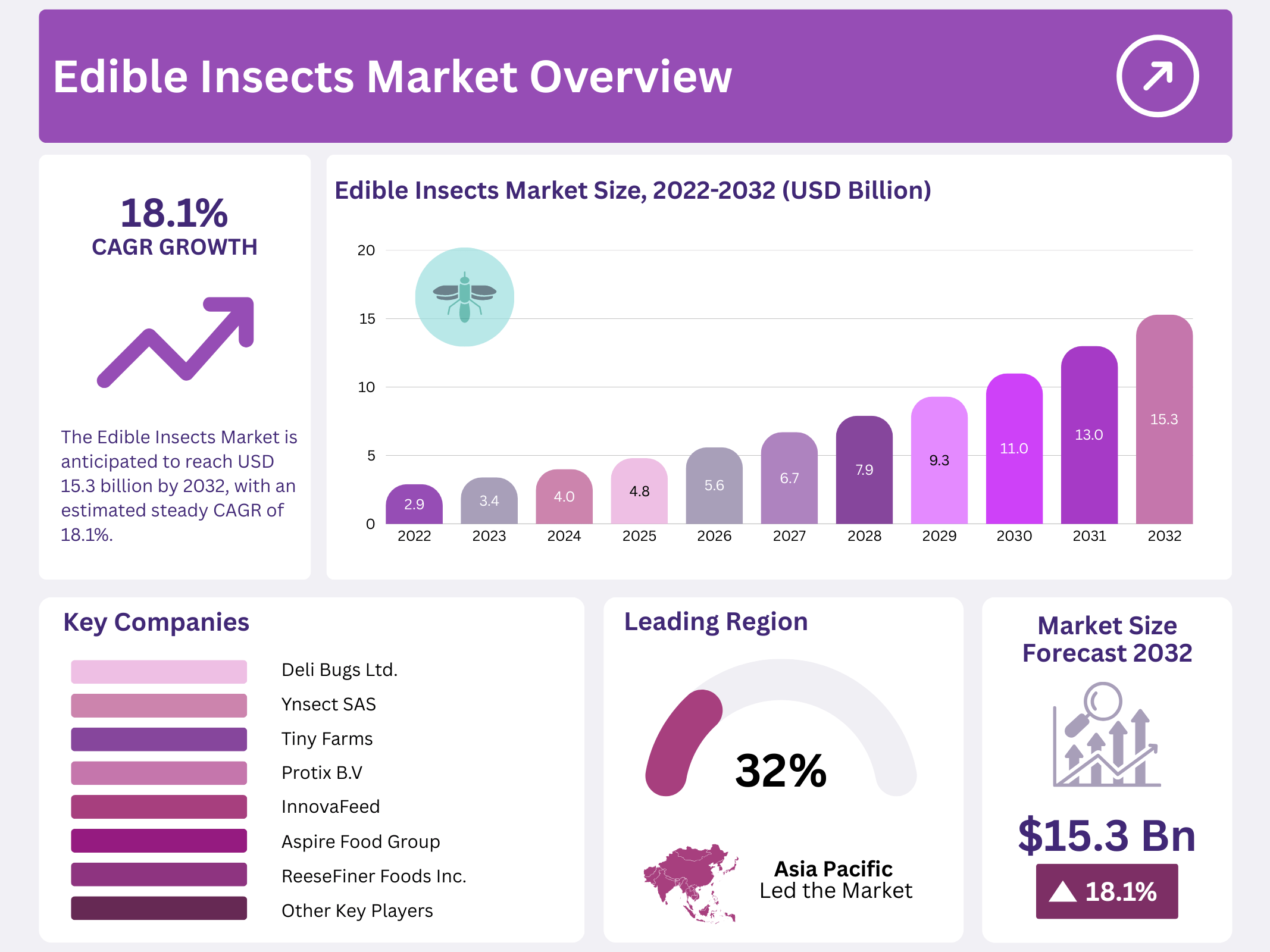
New York, NY – November 24, 2025 – The Global Edible Insects Market is witnessing rapid growth driven by rising demand for sustainable and high-protein food sources. The market is expected to reach approximately USD 15.3 billion by 2032, growing steadily at a CAGR of 18.1% during the forecast period from 2022 to 2032. In 2023, the market size was estimated at around USD 3.4 billion, reflecting increasing consumer interest and expanding commercial adoption.
Edible insects refer to insects that are safely consumed by humans as part of their diet. They have been an integral component of traditional food cultures in many regions for centuries and continue to be consumed today. Edible insects are rich in protein, essential amino acids, vitamins, minerals, and healthy fats, making them a highly nutritious food source. Their low environmental footprint further enhances their appeal as a sustainable alternative to conventional animal protein.
The edible insects category includes a wide variety of species, such as crickets, grasshoppers, mealworms, caterpillars, ants, and beetles. These insects are available in multiple forms, including whole insects, insect flours, powders, and ingredients used in processed food products. Such versatility allows their incorporation into snacks, protein bars, baked goods, and dietary supplements, supporting broader acceptance across both traditional and modern food applications.
Key Takeaways
- The Edible Insects Market is anticipated to reach USD 15.3 billion by 2032, with an estimated steady CAGR of 18.1%.
- Beetles held the dominant market position in 2023, capturing more than a 31.6% share due to their nutritional value and culinary versatility.
- Insect Powder held a dominant market position in 2023, capturing more than a 40% share, and was widely used in various food products.
- The Animal Feed segment held a dominant market position in 2023, driven by the demand for sustainable protein sources.
- The Asia-Pacific (APAC) region had the highest market share, driven by cultural acceptance and consumption of insect products.
Report Scope
| Report Features | Description |
|---|---|
| Market Value (2023) | USD 3.4 Billion |
| Forecast Revenue (2032) | USD 15.3 Billion |
| CAGR (2023-2032) | 18.1% |
| Segments Covered | By Insect Type (Beetles, Cricket, Caterpillar, Hymenoptera, Orthoptera, Tree Bugs, Others), By Type (Insect Powder, Insect Meal, Insect Bar, Insect Paste, Insect Oil, Others), By Application (Food & Beverages, Cosmetics, Health Supplements, Animal Feed, Others) |
| Competitive Landscape | Beta Hatch Inc., Deli Bugs Ltd., InnovaFeed, AgriProtein Technologies, Protix B.V., Ynsect SAS, ReeseFiner Foods Inc., Tiny Farms, Aspire Food Group, HaoCheng Mealworm Inc., Global Bugs Asia CO., Ltd, Enviro Flight, Hargol Foodtech, Kreca V.O.F.LLC, Armstrong Cricket Farm, Georgia, Entomo Farms, EntoCube Ltd., Protifarm Holdings NvKey Market Segments |
By Insect Type
In 2023, beetles dominated the edible insects market with a 31.6% share. Their widespread availability, high nutritional profile (rich in protein, vitamins, and minerals), and culinary versatility have made them the most consumed insect globally. Beetles are projected to retain their leadership throughout the forecast period as consumer awareness and acceptance of insect-based foods continue to rise.
The crickets segment also commands a significant portion of the market. Renowned for their excellent protein content, complete amino-acid profile, and highly sustainable farming requirements, crickets have gained strong traction. Demand is particularly strong for value-added products such as cricket flour, whole roasted crickets, and cricket-based protein bars. The cricket segment is expected to be one of the fastest-growing categories, fueled by increasing mainstream incorporation into snacks, bakery items, and functional foods.
By Product Form
Insect powders led the market in 2023, capturing over 40% of total revenue. Their ease of use, long shelf life, and seamless integration into a wide range of recipes—from protein shakes and baked goods to snacks and seasonings—have driven widespread adoption among food manufacturers and consumers alike. Powders deliver concentrated nutrition (high protein, fiber, and micronutrients) in a convenient, neutral-tasting format.
Closely following is the insect meal segment, primarily used in animal nutrition. Produced by grinding dried whole insects into a fine meal, this product serves as an eco-friendly, high-quality protein source for aquaculture, livestock feed, and pet food. Its low environmental footprint and superior digestibility compared to traditional proteins position insect meal for steady growth as the animal feed industry seeks sustainable alternatives.
By Application
The animal feed segment was the largest application area in 2023, accounting for more than 36% of the market. Insects such as black soldier fly larvae and mealworms provide a nutrient-dense, sustainable substitute for fishmeal and soybean meal. Rising pressure to reduce the ecological impact of conventional feed ingredients, combined with regulatory support in several regions, continues to accelerate adoption in livestock, aquaculture, and pet food formulations.
Regional Analysis
Asia-Pacific (APAC) remained the undisputed leader in 2023, holding over 32.6% of the global market and generating approximately USD 1.0 billion in revenue. Long-standing cultural acceptance of entomophagy in countries like Thailand, China, Vietnam, and Laos, coupled with strong local production capacity, underpins this dominance. Rapid urbanization, rising disposable incomes, and growing demand for convenient, processed insect products are expected to drive the fastest regional growth through the forecast period.
In summary, the edible insects market in 2023 was characterized by beetle and powder dominance on the supply side, heavy utilization in animal feed, and clear leadership from Asia-Pacific—trends that are all projected to strengthen as sustainability and protein-security concerns intensify globally.
Top Use Cases
- Human Nutrition Boost: Edible insects like crickets and mealworms pack a punch with complete proteins, healthy fats, and key vitamins that match or beat traditional meats. They’re a smart pick for folks chasing balanced diets without the heavy eco-burden of livestock. Easy to mix into snacks or shakes, they help fight hunger in growing populations while keeping meals tasty and nutrient-rich.
- Animal Feed Upgrade: Farmers turn to insects such as black soldier fly larvae to craft high-quality feed for livestock, fish farms, and pets. These bugs convert waste into protein-packed meals that cut down on soy and fishmeal needs. Healthier animals mean better yields, all while slashing farm pollution and feed costs for a greener operation.
- Sustainable Food Innovation: Chefs and brands whip up trendy treats like protein bars, noodles, and burgers using insect flours from beetles or grasshoppers. This swaps out resource-hungry crops for quick-growing insects that thrive on scraps. It sparks excitement in kitchens worldwide, blending bold flavors with guilt-free indulgence for eco-savvy eaters exploring novel bites.
- Health Supplement Ally: Insect extracts shine in pills and powders, loaded with antioxidants and minerals that support immunity, gut health, and even heart wellness. From cricket oil for skin glow to silkworm silk for anti-aging creams, they offer natural perks without synthetic additives. Busy wellness fans love the simple, potent boost to daily routines.
- Eco-Farming Fertilizer Source: Insect waste from cricket or termite farms turns into top-notch compost that enriches soil without chemicals. This closed-loop trick recycles farm leftovers into nutrient gold for crops, boosting growth while curbing waste. It’s a win for smallholders, cutting bills and pollution to build resilient, chemical-free fields for tomorrow’s harvests.
Recent Developments
1. Beta Hatch Inc.
Beta Hatch is scaling up with its new, large-scale production facility in Cashmere, Washington, which is the largest of its kind in North America. The company focuses on producing mealworms (Tenebrio molitor) for animal feed, particularly in poultry and aquaculture. Their recent developments involve optimizing production efficiency and securing partnerships to integrate their insect meal into commercial feed supply chains, promoting a circular economy by using agricultural byproducts as feedstock.
2. Deli Bugs Ltd.
UK-based Deli Bugs is pioneering the production of insects for human consumption. A key recent development is the successful approval of its Lesser Mealworm (Alphitobius diaperinus) as a Novel Food in the UK, a significant regulatory milestone. The company is now scaling its vertical farming operations to bring whole, roasted insects and insect protein powder to the market, positioning itself as a leader in the direct-to-consumer edible insect sector in Great Britain.
3. InnovaFeed
InnovaFeed specializes in large-scale insect farming for feed, operating one of the world’s largest facilities in Nesle, France. A major recent development is their global expansion, including a strategic partnership with ADM to build a new production site in Decatur, Illinois. They are also advancing R&D into new applications, such as using insect oil in aquaculture and pet food, while focusing on industrial symbiosis to reduce the environmental footprint of their operations.
4. AgriProtein Technologies
Now operating under its parent company, Insect Technology Group (after a merger with Protix), AgriProtein’s recent developments are part of a larger consolidation. The focus has been on leveraging their patented technology for breeding black soldier flies on organic waste. The merged entity is now driving global expansion and scaling up production capacity to meet the growing demand for sustainable protein in animal feed, pet food, and aquaculture markets worldwide.
5. Protix B.V.
Protix continues to lead in ingredient application and expansion. A landmark recent development is a strategic partnership and substantial investment from ingredients giant Darling Ingredients. This alliance aims to globalize Protix’s insect-based protein and lipid solutions, accelerating the construction of new farms worldwide. Protix is also focusing on launching new products for the pet food and aquaculture industries, solidifying its role as a key supplier of sustainable, high-value ingredients.
Conclusion
Edible Insects emerge as a game-changer in our quest for smarter food choices. These tiny powerhouses deliver top-notch nutrition while easing the strain on our planet’s resources, from water to land. With more folks embracing bold, green eating habits, insects are weaving into everyday meals and feeds, sparking fresh ideas in kitchens and farms alike.







