

Our research and reporting process follows recognized industry practices and global standards for data collection, analysis, and presentation. This helps ensure that clients receive clear, reliable, and well-validated insights. Each project is handled with a structured and careful approach to maintain accuracy and relevance.
The methodology used is detailed, flexible, and tailored to the specific industry and business questions being studied. As new data points and findings emerge, the research is reviewed and validated continuously to strengthen the quality of the final output. We also work closely with clients to define clear research objectives and agree on the most suitable methodology for each project.
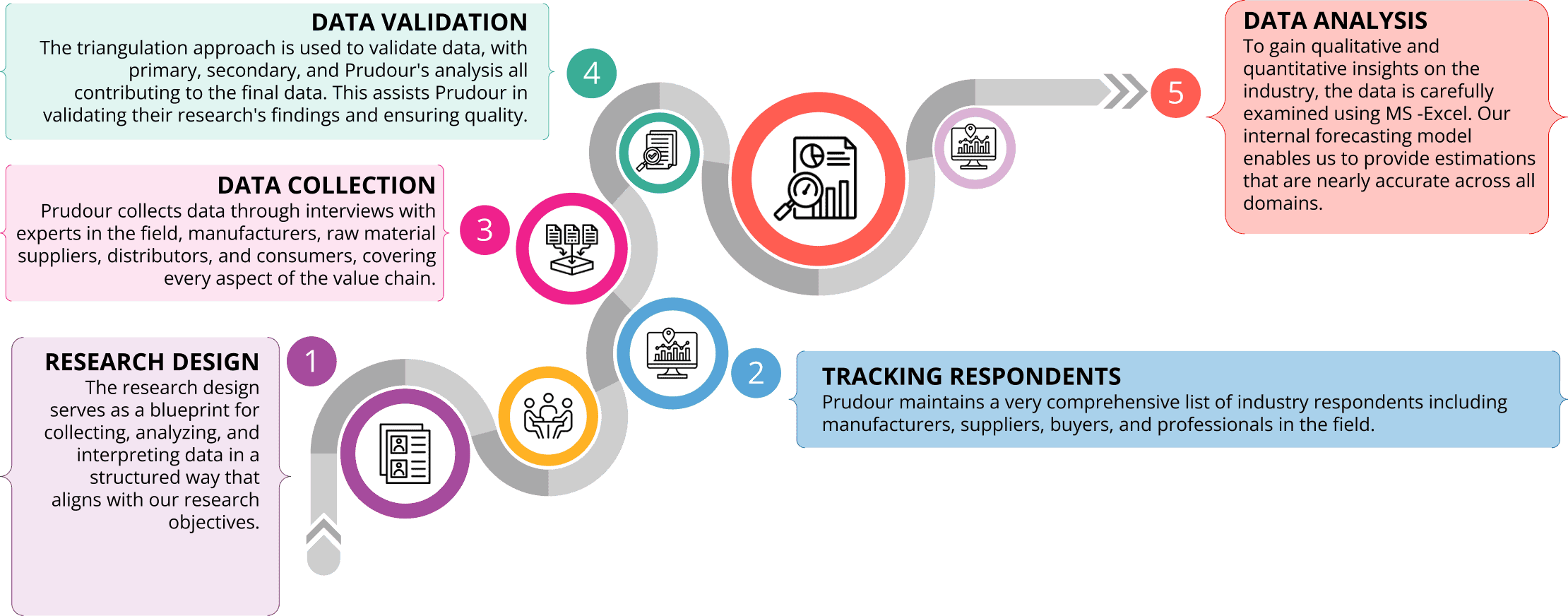
Our Market Research Process
Research Design
IIn this stage, we establish the overall approach and framework that will guide the entire market research process. The research design serves as a blueprint for collecting, analyzing, and interpreting data in a structured way that aligns with our research objectives. We ensure that our methodology is appropriate for the type of data we need, and we make sure to have clear plans for each aspect of data collection and analysis.
Data Collection
IThe data collection process is the heart of our research, where we gather the necessary information to address the research objectives. This step ensures that the data we collect is accurate, reliable, and relevant to our research questions. We rely on both primary and secondary data sources, and our goal is to follow a structured and systematic approach to avoid bias and errors.
Data Analysis
IData analysis involves collecting, cleaning, interpreting, and transforming raw data into meaningful insights that help guide decision-making. The goal is to identify trends, patterns, and relationships within the data to make informed business decisions or strategic recommendations.
Data Validation
Ihe validation process involves multiple layers of checking both the quality and integrity of the data we have collected, ensuring that the analysis holds up under scrutiny.
Documentation and Reporting
IThis is just placeholder text. Don't be alarmed, this is just here to fill up space since your finalized copy isn't ready yet. Once we have your content finalized, we'll replace this placeholder text with your real content.

Research Design
Method Selection
We decide between qualitative (e.g., focus groups, interviews, secondary research) or quantitative (e.g., surveys, analytics) methods, or a combination of both.
Sampling Strategy
We define the target population and sampling technique (e.g., random sampling, stratified sampling, convenience sampling).
Data Collection Tools
We create or select survey questionnaires, interview guides, or observation protocols.
Data Collection
A structured data collection process is followed to ensure that the research findings are accurate, reliable, and relevant. Both primary and secondary research methods are used to gather comprehensive market information from trusted sources.
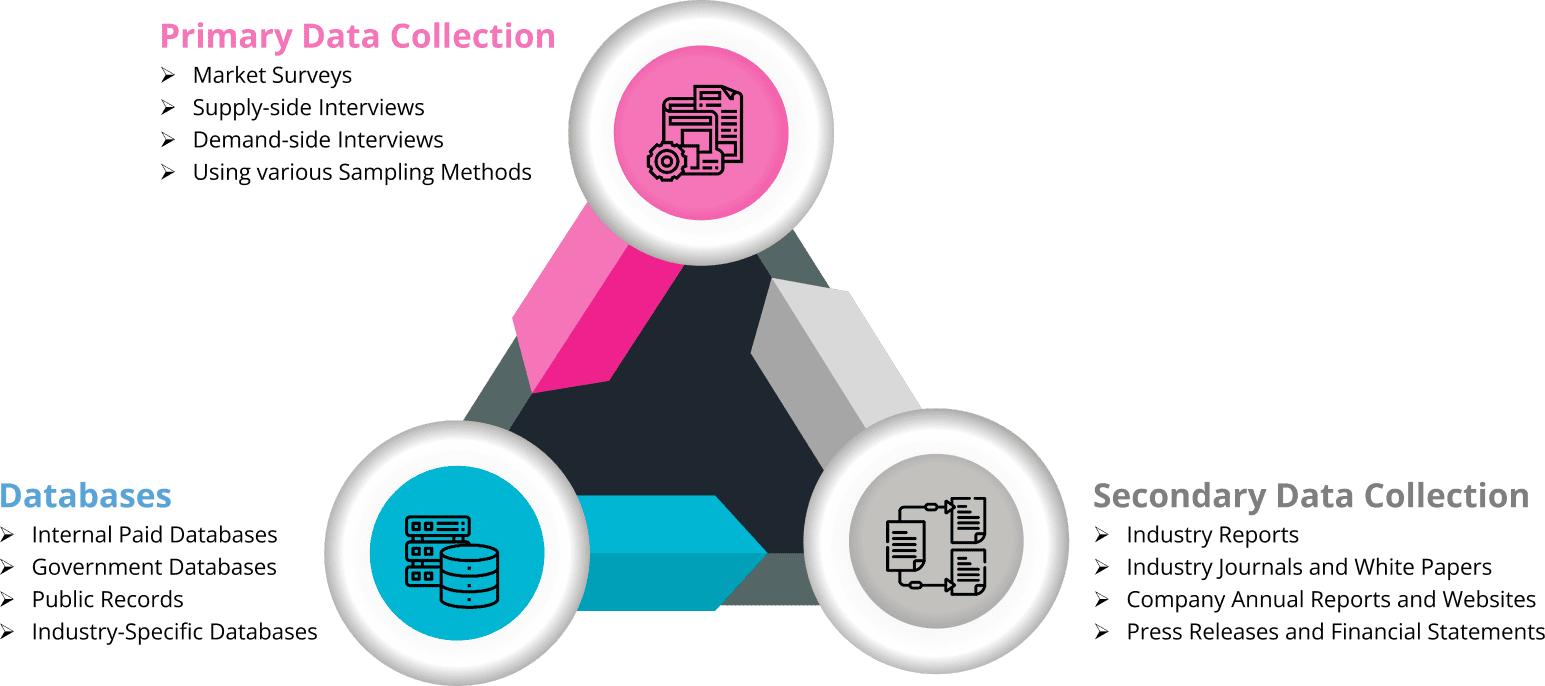
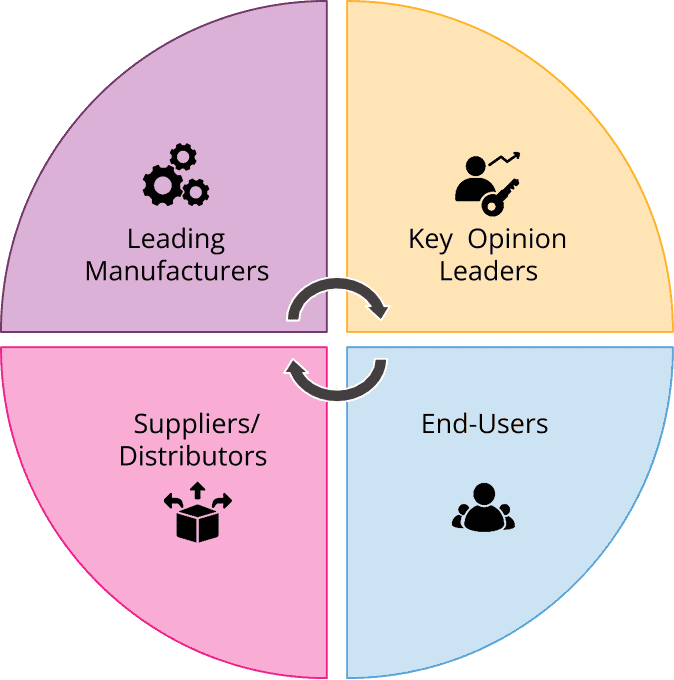
Primary Data Collection
Read more ↓
Secondary Data Collection
Read more ↓Data Analysis
Data Cleaning
Raw data is cleaned, organized, and standardized to improve accuracy, remove inconsistencies, and prepare it for reliable analysis and reporting.
Data Modeling and Analysis
Statistical models and visual tools are used to identify patterns, measure relationships, and generate reliable forecasts from structured market data.
Data Interpretation
Market data is analyzed using validated sources, trend comparisons, and expert review to deliver clear, accurate, and decision-focused insights.
Market Estimation Approaches
Market size is estimated using top-down and bottom-up approaches to ensure accurate segment analysis, reliable forecasting, and complete market validation.
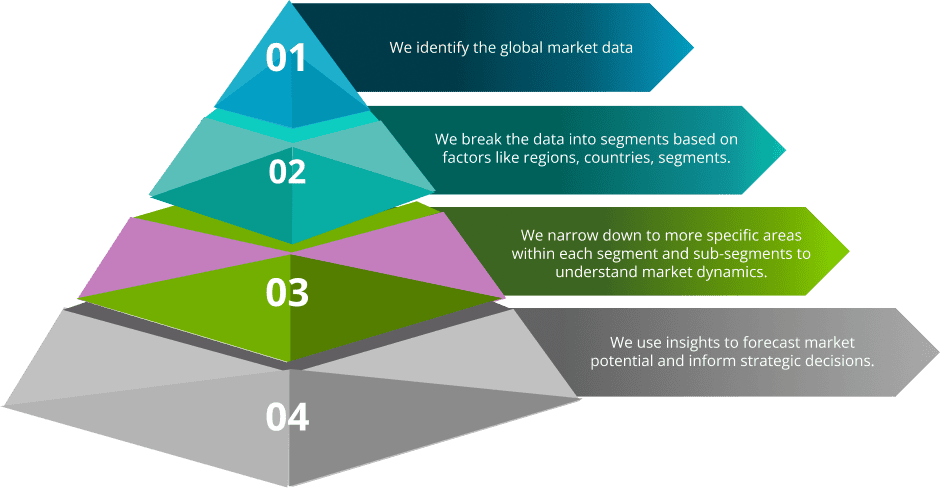
Top-down Approach
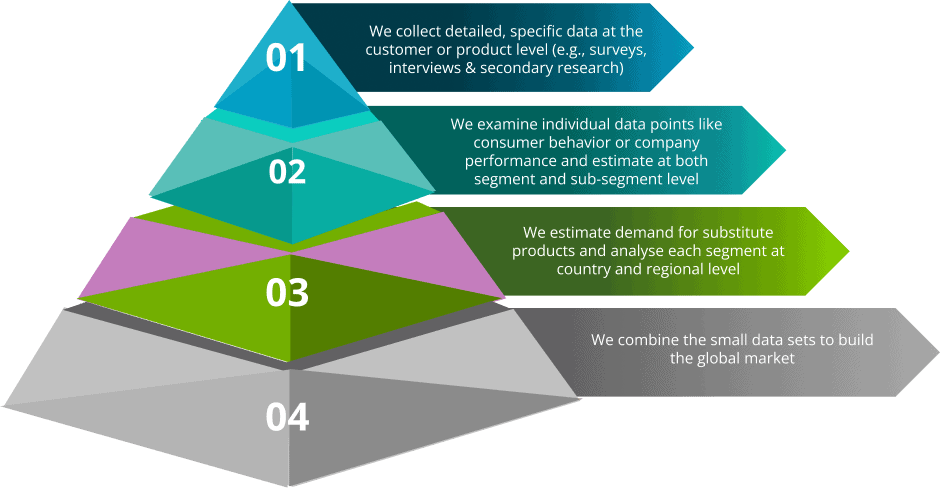
Bottom-Up Approach
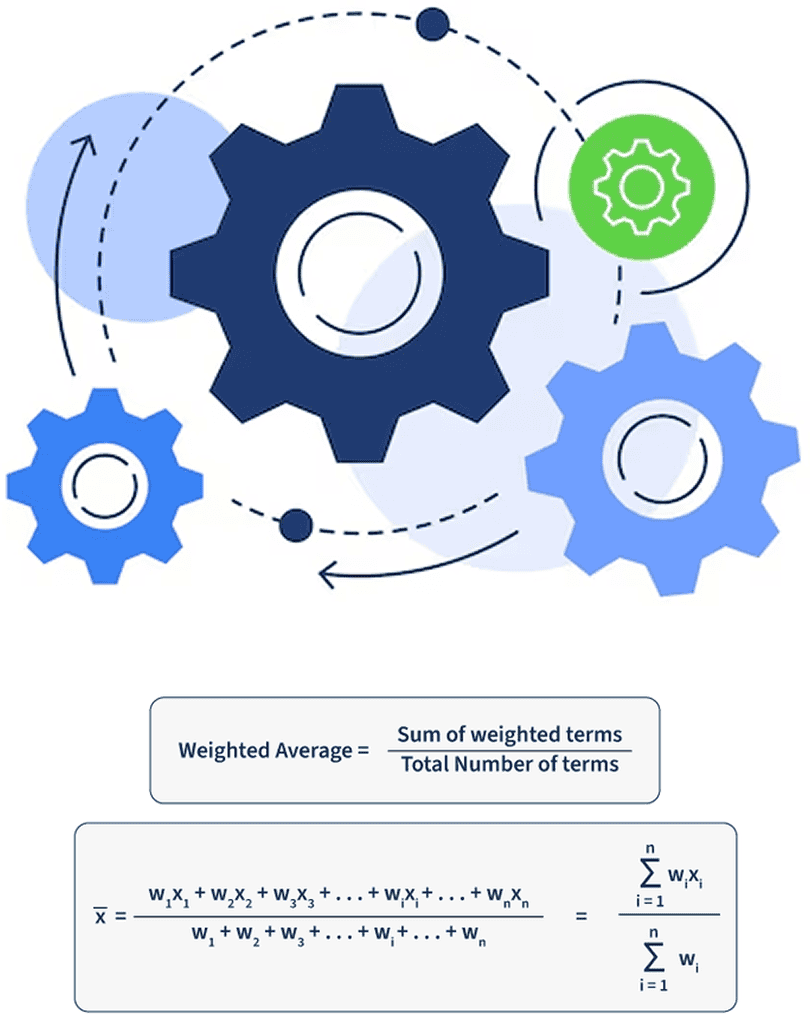
Weighted Average Method

Parent/Ancillary Market Analysis

Primary Interviews of KoLs

Customer Base Method

Installed Base Method

Volume-Price Method
How We Validate The Data
Challenging assumptions, we go beyond biases to deliver research that is accurate, balanced, and grounded in objectivity. Quality insights begin with a clear, unbiased mind.


Preliminary Data Quality Check
We perform an initial inspection to detect issues like duplicates, missing values, outliers, incorrect ranges, and inconsistencies across data sources.

Cross-Verification & Data Triangulation
We compare the data with trusted external sources and revalidate from original data points to confirm authenticity and integrity.

Consistency Checks
We ensure that relationships between variables are logical and data behaves consistently over time, identifying any unusual patterns or errors.

Peer Review and Expert Validation
We conduct internal and external reviews to identify potential errors and confirm the data aligns with industry knowledge or expectations.
Ethical Considerations
What we do?
We ensure that all our data collection practices are ethical, transparent, and in line with industry standards.
Informed Consent
We ensure that all participants provide informed consent, understanding the purpose of the research and how their data will be used.
Confidentiality
We guarantee that all personal information is kept confidential, and participants' anonymity is maintained.
Voluntary Participation
We ensure that participation is entirely voluntary, with no coercion or pressure applied.



