Market Overview
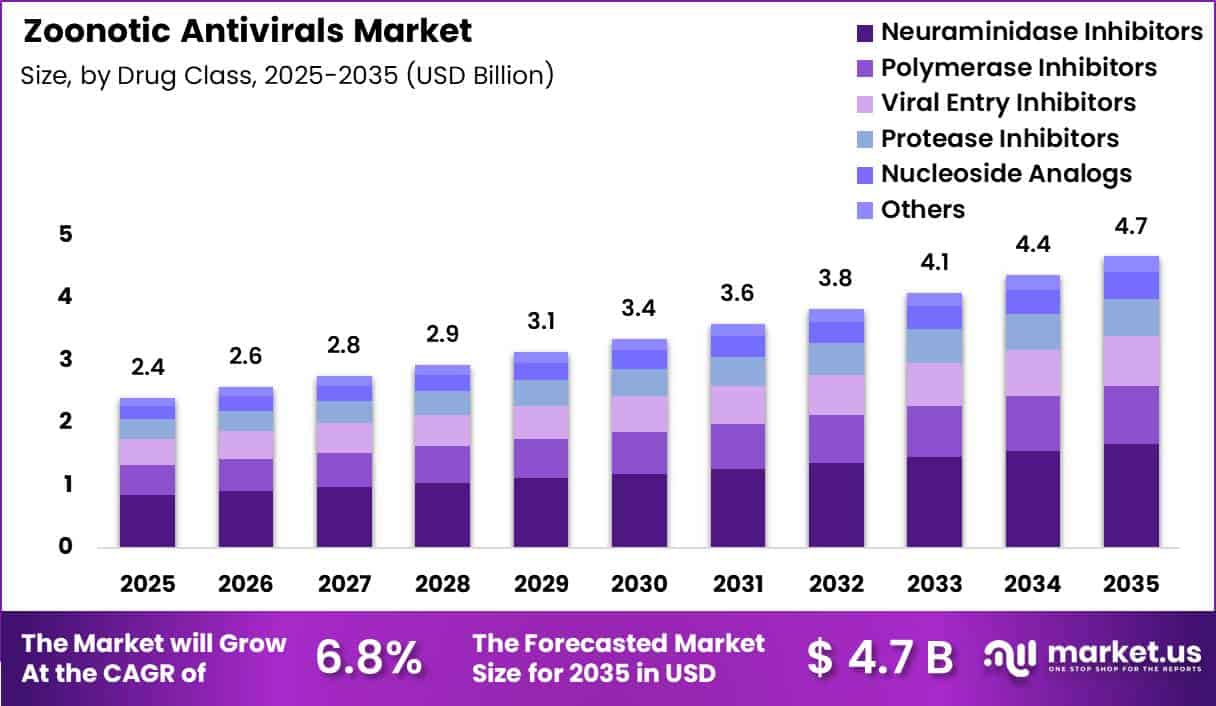
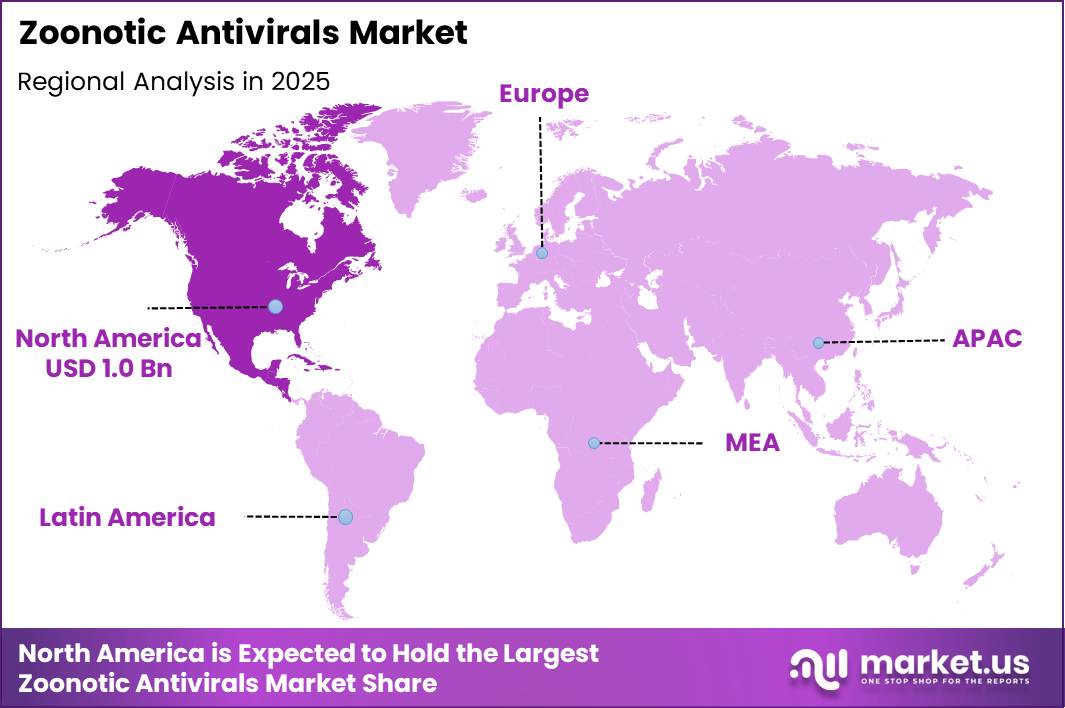
The Global Zoonotic Antivirals Market size is expected to be worth around US$ 4.7 Billion by 2035 from US$ 2.41 Billion in 2025, growing at a CAGR of 6.8% during the forecast period from 2026 to 2035. In 2025, North America led the market, achieving over 41.6% share with a revenue of US$ 1.00 Billion.
The Zoonotic Antivirals Market is gaining importance due to the increasing global focus on preventing and treating viral infections transmitted between animals and humans. Zoonotic diseases represent a major public health challenge, with the World Health Organization (WHO) identifying more than 200 types of zoonotic diseases that can affect humans.
These infections include viral diseases such as influenza, rabies, Ebola, Nipah virus, and emerging coronavirus infections, creating demand for effective antiviral therapies and rapid response treatments. The market is driven by rising investments in infectious disease preparedness, One Health initiatives, antiviral drug development, and advanced surveillance programs.
According to the U.S. Centers for Disease Control and Prevention (CDC), scientists estimate that more than 6 out of 10 known infectious diseases in humans can spread from animals, while 3 out of 4 new or emerging infectious diseases originate from animals. This growing disease burden is encouraging research into broad-spectrum antivirals, repurposed antiviral drugs, and targeted therapies.
Government agencies and healthcare organizations are strengthening antiviral preparedness against high-risk zoonotic outbreaks. For example, Nipah virus remains a significant concern because WHO reports a high estimated case fatality rate of 40% to 75%, with no licensed vaccine or specific antiviral treatment currently available, highlighting unmet medical needs.
The Zoonotic Antivirals Market is expected to expand through innovations in antiviral platforms, monoclonal antibodies, small-molecule drugs, and pandemic preparedness programs. Increasing collaboration among public health agencies, pharmaceutical developers, and research institutions will support the development of faster and more effective treatments for future zoonotic viral threats.
Key Takeaways
- Market Size: The Global Zoonotic Antivirals Market size was US$ 2.41 Billion in 2025. The market is estimated to grow to US$ 4.7 Billion by 2035.
- Market Share: The Compound Annual Growth Rate (CAGR) of the market from 2026 to 2035 will be at 6.8%.
- Virus Type: Influenza Viruses has the largest market share, accounting for 42.5% of total sales.
- Drug Class: Neuraminidase Inhibitors dominate the segment, accounting for 35.6% of total revenue.
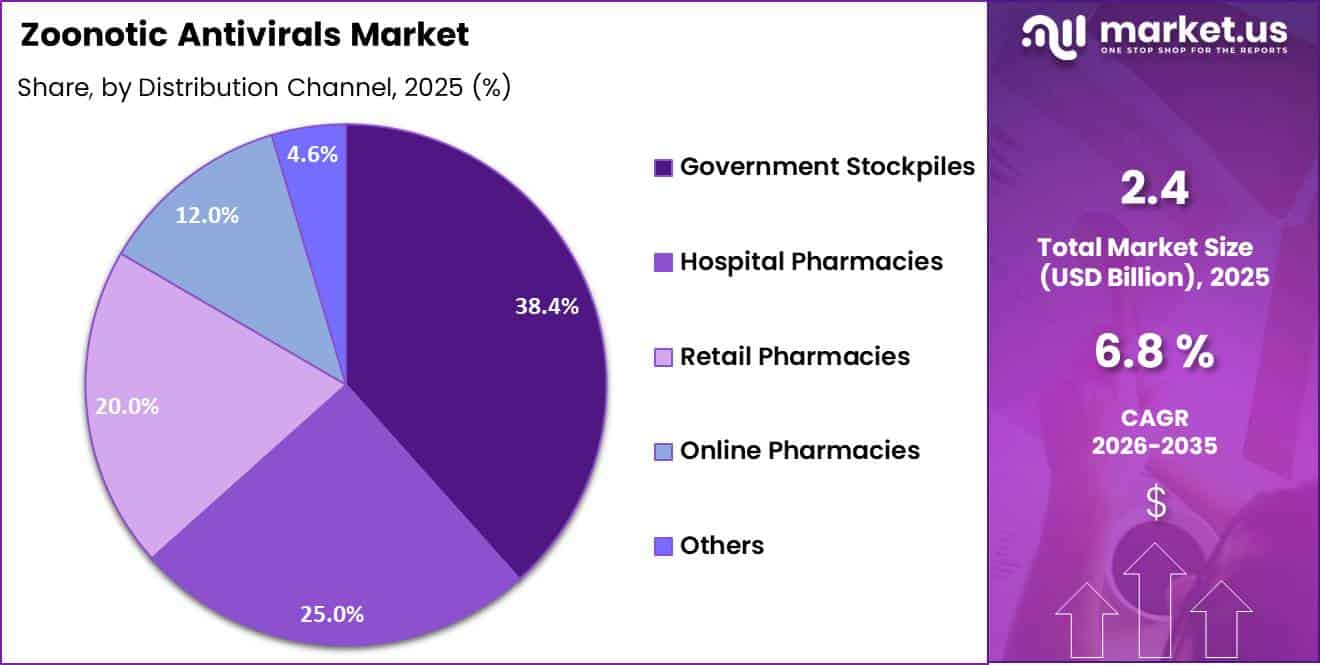
- Distribution Channel: Government Stockpiles dominate the segment, accounting for 38.4% of total revenue.
- End User: Hospitals dominate the segment, accounting for 44.7% of total revenue.
- Regional: North America is the dominant regional market, accounting for 41.6% of global sales, holding US$ 1.00 Billion in revenue.
Virus Type Analysis
Influenza viruses account for the largest share of the zoonotic antivirals market, capturing around 42.5% of global revenues in 2025 due to their high mutation rates, seasonal circulation, and recurrent pandemic risk that keeps stockpiling and vaccination-plus-therapy strategies at the center of preparedness plans.
Coronaviruses form the next major segment as governments and health systems continue to invest in broad-spectrum and coronavirus-active antivirals following COVID-19, emphasizing rapid-response platforms and combination regimens that can be redeployed against future spillover strains.
Ebola and Marburg virus targeted antivirals remain niche but strategically important, with demand driven by outbreak-prone regions in Africa and by multinational agencies financing emergency stockpiles and investigational therapeutics for filovirus epidemics.
Rabies virus and hantavirus therapies represent smaller, geographically concentrated segments where treatment demand is closely linked to animal-bite incidence, rodent exposure, and public health vaccination coverage, particularly in Asia, Latin America, and selected rural markets.
Nipah and Hendra viruses, Rift Valley fever virus, Crimean-Congo hemorrhagic fever virus, and other emerging zoonoses collectively form an opportunistic “long tail” segment, where revenues are modest but pipeline activity is growing as agencies prioritize platform antivirals capable of addressing Category A and B priority pathogens under global health security initiatives.
Drug Class Analysis
Neuraminidase inhibitors dominate the zoonotic antivirals market by drug class, representing approximately 35.6% of revenues in 2025, supported by their entrenched role in influenza treatment and prophylaxis, established clinical guidelines, and widespread inclusion in national stockpiles.
Polymerase inhibitors account for about 20.0% and benefit from broad-spectrum activity against multiple RNA viruses, making them attractive for pandemic preparedness frameworks and investigational use against novel zoonotic threats.
Viral entry inhibitors hold roughly 17.0% share as they gain traction in filovirus and coronavirus programs where blocking host–virus interaction is central to limiting severe disease progression. Protease inhibitors, with a 13.0% share, remain important in combination regimens and repurposing strategies, particularly where host-targeted and virus-targeted mechanisms are combined to lower resistance risks.
Nucleoside analogs capture around 9.0% of the market, supported by their role as backbone therapies in broad-spectrum candidates, while the remaining 5.4% is spread across other mechanisms, including host-directed antivirals and novel modality drugs that are still at an early commercialization stage but backed by substantial R&D funding.
Distribution Channel Analysis
Government stockpiles constitute the leading distribution channel for zoonotic antivirals, accounting for about 38.4% of market share in 2025 as centralized procurement and strategic reserves remain the cornerstone of national and supranational pandemic preparedness strategies. These stockpiles ensure rapid deployment during outbreaks, with inventory management focused on shelf-life optimization, rotation policies, and surge-capacity contracts with manufacturers.
Hospital pharmacies, representing roughly 25.0% of distribution, are critical for acute case management, intensive-care protocols, and administration of high-cost or parenteral antivirals that require close clinical supervision.
Retail pharmacies contribute around 20.0% of sales by supporting outpatient management of influenza and other community-managed zoonotic infections, particularly in high-income and urbanizing markets with strong prescription infrastructure.
Online pharmacies, at approximately 12.0%, are gaining ground in regions with growing e-health adoption and teleconsultation, improving access in remote areas while raising the need for tighter stewardship of prescription antivirals.
The remaining 4.6% is attributed to other channels, including military procurement, NGO-led programs, and specialized emergency response networks, which play targeted but influential roles during localized epidemics and humanitarian crises.
End User Analysis
Hospitals are the leading end users in the zoonotic antivirals market, accounting for roughly 44.7% of utilization in 2025 as they manage severe and complicated infections, deliver intravenous and combination therapies, and implement isolation and infection-control protocols. Their central role in triage and critical care, particularly for influenza complications, viral pneumonias, and hemorrhagic fevers, underpins strong demand for guideline-backed antiviral regimens.
Government agencies form the second key end-user group, overseeing procurement, stockpiling, and coordinated deployment of antivirals during outbreaks; their decisions heavily influence volume demand, portfolio composition, and pricing dynamics across the supply chain.
Research institutes represent another important segment as they conduct clinical trials, resistance surveillance, and translational studies, driving consumption of investigational or compassionate-use antivirals that support label expansions and new approvals.
Veterinary clinics, while smaller in revenue terms, are strategically relevant in the “One Health” context, using antivirals and adjunct therapies in companion animals and livestock, helping to curb viral reservoirs and reduce the probability of spillover events.
Key Market Segments
By Virus Type
- Influenza Viruses
- Coronaviruses
- Ebola and Marburg Viruses
- Rabies Virus
- Hantaviruses
- Nipah and Hendra Viruses
- Rift Valley Fever Virus
- Crimean-Congo Hemorrhagic Fever Virus
- Others
By Drug Class
- Neuraminidase Inhibitors
- Polymerase Inhibitors
- Viral Entry Inhibitors
- Protease Inhibitors
- Nucleoside Analogs
- Others
By Distribution Channel
- Government Stockpiles
- Hospital Pharmacies
- Retail Pharmacies
- Online Pharmacies
- Others
By End User
- Hospitals
- Government Agencies
- Research Institutes
- Veterinary Clinics
Driver
One Health Preparedness Funding Accelerating Zoonotic Antiviral Demand
Post‑COVID, many OECD health systems and multilateral agencies have ring‑fenced recurring pandemic preparedness budgets, with One Health positioning zoonoses at the centre of national security dialogues and prompting new surveillance and countermeasure funding lines from 2024 onward.
Several countries have launched integrated animal–human surveillance programs and zoonotic threat lists, often accompanied by 3–5‑year budget envelopes that can allocate hundreds of millions of dollars to vaccine and antiviral platforms in practice, antivirals frequently capture 20–30% of these countermeasure pools because they can be deployed more rapidly than vaccines once a pathogen is characterized.
Multilateral initiatives and philanthropic consortia have begun to support regional manufacturing hubs for infectious disease products, which reduces marginal cost of goods sold (COGS) by spreading capex over larger volumes and creates viable contract manufacturing and fill‑finish business models tied to preparedness orders.
For manufacturers of zoonotic antivirals, this driver translates into stickier long‑term framework agreements, take‑or‑pay clauses, and subscription‑like revenue structures where governments pay annual retainers for guaranteed access, structurally lifting revenue visibility and supporting valuation multiples more akin to SaaS than purely transactional pharma.
Commercially, the One Health framing also expands the customer universe to ministries of agriculture and environment and to livestock and food‑industry buyers, which diversifies revenue beyond traditional hospital and retail pharmacy channels and incentivizes integrated offerings that bundle antivirals with diagnostics, surveillance services, and data platforms.
| Driver | (~) % Impact on CAGR Forecast | Geographic Relevance | Impact Timeline |
|---|---|---|---|
| Escalating zoonotic spillover and DALY burden | +2.0% | North America core, EU, APAC corridors, Africa emerging | Long term (≥ 4 years) |
| Post-COVID preparedness and One Health funding push | +1.8% | North America core, EU, APAC corridors, South America spill-over | Medium term (2-4 years) |
| Regulatory acceleration for antivirals and pandemic tools | +1.5% | North America core, EU, selected APAC, GCC | Medium term (2-4 years) |
| Platform-based antiviral R&D (broad-spectrum, mRNA, monoclonals) | +1.7% | North America core, EU, Japan, South Korea, China | Long term (≥ 4 years) |
| Rising animal health integration and veterinary antiviral use | +1.2% | North America core, EU, Latin America agro, APAC livestock belts | Long term (≥ 4 years) |
| Growing LMIC access programs and pooled procurement | +1.3% | Africa, South-East Asia, Latin America, EMRO | Medium to long term (2-4+ years) |
Challenge
Clinical Trial Bottlenecks Slowing Zoonotic Antiviral Development
Clinical trial execution for zoonotic antivirals faces operational bottlenecks that are systemic rather than episodic, anchored in recruitment volatility, outbreak‑linked site activation, and logistical constraints around biosafety and virological monitoring.
Candidate antivirals targeting high‑consequence zoonoses such as Ebola, Nipah, or Bundibugyo virus must often be tested under BSL‑3 or BSL‑4 constraints, where global capacity is limited to a few dozen qualified centers and the number of investigators trained to run complex therapeutic protocols with intensive virological sampling is typically under 300–400 worldwide, creating chronic scheduling and throughput constraints.
Outbreak‑dependent enrollment amplifies variance: trial accrual curves routinely show standard deviations of 40–60% against plan, with recruitment phases that were meant to last 12–18 months stretching to 30 months or more, and protocol amendments are frequent because case clusters shift location or age‑risk mix mid‑study.
These dynamics translate into a concrete growth drag of about 1.2 % points on potential CAGR, as pivotal trials start 12–24 months later than ideal and median time from first‑in‑human to registrational data package for zoonotic antivirals extends to 8–10 years, compared with 6–7 years in more stable indications.
Strategic mitigation requires sponsors to pre‑negotiate trial frameworks with outbreak‑prone countries, set up pre‑approved adaptive designs that can absorb fluctuating incidence with Bayesian re‑weighting, and expand use of platform trial infrastructure capable of slotting in new antivirals with standardized endpoints and shared controls, which can cut calendar time by 15–25% but demands 2–4 years of coordinated investment in trial networks, data systems, and ethics review harmonization.
| Challenge | (~) % CAGR Friction Drag | Geographic Relevance | Mitigation Horizon |
|---|---|---|---|
| Fragmented pathogen targeting | -1.4% | Global high-risk zones | Long term (≥ 4 years) |
| Clinical trial execution bottlenecks | -1.2% | North America, EU, APAC | Medium term (2-4 years) |
| Regulatory and data interoperability drag | -1.0% | US, EU regulatory cores | Medium term (2-4 years) |
| Talent and infrastructure capacity gaps | -0.9% | Emerging markets, tier-2 hubs | Long term (≥ 4 years) |
| Supply chain cold-chain fragility | -0.8% | APAC, Africa, LatAm corridors | Medium term (2-4 years) |
| Pandemic-preparedness funding cyclicality | -1.1% | Global public sector budgets | Long term (≥ 4 years) |
Restraints
Regulatory Delays Restricting Zoonotic Antiviral Pipeline Growth
Prolonged regulatory pathways for antivirals targeting emerging and re‑emerging zoonoses remain a structural brake on market expansion by stretching time‑to‑approval from the theoretical 7–8 years often cited for infectious disease therapeutics to 10–12 years when accounting for target validation, complex adaptive trial designs, and the need to demonstrate activity against diverse viral clades and genotypes.
Regulatory guidance for antivirals requires extensive nonclinical packages, including broad in vitro susceptibility panels, resistance selection studies, and mechanism‑of‑action data, which can add 18–24 months and USD 40–80 million to early‑stage program costs before first‑in‑human trials.
For zoonotic threats where outbreaks are intermittent, sponsors must often combine data from multiple geographies and seasons to achieve statistically powered endpoints, driving per‑patient trial costs into the USD 80,000–120,000 range and inflating pivotal phase III budgets into the USD 250–400 million band even for modestly sized studies of 2,500–3,500 patients.
Misalignment between expedited pathways for oncology and infectious disease where oncology routinely secures priority review, breakthrough designation, and surrogate endpoints, while antivirals must still demonstrate robust virologic and clinical outcomes diverts capital toward areas with 5–7 %‑point higher risk‑adjusted returns, effectively depressing pipeline density in zoonotic antivirals.
The cumulative effect is that regulatory drag reduces launch frequency, compresses the commercial window before resistance emerges, and forces companies to apply higher internal hurdle rates, which mechanically removes marginal projects from the portfolio and trims around 2.0 % points from otherwise attainable CAGRs over the coming decade.
| Restraint | (~) % Impact on CAGR Forecast | Geographic Relevance | Impact Timeline |
|---|---|---|---|
| Prolonged regulatory pathways | -2.0% | US, EU, Japan | Long term (≥ 4 years) |
| Limited validated targets & trial complexity | -1.8% | Global, emerging hotspots | Long term (≥ 4 years) |
| API & fill-finish supply risk | -1.5% | US, EU, APAC corridors | Medium term (2-4 years) |
| Sporadic outbreak economics | -1.3% | Global, LMIC focus | Medium term (2-4 years) |
| Pricing, reimbursement & budget caps | -1.2% | US, EU, OECD systems | Long term (≥ 4 years) |
| Stewardship & resistance constraints | -1.0% | Global | Long term (≥ 4 years) |
Opportunity
Rapid-response zoonotic antiviral stockpile & subscription models
Rapid-response zoonotic antiviral stockpile and subscription offerings unlock upside by shifting from episodic, procurement-based sales to recurring revenue models tied to quantified outbreak risk, a space largely untouched despite clear evidence that 9.3% of global land area is at high or very high zoonotic outbreak risk and spillover frequency is increasing each year.
Under current practice, countries and large health systems procure antivirals reactively after detection of major outbreaks, generating volatile demand and underutilized manufacturing capacity a subscription-based “outbreak assurance” product could charge risk-indexed annual fees for guaranteed access to stockpiled zoonotic antivirals within 72 hours of trigger thresholds, plus periodic readiness drills.
Assuming 1.5–2.0 billion people live in high- and very-high-risk spillover zones by 2035, penetration of 30–40% into national and regional payer structures would translate into a new recurring revenue pool of roughly USD 7–10 billion annually, with EBITDA margins potentially exceeding 20% given the high fixed-cost leverage in manufacturing, versus 12–15% typical for spot sales.
The incremental value creation comes from smoothing utilization across years and locking in multi-year contracts with performance clauses tied to outbreak response metrics, improving cash flow predictability and reducing capital cost by 150–250 basis points.
Because most health systems and payers currently treat antivirals as consumables rather than strategic risk management tools, this subscription-and-stockpile architecture is a clear future pivot rather than a baseline driver; if rolled out at scale across North America, the EU, and East Asia between 2026 and 2030, it could plausibly add around 1.5 % points to global zoonotic antivirals CAGR above baseline.
| Opportunity | (~) % Potential CAGR Upside | Geographic Relevance | Execution Window |
|---|---|---|---|
| One Health integrated antivirals platforms | +2.0% | Africa, South Asia, SE Asia | Medium term (2–4 years) |
| Rapid-response zoonotic antiviral stockpile & subscription models | +1.5% | North America, EU, East Asia | Short term (≤ 2 years) |
| Zoonotic respiratory virus-focused organoid & AI screening hubs | +1.3% | North America, EU, APAC emerging | Medium term (2–4 years) |
| Dual-use livestock–human antivirals for LMIC spillover hotspots | +1.0% | Sub-Saharan Africa, South Asia, Latin America | Long term (≥ 4 years) |
| Regional high-threat pathogen (HTP) co-development alliances | +1.0% | SE Asia, MENA, Latin America | Medium term (2–4 years) |
| Pandemic risk-indexed financial and insurance products linked to antivirals | +0.8% | Global financial centers | Long term (≥ 4 years) |
Regional Analysis
In 2025,North America led the market, achieving over 41.6% share with a revenue of US$1.00 Billion. North America dominates the Zoonotic Antivirals Market, accounting for 41.6% of the global market in 2025. The region benefits from strong government investments in infectious disease preparedness, advanced pharmaceutical research, and well-established healthcare infrastructure.
Organizations such as the U.S. Centers for Disease Control and Prevention (CDC), the National Institutes of Health (NIH), and the Biomedical Advanced Research and Development Authority (BARDA) actively support antiviral research and pandemic preparedness programs. The presence of leading pharmaceutical companies, strategic government antiviral stockpiles, and increasing surveillance of emerging zoonotic diseases further strengthen regional market growth.
Europe represents the second-largest market, supported by coordinated disease surveillance programs, strong regulatory frameworks, and growing investments in antiviral drug innovation. The European Centre for Disease Prevention and Control (ECDC) and national public health agencies continue to strengthen preparedness against influenza, rabies, and other emerging zoonotic viral infections. Rising collaboration between research institutions and pharmaceutical manufacturers is accelerating the development of novel antiviral therapies across the region.
Asia-Pacific is expected to witness the fastest growth during the forecast period due to frequent zoonotic disease outbreaks, expanding healthcare infrastructure, and increasing government initiatives for infectious disease control. Countries including China, Japan, South Korea, and Australia are investing in antiviral research, surveillance systems, and pandemic response capabilities.
Meanwhile, Latin America, the Middle East, and Africa are experiencing steady market growth, supported by improving healthcare access, international disease control programs, and increasing awareness of zoonotic infection prevention, particularly for rabies, Ebola, Rift Valley fever, and other region-specific viral diseases.
Key Regions and Countries
North America
- The US
- Canada
Europe
- Germany
- France
- The U.K.
- Italy
- Spain
- Russia & CIS
- Rest of Europe
Asia Pacific
- China
- India
- Japan
- South Korea
- ASEAN
- Australia & New Zealand
- Rest of Asia Pacific
Middle East & Africa
- GCC
- South Africa
- Rest of Middle East & Africa
Latin America
- Brazil
- Mexico
- Rest of Latin America
Key Player Analysis
Competitive advantage in the global zoonotic antivirals market is achieved through broad antiviral drug class portfolio coverage spanning neuraminidase inhibitors, polymerase inhibitors, and viral entry inhibitors, established government stockpile procurement relationships representing the dominant distribution channel, and continued investment in pipeline antiviral development targeting emerging zoonotic virus threats including Nipah, Hendra, and Crimean-Congo Hemorrhagic Fever Virus.
Major strategic priorities for leading pharmaceutical manufacturers include expansion of neuraminidase inhibitor and polymerase inhibitor antiviral stockpile supply agreements with national public health agencies, development of broad-spectrum antiviral compounds addressing multiple zoonotic virus families within a single therapeutic mechanism, and growing investment in pandemic preparedness research partnerships with government agencies and research institutes supporting sustained institutional procurement beyond seasonal influenza antiviral demand cycles.
Strong government agency and hospital procurement relationships, combined with expanding veterinary clinic distribution presence addressing the animal reservoir interface of zoonotic virus transmission, represent a critical competitive differentiator for manufacturers serving the dominant influenza virus antiviral segment globally.
Top Key Players
- Gilead Sciences Inc.
- GlaxoSmithKline plc
- Merck & Co., Inc.
- Roche Holding AG
- Johnson & Johnson
- AbbVie Inc.
- Bristol-Myers Squibb Company
- Pfizer Inc.
- Novartis AG
- AstraZeneca plc
- Sanofi S.A.
- Regeneron Pharmaceuticals Inc.
- BioCryst Pharmaceuticals Inc.
- Chimerix Inc.
- Takeda Pharmaceutical Company Limited
- Other Key Players
Recent Developments
- In January 2026, Gilead Sciences Inc. expanded its remdesivir antiviral supply agreement with a leading international government health agency covering pandemic preparedness stockpile procurement, targeting national public health emergency response programs requiring pre-positioned broad-spectrum antiviral treatment reserves for emerging zoonotic coronavirus outbreak response.
- In February 2026, Roche Holding AG launched an updated neuraminidase inhibitor influenza antiviral formulation with improved bioavailability and extended shelf life, targeting government stockpile procurement agencies and hospital pharmacy institutional buyers seeking enhanced oseltamivir product performance for seasonal influenza and pandemic preparedness applications.
- In March 2026, BioCryst Pharmaceuticals Inc. initiated Phase III clinical trials for a novel broad-spectrum antiviral compound targeting multiple hemorrhagic fever virus indications including Ebola, Marburg, and Crimean-Congo Hemorrhagic Fever Virus, with government agency research funding supporting accelerated development timelines for this critical emerging zoonotic pathogen therapeutic.
- In April 2026, Merck & Co., Inc. secured a multi-year government stockpile supply agreement covering its oral antiviral molnupiravir portfolio for pandemic preparedness procurement, expanding its institutional government agency procurement presence across North American and European national public health emergency antiviral reserve programs.
Report Scope
| Report Features | Description |
|---|---|
| Market Value (2025) | US$ 2.41 Billion |
| Forecast Revenue (2035) | US$ 4.7 Billion |
| CAGR (2026-2035) | 6.8% |
| Base Year for Estimation | 2025 |
| Historic Period | 2020-2024 |
| Forecast Period | 2026-2035 |
| Report Coverage | Revenue Forecast, Market Dynamics, Competitive Landscape, Recent Developments |
| Segments Covered | By Virus Type (Influenza Viruses, Coronaviruses, Ebola and Marburg Viruses, Rabies Virus, Hantaviruses, Nipah and Hendra Viruses, Rift Valley Fever Virus, Crimean-Congo Hemorrhagic Fever Virus, Others), By Drug Class (Neuraminidase Inhibitors, Polymerase Inhibitors, Viral Entry Inhibitors, Protease Inhibitors, Nucleoside Analogs, Others), By Distribution Channel (Government Stockpiles, Hospital Pharmacies, Retail Pharmacies, Online Pharmacies, Others), By End User (Hospitals, Government Agencies, Research Institutes, Veterinary Clinics) |
| Regional Analysis | North America – The US, Canada; Europe – Germany, France, U.K., Italy, Spain, Russia & CIS, Rest of Europe; Asia Pacific – China, India, Japan, South Korea, ASEAN, Australia & New Zealand, Rest of Asia Pacific; Middle East & Africa – GCC, South Africa, Rest of Middle East & Africa; Latin America – Brazil, Mexico, Rest of Latin America |
| Competitive Landscape | Gilead Sciences Inc., GlaxoSmithKline plc, Merck & Co., Inc., Roche Holding AG, Johnson & Johnson, AbbVie Inc., Bristol-Myers Squibb Company, Pfizer Inc., Novartis AG, AstraZeneca plc, Sanofi S.A., Regeneron Pharmaceuticals Inc., BioCryst Pharmaceuticals Inc., Chimerix Inc., Takeda Pharmaceutical Company Limited, Other Key Players |
| Customization Scope | Customization for segments, region/country-level will be provided. Moreover, additional customization can be done based on the requirements. |
| Purchase Options | We have three licenses to opt for: Single User License, Multi-User License (Up to 5 Users), Corporate Use License (Unlimited User and Printable PDF) |