


Global Women Leather Luxury Footwear Market Size, Share, Growth Analysis By Type (Boots, Heels & Pumps, Sandals & Flats, Sneakers & Others), By End-User (Casual Luxury Use, Special Occasion Wear, Trend-Driven, Professional Attire), By Region and Companies - Industry Segment Outlook, Market Assessment, Competition Scenario, Statistics, Trends and Forecast 2026-2035
- Published date: Jan 2026
- Report ID: 175403
- Number of Pages: 320
- Format:
-
keyboard_arrow_up
Quick Navigation
Report Overview
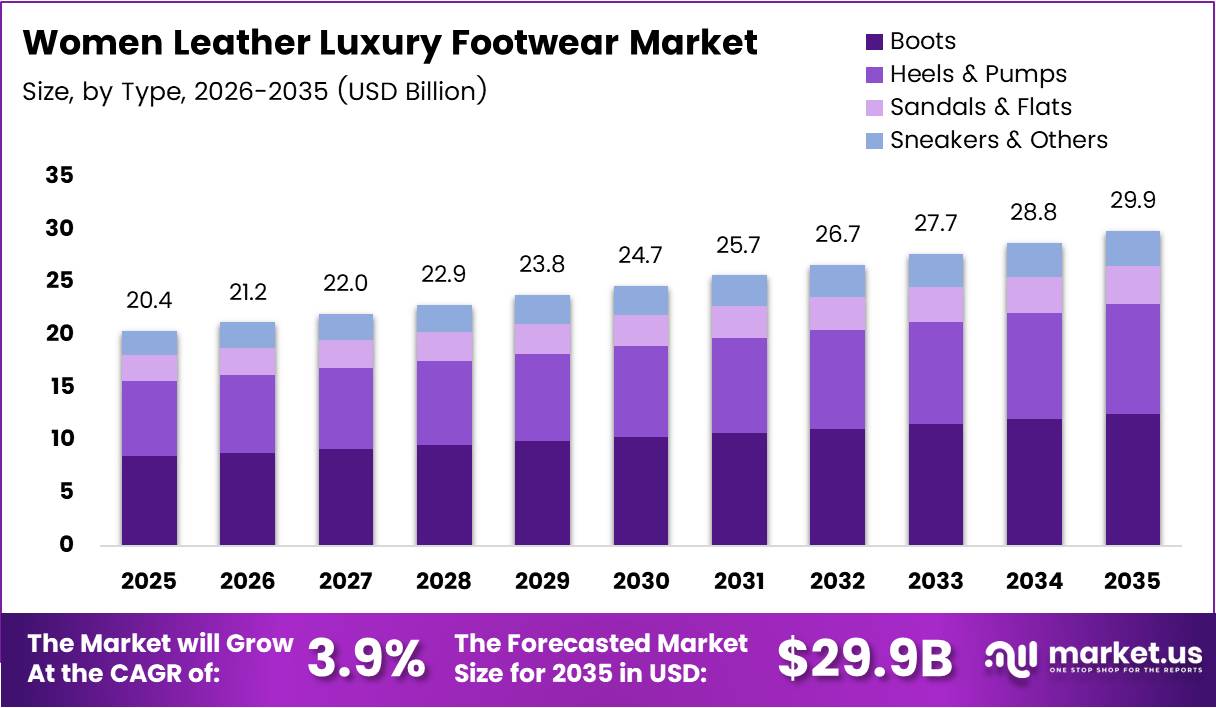
Global Women Leather Luxury Footwear Market size is expected to be worth around USD 29.9 Billion by 2035 from USD 20.4 Billion in 2025, growing at a CAGR of 3.9% during the forecast period 2026 to 2035.
Women leather luxury footwear represents premium footwear products crafted from genuine leather materials. These high-end shoes combine superior craftsmanship, exclusive brand heritage, and refined aesthetics. Moreover, they cater to affluent female consumers seeking quality, status, and timeless fashion appeal.
The market encompasses diverse product categories including boots, heels, sandals, and designer sneakers. Luxury brands leverage heritage craftsmanship and innovative designs to maintain market positioning. Additionally, genuine leather remains the preferred material due to superior durability and premium visual characteristics.
Rising disposable income among urban female consumers drives premium fashion spending globally. Strong brand influence and celebrity endorsements significantly boost demand for luxury footwear products. Furthermore, expansion of luxury retail outlets in emerging economies creates new growth opportunities for established brands.
Product innovation integrating comfort technologies attracts modern luxury consumers seeking functionality. The growing female workforce increases demand for professional and premium footwear options. Consequently, brands invest in customization services and made-to-order offerings to capture discerning customers.
Digital transformation reshapes luxury retail through online platforms and virtual try-on technologies. Cross-border e-commerce enables brands to reach international markets more effectively. However, ethical concerns regarding leather sourcing and sustainability practices influence consumer purchasing decisions increasingly.
In February 2025, Caleres signed a definitive agreement to acquire Stuart Weitzman from Tapestry for $105 million, advancing its footwear portfolio strategy. In December 2025, HSG became the majority investor in Golden Goose, with an estimated valuation around €2.5 billion, demonstrating strong investor confidence in luxury footwear brands.
Key Takeaways
- Global Women Leather Luxury Footwear Market valued at USD 20.4 Billion in 2025, projected to reach USD 29.9 Billion by 2035
- Market growing at CAGR of 3.9% during forecast period 2026-2035
- Boots segment dominates By Type category with 42.7% market share in 2025
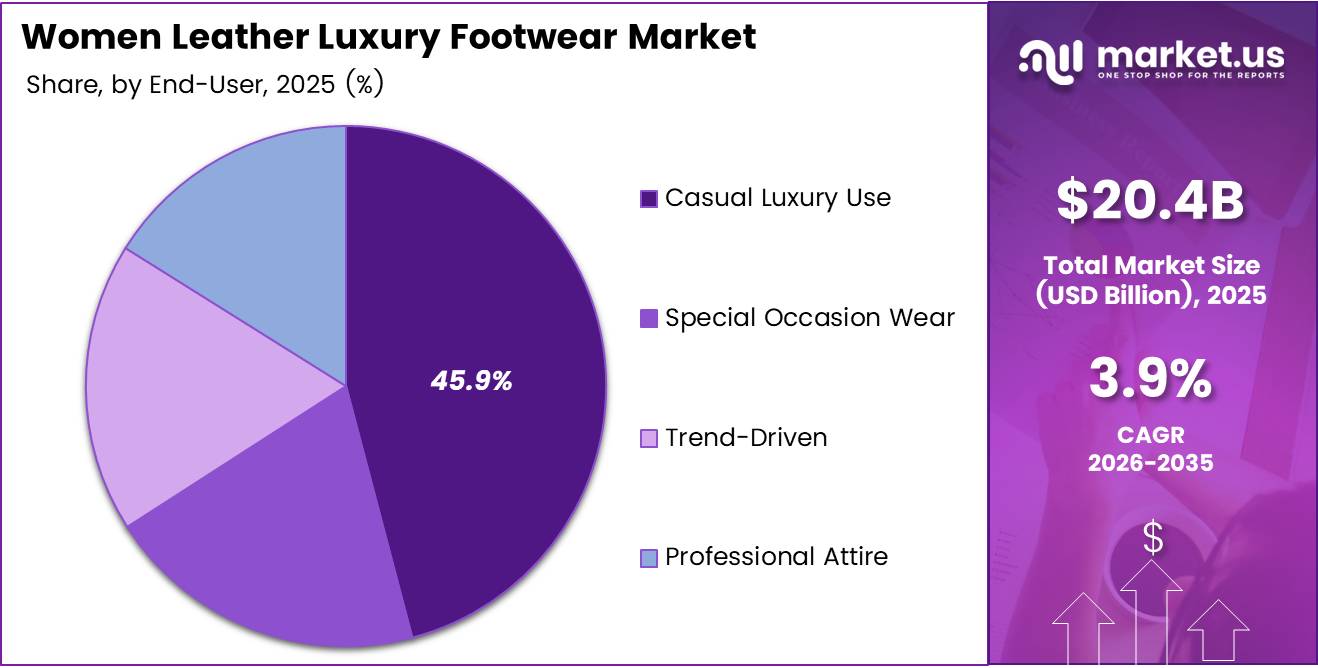
- Casual Luxury Use segment leads By End-User category with 45.9% market share
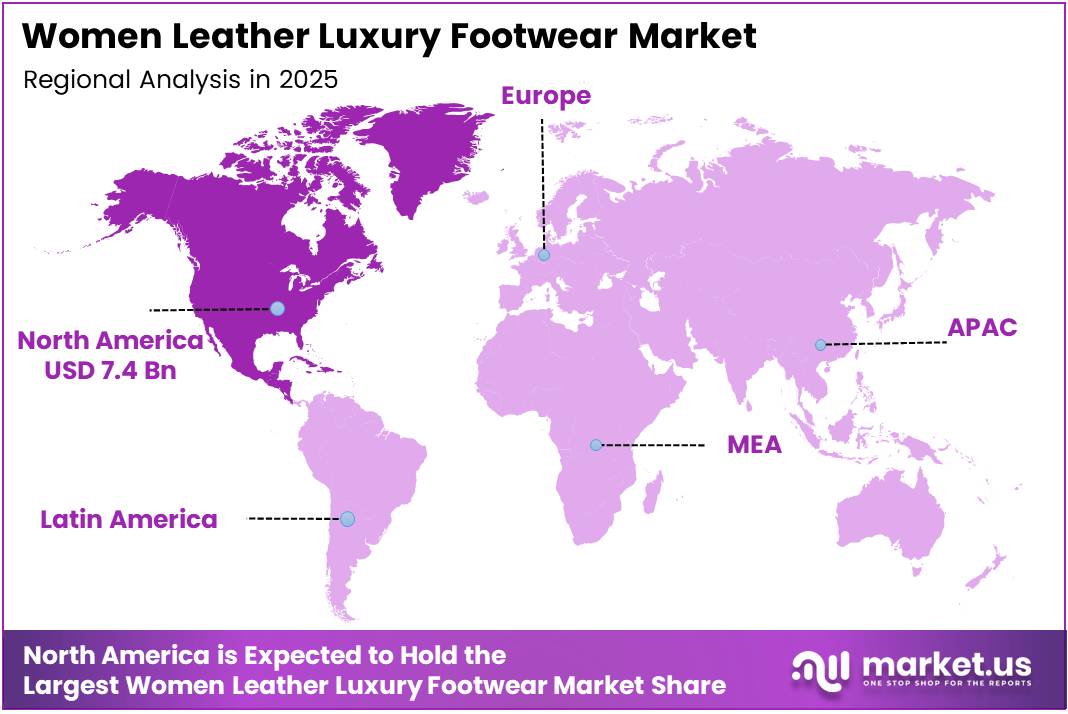
- North America dominates regional market with 36.70% share, valued at USD 7.4 Billion
Type Analysis
Boots dominates with 42.7% due to versatility across seasons and occasions.
In 2025, Boots held a dominant market position in the By Type segment of Women Leather Luxury Footwear Market, with a 42.7% share. Premium leather boots offer exceptional versatility for both casual and formal settings. Additionally, ankle boots, knee-high styles, and Chelsea boots appeal to diverse consumer preferences across different climates.
Heels & Pumps represent timeless elegance in luxury women’s footwear collections globally. Classic stilettos, block heels, and kitten heels maintain strong appeal among professional and formal wear segments. Moreover, renowned designers continuously innovate heel structures combining fashion-forward aesthetics with improved comfort technologies for extended wear.
Sandals & Flats cater to warm-weather fashion and casual luxury lifestyle preferences. Luxury leather sandals feature intricate detailing, artisan craftsmanship, and premium finishing techniques. Furthermore, designer flats and loafers serve as essential wardrobe staples for everyday luxury consumption and travel-friendly footwear needs.
Sneakers & Others capture the growing athleisure and casual premium footwear trend. Luxury sneakers blend Italian leather craftsmanship with contemporary streetwear aesthetics effectively. Consequently, high-end brands expand their casual footwear lines to meet evolving consumer lifestyle demands and preferences.
End-User Analysis
Casual Luxury Use dominates with 45.9% due to lifestyle-driven premium footwear adoption.
In 2025, Casual Luxury Use held a dominant market position in the By End-User segment of Women Leather Luxury Footwear Market, with a 45.9% share. Affluent consumers increasingly incorporate luxury footwear into everyday wardrobes beyond special occasions. Therefore, comfortable yet stylish leather shoes become essential lifestyle investments for quality-conscious women seeking versatile premium options.
Special Occasion Wear drives demand for statement footwear pieces for weddings, galas, and formal events. Luxury heels, embellished sandals, and designer pumps serve as centerpiece accessories for memorable occasions. Additionally, consumers invest in timeless luxury footwear that maintains value and can be worn across multiple special events.
Trend-Driven consumers actively seek latest runway-inspired designs and seasonal luxury footwear collections. Fashion-forward buyers follow designer shows, celebrity styles, and emerging footwear trends closely. Moreover, this segment demonstrates willingness to pay premium prices for limited-edition releases and exclusive collaborations with renowned designers.
Professional Attire segment requires polished luxury footwear for corporate and business environments consistently. Executive women invest in classic leather pumps, loafers, and refined boots for professional credibility. Furthermore, rising female workforce participation globally expands the market for sophisticated work-appropriate luxury footwear options significantly.
Key Market Segments
By Type
- Boots
- Heels & Pumps
- Sandals & Flats
- Sneakers & Others
By End-User
- Casual Luxury Use
- Special Occasion Wear
- Trend-Driven
- Professional Attire
Drivers
Rising Disposable Income and Premium Fashion Spending Drive Market Expansion
Rising global disposable income among urban female consumers drives premium fashion spending significantly. Affluent women increasingly allocate larger portions of household budgets toward luxury footwear and accessories. Moreover, economic growth in emerging markets creates new consumer segments willing to invest in genuine leather luxury products for status and quality assurance.
Strong brand influence and celebrity endorsements boost luxury footwear demand across global markets effectively. High-profile fashion influencers and style icons showcase premium leather shoes through social media platforms. Consequently, aspirational consumers seek branded luxury footwear to emulate celebrity aesthetics and demonstrate sophisticated fashion sensibilities through their footwear choices.
Increasing preference for genuine leather stems from superior durability and premium aesthetic characteristics it provides. Luxury consumers value natural leather’s aging properties and timeless appeal over synthetic alternatives. Additionally, expansion of luxury retail outlets and mono-brand stores in emerging economies improves product accessibility and enhances brand presence in high-growth markets substantially.
Restraints
High Product Pricing and Ethical Concerns Limit Market Adoption
High product pricing limits adoption among middle-income consumer segments seeking luxury footwear options. Premium leather shoes often cost several hundred to thousands of dollars per pair. Therefore, price sensitivity restricts market penetration beyond affluent demographics despite growing aspirational demand from broader consumer bases globally.
Ethical concerns related to animal leather sourcing create sustainability challenges for luxury footwear brands. Environmental activists and conscious consumers increasingly question traditional leather production methods and animal welfare practices. Moreover, younger luxury consumers demonstrate stronger preferences for transparently sourced materials and ethically produced footwear options.
The luxury footwear industry faces mounting pressure to address environmental impact and adopt sustainable practices. Brands must balance heritage craftsmanship traditions with evolving consumer expectations for responsible production. Consequently, companies invest in alternative leather technologies and ethical sourcing programs to maintain market relevance among environmentally conscious luxury shoppers.
Growth Factors
Digital Innovation and Customization Services Accelerate Market Growth
Growing demand for customized and made-to-order luxury women footwear creates premium revenue opportunities. Affluent consumers seek personalized products reflecting individual style preferences and perfect fit requirements. Therefore, luxury brands develop bespoke services allowing customers to select leather types, colors, heel heights, and exclusive design elements.
Rapid growth of online luxury fashion platforms and cross-border e-commerce expands market reach. Digital channels enable luxury footwear brands to connect with international consumers beyond traditional retail locations. Additionally, virtual try-on technologies and augmented reality features reduce purchase hesitation and improve online shopping experiences for luxury footwear customers.
Rising female workforce participation increases formal and premium footwear usage across professional environments globally. Executive women require polished luxury shoes for corporate settings and business travel needs. Furthermore, product innovation integrating comfort technologies in luxury leather shoes attracts modern consumers seeking both style and all-day wearability in premium footwear investments.
Emerging Trends
Sustainability and Digital Technologies Reshape Luxury Footwear Landscape
Shift toward minimalist and timeless footwear designs dominates contemporary luxury fashion preferences. Consumers increasingly favor classic silhouettes and neutral colors over trend-heavy seasonal styles. Moreover, investment-worthy pieces with longevity appeal replace fast-fashion luxury consumption patterns among environmentally conscious and quality-focused buyers.
Increasing adoption of eco-friendly and responsibly sourced leather materials reflects evolving consumer values. Luxury brands implement transparent supply chains and obtain certifications for sustainable leather production practices. Additionally, chrome-free tanning processes and vegetable-tanned leather options gain popularity among premium footwear manufacturers committed to environmental responsibility.
Rising popularity of luxury sneakers and casual premium footwear transforms traditional luxury footwear categories. High-end brands successfully merge Italian leather craftsmanship with streetwear-inspired designs and athleisure aesthetics. Furthermore, integration of smart sizing and virtual try-on technologies in online retail channels enhances customer experience and reduces return rates for luxury footwear purchases significantly.
Regional Analysis
North America Dominates the Women Leather Luxury Footwear Market with a Market Share of 36.70%, Valued at USD 7.4 Billion
North America commands the largest regional market position with 36.70% share, valued at USD 7.4 Billion in 2025. The region benefits from high disposable income levels and strong luxury fashion consumption culture. Moreover, established luxury retail infrastructure and significant presence of flagship stores drive consistent premium footwear sales across major metropolitan areas.
Europe Women Leather Luxury Footwear Market Trends
Europe maintains strong market presence driven by heritage luxury brands and artisan craftsmanship traditions. Italian and French footwear manufacturers lead global luxury shoe production with centuries of expertise. Additionally, sophisticated European consumers demonstrate deep appreciation for quality leather goods and willingness to invest in timeless premium footwear pieces.
Asia Pacific Women Leather Luxury Footwear Market Trends
Asia Pacific emerges as fastest-growing regional market fueled by rising affluence and luxury aspirations. Chinese and Indian consumers increasingly purchase premium leather footwear as economic prosperity expands middle and upper classes. Furthermore, luxury brands aggressively expand retail networks across tier-one and tier-two cities throughout the region.
Latin America Women Leather Luxury Footwear Market Trends
Latin America demonstrates growing appetite for luxury footwear despite economic volatility in certain markets. Brazilian consumers particularly favor premium leather shoes and accessories as status symbols. Moreover, international luxury brands establish direct retail presence in major Latin American cities to capture high-net-worth individuals.
Middle East & Africa Women Leather Luxury Footwear Market Trends
Middle East & Africa shows strong luxury consumption driven by affluent Gulf Cooperation Council nations. High-end shopping destinations in Dubai and Riyadh attract luxury footwear brands seeking premium consumers. Additionally, South African market demonstrates steady demand for quality leather luxury shoes among urban professional women.
Key Regions and Countries
North America
- US
- Canada
Europe
- Germany
- France
- The UK
- Spain
- Italy
- Rest of Europe
Asia Pacific
- China
- Japan
- South Korea
- India
- Australia
- Rest of APAC
Latin America
- Brazil
- Mexico
- Rest of Latin America
Middle East & Africa
- GCC
- South Africa
- Rest of MEA
Key Company Insights
Christian Louboutin maintains iconic status in luxury women’s footwear through signature red-lacquered soles and exceptional craftsmanship. The brand commands premium pricing for stilettos, pumps, and boots featuring distinctive aesthetic elements. Moreover, Christian Louboutin successfully expands beyond footwear into handbags and beauty products while maintaining exclusivity and desirability among global luxury consumers.
Gucci leads luxury footwear innovation by blending Italian heritage with contemporary streetwear influences effectively. The brand’s leather loafers, embellished sneakers, and horsebit details achieve strong recognition worldwide. Additionally, Gucci leverages digital marketing and celebrity collaborations to maintain relevance among younger luxury consumers while preserving traditional leather craftsmanship excellence.
Hermès International S.A. represents ultimate luxury positioning with meticulously handcrafted leather footwear collections. The French maison applies exceptional leather expertise from handbag production to premium women’s shoes. Furthermore, Hermès maintains limited production volumes and waitlists for certain styles, reinforcing exclusivity and investment value for discerning collectors.
Jimmy Choo Ltd. specializes in glamorous evening footwear and red-carpet worthy luxury shoes globally. The brand combines British design sensibilities with Italian manufacturing expertise for exceptional quality products. Consequently, Jimmy Choo attracts celebrity clientele and special occasion shoppers seeking statement footwear pieces that blend sophistication with contemporary fashion trends.
Key players
- Aquazzura
- Bally
- Bottega Veneta
- Chanel
- Christian Louboutin
- Fendi
- Giuseppe Zanotti
- Gucci
- Hermès International S.A.
- Jimmy Choo Ltd.
- Kering
Recent Developments
- February 2025 – Caleres signed a definitive agreement to acquire the Stuart Weitzman brand from Tapestry for $105 million, advancing its footwear portfolio strategy and expanding presence in luxury women’s footwear segment with established designer brand recognition.
- August 2025 – Caleres completed the acquisition of the Stuart Weitzman brand from Tapestry for $120.2 million, strengthening its global footwear leadership position and enhancing capabilities in premium leather women’s shoes through strategic brand expansion initiatives.
Report Scope
Report Features Description Market Value (2025) USD 20.4 Billion Forecast Revenue (2035) USD 29.9 Billion CAGR (2026-2035) 3.9% Base Year for Estimation 2025 Historic Period 2020-2024 Forecast Period 2026-2035 Report Coverage Revenue Forecast, Market Dynamics, Competitive Landscape, Recent Developments Segments Covered By Type (Boots, Heels & Pumps, Sandals & Flats, Sneakers & Others), By End-User (Casual Luxury Use, Special Occasion Wear, Trend-Driven, Professional Attire) Regional Analysis North America (US and Canada), Europe (Germany, France, The UK, Spain, Italy, and Rest of Europe), Asia Pacific (China, Japan, South Korea, India, Australia, and Rest of APAC), Latin America (Brazil, Mexico, and Rest of Latin America), Middle East & Africa (GCC, South Africa, and Rest of MEA) Competitive Landscape Aquazzura, Bally, Bottega Veneta, Chanel, Christian Louboutin, Fendi, Giuseppe Zanotti, Gucci, Hermès International S.A., Jimmy Choo Ltd., Kering Customization Scope Customization for segments, region/country-level will be provided. Moreover, additional customization can be done based on the requirements. Purchase Options We have three licenses to opt for: Single User License, Multi-User License (Up to 5 Users), Corporate Use License (Unlimited User and Printable PDF)  Women Leather Luxury Footwear MarketPublished date: Jan 2026add_shopping_cartBuy Now get_appDownload Sample
 -
-
- Aquazzura
- Bally
- Bottega Veneta
- Chanel
- Christian Louboutin
- Fendi
- Giuseppe Zanotti
- Gucci
- Hermès International S.A.
- Jimmy Choo Ltd.
- Kering
Our Clients

- 175403
- Jan 2026






