Market Overview
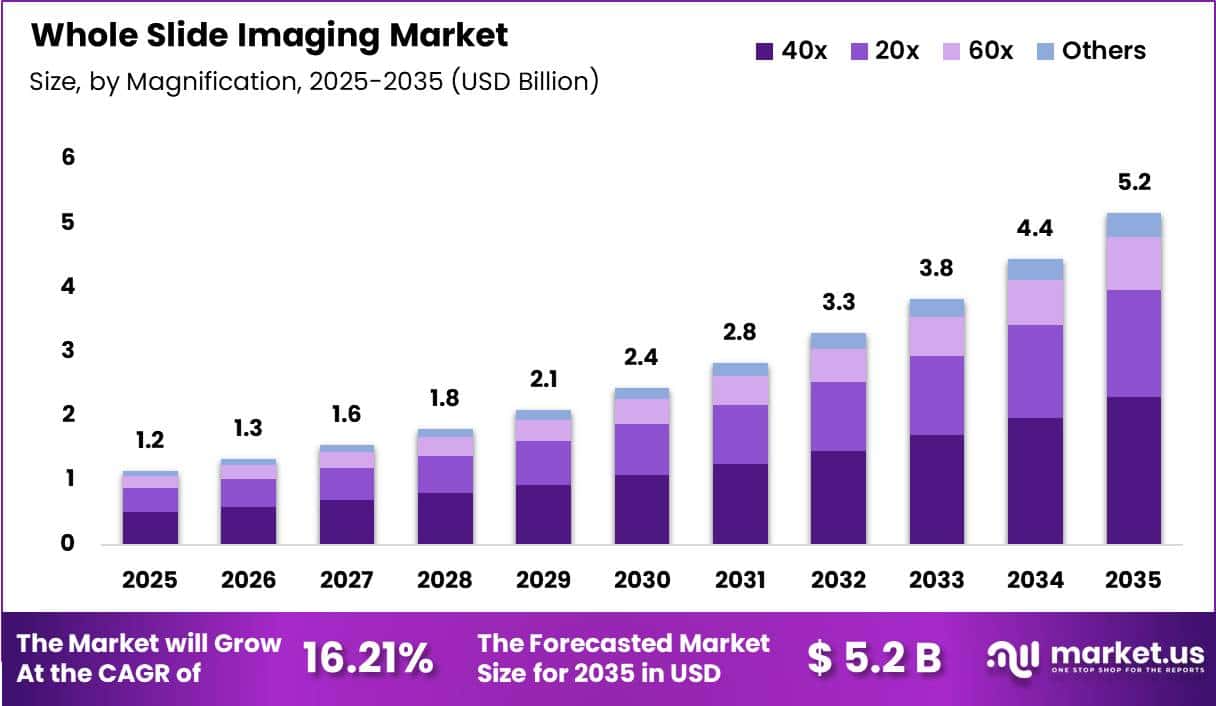
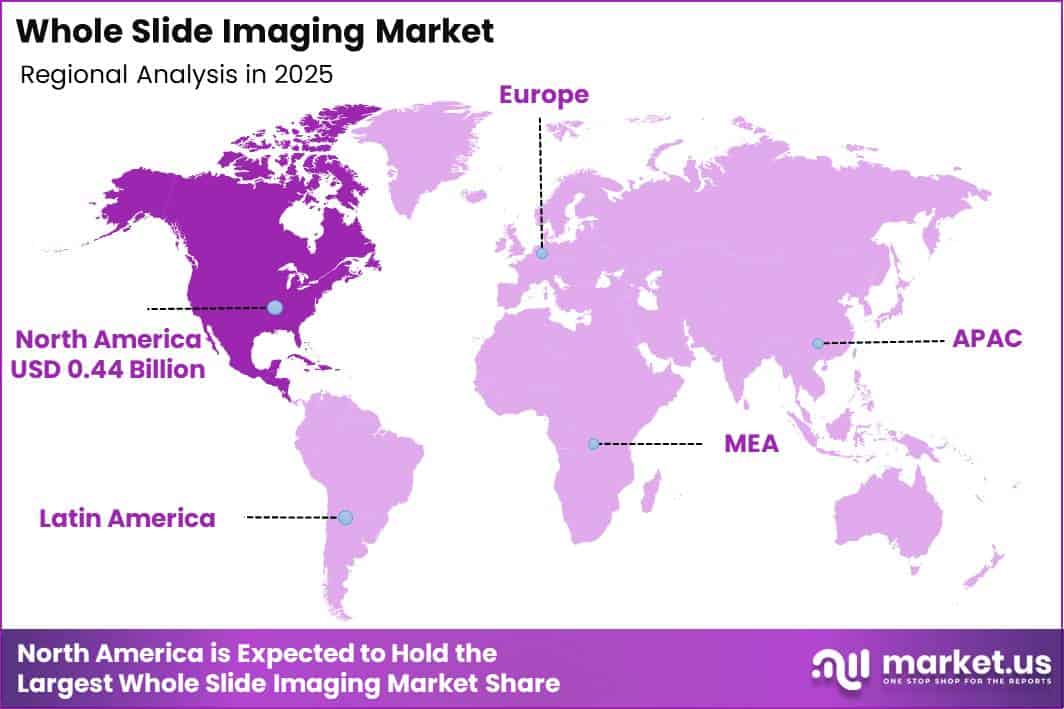
Global Whole Slide Imaging Market size is expected to be worth around US$ 5.2 Billion by 2035 from US$ 1.2 Billion in 2025, growing at a CAGR of 16.21% during the forecast period from 2026 to 2035. In 2025, North America led the market, achieving over 38.60% share with a revenue of US$ 0.44 Billion.
The growing adoption of digital pathology is accelerating the demand for whole slide imaging (WSI) technologies as healthcare providers seek faster, more accurate, and collaborative diagnostic workflows. Whole slide imaging converts conventional glass slides into high-resolution digital images that can be securely stored, analyzed, and shared, enabling remote consultations, artificial intelligence (AI)-assisted diagnosis, and streamlined pathology operations.
The U.S. Food and Drug Administration (FDA) continues to support innovation in this field through its Digital Pathology Program, which focuses on developing regulatory science, image quality standards, interoperability, and performance evaluation methods for WSI devices. The FDA notes that whole slide imaging systems are increasingly important for integrating AI and machine learning into pathology practice while ensuring diagnostic safety and effectiveness.
The increasing global burden of cancer is one of the strongest factors driving market growth. According to the World Health Organization (WHO), approximately 20 million new cancer cases and 9.7 million cancer-related deaths occurred worldwide in 2022, while an estimated 53.5 million people were living within five years of a cancer diagnosis.
WHO also projects that new cancer cases will exceed 35 million annually by 2050, representing a 77% increase compared with 2022. These trends are increasing the need for efficient pathology services and advanced digital imaging technologies capable of handling growing diagnostic workloads.
In the United States, regulatory acceptance continues to strengthen the clinical adoption of whole slide imaging. The FDA first authorized a WSI system for primary diagnosis in 2017, demonstrating diagnostic performance comparable to conventional microscopy through a clinical study involving approximately 2,000 surgical pathology cases.
More recently, additional FDA clearances for new whole slide imaging systems and AI-assisted digital pathology software have expanded clinical access while supporting greater standardization and innovation in digital pathology workflows.
These regulatory advancements, combined with increasing investments in AI-enabled pathology and precision medicine, are expected to support sustained growth in the Whole Slide Imaging Market over the coming years.
Key Takeaways
- Market Size : Whole Slide Imaging Market size is expected to be worth around US$ 5.2 Billion by 2035 from US$ 1.2 Billion in 2025.
- Market Share : The market is growing at a CAGR of 16.21% during the forecast period from 2026 to 2035.
- Magnification Analysis : The 40x segment dominated the Whole Slide Imaging Market, accounting for 44.5% of the market share in 2025.
- Application Analysis : The Clinical Diagnostics segment accounted for the largest share of the Whole Slide Imaging Market, representing 42.6% in 2025.
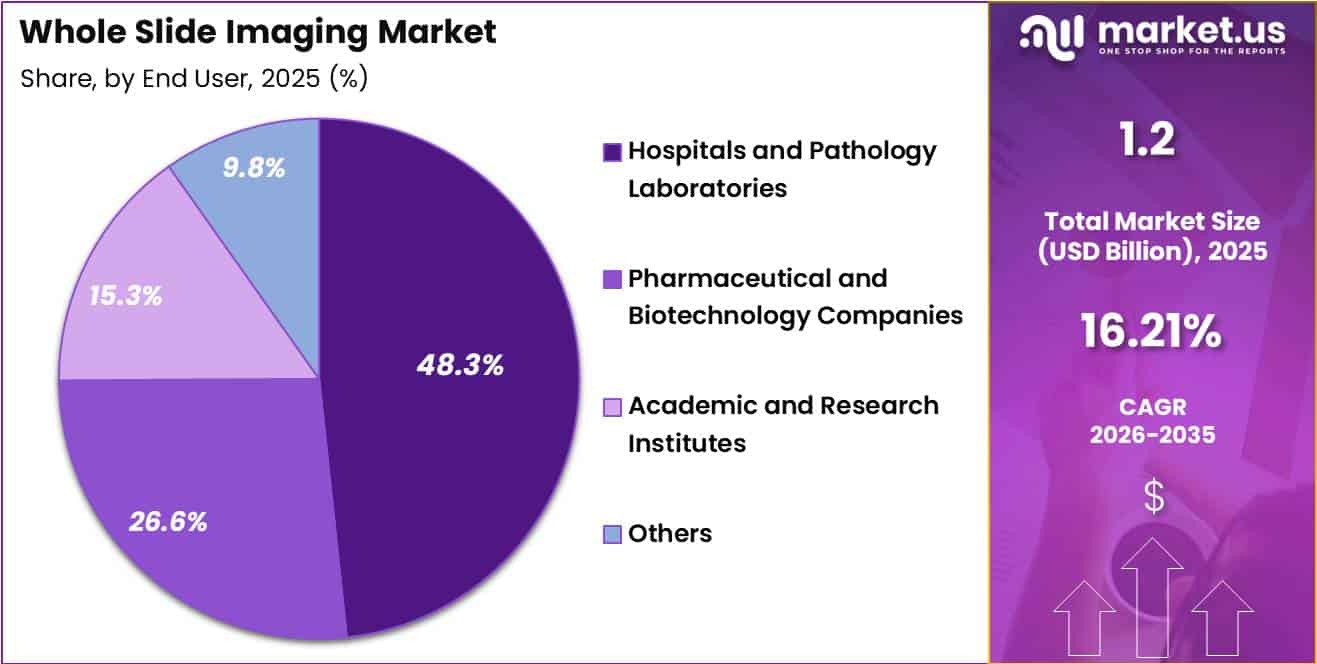
- End User Analysis : The Hospitals and Pathology Laboratories segment dominated the Whole Slide Imaging Market, capturing 48.3% of the market share in 2025.
- Regional Analysis : In 2025, North America led the market, achieving over 38.60% share with a revenue of US$ 0.44 Billion.
Magnification Analysis
The 40x segment dominated the Whole Slide Imaging Market, accounting for 44.5% of the market share in 2025. Its leadership is driven by the balance it provides between image resolution, scanning speed, storage efficiency, and diagnostic performance. A 40x magnification is widely used for routine surgical pathology because it produces high-quality digital images that are suitable for primary diagnosis while reducing scan time and data storage requirements.
Regulatory guidance for whole slide imaging recognizes these systems as important tools for reviewing formalin-fixed, paraffin-embedded tissue slides, supporting their use in routine pathology workflows. As healthcare providers continue to transition toward digital pathology, 20x magnification remains the preferred option for large-scale clinical operations.
The 20x segment holds a significant share due to its ability to capture finer cellular details required for complex pathology cases, biomarker evaluation, and detailed tissue assessment. Although it generates larger image files and requires longer scanning times, it is preferred when higher resolution is essential.
The 60x segment is mainly utilized in specialized research applications, hematopathology, and detailed cytological evaluations where enhanced magnification improves visualization. The Others category includes customized and lower magnification settings used for education, quality control, and specific research applications according to laboratory requirements.
Application Analysis
The Clinical Diagnostics segment accounted for the largest share of the Whole Slide Imaging Market, representing 42.6% in 2025. The segment’s dominance is supported by the increasing adoption of digital pathology for routine diagnosis, cancer detection, pathology consultations, and workflow optimization.
Whole slide imaging enables pathologists to review, manage, and interpret digital tissue slides while supporting remote consultations and efficient case sharing. Regulatory recognition of whole slide imaging systems for primary diagnosis has further encouraged their integration into clinical pathology laboratories, improving diagnostic consistency and operational efficiency.
The Drug Discovery and Development segment is growing steadily as digital pathology supports toxicology studies, biomarker identification, and preclinical research. The FDA has also issued guidance on the use of whole slide imaging in nonclinical toxicology studies, reflecting its expanding role in pharmaceutical research.
Research and Academia remains a major application area, where digital slides are extensively used for pathology education, collaborative research, and image archiving. Telepathology continues to expand by enabling remote diagnosis, second-opinion consultations, and improved access to pathology expertise in underserved regions. The Others segment includes veterinary pathology, forensic pathology, and specialized diagnostic applications.
End User Analysis
The Hospitals and Pathology Laboratories segment dominated the Whole Slide Imaging Market, capturing 48.3% of the market share in 2025. These healthcare facilities process the largest volume of tissue specimens and are increasingly adopting digital pathology to improve workflow efficiency, reduce turnaround time, and facilitate remote consultation.
Whole slide imaging systems enable digital storage, image sharing, and standardized pathology reporting, making them an essential component of modern pathology laboratories. Continued growth in cancer diagnosis and digital healthcare transformation further supports the expansion of this segment.
Pharmaceutical and Biotechnology Companies represent an important end-user group, utilizing whole slide imaging for drug development, toxicology assessment, biomarker research, and regulatory studies. Academic and Research Institutes continue to adopt digital pathology for medical education, pathology training, collaborative research, and artificial intelligence development.
The Others segment includes government laboratories, public health organizations, contract research organizations, and specialized diagnostic centers that are increasingly implementing whole slide imaging to enhance research capabilities, improve diagnostic quality, and support digital pathology initiatives.
Market Segmentations
By Magnification
- 20x
- 40x
- 60x
- Others
By Application
- Clinical Diagnostics
- Drug Discovery and Development
- Research and Academia
- Telepathology
- Others
By End User
- Hospitals and Pathology Laboratories
- Pharmaceutical and Biotechnology Companies
- Academic and Research Institutes
- Others
Driver
Rising Disease Burden Accelerating Whole Slide Imaging Adoption
The rising burden of cancer and chronic diseases is structurally increasing biopsy, histology, and immunohistochemistry volumes, which in turn enlarges the addressable base for WSI deployments in both tertiary care centers and specialized diagnostics labs.
As oncology pathways integrate more complex biomarker panels for therapy selection, each patient can require multiple slides and repeated assessments over time, amplifying the total number of slides handled per case and pushing manual workflows to their limits.
AI‑pathology literature and digital pathology case reports indicate that fully digital workflows allow for easier sharing of slides, participation in tumor boards, and retrospective analysis for clinical trials, which is particularly valuable as precision oncology trials grow in complexity and scale.
Meanwhile, chronic disease management programs especially for conditions such as diabetic complications and chronic inflammatory disorders are increasing demand for consistent, high‑quality histopathological assessment in larger health systems, aligning with broader trends in population health management discussed by U.S. agencies like the NIH, CDC, and HHS for chronic conditions including diabetes and cardiovascular disease.
The combination of higher test volumes, more complex interpretation requirements, and pressure to standardize outcomes supports the business case for WSI platforms that integrate with laboratory information systems and electronic health records, enabling laboratories to scale throughput and maintain quality without proportionally expanding headcount; this structural demand driver is likely to add close to one % point to long‑term WSI market growth as oncology and chronic disease programs mature globally, especially in North America, Europe, and emerging Asia.
| Driver | (~) % Impact on CAGR Forecast | Geographic Relevance | Impact Timeline |
|---|---|---|---|
| AI-augmented digital pathology productivity in WSI | +1.2% | North America core, EU, APAC corridors | Medium term (2–4 years) |
| Regulatory approvals and validation frameworks for WSI | +0.8% | North America core, EU, selective APAC | Medium–Long term (2–5+ years) |
| Oncology and chronic disease testing volume growth | +0.9% | North America, EU, Asia (China, India), GCC | Long term (≥ 4 years) |
| Hospital and lab network consolidation and central labs | +0.6% | North America, EU, Japan, Middle East | Medium term (2–4 years) |
| Remote diagnostics, telepathology and workforce gaps | +0.7% | North America spill-over, EU, APAC corridors, LatAm | Short–Medium term (≤ 4 years) |
| Cloud and hybrid IT infrastructure readiness for WSI | +0.5% | North America core, EU, developed APAC | Medium term (2–4 years) |
Challenge
Pathologist Shortage Limiting Whole Slide Imaging Implementation
A global shortage of pathologists and digitally skilled health IT personnel imposes a structural ceiling on the pace of WSI operationalization, as many high-income markets already report pathologist densities of only 1–2 per 100,000 inhabitants and vacancy rates in digital pathology-capable roles hovering around 10–20%, forcing institutions to prioritize core diagnostic workloads over participation in complex digital transformation projects.
On the IT side, surveys of hospital digital health adoption show that nearly half of providers cite limited availability of skilled IT staff as a key barrier, with many systems operating with lean teams of 5–15 FTEs supporting hundreds of clinical applications, making it difficult to allocate the 0.5–1.0 FTE per year typically needed for WSI-specific support, integration maintenance, and cybersecurity monitoring.
This human capital bottleneck translates into slower ramp-up curves: even after hardware installation, it can take 6–12 months of training and change management often 20–40 hours of training per pathologist and 10–20 hours per technologist to embed WSI into routine workflows without impacting turnaround times, and in practice many laboratories cap digital case volumes at 30–60% of total to avoid overloading staff, contributing approximately 0.6 % points of frictional drag on overall market growth.
Strategically, vendors and health systems must deploy scalable training programs (e-learning plus simulation), create digital pathology fellowships and cross-training tracks for histo-technologists, standardize role-based workflows that minimize cognitive overhead, and leverage remote and hub-and-spoke diagnostic models that allow a smaller number of digitally proficient pathologists to cover larger networks, thereby gradually increasing digital case penetration by 10–20 % points over 3–5 years even under continued workforce scarcity.
| Challenge | (~) % CAGR Friction Drag | Geographic Relevance | Mitigation Horizon |
|---|---|---|---|
| Data storage & bandwidth strain | -0.8% | North America, Europe, APAC tertiary hubs | Medium term (2-4 years) |
| Workflow integration & LIS interoperability | -0.7% | North America core, EU regulatory hubs | Medium term (2-4 years) |
| Pathologist & IT talent constraints | -0.6% | North America, Europe, high-volume APAC | Long term (≥ 4 years) |
| Regulatory validation & QA complexity | -0.6% | FDA, EMA, select APAC regulators | Long term (≥ 4 years) |
| Capital intensity in mid-/low-resource settings | -0.5% | Latin America, MEA, emerging APAC | Long term (≥ 4 years) |
| Cybersecurity & data governance burden | -0.4% | Global hospital networks, cloud adopters | Medium term (2-4 years) |
Restraints
Reimbursement Uncertainty Slowing Whole Slide Imaging Adoption
Uncertain reimbursement and limited economic incentives create a direct drag on WSI adoption, as in many health systems digital pathology workflows are either not separately reimbursed or recognized only through vague technology‑neutral codes that fail to capture incremental value, leaving labs to absorb 100% of digital migration costs without explicit revenue uplift.
In the United States, fewer than roughly 5–10% of pathology cases are signed out digitally despite FDA clearance of specific systems, largely because payers do not differentiate between glass slide and digital interpretation in fee schedules, compressing potential ROI and reducing expected annual savings from telepathology and centralized Reading from an often‑marketed 10–15% down to the low single digits.
Similar dynamics play out across European markets where national health services or statutory insurers have yet to codify WSI‑specific reimbursement policies, leading to inconsistent pilot funding where 20–40% of digital pathology initiatives stall after initial grant cycles once operating budgets must sustain licensing fees and data storage costs.
In quantitative terms, the lack of explicit reimbursement can translate into a negative spread of US$ 5–10 per case between incremental digital infrastructure and workflow costs and any measurable productivity gains; at 50,000–100,000 cases per year, this creates an annual drag of US$ 0.25–1.0 million on pathology department economics, forcing CFOs to cap digital adoption at 30–40% of volume to avoid margin erosion.
Strategically, this misalignment between clinical benefit and financial recognition delays board‑level go/no‑go decisions, keeps many WSI deployments in extended evaluation status, and effectively knocks off about 2.1 % points from market CAGR trajectories by pushing purchasing committees to favor lower‑risk equipment upgrades over transformative but unreimbursed digital pathology platforms until payer policies concretely change.
| Restraint | (~) % Impact on CAGR Forecast | Geographic Relevance | Impact Timeline |
|---|---|---|---|
| High scanner and IT CapEx burden | -2.4% | North America core, Western EU, developed APAC | Medium term (2–4 years) |
| Data storage and imaging infrastructure bottlenecks | -1.9% | North America, EU, APAC corridors, GCC | Long term (≥ 4 years) |
| Uncertain reimbursement and limited economic incentives | -2.1% | North America core, selected EU states | Medium term (2–4 years) |
| Fragmented regulatory and accreditation pathways | -1.4% | North America, EU, APAC tier-1 | Long term (≥ 4 years) |
| Workflow disruption and change-management resistance | -1.2% | Global tertiary labs, emerging APAC and LATAM | Short–Medium term (≤ 4 years) |
| Skilled digital pathology talent and AI integration gap | -1.0% | North America, EU, APAC innovation hubs | Long term (≥ 4 years) |
Opportunity
Emerging Oncology Programs Expanding Whole Slide Imaging Adoption
Global cancer incidence is projected to rise sharply, with estimates indicating roughly a 65–80% increase in new cases between 2010 and 2035 in many countries, and over 35 million new cancer cases globally by 2050, but high‑burden regions such as APAC, Latin America, the Middle East, and Africa still have limited WSI penetration and fragmented diagnostic pathways.
Baseline WSI forecasts mostly assume incremental scanner placement in tertiary centers within developed markets, not the creation of integrated oncology platforms that bundle WSI, immunohistochemistry, molecular diagnostics, and structured reporting, tailored to population‑level oncology programs in emerging economies.
In these regions, oncology diagnostic spend per new cancer case can be under USD 150–250, compared with USD 400–700 in high‑income countries; by embedding WSI into national cancer control programs, raising diagnostics spend to USD 250–400 per case through standardized digital workflows, AI‑aided triage, and better quality assurance.
Vendors can open USD 1.5–2.0 billion in incremental addressable diagnostic platform revenue by 2035 across emerging markets, of which WSI‑linked components could conservatively capture 30–40%. This would imply roughly USD 0.5–0.8 billion of new WSI system and software sales plus ongoing service contracts, translating into a CAGR uplift of around 2.2 % points relative to a scenario where WSI growth is concentrated in mature markets only.
Operationally, integrated platforms can increase lab throughput by 20–40%, reduce slide handling errors by 50–70%, and improve adherence to cancer reporting standards, which in turn supports value‑based funding and international donor financing.
The opportunity remains untapped because regulatory approvals, capital budgets, and workforce training programs in these regions have not yet fully converged around digital pathology; many national cancer plans still specify analog microscopy workflows, and funding mechanisms for multi‑modality digital oncology platforms are emerging only gradually, leaving a significant policy and infrastructure white space for companies willing to co‑design programs with health ministries and multilateral agencies.
| Opportunity | (~) % Potential CAGR Upside | Geographic Relevance | Execution Window |
|---|---|---|---|
| AI-native workflow & premium triage bundles | +2.0% | North America core, EU, advanced APAC | Short term (≤ 2 years) |
| Telepathology & cross-border reading networks | +1.8% | North America, EU, GCC, APAC emerging | Medium term (2-4 years) |
| Integrated oncology platforms in high-burden markets | +2.2% | APAC, Latin America, Middle East, Africa | Medium term (2-4 years) |
| Enterprise lab network consolidation & WSI roll-ups | +1.5% | North America, EU, select APAC | Long term (≥ 4 years) |
| Non-clinical Pharma/biotech and AI training data monetization | +2.3% | Global Tier 1 pharma hubs (US, EU, Japan) | Short term (≤ 2 years) |
| Value-based diagnostics contracts tied to cancer pathways | +1.7% | North America, EU, advanced APAC | Medium term (2-4 years) |
Regional Analysis
In 2025, North America dominated the Whole Slide Imaging Market, accounting for over 38.60% of global revenue, reaching approximately US$ 0.44 billion. The region benefits from a well-established healthcare system, widespread adoption of digital pathology, and strong regulatory support for whole slide imaging in clinical diagnostics.
The increasing use of digital pathology for cancer diagnosis, telepathology, education, and laboratory workflow optimization continues to strengthen regional demand. In addition, the U.S. Food and Drug Administration (FDA) has established regulatory pathways and technical guidance for whole slide imaging systems, supporting their safe and effective use in routine pathology practice.
Europe holds a significant share of the market due to growing digital transformation across pathology laboratories, increasing adoption of telemedicine, and expanding use of whole slide imaging in clinical research and medical education.
Several European healthcare systems are investing in digital pathology to improve diagnostic efficiency, facilitate remote consultations, and support precision medicine initiatives. The region also benefits from strong collaboration between hospitals, universities, and research institutions, encouraging wider implementation of digital imaging technologies.
The Asia-Pacific region is expected to witness the fastest growth during the forecast period. Rising healthcare expenditure, increasing cancer burden, expanding pathology services, and government initiatives promoting healthcare digitization are driving demand for whole slide imaging across countries such as China, Japan, India, and South Korea.
Meanwhile, Latin America and the Middle East & Africa are gradually adopting digital pathology technologies as healthcare infrastructure improves and access to advanced diagnostic services expands, creating new opportunities for market growth in the coming years.
Key Regions and Countries
North America
- The US
- Canada
Europe
- Germany
- France
- The U.K.
- Italy
- Spain
- Russia & CIS
- Rest of Europe
Asia Pacific
- China
- India
- Japan
- South Korea
- ASEAN
- Australia & New Zealand
- Rest of Asia Pacific
Middle East & Africa
- GCC
- South Africa
- Rest of Middle East & Africa
Latin America
- Brazil
- Mexico
- Rest of Latin America
Key Player Analysis
The Whole Slide Imaging Market is supported by several leading companies that focus on digital pathology, high-quality imaging, workflow improvement, and AI-enabled diagnostics. Roche Diagnostics strengthens its position by offering integrated digital pathology solutions that improve laboratory efficiency and support accurate disease diagnosis.
Philips Healthcare provides advanced whole slide imaging systems and software that help pathologists review and share digital slides for faster clinical decision-making. Hamamatsu Photonics K.K. is recognized for its high-resolution slide scanners that deliver reliable image quality for research and clinical applications. Olympus Corporation contributes through advanced microscopy technologies that enhance digital imaging and pathology workflows.
Leica Biosystems (Danaher Corporation) offers complete digital pathology platforms, including slide scanners and image management solutions that support routine diagnostics. Zeiss Group develops precision imaging systems with strong optical performance for pathology and life science research.
3DHistech Ltd. specializes in high-capacity whole slide scanners and digital pathology software designed for research laboratories and hospitals. Sectra AB focuses on secure digital pathology platforms that enable image storage, sharing, and remote consultation.
Huron Digital Pathology Inc. provides automated scanning technologies that improve laboratory productivity, while Visiopharm A/S delivers AI-powered image analysis software that supports accurate tissue analysis and pathology decision-making.
Top Key Players
- Roche Diagnostics
- Philips Healthcare
- Hamamatsu Photonics K.K.
- Olympus Corporation
- Leica Biosystems (Danaher Corporation)
- Zeiss Group
- 3DHistech Ltd.
- Sectra AB
- Huron Digital Pathology Inc.
- Visiopharm A/S
- Inspirata Inc.
- Mikroscan Technologies Inc.
- Objective Pathology Services
- Glencoe Software Inc.
- PathPresenter
- Others
Recent Developments
- In June 2026, Leica Biosystems expanded its collaboration with AstraZeneca and Daiichi Sankyo to develop AI-powered digital pathology tools for precision medicine, integrating Aperio scanners, image management software, and computational pathology algorithms for biomarker development.
- In May 2026, Grundium acquired Visiopharm A/S to create an integrated precision pathology platform by combining Grundium’s digital slide scanning technology with Visiopharm’s AI-powered pathology software for clinical diagnostics and research.
- In September 2025, Visiopharm A/S partnered with Stratipath to accelerate the clinical implementation of AI-powered breast cancer diagnostics, strengthening computational pathology capabilities in Europe.
- In April 2025, Visiopharm A/S partnered with Cell Signaling Technology to combine validated biomarkers with AI-driven image analysis, supporting spatial biology research and advanced digital pathology applications.
Report Scope
| Report Features | Description |
|---|---|
| Market Value (2025) | US$ 1.2 Billion |
| Forecast Revenue (2035) | US$ 5.2 Billion |
| CAGR (2026-2035) | 16.21% |
| Base Year for Estimation | 2025 |
| Historic Period | 2020-2024 |
| Forecast Period | 2026-2035 |
| Report Coverage | Revenue Forecast, Market Dynamics, Competitive Landscape, Recent Developments |
| Segments Covered | By Magnification (20x, 40x, 60x, Others), By Application (Clinical Diagnostics, Drug Discovery and Development, Research and Academia, Telepathology, Others), By End User (Hospitals and Pathology Laboratories, Pharmaceutical and Biotechnology Companies, Academic and Research Institutes, Others) |
| Regional Analysis | North America – The US, Canada; Europe – Germany, France, U.K., Italy, Spain, Russia & CIS, Rest of Europe; Asia Pacific – China, India, Japan, South Korea, ASEAN, Australia & New Zealand, Rest of Asia Pacific; Middle East & Africa – GCC, South Africa, Rest of Middle East & Africa; Latin America – Brazil, Mexico, Rest of Latin America |
| Competitive Landscape | Roche Diagnostics, Philips Healthcare, Hamamatsu Photonics K.K., Olympus Corporation, Leica Biosystems (Danaher Corporation), Zeiss Group, 3DHistech Ltd., Sectra AB, Huron Digital Pathology Inc., Visiopharm A/S, Inspirata Inc., Mikroscan Technologies Inc., Objective Pathology Services, Glencoe Software Inc., PathPresenter, Others |
| Customization Scope | Customization for segments, region/country-level will be provided. Moreover, additional customization can be done based on the requirements. |
| Purchase Options | We have three licenses to opt for: Single User License, Multi-User License (Up to 5 Users), Corporate Use License (Unlimited User and Printable PDF) |