


Global Wheat And Rice Flour Substitute-Resistant Starch Market Size, Share Analysis Report By Source (Grains, Fruits and Vegetables, Beans and Legumes, Cereal Food), By Application (Bakery and Confectionery, Cereals and Snacks, Pasta and Noodles, Beverages and Fiber Shots, Nutraceuticals/Supplements, Meat and Savory Binders, Pet Food, Others), By Region and Companies - Industry Segment Outlook, Market Assessment, Competition Scenario, Trends and Forecast 2026-2035
- Published date: Mar 2026
- Report ID: 182391
- Number of Pages: 371
- Format:
-
keyboard_arrow_up
Quick Navigation
Report Overview
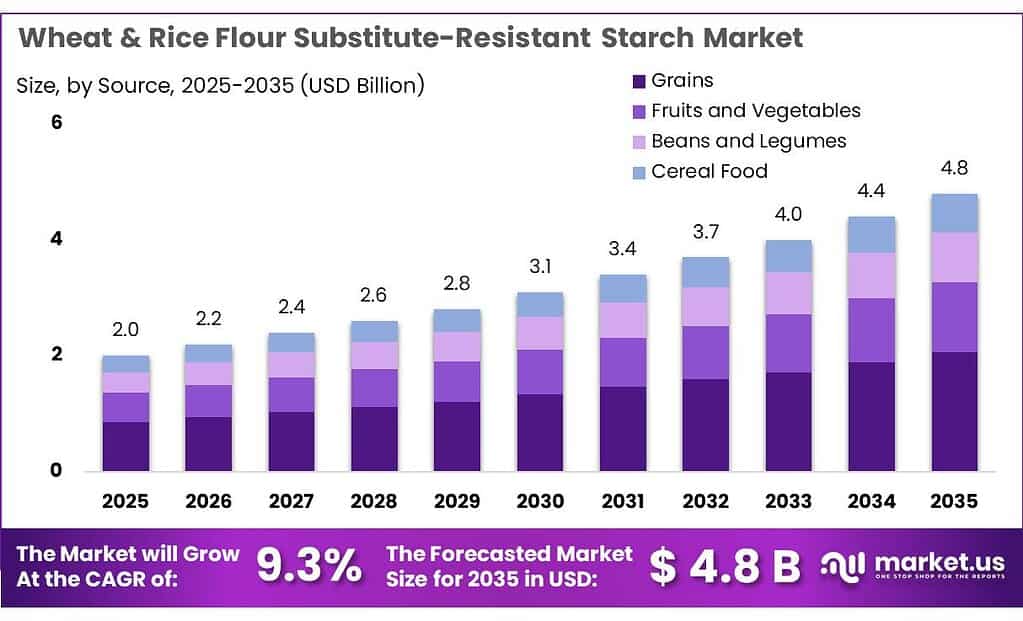
The Global Wheat And Rice Flour Substitute-Resistant Starch Market size is expected to be worth around USD 4.8 Billion by 2035, from USD 2.0 Billion in 2025, growing at a CAGR of 9.3% during the forecast period from 2026 to 2035. In 2025, North America held a dominant market position, capturing more than a 38.9% share, holding USD 0.7 Billion revenue.
Wheat and rice flour substitute–resistant starch is increasingly positioned as a functional ingredient segment rather than a simple starch replacement category. In professional product development, it is used to partially replace conventional wheat or rice flour in bakery, snacks, noodles, batters and gluten-free applications to improve fibre content, lower digestible carbohydrate load and support texture management.
The nutrition case is strengthening: the World Health Organization recommends at least 25 grams/day of naturally occurring dietary fibre for adults, while the U.S. CDC says most U.S. adults consume only about half of the fibre they need. In parallel, the U.S. FDA recognizes high-amylose starch as a dietary fibre source on labels, which gives resistant starch a clear regulatory pathway in mainstream food formulation.
From an industrial scenario perspective, the category benefits from a very large cereal processing base. FAO projected global wheat production at about 796 million tonnes in 2025, while world rice production for 2024/25 was forecast at 543.3 million tonnes. FAO also reported total world cereal production of 3,029 million tonnes in 2025, indicating that processors have broad raw-material availability across grain systems.
On the demand side, FAO indicated global rice utilization could reach 535.8 million tonnes in 2024/25, and the OECD-FAO Agricultural Outlook states that wheat and rice remain cereals used mainly for direct food consumption, which is important because resistant starch adoption is strongest in food-facing applications rather than feed or fuel markets.
Demand drivers are also strongly linked to metabolic health. WHO reports that the number of people living with diabetes rose to 830 million in 2022, and the International Diabetes Federation states that 11.1%, or 1 in 9 adults, now live with diabetes globally; it further projects about 853 million adults by 2050. In parallel, WHO notes a globally agreed target to halt the rise in diabetes and obesity by 2025.
Tate & Lyle reported 4% EBITDA growth and £190 million of free cash flow in its FY25 results, signaling continued investment capacity in speciality ingredients for healthier reformulation. Ingredion announced a $100 million modernization investment in Indianapolis to improve specialty starch capabilities and a further $50 million expansion in Cedar Rapids in February 2025.
Key Takeaways
- Wheat And Rice Flour Substitute-Resistant Starch Market size is expected to be worth around USD 4.8 Billion by 2035, from USD 2.0 Billion in 2025, growing at a CAGR of 9.3%.
- Grains held a dominant market position, capturing more than a 43.7% share.
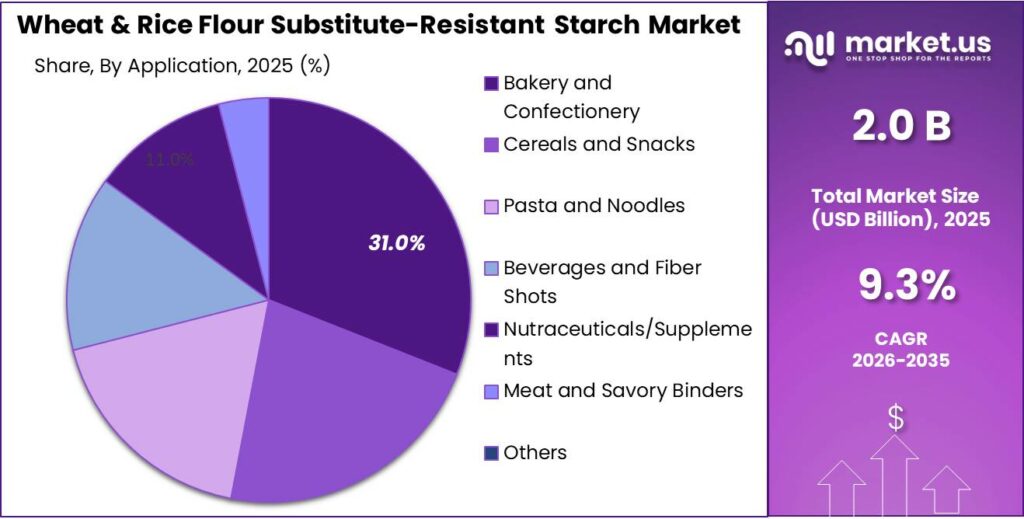
- Bakery and Confectionery held a dominant market position, capturing more than a 31.6% share.
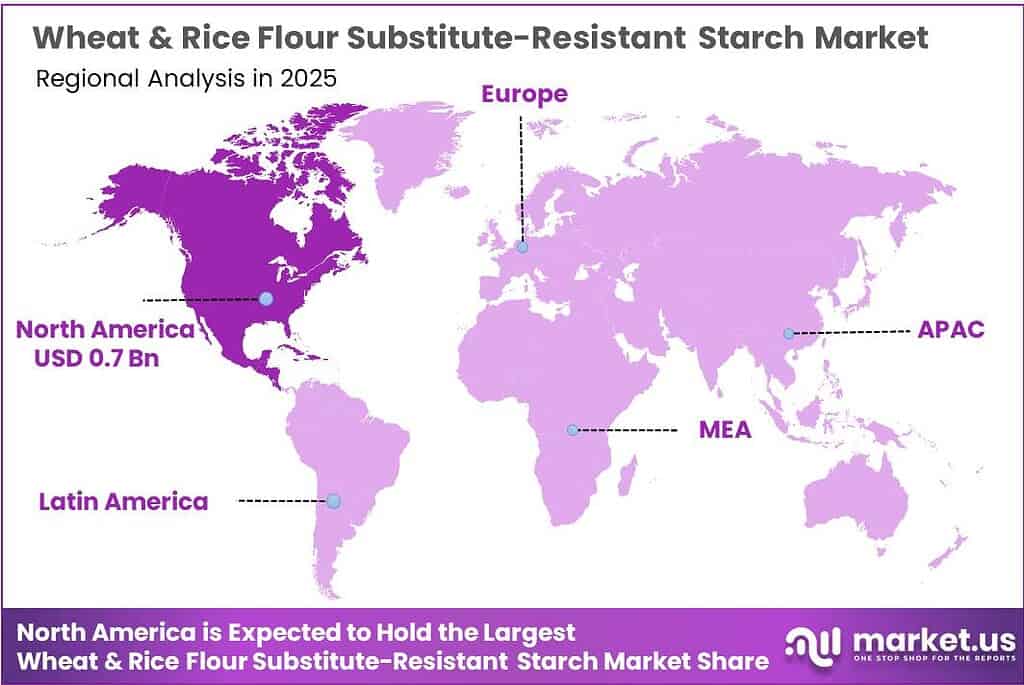
- North America emerged as the dominant region in the wheat and rice flour substitute–resistant starch market, accounting for 38.9% share and reaching a value of nearly USD 0.7 Bn.
By Source Analysis
Grains dominate with 43.7% driven by familiar consumption patterns and easy integration into daily diets
In 2025, Grains held a dominant market position, capturing more than a 43.7% share. This strong position is mainly due to the widespread use of grain-based ingredients like wheat and rice alternatives, which are already well understood by both consumers and food manufacturers. Grains are easy to process into resistant starch and can be smoothly incorporated into everyday food products such as bread, noodles, and baked goods without major changes in taste or texture. Moving into 2026, the segment continues to benefit from steady demand as more people look for healthier carbohydrate options that support digestion and blood sugar control.
By Application Analysis
Bakery and confectionery leads with 31.6% as consumers prefer healthier baked treats
In 2025, Bakery and Confectionery held a dominant market position, capturing more than a 31.6% share. This growth is largely linked to the rising demand for healthier versions of everyday baked products like bread, cakes, cookies, and pastries. Resistant starch made from wheat and rice substitutes is being widely used to improve fiber content while keeping the same soft texture and taste that consumers expect. By 2026, this segment continues to see steady traction as bakeries and food brands focus on offering low-glycemic and digestive-friendly options without compromising on quality.
Key Market Segments
By Source
- Grains
- Fruits and Vegetables
- Beans and Legumes
- Cereal Food
By Application
- Bakery and Confectionery
- Cereals and Snacks
- Pasta and Noodles
- Beverages and Fiber Shots
- Nutraceuticals/Supplements
- Meat and Savory Binders
- Pet Food
- Others
Emerging Trends
“Stealth health” reformulation is becoming a strong trend in everyday foods
One of the most noticeable trends in the wheat and rice flour substitute–resistant starch market is the shift toward what the industry often calls “stealth health.” This simply means improving the nutritional value of everyday foods without making big changes that consumers can easily notice. In 2025, this approach is becoming more common, especially in bakery, snacks, and packaged foods. Manufacturers are quietly adding resistant starch to products like bread, biscuits, cereals, and noodles to increase fiber content and reduce the glycemic impact.
Industry data shows that bakery applications alone accounted for nearly 38% of resistant starch use in 2025, highlighting how widely it is being adopted in daily food products. The idea is simple—people want healthier food, but they don’t want to compromise on taste or texture. Resistant starch helps solve that problem because it blends easily into flour-based products. By 2026, this trend is becoming even stronger, with food brands focusing on “hidden nutrition” rather than obvious diet foods.
Growing focus on gut health and microbiome-friendly ingredients
Another important trend shaping this market is the rising focus on gut health and microbiome-friendly foods. Consumers are becoming more aware that digestion is closely linked to overall health, including immunity and metabolism. Resistant starch is gaining attention here because it works like a prebiotic—it reaches the large intestine and feeds beneficial gut bacteria
Recent health insights suggest that adults should consume around 15 grams of resistant starch daily, but actual intake is much lower, often close to just 4 grams. This gap is pushing food companies to innovate and include resistant starch in common products like rice-based foods, baked goods, and snacks. Governments and nutrition bodies are also encouraging fiber-rich diets to reduce lifestyle diseases, which indirectly supports this shift.
Drivers
Rising digestive health concerns are pushing demand for resistant starch alternatives
One of the biggest drivers for wheat and rice flour substitute–resistant starch is the growing concern around digestive health and lifestyle diseases. Across the world, people are slowly shifting away from highly refined carbohydrates and looking for ingredients that behave more like fiber. Resistant starch fits naturally here because it is not digested in the small intestine and instead reaches the colon, where it supports gut bacteria and overall digestive balance
Global health bodies have been indirectly supporting this shift. According to Food and Agriculture Organization and World Health Organization, diets should include a high proportion of carbohydrates—around 55% of daily energy—from diverse and healthier sources rather than refined ones. This has encouraged food companies to rethink flour-based products and bring in functional ingredients like resistant starch. By 2025 and continuing into 2026, food manufacturers are actively reformulating bakery and staple foods to include fiber-like starches that improve digestion without changing taste much.
Low global fiber intake is creating a strong need for functional starch ingredients
Another key factor driving this market is the gap between recommended and actual fiber intake. Many consumers simply do not get enough fiber from their daily diets, which is pushing demand for easy-to-add functional ingredients like resistant starch. Nutrition experts suggest that adults should consume around 15 grams of resistant starch daily, but actual intake is much lower, often close to just 4 grams in typical diets. This clear gap is creating a strong opportunity for food producers to bridge it through fortified products.
Governments and public health bodies are increasingly promxoting fiber-rich diets as part of long-term health strategies, which indirectly supports the use of resistant starch in flour substitutes. By 2026, many packaged food brands are positioning their products as “high fiber” or “gut-friendly,” and resistant starch plays a quiet but important role in that transition. This demand is less about trends and more about everyday health needs, which makes it a stable and long-term growth driver.
Restraints
Higher production complexity and cost limit large-scale adoption
One of the key challenges holding back the wheat and rice flour substitute–resistant starch market is the complexity involved in producing and incorporating resistant starch into food products. Unlike regular flour, resistant starch often requires special processing methods such as controlled heating, cooling, or chemical modification to achieve the desired resistance to digestion. These additional steps increase production costs and make it less attractive for small and mid-sized food manufacturers.
Research also highlights that developing food products with resistant starch is not straightforward, as its behavior can vary depending on the source and processing method. This creates formulation challenges for maintaining taste, texture, and shelf life in everyday foods like bread and baked goods. On top of that, there is no standardized database for resistant starch content in common foods, which adds uncertainty for producers when designing products.
Limited scientific consensus and inconsistent health outcomes slow confidence
Another important restraining factor is the lack of consistent scientific agreement on the health benefits of resistant starch. While many studies show positive effects, the results are not always uniform across different population groups or product types. For example, research reviewing multiple clinical trials found that outcomes such as weight, blood sugar, and inflammation varied significantly depending on dosage, duration, and individual characteristics
Even regulatory bodies have taken a cautious stance. The U.S. FDA has allowed a qualified health claim stating that resistant starch may reduce the risk of type 2 diabetes, but it clearly mentions that the scientific evidence is limited and not fully conclusive. This kind of cautious approval creates hesitation among food companies when making strong product claims. As a result, by 2026, many manufacturers are still careful about fully replacing traditional flours with resistant starch.
Opportunity
Growing gap between recommended and actual fiber intake creates strong opportunity
One of the biggest growth opportunities for wheat and rice flour substitute–resistant starch lies in the clear gap between how much fiber people should eat and how much they actually consume. Health experts recommend around 25–29 grams of daily fiber intake for adults, with even higher intake showing added benefits for long-term health. However, in real-world diets, most people fall short of this target due to high consumption of refined grains and processed foods.
This is where resistant starch becomes useful. It behaves like dietary fiber because it is not digested in the small intestine and instead supports gut health in the large intestine. Governments and health bodies are consistently promoting higher fiber diets as part of strategies to reduce chronic diseases such as diabetes and heart issues.
Strong push for healthier carbohydrate sources supports product innovation
Another major opportunity comes from the global shift toward better-quality carbohydrates. Organizations like the FAO and WHO recommend that at least 55% of daily energy intake should come from carbohydrates, but they also stress the importance of choosing healthier and more diverse sources
This recognition is important because it gives companies confidence to develop and label new products around it. By 2026, this is leading to more innovation in bakery, packaged foods, and even staple items, where resistant starch is quietly replacing a portion of traditional flour. The opportunity here is not just in niche health products, but in everyday foods that people already consume, making growth more stable and long-term.
Regional Insights
North America dominates with 38.9% share valued at around USD 0.7 Bn, supported by strong demand for functional and fiber-rich foods
In 2025, North America emerged as the dominant region in the wheat and rice flour substitute–resistant starch market, accounting for 38.9% share and reaching a value of nearly USD 0.7 Bn. This leadership is largely driven by changing food habits in the United States and Canada, where consumers are actively looking for healthier carbohydrate options. The region has a strong presence of processed and packaged food industries, which makes it easier to introduce resistant starch into everyday products like bread, cereals, snacks, and ready-to-eat meals.
One of the key supporting factors is the clear gap in fiber consumption across North America. According to the U.S. Department of Agriculture, average dietary fiber intake in the U.S. is around 16 grams per day, which is below recommended levels. At the same time, resistant starch intake is estimated to be only about 3 to 8 grams per person daily, highlighting strong potential for improvement through food reformulation.
Key Regions and Countries Insights
- North America
- US
- Canada
- Europe
- Germany
- France
- The UK
- Spain
- Italy
- Rest of Europe
- Asia Pacific
- China
- Japan
- South Korea
- India
- Australia
- Rest of APAC
- Latin America
- Brazil
- Mexico
- Rest of Latin America
- Middle East & Africa
- GCC
- South Africa
- Rest of MEA
Key Players Analysis
Tate & Lyle continues to position itself as a key player in specialty food ingredients, including resistant starch solutions. In 2025, the company reported revenue of around £2.1 billion, supported by its focus on fiber enrichment, sugar reduction, and clean-label starches. The company has also invested over $80 million in innovation and product development, strengthening its portfolio in functional starch. With more than 4,000 customer interactions recorded in 2025, it shows strong industry engagement.
Ingredion plays a major role in the resistant starch space through its “Texture & Healthful Solutions” segment. In 2025, the company reported operating income of about $493 million in its LATAM food ingredients segment, showing stable performance despite market challenges. The company continues to invest in plant-based and fiber-rich ingredients, supporting demand for flour substitutes.
Archer Daniels Midland (ADM) is one of the largest global ingredient suppliers, with a strong presence in starch and carbohydrate solutions. In 2025, the company reported total segment operating profit of around $3.2 billion, with its carbohydrate solutions segment alone contributing about $1.2 billion. ADM’s scale allows it to supply resistant starch at competitive prices, making it a preferred partner for large food manufacturers.
Top Key Players Outlook
- Tate & Lyle
- Ingredion
- Emsland Group
- ADM
- Cargill, Incorporated
- Roquette Frères
Recent Industry Developments
In 2025, Tate & Lyle strengthened its position in the wheat and rice flour substitute–resistant starch space by building on its wider specialty ingredients business, which reported pro forma revenue of £2.1 billion and pro forma adjusted EBITDA of £446 million for the year ended 31 March 2025.
In 2025, Ingredion strengthened its work in the wheat and rice flour substitute–resistant starch space through its wider Texture & Healthful Solutions business, which recorded US$2.397 billion in net sales and US$405 million in operating income for full-year 2025.
Report Scope
Report Features Description Market Value (2025) USD 2.0 Bn Forecast Revenue (2035) USD 4.8 Bn CAGR (2026-2035) 9.3% Base Year for Estimation 2025 Historic Period 2020-2024 Forecast Period 2026-2035 Report Coverage Revenue Forecast, Market Dynamics, Competitive Landscape, Recent Developments Segments Covered By Source (Grains, Fruits and Vegetables, Beans and Legumes, Cereal Food), By Application (Bakery and Confectionery, Cereals and Snacks, Pasta and Noodles, Beverages and Fiber Shots, Nutraceuticals/Supplements, Meat and Savory Binders, Pet Food, Others) Regional Analysis North America – US, Canada; Europe – Germany, France, The UK, Spain, Italy, Rest of Europe; Asia Pacific – China, Japan, South Korea, India, Australia, Singapore, Rest of APAC; Latin America – Brazil, Mexico, Rest of Latin America; Middle East & Africa – GCC, South Africa, Rest of MEA Competitive Landscape Tate & Lyle, Ingredion, Emsland Group, ADM, Cargill, Incorporated, Roquette Frères Customization Scope Customization for segments, region/country-level will be provided. Moreover, additional customization can be done based on the requirements. Purchase Options We have three licenses to opt for: Single User License, Multi-User License (Up to 5 Users), Corporate Use License (Unlimited User and Printable PDF)  Wheat And Rice Flour Substitute-Resistant Starch MarketPublished date: Mar 2026add_shopping_cartBuy Now get_appDownload Sample
 -
-
- Tate & Lyle
- Ingredion
- Emsland Group
- ADM
- Cargill, Incorporated
- Roquette Frères
Our Clients

- 182391
- Mar 2026






