


Global Western Wear Market Size, Share, Growth Analysis By Type (Casual, Formal), By End User (Men, Women, Kids), By Distribution Channel (Online Platforms, Specialty Stores, Supermarkets & Hypermarkets, Brand Outlets, Others), By Region and Companies - Industry Segment Outlook, Market Assessment, Competition Scenario, Statistics, Trends and Forecast 2025-2034
- Published date: Jan 2026
- Report ID: 173080
- Number of Pages: 378
- Format:
-
keyboard_arrow_up
Quick Navigation
Report Overview
The Global Western Wear Market size is expected to be worth around USD 162.9 Billion by 2035, from USD 91.8 Billion in 2025, growing at a CAGR of 5.9% during the forecast period from 2026 to 2035.
The Western Wear Market encompasses apparel rooted in American frontier heritage, including denim jeans, shirts, boots, and casual lifestyle clothing. This segment represents a significant portion of the global fashion industry. Modern western wear blends traditional aesthetics with contemporary design elements. The market serves diverse consumer demographics seeking both functional and fashion-forward apparel options.
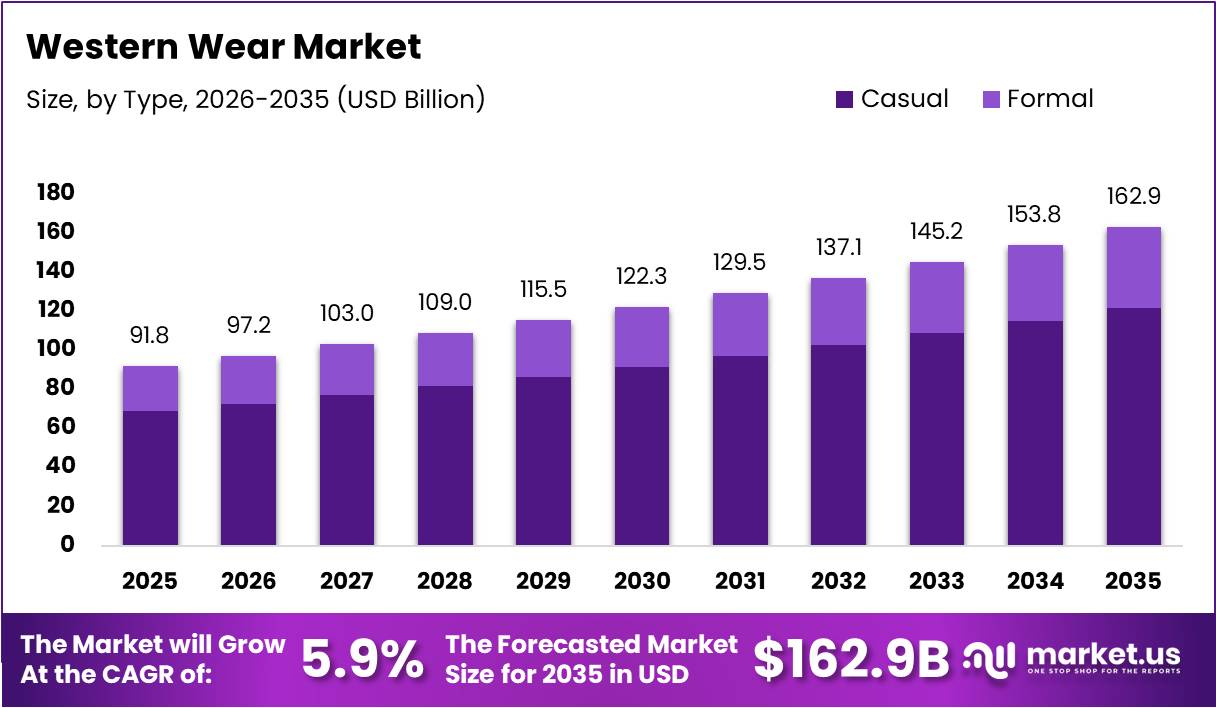
The market demonstrates robust expansion driven by increasing casualization trends across professional and social settings. Consumers increasingly prioritize comfort without compromising style, thereby fueling demand for denim and relaxed-fit garments. Furthermore, e-commerce platforms have enhanced market accessibility, enabling brands to reach previously untapped geographical territories. Cross-cultural fashion adoption continues strengthening the market’s global footprint.
Significant opportunities emerge through sustainable manufacturing practices and eco-friendly fabric innovations. Brands investing in organic cotton and recycled materials attract environmentally conscious consumers. Additionally, customization services and direct-to-consumer models present lucrative growth avenues. The rising popularity of athleisure western fusion creates hybrid product categories, subsequently expanding the addressable market substantially.
Government regulations concerning textile manufacturing standards and labor practices shape operational frameworks across the industry. Environmental compliance requirements drive manufacturers toward cleaner production technologies. Trade policies and tariff structures influence pricing strategies and international market penetration. Moreover, intellectual property protections safeguard brand authenticity while combating counterfeit merchandise.
Market penetration remains particularly strong within retail environments, evidenced by spatial allocation priorities. Consequently, retailers dedicate substantial floor space to this category, reflecting consumer preference patterns. The market benefits from consistent demand across age groups and lifestyle segments, ensuring sustained revenue generation.
Consumer behavior data reveals remarkable adoption rates across demographics. According to research, 57% of U.S. adults report wearing jeans regularly, with 26% wearing them several times weekly and 31% donning them daily. Additionally, retail allocation reflects category importance, as western wear occupies approximately 60% of lifestyle retailers’ floor space. These statistics underscore the segment’s dominance within contemporary fashion landscapes and validate continued investment in product development and market expansion initiatives.
Key Takeaways
- Global Western Wear Market is projected to grow from USD 91.8 Billion in 2025 to USD 162.9 Billion by 2035, registering a 5.9% CAGR.
- Casual Western Wear dominates the market by type with a 74.8% share, reflecting strong demand for comfort-driven apparel.
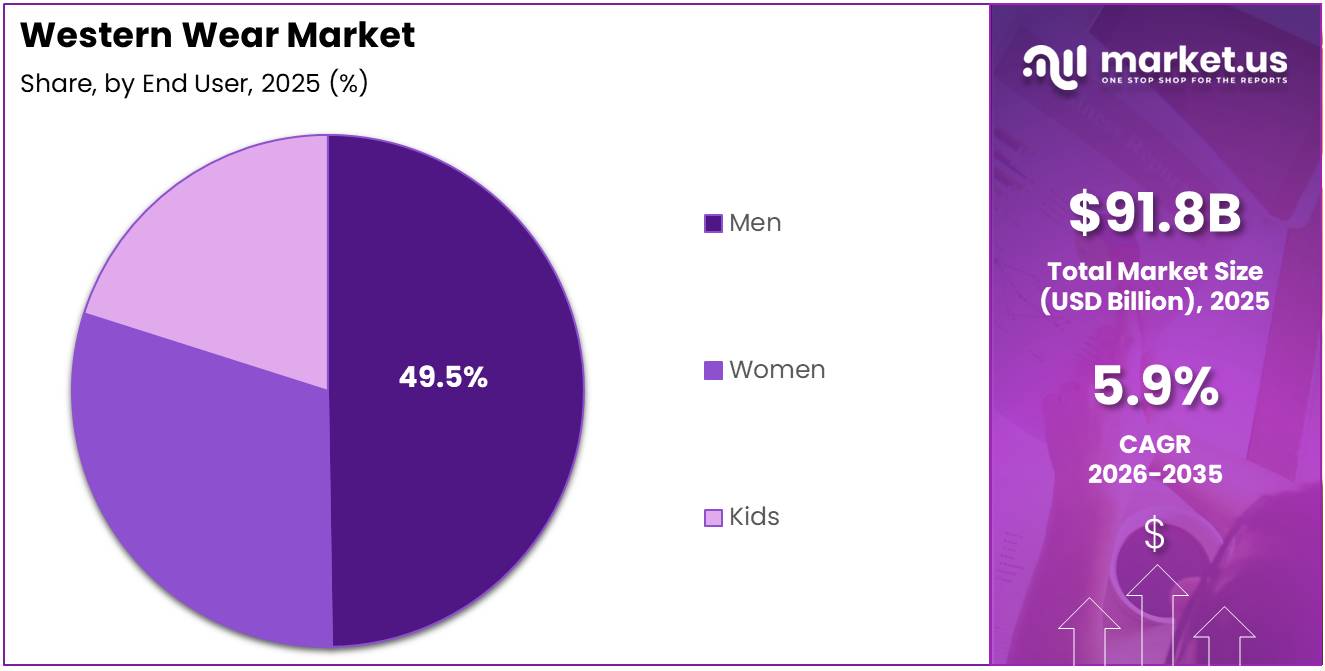
- Men’s Western Wear leads the end-user segment, accounting for a 49.5% market share due to consistent purchasing patterns.
- Online Platforms represent the largest distribution channel with a 39.7% share, supported by digital adoption and e-commerce expansion.
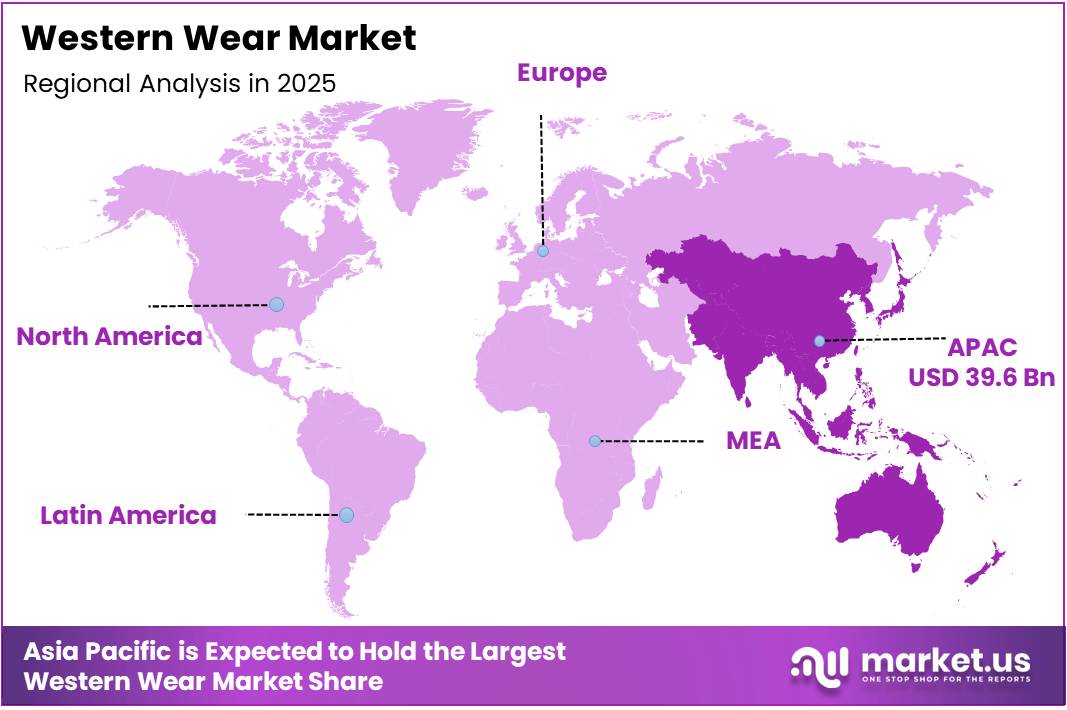
- Asia Pacific is the leading region, holding 43.2% of global market share with a market value of USD 39.6 Billion.
By Type Analysis
Casual Western Wear dominates with 74.8% share due to its versatility and everyday comfort appeal.
In 2025, Casual Western Wear held a dominant market position in the By Type Analysis segment of Western Wear Market, with a 74.8% share. This substantial dominance stems from evolving lifestyle preferences where consumers prioritize comfort without compromising style. Casual wear encompasses denim jeans, t-shirts, and relaxed-fit trousers that seamlessly transition from daily errands to social gatherings, benefiting from increased remote work culture and leisure-oriented lifestyles.
Formal Western Wear maintains steady presence catering to professional environments and special occasions requiring polished appearances. This segment includes tailored suits, dress shirts, and blazers. While business casual trends have impacted traditional formal wear demand, certain industries and events continue driving consistent purchases, particularly in urban markets where corporate culture remains robust.
By End User Analysis
Men’s Western Wear dominates with 49.5% share due to consistent demand across casual and formal categories.
In 2025, Men’s Western Wear held a dominant market position in the By End User Analysis segment of Western Wear Market, with a 49.5% share. This leadership reflects sustained purchasing patterns driven by wardrobe essentials and regular replacement cycles. Men consistently invest in versatile pieces like jeans, shirts, and jackets. Growing fashion consciousness and increased disposable income contribute to steady market dominance.
Women’s Western Wear represents a significant segment with dynamic growth potential and diverse product offerings. This category encompasses dresses, tops, skirts, and trousers catering to fashion-forward consumers. Women demonstrate higher purchase frequency and experimentation with trends. The rise of fast fashion and online shopping has accelerated consumption patterns, creating opportunities for both premium and affordable brands.
Kids’ Western Wear forms an essential segment characterized by frequent purchases driven by growth spurts and evolving style preferences. Parents prioritize durable, comfortable clothing suitable for active lifestyles. This segment benefits from character-themed collections and eco-friendly options. Despite smaller market share, kids’ wear demonstrates consistent demand supported by growing nuclear families and increased spending on children’s fashion.
By Distribution Channel Analysis
Online Platforms dominate with 39.7% share due to convenience, variety, and competitive pricing advantages.
In 2025, Online Platforms held a dominant market position in the By Distribution Channel Analysis segment of Western Wear Market, with a 39.7% share. This digital leadership reflects fundamental shifts in consumer shopping behaviors accelerated by technological advancement. Online channels offer unparalleled convenience, extensive collections, price comparisons, and doorstep delivery. Mobile commerce and personalized recommendations enhance user experiences significantly.
Specialty Stores maintain important presence by offering curated selections and expert guidance for discerning shoppers. These dedicated outlets provide focused product assortments and personalized shopping experiences. Customers appreciate physically examining fabrics and receiving styling recommendations from trained professionals, particularly when seeking premium brands and custom alterations without shipping delays.
Supermarkets & Hypermarkets serve as convenient one-stop shopping destinations where consumers purchase western wear alongside groceries. These large-format retailers leverage high foot traffic and impulse buying opportunities. The channel appeals to budget-conscious families seeking affordable options during routine shopping trips through strategic placement, promotional pricing, and private label offerings.
Brand Outlets provide direct brand experiences with exclusive collections and immersive retail environments that strengthen brand loyalty. These manufacturer-owned stores showcase complete product ranges and maintain consistent brand narratives. Customers visit for authentic products, latest collections, and premium shopping experiences, particularly attracting brand-conscious consumers seeking direct engagement with preferred labels.
Others encompass alternative distribution channels including department stores, discount retailers, pop-up shops, and institutional sales serving niche segments. These diverse channels address specific needs through varied retail formats. Department stores offer multi-brand selections, while discount retailers focus on value propositions, demonstrating the western wear market’s distribution diversity across consumer demographics.
Key Market Segments
By Type
- Casual
- Formal
By End User
- Men
- Women
- Kids
By Distribution Channel
- Online Platforms
- Specialty Stores
- Supermarkets & Hypermarkets
- Brand Outlets
- Others
Drivers
Rising Popularity of Casual and Semi-Formal Western Outfits Among Millennials Drives Market Growth
The western wear market is experiencing significant growth as millennials increasingly prefer casual and semi-formal western outfits for their daily wardrobes. This younger generation values comfort alongside style, making western apparel an ideal choice for both workplace and social settings. The shift toward relaxed dress codes in offices has further boosted demand for versatile western clothing items like shirts, trousers, and dresses.
Western pop culture continues to shape fashion preferences globally, with celebrity endorsements playing a crucial role in driving market expansion. When popular celebrities and influencers showcase western wear on social media platforms, it creates immediate demand among their followers. This influence extends beyond entertainment, impacting everyday fashion choices of consumers worldwide.
The growth of online retail platforms has revolutionized how consumers access western apparel. E-commerce websites offer extensive product ranges, competitive pricing, and convenient home delivery options. This digital transformation has made western wear accessible to customers in remote locations, eliminating geographical barriers and expanding the overall market reach significantly.
Restraints
Seasonal Fluctuations Impacting Demand Restrains Market Stability
The western wear market faces challenges due to seasonal fluctuations that create unpredictable demand patterns. Weather changes directly influence purchasing decisions, with consumers buying lighter fabrics during summer and heavier materials in winter. This seasonality forces retailers to manage inventory carefully, often leading to excess stock or shortages that affect profitability and sales consistency.
Competition from traditional ethnic and fusion wear presents another significant restraint for the western wear market. Many consumers, particularly in Asian and Middle Eastern regions, prefer traditional clothing for cultural and religious occasions. Fusion wear, which blends western and ethnic styles, has also gained popularity as it offers versatility. This strong preference for ethnic alternatives limits the market share available for pure western apparel.
Additionally, traditional wear often carries emotional and cultural significance that western clothing cannot replace. During festivals and family gatherings, consumers naturally gravitate toward ethnic options, reducing demand for western wear during these periods. Retailers must navigate this competitive landscape while maintaining their market position.
Growth Factors
Expansion in Tier-II and Tier-III Cities Creates Significant Growth Opportunities
The western wear market is discovering substantial growth opportunities in tier-II and tier-III cities where fashion awareness is rapidly increasing. Rising disposable incomes and exposure to global trends through digital media have transformed consumer preferences in these regions. Urban migration and improved infrastructure have created new customer bases eager to adopt contemporary fashion styles, presenting untapped potential for market players.
Sustainable and eco-friendly western wear collections represent another promising opportunity for market expansion. Growing environmental consciousness among consumers has created demand for clothing made from organic materials and ethical manufacturing processes. Brands introducing sustainable collections can attract environmentally aware shoppers and differentiate themselves in a competitive marketplace.
Customization and personalized western apparel offer unique growth avenues for niche markets. Consumers increasingly seek clothing that reflects their individual style and personality. Technology enables brands to offer tailored fits, custom designs, and personalized embellishments at reasonable prices. This trend appeals particularly to younger consumers who value uniqueness and self-expression through fashion choices.
Emerging Trends
Revival of Vintage and Retro Western Fashion Styles Shapes Current Market Trends
The western wear market is witnessing a strong revival of vintage and retro fashion styles that appeal to nostalgia-driven consumers. Classic designs from the 1970s, 1980s, and 1990s are making comebacks with modern interpretations. This trend allows brands to reimagine timeless pieces while maintaining contemporary relevance, attracting both older consumers who remember these styles and younger shoppers discovering them fresh.
Smart fabrics and wearable technology integration represent cutting-edge trends transforming the western wear landscape. Innovative materials that regulate temperature, resist stains, or track fitness metrics are gaining consumer interest. These technological advancements add functional value beyond aesthetics, appealing to tech-savvy shoppers seeking performance-enhanced clothing for active lifestyles.
Gender-neutral and unisex western clothing has emerged as a significant trend reflecting changing social attitudes toward fashion. Consumers increasingly reject traditional gender boundaries in clothing choices, preferring versatile pieces that anyone can wear. Brands responding to this demand with inclusive collections are capturing new market segments and building stronger connections with progressive consumers who value equality and personal freedom in fashion expression.
Regional Analysis
Asia Pacific Dominates the Western Wear Market with a Market Share of 43.2%, Valued at USD 39.6 Billion
Asia Pacific leads the global western wear market with a commanding share of 43.2%, valued at USD 39.6 billion. The region’s dominance is driven by rapid urbanization, rising disposable incomes, and growing adoption of Western fashion trends among younger populations in China, India, Japan, and South Korea. The expanding middle class, proliferation of e-commerce platforms, and shift toward casual workplace attire have significantly accelerated market growth across the region.
North America Western Wear Market Trends
North America represents a mature market characterized by high consumer awareness and brand loyalty. The region benefits from a strong fashion-conscious consumer base, robust retail infrastructure, and advanced e-commerce penetration. Growing demand for sustainable and ethically produced clothing is reshaping brand strategies and consumer purchasing patterns across the market.
Europe Western Wear Market Trends
Europe maintains a significant market position driven by its rich fashion heritage and trendsetting influence. The region’s sophisticated consumers value both contemporary designs and timeless classics, with increasing preference for sustainable fashion and eco-friendly materials. Major fashion capitals like Paris, Milan, and London continue to drive global trends and innovation in western wear.
Latin America Western Wear Market Trends
Latin America presents an emerging market experiencing gradual growth fueled by urbanization and rising consumer spending. The young, fashion-forward population is increasingly embracing western clothing styles, supported by expanding retail chains and online platforms. Economic volatility and price sensitivity remain key factors influencing purchasing patterns across the region.
Middle East and Africa Western Wear Market Trends
The Middle East and Africa region exhibits diverse market dynamics with varying adoption rates influenced by cultural and economic factors. Affluent urban centers in the Middle East show strong demand for premium western wear, while African markets are gradually expanding through urbanization and improved retail infrastructure. Social media and global fashion trends are increasingly influencing consumer preferences across both subregions.
Key Regions and Countries
North America
- US
- Canada
Europe
- Germany
- France
- The UK
- Spain
- Italy
- Rest of Europe
Asia Pacific
- China
- Japan
- South Korea
- India
- Australia
- Rest of APAC
Latin America
- Brazil
- Mexico
- Rest of Latin America
Middle East & Africa
- GCC
- South Africa
- Rest of MEA
Key Western Wear Company Insights
GAP Inc. continues to balance classic American casualwear with enhanced digital engagement and sustainability initiatives. The company’s focus on wardrobe staples and omnichannel convenience positions it well to capture value-oriented consumers, though competitive pressure requires innovation in product differentiation and supply chain responsiveness.
Forever21 Inc. remains relevant by targeting younger demographics through trend-driven assortments and aggressive price points. As fashion cycles accelerate, Forever21’s ability to quickly translate runway and social media trends into affordable offerings will be critical. However, the brand must reinforce operational discipline to support profitability while expanding its global footprint amidst intensified competition.
Vero Moda is gaining traction in Western wear by blending European fashion sensibilities with accessible pricing. Its strategic emphasis on fit, seasonal collections, and lifestyle positioning strengthens relevance among fashion-conscious consumers. To sustain momentum in 2025, Vero Moda will need to deepen market penetration across diverse regions, particularly in emerging economies where Western wardrobes are rapidly evolving.
Benetton Group leverages its heritage in knitwear and casual apparel to address demand for quality and comfort. The brand’s commitment to vibrant design and responsible sourcing resonates with consumers prioritizing ethical fashion. In the context of the broader Western Wear market, Benetton’s integrated value strategy supports resilience, though it must continuously refine distribution channels and localized marketing to optimize customer engagement.
Top Key Players in the Market
- GAP Inc.
- Forever21 Inc.
- Vero Moda
- Benetton Group
- Hennes & Mauritz AB (H&M)
- crema diesel spa
- Aditya Birla Fashion and Retail Ltd. (ABFRL)
- MANGO BCN
- Inditex SA (Zara)
- Marks & Spencer Plc
Recent Developments
- In August 2025, Levi’s launched the The Denim Cowboy Beyoncé x Levi’s collection as part of its REIIMAGINE campaign, featuring western-inspired denim silhouettes that reinforced Levi’s cowboy heritage and strengthened its positioning in the Western wear segment.
- In December 2025, Republic Brands Group (RBG) acquired Joie, Equipment, and Current/Elliott from Sunrise Brands for $36 million, with the inclusion of denim-focused Current/Elliott offering indirect exposure to Western and heritage-inspired denim categories.
Report Scope
Report Features Description Market Value (2025) USD 91.8 Billion Forecast Revenue (2035) USD 162.9 Billion CAGR (2026-2035) 5.9% Base Year for Estimation 2025 Historic Period 2020-2024 Forecast Period 2026-2035 Report Coverage Revenue Forecast, Market Dynamics, Competitive Landscape, Recent Developments Segments Covered By Type (Casual, Formal), By End User (Men, Women, Kids), By Distribution Channel (Online Platforms, Specialty Stores, Supermarkets & Hypermarkets, Brand Outlets, Others) Regional Analysis North America (US and Canada), Europe (Germany, France, The UK, Spain, Italy, and Rest of Europe), Asia Pacific (China, Japan, South Korea, India, Australia, and Rest of APAC), Latin America (Brazil, Mexico, and Rest of Latin America), Middle East & Africa (GCC, South Africa, and Rest of MEA) Competitive Landscape GAP Inc., Forever21 Inc., Vero Moda, Benetton Group, Hennes & Mauritz AB (H&M), crema diesel spa, Aditya Birla Fashion and Retail Ltd. (ABFRL), MANGO BCN, Inditex SA (Zara), Marks & Spencer Plc Customization Scope Customization for segments, region/country-level will be provided. Moreover, additional customization can be done based on the requirements. Purchase Options We have three licenses to opt for: Single User License, Multi-User License (Up to 5 Users), Corporate Use License (Unlimited User and Printable PDF) 
-
-
- GAP Inc.
- Forever21 Inc.
- Vero Moda
- Benetton Group
- Hennes & Mauritz AB (H&M)
- crema diesel spa
- Aditya Birla Fashion and Retail Ltd. (ABFRL)
- MANGO BCN
- Inditex SA (Zara)
- Marks & Spencer Plc
Our Clients

- 173080
- Jan 2026






