


Global Travel Trailer Market Size, Share, Growth Analysis By Trailer (Conventional Travel Trailers, Fifth-Wheel Trailers, Toy Haulers, Hybrid Travel Trailers, Teardrop Trailers, Pop-Up/Folding Trailers), By Length (Small (Up to 20 ft), Medium (21–30 ft), Large (Above 30 ft)), By Application (Leisure & Vacation Travel, Full-Time Living, Adventure & Off-Road Camping, Seasonal/Weekend Camping), By End Use (Individual, Fleet Owner), By Region and Companies - Industry Segment Outlook, Market Assessment, Competition Scenario, Statistics, Trends and Forecast 2026-2035
- Published date: Jan 2026
- Report ID: 174657
- Number of Pages: 303
- Format:
-
keyboard_arrow_up
Quick Navigation
Report Overview
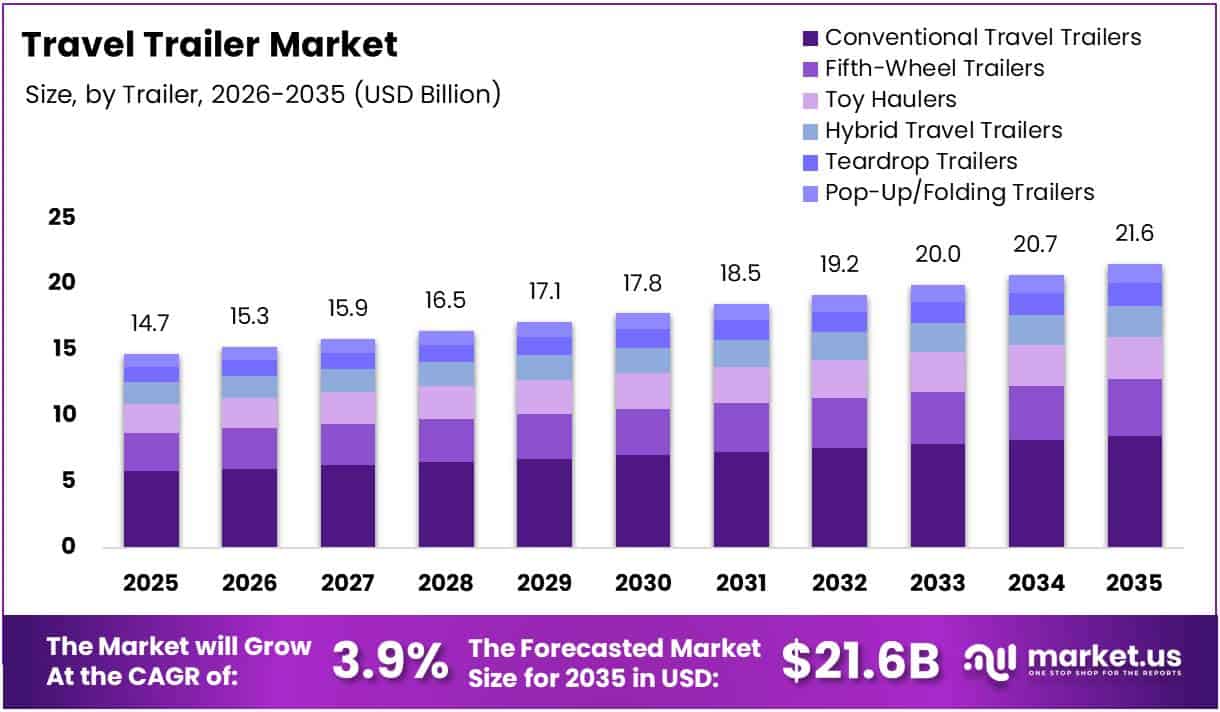
The Global Travel Trailer Market size is expected to be worth around USD 21.6 Billion by 2035, from USD 14.7 Billion in 2025, growing at a CAGR of 3.9% during the forecast period from 2026 to 2035.
The travel trailer market represents a dynamic segment within the recreational vehicle industry, encompassing towable units designed for temporary accommodation during leisure trips. These versatile trailers connect to personal vehicles, offering consumers flexible travel solutions without requiring specialized driving licenses. Market analysis reveals substantial growth potential driven by evolving consumer preferences toward experiential travel and outdoor recreation activities.
Growth trajectories indicate robust expansion as millennials and Generation Z demonstrate increasing interest in road-based adventures. Remote work arrangements have fundamentally transformed travel patterns, enabling extended trips and destination flexibility. Consequently, manufacturers are introducing innovative designs featuring smart technology integration, sustainable materials, and compact configurations that appeal to younger demographics seeking affordable entry points.
Investment opportunities emerge across multiple value chain segments, from manufacturing innovations to ancillary services including campground development and digital booking platforms. Government infrastructure initiatives supporting national park accessibility and recreational area expansion further catalyze market development. These public investments create favorable conditions for sustained industry growth through improved destination connectivity and enhanced visitor experiences.
Regulatory frameworks governing vehicle safety standards, towing capacity requirements, and environmental emissions continue evolving to balance consumer access with sustainability objectives. Compliance mandates drive technological advancements in lightweight construction materials and energy-efficient systems. Furthermore, zoning regulations affecting RV parking and temporary dwelling permits influence purchasing decisions and usage patterns across different geographic markets.
Statistical evidence demonstrates market maturation and demographic diversity within the consumer base. Conventional travel trailers dominate the towable RV segment, representing ownership among 38% of RV enthusiasts according to industry association data. Demographic distribution shows 34% of travel trailer owners fall within the 18-54 age bracket, while 66% comprise individuals aged 55 and above. Weight specifications typically range between 3,000 and 8,000 pounds, though compact models achieve lighter configurations around 2,500 pounds, accommodating diverse towing vehicle capabilities and consumer requirements.
Key Takeaways
- The Global Travel Trailer Market is projected to grow from USD 14.7 Billion in 2025 to USD 21.6 Billion by 2035 at a CAGR of 3.9%.
- Conventional Travel Trailers lead the product segment with a 39.4% market share, driven by affordability and broad consumer adoption.
- Medium-length trailers (21–30 ft) dominate by size, accounting for 49.2% of total market demand.
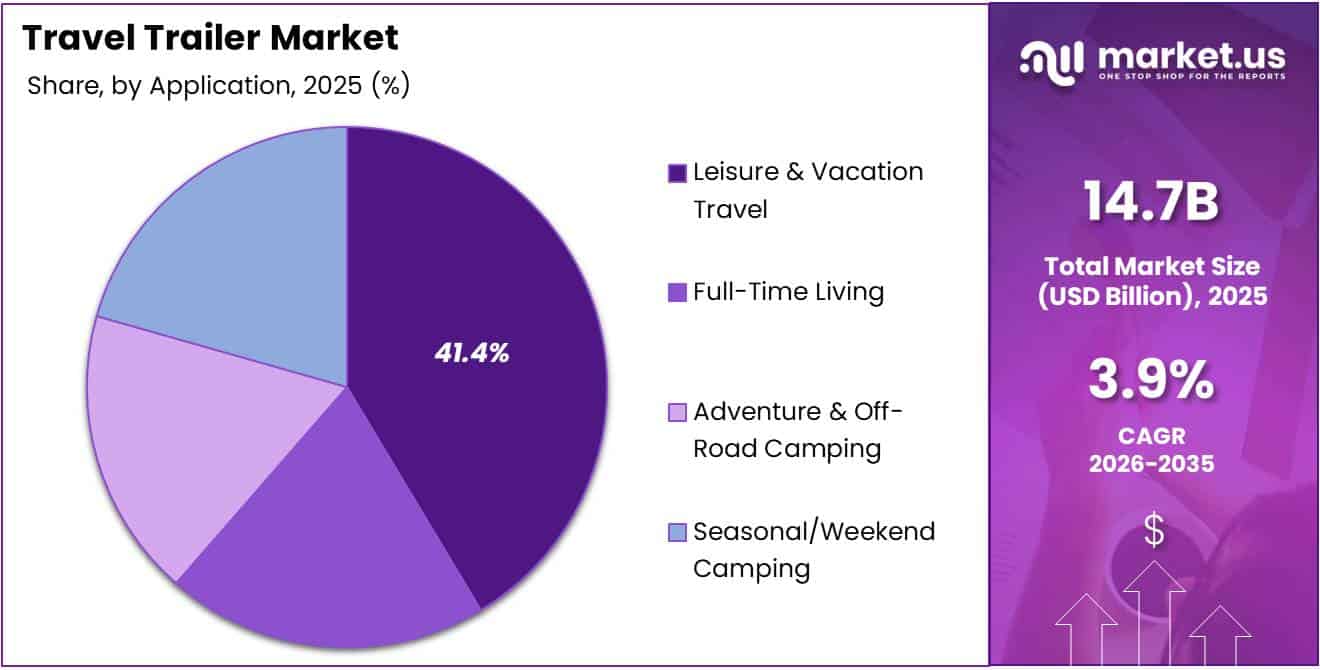
- Leisure & Vacation Travel is the largest application segment, representing 41.4% of overall market usage.
- Individual end users account for the majority of demand with a 78.3% market share compared to fleet owners.
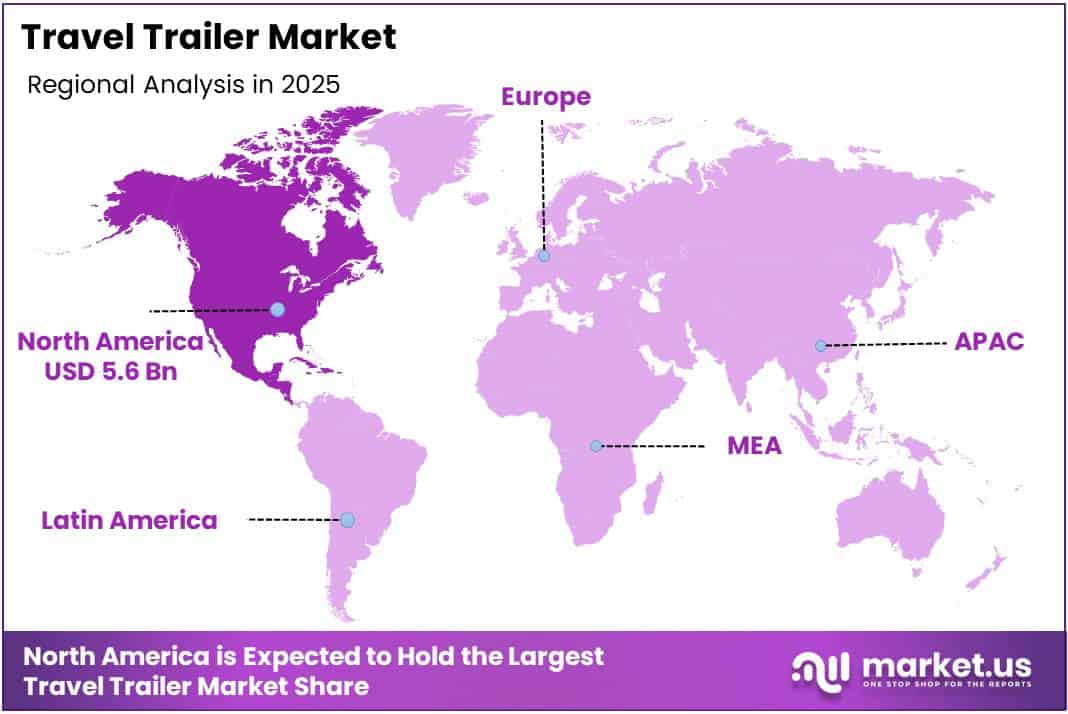
- North America leads regionally with a 38.4% market share, valued at USD 5.6 Billion, supported by strong RV culture and infrastructure.
By Trailer Analysis
Conventional Travel Trailers dominate with 39.4% due to their widespread availability and cost-effectiveness.
Conventional Travel Trailers maintain market leadership with a 39.4% share, offering exceptional versatility and affordability. These trailers appeal to diverse consumer segments, from first-time buyers to experienced campers. Their compatibility with standard tow vehicles eliminates the need for specialized trucks, reducing ownership costs. Manufacturers continuously enhance interior layouts with modern amenities that rival traditional homes, ensuring sustained demand across various demographics.
Fifth-Wheel Trailers represent a premium segment, attracting consumers who prioritize spacious living areas and enhanced towing stability. Their unique hitching system provides superior control compared to conventional models. These trailers typically feature multi-level floor plans with elevated bedrooms, maximizing interior space. They deliver exceptional comfort for extended trips and full-time living, making them popular among retirees and long-term travelers.
Toy Haulers cater to adventure enthusiasts seeking dedicated cargo space for motorcycles, ATVs, or outdoor equipment. These specialized trailers blend living quarters with functional garage areas, featuring fold-down ramps and reinforced flooring. The versatility appeals particularly to younger demographics who integrate recreational activities with camping experiences, driving steady growth in this niche segment.
Hybrid Travel Trailers combine hard-sided construction with expandable tent-style sleeping areas, offering compact towability with enhanced capacity. These models bridge the gap between pop-up campers and conventional trailers, attracting families seeking affordable options. Their lightweight design enables towing with smaller vehicles while maintaining essential amenities for comfortable camping experiences.
Teardrop Trailers appeal to minimalist campers and solo travelers through their ultra-compact, aerodynamic designs. Despite limited interior space, they offer surprising functionality with exterior kitchens and efficient storage. Their retro aesthetic and fuel efficiency resonate strongly with urban dwellers seeking weekend getaway solutions without the commitment of larger trailers.
Pop-Up/Folding Trailers provide entry-level camping solutions with collapsible designs that facilitate easy storage and towing. Their affordability and maneuverability make them ideal for budget-conscious families and occasional campers. Though they sacrifice some conveniences found in hard-sided alternatives, they remain popular for seasonal use and introductory camping experiences.
By Length Analysis
Medium (21-30 ft) trailers dominate with 49.2% due to their optimal balance of space and towability.
Medium-length trailers (21-30 ft) command a dominant 49.2% market share, representing the ideal compromise between comfort and practical towing. These models accommodate families comfortably while remaining compatible with mid-size trucks and SUVs. Manufacturers optimize this range with efficient floor plans featuring full kitchens, bathrooms, and separate sleeping areas. The segment benefits from widespread campground accessibility and superior maneuverability.
Small trailers (Up to 20 ft) attract urban dwellers and minimalist campers who prioritize easy storage and fuel efficiency. Their compact dimensions enable towing with smaller vehicles, including sedans and compact SUVs, significantly reducing transportation costs. While offering limited living space, modern designs maximize functionality through innovative storage solutions, appealing particularly to couples and solo adventurers seeking affordable entry points.
Large trailers (Above 30 ft) cater to consumers seeking residential-style amenities and spacious accommodations for extended trips. These premium models feature multiple slide-outs, full-size appliances, and separate bedroom suites. Despite requiring heavy-duty tow vehicles and specialized skills, they attract retirees and long-term travelers who prioritize comfort over portability, representing a growing luxury segment.
By Application Analysis
Leisure & Vacation Travel dominates with 41.4% due to increasing consumer preference for flexible, cost-effective holiday options.
Leisure & Vacation Travel captures 41.4% of market applications, reflecting growing consumer desire for self-directed travel experiences. This segment thrives on flexibility, allowing families to explore multiple destinations without accommodation constraints. Rising hotel costs drive travelers toward trailer-based vacations that offer privacy and autonomy. Modern trailers equipped with entertainment systems and full amenities replicate home comforts while enabling access to scenic locations.
Full-Time Living represents a transformative lifestyle choice where individuals permanently reside in travel trailers, driven by desires for minimalism and location independence. Remote work proliferation enables professionals to maintain careers while traveling continuously. This application demands trailers with enhanced durability, comprehensive utility systems, and residential-grade features.
Adventure & Off-Road Camping appeals to thrill-seekers pursuing remote, rugged destinations inaccessible to standard vehicles. This niche requires specialized trailers with reinforced suspensions, all-terrain tires, and off-grid capabilities including solar power. The segment attracts younger demographics passionate about outdoor activities, driving innovation in lightweight, durable trailer construction designed for extreme conditions.
Seasonal/Weekend Camping encompasses casual users who deploy trailers periodically for short recreational trips, often maintaining permanent campsite placements. This application emphasizes convenience and simplicity, with users seeking reliable, low-maintenance options. Seasonal campers typically invest in mid-range models that balance affordability with sufficient amenities for comfortable short-term stays and regular weekend escapes.
By End Use Analysis
Individual consumers dominate with 78.3% due to personal ownership preferences and lifestyle-driven purchasing decisions.
Individual end users represent an overwhelming 78.3% market share, reflecting the fundamentally personal nature of recreational vehicle ownership. Private consumers purchase trailers primarily for family vacations, retirement travel, and lifestyle enhancement. This segment demonstrates diverse motivations including adventure-seeking, family bonding, and financial optimization through reduced vacation costs.
Fleet Owners constitute commercial operators managing multiple trailers for rental services, corporate retreats, or hospitality ventures. This segment prioritizes durability, maintenance efficiency, and standardized features that simplify fleet management. Rental companies particularly influence this category, providing trial experiences that often convert renters into individual buyers.
Key Market Segments
By Trailer
- Conventional Travel Trailers
- Fifth-Wheel Trailers
- Toy Haulers
- Hybrid Travel Trailers
- Teardrop Trailers
- Pop-Up/Folding Trailers
By Length
- Medium (21–30 ft)
- Small (Up to 20 ft)
- Large (Above 30 ft)
By Application
- Leisure & Vacation Travel
- Full-Time Living
- Adventure & Off-Road Camping
- Seasonal/Weekend Camping
By End Use
- Individual
- Fleet Owner
Drivers
Rising Popularity of Outdoor Recreation and Road Trips Drives Market Expansion
The travel trailer market is experiencing significant growth as younger generations embrace outdoor adventures. Millennials and Gen Z consumers are increasingly choosing road trips and camping over traditional vacations, seeking freedom, customization, and memorable experiences over luxury stays. This shift reflects their desire for flexible, experiential travel that connects them with nature while maintaining affordability.
Urban consumers are driving demand for compact and lightweight travel trailers that suit city living, where space constraints and parking limitations influence buying decisions. These smaller models are easier to store, tow, and maneuver, making them practical for people with limited space. The focus on urban mobility has encouraged manufacturers to design trailers that balance comfort with portability.
Technological innovation is transforming trailer design and functionality. Smart features like automated leveling systems, climate control, and connectivity options are becoming standard. Energy-efficient technologies, including LED lighting and improved insulation, reduce operating costs. These advancements make travel trailers more appealing to tech-savvy buyers who value convenience and sustainability in their recreational vehicles.
Restraints
Limited Campground Infrastructure Restrains Market Accessibility
The travel trailer market faces challenges due to insufficient camping infrastructure in urban areas. Many cities lack adequate parking spaces and storage facilities for trailers, making ownership impractical for urban residents. Finding suitable campgrounds near metropolitan areas remains difficult, limiting spontaneous travel opportunities for city dwellers.
Campground availability during peak seasons creates additional barriers, particularly in high-demand recreational regions. Popular destinations often reach capacity quickly, forcing travelers to book months in advance. This shortage discourages potential buyers who seek flexibility in their travel plans and prefer last-minute trips, reducing the perceived convenience of owning a travel trailer.
Fuel price volatility significantly impacts travel affordability for trailer owners. Long-distance trips become expensive when fuel costs rise, particularly for larger vehicles required to tow trailers. These fluctuating expenses make budget planning difficult and may deter cost-conscious consumers from purchasing travel trailers. Economic uncertainty around fuel prices creates hesitation among potential buyers considering the long-term costs of trailer ownership.
Growth Factors
Expansion of Electric and Hybrid Models Creates Sustainable Growth Opportunities
The travel trailer industry is positioned for growth through eco-friendly innovations. Electric and hybrid travel trailers are emerging as sustainable alternatives that reduce carbon emissions. These environmentally conscious options appeal to buyers who prioritize green travel while enjoying outdoor experiences. Manufacturers investing in electric technology are tapping into a growing market segment.
Solar panel integration represents a major opportunity for market expansion. Renewable energy solutions allow travelers to operate off-grid with reduced reliance on traditional power sources. Solar-equipped trailers offer independence and lower operating costs, attracting environmentally aware consumers and adventure enthusiasts seeking remote locations.
Customization and luxury options are opening premium market segments. Consumers increasingly want personalized features that match their specific lifestyle needs. High-end trailers with premium finishes, advanced amenities, and bespoke designs command higher prices. This trend toward customization allows manufacturers to differentiate products and capture affluent buyers seeking unique travel experiences with comfort and style.
Emerging Trends
Surge in Minimalist Living Trends Shapes Market Direction
Minimalist and tiny home-inspired designs are trending in the travel trailer market. Consumers are embracing simplified living with space-efficient layouts that maximize functionality. These compact designs appeal to people downsizing their lifestyles while maintaining mobility. The tiny home movement directly influences trailer aesthetics and interior configurations.
Off-grid and self-sufficient travel trailers are gaining popularity among adventure seekers. Buyers want trailers equipped with water filtration systems, composting toilets, and extended battery capacity. These features enable extended stays in remote locations without relying on campground amenities, attracting independent travelers.
Subscription-based rental services are transforming market accessibility. These platforms allow consumers to experience trailer travel without ownership commitments. Monthly subscription models provide flexibility for occasional users and help people test different trailer types before purchasing. This rental trend is introducing new customers to the market while generating recurring revenue streams for businesses.
Regional Analysis
North America Dominates the Travel Trailer Market with a Market Share of 38.4%, Valued at USD 5.6 Billion
North America commands the leading position in the global travel trailer market, accounting for 38.4% of the market share with a valuation of USD 5.6 billion. The region’s dominance is driven by a strong outdoor recreation culture, widespread RV lifestyle adoption, and well-developed camping infrastructure. The growing trend of remote work and digital nomadism has accelerated demand for flexible living solutions, while established manufacturers and extensive dealership networks further strengthen the region’s market leadership.
Europe Travel Trailer Market Trends
Europe represents a significant market characterized by growing preference for sustainable tourism and eco-friendly travel options. The region’s expansion is supported by strong camping culture in Germany, the United Kingdom, and France, with consumers increasingly favoring compact and lightweight designs. The rising popularity of staycations and domestic travel has bolstered demand for travel trailers as alternatives to traditional accommodations.
Asia Pacific Travel Trailer Market Trends
The Asia Pacific region is emerging as a high-growth market driven by rising disposable incomes and expanding middle-class populations. Countries such as Australia, China, and Japan are witnessing increased adoption of outdoor leisure activities, supported by developing camping infrastructure. However, limited facilities in certain areas and higher initial investment costs remain challenges to widespread market penetration.
Middle East and Africa Travel Trailer Market Trends
The Middle East and Africa market is in a developing phase with gradual growth in tourism and adventure travel. GCC nations, particularly the UAE and Saudi Arabia, show growing interest in luxury outdoor experiences, while South Africa leads with established camping culture. Limited infrastructure and lower consumer awareness constrain broader market expansion across the region.
Latin America Travel Trailer Market Trends
Latin America presents a nascent market with gradual adoption driven by increasing outdoor recreation interest. Brazil, Argentina, and Chile are experiencing growing demand as consumers seek affordable vacation alternatives. However, economic volatility, limited dealership availability, and underdeveloped camping infrastructure continue to temper market growth across the region.
Key Regions and Countries
North America
- US
- Canada
Europe
- Germany
- France
- The UK
- Spain
- Italy
- Rest of Europe
Asia Pacific
- China
- Japan
- South Korea
- India
- Australia
- Rest of APAC
Latin America
- Brazil
- Mexico
- Rest of Latin America
Middle East & Africa
- GCC
- South Africa
- Rest of MEA
Key Travel Trailer Company Insights
The global travel trailer market in 2025 is characterized by intense competition among established manufacturers who have built strong reputations through decades of innovation and quality craftsmanship. These industry leaders continue to shape consumer preferences and drive technological advancements in recreational vehicle design and functionality.
Airstream remains an iconic name in the travel trailer industry, distinguished by its signature aluminum-bodied trailers that combine timeless design with modern amenities. The company’s commitment to aerodynamic efficiency and durability has sustained its premium market position, attracting consumers who value both aesthetic appeal and long-term investment.
Forest River, one of the largest RV manufacturers in North America, offers an extensive portfolio of travel trailer brands catering to diverse consumer segments from budget-conscious buyers to luxury seekers. Their strategy of maintaining multiple brand identities under one corporate umbrella allows them to capture significant market share across various price points.
Grand Design RV has rapidly established itself as a quality-focused manufacturer, emphasizing superior construction standards and customer service that resonate particularly well with discerning buyers seeking reliability and innovation. Their attention to detail and responsiveness to owner feedback has cultivated strong brand loyalty within a competitive landscape.
Thor Industries operates as a powerhouse in the RV sector, functioning as a parent company to numerous well-known brands and leveraging economies of scale to maintain competitive pricing while investing in research and development. Their diversified brand portfolio and strategic acquisitions have positioned them as a dominant force capable of weathering market fluctuations while continuing to meet evolving consumer demands for recreational travel solutions.
Top Key Players in the Market
- Airstream
- Coachmen RV
- Dutchmen RV
- Forest River
- Grand Design RV
- KZ RV
- Lance Camper Manufacturing
- Thor Industries
- Winnebago Industries
Recent Developments
- In April 2025, Brinkley RV announced an all-cash agreement to acquire Cessna from Textron Aviation, marking a strategic move to expand its presence in the luxury towable RV segment and strengthen its premium product portfolio.
- In July 2025, Bill Rex completed the acquisition of Lance Camper, aiming to enhance its footprint in the high-end travel trailer and truck camper market while leveraging Lance’s strong brand equity.
- In November 2025, Markquart RV acquired Appleton Camping Center, expanding its regional dealership network and improving access to RV sales, service, and customer reach in the Midwest.
Report Scope
Report Features Description Market Value (2025) USD 14.7 Billion Forecast Revenue (2035) USD 21.6 Billion CAGR (2026-2035) 3.9% Base Year for Estimation 2025 Historic Period 2020-2024 Forecast Period 2026-2035 Report Coverage Revenue Forecast, Market Dynamics, Competitive Landscape, Recent Developments Segments Covered By Trailer (Conventional Travel Trailers, Fifth-Wheel Trailers, Toy Haulers, Hybrid Travel Trailers, Teardrop Trailers, Pop-Up/Folding Trailers), By Length (Small (Up to 20 ft), Medium (21–30 ft), Large (Above 30 ft)), By Application (Leisure & Vacation Travel, Full-Time Living, Adventure & Off-Road Camping, Seasonal/Weekend Camping), By End Use (Individual, Fleet Owner) Regional Analysis North America (US and Canada), Europe (Germany, France, The UK, Spain, Italy, and Rest of Europe), Asia Pacific (China, Japan, South Korea, India, Australia, and Rest of APAC), Latin America (Brazil, Mexico, and Rest of Latin America), Middle East & Africa (GCC, South Africa, and Rest of MEA) Competitive Landscape Airstream, Coachmen RV, Dutchmen RV, Forest River, Grand Design RV, KZ RV, Lance Camper Manufacturing, Thor Industries, Winnebago Industries Customization Scope Customization for segments, region/country-level will be provided. Moreover, additional customization can be done based on the requirements. Purchase Options We have three licenses to opt for: Single User License, Multi-User License (Up to 5 Users), Corporate Use License (Unlimited User and Printable PDF) 
-
-
- Airstream
- Coachmen RV
- Dutchmen RV
- Forest River
- Grand Design RV
- KZ RV
- Lance Camper Manufacturing
- Thor Industries
- Winnebago Industries
Our Clients

- 174657
- Jan 2026






