


Market Overview
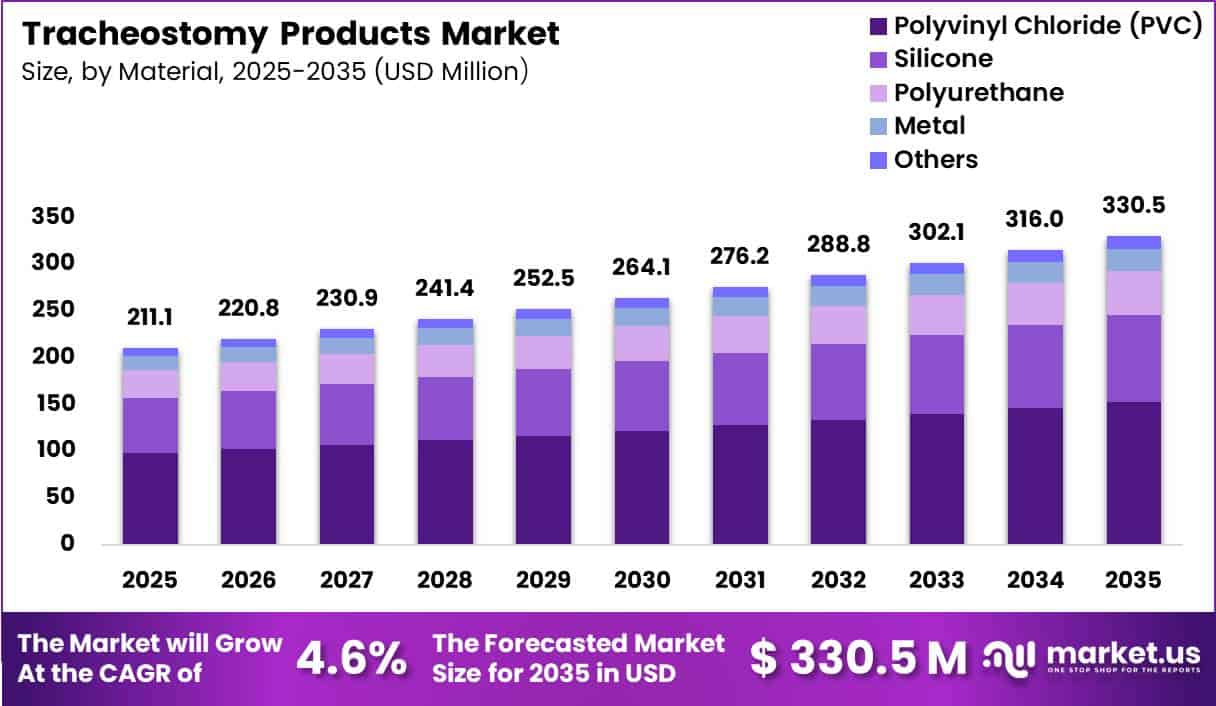
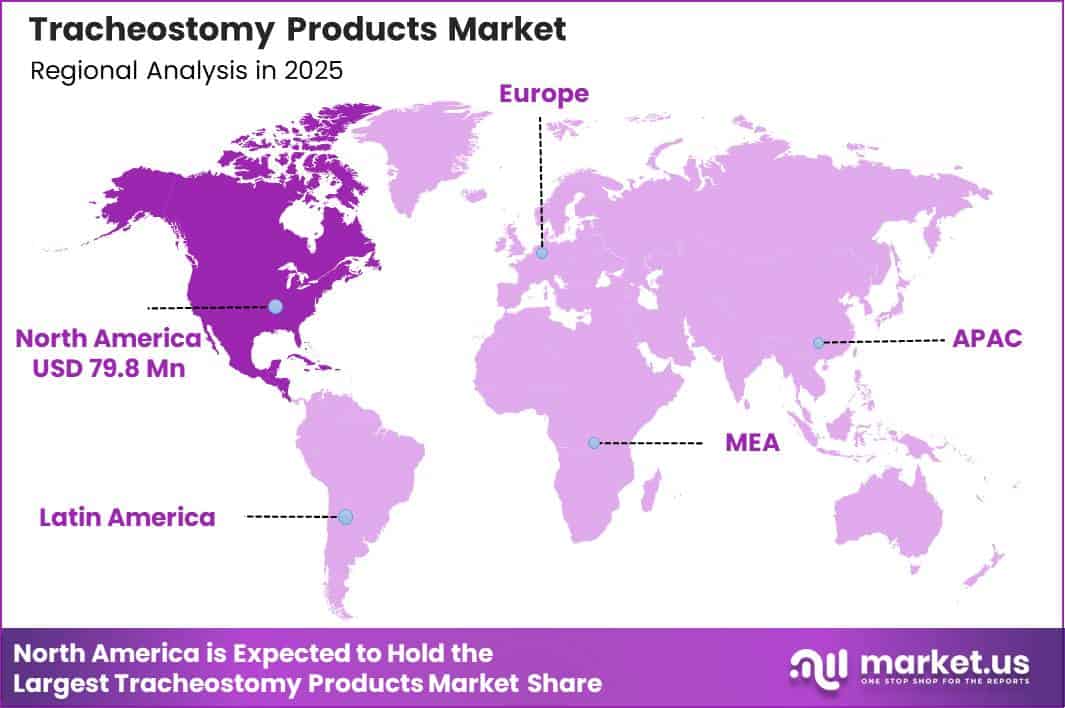
Global Tracheostomy Products Market size is expected to be worth around US$ 330.5 Million by 2035 from US$ 211.1 Million in 2025, growing at a CAGR of 4.6% during the forecast period from 2026 to 2035. In 2025, North America led the market, achieving over 37.8% share with a revenue of US$ 79.8 Million.
The tracheostomy products market is witnessing steady growth due to the increasing number of patients requiring long-term respiratory support, prolonged mechanical ventilation, and critical care services. Rising cases of chronic respiratory disorders, neurological diseases, traumatic injuries, and an aging population continue to support demand for tracheostomy tubes, speaking valves, humidification systems, and airway management accessories.
Healthcare data indicate a significant clinical need for tracheostomy procedures worldwide. In the United States, the annual incidence of tracheostomy placement is estimated at approximately 28.4–39.7 cases per 100,000 adults, highlighting the importance of tracheostomy products in hospital and intensive care settings.
Additionally, around 20%–40% of adult intensive care unit patients require mechanical ventilation, while 6.2% of ventilated patients need prolonged respiratory support exceeding 21 days, creating sustained demand for tracheostomy devices and consumables.
Clinical studies further show that nearly one in every eleven mechanically ventilated ICU patients undergoes a tracheostomy procedure, emphasizing its role in managing prolonged ventilation and improving patient care pathways. More than 1.35 million adults in the United States received tracheostomies between 1993 and 2012, reflecting the widespread utilization of these procedures in critical care environments.
Advancements in cuffed tubes, antimicrobial coatings, disposable components, and homecare-friendly devices are also contributing to market expansion as healthcare systems increasingly focus on improving patient outcomes, reducing complications, and supporting long-term respiratory management.
Key Takeaways
- Market Size : Tracheostomy Products Market size is expected to be worth around US$ 330.5 Million by 2035 from US$ 211.1 Million in 2025.
- Market Share : The market is growing at a CAGR of 4.6% during the forecast period from 2026 to 2035.
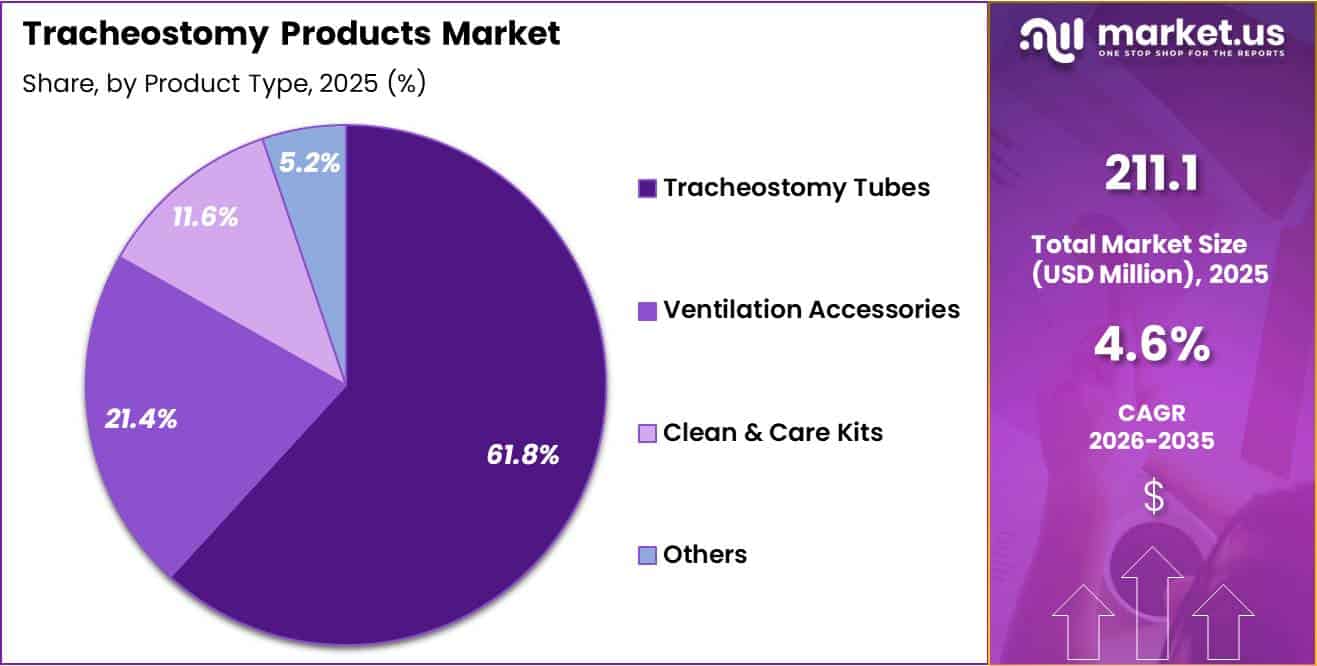
- Product Type Analysis : The tracheostomy tubes segment dominated the tracheostomy products market in 2025, accounting for 61.8% of the total market share.
- Material Analysis : Polyvinyl chloride (PVC) dominated the tracheostomy products market in 2025, capturing 46.3% of the total market share.
- Procedure Type Analysis : The surgical tracheostomy segment dominated the tracheostomy products market in 2025, accounting for 58.7% of the total market share.
- Patient Type Analysis : The adult segment dominated the tracheostomy products market in 2025, accounting for 84.6% of the total market share.
- End User Analysis: Hospitals dominated the tracheostomy products market in 2025, accounting for 63.4% of the total market share.
- Regional Analysis: In 2025, North America led the market, achieving over 37.8% share with a revenue of US$ 79.8 Million.
Product Type Analysis
The tracheostomy tubes segment dominated the tracheostomy products market in 2025, accounting for 61.8% of the total market share. Its leading position is attributed to the essential role tracheostomy tubes play in maintaining airway patency, supporting mechanical ventilation, and enabling long-term respiratory management for patients with chronic respiratory disorders, neurological conditions, and head and neck cancers.
Increasing demand for cuffed, uncuffed, fenestrated, and adjustable-flange tubes has further contributed to segment growth. Continuous product innovations aimed at improving patient comfort, reducing airway complications, and enhancing secretion management also support adoption.
The ventilation accessories segment represented 21.4% of the market in 2025, driven by growing utilization of humidification systems, speaking valves, filters, connectors, and suction devices in intensive care and homecare environments.
Meanwhile, clean and care kits accounted for 11.6% of the market, supported by rising awareness regarding infection prevention, hygiene maintenance, and proper tracheostomy management practices. The others segment held 5.2% market share, comprising fixation devices, dressings, and ancillary accessories used to enhance patient safety and improve long-term tracheostomy care outcomes.
Material Analysis
Polyvinyl chloride (PVC) dominated the tracheostomy products market in 2025, capturing 46.3% of the total market share. The widespread adoption of PVC is primarily associated with its cost-effectiveness, flexibility, durability, and compatibility with various tracheostomy tube designs.
PVC-based products are extensively used across hospitals and long-term care settings due to their ease of manufacturing, availability, and ability to provide reliable airway support. Manufacturers continue to develop advanced PVC formulations that enhance patient comfort and minimize tissue irritation during prolonged use.
The silicone segment accounted for 28.1% of the market in 2025, benefiting from its superior biocompatibility, softness, and suitability for long-term tracheostomy applications. Silicone products are increasingly preferred for patients requiring extended respiratory support.
Polyurethane represented 14.2% of market share, supported by its lightweight structure, improved flexibility, and resistance to deformation. The metal segment held 7.3% of the market, mainly serving specialized and long-term tracheostomy requirements due to its durability and reusability.
The others category accounted for 4.1%, including emerging materials designed to improve comfort, safety, and airway management efficiency.
Procedure Type Analysis
The surgical tracheostomy segment dominated the tracheostomy products market in 2025, accounting for 58.7% of the total market share. Surgical tracheostomy remains widely adopted because it provides direct airway access under controlled operating room conditions, making it suitable for complex cases, patients with anatomical challenges, and individuals requiring prolonged ventilation support.
The procedure is commonly performed in tertiary hospitals and specialized healthcare facilities where advanced surgical expertise is available. Increasing numbers of critically ill patients and growing demand for long-term respiratory support continue to sustain segment growth.
The percutaneous dilatational tracheostomy segment represented the remaining market share in 2025, supported by its minimally invasive nature, shorter procedure duration, reduced surgical trauma, and lower healthcare resource utilization.
This technique has gained considerable acceptance in intensive care units owing to its ability to be performed at the bedside, thereby reducing patient transportation requirements and procedural costs. Advancements in bronchoscopic guidance systems, improved dilatation kits, and enhanced clinician training programs are further encouraging adoption.
As healthcare providers increasingly seek efficient airway management solutions, percutaneous techniques are expected to continue gaining traction alongside conventional surgical approaches.
Patient Type Analysis
The adult segment dominated the tracheostomy products market in 2025, accounting for 84.6% of the total market share. The high proportion of adult patients is primarily driven by the increasing prevalence of chronic respiratory disorders, neurological diseases, trauma cases, head and neck cancers, and conditions requiring prolonged mechanical ventilation.
Adults frequently undergo tracheostomy procedures in intensive care settings and long-term care facilities, creating sustained demand for tracheostomy tubes, humidification systems, speaking valves, and associated accessories. Rising healthcare expenditure and improvements in critical care management further support segment expansion.
The pediatric segment represents a notable share of the market, driven by congenital airway abnormalities, respiratory disorders, and the need for prolonged ventilatory assistance among children. Specialized pediatric tracheostomy products designed to accommodate smaller airway anatomies continue to support growth in this category.
Meanwhile, the neonatal segment accounts for a comparatively smaller portion of the market, reflecting the relatively lower number of procedures performed in newborns. However, advancements in neonatal intensive care services, increasing survival rates among premature infants, and the availability of specialized neonatal tracheostomy devices are contributing to gradual segment development.
End User Analysis
Hospitals dominated the tracheostomy products market in 2025, accounting for 63.4% of the total market share. The segment’s strong position is attributed to the high volume of tracheostomy procedures performed in hospitals, particularly in intensive care units, emergency departments, and surgical settings.
Hospitals possess advanced infrastructure, specialized respiratory care teams, and access to comprehensive airway management technologies, making them the primary end users of tracheostomy tubes, ventilation accessories, and care products. Increasing admissions related to respiratory diseases and critical illnesses continue to support demand within this segment.
Ambulatory Surgical Centers (ASCs) are experiencing growing adoption due to increasing preference for cost-effective and efficient surgical services. Specialty ENT clinics contribute to market growth through dedicated airway management and follow-up care services.
Home healthcare settings are gaining importance as more patients transition to long-term respiratory support outside hospital environments. Long-term care facilities also represent a significant end-user category, supported by the growing elderly population and rising prevalence of chronic respiratory conditions.
The others segment includes rehabilitation centers and specialized respiratory care institutions that further expand the utilization of tracheostomy products worldwide.
Market Segmentations
Product Type
- Tracheostomy Tubes
- Ventilation Accessories
- Clean & Care Kits
- Others
Material
- Polyvinyl Chloride (PVC)
- Silicone
- Polyurethane
- Metal
- Others
Procedure Type
- Surgical Tracheostomy
- Percutaneous Dilatational Tracheostomy
Patient Type
- Adult
- Pediatric
- Neonatal
End User
- Hospitals
- Ambulatory Surgical Centers (ASCs)
- Specialty ENT Clinics
- Home Healthcare Settings
- Long-Term Care Facilities
- Others
Drivers
Expansion of ICU Capacity and Ventilator Infrastructure Post COVID
Post COVID health system rebuilding has significantly expanded ICU capacity, ventilator availability, and critical care infrastructure worldwide, particularly across middle income economies. This structural upgrade has created sustained headroom for increased use of prolonged mechanical ventilation and associated airway management procedures such as tracheostomy.
Global hospital infrastructure investment continues to grow, with the hospital beds market valued at approximately USD 4.1 billion in 2024 and projected to exceed USD 7 billion by 2035, reflecting steady expansion of inpatient capacity.
ICU specific capacity is rising even faster in some regions, as governments prioritize surge readiness and resilience following pandemic related shortages. Despite expansion, many systems still operate near capacity constraints, with OECD data indicating average hospital occupancy around 72 %, and several countries exceeding 85 % occupancy.
This persistent utilization pressure increases reliance on ventilators and step down respiratory support units. The larger installed base of ventilators directly increases the number of patients receiving prolonged ventilation beyond 7 to 10 days, a clinical threshold where tracheostomy is commonly considered to improve weaning outcomes and reduce sedation needs.
As a result, demand for tracheostomy tubes, inner cannulas, humidification systems, and related consumables rises in a more predictable, recurring pattern. From a commercial perspective, expanded ICU infrastructure shifts procurement toward multi year framework agreements and bundled airway management contracts, increasing supplier scale advantages.
While this supports volume growth, it also intensifies tender based pricing pressure, making operational efficiency and supply reliability critical for maintaining margins in a more institutionalized critical care market.
| Driver | (~) % Impact on CAGR Forecast | Geographic Relevance | Impact Timeline |
|---|---|---|---|
| Rising chronic respiratory disease burden and aging ICU population | +2.0% | North America core, EU, APAC corridors | Long term (≥ 4 years) |
| Expansion of ICU capacity and ventilator infrastructure post-COVID | +1.5% | North America core, EU, APAC corridors, South America spill-over | Medium term (2–4 years) |
| Evidence-based protocols favoring early tracheostomy and longer ventilator weaning pathways | +1.2% | North America core, EU, APAC corridors | Medium term (2–4 years) |
| Regulatory focus on device safety, supply resilience and reuse guidance (FDA, EU MDR, WHO) | +0.8% | North America core, EU, selective APAC | Short–Medium term (≤ 4 years) |
| Product innovation in specialized tubes, securement systems and home-care pathways | +1.0% | North America core, EU, APAC corridors | Long term (≥ 4 years) |
| Shift toward bundled critical-care procurement and value-based reimbursement | +0.7% | North America core, EU | Medium–Long term (2–5 years) |
Challenges
Skilled Staffing Deficit in Tracheostomy Care and Its Impact on Market Growth
The skilled staffing deficit in respiratory therapy and critical care is a major constraint on tracheostomy utilization and product adoption, contributing an estimated 1.3 % point drag on CAGR. Shortages of ICU nurses, respiratory therapists, and trained home care clinicians limit both procedural capacity and the safe use of advanced airway management systems.
In many hospitals, staffing levels are 10 to 20 % below required complements, forcing teams to prioritize simpler, standardized tracheostomy devices rather than newer configurations that require additional training or operational familiarity. This slows adoption of innovations such as advanced inner cannulas, speaking valves, and specialized tube designs, even when these could improve patient comfort and outcomes. Clinical risk further reinforces caution.
Pediatric tracheostomy complication rates can approach 48 %, driven by tube obstruction, malposition, and secretion management errors. These risks are strongly linked to staff experience and adherence to protocols, making workforce variability a key determinant of safety and adoption rates.
The challenge extends beyond hospitals into home care, where caregivers often receive only a few hours of training yet must manage suctioning, cuff pressure monitoring, and emergency tube replacement. This increases perceived risk and limits demand for more advanced accessory devices.
To address these gaps, vendors and health systems are increasingly investing in simulation training, e learning platforms, and remote clinical support tools. If effective, these measures could reduce complications by 15 to 20 %, improve ICU efficiency, and gradually unlock suppressed demand across tracheostomy care markets.
| Challenge | (~) % CAGR Friction Drag | Geographic Relevance | Mitigation Horizon |
|---|---|---|---|
| Post-acute care complexity | -1.4% | North America, EU, APAC urban | Medium term (2-4 years) |
| Infection control burden | -1.1% | Global tertiary & home care | Long term (≥ 4 years) |
| Skilled staffing deficit | -1.3% | North America core, EU, GCC, APAC metros | Long term (≥ 4 years) |
| Supply chain material volatility | -0.9% | US, EU, select APAC corridors | Medium term (2-4 years) |
| Reimbursement coding friction | -0.8% | US Medicare, EU public payers | Medium term (2-4 years) |
| Pediatric long-stay resource intensity | -0.7% | North America, EU pediatric hubs | Long term (≥ 4 years) |
Restraints
Reimbursement and Budget Pressure in Tracheostomy Care
Reimbursement constraints and persistent budget pressure are key structural headwinds for the tracheostomy market, limiting both procedure volumes and adoption of higher value consumables.
Over time, declining real reimbursement for complex respiratory procedures under public payer systems has materially reduced utilization intensity, with U.S. Medicare data indicating a 48.9 % decline in planned tracheostomies and more than 50 % total procedure reduction between 2000 and 2022, alongside a steep inflation adjusted drop in overall reimbursement spending.
Although inpatient payment updates such as IPPS have delivered modest annual increases of roughly 2.6 to 3.0 %, these adjustments have not kept pace with post pandemic cost inflation.
Labor, ICU staffing, and consumable expenses have risen in high single digits annually, forcing hospitals to tighten per case budgets and prioritize interventions with clearer downstream cost savings. This has direct implications for device procurement.
Hospitals increasingly resist premium priced tracheostomy tubes, speaking valves, and specialized accessories, often imposing annual volume caps or extending replacement cycles from 30 to 45 days in stable patients.
This reduces consumable utilization by an estimated 20 to 30 % in some systems, while limiting the ability of manufacturers to implement regular price increases. Over the medium term, continued reimbursement erosion and budget tightening shift focus toward lower cost respiratory support alternatives and delay adoption of premium innovations such as antimicrobial coatings or integrated monitoring systems.
Collectively, these pressures are estimated to reduce achievable market CAGR by approximately 0.9 % points across major developed healthcare markets.
| Restraint | (~) % Impact on CAGR Forecast | Geographic Relevance | Impact Timeline |
|---|---|---|---|
| Device safety alerts and recalls | -1.2% | North America core, EU | Short–Medium term |
| Reimbursement and budget pressure | -0.9% | North America core, EU, selected APAC | Medium–Long term |
| High procedure complexity and complication risk | -0.8% | Global tertiary care hubs | Medium term |
| Skilled staff and training gaps | -0.7% | Emerging APAC corridors, LatAm, MEA | Medium–Long term |
| Supply chain and quality assurance friction | -0.7% | Global, with higher impact in EMs | Short–Medium term |
| Slow decannulation and care pathway variability | -0.6% | North America, Europe, ANZ | Medium term |
Opportunity
Post-Acute Tracheostomy Rehabilitation Networks
A significant untapped opportunity in tracheostomy care is the development of structured, multidisciplinary post acute rehabilitation networks designed to bridge ICU discharge and long term recovery. Today, care after tracheostomy is highly fragmented, with inconsistent access to coordinated weaning protocols, speech therapy, nutrition optimization, and mobility rehabilitation across both institutional and home care settings.
Clinical data highlight the scale of unmet need. Tracheostomized ARDS patients typically spend 30 plus days in ICU and approximately 45 days in hospital, with mortality rates near 38 to 40 %. Although around 75 % survive to hospital discharge, one year survival falls to roughly 50 %, indicating a critical post acute window where structured rehabilitation could materially improve outcomes and reduce downstream costs.
Dedicated tracheostomy rehabilitation networks could standardize decannulation pathways, improve secretion management, and accelerate functional recovery through coordinated care models. These programs could also bundle clinical services with specialized products such as speaking valves, decannulation kits, humidification systems, and consumables, generating USD 8,000 to 12,000 per patient episode, with 20 to 30 % of revenue tied to device and accessory use.
If adopted for even 10 to 15 % of discharged tracheostomy patients across North America, Europe, and parts of the Gulf region by 2032, this model could generate USD 0.5 to 0.8 billion in incremental revenue, translating into approximately 1.8 % points of CAGR upside.
However, this remains an emerging opportunity rather than a current driver, as most post acute settings still treat tracheostomy management as routine nursing care rather than a structured, outcomes based rehabilitation pathway.
| Opportunity | (~) % Potential CAGR Upside | Geographic Relevance | Execution Window |
|---|---|---|---|
| Home ventilation tracheostomy care bundles | +3.0% | North America, EU, APAC urban | Medium term (2-4 years) |
| LMIC chronic respiratory access platforms | +2.5% | APAC emerging, Latin America, Africa | Long term (≥ 4 years) |
| Digital remote tracheostomy monitoring | +2.2% | North America core, EU, APAC tier-1 | Medium term (2-4 years) |
| Post-acute tracheostomy rehabilitation networks | +1.8% | North America, EU, GCC | Short–Medium (≤ 3 years) |
| Procedure-adjacent consumables and accessories | +1.6% | Global, especially APAC & EU | Short term (≤ 2 years) |
| Specialized pediatric and neuromuscular segments | +1.5% | North America, EU, Japan | Long term (≥ 4 years) |
Regional Analysis
North America dominated the tracheostomy products market in 2025, accounting for over 37.8% of the global market and generating revenue of approximately US$ 79.8 million. The region benefits from advanced healthcare infrastructure, widespread availability of intensive care services, and high adoption of specialized airway management products.
The increasing prevalence of chronic respiratory diseases, neurological disorders, head and neck cancers, and prolonged mechanical ventilation requirements continues to drive demand for tracheostomy tubes, humidification systems, speaking valves, and related accessories. The presence of leading manufacturers, favorable reimbursement policies, and growing emphasis on improving patient outcomes further support regional market growth.
Europe represents another significant market, supported by established healthcare systems, increasing adoption of standardized tracheostomy care protocols, and rising demand for home-based respiratory management solutions.
Countries such as Germany, the United Kingdom, France, and Italy are witnessing greater utilization of advanced tracheostomy products aimed at reducing complications and enhancing patient comfort.
Meanwhile, Asia-Pacific is expected to experience steady growth owing to expanding healthcare investments, improving critical care facilities, growing awareness regarding respiratory care, and a large patient population requiring long-term airway management.
Latin America and the Middle East & Africa are also gradually expanding their presence in the market, driven by improving healthcare access, increasing hospital capacities, and ongoing investments in critical care infrastructure. These developments collectively contribute to the balanced growth of the global tracheostomy products market.
Key Regions and Countries
North America
- The US
- Canada
Europe
- Germany
- France
- The U.K.
- Italy
- Spain
- Russia & CIS
- Rest of Europe
Asia Pacific
- China
- India
- Japan
- South Korea
- ASEAN
- Australia & New Zealand
- Rest of Asia Pacific
Middle East & Africa
- GCC
- South Africa
- Rest of Middle East & Africa
Latin America
- Brazil
- Mexico
- Rest of Latin America
Key Player Analysis
The tracheostomy products market is characterized by the presence of established medical device manufacturers with strong respiratory care portfolios, broad distribution networks, and continuous product improvements.
Medtronic plc remains a leading participant through its Shiley™ tracheostomy portfolio, offering adult, pediatric, customized, and extended-length tubes designed for acute care, long-term care, and home healthcare settings. The company continues to strengthen its airway management capabilities through innovations such as TaperGuard™ cuff technology and integrated suction solutions.
Teleflex Incorporated maintains a strong position with its Rüsch tracheostomy product range, supporting patients from intensive care to long-term respiratory management. Smiths Group plc, Becton Dickinson (CareFusion), Boston Scientific, and Cook Group leverage their extensive hospital relationships and clinical expertise to support airway intervention procedures.
Meanwhile, TRACOE Medical and Fisher & Paykel Healthcare focus on specialized tracheostomy care, humidification systems, and patient comfort solutions. Continuous product development, clinician training initiatives, and expansion of customized airway management offerings remain key competitive strategies adopted by these companies.
Top Key Players
- Medtronic plc
- Smiths Group plc
- Teleflex Incorporated
- Becton Dickinson (CareFusion)
- Boston Scientific
- Cook Group
- TRACOE Medical
- Fisher & Paykel Healthcare
- Fuji Systems
- Atos Medical AB
- Ambu A/S
- Intersurgical Ltd.
- Coloplast (Servona)
- ICU Medical
- Passy-Muir Inc.
- Other Key Players
Recent Developments
- In December 2025, Intersurgical Ltd. expanded its respiratory and airway management portfolio through the planned acquisition of Teleflex’s Acute Care business for approximately US$530 million, strengthening its position in anesthesia, ventilation, and tracheostomy-related respiratory care markets worldwide.
- In February 2025, Teleflex Incorporated disclosed that its post-separation hospital-focused business is expected to comprise approximately US$2.1 billion in 2024 pro forma revenue, targeting high-growth acute care settings such as intensive care units, emergency departments, and operating rooms, where tracheostomy and airway management products are routinely utilized.
Report Scope
| Report Features | Description |
|---|---|
| Market Value (2025) | US$ 211.1 Million |
| Forecast Revenue (2035) | US$ 330.5 Million |
| CAGR (2026-2035) | 4.6% |
| Base Year for Estimation | 2025 |
| Historic Period | 2020-2024 |
| Forecast Period | 2026-2035 |
| Report Coverage | Revenue Forecast, Market Dynamics, Competitive Landscape, Recent Developments |
| Segments Covered | Product Type (Tracheostomy Tubes, Ventilation Accessories, Clean & Care Kits, Others), Material (Polyvinyl Chloride (PVC), Silicone, Polyurethane, Metal, Others), Procedure Type (Surgical Tracheostomy, Percutaneous Dilatational Tracheostomy), Patient Type (Adult, Pediatric, Neonatal), End User (Hospitals, Ambulatory Surgical Centers (ASCs), Specialty ENT Clinics, Home Healthcare Settings, Long-Term Care Facilities, Others) |
| Regional Analysis | North America – The US, Canada; Europe – Germany, France, U.K., Italy, Spain, Russia & CIS, Rest of Europe; Asia Pacific – China, India, Japan, South Korea, ASEAN, Australia & New Zealand, Rest of Asia Pacific; Middle East & Africa – GCC, South Africa, Rest of Middle East & Africa; Latin America – Brazil, Mexico, Rest of Latin America |
| Competitive Landscape | Medtronic plc, Smiths Group plc, Teleflex Incorporated, Becton Dickinson (CareFusion), Boston Scientific, Cook Group, TRACOE Medical, Fisher & Paykel Healthcare, Fuji Systems, Atos Medical AB, Ambu A/S, Intersurgical Ltd., Coloplast (Servona), ICU Medical, Passy-Muir Inc., Other Key Players |
| Customization Scope | Customization for segments, region/country-level will be provided. Moreover, additional customization can be done based on the requirements. |
| Purchase Options | We have three licenses to opt for: Single User License, Multi-User License (Up to 5 Users), Corporate Use License (Unlimited User and Printable PDF) |
Statistics
• In 2025, a Global Tracheostomy Collaborative analysis reported that 52.9% of 5,318 adult tracheostomy patients were successfully decannulated before hospital discharge, providing a benchmark for tracheostomy care performance.
• The same 2025 study evaluated 5,318 patients across 25 hospitals located in the United States, Australia, and the United Kingdom, representing one of the largest recent multicenter tracheostomy datasets available.
• In 2025, tracheostomy decannulation rates demonstrated marked regional variation, reaching 82.1% in Australia, 70.0% in the United Kingdom, and 13.5% in the United States.
• In 2025, 11.4% of decannulated patients experienced adverse events, with unplanned decannulation identified as the most frequent complication.
• A 2026 robotic tracheostomy study reported that conventional manual percutaneous dilatational tracheostomy procedures can exhibit positioning inaccuracies of approximately 5 mm and angular deviations approaching 30 degrees.
• In 2026, an automated robotic puncture platform reduced the median puncture position error to 1.7 mm, with an interquartile range of 1.9 mm.





































