Global Sports Recruiting Software Market Size, Share and Analysis By Component (Software, Services), By Application (Colleges and Universities, Sports Academies, Professional Teams, High Schools, Others), By End-User (Coaches/Professional Clubs/Teams, Athletes/Individual Users, Recruiting Agencies/Scouts, Others (Academies/High Schools), By Regional Analysis, Global Trends and Opportunity, Future Outlook By 2025-2035
- Published date: March 2026
- Report ID: 182852
- Number of Pages: 258
- Format:
-
keyboard_arrow_up
Quick Navigation
Report Overview
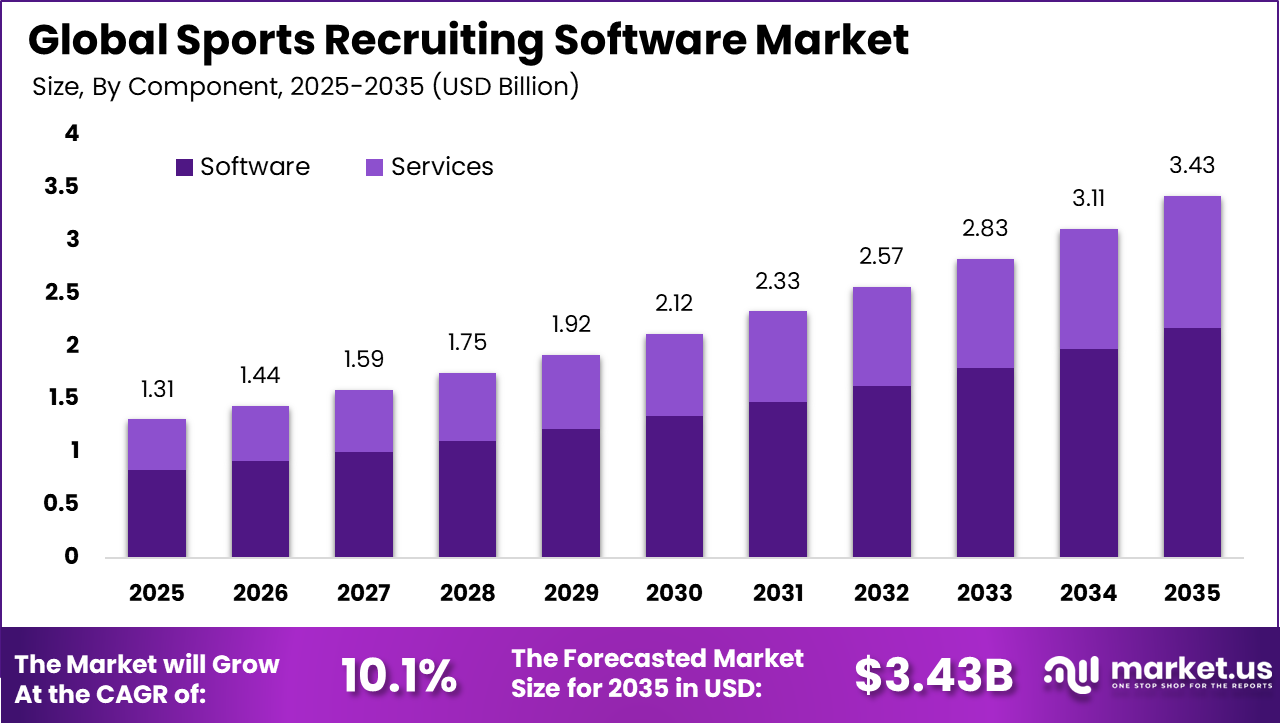
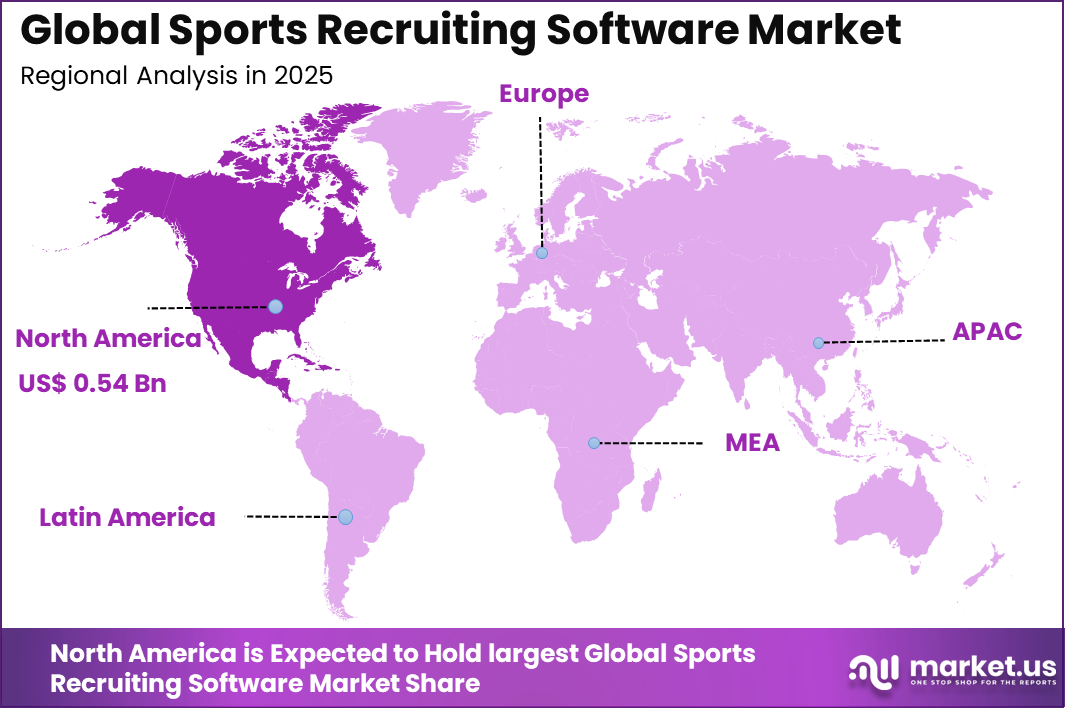
The Global Sports Recruiting Software Market size is expected to be worth around USD 3.43 billion by 2035, from USD 1.31 billion in 2025, growing at a CAGR of 10.1% during the forecast period from 2025 to 2035. North America held a dominant market position, capturing more than a 41.6% share, holding USD 0.54 billion in revenue.
The Sports Recruiting Software market refers to digital platforms and tools designed to streamline the process of identifying, evaluating, and recruiting athletes for schools, colleges, and professional teams. These platforms provide centralized databases of athlete profiles, performance videos, and communication tools that allow coaches and recruiters to efficiently discover talent.
The software integrates analytics, compliance tracking, and communication features, enabling structured and data driven recruitment processes. It plays a critical role in connecting student athletes with opportunities while helping institutions manage complex recruitment workflows more effectively. Top driving factors of this market are strongly influenced by the increasing competition in athletic recruitment and the need for broader athlete visibility.
Data indicates that less than 7% of high school athletes progress to college level sports, which highlights the importance of digital platforms in improving exposure and discovery opportunities. Institutions are increasingly adopting these tools to identify talent beyond local regions and reduce dependency on traditional scouting methods. The shift toward digital ecosystems in sports management and the growing importance of performance data are also accelerating adoption across educational and professional sports organizations.
Demand is rising as youth sports participation expands and coaches face a growing number of prospects to evaluate. Families now expect digital profiles that include videos, academics, and verified performance details. Surveys find 75% of athletes use platforms to connect directly with programs, while coaches note 80% better info quality from structured systems.
For instance, in January 2026, Hudl, the Lincoln, Nebraska powerhouse, rolled out its AI Recruiter Pro module, slashing video analysis time for college coaches by 60%. This launch solidifies U.S. dominance as 10,000+ programs now rely on Hudl’s tech to scout talent nationwide, keeping North America ahead in data-driven recruiting.
Key Takeaway
- The software segment led the global sports recruiting software market in 2025, accounting for 63.5% share, supported by increasing adoption of digital scouting and athlete management tools.
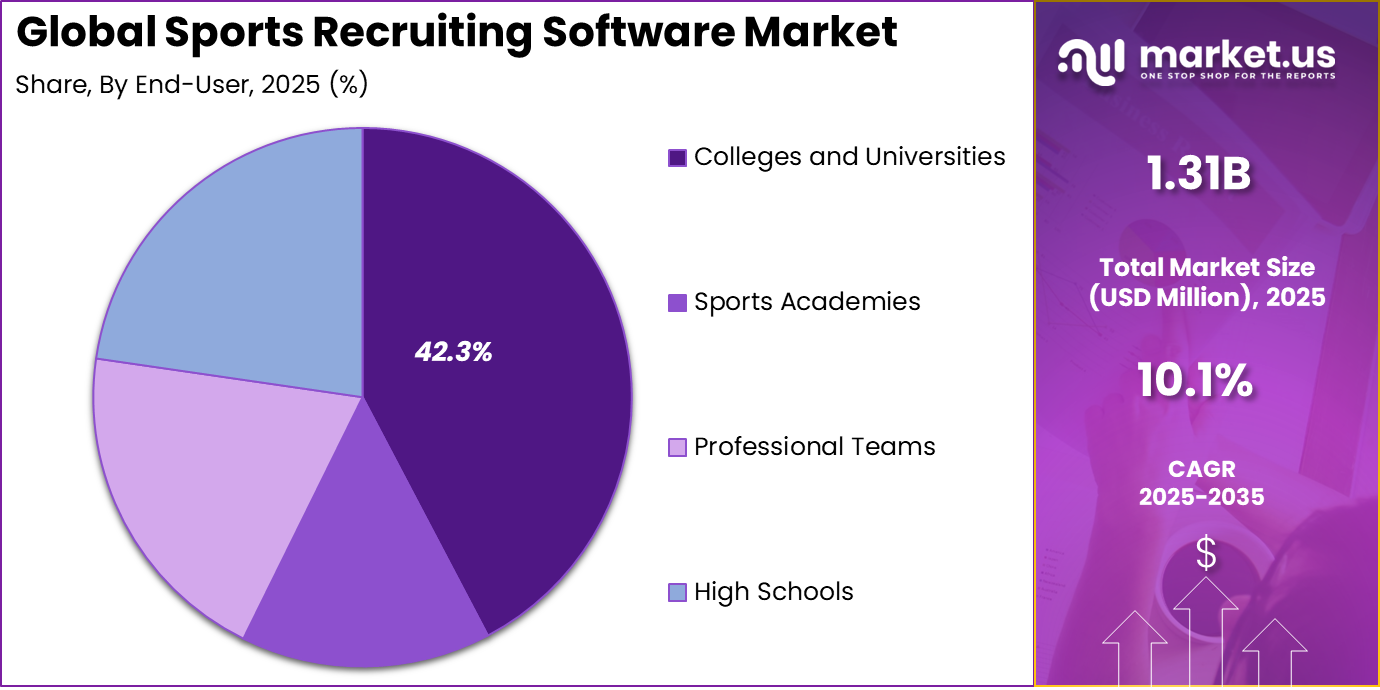
- Colleges and universities represented the leading end-user group, capturing 43.6% share, driven by structured recruitment programs and competitive collegiate sports ecosystems.
- Coaches, professional clubs, and teams followed closely with a 42.3% share, reflecting growing reliance on data-driven talent identification and performance tracking systems.
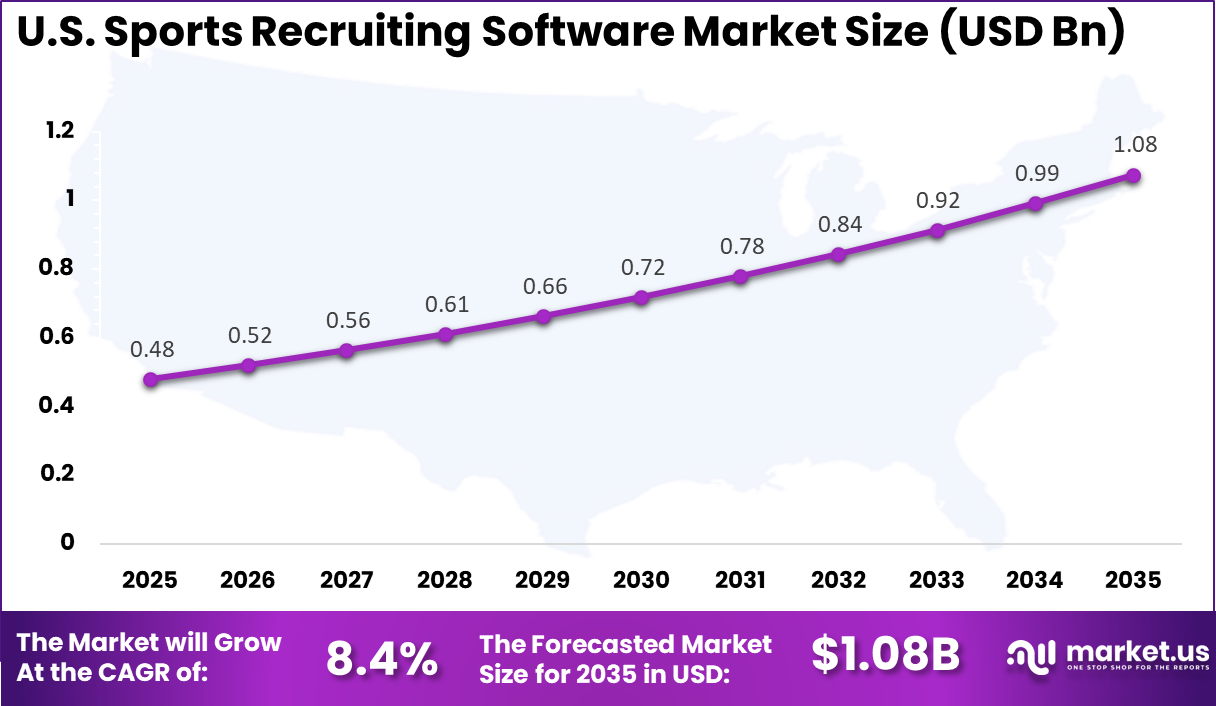
- The U.S. sports recruiting software market reached USD 0.48 billion in 2025, expanding at a CAGR of 8.4%, supported by strong institutional investment in sports analytics.
- North America maintained its leading position globally, capturing over 41.6% share, driven by advanced sports infrastructure and early adoption of recruitment technologies.
Recruitment Efficiency and Impact
- Centralized recruiting platforms have significantly improved athlete visibility, with exposure to coaches increasing by nearly 3x, supporting more efficient talent discovery and evaluation.
- Despite a pool of over 7 million high school athletes in the U.S., only around 7% progress to NCAA-level competition, underscoring the highly competitive nature of recruitment and the growing importance of digital tools.
- Recruiting software has demonstrated strong operational value, with 94% of recruiters reporting a positive impact on hiring processes, reflecting improvements in efficiency, tracking, and decision-making.
- The integration of wearable data into recruitment and training systems has also contributed to performance management, helping reduce injury rates by up to 15% through better monitoring and preventive insights.
By Component Analysis
In 2025, the software segment held a dominant position in the sports recruiting software market, accounting for 63.5% share. This leadership reflects the growing dependence on digital platforms that help simplify athlete evaluation, communication, and recruitment tracking. Sports organizations and academic institutions are increasingly adopting software tools to manage recruitment workflows more efficiently.
The ability to centralize data and improve decision-making has strengthened demand for software-based solutions. The segment is also benefiting from the rising need for organized and real-time access to athlete profiles, performance records, and communication history.
Software platforms help reduce manual effort and allow recruiters to monitor prospects through a more structured process. Advanced features such as analytics dashboards, video integration, and automated updates are improving platform value. As recruitment becomes more data-driven, software continues to remain the core market component.
For Instance, in June 2025, SportsEngine added seamless video sharing for recruit evaluations. Staff can tag key plays and send highlights directly to decision-makers, speeding up the whole review process. It’s a big reason software keeps growing, helping programs stay organized amid busy seasons.
By Application Analysis
In 2025, colleges and universities accounted for a leading 43.6% share in the sports recruiting software market. This strong position is supported by the increasing focus of higher education institutions on identifying suitable athletic talent in a competitive recruitment environment. These institutions rely on recruiting software to manage prospect pipelines, evaluate student-athletes, and improve communication with candidates.
The use of digital recruiting tools has become important for building stronger athletic programs.Colleges and universities also benefit from these platforms by improving recruitment efficiency across multiple sports programs.
Centralized systems allow staff to review athlete information, academic records, and performance data in one place. This supports better coordination between coaches, recruiters, and admissions teams. As competition for skilled athletes continues to rise, the role of recruiting software in higher education is becoming more significant.
For instance, in September 2025, FieldLevel opened its network to everyone for free scouting. Colleges jumped in to connect with high school talent without barriers, making outreach smoother for admissions teams. This push shows why universities lead here, always hunting fresh players to build rosters.
By End-User Analysis
In 2025, coaches, professional clubs, and teams held a dominant 42.3% share of the sports recruiting software market. Their leading position is driven by the need to identify talent early, monitor player development, and maintain stronger recruitment pipelines. These users depend on software solutions to streamline scouting activities and improve communication with athletes and stakeholders.
The demand is rising as recruitment decisions become more performance-focused and time-sensitive. The growing use of digital tools among coaches and teams is also linked to the need for better visibility into athlete potential across wider geographic areas.
Recruiting software helps manage video analysis, player comparisons, and direct engagement through a single platform. This improves speed, consistency, and planning throughout the recruitment process. As sports organizations aim to strengthen team performance, adoption among this end-user group remains high.
For Instance, in October 2025, SportsRecruits updated its mobile alerts for real-time athlete updates. Pro teams and coaches get instant pings on new profiles or stats, helping them beat rivals to top picks. It’s no wonder this group drives demand, as they rely on fast access to stay ahead in competitive leagues.
By Region Analysis
In 2025, North America held a dominant market position, capturing 41.6% share in the sports recruiting software market. This regional strength is supported by the well-established sports ecosystem, strong college athletics structure, and high adoption of digital sports management tools.
Educational institutions, clubs, and sports organizations across the region are investing in software to modernize recruitment practices. The region’s advanced technology environment continues to support steady market development.
For instance, in February 2025, Hudl solidified North America’s sports recruiting dominance by launching AI-powered video analysis tools that help coaches scout talent nationwide. The Nebraska-based platform now serves over 200,000 teams, giving U.S. colleges unmatched access to athlete performance data for smarter recruiting decisions.
The United States market was valued at USD 0.48 billion in 2025 and is projected to expand at a CAGR of 8.4%. This growth reflects continued demand for efficient recruiting solutions across academic and professional sports settings. Increased attention to athlete performance tracking, outreach management, and data-based recruitment is supporting market expansion.
For instance, in March 2025, TeamSnap enhanced U.S. leadership in sports recruiting software with new scheduling integrations that connect youth leagues directly to college scouts. This Colorado innovation streamlines athlete discovery across North America, boosting participation in competitive programs.
Emerging Trends Analysis
A major trend in the sports recruiting software market is the growing use of video, performance data, and AI-supported evaluation within one workflow. Recruiting platforms are no longer limited to contact management or prospect lists. They increasingly combine athlete profiles, highlight reels, scouting notes, and performance insights so coaches can review talent faster and with better context.
Hudl, for example, positions its recruiting tools around deep video and data libraries that help teams and talent find each other more efficiently. This trend is being shaped by the need for faster and more informed recruiting decisions across schools, clubs, and athletic departments.
As recruiting becomes more competitive, software is being used to organize communication, track athlete engagement, and support more personalized outreach. The market is moving toward platforms that can do more than store information. They are increasingly expected to help recruiters identify fit, reduce manual work, and improve decision quality through better data visibility.
Growth Factors
The shift toward digital tools is one of the biggest growth drivers in sports recruiting software. Teams are moving away from spreadsheets and paper-based tracking to improve speed, organization, and decision-making. 80% of pro teams cite efficiency as the top reason to switch, reflecting the practical value these platforms provide.
Growing participation in youth sports is also expanding the need for better recruiting systems. As more athletes join competitive programs, coaches need software that helps sort profiles and identify potential quickly. Software use grew 55% alongside program expansions, showing how participation growth is directly supporting market demand.
Key Market Segments
By Component
- Software
- Cloud-Based
- On-Premises
- Services
By Application
- Colleges and Universities
- Sports Academies
- Professional Teams
- High Schools
- Others
By End-User
- Coaches/Professional Clubs/Teams
- Athletes/Individual Users
- Recruiting Agencies/Scouts
- Others (Academies/High Schools)
Key Regions and Countries
North America
- US
- Canada
Europe
- Germany
- France
- The UK
- Spain
- Italy
- Russia
- Netherlands
- Rest of Europe
Asia Pacific
- China
- Japan
- South Korea
- India
- Australia
- Singapore
- Thailand
- Vietnam
- Rest of APAC
Latin America
- Brazil
- Mexico
- Rest of Latin America
Middle East & Africa
- South Africa
- Saudi Arabia
- UAE
- Rest of MEA
Drivers
Digital Shift in Talent Identification
The market is growing as sports organizations move from traditional scouting methods to digital talent identification tools. These platforms help coaches review athlete profiles, performance history, and video content in a more organized way. This improves the quality of evaluation and helps recruiters make faster decisions with greater confidence.
Digital systems also make recruiting work easier by reducing paperwork and manual tracking. Coaches can monitor more athletes in less time and keep communication records in one place. As competition for skilled players becomes stronger, the need for smart and efficient recruiting tools continues to rise steadily.
For instance, in December 2025, Hudl teamed up with Elite 11 to share video clips and stats from top quarterback camps starting next year. This lets college coaches dig into verified game footage right in their Recruit tool, spotting standouts without hitting the road. It speeds up how teams find raw talent through clear, on-demand highlights that show real skills in action.
Restraint
High Cost
The high cost of recruiting software remains a barrier for many small and mid level sports programs. Licensing fees, system setup, and ongoing maintenance can be difficult to manage within limited budgets. This restricts access to advanced tools, especially for institutions that rely on basic or traditional recruiting methods.
In addition, training staff and adapting to new systems require time and financial commitment. Many organizations hesitate to invest due to uncertain returns in the early stages. This slows adoption, particularly among grassroots programs that may benefit from these tools but struggle to justify the expense.
For instance, in February 2026, TeamSnap launched its full TeamSnap ONE platform after a big rebuild, but it came with higher fees that smaller leagues noticed right away. Coaches grumbled about the jump in yearly costs just to keep schedules and rosters smooth. Many stuck with free apps since the new setup felt like too much for basic needs during tight seasons.
Opportunities
Growth in New Regions
Growth in new regions is creating strong opportunities for sports recruiting software. As more children join organized sports in Asia and Latin America, teams and academies need better ways to manage player information and identify talent. This rising activity is encouraging wider use of digital tools for structured recruitment.
The market also benefits from demand for simple and mobile friendly platforms that fit local needs. Many growing sports programs want flexible tools without major system changes. As youth leagues attract more support and investment, software providers have a good chance to build a long term presence in these regions.
For instance, in February 2026, Hudl locked in fresh scouting deals across Europe, like with Italy’s Serie B and Latvia’s top league, bringing video tools to rising soccer scenes. Local coaches in these spots now access global-level analysis for their youth tryouts. It opens doors for regions building their programs to link up with bigger networks seamlessly.
Challenges
Data Management and Accuracy
Handling large volumes of athlete information is a major challenge for recruiting platforms. Data comes from multiple sources such as video uploads, performance stats, and communication records. Ensuring that this information is organized and accessible is critical for accurate evaluation and decision making.
Maintaining data accuracy over time also requires constant updates and verification. Errors or outdated information can lead to poor recruitment choices. Organizations must invest in proper data management practices to ensure reliability, which can be complex and time consuming for many teams and institutions.
For instance, in February 2026, SportsRecruits faced backlash when profile stats from old tournaments didn’t sync right, confusing college scouts about current form. Users spent weekends uploading fixes manually. Without tighter checks, bad data lingered, making trust in rankings a real headache for everyone involved.
Key Players Analysis
In the Sports Recruiting Software market, Hudl, TeamSnap, and SportsEngine are widely recognized for their strong platforms that support athlete performance tracking and team management. These companies provide tools that help coaches evaluate talent, manage communication, and streamline recruitment workflows. FieldLevel and NCSA Athletic Recruiting also play a key role by connecting athletes with college programs through structured digital recruiting networks.
BeRecruited, RecruitChute, and MaxPreps contribute to the market by offering athlete profiling, performance data sharing, and scouting visibility tools. Their platforms are designed to improve exposure for athletes and simplify the recruitment process for coaches and institutions. SharpSide, Vericool, and SportsRecruits further enhance the ecosystem with solutions focused on video analysis, digital portfolios, and engagement tracking.
HomeCampus, Trackwrestling, and AthleteReg support recruitment through event management and athlete data organization capabilities. PowerPlayer, ZipRecruiter Sports Division, CoachLogic, and Stack Sports expand the market with broader talent sourcing, analytics, and coaching support tools. Other emerging players continue to introduce niche solutions, contributing to increased competition and ongoing innovation in sports recruitment technology.
Top Key Players in the Market
- Hudl
- TeamSnap
- SportsEngine
- FieldLevel
- NCSA Athletic Recruiting
- BeRecruited
- RecruitChute
- MaxPreps
- SharpSide
- Vericool
- SportsRecruits
- HomeCampus
- Trackwrestling
- AthleteReg
- PowerPlayer
- ZipRecruiter Sports Division
- CoachLogic
- Stack Sports
- Others
Recent Developments
- In October 2025, FieldLevel announced a strategic partnership with California Junior Colleges, digitizing 2,500 athletic programs’ recruiting workflows. This West Coast collaboration streamlines coach-athlete matches, highlighting U.S. innovation driving the sports recruiting software surge.
- In November 2025, SharpSide partnered with 20 NCAA conferences for mobile-first recruiting dashboards, cutting response times by 40%. Atlanta’s agile tools highlight U.S. firms’ speed advantage in the hyper-competitive sports talent acquisition market.
Report Scope
Report Features Description Market Value (2025) USD 1.3 Bn Forecast Revenue (2035) USD 3.4 Bn CAGR (2026-2035) 10.1% Base Year for Estimation 2025 Historic Period 2020-2024 Forecast Period 2026-2035 Report Coverage Revenue forecast, AI impact on Market trends, Share Insights, Company ranking, competitive landscape, Recent Developments, Market Dynamics and Emerging Trends Segments Covered By Component (Software, Services), By Application (Colleges and Universities, Sports Academies, Professional Teams, High Schools, Others), By End-User (Coaches/Professional Clubs/Teams, Athletes/Individual Users, Recruiting Agencies/Scouts, Others (Academies/High Schools) Regional Analysis North America – US, Canada; Europe – Germany, France, The UK, Spain, Italy, Russia, Netherlands, Rest of Europe; Asia Pacific – China, Japan, South Korea, India, New Zealand, Singapore, Thailand, Vietnam, Rest of Latin America; Latin America – Brazil, Mexico, Rest of Latin America; Middle East & Africa – South Africa, Saudi Arabia, UAE, Rest of MEA Competitive Landscape Hudl, TeamSnap, SportsEngine, FieldLevel, NCSA Athletic Recruiting, BeRecruited, RecruitChute, MaxPreps, SharpSide, Vericool, SportsRecruits, HomeCampus, Trackwrestling, AthleteReg, PowerPlayer, ZipRecruiter Sports Division, CoachLogic, Stack Sports, Others Customization Scope Customization for segments, region/country-level will be provided. Moreover, additional customization can be done based on the requirements. Purchase Options We have three license to opt for: Single User License, Multi-User License (Up to 5 Users), Corporate Use License (Unlimited User and Printable PDF)  Sports Recruiting Software MarketPublished date: March 2026add_shopping_cartBuy Now get_appDownload Sample
 -
-
- Hudl
- TeamSnap
- SportsEngine
- FieldLevel
- NCSA Athletic Recruiting
- BeRecruited
- RecruitChute
- MaxPreps
- SharpSide
- Vericool
- SportsRecruits
- HomeCampus
- Trackwrestling
- AthleteReg
- PowerPlayer
- ZipRecruiter Sports Division
- CoachLogic
- Stack Sports
- Others
Our Clients

- 182852
- March 2026