


Global Sitar Market Size, Share, Growth Analysis By Product Type (Electric Sitar, Acoustic Sitar), By Application (Music Schools, Personal Use, Professional Musicians), By Distribution Channel (Online Stores, Musical Instrument Stores, Specialty Stores, Others), By Region and Companies - Industry Segment Outlook, Market Assessment, Competition Scenario, Statistics, Trends and Forecast 2025-2034
- Published date: Jan 2026
- Report ID: 173998
- Number of Pages: 283
- Format:
-
keyboard_arrow_up
Quick Navigation
Report Overview
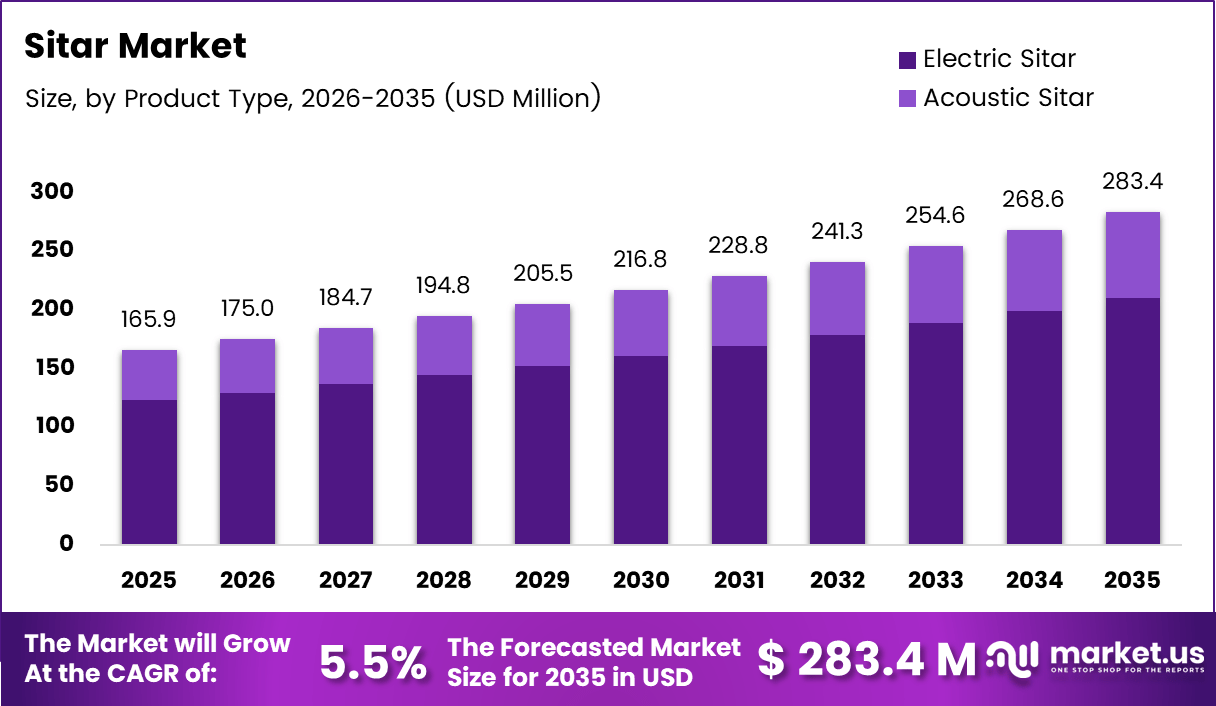
The Global Sitar Market size is expected to be worth around USD 283.4 million by 2035, from USD 165.9 million in 2025, growing at a CAGR of 5.5% during the forecast period from 2026 to 2035.
The sitar is a traditional plucked string instrument central to Indian classical music and global cultural heritage. the sitar represents both musical craftsmanship and cultural continuity. It supports music education, live performances, and spiritual practices, thereby sustaining long-term relevance across domestic and international music ecosystems.
From a market perspective, the Sitar Market covers manufacturing, distribution, training, and ancillary services supporting instrument adoption. Demand is driven by cultural preservation, global music fusion trends, and expanding digital learning platforms. Consequently, the market reflects stable niche growth, supported by institutional purchases, personal ownership, and professional performance requirements.
Growth momentum remains consistent as global audiences increasingly explore world music and classical traditions. Additionally, music schools and cultural academies continue expanding enrollment, supporting repeat instrument demand. Moreover, rising disposable income among hobbyist musicians strengthens personal-use adoption, while international workshops and festivals further reinforce sustained market participation.
Government involvement also supports market stability through cultural funding and preservation programs. ministries and cultural bodies promote classical instruments via grants, festivals, and education initiatives. Similarly, international cultural exchange programs indirectly stimulate sitar demand by supporting traditional arts, Music instrument training, and heritage-focused performances worldwide.
From an opportunity standpoint, digital commerce and online music education are reshaping accessibility. Manufacturers increasingly reach global buyers through e-commerce platforms, while virtual sitar classes reduce geographic barriers. As a result, emerging markets and diaspora communities contribute incremental demand, improving long-term revenue visibility for the broader sitar industry.
The sitar’s design influences pricing and craftsmanship value. According to survey, the sitar is typically 1.2 meters long and played seated at a 45-degree angle. The hollow gourd body and long neck require skilled manual production, reinforcing premium positioning.
According to musical study, sitars feature between 18 and 21 strings, including 1–2 drone strings and 10–13 sympathetic taraf strings beneath the frets. These technical attributes enhance tonal richness, supporting professional adoption. Collectively, these characteristics sustain long-term demand within the global sitar market.
Key Takeaways
- Global Sitar Market is projected to reach USD 283.4 million by 2035, growing from USD 165.9 million in 2025 at a 5.5% CAGR.
- Electric Sitar is the leading product segment, accounting for a dominant share of 74.1% in 2025.
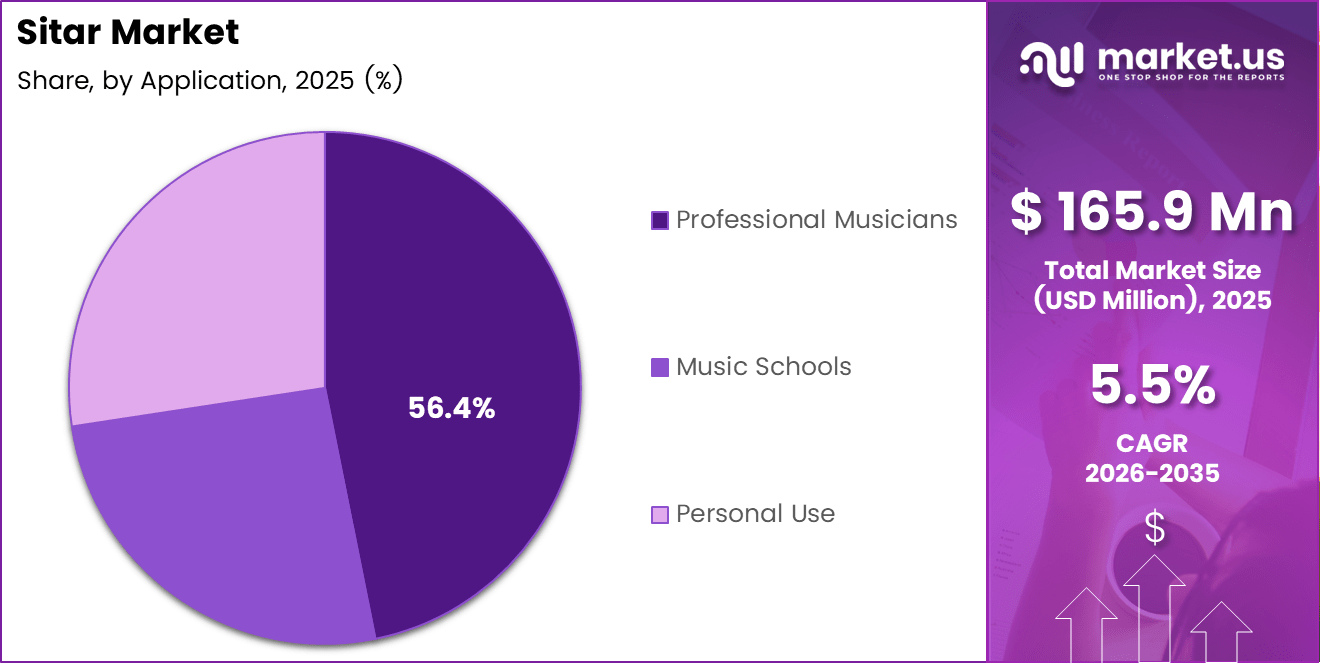
- Professional Musicians represent the largest application segment with a market share of 56.4% in 2025.
- Musical Instrument Stores lead distribution channels, holding 46.8% of the market in 2025.
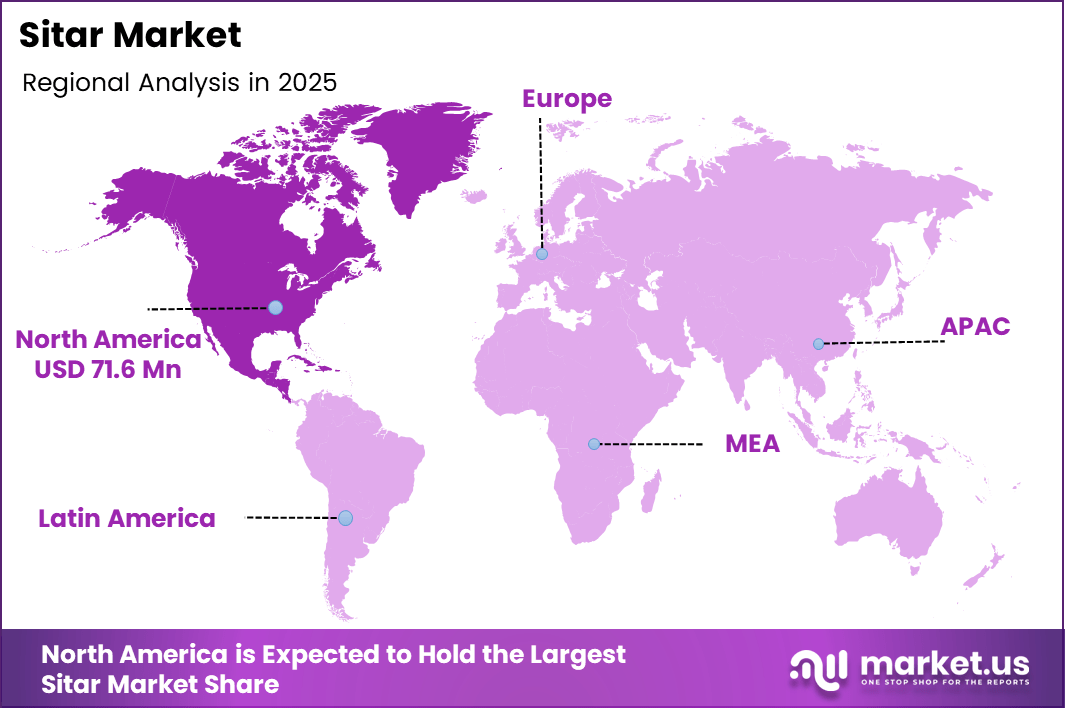
- North America dominates the global market with a regional share of 43.2%, valued at USD 71.6 million.
By Product Type Analysis
Electric Sitar dominates with 74.1% due to its adaptability across modern music formats and amplified performance environments.
In 2025, Electric Sitar held a dominant market position in the By Product Type Analysis segment of Sitar Market, with a 74.1% share. This dominance is supported by growing adoption in fusion music, live stage performances, and recording environments where amplification and sound modulation are essential.
Electric sitars benefit from compatibility with digital effects, amplifiers, and studio equipment. As a result, professional and semi-professional musicians increasingly prefer electric variants for versatility. Additionally, younger artists experimenting with cross-genre compositions continue driving sustained demand for this product category.
Acoustic Sitar remains an important segment, primarily supported by traditional Indian classical music practitioners and institutional training programs. This segment maintains relevance through cultural preservation initiatives and classical performance settings where authentic sound resonance is required.
Moreover, acoustic sitars are preferred in academic environments focused on foundational learning. Although lower in share, consistent replacement cycles and artisan craftsmanship ensure steady demand, supporting long-term presence within the overall product mix.
By Application Analysis
Professional Musicians dominate with 56.4% driven by performance requirements, recording usage, and international touring demand.
In 2025, Professional Musicians held a dominant market position in the By Application Analysis segment of Sitar Market, with a 56.4% share. This leadership reflects consistent procurement for concerts, studio recordings, and global collaborations requiring high-quality instruments.
Professional adoption remains strong due to customization needs, tonal precision, and durability expectations. Furthermore, rising global interest in world music performances continues reinforcing sustained demand from touring artists and ensemble performers.
Music Schools represent a stable application segment, supported by formal classical music education and cultural institutions. These organizations focus on long-term instrument usage, emphasizing durability and tonal accuracy for student training programs.
Personal Use continues expanding gradually as hobbyists and cultural enthusiasts invest in sitars for learning and leisure. Online tutorials and virtual lessons further support this segment, increasing accessibility and encouraging individual ownership across urban and international markets.
By Distribution Channel Analysis
Musical Instrument Stores dominate with 46.8% due to trust-based purchasing, physical inspection, and after-sales support.
In 2025, Musical Instrument Stores held a dominant market position in the By Distribution Channel Analysis segment of Sitar Market, with a 46.8% share. These outlets benefit from customer preference for hands-on evaluation and expert guidance during purchase decisions.
Physical stores also support customization, maintenance advice, and tuning assistance. Consequently, professional buyers and institutions continue relying on specialized retailers for higher-value sitar purchases.
Online Stores are gaining traction due to wider product availability and international shipping capabilities. This channel benefits personal users and overseas buyers seeking convenience, competitive pricing, and access to niche instrument variations.
Specialty Stores and Others serve niche customer groups, including cultural centers and exhibitions. While smaller in share, these channels contribute to brand visibility and localized demand, supporting overall market diversification.
Key Market Segments
By Product Type
- Electric Sitar
- Acoustic Sitar
By Application
- Music Schools
- Personal Use
- Professional Musicians
By Distribution Channel
- Online Stores
- Musical Instrument Stores
- Specialty Stores
- Others
Drivers
Rising Global Interest in Indian Classical Music Drives Sitar Market Growth
The growing global appreciation for Indian classical music strongly supports sitar demand. Cultural preservation programs, international yoga movements, and increased awareness of traditional art forms introduce wider audiences to classical instruments. As more listeners explore Indian ragas, interest in owning authentic instruments continues to rise steadily.
Formal and informal Hindustani music education also plays a vital role in market expansion. Music schools, private tutors, and online learning platforms increasingly include sitar training. This trend encourages beginner and intermediate learners to invest in entry-level and mid-range sitars for long-term practice.
Demand for high-quality handcrafted instruments further strengthens the market. Professional musicians and serious learners prefer traditional sitars made using time-tested techniques. The emphasis on tonal depth, craftsmanship quality, and authenticity keeps skilled makers in steady demand across domestic and export markets.
Live concerts, cultural festivals, and international exchange programs further fuel growth. Global music festivals increasingly feature Indian classical and fusion performances. These events enhance instrument visibility and inspire new musicians, sustaining long-term demand for sitars worldwide.
Restraints
High Cost of Handcrafted Sitars Limits Wider Market Adoption
The high cost of professionally crafted sitars remains a key market restraint. Skilled artisans spend months shaping gourds, necks, bridges, and fine tuning components. This intensive process raises prices, making premium sitars less accessible to beginners and price-sensitive buyers.
Long production timelines also limit supply flexibility. Unlike factory-produced instruments, traditional sitars cannot be scaled quickly. Custom orders often involve waiting periods, which may discourage new learners seeking immediate access to instruments.
Another challenge involves the limited number of skilled luthiers. Traditional sitar making requires years of apprenticeship and deep cultural knowledge. As fewer young artisans enter the craft, production capacity faces constraints, particularly for high-end instruments.
Geographical concentration of artisans adds further pressure. Most expert sitar makers operate in specific regions, restricting local availability in international markets. This dependency on a small talent pool continues to restrict faster market expansion.
Growth Factors
Growing Demand for Customized Sitars Creates New Market Opportunities
Customization demand presents a strong growth opportunity for the sitar market. Professional artists increasingly seek instruments tailored to playing style, tonal preference, and performance needs. Signature designs help musicians differentiate their sound and stage presence.
Online instrument sales platforms significantly expand global reach. Digital storefronts allow artisans and brands to connect directly with international buyers. Secure shipping, detailed product videos, and virtual consultations increase buyer confidence across borders.
The rising popularity of fusion and experimental music also supports growth. Sitars now feature in jazz, electronic, and cinematic compositions. This cross-genre adoption attracts younger musicians and composers seeking unique tonal textures.
Institutional procurement further strengthens demand. Music academies, universities, and cultural organizations increasingly invest in sitars for structured programs. Bulk purchases and long-term training initiatives create stable revenue channels for manufacturers.
Emerging Trends
Digital Exposure and Modern Design Enhancements Shape Sitar Market Trends
The use of premium and sustainably sourced woods is a key market trend. Buyers increasingly value eco-friendly materials that ensure durability while supporting responsible craftsmanship. This focus aligns with global sustainability preferences.
Manufacturers are also integrating modern structural improvements. Enhanced tuning stability, reinforced neck designs, and improved bridges help instruments perform reliably across varied climates and performance conditions without compromising traditional sound.
Lightweight and travel-friendly sitars are gaining popularity. Touring artists and international students prefer instruments that are easier to transport while maintaining tonal integrity. Compact designs support wider mobility.
Digital performances and streaming platforms significantly boost visibility. Social media concerts, online tutorials, and global collaborations introduce sitars to new audiences, strengthening cultural relevance and driving sustained market interest.
Regional Analysis
North America Dominates the Sitar Market with a Market Share of 43.2%, Valued at USD 71.6 Million
North America holds a dominant position in the Sitar Market, accounting for 43.2% share and valued at USD 71.6 million. Strong interest in world music, Indian classical traditions, and cross cultural fusion genres continues to support demand. The presence of music universities, cultural institutions, and higher disposable income further strengthens sustained instrument purchases.
Europe Sitar Market Trends
Europe represents a steadily growing regional market, supported by cultural exchange programs and rising participation in classical and experimental music scenes. Increased inclusion of Indian music in conservatories and festivals supports demand. Growing appreciation for handcrafted traditional instruments also contributes to consistent regional uptake.
Asia Pacific Sitar Market Trends
Asia Pacific remains a core production and consumption hub due to strong cultural roots and educational infrastructure. Demand is supported by music academies, heritage preservation initiatives, and intergenerational learning. Expanding urban audiences and renewed youth interest in classical instruments continue to sustain regional market momentum.
Middle East and Africa Sitar Market Trends
The Middle East and Africa region shows gradual growth driven by cultural festivals, diaspora influence, and cross border musical collaborations. Educational workshops and cultural centers increasingly promote traditional instruments. Demand remains niche but is anticipated to strengthen with broader cultural outreach programs.
Latin America Sitar Market Trends
Latin America is an emerging market supported by growing interest in global music fusion and alternative sound exploration. Independent artists and music schools increasingly experiment with Indian classical elements. Rising digital exposure and cultural collaborations are expected to support long term regional adoption.
U.S. Sitar Market Trends
The U.S. market benefits from strong academic programs, live performance culture, and digital learning platforms. Growing adoption of sitars in fusion, meditation, and film music supports demand. Institutional procurement and online instrument access further enhance market visibility and accessibility.
Key Regions and Countries
North America
- US
- Canada
Europe
- Germany
- France
- The UK
- Spain
- Italy
- Rest of Europe
Asia Pacific
- China
- Japan
- South Korea
- India
- Australia
- Rest of APAC
Latin America
- Brazil
- Mexico
- Rest of Latin America
Middle East & Africa
- GCC
- South Africa
- Rest of MEA
Key Sitar Company Insights
Art & Lutherie maintains relevance in the global sitar market through its broader expertise in string instrument craftsmanship and wood acoustics. In 2025, its brand strength supports niche sitar offerings aimed at students and fusion musicians seeking consistency, tonal balance, and durability. The company benefits from cross-category manufacturing efficiencies and growing interest in world music instruments among Western learners.
Shubhendra remains a highly respected name closely associated with classical sitar pedagogy and performance traditions. The brand’s market position is reinforced by strong links to advanced learners, professional musicians, and institutional buyers. In 2025, its focus on authentic tonal quality and traditional build standards sustains premium demand within India and among international classical music circles.
Kremona leverages its European craftsmanship heritage to address demand for precision-built string instruments, including sitars adapted for global users. Its positioning appeals to crossover and experimental musicians seeking reliability and refined sound output. In 2025, the company benefits from rising adoption of Indian classical instruments within contemporary and fusion music settings.
K. K. Kawai contributes to the sitar market through engineering-led manufacturing expertise and global distribution strength. While best known for keyboard instruments, its presence supports standardized production, quality control, and export-oriented sales. In 2025, this approach aligns with demand from music schools and international buyers seeking dependable instruments with consistent performance characteristics.
Top Key Players in the Market
- Art & Lutherie
- Shubhendra
- Kremona
- K. K. Kawai
- Concord
- Gibson
- Fender
- Banjara
- Schertler
- Yamaha
Recent Developments
- In January 6th, 2026, LANDR announced the acquisition of Reason Studios to accelerate the development of next generation creator tools by combining AI powered, music production with the globally recognized Reason DAW and Reason Rack ecosystem.
- In June 2024, ERA Music Brands acquired Meters Music, expanding its portfolio with premium audio products known for integrated analog VU meters and lifestyle focused headphones and wireless gear, strengthening its position in the high end audio accessories segment.
Report Scope
Report Features Description Market Value (2025) USD 165.9 million Forecast Revenue (2035) USD 283.4 million CAGR (2026-2035) 5.5% Base Year for Estimation 2025 Historic Period 2020-2024 Forecast Period 2026-2035 Report Coverage Revenue Forecast, Market Dynamics, Competitive Landscape, Recent Developments Segments Covered By Product Type (Electric Sitar, Acoustic Sitar), By Application (Music Schools, Personal Use, Professional Musicians), By Distribution Channel (Online Stores, Musical Instrument Stores, Specialty Stores, Others) Regional Analysis North America (US and Canada), Europe (Germany, France, The UK, Spain, Italy, and Rest of Europe), Asia Pacific (China, Japan, South Korea, India, Australia, and Rest of APAC), Latin America (Brazil, Mexico, and Rest of Latin America), Middle East & Africa (GCC, South Africa, and Rest of MEA) Competitive Landscape Art & Lutherie, Shubhendra, Kremona, K. K. Kawai, Concord, Gibson, Fender, Banjara, Schertler, Yamaha Customization Scope Customization for segments, region/country-level will be provided. Moreover, additional customization can be done based on the requirements. Purchase Options We have three licenses to opt for: Single User License, Multi-User License (Up to 5 Users), Corporate Use License (Unlimited User and Printable PDF) 
-
-
- Art & Lutherie
- Shubhendra
- Kremona
- K. K. Kawai
- Concord
- Gibson
- Fender
- Banjara
- Schertler
- Yamaha
Our Clients

- 173998
- Jan 2026






