


Global Self-Tanning Products Market Size, Share, Growth Analysis By Product (Foam, Self-Tan Lotion, Self-Tan Spray, Self-Tan Oil, Self-Tan Mousse, Self-Tan Drops, Self-Tan Wipes, Others), By Skin Type (Normal Skin, Dry Skin, Oily Skin, Sensitive Skin, Others), By Application (Men, Women), By Distribution Channel (Supermarkets and Hypermarkets, Convenience Stores, Brand Outlets, Online Sales, Others), Region and Companies - Industry Segment Outlook, Market Assessment, Competition Scenario, Statistics, Trends and Forecast 2026-2035
- Published date: Feb 2026
- Report ID: 179377
- Number of Pages: 202
- Format:
-
keyboard_arrow_up
Quick Navigation
Market Overview
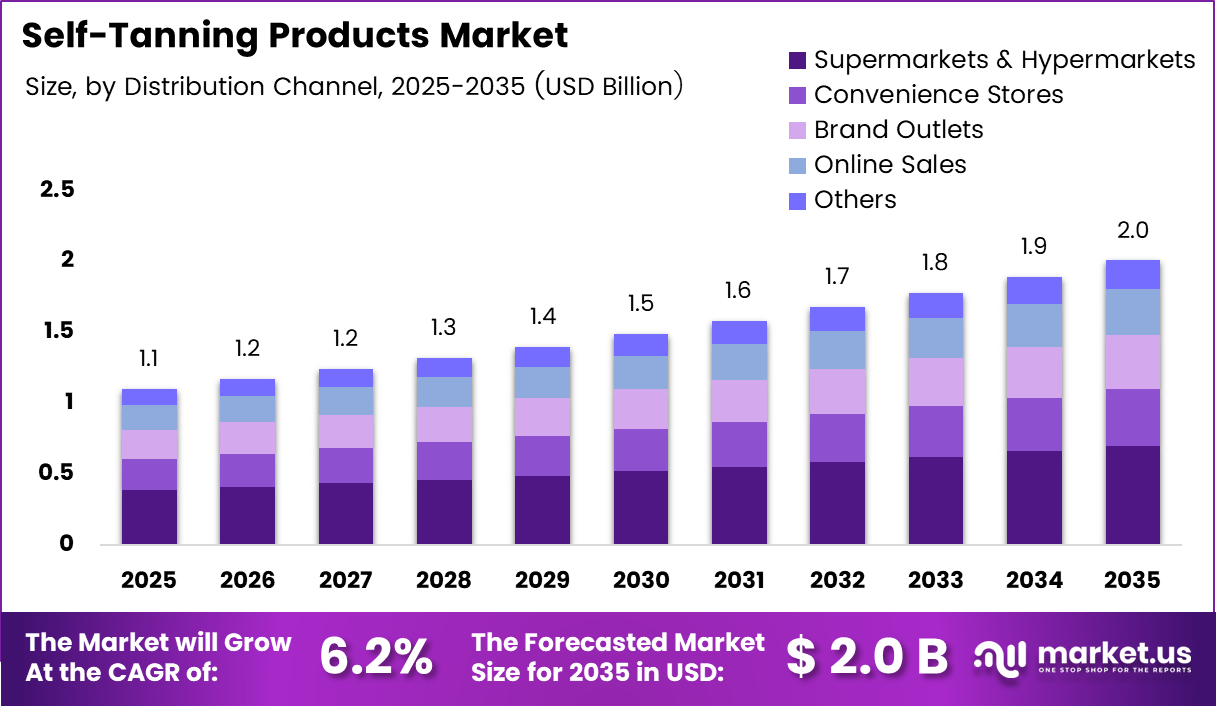
Global Self-Tanning Products Market size is expected to be worth around USD 2.0 Billion by 2035 from USD 1.1 Billion in 2025, growing at a CAGR of 6.2% during the forecast period 2026 to 2035.
The self-tanning products market includes a broad range of cosmetic formulations designed to provide a sun-kissed appearance without UV exposure. These products contain dihydroxyacetone (DHA) as the active ingredient, which reacts with the skin’s surface to produce a natural-looking tan. Moreover, product formats include lotions, sprays, mousses, oils, drops, and wipes.
Rising awareness of the health risks associated with prolonged sun exposure is a primary driver of this market. Consumers are increasingly seeking safe alternatives to sunbathing and tanning beds. Consequently, demand for at-home self-tanning solutions has grown significantly across all age groups and demographics.
Social media platforms and celebrity endorsements have accelerated product adoption, particularly among younger consumers. Beauty influencers regularly demonstrate application techniques and review product results. Therefore, brands are investing more in digital marketing and direct-to-consumer channels to capture this engaged audience.
Government health campaigns highlighting melanoma and skin cancer risks continue to shift consumer behavior toward UV-free tanning options. Additionally, clean beauty regulations in key markets are prompting brands to develop organic, dermatologist-tested formulations. This regulatory environment supports long-term market growth and product innovation.
According to research, once applied to the skin, a self-tan takes 2 to 4 hours to set and typically fades within 2 to 7 days due to natural skin exfoliation. Additionally, according to Vogue Scandinavia, leading product innovations now feature 90 percent natural-origin DHA, certified-organic dry oils with argan and rosehip, and formulas offering 72-hour hydration alongside gradual tanning benefits.
Emerging economies in Asia Pacific and Latin America present strong untapped potential for market expansion. Rising disposable incomes and growing beauty spending in these regions are attracting global brands. Furthermore, the expansion of e-commerce infrastructure is making premium self-tanning products accessible to a much wider consumer base.
Key Takeaways
- The global Self-Tanning Products Market was valued at USD 1.1 Billion in 2025 and is projected to reach USD 2.0 Billion by 2035.
- The market is expected to grow at a CAGR of 6.2% during the forecast period 2026 to 2035.
- By Product, Self-Tan Lotion held the dominant share at 36.4% in 2025.
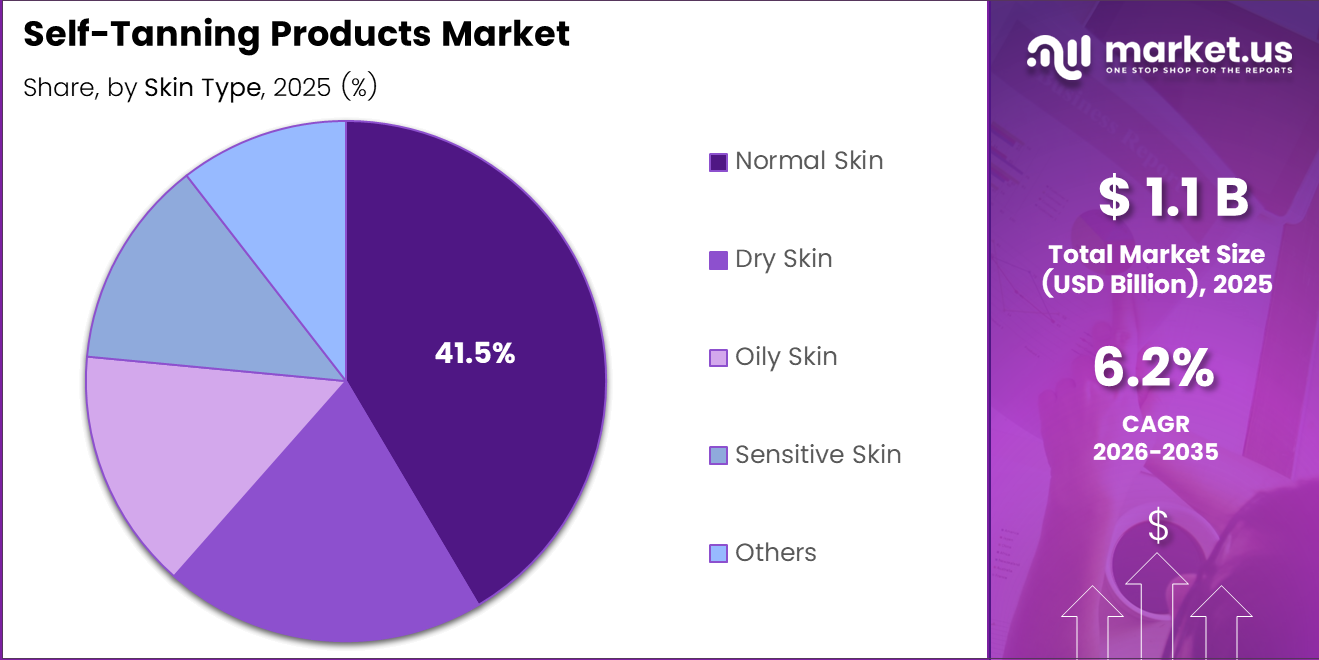
- By Skin Type, Normal Skin led the segment with a share of 41.5% in 2025.
- By Application, Women accounted for the largest share at 77.8% in 2025.
- By Distribution Channel, Supermarkets and Hypermarkets dominated with a 34.9% share in 2025.
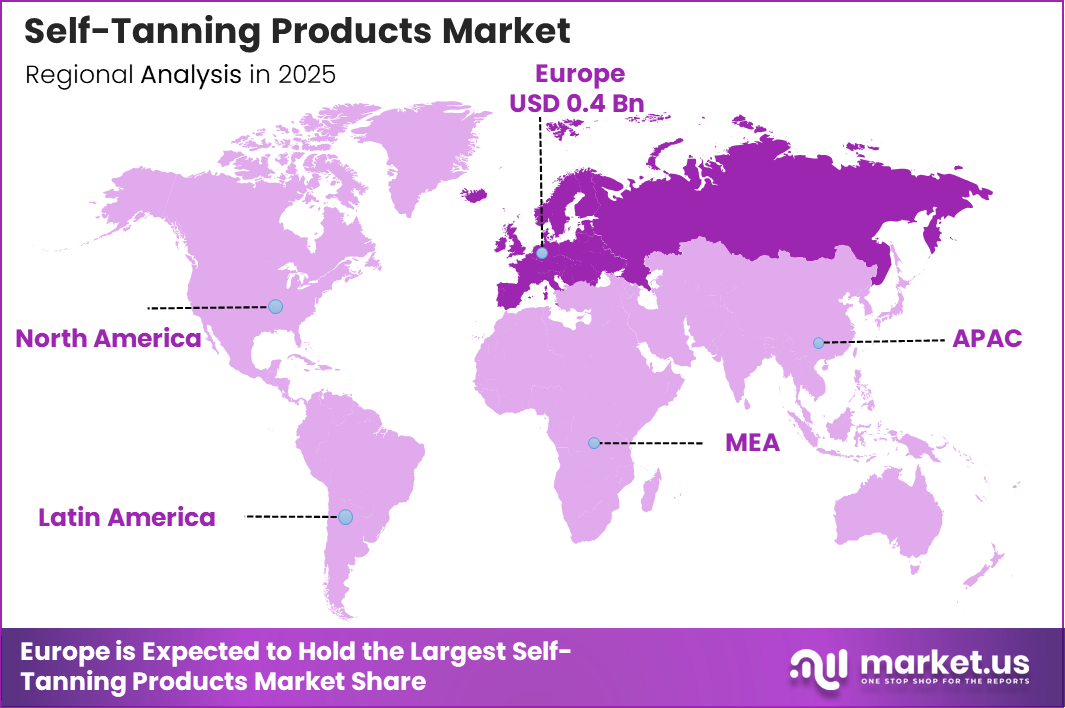
- Europe led the regional landscape with a market share of 37.80%, valued at USD 0.4 Billion in 2025.
Product Analysis
Self-Tan Lotion dominates with 36.4% due to its ease of application and widespread consumer familiarity.
In 2025, Self-Tan Lotion held a dominant market position in the Product segment of the Self-Tanning Products Market, with a 36.4% share. Lotions are preferred for their smooth application, moisturizing properties, and consistent coverage. They are widely available across retail and online channels, making them a top choice for everyday consumers seeking reliable results.
Self-Tan Spray is gaining traction due to its quick application and even distribution across the body. It appeals to consumers looking for a mess-free and time-efficient tanning experience. Moreover, aerosol and pump spray formats are growing in popularity among users who want professional salon-style results at home with minimal effort.
Self-Tan Oil attracts consumers who want added skincare benefits alongside tanning, particularly those with dry or mature skin types. These products often contain nourishing ingredients such as argan and rosehip that improve skin texture. Furthermore, the luxurious feel and skin-conditioning properties of self-tan oils are driving their growing appeal among premium beauty consumers.
Self-Tan Mousse remains one of the most popular formats due to its lightweight texture, fast-drying formula, and ease of blending. It is particularly favored by experienced self-tanning users who value buildable coverage and a natural finish. Additionally, mousse formats are widely used by beauty professionals and at-home users seeking salon-quality results without streaking.
Self-Tan Drops are gaining strong momentum as consumers seek customizable tanning solutions that can be mixed with their existing skincare or moisturizer. This format allows precise control over tan intensity and suits a wide range of skin tones. Consequently, drops have become a preferred choice among beauty enthusiasts who prioritize personalization and gradual, natural-looking color development.
Self-Tan Wipes serve consumers who prioritize portability, convenience, and on-the-go application without the need for additional tools or accessories. Their pre-soaked format ensures consistent product distribution and reduces the risk of uneven application. Moreover, Foam and Others in this segment continue to address niche consumer preferences for unique textures, specialized formulations, and innovative delivery formats.
Skin Type Analysis
Normal Skin dominates with 41.5% due to compatibility with a wider range of formulations.
In 2025, Normal Skin held a dominant market position in the Skin Type segment of the Self-Tanning Products Market, with a 41.5% share. Consumers with normal skin benefit from a broad selection of self-tanning products without concerns about irritation or excessive dryness. Consequently, brands develop a wide range of standard formulations suited specifically for this skin type.
Dry Skin represents a significant and growing segment as brands introduce hydrating self-tanners enriched with moisturizing agents. These products address the need for extended skin nourishment alongside tanning. Furthermore, consumers with dry skin are increasingly drawn to formulations that combine 72-hour hydration benefits with gradual tan development.
Oily Skin consumers seek lightweight, non-comedogenic, and fast-absorbing formulas that do not clog pores. Water-based and gel formats are particularly favored in this segment. Moreover, brands are investing in oil-free and mattifying self-tanning solutions to better serve this consumer group and address concerns around shine and breakouts.
Sensitive Skin consumers require hypoallergenic, fragrance-free, and dermatologist-tested self-tanning solutions that minimize the risk of irritation or allergic reactions. This sub-segment is growing as more consumers identify as having reactive skin. Additionally, brands are expanding their sensitive skin ranges with gentler DHA concentrations and soothing botanical ingredients to capture this underserved audience.
Others in the skin type segment include combination skin and consumers with specific dermatological conditions who require tailored self-tanning formulations. These buyers often seek products with additional therapeutic or skin-balancing properties. Therefore, brands that offer targeted solutions for diverse skin needs are well positioned to capture incremental growth across this broader and evolving consumer base.
Application Analysis
Women dominate with 77.8% due to higher beauty product engagement and tanning culture adoption.
In 2025, Women held a dominant market position in the Application segment of the Self-Tanning Products Market, with a 77.8% share. Female consumers drive the majority of self-tanning product purchases globally. Their strong engagement with beauty routines, social media trends, and wellness culture supports continued dominance in this segment.
Men represent the fastest-growing application sub-segment as grooming awareness expands across male demographics. Brands are responding with gender-neutral and male-specific self-tanning formulations. Moreover, the rise of male beauty culture, particularly driven by social media and fitness communities, is opening a significant new growth avenue within this market segment.
Distribution Channel Analysis
Supermarkets and Hypermarkets dominate with 34.9% due to high consumer footfall and product visibility.
In 2025, Supermarkets and Hypermarkets held a dominant market position in the Distribution Channel segment of the Self-Tanning Products Market, with a 34.9% share. These retail formats offer consumers the ability to compare products in person, access promotions, and make immediate purchases. Therefore, they remain the preferred channel for mass-market self-tanning brands seeking broad consumer reach.
Convenience Stores serve consumers who prioritize quick, on-the-go purchases of self-tanning essentials without visiting larger retail destinations. Their widespread locations and extended operating hours make them a practical option for last-minute beauty needs. Moreover, convenience stores are increasingly stocking a wider range of personal care products to meet growing impulse purchase demand.
Brand Outlets provide a curated retail environment where consumers can explore full product ranges and receive personalized guidance from trained beauty advisors. These dedicated spaces support brand storytelling, loyalty building, and premium product positioning. Additionally, exclusive in-store promotions and sampling opportunities help brands convert first-time visitors into long-term loyal customers.
Online Sales are growing rapidly as e-commerce platforms enable direct-to-consumer access, subscription models, and wider product discovery across global markets. Digital channels allow brands to engage consumers through tutorials, reviews, and targeted advertising. Furthermore, the convenience of home delivery and competitive online pricing continues to drive a shift away from traditional brick-and-mortar retail.
Others, including pharmacies, salons, and specialty beauty retailers, cater to consumers seeking professional guidance and curated self-tanning product selections. Pharmacies play a particularly important role in driving adoption of dermatologist-recommended and sensitive-skin-friendly formulations. Consequently, these channels attract health-conscious buyers who prioritize ingredient safety and expert-endorsed product recommendations over standard retail convenience.
Key Market Segments
By Product
- Foam
- Self-Tan Lotion
- Self-Tan Spray
- Self-Tan Oil
- Self-Tan Mousse
- Self-Tan Drops
- Self-Tan Wipes
- Others
By Skin Type
- Normal Skin
- Dry Skin
- Oily Skin
- Sensitive Skin
- Others
By Application
- Men
- Women
By Distribution Channel
- Supermarkets and Hypermarkets
- Convenience Stores
- Brand Outlets
- Online Sales
- Others
Drivers
Rising Health Awareness and Consumer Demand Drive Self-Tanning Products Market Growth
Growing awareness of UV radiation damage and skin cancer risks is shifting consumer preferences away from outdoor tanning and tanning beds. More consumers are opting for safe, sun-free alternatives. Consequently, self-tanning products have become a mainstream personal care category, supported by dermatologists and public health organizations advocating UV-free beauty routines.
Consumer demand for instant, streak-free, and long-lasting tanning formulas is pushing brands to invest in advanced product development. Shoppers expect professional-grade results from at-home products. Moreover, the expansion of beauty and personal care spending in emerging economies is creating new consumer bases that are discovering self-tanning products for the first time.
Social media beauty trends and celebrity endorsements significantly influence purchasing decisions in this market. Influencer tutorials and product reviews drive trial and repeat purchase behavior. Additionally, as beauty content becomes increasingly global, self-tanning products are gaining visibility among consumers in regions where the category was previously underdeveloped.
Restraints
Application Challenges and Consumer Trust Issues Restrain Market Growth
One of the most common barriers to adoption is the risk of uneven application, leading to streaking, patchiness, or unwanted orange tones. Many first-time users experience disappointing results. Therefore, consumer confidence in self-tanning products remains inconsistent, particularly among those who have not received guidance on proper application techniques or product selection.
Skin irritation and allergic reactions associated with DHA and fragrance ingredients are also a concern for sensitive skin consumers. These reactions can deter repeat purchases and generate negative reviews. Consequently, brands must invest more in dermatological testing and hypoallergenic formulation development to retain consumer confidence within this growing but cautious consumer segment.
Limited consumer trust due to perceived artificial or unnatural results remains a persistent challenge in the market. Many consumers associate self-tanning products with outdated formulas that produced unrealistic skin tones. However, ongoing product innovation and transparent marketing around natural-looking results are gradually changing these perceptions and supporting broader category adoption.
Growth Factors
Innovation, E-Commerce Expansion, and Inclusive Product Development Accelerate Market Growth
The development of organic, clean-label, and skin-nourishing self-tanning formulations is attracting a health-conscious consumer segment. Brands incorporating certified-organic ingredients and free-from formulas are gaining strong traction. Moreover, regulatory support for natural cosmetics in Europe and North America is creating a favorable environment for clean beauty self-tanning products to scale.
Rising demand for gender-neutral and men-specific self-tanning products is opening a significant new growth avenue. Traditionally female-dominated, the market is now broadening its consumer base. Additionally, product innovation in gradual tanners, customizable drops, and personalized shade ranges is enabling brands to meet diverse skin tone preferences and application needs globally.
The rapid expansion of e-commerce and direct-to-consumer beauty platforms is making self-tanning products more accessible worldwide. Online channels enable brands to tell detailed product stories, provide tutorials, and build subscription-based customer relationships. Therefore, digital distribution is expected to become a primary growth channel, particularly in emerging markets with growing internet penetration.
Emerging Trends
Skincare-Infused Formulas and Sustainability Initiatives Reshape the Self-Tanning Products Market
A significant trend in this market is the integration of skincare benefits such as hydration, anti-aging properties, and SPF support within self-tanning formulations. Consumers increasingly expect multi-functional products that deliver both cosmetic and skin health benefits. Consequently, brands that combine tanning with moisturizing and protective ingredients are seeing strong commercial performance.
Water-based, fast-drying, and transfer-resistant formulas are gaining popularity among consumers seeking convenience and wearability. These innovations address common complaints about product transfer onto clothing and long drying times. Moreover, at-home professional-grade tanning products are seeing increased adoption as consumers invest in elevated beauty routines that replicate salon-quality results.
Sustainable packaging and eco-friendly ingredient sourcing are emerging as key differentiators in the competitive landscape. Environmentally conscious consumers are favoring brands that demonstrate responsible manufacturing practices. Additionally, refillable packaging formats and biodegradable materials are being introduced by forward-thinking brands, aligning product positioning with the broader global sustainability movement in the beauty industry.
Regional Analysis
Europe Dominates the Self-Tanning Products Market with a Market Share of 37.80%, Valued at USD 0.4 Billion
Europe leads the global self-tanning products market, holding a dominant share of 37.80% and valued at USD 0.4 Billion in 2025. The region’s strong performance is driven by high consumer awareness of UV skin damage, an established premium beauty culture, and robust demand across the UK, Germany, and France. Additionally, stringent EU cosmetic regulations are encouraging clean-label product innovation.
North America Self-Tanning Products Market Trends
North America represents a significant and mature market for self-tanning products, supported by high beauty spending and strong brand presence. The United States leads regional consumption, driven by wellness culture and social media beauty trends. Moreover, growing demand for organic and skin-nourishing formulations is prompting domestic brands to expand their clean beauty portfolios.
Asia Pacific Self-Tanning Products Market Trends
Asia Pacific is an emerging growth region, with rising disposable incomes and growing awareness of UV-free tanning options. Countries such as Australia and South Korea are key contributors due to strong beauty culture and consumer willingness to adopt new cosmetic categories. Furthermore, expanding e-commerce infrastructure is making self-tanning products increasingly accessible across the region.
Latin America Self-Tanning Products Market Trends
Latin America presents growing opportunities for self-tanning product brands, particularly in Brazil and Mexico where beauty spending is rising steadily. Increasing urbanization and exposure to global beauty trends via social media are accelerating product adoption. However, price sensitivity in key markets means that affordable and mid-range product tiers are likely to drive the majority of volume growth.
Middle East and Africa Self-Tanning Products Market Trends
The Middle East and Africa region is at an early stage of self-tanning product adoption but holds long-term potential. Rising consumer interest in personal grooming and beauty in GCC countries is a key positive signal. Additionally, South Africa’s growing modern retail infrastructure is improving product accessibility and supporting gradual category development across the region.
Key Regions and Countries
North America
- US
- Canada
Europe
- Germany
- France
- The UK
- Spain
- Italy
- Rest of Europe
Asia Pacific
- China
- Japan
- South Korea
- India
- Australia
- Rest of APAC
Latin America
- Brazil
- Mexico
- Rest of Latin America
Middle East & Africa
- GCC
- South Africa
- Rest of MEA
Key Company Insights
St. Tropez Inc. is one of the most recognized names in the global self-tanning products market, known for its professional-grade formulations and broad product range. The brand has maintained strong consumer loyalty through continuous product innovation and high-profile marketing partnerships. However, following its acquisition by PZ Cussons in 2010, the brand was announced for sale in April 2024, signaling a strategic portfolio shift.
Bondi Sands has established itself as a leading self-tanning brand with Australian heritage positioning and a broad international retail footprint. The brand is particularly strong in the UK, Australia, and North America. Moreover, its strategy of combining affordable pricing with quality formulations has enabled it to capture a wide consumer demographic across both premium and mass-market retail segments.
Tan-Luxe (Future Beauty Labs) has positioned itself as a premium, skincare-first self-tanning brand with strong appeal among beauty enthusiasts. Its drop-based customizable tanning format has been particularly well received. Additionally, the brand’s focus on clean ingredients and dermatologist-tested formulations aligns with growing consumer demand for safe, nourishing, and results-driven self-tanning solutions in key Western markets.
Isle of Paradise is a vegan and cruelty-free self-tanning brand that has gained significant traction through social media and influencer marketing. Its color-coded drop system appeals to consumers seeking a personalized tanning experience. Furthermore, the brand’s commitment to clean, certified-organic ingredients and sustainable packaging positions it well within the fast-growing eco-conscious beauty consumer segment globally.
Key Players
- St. Tropez Inc.
- Bondi Sands
- Tan-Luxe (Future Beauty Labs)
- Isle of Paradise
- Pradas Glow
- Kao Corporation
- Coola LLC.
- Clarins
- Crown Laboratories, Inc.
- Avalon Natural Products, Inc.
- L’Oréal S.A.
- Skinerals
Recent Developments
- April 2024 – PZ Cussons announced its decision to sell the St. Tropez self-tanning brand, which it had acquired as a premium range back in 2010. This strategic divestment signals a broader portfolio realignment by PZ Cussons as it refocuses on its core consumer goods business.
- August 2025 – The firm behind Vogue Williams’ self-tan brand announced an active acquisition hunt to expand its portfolio and market reach. Separately, a distribution company installed the country’s first robotic warehouse dedicated to cosmetics, signaling growing investment in logistics infrastructure for the beauty sector.
- June 2024 – Yellow Wood Partners’ portfolio company, Suave Brands Company, successfully completed the acquisition of the ChapStick brand from Haleon. As part of the transaction, Haleon became a shareholder in Suave Brands Company, reflecting a growing trend of strategic cross-brand partnerships within the broader consumer beauty and personal care industry.
Report Scope
Report Features Description Market Value (2025) USD 1.1 Billion Forecast Revenue (2035) USD 2.0 Billion CAGR (2026-2035) 6.2% Base Year for Estimation 2025 Historic Period 2020-2024 Forecast Period 2026-2035 Report Coverage Revenue Forecast, Market Dynamics, Competitive Landscape, Recent Developments Segments Covered By Product (Foam, Self-Tan Lotion, Self-Tan Spray, Self-Tan Oil, Self-Tan Mousse, Self-Tan Drops, Self-Tan Wipes, Others), By Skin Type (Normal Skin, Dry Skin, Oily Skin, Sensitive Skin, Others), By Application (Men, Women), By Distribution Channel (Supermarkets and Hypermarkets, Convenience Stores, Brand Outlets, Online Sales, Others) Regional Analysis North America (US and Canada), Europe (Germany, France, The UK, Spain, Italy, and Rest of Europe), Asia Pacific (China, Japan, South Korea, India, Australia, and Rest of APAC), Latin America (Brazil, Mexico, and Rest of Latin America), Middle East & Africa (GCC, South Africa, and Rest of MEA) Competitive Landscape St. Tropez Inc., Bondi Sands, Tan-Luxe (Future Beauty Labs), Isle of Paradise, Pradas Glow, Kao Corporation, Coola LLC., Clarins, Crown Laboratories Inc., Avalon Natural Products Inc., L’Oréal S.A., Skinerals Customization Scope Customization for segments, region/country-level will be provided. Moreover, additional customization can be done based on the requirements. Purchase Options We have three licenses to opt for: Single User License, Multi-User License (Up to 5 Users), Corporate Use License (Unlimited User and Printable PDF)  Self-Tanning Products MarketPublished date: Feb 2026add_shopping_cartBuy Now get_appDownload Sample
 -
-
- St. Tropez Inc.
- Bondi Sands
- Tan-Luxe (Future Beauty Labs)
- Isle of Paradise
- Pradas Glow
- Kao Corporation
- Coola LLC.
- Clarins
- Crown Laboratories, Inc.
- Avalon Natural Products, Inc.
- L'Oréal S.A.
- Skinerals
Our Clients

- 179377
- Feb 2026






