Market Overview
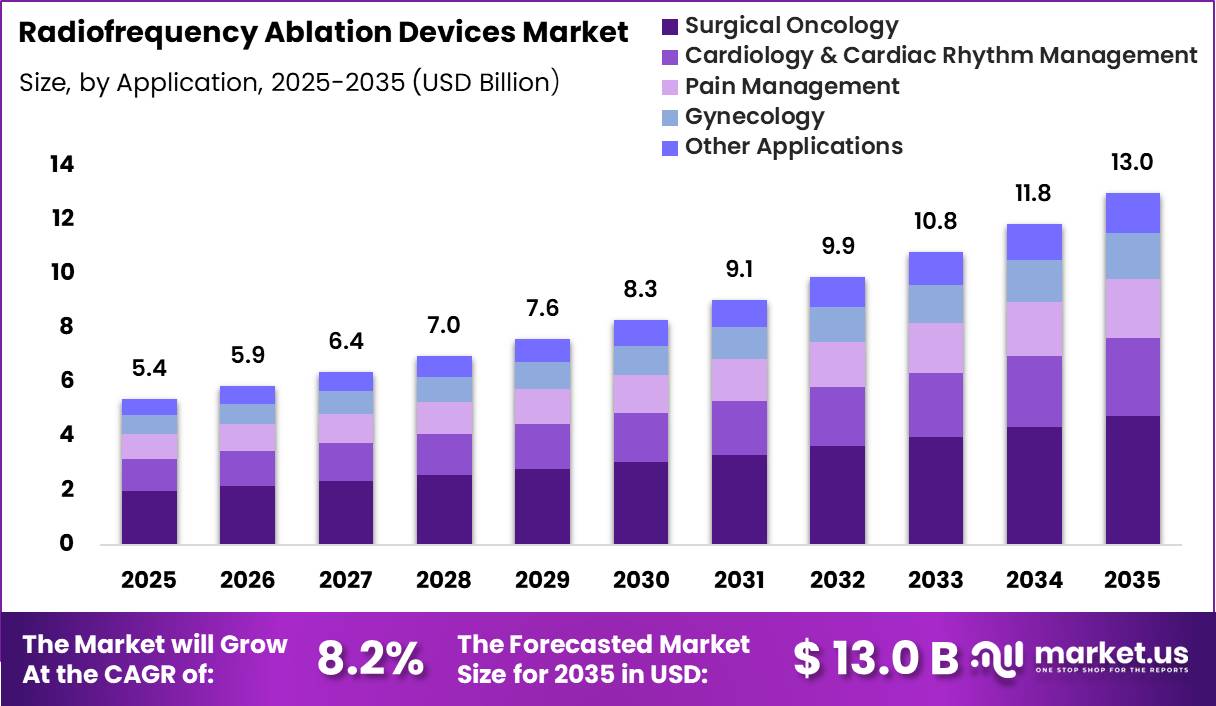
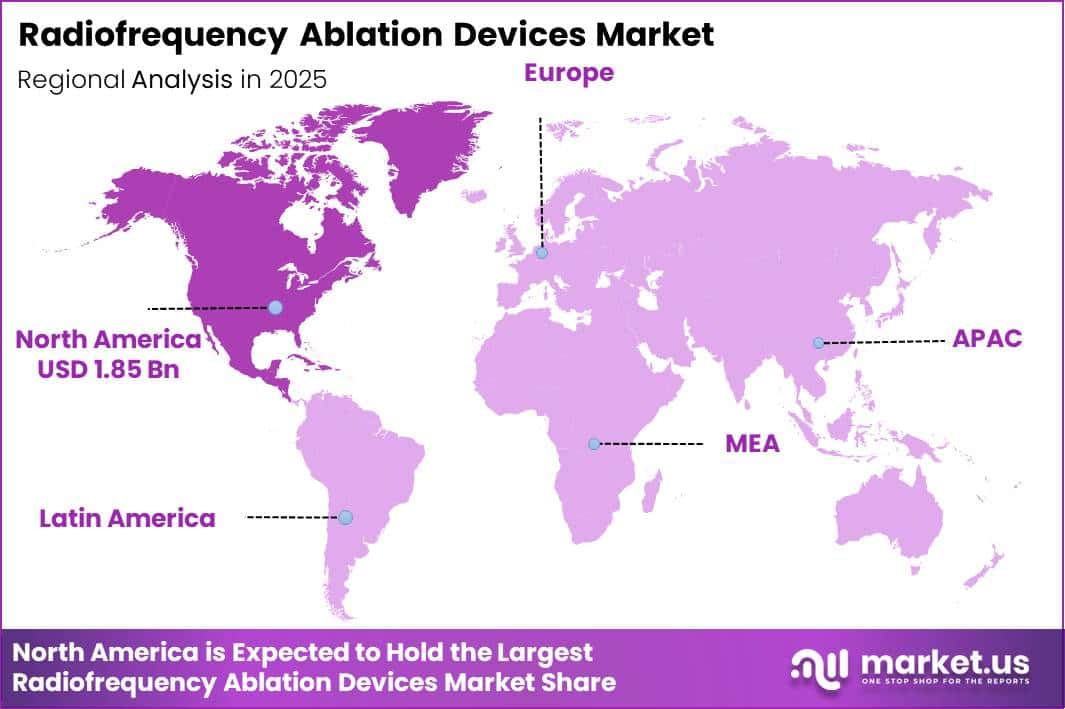
The Global Radiofrequency Ablation Devices Market size is expected to be worth around US$ 13.0 Billion by 2035 from US$ 5.4 Billion in 2025, growing at a CAGR of 8.2% during the forecast period from 2026 to 2035. In 2025, North America led the market, achieving over 34.2% share with a revenue of US$ 1.85 billion.
The global Radiofrequency Ablation (RFA) Devices Market is witnessing sustained growth as healthcare systems increasingly adopt minimally invasive procedures for treating cancer, cardiac arrhythmias, chronic pain, and other disorders. Radiofrequency ablation uses high-frequency electrical energy to generate controlled heat that destroys abnormal tissue while minimizing damage to surrounding healthy structures.
The technology has become a preferred treatment option due to shorter hospital stays, faster recovery, and reduced complication rates compared with many open surgical procedures.
According to the World Health Organization (WHO), cancer caused nearly 10 million deaths in 2022, making it one of the leading causes of mortality worldwide. Growing cancer incidence continues to increase demand for image-guided ablation procedures for liver, kidney, lung, and bone tumors.
In cardiovascular care, the U.S. Centers for Disease Control and Prevention (CDC) reports that heart disease accounted for 702,880 deaths in the United States in 2022, reinforcing the need for advanced electrophysiology procedures, including catheter-based radiofrequency ablation for arrhythmias.
Furthermore, the CDC estimates that approximately 129 million U.S. adults have at least one major chronic disease, highlighting the expanding patient population requiring minimally invasive therapeutic interventions.
Technological advancements, including precision navigation systems, temperature-controlled ablation catheters, and real-time imaging integration, are improving procedural accuracy and clinical outcomes. Continuous regulatory approvals and innovation from leading medical device manufacturers are also supporting market expansion.
With rising healthcare investments, expanding access to interventional oncology and electrophysiology services, and growing preference for outpatient treatment, the radiofrequency ablation devices market is expected to maintain strong momentum across developed and emerging healthcare markets.
Key Takeaways
- Market Size: The Global Radiofrequency Ablation Devices Market size was US$ 5.4 Billion in 2025. The market is estimated to grow to US$ 13.0 Billion by 2035.
- Market Share: The Compound Annual Growth Rate (CAGR) of the market from 2026 to 2035 will be 8.2%.
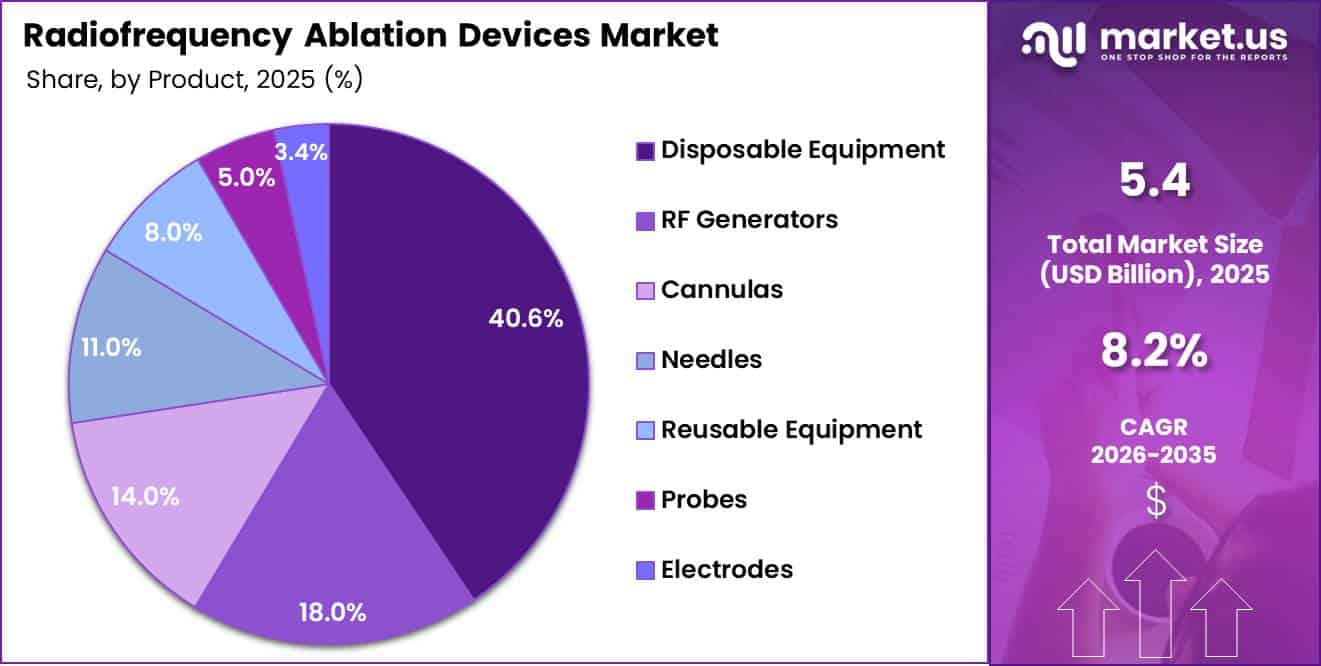
- Product: Disposable Equipment has the largest market share, accounting for 40.6% of total sales.
- Application: Surgical Oncology leads the segment, accounting for 36.7% of total revenue.
- End User: Hospitals dominate the segment, accounting for 53.1% of total revenue.
- Regional: North America is the dominant regional market, accounting for 34.2% of global sales, holding US$ 1.85 billion in revenue.
Product Analysis
The Disposable Equipment segment dominated the global Radiofrequency Ablation Devices Market, accounting for 40.6% of the market share in 2025. Its leadership is driven by the growing emphasis on infection prevention, single-use safety standards, and consistent procedural performance.
Hospitals and outpatient facilities increasingly prefer disposable electrodes, catheters, and accessory kits because they eliminate the need for sterilization while reducing the risk of cross-contamination.
The expansion of minimally invasive procedures and stricter hospital infection-control protocols further support demand for disposable products. RF Generators represented 18.0% of the market, as they serve as the primary energy source for radiofrequency ablation procedures across multiple clinical specialties. Cannulas held 14.0%, supported by their widespread use in pain management and image-guided interventions.
Needles accounted for 11.0%, benefiting from increasing utilization in tumor ablation and biopsy-assisted procedures. Reusable Equipment captured 8.0% of the market, remaining relevant in healthcare facilities seeking long-term cost efficiency despite rising disposable adoption. Probes contributed 5.0%, supported by technological improvements that enhance procedural precision and tissue targeting.
Electrodes represented 3.4% of the market, with steady demand in specialized therapeutic applications. Continuous product innovation, improved energy delivery systems, and expanding clinical indications are expected to strengthen growth across all product categories.
Application Analysis
The Surgical Oncology segment led the Radiofrequency Ablation Devices Market with a 36.7% market share in 2025. The segment’s dominance is attributed to the increasing use of radiofrequency ablation for treating liver, kidney, lung, and bone tumors, particularly among patients who are unsuitable for conventional surgery.
Growing cancer incidence, advancements in image-guided interventions, and the preference for minimally invasive treatment approaches continue to support widespread adoption in oncology. The ability of radiofrequency ablation to reduce recovery time and preserve healthy tissue further strengthens its clinical value.
The Cardiology & Cardiac Rhythm Management segment accounted for 22.0% of the market, driven by the rising prevalence of atrial fibrillation and other cardiac arrhythmias requiring catheter-based ablation procedures. Pain Management represented 17.0%, supported by increasing treatment of chronic spinal, joint, and nerve-related pain through minimally invasive interventions.
Gynecology held 13.0% of the market, benefiting from the growing use of radiofrequency ablation for uterine fibroids and other gynecological disorders. Other Applications, comprising 11.3%, include treatments in pulmonology, orthopedics, and gastroenterology, where expanding clinical evidence and technological innovation continue to broaden the therapeutic scope of radiofrequency ablation devices.
End User Analysis
The Hospitals segment dominated the global Radiofrequency Ablation Devices Market, capturing 53.1% of the market share in 2025. Hospitals remain the primary setting for radiofrequency ablation procedures because they offer advanced imaging systems, specialized electrophysiology laboratories, oncology departments, and multidisciplinary clinical teams.
The availability of experienced physicians, comprehensive patient monitoring, and access to complex surgical infrastructure enables hospitals to perform a broad range of ablation procedures safely and efficiently.
Rising admissions for cancer, cardiovascular diseases, and chronic pain conditions continue to reinforce hospital demand for advanced radiofrequency ablation technologies.
Ambulatory Surgical Centers (ASCs) represent the second-largest end-user segment, supported by the growing shift toward outpatient minimally invasive procedures. These facilities provide shorter treatment times, lower procedural costs, and faster patient recovery, making them increasingly attractive for pain management and selected cardiac and oncology interventions. Favorable reimbursement policies in several developed healthcare systems are also encouraging procedural migration to ASCs.
The Other End-Users segment includes specialty clinics, physician offices, academic medical centers, and research institutions. Although smaller in market share, these facilities contribute to the adoption of innovative radiofrequency ablation technologies through specialized treatments, clinical research, physician training, and expanding access to minimally invasive therapeutic procedures across diverse healthcare settings.
Key Market Segments
By Product
- RF Generators
- Disposable Equipment
- Cannulas
- Needles
- Reusable Equipment
- Probes
- Electrodes
By Application
- Cardiology & Cardiac Rhythm Management
- Surgical Oncology
- Pain Management
- Gynecology
- Other Applications
By End User
- Hospitals
- Ambulatory Surgical Centers
- Other End Users
Driver
Chronic Pain Pathway Shift Toward Non-Opioid Intervention
Chronic pain is becoming a major growth area for non opioid interventional treatments such as radiofrequency ablation (RFA), driven by high disease prevalence and policy pressure to reduce opioid use.
In the U.S., about 24.3% of adults experience chronic pain, and 8.5% have high-impact chronic pain, representing over 60 million people who may require escalating levels of care beyond conservative therapy.
As patients fail medications, physical therapy, or injections, they are increasingly routed into interventional pathways including nerve blocks and RFA. This progression is supported by payer frameworks.
Medicare Part B and most commercial insurers reimburse RFA once conservative treatment failure is documented, making it accessible across hospitals, ambulatory surgical centers, and pain clinics.
Shift also changes the commercial structure of the market. Instead of one-time equipment sales, revenue becomes more recurring through disposable procedural kits such as electrodes, cannulas, and probes that are repeatedly used as pain returns. This creates more stable utilization cycles tied to chronic disease recurrence rather than single surgical episodes.
Clinically and commercially, the model strengthens outpatient pain management ecosystems and increases the role of specialist physicians in procedure-based care. It also reduces reliance on opioids, aligning with broader public health goals.
Overall, this transition toward non opioid interventional pain care supports a structurally resilient demand base and reinforces RFA as a repeat procedure, outpatient-driven growth segment in chronic pain management.
| Driver | (~) % Impact on CAGR Forecast | Geographic Relevance | Impact Timeline |
|---|---|---|---|
| Oncology load expansion in liver-lung lesions | +2.1% | APAC core, North America core, EU core, Middle East selective | Medium term (2-4 years) |
| Chronic pain pathway shift toward non-opioid intervention | +1.8% | North America core, EU, ANZ, urban APAC spill-over | Short term (≤ 2 years) |
| Reimbursement and coding visibility improving procedure throughput | +1.4% | U.S. core, then private-payer spill-over | Short term (≤ 2 years) |
| Guidance-imaging and precision workflow upgrades | +1.2% | North America, EU, Japan, Korea, tertiary China hubs | Medium term (2-4 years) |
| Earlier-line use in selected care algorithms | +1.0% | EU, U.S., Japan, large academic centers globally | Medium term (2-4 years) |
| Regulatory entry and platform refresh supporting SKU expansion | +0.9% | U.S. core, EU follow-through, export markets | Long term (≥ 4 years) |
Challenge
Post-Market Safety Scrutiny in RF-Based Pain Interventions
Post-market safety scrutiny introduces a meaningful constraint on RF-based pain and interventional procedures, contributing an estimated 0.8 % point drag on CAGR through higher compliance costs, more cautious clinical adoption, and increased regulatory oversight.
Recent FDA safety communications related to RF energy-based aesthetic devices, particularly RF microneedling systems, have highlighted adverse events such as burns, scarring, fat loss, disfigurement, and nerve injury.
While these alerts are not directly targeted at radiofrequency ablation (RFA) used in pain or oncology settings, they elevate overall regulatory sensitivity around thermal energy delivery systems and reinforce stricter expectations for device safety, training, and monitoring.
This environment increases manufacturer obligations for post-market surveillance, including expanded real-world evidence collection, adverse event reporting, human factors validation, and updated risk management documentation.
New requirements such as Unique Device Identification (UDI) tracking and digital reporting standards also add incremental compliance costs across product lines and can slow iterative product launches.
At the clinical level, physicians face additional documentation requirements and stricter procedural protocols, which can slightly reduce throughput in high-volume outpatient settings and discourage use in borderline or lower priority indications.
In response, manufacturers are investing in safer energy delivery algorithms, standardized training programs, and more robust clinical evidence generation to reduce complication rates and stabilize regulatory confidence.
These efforts are expected to gradually normalize safety perceptions over a 2 to 4-year horizon, but they also increase near term R&D and compliance burdens, modestly compressing margins and slowing expansion pace despite sustained underlying demand.
| Challenge | (~) % CAGR Friction Drag | Geographic Relevance | Mitigation Horizon |
|---|---|---|---|
| Fragmented reimbursement logic | -1.4% | US, EU, selected OECD | Medium term (2–4 years) |
| Skilled operator capacity gap | -1.2% | North America, EU, APAC metros | Long term (≥ 4 years) |
| Capital-intensive lab upgrades | -1.0% | Hospital hubs, EP labs, oncology centers | Medium term (2–4 years) |
| Post-market safety scrutiny | -0.8% | US FDA, EU, advanced Asia | Medium term (2–4 years) |
| Clinical pathway variability | -0.9% | US, EU, emerging APAC | Long term (≥ 4 years) |
| Cross-indication training complexity | -0.7% | Global specialist centers | Long term (≥ 4 years) |
Restraints
Reimbursement and Coverage Constraints for RFA Procedures
Reimbursement and coverage constraints are a key limitation for radiofrequency ablation (RFA) across pain management, cardiology, and oncology, as payers tighten medical necessity requirements, restrict repeat procedures, and apply indication-specific payment rules.
In pain management, CMS guidelines for facet joint interventions typically cap reimbursable treatment at up to four sessions per spinal region per year, which directly limits repeat utilization even when patients continue to experience chronic symptoms.
Although Medicare Part B generally covers about 80% of approved costs, patient co-payments can still be meaningful. Depending on indication, out-of-pocket expenses may range from a few hundred dollars for musculoskeletal procedures to over US$1,000 to 1,700 for oncology-related ablations, which reduces affordability and constrains elective or repeat interventions.
Coverage is also highly selective by indication. For instance, thyroid RFA is reimbursed only for symptomatic benign nodules after failure of conservative therapy, excluding cosmetic applications and narrowing the eligible patient base.
Similar restrictions across other therapeutic areas slow broader diffusion of the technology. As private insurers and international health systems adopt comparable policies, reimbursement growth often trails clinical demand.
Even in high-potential RFA markets, coverage constraints can reduce realized growth by 2–3 % points, contributing to roughly a 1.4 % point drag on device CAGR. To respond, manufacturers must invest in health economic evidence, navigate fragmented coding frameworks, and align offerings with reimbursed pathways through bundled pricing or outcomes-based contracts.
These requirements increase commercialization complexity and limit pricing flexibility, especially in emerging or borderline indications.
| Restraint | (~) % Impact on CAGR Forecast | Geographic Relevance | Impact Timeline |
|---|---|---|---|
| Heightened safety and regulatory scrutiny on RF devices | -2.0% | US, EU, East Asia | Medium term (2–4 years) |
| Supply chain volatility in RF catheters and electronics | -1.6% | North America, EU, APAC | Short to medium term (≤ 4 years) |
| Reimbursement and coverage constraints for RFA procedures | -1.4% | US, EU, selected APAC | Medium term (2–4 years) |
| Clinical risk perception and adverse event reporting | -1.2% | US, EU, MEA | Short term (≤ 2 years) |
| Hospital CapEx pressure and OR utilization optimization | -1.8% | Global tertiary centers | Long term (≥ 4 years) |
Opportunity
RF Ablation for Metabolic and Obesity-Linked Pain
RF ablation for metabolic and obesity linked pain is an emerging opportunity driven by the rapid rise in obesity, diabetes, and related musculoskeletal and neuropathic disorders. These conditions significantly increase the risk of knee osteoarthritis, chronic back pain, and peripheral nerve dysfunction, creating a large and growing population that often responds poorly to conservative therapies.
Despite this burden, most RF ablation programs today are not specifically designed for high BMI or metabolically complex patients. Treatment pathways remain broadly standardized, even though obese and diabetic patients frequently require adapted procedural approaches and multidisciplinary management.
If RF ablation adoption in these cohorts increased by 5 to 10 % points, and structured metabolic pain programs in bariatric, diabetes, and chronic disease clinics achieved 20 to 30 % penetration in regions such as the U.S., India, the Middle East, and Southeast Asia, the resulting procedural expansion could materially increase overall segment demand. This could contribute approximately 1.2 % points of incremental CAGR upside by 2035.
From an operational perspective, high BMI patients often require longer procedure times and carry higher complication risk. Optimized RF systems with improved access tools, refined energy delivery, and protocol standardization can reduce procedure duration by 15 to 20 minutes and improve safety outcomes, supporting payer acceptance and efficiency.
This remains an underdeveloped segment because most RF devices are designed for general chronic pain populations rather than metabolic disease cohorts. However, integrating RF ablation into structured obesity and diabetes care pathways could create a differentiated, higher value niche with strong long-term growth potential.
| Opportunity | (~) % Potential CAGR Upside | Geographic Relevance | Execution Window |
|---|---|---|---|
| Integrated chronic pain RFA networks | +2.0% | North America, EU, high-income APAC | Short–Medium term |
| Outpatient oncology micro-tumor RF platforms | +1.8% | North America core, EU, China, India | Medium term |
| Primary care & spine clinics RFA enablement | +1.5% | North America, EU, LatAm urban, APAC | Short–Medium term |
| RF ablation for metabolic & obesity-linked pain | +1.2% | U.S., Middle East, India, Southeast Asia | Medium–Long term |
| AI-guided multi-energy ablation ecosystems | +1.0% | Global tertiary centers (NA, EU, APAC) | Long term |
| Value-based reimbursement & subscription models | +0.8% | U.S., Canada, UK, Germany, Australia | Medium term |
Regional Analysis
In 2025, North America led the market, achieving over 34.2% share with a revenue of US$ 1.85 Billion. The region’s leadership is supported by its advanced healthcare infrastructure, high adoption of minimally invasive procedures, and widespread availability of specialized electrophysiology and interventional oncology centers.
The United States contributes the largest share due to the growing prevalence of cardiovascular diseases, cancer, and chronic pain disorders, along with favorable reimbursement policies and continuous investment in innovative medical technologies. Strong clinical research activity and the early commercialization of next-generation ablation systems further strengthen regional growth.
Europe represents the second-largest regional market, driven by increasing demand for minimally invasive cancer therapies, expanding aging populations, and supportive healthcare funding across countries such as Germany, France, and the United Kingdom. Growing adoption of image-guided interventions and advanced cardiac rhythm management procedures continues to support market expansion.
The Asia-Pacific region is projected to register the fastest growth during the forecast period. Rising healthcare expenditure, improving hospital infrastructure, expanding access to advanced medical devices, and increasing awareness of minimally invasive treatments are accelerating adoption across China, Japan, South Korea, and India.
Meanwhile, Latin America and the Middle East & Africa are experiencing gradual market growth, supported by healthcare modernization initiatives, improving diagnostic capabilities, increasing investments in specialized treatment centers, and expanding access to advanced radiofrequency ablation technologies for oncology, cardiology, and pain management applications.
Key Regions and Countries
North America
- The US
- Canada
Europe
- Germany
- France
- The U.K.
- Italy
- Spain
- Russia & CIS
- Rest of Europe
Asia Pacific
- China
- India
- Japan
- South Korea
- ASEAN
- Australia & New Zealand
- Rest of Asia Pacific
Middle East & Africa
- GCC
- South Africa
- Rest of Middle East & Africa
Latin America
- Brazil
- Mexico
- Rest of Latin America
Key Player Analysis
Competitive advantage in the global radiofrequency ablation devices market is achieved through broad product portfolio coverage spanning RF generators, disposable cannulas and needles, and
Reusable probe and electrode systems, established relationships with hospital interventional radiology, cardiology, and oncology surgical department institutional buyers, and continued investment in next-generation RF ablation technology development improving tumor ablation precision, cardiac rhythm management outcomes, and pain management procedural efficiency.
Major strategic priorities for leading manufacturers include expansion of disposable equipment product lines addressing the dominant product segment and infection control procurement preferences.
Development of advanced RF generator systems with integrated imaging guidance capabilities improving surgical oncology ablation accuracy, and growing investment in ambulatory surgical center distribution channels supporting the structural shift toward outpatient RF ablation procedure delivery across pain management and gynecological applications.
Strong hospital institutional procurement relationships, combined with growing ambulatory surgical center presence, represent a critical competitive differentiator for manufacturers serving the dominant surgical oncology and cardiac rhythm management application segments globally.
Top Key Players
- Avanos Medical Inc.
- Arthrex Inc.
- Sutter Medizintechnik GmbH
- AngioDynamics Inc.
- AtriCure Inc.
- Hologic Inc.
- Acessa Health Inc.
- EPIX Therapeutics Inc.
- Other Key Players
Recent Developments
- In January 2026, AtriCure Inc. launched an expanded RF ablation system for cardiac rhythm management featuring enhanced lesion monitoring technology, targeting hospital electrophysiology and cardiac surgery departments seeking improved atrial fibrillation ablation procedural outcomes and long-term rhythm control.
- In February 2026, AngioDynamics Inc. introduced a new disposable RF ablation needle portfolio with advanced tip geometry for improved hepatic tumor targeting, targeting hospital interventional radiology and surgical oncology center buyers managing hepatocellular carcinoma and liver metastasis ablation procedures.
- In March 2026, Hologic Inc. expanded its RF ablation gynecological product line with a new endometrial ablation system for ambulatory surgical center deployment, targeting gynecology clinic and ASC buyers seeking cost-effective outpatient heavy menstrual bleeding treatment solutions.
- In April 2026, Avanos Medical Inc. secured a multi-year supply agreement with a leading Asian hospital network covering its RF pain management ablation device portfolio, expanding its institutional presence across chronic pain management and musculoskeletal ablation procedure channels in the Asia Pacific region.
Report Scope
| Report Features | Description |
|---|---|
| Market Value (2025) | US$ 5.4 Billion |
| Forecast Revenue (2035) | US$ 13.0 Billion |
| CAGR (2026-2035) | 8.2% |
| Base Year for Estimation | 2025 |
| Historic Period | 2020-2024 |
| Forecast Period | 2026-2035 |
| Report Coverage | Revenue Forecast, Market Dynamics, Competitive Landscape, Recent Developments |
| Segments Covered | By Product (RF Generators, Disposable Equipment, Cannulas, Needles, Reusable Equipment, Probes, Electrodes), By Application (Cardiology & Cardiac Rhythm Management, Surgical Oncology, Pain Management, Gynecology, Other Applications), By End User (Hospitals, Ambulatory Surgical Centers, Other End Users) |
| Regional Analysis | North America – The US, Canada; Europe – Germany, France, U.K., Italy, Spain, Russia & CIS, Rest of Europe; Asia Pacific – China, India, Japan, South Korea, ASEAN, Australia & New Zealand, Rest of Asia Pacific; Middle East & Africa – GCC, South Africa, Rest of Middle East & Africa; Latin America – Brazil, Mexico, Rest of Latin America |
| Competitive Landscape | Avanos Medical Inc., Arthrex Inc., Sutter Medizintechnik GmbH, AngioDynamics Inc., AtriCure Inc., Hologic Inc., Acessa Health Inc., EPIX Therapeutics Inc., Other Key Players |
| Customization Scope | Customization for segments, region/country-level will be provided. Moreover, additional customization can be done based on the requirements. |
| Purchase Options | We have three licenses to opt for: Single User License, Multi-User License (Up to 5 Users), Corporate Use License (Unlimited User and Printable PDF) |