Market Overview
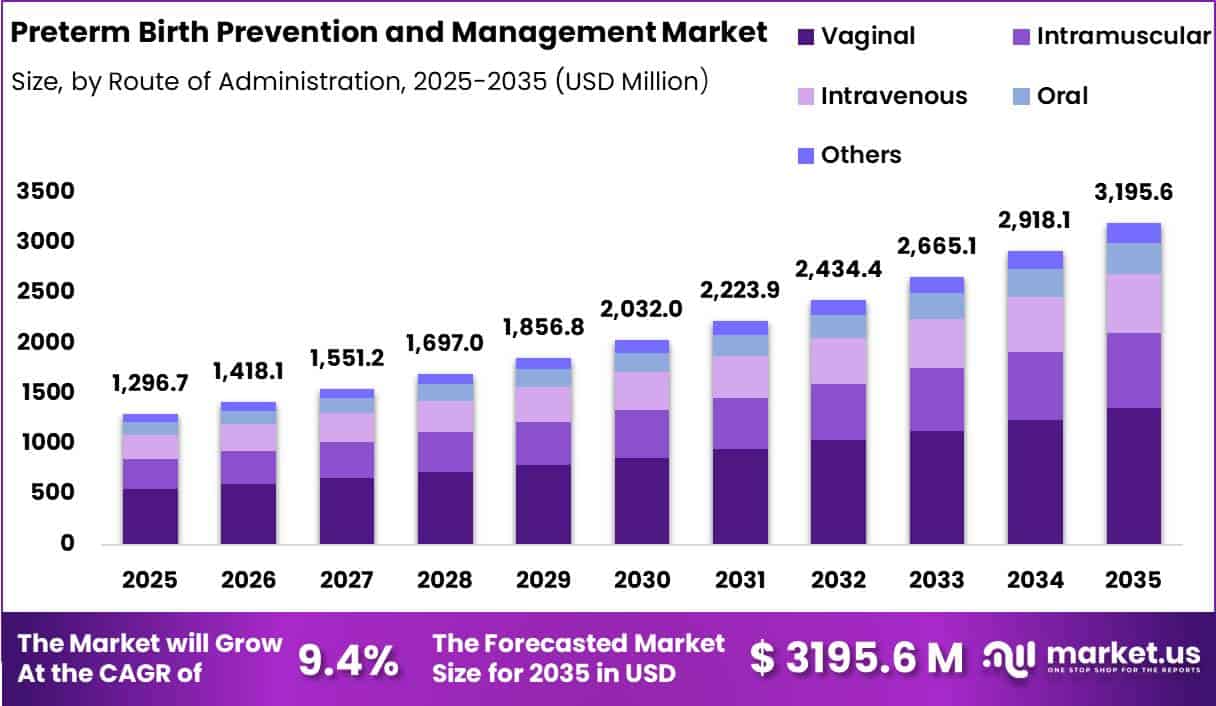
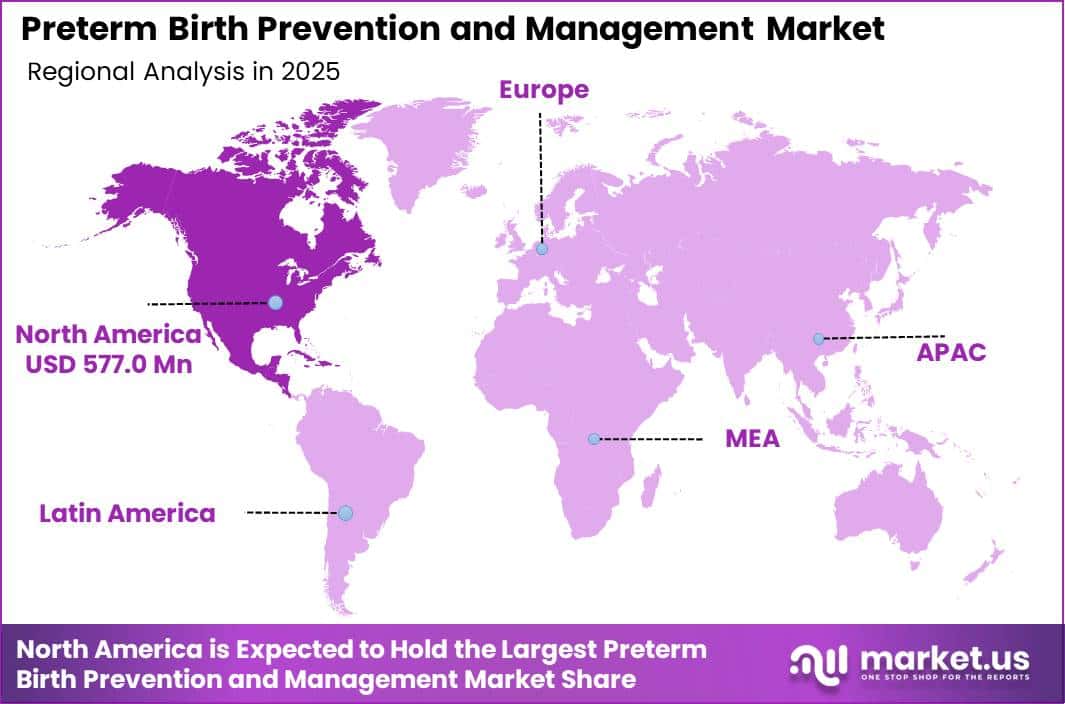
The Global Preterm Birth Prevention and Management Market size is expected to be worth around US$ 3,195.6 Million by 2035 from US$ 1,296.7 Million in 2025, growing at a CAGR of 9.4% during the forecast period from 2026 to 2035. In 2025, North America led the market, achieving over 44.5% share with a revenue of US$ 577.0 Million.
Preterm birth remains one of the most significant challenges in maternal and neonatal healthcare, driving continuous demand for effective prevention and management strategies worldwide. Rising maternal age, multiple pregnancies, chronic conditions such as hypertension and diabetes, and lifestyle-related risk factors have contributed to the growing need for early risk identification and timely clinical intervention.
Healthcare systems are increasingly emphasizing preventive obstetric care through routine prenatal screening, cervical length monitoring, infection management, progesterone therapy for eligible women, and specialized neonatal support to improve pregnancy outcomes and reduce complications associated with premature delivery.
According to the World Health Organization (WHO), approximately 13.4 million babies were born preterm in 2020, accounting for nearly 1 in 10 live births globally, with preterm birth remaining the leading cause of death among children under five years of age.
The U.S. Centers for Disease Control and Prevention (CDC) also reported a 10.41% preterm birth rate in the United States in 2023, underscoring the continued public health burden and the importance of evidence-based maternal care. These statistics have encouraged governments and healthcare providers to strengthen maternal health programs, expand access to quality antenatal services, and improve neonatal intensive care capabilities.
Technological advancements are further transforming the field through improved prenatal diagnostics, fetal monitoring systems, telehealth-enabled prenatal consultations, and enhanced neonatal intensive care practices. Research institutions and healthcare organizations continue to evaluate innovative therapies and precision medicine approaches aimed at reducing preterm birth risk and improving long-term neonatal outcomes.
Growing awareness among expectant mothers, increasing healthcare expenditure, and stronger policy support for maternal and child health are expected to accelerate the adoption of comprehensive preterm birth prevention and management solutions across both developed and emerging healthcare markets.
Key Takeaways
- Market Size: Preterm Birth Prevention and Management Market size was US$ 1,296.7 Million in 2025. The market is estimated to grow to US$3,195.6 Million by 2035.
- Market Share: The Compound Annual Growth Rate (CAGR) of the market from 2026 to 2035 will be 9.4%.
- By Drug Class: Progestogens has the largest market share, accounting for 38.5% of total sales.
- By Route of Administration: Vaginal, accounting for 42.6% of total revenue.
- By End User: Hospitals leads the segment, accounting for 58.4% of total revenue.
- Regional: North America is the dominant regional market, accounting for 44.5% of global sales.
Drug Class Analysis
The Progestogens segment dominated the Preterm Birth Prevention and Management Market, accounting for 38.5% of the market share in 2025. This leadership is driven by the widespread clinical use of progesterone therapy for women at high risk of spontaneous preterm birth, particularly those with a history of preterm delivery or a short cervix.
Progestogens are recommended in several obstetric guidelines because they help maintain pregnancy and reduce uterine contractions, making them a preferred first-line preventive treatment. Growing awareness of maternal health and increasing prenatal screening programs have further strengthened demand for these therapies.
The Tocolytics segment captured 21.4% of the market, supported by their role in delaying labor long enough to administer corticosteroids or transfer patients to specialized neonatal care centers. Corticosteroids represented 16.8% of the market due to their proven ability to accelerate fetal lung development and reduce neonatal complications when preterm birth is unavoidable.
Magnesium Sulfate accounted for 10.6%, mainly because of its neuroprotective benefits for premature infants. Antibiotics held 7.9%, primarily used in infection-related preterm labor cases. The Others category contributed 4.8%, including supportive therapies and emerging treatment approaches under clinical evaluation.
Route of Administration Analysis
The Vaginal route dominated the Preterm Birth Prevention and Management Market, accounting for 42.6% of the market share in 2025. Vaginal administration is widely preferred for progesterone therapy because it delivers medication directly to reproductive tissues, improving local effectiveness while reducing systemic side effects.
Healthcare providers frequently recommend this route for women at high risk of preterm birth due to its convenience, better patient compliance, and strong clinical evidence supporting pregnancy maintenance. The increasing adoption of vaginal progesterone formulations in prenatal care continues to strengthen this segment’s leading position.
The Intramuscular segment accounted for 23.1% of the market, driven by the continued use of injectable progesterone formulations and emergency treatments administered under physician supervision. The Intravenous segment represented 15.8%, supported by hospital-based management of acute preterm labor requiring rapid drug delivery, including tocolytics and magnesium sulfate.
The Oral route held 12.4% of the market, benefiting from ease of administration and improved patient convenience, although its use remains limited for certain therapies due to lower bioavailability. The Others segment contributed 6.1%, including less common administration methods and novel drug delivery systems currently being evaluated for enhanced maternal and fetal outcomes.
End User Analysis
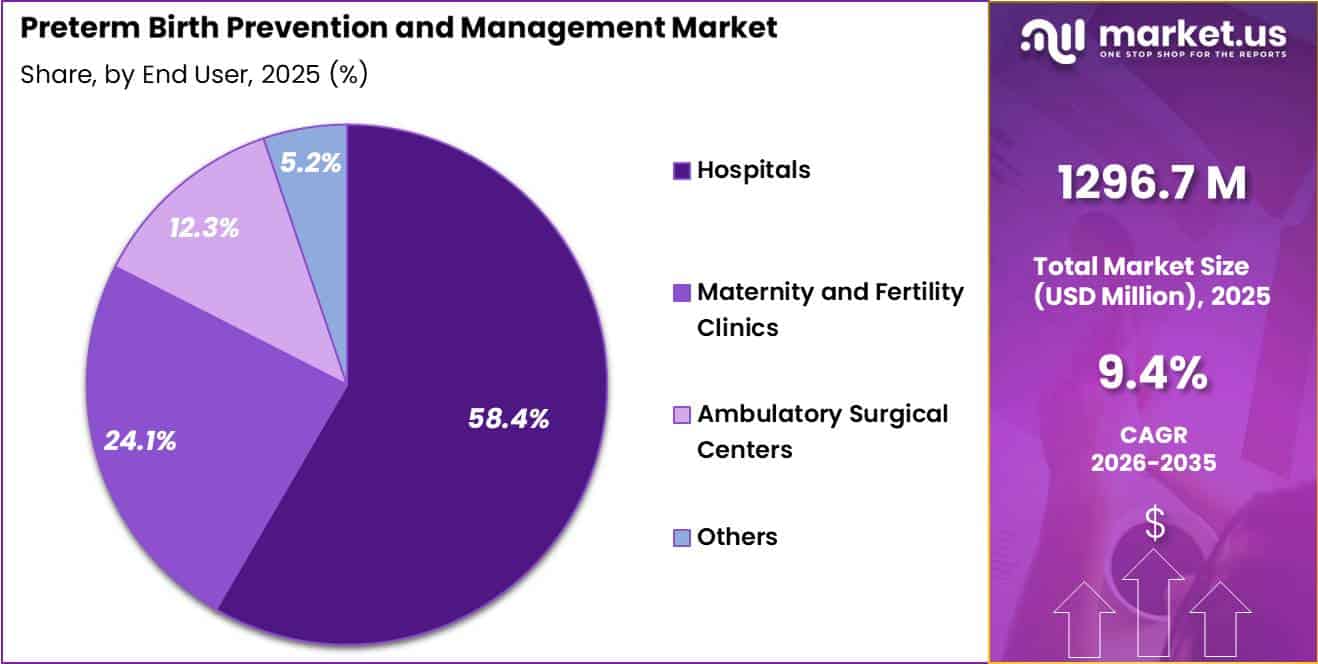
The Hospitals segment dominated the Preterm Birth Prevention and Management Market, accounting for 58.4% of the market share in 2025. Hospitals remain the primary centers for managing high-risk pregnancies, diagnosing preterm labor, administering emergency medications, and providing comprehensive maternal and neonatal intensive care services.
The availability of multidisciplinary obstetric teams, advanced fetal monitoring technologies, neonatal intensive care units (NICUs), and round-the-clock emergency services makes hospitals the preferred choice for preterm birth prevention and treatment. Rising rates of high-risk pregnancies, increasing maternal age, and greater access to specialized obstetric care have further strengthened hospital demand.
Hospitals also play a critical role in administering corticosteroids, tocolytics, magnesium sulfate, and other evidence-based therapies while ensuring continuous maternal and fetal monitoring. In addition, the growing adoption of standardized clinical protocols, improved prenatal screening programs, and government investments in maternal healthcare infrastructure continue to support the dominance of this segment.
Increasing referrals from primary care providers and maternity clinics to tertiary hospitals for complex pregnancies are expected to sustain strong market growth throughout the forecast period.
Meanwhile, maternity and fertility clinics, ambulatory surgical centers, and other healthcare facilities continue to contribute to market expansion by providing prenatal consultations, early risk assessment, routine monitoring, and supportive pregnancy care for women with varying levels of obstetric risk.
Market Segmentations
By Drug
- Progestogens
- Tocolytics
- Corticosteroids
- Magnesium Sulfate
- Antibiotics
- Others
By Route of Administration
- Vaginal
- Intramuscular
- Intravenous
- Oral
- Others
By End User
- Hospitals
- Maternity and Fertility Clinics
- Ambulatory Surgical Centers
- Others
Driver
High and persistent preterm birth burden sustaining baseline demand
Preterm birth remains one of the largest unresolved maternal-newborn health burdens, which creates durable demand for prevention tools, surveillance protocols, hospital management products, and neonatal support services.
WHO reports about 13.4 million preterm births globally in 2020, or roughly 1 in 10 live births, with the heaviest concentration in southern Asia and sub-Saharan Africa, while preterm complications remain a leading cause of death in children under 5.
In the U.S., the CDC states the preterm birth rate was 10.4% in 2022, and racial inequity remains severe, with 14.6% among Black women versus 9.4% among White women and 10.1% among Hispanic women, which keeps screening and high-risk obstetric management commercially relevant even in mature healthcare systems.
For market structure, that disease burden supports recurring utilization across cervical-length ultrasound, fetal fibronectin or emerging biomarker testing, antenatal corticosteroid triage, tocolytic use in selected cases, NICU respiratory support, thermal care, and follow-up services rather than one-off drug sales.
The result is a broad revenue base tied to volume persistence: even low single-digit reductions in incidence do not materially shrink demand because survival-improving interventions expand the number of managed survivors requiring longer clinical pathways, particularly in tertiary and quaternary hospitals.
| Driver | (~) % Impact on CAGR Forecast | Geographic Relevance | Impact Timeline |
|---|---|---|---|
| High and persistent preterm birth burden sustaining baseline demand | +2.1% | Global, with South Asia and Sub-Saharan Africa core; U.S. and EU specialty care markets | Medium term (2-4 years) |
| Post-Makena treatment reset, accelerating targeted screening and protocol redesign | +1.7% | North America core, EU guideline-led markets, APAC tertiary centers | Short term (≤ 2 years) |
| Maternal safety policy and reimbursement alignment, expanding monitored pregnancy pathways | +1.5% | U.S. core, EU public systems, selected Gulf and APAC hospital networks | Medium term (2-4 years) |
| Evidence-backed neonatal care scale-up increasing management spending per at-risk birth | +1.9% | Global, strongest in LMIC hospital systems and NICU-upgrading markets | Medium term (2-4 years) |
| AI-enabled prediction and cervical assessment improve earlier intervention yield | +1.3% | North America, EU, Japan, South Korea, urban China, and private India | Medium term (2-4 years) |
| Equity gaps and regional access programs are widening the addressable population | +1.6% | Sub-Saharan Africa, South Asia, Latin America spill-over, U.S. disparity-focused programs | Long term (≥ 4 years) |
Challenge
Fragmented Antenatal Care Limiting Preterm Birth Management Adoption
Persistently fragmented antenatal care pathways create a structural drag on the preterm birth prevention and management market by limiting timely identification of the roughly 10% of pregnancies that progress to preterm birth globally, undermining demand capture for screening, prophylaxis, and early intervention solutions, even as absolute case volumes remain high.
In many low- and middle-income regions, between 20% and 40% of pregnant women initiate antenatal care after the first trimester and median visit counts remain below the eight contacts recommended by global guidelines, which means that risk-stratification tools, progesterone-based prevention protocols, and cervical length monitoring solutions penetrate only a subset of the theoretical addressable population, depressing utilization intensity per at-risk pregnancy by an estimated 25–35%.
Operationally, fragmented referral chains between primary clinics, district hospitals, and tertiary centers introduce transit delays of 12–48 hours for women with evolving preterm labor, during which window the opportunity to deploy tocolytics, antenatal corticosteroids, and in utero transfer strategies is lost in 15–30% of cases, thereby eroding the realized value proposition of preterm prevention and management products.
Strategically, vendors and providers must invest in multi-tier referral integration (digital referral systems, standardized clinical pathways, and shared risk-scoring tools) and deploy hub-and-spoke service models that proactively connect community-level midwives with specialized preterm centers; such initiatives typically require 4–7 years to mature, as they depend on upgrading information systems across dozens to hundreds of facilities per region and re-training thousands of frontline workers, hence the long-term mitigation horizon and the estimated 1.2 % point drag on otherwise attainable market CAGR.
| Challenge | (~) % CAGR Friction Drag | Geographic Relevance | Mitigation Horizon |
|---|---|---|---|
| Fragmented antenatal care pathways | -1.2% | Sub-Saharan Africa, South Asia, Latin America | Long term (≥ 4 years) |
| Limited specialized neonatal capacity | -0.9% | LMIC tertiary hubs, peri-urban corridors | Medium term (2-4 years) |
| Evidence–practice implementation gap | -0.8% | North America, EU, Asia-Pacific | Medium term (2-4 years) |
| Data quality and registry deficits | -0.7% | Global, especially LMIC health systems | Long term (≥ 4 years) |
| High-skill workforce constraints | -0.9% | Global, with LMIC concentration | Long term (≥ 4 years) |
| Reimbursement and affordability friction | -0.6% | Mixed health financing markets, emerging economies | Medium term (2-4 years) |
Restraints
Regulatory Uncertainty Slowing Preterm Birth Innovation Adoption
Regulatory dynamics in the preterm birth prevention space are increasingly stringent and in some cases, adverse, creating a climate of uncertainty that directly depresses innovation investment and indirectly slows clinical adoption, warranting an estimated 0.9 %‑point reduction in CAGR forecasts for the sector.
Regulatory agencies in high‑income markets have become more cautious about interventions where long‑term maternal or neonatal safety signals are ambiguous, and they demand larger, more diverse post‑marketing datasets, effectively stretching the timeline from Phase III data read‑out to durable label acceptance and guideline endorsement by an additional 2–4 years in some categories.
Historical precedents where specific hormonal therapies or obstetric interventions were re‑evaluated, restricted, or withdrawn after safety or efficacy concerns eroded clinician confidence have raised the perceived risk of relying on single‑agent pharmacologic prevention strategies, pushing health systems and practitioners toward non‑pharmacologic or systems‑level interventions instead.
For manufacturers, this translates into higher regulatory compliance costs (with additional Phase IV commitments, risk management plans, and risk–benefit re‑assessments), as well as elevated risk that a product may face label narrowing or market withdrawal before its commercial life cycle has run its course, resulting in potential asset write‑downs and increased cost of capital for pipeline candidates.
In emerging markets, heterogeneous regulatory capacities and delayed harmonization with international standards further fragment launch sequences, forcing companies to stage regulatory filings and delaying multi‑regional rollouts by several years.
Collectively, this regulatory unpredictability discourages aggressive pipeline expansion in niche preterm prevention indications and reinforces risk‑averse portfolio strategies, which ultimately slows the entry of innovative therapies and devices into the market and reduces the sector’s aggregate growth trajectory.
| Restraint | (~) % Impact on CAGR Forecast | Geographic Relevance | Impact Timeline |
|---|---|---|---|
| Underfunded maternal–neonatal care systems | -1.8% | LICs, LMICs, APAC, Sub-Saharan Africa | Long term (≥ 4 years) |
| Reimbursement and pricing barriers for interventions | -1.2% | North America core, EU, selected APAC | Medium term (2–4 years) |
| Regulatory uncertainty and product withdrawals | -0.9% | US, EU, Latin America | Medium term (2–4 years) |
| Workforce and facility capacity constraints | -1.0% | Global urban–rural mix, LMIC corridors | Short–Medium (≤ 4 years) |
| Socio-demographic and environmental risk persistence | -1.3% | Global, especially fragile states | Long term (≥ 4 years) |
| Data, screening, and referral fragmentation | -0.8% | Emerging APAC, Latin America, Africa | Short–Medium (≤ 4 years) |
Opportunity
Obstetric Care Consolidation: Creating Preterm Management Growth Opportunities
This opportunity looks at executing a focused M&A roll-up strategy that consolidates fragmented obstetric and neonatal practices, especially in the US and Latin America, into regionally scaled networks specializing in preterm prevention and high-risk pregnancy management, creating economies of scale and differentiated bargaining power with payers.
Currently, many high-risk obstetric and neonatal services are delivered by small independent practices or hospital-based units with limited negotiating leverage, inconsistent adherence to best-practice guidelines, and variable access to advanced interventions, even though preterm-related care accounts for a disproportionate share of perinatal healthcare spending, including per-infant hospital costs often exceeding 70,000 dollars and, for the most premature infants, several hundred thousand dollars.
A roll-up strategy that acquires and integrates these providers into branded networks can standardize protocols, embed telehealth, introduce centralized contracting, and align incentives with outcomes-based contracts; this can generate cost synergies of 5–10% through shared services and improved procurement, while also unlocking 2–4 % points of margin expansion through higher-value contracts targeting preterm prevention and complex care management.
Importantly, this is not a baseline driver today because most M&A in healthcare is still broadly focused and has not explicitly targeted preterm prevention and neonatal outcomes as a distinct strategic theme with dedicated branding, data infrastructure, and payer partnerships, leaving a niche yet material white space.
The estimated 0.6 % point CAGR upside reflects realistic acquisition and integration cadence in key markets, assuming consolidation of 10–20% of addressable high-risk obstetric and neonatal care capacity by 2030, and assumes the ability to negotiate modest price uplifts alongside better outcomes in pay-for-performance or bundled payment arrangements.
| Opportunity | (~) % Potential CAGR Upside | Geographic Relevance | Execution Window |
|---|---|---|---|
| Risk-stratified digital prenatal care bundles | +1.5% | North America, EU, urban APAC | Short term |
| Outcomes-based payer contracts for preterm prevention | +0.8% | US, Western Europe | Medium term |
| Low-cost decentralized screening & triage networks | +1.2% | South Asia, sub-Saharan Africa | Medium term |
| Integrated mother–infant longitudinal care platforms | +0.9% | Global upper-middle income | Long term |
| AI-driven population risk registries & analytics | +0.7% | Global with EHR penetration | Medium term |
| Preterm-focused M&A roll-up of fragmented clinics | +0.6% | US, Latin America | Medium term |
Regional Analysis
In 2025, the North America region’s leadership is supported by its advanced maternal healthcare infrastructure, high awareness of pregnancy-related complications, and widespread access to prenatal screening and specialized obstetric care. The United States and Canada continue to invest significantly in maternal and neonatal health programs, helping improve early identification and management of women at risk of preterm birth.
The increasing prevalence of risk factors such as advanced maternal age, obesity, diabetes, hypertension, and multiple pregnancies has further strengthened demand for preventive therapies, diagnostic monitoring, and neonatal care services across the region.
Healthcare providers are increasingly adopting evidence-based interventions, including progesterone therapy, cervical length screening, antenatal corticosteroids, and fetal monitoring technologies to reduce complications associated with premature delivery.
Strong support from public health organizations, continuous clinical research, and favorable reimbursement policies have also accelerated the adoption of innovative treatment approaches. Academic medical centers and pharmaceutical companies are actively involved in developing new therapies and conducting clinical trials focused on improving pregnancy outcomes.
Additionally, the presence of leading biotechnology and pharmaceutical manufacturers, combined with high healthcare spending and well-established neonatal intensive care facilities, continues to reinforce North America’s dominant position in the global Preterm Birth Prevention and Management Market throughout the forecast period.
Key Regions and Countries
North America
- The US
- Canada
Europe
- Germany
- France
- The U.K.
- Italy
- Spain
- Russia & CIS
- Rest of Europe
Asia Pacific
- China
- India
- Japan
- South Korea
- ASEAN
- Australia & New Zealand
- Rest of Asia Pacific
Middle East & Africa
- GCC
- South Africa
- Rest of Middle East & Africa
Latin America
- Brazil
- Mexico
- Rest of Latin America
Key Player Analysis
The Preterm Birth Prevention and Management Market is moderately consolidated, with established global pharmaceutical companies competing alongside regional manufacturers to expand their presence through innovative therapies and broader geographic reach.
Competition is driven by continuous research and development, regulatory approvals, lifecycle management of existing products, and strategic collaborations aimed at improving maternal and neonatal health outcomes. Companies are investing in advanced formulations, evidence-based treatment protocols, and integrated healthcare solutions to strengthen their market position while addressing the growing burden of preterm birth worldwide.
Leading participants include AMAG Pharmaceuticals (Covis Pharma), Merck & Co., Inc., Ferring Pharmaceuticals, Novartis AG, Pfizer Inc., Bayer AG, GlaxoSmithKline plc, Johnson & Johnson, Teva Pharmaceutical Industries Ltd., Mylan N.V. (Viatris), Sun Pharmaceutical Industries Ltd., Cipla Inc., Dr. Reddy’s Laboratories Ltd., Lupin Limited, Laboratoire HRA Pharma (Perrigo), Endo International plc, and Others.
These companies prioritize extensive R&D to enhance the safety and efficacy of progestogens, corticosteroids, tocolytics, and other therapies used in preterm birth prevention and management. Strategic partnerships with healthcare providers, research institutions, and public health organizations support clinical development and improve access to treatment.
Product innovation focuses on patient-friendly formulations, optimized dosing, and improved drug delivery systems. In addition, companies are integrating digital healthcare workflows, pharmacovigilance programs, and real-world evidence platforms to support clinical decision-making.
Ecosystem-based competition is also increasing, with manufacturers collaborating across pharmaceutical, diagnostic, and maternal healthcare networks to deliver comprehensive solutions that improve pregnancy outcomes and reduce neonatal complications worldwide.
Top Key Players
- AMAG Pharmaceuticals (Covis Pharma)
- Merck & Co., Inc.
- Ferring Pharmaceuticals
- Novartis AG
- Pfizer Inc.
- Bayer AG
- GlaxoSmithKline plc
- Johnson & Johnson
- Teva Pharmaceutical Industries Ltd.
- Mylan N.V. (Viatris)
- Sun Pharmaceutical Industries Ltd.
- Cipla Inc.
- Dr. Reddy’s Laboratories Ltd.
- Lupin Limited
- Laboratoire HRA Pharma (Perrigo)
- Endo International plc
- Others
Recent Developments
- In January 2025, GlaxoSmithKline plc (GSK) completed the acquisition of IDRx for up to US$1.15 billion, strengthening its precision oncology pipeline with the investigational KIT inhibitor IDRX-42.
- In June 2025, Novartis AG completed the acquisition of Regulus Therapeutics in a deal worth up to US$1.7 billion, expanding its renal disease pipeline with microRNA-targeted therapies.
- In October 2025, Novartis AG completed the acquisition of Tourmaline Bio, further strengthening its cardiovascular and immunology portfolio through the addition of pacibekitug, an anti-IL-6 monoclonal antibody candidate.
Report Scope
| Report Features | Description |
|---|---|
| Market Value (2025) | US$ 1,296.7 Mn |
| Forecast Revenue (2035) | US$ 3,195.6 Mn |
| CAGR (2026-2035) | 9.4% |
| Base Year for Estimation | 2025 |
| Historic Period | 2020-2024 |
| Forecast Period | 2026-2035 |
| Report Coverage | Revenue Forecast, Market Dynamics, Competitive Landscape, Recent Developments |
| Segments Covered | By Drug Class (Progestogens, Tocolytics, Corticosteroids, Magnesium Sulfate, Antibiotics, Others) By Route of Administration (Vaginal, Intramuscular, Intravenous, Oral, Others) By End User (Hospitals, Maternity and Fertility Clinics, Ambulatory Surgical Centers, Others) |
| Regional Analysis | North America – The US, Canada; Europe – Germany, France, U.K., Italy, Spain, Russia & CIS, Rest of Europe; Asia Pacific – China, India, Japan, South Korea, ASEAN, Australia & New Zealand, Rest of Asia Pacific; Middle East & Africa – GCC, South Africa, Rest of Middle East & Africa; Latin America – Brazil, Mexico, Rest of Latin America |
| Competitive Landscape | AMAG Pharmaceuticals (Covis Pharma), Merck & Co., Inc., Ferring Pharmaceuticals, Novartis AG,Pfizer Inc.,Bayer AG, GlaxoSmithKline plc , Johnson & Johnson, Teva Pharmaceutical Industries Ltd., Mylan N.V. (Viatris) , Sun Pharmaceutical Industries Ltd., Cipla Inc., Dr. Reddy’s Laboratories Ltd., Lupin Limited, Laboratoire HRA Pharma (Perrigo), Endo International plc, Others |
| Customization Scope | Customization for segments, region/country-level will be provided. Moreover, additional customization can be done based on the requirements. |
| Purchase Options | We have three licenses to opt for: Single User License, Multi-User License (Up to 5 Users), Corporate Use License (Unlimited Users and Printable PDF) |