


Global Paragliding Harness Market Size, Share, Growth Analysis By Type (Single, Tandem), By Application (Offline, Online), By Region and Companies - Industry Segment Outlook, Market Assessment, Competition Scenario, Statistics, Trends and Forecast 2025-2034
- Published date: Dec 2025
- Report ID: 171474
- Number of Pages: 260
- Format:
-
keyboard_arrow_up
Quick Navigation
Report Overview
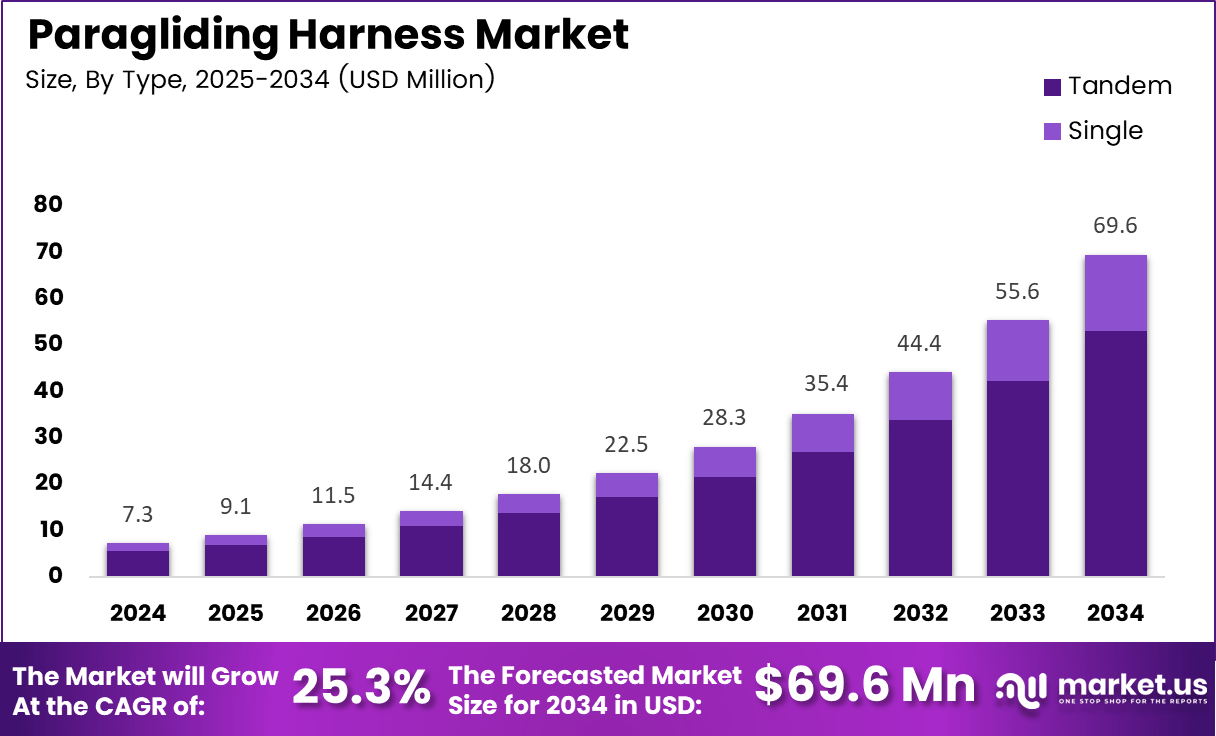
The Global Paragliding Harness Market size is expected to be worth around USD 69.6 million by 2034, from USD 7.3 million in 2024, growing at a CAGR of 25.3% during the forecast period from 2025 to 2034.
From an analyst viewpoint, the Paragliding Harness Market forms a core segment of the paragliding equipment industry, directly influencing pilot safety, comfort, and in flight control. A paragliding harness functions as the pilot’s seating and restraint system, supporting posture, integrating safety mechanisms, and enabling stable interaction with the wing during all flight phases.
From a market definition perspective, paragliding harnesses include standard, pod, cocoon, and ultra light designs engineered for training, recreational flying, cross country, and competition use. Consequently, market growth aligns closely with rising participation in adventure sports tourism, supported by expanding certified flying zones and instructional schools worldwide.
Growth acceleration also reflects stronger regulatory oversight and government supported safety frameworks. According to survey, all pilots must fly with a certified harness, especially in FAI Category 1 competitions. Harnesses must meet LTF09 or EN 1651:2018 standards, while earlier certified models are no longer compliant, encouraging systematic product upgrades.
Safety driven design creates additional opportunity across the market. According to safety guidance, pilots are advised to select harnesses with substantial foam back protection, ideally within the 17–20 cm range, to improve impact absorption. This requirement supports innovation in lightweight protective materials and modular safety configurations across performance categories.
Weight and portability further influence purchasing behavior. According to manufacturer specifications and paragliding equipment manuals, ultra light harnesses weigh from a few hundred grams up to 2 kg, light harnesses range between 2–3 kg, and standard harnesses typically weigh 3–5 kg. Total packed equipment weight generally ranges from 7 kg to over 15 kg.
Performance considerations also shape market demand. According to paragliding performance references, harness aerodynamics indirectly influence system efficiency, supporting glide ratios from 9.3:1 for recreational wings to over 11.3:1 for performance models. Pod harness designs with active aerodynamic fins increasingly appeal to cross country and competitive pilots.
Finally, speed control integration strengthens transactional demand. According to CIVL technical guidance, speed bar systems integrated into harnesses allow pilots to accelerate from trim speeds of 32–40 km/h to maximum ranges of 55–70 km/h on high end wings. Collectively, regulatory enforcement, safety priorities, and performance optimization sustain long term Paragliding Harness Market growth.
Key Takeaways
- The Global Paragliding Harness Market is projected to expand from USD 7.3 million in 2024 to USD 69.6 million by 2034, registering a strong CAGR of 25.3% during 2025–2034.
- Single harnesses dominate the market by type, accounting for a leading share of 76.3%, supported by widespread adoption among solo recreational and training pilots.
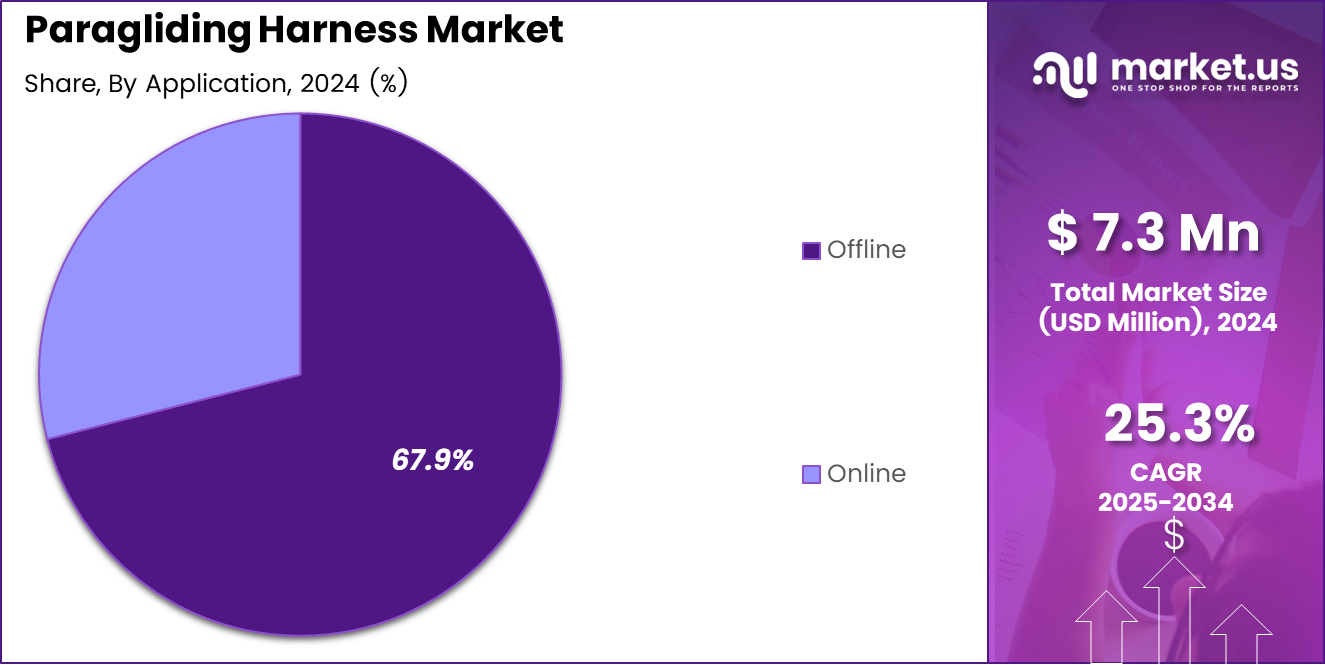
- Offline distribution channels lead by application with a share of 67.9%, driven by the need for physical fitting, safety verification, and expert guidance.
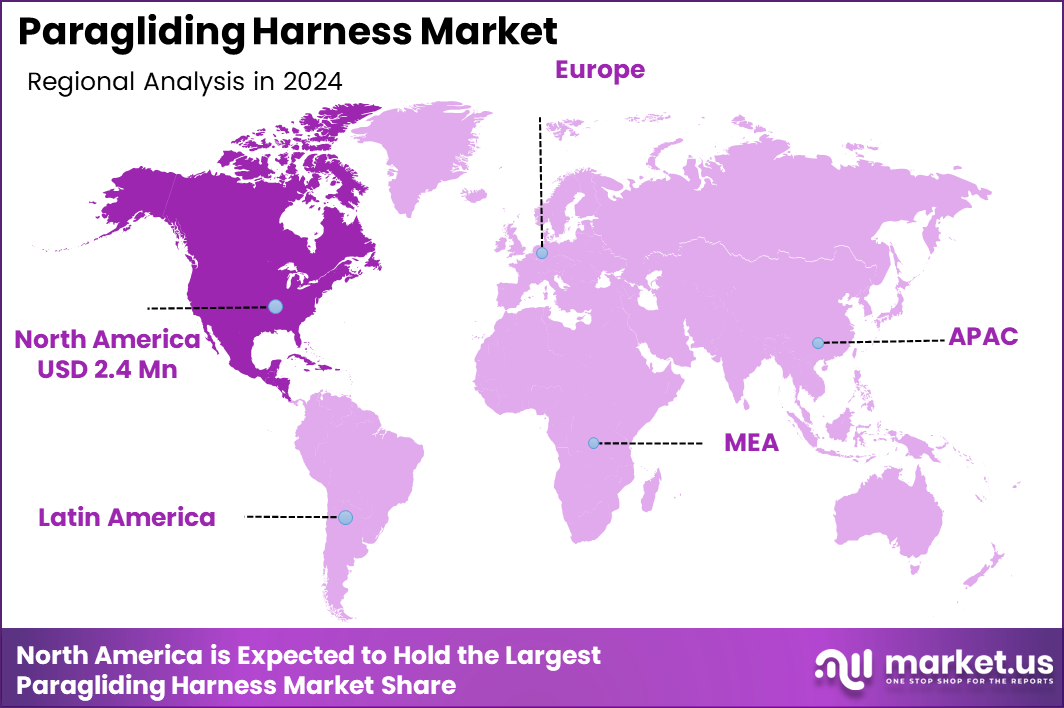
- North America represents the dominant region with a market share of 33.2%, with the regional market valued at USD 2.4 million in 2024.
- Asia Pacific is emerging as a high growth region, supported by rising adventure tourism, expanding paragliding hubs, and increasing safety compliance awareness.
By Type Analysis
Single harness dominates with 76.3% due to its suitability for solo pilots and widespread recreational adoption.
In 2024, Single held a dominant market position in the By Type Analysis segment of Paragliding Harness Market, with a 76.3% share. This dominance is supported by rising participation in recreational paragliding and solo adventure sports. Additionally, pilots prefer lightweight, ergonomic designs that improve comfort, control, and safety during extended flights.
Tandem harnesses serve instructors and commercial operators offering dual flights for training and tourism activities. This sub-segment benefits from growing adventure tourism and certified flight schools. However, higher equipment costs, stricter safety regulations, and limited end-user base compared to solo pilots moderate its overall market penetration.
By Application Analysis
Offline distribution dominates with 67.9% driven by hands-on product evaluation and safety-focused purchasing behavior.
In 2024, Offline held a dominant market position in the By Application Analysis segment of Paragliding Harness Market, with a 67.9% share. Specialty sports stores and training centers enable pilots to assess fit, back protection, and harness compatibility. Moreover, expert guidance and certification checks reinforce buyer confidence.
Online channels are gaining attention due to improved digital catalogs and global brand reach. Enthusiast pilots increasingly compare specifications, certifications, and reviews before purchasing. Nevertheless, concerns around sizing accuracy, safety assurance, and after-sales support continue to limit faster adoption compared to traditional offline purchasing routes.
Key Market Segments
By Type
- Single
- Tandem
By Application
- Offline
- Online
Drivers
Rising Participation in Recreational and Adventure Air Sports Drives Market Growth
Rising participation in recreational and adventure air sports continues to drive the paragliding harness market steadily. More individuals seek outdoor experiences that combine thrill with skill-based learning. As paragliding becomes popular across age groups, demand for reliable and comfortable harness systems increases consistently.
Increasing demand for ergonomic and lightweight pilot support systems further supports market growth. Pilots prefer harnesses that reduce fatigue and improve body posture during long flights. Lightweight materials also enhance maneuverability, making modern harness designs more appealing for both beginners and experienced flyers.
Growing adoption of advanced safety certifications in paragliding equipment strengthens buyer confidence. Certified harnesses meeting international safety standards attract training schools and licensed pilots. This focus on safety encourages structured purchasing decisions and raises overall quality expectations within the market.
Expansion of paragliding training schools and tandem flight operations adds sustained demand. Training centers require multiple certified harnesses for daily use, while tandem operators invest in durable designs. These institutional buyers create repeat demand, supporting stable growth across regions.
Restraints
High Replacement and Upgrade Costs Limit Market Expansion
High replacement and upgrade costs for premium harness systems restrain market growth. Advanced materials, safety features, and certifications increase product prices. Many recreational pilots delay upgrades, extending usage cycles and slowing replacement demand, especially in cost-sensitive regions.
Demand remains sensitive to weather dependent flying conditions. Paragliding activity reduces during unfavorable seasons, directly affecting equipment purchases. Irregular flying opportunities discourage frequent investments in new harnesses, limiting consistent sales throughout the year.
Limited accessibility of certified paragliding sites also restricts market reach. Several regions lack approved launch and landing zones, reducing participation levels. Without proper infrastructure, potential pilots hesitate to invest in professional-grade harness systems.
Additionally, regulatory approvals for flying locations often involve lengthy processes. These constraints slow the development of new paragliding hubs, indirectly affecting harness demand across emerging markets.
Growth Factors
Development of Modular Harness Designs Creates New Growth Opportunities
Development of modular harness designs presents strong growth opportunities. Pilots increasingly seek adaptable systems suitable for cross-country and acro flying. Modular designs allow customization, extending product lifespan and appealing to advanced users seeking performance flexibility.
Growing interest in paragliding tourism across emerging mountain destinations supports market expansion. Adventure tourism operators invest in certified harnesses for guided flights. As new destinations promote air sports, equipment demand rises alongside tourist participation.
Integration of smart sensors for flight data and safety monitoring opens new value segments. Harnesses with embedded tracking and performance analytics attract tech-oriented pilots. These features improve safety awareness and flight optimization.
Such innovations encourage premium pricing strategies and attract experienced flyers, helping manufacturers differentiate products and expand revenue opportunities.
Emerging Trends
Shift Toward Ultra Lightweight Materials Shapes Market Trends
The shift toward ultra lightweight materials influences current market trends. Pilots favor harnesses that reduce overall load during long-duration flights. Advanced fabrics and composites improve comfort without compromising safety standards.
Increasing use of aerodynamic pod harnesses supports performance flying trends. Competitive pilots prefer streamlined designs that reduce drag and improve glide efficiency. This trend drives innovation in shape, structure, and material engineering.
Adoption of eco friendly fabrics and sustainable manufacturing practices gains attention. Environmentally conscious pilots and brands focus on reducing material waste and carbon impact, aligning paragliding equipment with broader sustainability goals.
Rising popularity of compact harness designs benefits hike and fly enthusiasts. Lightweight, foldable harnesses support quick ascent activities, reinforcing demand for minimalist yet certified designs.
Regional Analysis
North America Dominates the Paragliding Harness Market with a Market Share of 33.2%, Valued at USD 2.4 Million
North America accounted for a dominant 33.2% share of the Paragliding Harness Market, with the regional market valued at USD 2.4 million, supported by a well established adventure sports ecosystem and high compliance with certified aviation safety standards. Strong participation in recreational and competitive paragliding, along with organized training infrastructure, continues to sustain steady replacement and upgrade demand. The presence of regulated flying sites further reinforces consistent market performance.
Europe Paragliding Harness Market Trends
Europe represents a mature and technically advanced market, driven by a strong paragliding culture and widespread adoption of certified equipment standards. Strict adherence to safety regulations and competitive flying events supports demand for high performance and compliant harness systems. Continuous product upgrades aligned with evolving certification norms contribute to stable regional growth.
Asia Pacific Paragliding Harness Market Trends
Asia Pacific is emerging as a high growth region due to expanding adventure tourism and increasing participation in recreational air sports. Countries with mountainous terrain and developing paragliding hubs are witnessing rising demand for entry level and lightweight harnesses. Growing awareness of safety compliance is expected to further support regional adoption.
Middle East and Africa Paragliding Harness Market Trends
The Middle East and Africa market is gradually expanding, supported by adventure tourism initiatives and the development of new flying destinations. Demand remains concentrated in regions with established paragliding schools and organized events. Increasing focus on pilot safety and certified equipment usage is expected to drive gradual market expansion.
Latin America Paragliding Harness Market Trends
Latin America shows moderate growth, driven by rising interest in adventure sports and favorable geographic conditions for paragliding. Expanding training programs and tourism focused flying sites support demand for certified harness systems. Market growth remains steady as safety awareness and structured paragliding activities continue to improve across the region.
Key Regions and Countries
North America
- US
- Canada
Europe
- Germany
- France
- The UK
- Spain
- Italy
- Rest of Europe
Asia Pacific
- China
- Japan
- South Korea
- India
- Australia
- Rest of APAC
Latin America
- Brazil
- Mexico
- Rest of Latin America
Middle East & Africa
- GCC
- South Africa
- Rest of MEA
Key Paragliding Harness Company Insights
Swing continues to maintain a solid position in the global paragliding harness market in 2024 by focusing on pilot safety and comfort-driven engineering. The company emphasizes certified protection systems and ergonomic seating geometry. Its harness portfolio appeals strongly to recreational and intermediate pilots seeking durability, stability, and reliable back protection.
Advance is recognized in 2024 for its premium design philosophy and precision manufacturing approach. The company prioritizes lightweight construction combined with high safety standards, supporting long-duration and cross-country flights. Advance harnesses attract experienced pilots who value aerodynamic efficiency, refined materials, and consistent performance across diverse flying conditions.
Ozone strengthens its market presence through innovation-led product development and pilot-centric design. In 2024, the company focuses on harnesses optimized for performance flying and competition use. Its designs emphasize weight reduction, streamlined profiles, and modular configurations, appealing to pilots aiming for speed, agility, and advanced flight control.
Niviuk Paragliders continues to grow its influence by offering versatile harness solutions that balance comfort and performance. In 2024, the company addresses both recreational and advanced pilot needs through adaptable designs and certified safety systems. Its focus on usability and progressive design supports strong adoption across training schools and independent pilots.
Top Key Players in the Market
- Swing
- Advance
- Ozone
- Niviuk Paragliders
- Gin Gliders
- U-Turn
- Mac Para
- Nova
- Nervures
- Fly Neo
Recent Developments
- In May 2024, EDELRID announced its new product lineup, which includes advancements relevant to the paragliding harness category, emphasizing lightweight construction, ergonomic load distribution, and enhanced safety integration.In 2025,
- In 2025, U-Turn Paragliders introduced the Passenger 3 Tandem Glider, a flagship tandem wing designed to deliver improved handling, higher power efficiency, and enhanced control for professional tandem pilots.
Report Scope
Report Features Description Market Value (2024) USD 7.3million Forecast Revenue (2034) USD 69.6 million CAGR (2025-2034) 25.3% Base Year for Estimation 2024 Historic Period 2020-2023 Forecast Period 2025-2034 Report Coverage Revenue Forecast, Market Dynamics, Competitive Landscape, Recent Developments Segments Covered By Type (Single, Tandem), By Application (Offline, Online) Regional Analysis North America (US and Canada), Europe (Germany, France, The UK, Spain, Italy, and Rest of Europe), Asia Pacific (China, Japan, South Korea, India, Australia, and Rest of APAC), Latin America (Brazil, Mexico, and Rest of Latin America), Middle East & Africa (GCC, South Africa, and Rest of MEA) Competitive Landscape Swing, Advance, Ozone, Niviuk Paragliders, Gin Gliders, U-Turn, Mac Para, Nova, Nervures, Fly Neo Customization Scope Customization for segments, region/country-level will be provided. Moreover, additional customization can be done based on the requirements. Purchase Options We have three licenses to opt for: Single User License, Multi-User License (Up to 5 Users), Corporate Use License (Unlimited User and Printable PDF) 
-
-
- Swing
- Advance
- Ozone
- Niviuk Paragliders
- Gin Gliders
- U-Turn
- Mac Para
- Nova
- Nervures
- Fly Neo
Our Clients

- 171474
- Dec 2025






