Market Overview
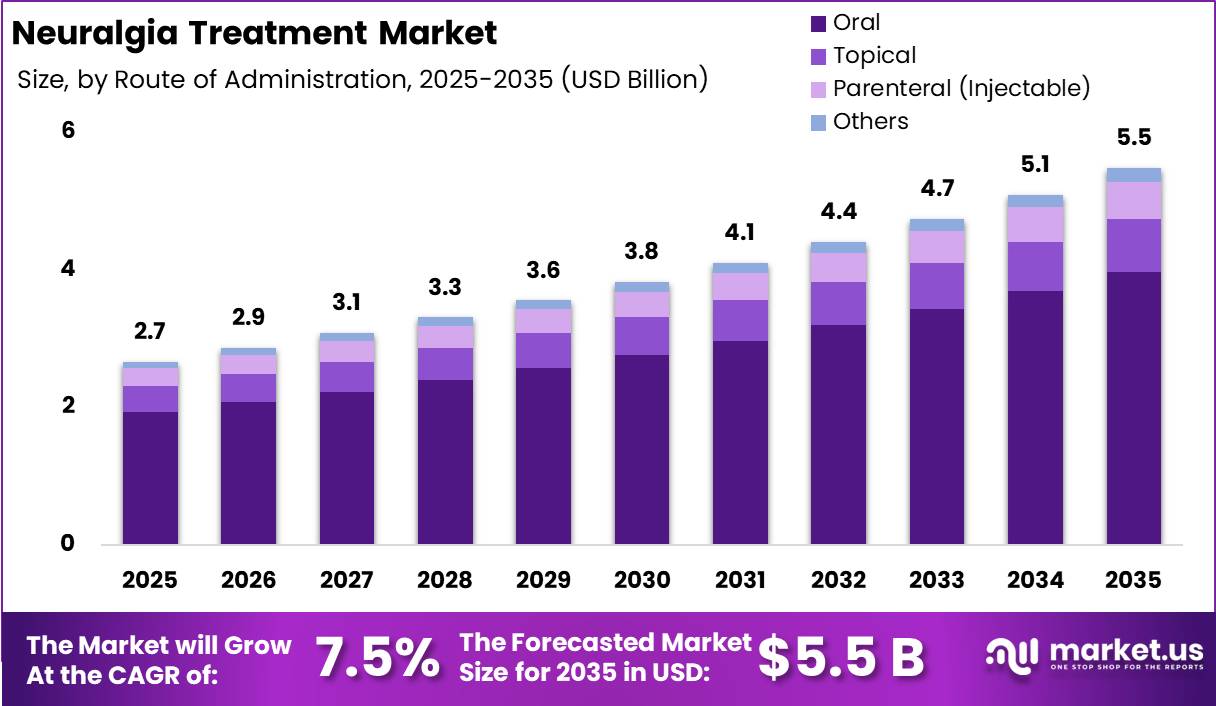
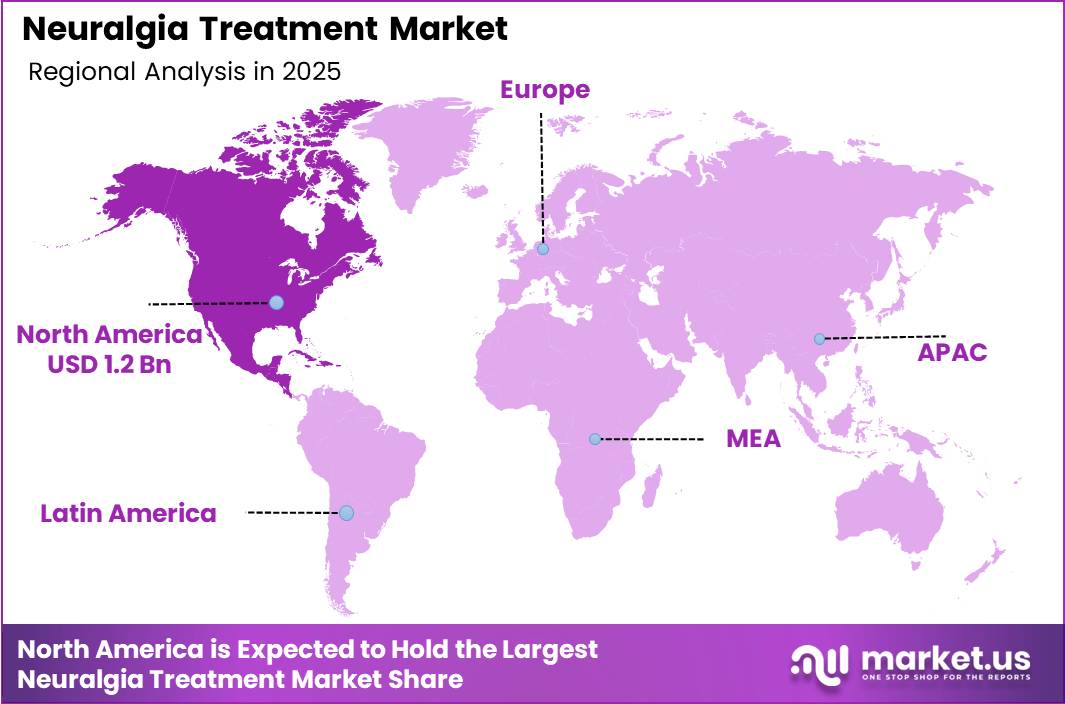
The Global Neuralgia Treatment Market size is expected to be worth around US$ 5.5 Billion by 2035 from US$ 2.7 Billion in 2025, growing at a CAGR of 7.5% during the forecast period from 2026 to 2035. In 2025, North America led the market, achieving over 44.2% share with a revenue of US$ 1.2 Billion.
Neuralgia treatment refers to the medical management of chronic nerve pain caused by damage, irritation, or dysfunction of peripheral or cranial nerves. Common forms include trigeminal neuralgia, postherpetic neuralgia, diabetic peripheral neuropathy, occipital neuralgia, and glossopharyngeal neuralgia.
The growing prevalence of diabetes, an aging population, increasing survival following cancer therapies, and a higher incidence of herpes zoster infections are contributing to the rising demand for effective neuralgia management worldwide.
According to the U.S. Centers for Disease Control and Prevention (CDC), about 38.4 million Americans have diabetes, a major risk factor for painful diabetic neuropathy. Meanwhile, the World Health Organization (WHO) estimates that more than 1 in 6 people globally will be aged 60 years or older by 2030, increasing the population vulnerable to neuropathic pain disorders.
Current treatment approaches combine pharmacological and non-pharmacological strategies. First-line therapies commonly include anticonvulsants such as gabapentin and pregabalin, antidepressants including tricyclic antidepressants and serotonin-norepinephrine reuptake inhibitors (SNRIs), topical agents, and selected interventional procedures for patients with refractory pain.
Clinical guidelines from trusted organizations such as the National Institute for Health and Care Excellence (NICE) and the American Academy of Neurology emphasize individualized treatment based on pain severity, underlying cause, and patient tolerance.
Continuous advances in neuromodulation technologies, targeted drug development, and improved diagnostic capabilities are expanding treatment options for patients with chronic neuropathic pain. Increasing healthcare awareness, improved access to specialized pain management services, and ongoing clinical research are expected to support sustained growth in the neuralgia treatment landscape while improving long-term patient outcomes and quality of life.
Key Takeaways
- Market Size: The Neuralgia Treatment Market size was US$ 2.7 billion in 2025. The market is estimated to grow to US$ 5.5 billion by 2035.
- Market Share: The Compound Annual Growth Rate (CAGR) of the market from 2026 to 2035 will be 7.5%.
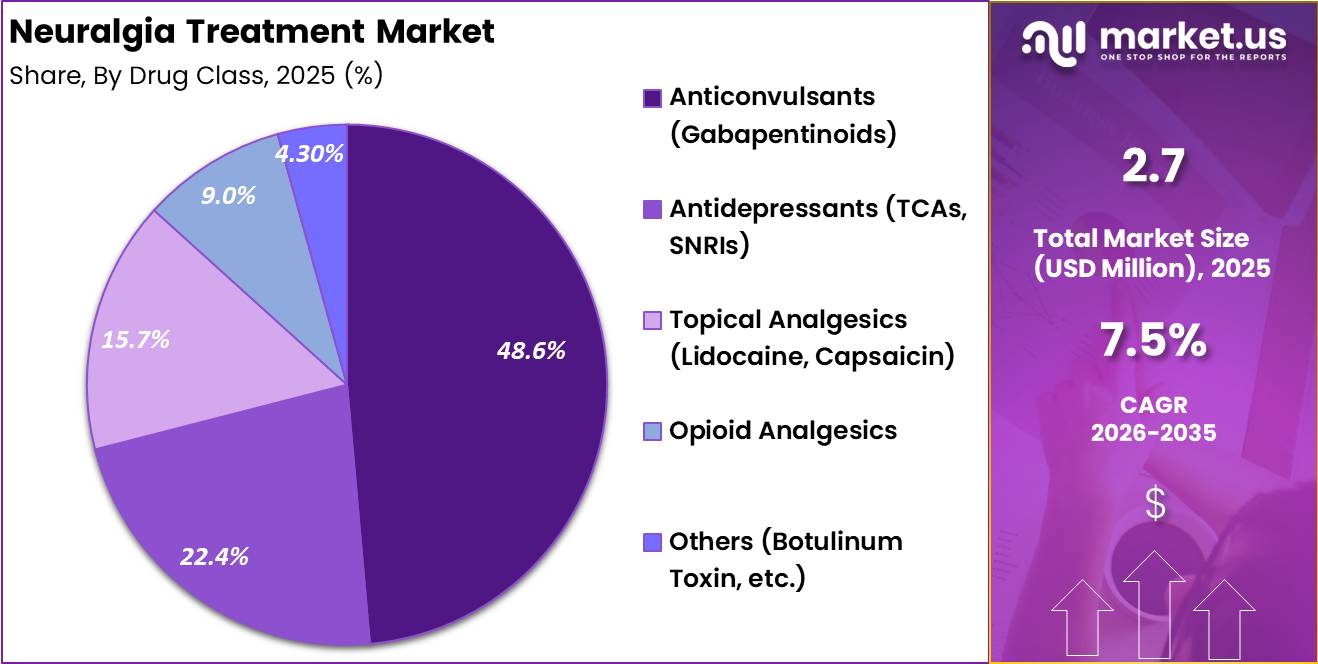
- By Drug Class: Anticonvulsants (Gabapentinoids) have the largest market share, accounting for 48.6% of total sales.
- By Route of Administration: Oral, accounting for 72.4% of total revenue.
- By end user:hospitals lead the segment, accounting for 52.6% of total revenue.
- Regional: North America is the dominant regional market, accounting for 44.2% of global sales.
Drug Class Analysis
The Anticonvulsants (Gabapentinoids) segment dominated the Neuralgia Treatment Market, accounting for 48.6% of the market share in 2025. This leadership is driven by the widespread use of gabapentin and pregabalin as first-line therapies for neuropathic pain, supported by established clinical guidelines and strong physician confidence.
These medications effectively reduce abnormal nerve signaling while offering a favorable balance between efficacy and tolerability for long-term pain management. Their broad use across conditions such as postherpetic neuralgia, diabetic neuropathy, and trigeminal neuralgia has strengthened their market position.
Growing awareness of neuropathic pain disorders, increasing diagnosis rates, and expanding access to generic formulations have further accelerated adoption globally. Continuous research into optimized dosing strategies and combination therapies also supports sustained demand for this drug class.
The Antidepressants (TCAs, SNRIs) held 21.4% of the market, reflecting their effectiveness in chronic neuropathic pain through modulation of pain pathways. Topical Analgesics (Lidocaine, Capsaicin) represented 13.2%, benefiting patients seeking localized pain relief with fewer systemic adverse effects.
Opioid Analgesics accounted for 10.1%, primarily reserved for severe or refractory cases due to safety concerns and prescribing restrictions. The Others (Botulinum Toxin, etc.) segment captured 6.7%, supported by increasing clinical evaluation of alternative therapies for treatment-resistant neuralgia and personalized pain management approaches.
Route of Administration Analysis
The Oral route of administration dominated the Neuralgia Treatment Market with a 72.4% market share in 2025. Oral medications remain the preferred treatment option because they provide convenient, non-invasive administration and are well suited for long-term management of chronic neuropathic pain.
Commonly prescribed oral therapies, including gabapentinoids and antidepressants, are widely available, cost-effective, and supported by strong clinical evidence for treating various neuralgia conditions. The ease of self-administration enhances patient adherence, particularly among individuals requiring continuous therapy.
Furthermore, healthcare providers favor oral formulations due to simplified prescribing practices and broad accessibility through retail and hospital pharmacies. The growing availability of generic products has also improved affordability, reinforcing the dominance of this segment across developed and emerging healthcare markets.
The Topical segment accounted for 14.2% of the market, driven by increasing demand for localized pain relief with minimal systemic exposure, especially among elderly patients and those with medication-related contraindications.
Parenteral (Injectable) therapies represented 9.8%, mainly utilized in hospital settings for severe or refractory neuralgia cases requiring rapid intervention. The Others segment contributed 3.6%, including specialized delivery systems and emerging formulations designed to improve therapeutic outcomes, patient convenience, and treatment personalization for complex neuropathic pain disorders.
End User Analysis
The Hospitals segment dominated the Neuralgia Treatment Market, accounting for 52.6% of the market share in 2025. Hospitals remain the primary centers for diagnosing and managing complex neuralgia disorders due to their access to multidisciplinary specialists, advanced diagnostic technologies, and comprehensive pain management services.
Patients with severe neuropathic pain, treatment-resistant conditions, or underlying neurological disorders frequently require hospital-based evaluation and individualized treatment plans. Hospitals also play a central role in administering injectable therapies, performing interventional pain procedures, and monitoring patients with multiple comorbidities.
Increasing healthcare investments, improved neurological care infrastructure, and rising referrals to specialized pain clinics within hospital systems continue to support this segment’s leadership. Moreover, hospitals actively participate in clinical research and the adoption of innovative therapies, further strengthening their position in the market.
Specialty clinics represent another important end-user segment, providing focused outpatient management, medication optimization, and long-term follow-up for patients with chronic neuralgia. These facilities are gaining popularity because they offer specialized expertise, shorter waiting times, and personalized treatment strategies.
Ambulatory surgical centers also contribute to market growth by supporting minimally invasive pain management procedures and nerve block interventions. Other end users, including rehabilitation centers and home healthcare providers, continue to expand their role as healthcare systems increasingly emphasize integrated, patient-centered care, improving treatment accessibility and long-term disease management outcomes.
Market Segmentations
By Drug Class
- Anticonvulsants (Gabapentinoids)
- Antidepressants (TCAs, SNRIs)
- Topical Analgesics (Lidocaine, Capsaicin)
- Opioid Analgesics
- Others (Botulinum Toxin, etc.)
By Route of Administration
- Oral
- Topical
- Parenteral (Injectable)
- Others
By End User
- Hospitals
- Specialty Clinics (Pain Management)
- Homecare Settings
- Others
Driver
Non-Oral Innovations Expanding Neuropathic Pain Treatment Access
Treatment innovation since 2020 has changed the market from an oral-drug-dominant model toward a broader modality stack: the FDA label for Qutenza covers neuropathic pain associated with postherpetic neuralgia and diabetic peripheral neuropathy of the feet, while recent clinical reviews note five FDA-approved treatment categories for painful diabetic peripheral neuropathy, including three oral medicines, one topical capsaicin system, and low- and high-frequency spinal cord stimulation devices.
On the device side, FDA-cleared systems from Nevro in 2021, Medtronic in 2022, and Boston Scientific in 2023 expanded the interventional set for chronic painful diabetic neuropathy, and published reviews report that around 80% of patients can achieve at least 50% pain reduction during a successful spinal cord stimulation trial.
This driver adds about 1.4 % points because it enlarges the treatable population beyond patients who tolerate first-line oral therapy, improves physician willingness to escalate care earlier, and supports premium pricing through procedure-linked or device-linked economics rather than only generic prescription volume.
Strategically, it shifts business models toward hybrid recurring revenue streams that include device implantation, programming, maintenance, and specialist follow-up, which can raise lifetime value per patient well above that of low-cost anticonvulsant treatment alone.
US reimbursement policy became a direct growth catalyst when CMS established temporary additional payments for certain non-opioid pain relief treatments in hospital outpatient departments and ambulatory surgery centers, with the program running from January 1, 2026 through December 31, 2027.
CMS states that qualifying products can receive payment once eligibility is determined, with the earliest effective payment date being January 1, 2026, creating a near-term economic bridge for non-opioid pain products and relevant outpatient interventions.
This supports roughly 1.1 % points of CAGR because reimbursement is often the gating variable for adoption of higher-cost non-oral treatments: once outpatient centers can better recover acquisition and administration costs, referral friction drops, formulary resistance weakens, and providers can justify stocking and offering newer pain options.
The impact is heavily US-centric but commercially powerful, as neuralgia treatment increasingly competes on opioid-sparing value, ambulatory throughput, and procedure contribution margin rather than only on clinical efficacy.
| Driver | (~) % Impact on CAGR Forecast | Geographic Relevance | Impact Timeline |
|---|---|---|---|
| Aging-linked rise in PHN and facial neuralgia patients | +1.3% | North America core, EU, Japan, urban China | Medium term (2-4 years) |
| Diabetes-driven expansion of painful neuropathy treatment pool | +1.6% | US core, EU5, China, India, Gulf states | Medium term (2-4 years) |
| FDA-cleared non-oral and neuromodulation options widening treated population | +1.4% | US core, selective EU adoption, developed APAC | Short term (≤ 2 years) |
| CMS non-opioid outpatient payment support improving procedure economics | +1.1% | US hospital outpatient and ASC channels | Short term (≤ 2 years) |
| Imaging-led diagnosis and referral improving conversion to intervention | +0.8% | North America, EU, South Korea, Japan, tier-1 China | Medium term (2-4 years) |
| Shift from chronic oral therapy to targeted interventional pathways | +1.0% | US core, Western Europe, advanced APAC | Long term (≥ 4 years) |
Challenge
Treatment Adherence Barriers Limiting Neuralgia Therapy Market Expansion
Suboptimal adherence to neuralgia pharmacotherapies and interventional regimens constitutes a persistent operational challenge because many first‑line agents are associated with side‑effect burdens and dosing complexities that drive discontinuation rates of 30–50% within 12 months, even when initial pain relief rates exceed 80–90% in trigeminal neuralgia cohorts.
Real‑world data on neuropathic pain indicate that a sizable proportion of patients cycle through 3–4 drug classes over a 24‑month period, with median daily dose intensity trailing guideline recommendations by 20–30%, and up to 40% of patients reporting either inadequate pain relief (≥4 on 0–10 scales) or functional impairment despite being “on treatment.”
This adherence friction depresses lifetime value per treated patient by roughly 15–25%, constrains the sustained utilization of higher‑value formulations (e.g., extended‑release variants, combination therapies), and limits uptake of neuromodulation and interventional options where referral completion rates from pharmacologic failure cohorts remain below 30–35%, effectively trimming about 1.0 % point from achievable market CAGR.
Strategically, stakeholders must address this challenge through multi‑modal adherence programs that combine digital monitoring (e.g., symptom diaries with weekly data points), pharmacist‑led titration clinics targeting 10–15% improvements in dose persistence, and side‑effect management pathways aimed at cutting discontinuations by 10–20%.
However, embedding such models into routine practice across aging urban populations—where polypharmacy and comorbidity rates (e.g., diabetes, cardiovascular disease) exceed 30–40%—requires long‑term behavioral and systems change over ≥4 years, including reimbursement for adherence services, clinically validated digital tools, and robust patient‑reported outcome data feeds into payers’ value‑based contracts.
| Challenge | (~) % CAGR Friction Drag | Geographic Relevance | Mitigation Horizon |
|---|---|---|---|
| Fragmented neuralgia diagnosis | -1.2% | North America, EU, East Asia | Medium term (2–4 years) |
| Suboptimal treatment adherence | -1.0% | Global urban & aging cohorts | Long term (≥ 4 years) |
| Limited specialist & pain capacity | -1.3% | EU public systems, US rural, EMs | Long term (≥ 4 years) |
| Heterogeneous payer & coding regimes | -0.8% | US, EU multi-payer, EM insurance | Medium term (2–4 years) |
| Slow adoption of advanced neuromodulation | -0.9% | High-income tertiary centers | Long term (≥ 4 years) |
| R&D translation and data integration lag | -0.7% | Global research hubs & networks | Medium term (2–4 years) |
Restraints
High Cost Barriers Restricting Neuromodulation Therapy Adoption
The high upfront and lifecycle cost of neuromodulation and interventional therapies sharply limits penetration into eligible neuralgia populations, despite strong evidence for spinal cord stimulation and other devices in refractory neuropathic pain.
Implantable neuromodulation systems can carry list prices in the tens of thousands of dollars, and when bundled with procedure fees, imaging, and follow‑up programming, the total episode cost can exceed 25,000–40,000 USD per patient in high‑income markets, far above the cumulative 2,000–5,000 USD cost of multi‑year pharmacotherapy.
Even where payers recognize long‑term cost offsets from reduced hospitalizations and opioid use, budget caps and procedural quotas limit annual implants to a small fraction of the eligible pool—often fewer than 5–10 devices per 100,000 inhabitants per year in many public systems—creating a structural wedge between clinical need and realized volume.
In addition, device replacement cycles and the need for specialized surgical teams constrain throughput, extending waiting lists by 6–18 months in some centers and discouraging referrals from community physicians who perceive neuromodulation as difficult to access.
For manufacturers, the combination of high CapEx per device, complex capital sales cycles, and uneven reimbursement means that revenue is concentrated in a limited set of tertiary hubs, making market expansion into new geographies costly and risky and increasing exposure to any downward adjustments in procedure tariffs.
This capital intensity and channel concentration suppress the neuromodulation segment’s contribution to overall neuralgia market growth by around 0.9 % points of CAGR, as device volumes grow more slowly than the underlying prevalence of refractory cases and as companies temper investments in next‑generation platforms or localized manufacturing that could otherwise reduce unit costs.
| Restraint | (~) % Impact on CAGR Forecast | Geographic Relevance | Impact Timeline |
|---|---|---|---|
| Underdiagnosis & late referral | -1.2% | North America, EU, APAC urban | Long term (≥ 4 years) |
| Reimbursement & formulary barriers | -1.0% | North America core, EU, Japan | Medium term (2-4 years) |
| High cost of neuromodulation | -0.9% | North America, EU5, high-income APAC | Long term (≥ 4 years) |
| Safety & regulatory scrutiny on analgesics | -0.7% | North America, EU, Latin America | Medium term (2-4 years) |
| Supply chain & manufacturing bottlenecks | -0.5% | APAC corridors, Latin America, MEA | Short term (≤ 2 years) |
| Workforce & care pathway constraints | -0.5% | Global, esp. LMICs | Long term (≥ 4 years) |
Opportunity
Home Neuromodulation Expanding Neuralgia Treatment Accessibility
Home neuromodulation and wearable devices offer a pathway to expand neuralgia treatment beyond pharmacotherapy by bringing spinal cord stimulation, peripheral nerve stimulation, and noninvasive neuromodulation closer to the home, thereby capturing patients who are either refractory to or intolerant of systemic medications.
Neuromodulation devices for chronic pain more broadly are projected to grow faster than traditional analgesic markets, with estimates of mid- to high-single-digit to low-double-digit annual growth driven by technological advances and expanding indications, but current neuralgia market baselines largely treat neuromodulation as a niche, procedure-based segment confined to specialized centers.
By 2033–2035, miniaturized devices, improved battery life, cloud connectivity, and AI-assisted stimulation algorithms could allow 15–20% of currently pharmacotherapy-dependent neuralgia patients in high-income regions to access home-based or minimally invasive neuromodulation solutions, particularly for trigeminal neuralgia and other localized neuralgias where targeted modulation has shown high response rates.
If device ASPs in the 1,500–3,000 dollar range and annual subscription or data services of 200–400 dollars per patient are layered on top, device–software ecosystems could add several hundred million dollars in incremental revenue to the neuralgia treatment value chain by 2035, while reducing long-term medication use and improving adherence.
Gross margins in devices and associated digital services frequently exceed 60%, implying significant margin accretion versus generic pharmaceuticals, and payers may accept higher upfront costs if real-world data demonstrate reductions in hospital visits and improved functional outcomes.
This remains an opportunity rather than a baseline driver because current guidelines and payer policies position neuromodulation as a third-line or rescue therapy adopted by a small minority of refractory patients, and most device roadmaps are oriented toward broader chronic pain rather than neuralgia-specific, at-home solutions, leaving room for focused portfolio and go-to-market strategies targeting neuralgia indications explicitly.
| Opportunity | (~) % Potential CAGR Upside | Geographic Relevance | Execution Window |
|---|---|---|---|
| Digital neuralgia care platforms | +2.0% | North America, EU, urban APAC | Short term |
| Peri-diabetic & oncology neuropathy programs | +1.8% | North America, Europe, East Asia | Short–medium term |
| Home neuromodulation & wearables | +2.3% | North America, EU, high-income APAC | Medium term |
| Precision phenotyping & biomarker-driven trials | +1.5% | US, EU5, Japan | Medium–long term |
| Integrated behavioral–pharmacologic bundles | +1.2% | North America, Europe | Short–medium term |
| Emerging-market step-care networks | +1.7% | Latin America, South Asia, Africa | Long term |
Regional Analysis
In 2025, North America led the market, achieving over 44.2% share with a revenue of US$1.2 billion.
North America Regional Analysis
In 2025, North America region’s leadership is supported by a high prevalence of chronic neuropathic pain disorders, including trigeminal neuralgia, postherpetic neuralgia, diabetic peripheral neuropathy, and chemotherapy-induced nerve pain.
An aging population, rising incidence of diabetes, and increasing survival rates among cancer patients continue to expand the patient pool requiring long-term pain management. Strong healthcare infrastructure, widespread access to neurologists and pain specialists, and favorable reimbursement policies further strengthen market growth across the United States and Canada.
The United States contributes the majority of regional revenue due to extensive adoption of evidence-based treatment guidelines, availability of branded and generic anticonvulsants, antidepressants, topical analgesics, and interventional pain therapies.
Continuous investments in neuroscience research by leading academic institutions, pharmaceutical companies, and government agencies support the development of novel non-opioid pain therapies and advanced neuromodulation technologies.
Regulatory oversight from the U.S. Food and Drug Administration (FDA) ensures the introduction of innovative and safe treatment options, while ongoing clinical trials accelerate therapeutic advancements. Additionally, increasing awareness of chronic pain management, expanding telemedicine services, and multidisciplinary pain clinics have improved diagnosis and treatment accessibility.
These factors collectively position North America as the leading regional market and are expected to sustain its dominance throughout the forecast period, driven by continuous innovation, strong healthcare spending, and growing demand for effective long-term neuralgia management solutions.
Key Regions and Countries
North America
- The US
- Canada
Europe
- Germany
- France
- The U.K.
- Italy
- Spain
- Russia & CIS
- Rest of Europe
Asia Pacific
- China
- India
- Japan
- South Korea
- ASEAN
- Australia & New Zealand
- Rest of Asia Pacific
Middle East & Africa
- GCC
- South Africa
- Rest of Middle East & Africa
Latin America
- Brazil
- Mexico
- Rest of Latin America
Key Player Analysis
The global neuralgia treatment market is moderately consolidated, with a combination of multinational pharmaceutical companies and established generic drug manufacturers competing across branded and cost-effective treatment portfolios.
Market participants are focused on strengthening their positions through continuous research and development, expanded therapeutic indications, strategic collaborations, and improved patient access.
Innovation is centered on enhancing pain management efficacy, minimizing adverse effects, and developing formulations that improve treatment adherence and long-term outcomes. Competition is also evolving toward integrated care models that combine pharmaceuticals with digital patient support and multidisciplinary pain management approaches.
Leading companies in the market include Pfizer Inc. (Lyrica), GlaxoSmithKline plc, Novartis AG, Merck & Co., Inc., Eli Lilly and Company (Cymbalta), Johnson & Johnson, Teva Pharmaceutical Industries Ltd., Mylan N.V. (Viatris), Sun Pharmaceutical Industries Ltd., Dr. Reddy’s Laboratories Ltd., Cipla Inc., Lupin Limited, Hikma Pharmaceuticals PLC, Bausch Health Companies Inc., Endo International plc, and Others.
These companies are investing in R&D to develop improved neuropathic pain therapies, including extended-release formulations and novel non-opioid treatment options. Strategic partnerships with healthcare providers, research institutions, and biotechnology firms are accelerating clinical development and expanding therapeutic pipelines.
Generic manufacturers continue to intensify competition by introducing affordable alternatives, increasing market accessibility in both developed and emerging economies. Product innovation is further supported by workflow integration through digital prescription management, patient adherence programs, and real-world evidence generation.
Ecosystem-based competition is becoming increasingly important, with companies collaborating across pharmaceutical, healthcare, and technology sectors to deliver comprehensive pain management solutions and strengthen long-term market competitiveness.
Top Key Players
- Pfizer Inc. (Lyrica)
- GlaxoSmithKline plc
- Novartis AG
- Merck & Co., Inc.
- Eli Lilly and Company (Cymbalta)
- Johnson & Johnson
- Teva Pharmaceutical Industries Ltd.
- Mylan N.V. (Viatris)
- Sun Pharmaceutical Industries Ltd.
- Dr. Reddy’s Laboratories Ltd.
- Cipla Inc.
- Lupin Limited
- Hikma Pharmaceuticals PLC
- Bausch Health Companies Inc.
- Endo International plc
- Others
Recent Developments
- In January 2026, Teva Pharmaceutical Industries Ltd. reported continued expansion of its neuroscience portfolio, with strong growth of innovative products including AJOVY and AUSTEDO, while emphasizing ongoing investment in neurological disorders and future pipeline development.
- In February 2026, Viatris (formerly Mylan N.V.) announced multiple global product launches and confirmed continued investment in its pipeline following its enterprise-wide strategic review, supporting growth across branded and generic medicines, including central nervous system therapeutics.
- In June 2026, Eli Lilly and Company acquired 4E Therapeutics, a clinical-stage biotechnology company developing non-opioid chronic pain therapies based on MNK inhibitor technology, strengthening Lilly’s neuroscience and pain management pipeline that is relevant to future neuralgia treatment.
Report Scope
| Report Features | Description |
|---|---|
| Market Value (2025) | US$ 2.7 Bn |
| Forecast Revenue (2035) | US$ 5.5 Bn |
| CAGR (2026-2035) | 7.5% |
| Base Year for Estimation | 2025 |
| Historic Period | 2020-2024 |
| Forecast Period | 2026-2035 |
| Report Coverage | Revenue Forecast, Market Dynamics, Competitive Landscape, Recent Developments |
| Segments Covered | By Drug Class (Anticonvulsants (Gabapentinoids) ,Antidepressants (TCAs, SNRIs) ,Topical Analgesics (Lidocaine, Capsaicin) ,Opioid Analgesics ,Others (Botulinum Toxin, etc.)) By Route of Administration (Oral ,Topical ,Parenteral (Injectable) ,Others) By End User (Hospitals ,Specialty Clinics (Pain Management) ,Homecare Settings ,Others) |
| Regional Analysis | North America – The US, Canada; Europe – Germany, France, U.K., Italy, Spain, Russia & CIS, Rest of Europe; Asia Pacific – China, India, Japan, South Korea, ASEAN, Australia & New Zealand, Rest of Asia Pacific; Middle East & Africa – GCC, South Africa, Rest of Middle East & Africa; Latin America – Brazil, Mexico, Rest of Latin America |
| Competitive Landscape | Pfizer Inc. (Lyrica) ,GlaxoSmithKline plc ,Novartis AG ,Merck & Co., Inc. ,Eli Lilly and Company (Cymbalta) ,Johnson & Johnson ,Teva Pharmaceutical Industries Ltd. ,Mylan N.V. (Viatris) ,Sun Pharmaceutical Industries Ltd. ,Dr. Reddy’s Laboratories Ltd. ,Cipla Inc. ,Lupin Limited ,Hikma Pharmaceuticals PLC ,Bausch Health Companies Inc. ,Endo International plc ,Others |
| Customization Scope | Customization for segments, region/country-level will be provided. Moreover, additional customization can be done based on the requirements. |
| Purchase Options | We have three licenses to opt for: Single User License, Multi-User License (Up to 5 Users), Corporate Use License (Unlimited User and Printable PDF) |