


Global Motocross Equipment Market Size, Share, Growth Analysis By Product Type (Helmets, Riding Apparel, Protective Gear, Boots, Gloves, Goggles, Body Armor, Accessories), By Material Type (Composite Materials, Leather, Textile, Plastic, Metal), By End User (Recreational Riders, Professional Riders, Amateur Riders), By Distribution Channel (Specialty Stores, Online Retail, Sports Goods Stores, Direct Sales, Supermarkets and Hypermarkets), By Region and Companies - Industry Segment Outlook, Market Assessment, Competition Scenario, Statistics, Trends and Forecast 2026-2035
- Published date: Feb 2026
- Report ID: 179896
- Number of Pages: 378
- Format:
-
keyboard_arrow_up
Quick Navigation
Report Overview
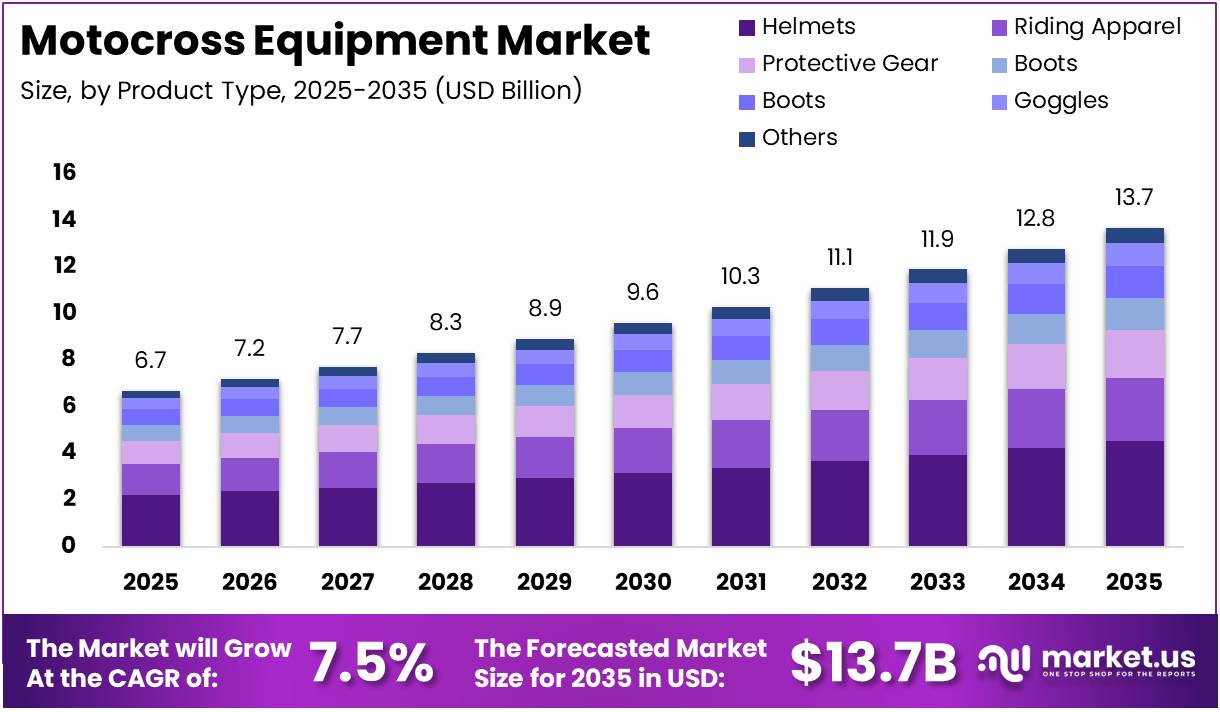
The Global Motocross Equipment Market size is expected to be worth around USD 13.7 Billion by 2035 from USD 6.7 Billion in 2025, growing at a CAGR of 7.5% during the forecast period 2026 to 2035.
The motocross equipment market covers a broad range of products used in off-road motorcycle sports. Key categories include helmets, riding apparel, protective gear, boots, gloves, goggles, body armor, and accessories. These products are designed for recreational, amateur, and professional riders engaging in competitive and casual off-road riding activities.
Rising participation in competitive and recreational off-road motorcycling is a key driver of market growth. Moreover, increasing safety awareness among riders is pushing demand for certified protective gear. Manufacturers continue to innovate with lightweight, high-impact-resistant materials that meet evolving international safety standards.
Government agencies and sporting bodies are actively supporting motocross through youth training programs and grassroots championships. Additionally, investments in off-road sports infrastructure across emerging markets are opening new growth avenues. These initiatives are bringing more riders into the sport and expanding the overall equipment consumer base significantly.
Distribution channels are also evolving rapidly. Specialty stores remain the dominant sales channel, while online retail is gaining considerable momentum. Consequently, brands are adopting omnichannel strategies to serve a wider and more diverse global audience of both professional athletes and casual motocross enthusiasts.
According to a 2024 Readers Choice Survey published by Dirt Rider Magazine, 91.3% of respondents stated they purchase motorcycle gear and hard parts. This high rate of consumer purchasing reflects strong brand loyalty and consistent equipment renewal behavior among active riders in the motocross segment.
According to a study published by PMC, 76.2% of track riders wore additional protective clothing, compared to only 15.4% of recreational riders. This significant gap presents a major opportunity for manufacturers to promote protective gear adoption among casual riders through targeted marketing and product education initiatives.
Key Takeaways
- The global Motocross Equipment Market was valued at USD 6.7 Billion in 2025 and is projected to reach USD 13.7 Billion by 2035.
- The market is expected to grow at a CAGR of 7.5% during the forecast period from 2026 to 2035.
- By Product Type, Helmets held the dominant position with a 32.5% share in 2025.
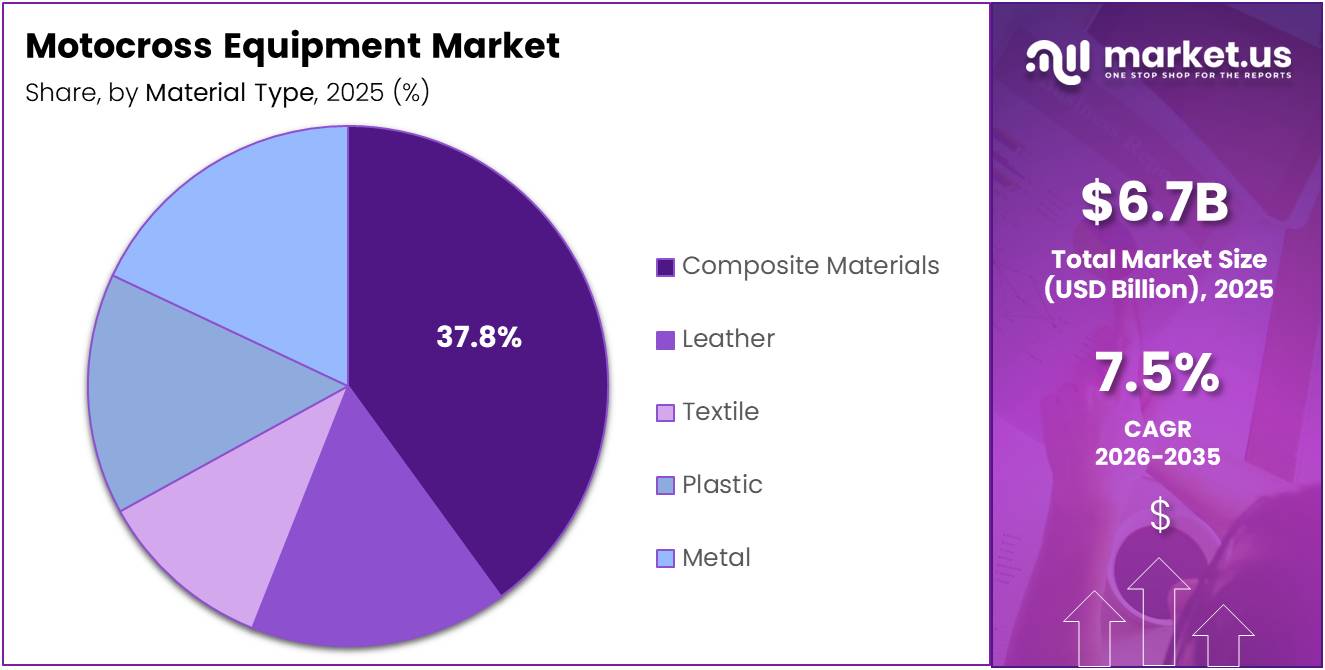
- By Material Type, Composite Materials led the segment with a 37.8% share.
- By End User, Recreational Riders accounted for the largest share at 51.3%.
- By Distribution Channel, Specialty Stores dominated with a 37.1% share.
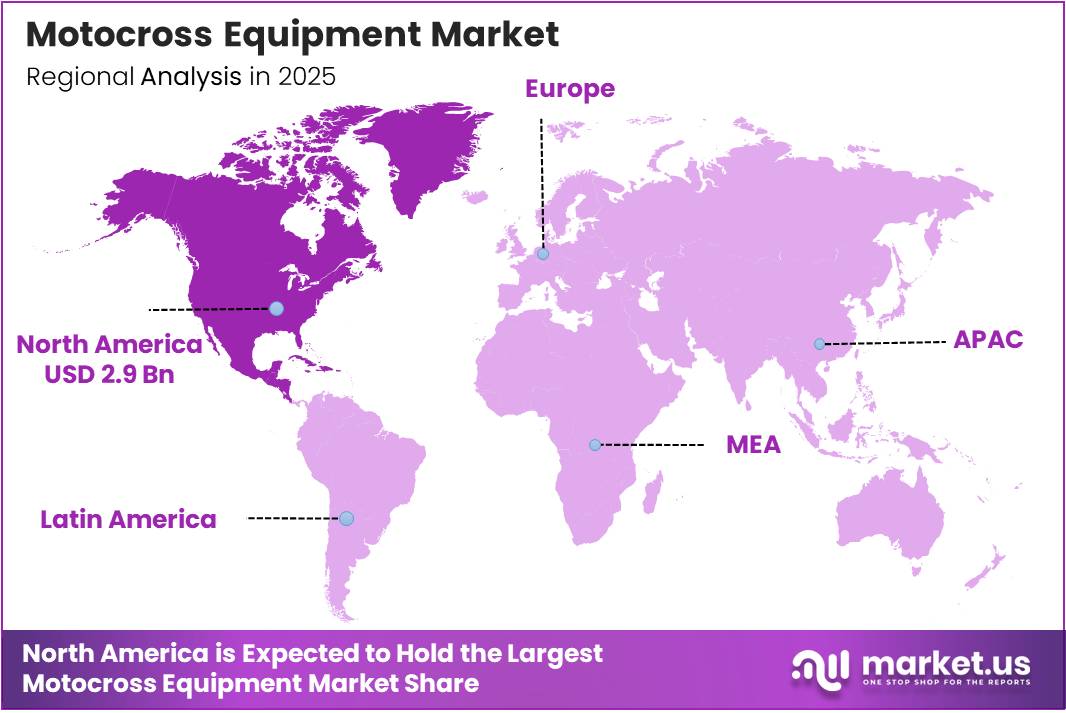
- North America led all regions with a market share of 45.30%, valued at USD 2.9 Billion.
Product Type Analysis
Helmets dominate with 32.5% due to mandatory safety standards and high replacement demand across all rider categories.
In 2025, Helmets held a dominant market position in the By Product Type segment of the Motocross Equipment Market, with a 32.5% share. Helmets remain the most critical safety component for all riders. Moreover, mandatory certification requirements and frequent replacement cycles consistently drive strong demand in this sub-segment.
Riding Apparel holds a significant position in the motocross equipment market. Purpose-built jerseys, pants, and jackets are essential for both protection and rider comfort. Additionally, the growing popularity of motocross events has increased demand for branded and performance-oriented riding apparel across all skill levels.
Protective Gear encompasses chest protectors, knee guards, elbow pads, and neck braces. Rising safety awareness among riders is accelerating adoption. However, demand tends to be stronger among professional and competitive riders who are required to meet organized event safety compliance standards.
Boots are an essential component for ankle and foot protection in motocross riding. They are engineered for durability, grip, and impact resistance. Consequently, demand is steady across all rider segments, with premium offerings gaining traction among professionals seeking enhanced performance and protection during competitive events.
Gloves offer hand protection and improved grip for riders across all conditions. They are among the most frequently purchased accessories due to wear and tear. Additionally, innovations in grip technology and breathable materials are making gloves a more essential performance item beyond basic protective use.
Goggles protect riders’ eyes from dust, debris, and harsh weather during off-road riding. Lens clarity and anti-fog features are key purchase criteria. Moreover, the rising number of youth and amateur riders joining training programs is broadening the consumer base for motocross goggles globally.
Body Armor provides critical torso and impact protection and is increasingly being adopted beyond professional use. Advancements in lightweight composite materials are improving comfort without compromising safety. Therefore, body armor is gradually becoming a standard piece of equipment across recreational and competitive riding segments.
Accessories include a range of supplementary items such as grips, handlebars, stands, and gear bags. These products support both performance and maintenance needs. Consequently, the accessories segment benefits from the broad and growing motocross rider base, with demand driven by customization and upgrade preferences.
Material Type Analysis
Composite Materials dominate with 37.8% due to superior strength-to-weight performance and compliance with advanced safety certifications.
In 2025, Composite Materials held a dominant market position in the By Material Type segment of the Motocross Equipment Market, with a 37.8% share. Composite materials offer exceptional strength, low weight, and high-impact resistance. Moreover, their use in helmets and body armor is expanding rapidly as manufacturers prioritize performance and safety compliance.
Leather remains a widely used material, particularly in boots and gloves, due to its durability and natural abrasion resistance. However, it tends to be heavier than modern alternatives. Despite this, leather maintains strong market presence among traditional riders who value its long-lasting quality and proven protective properties.
Textile materials are extensively used in riding apparel such as jerseys and pants. They offer breathability, flexibility, and cost-effectiveness. Additionally, advances in synthetic textile technology have resulted in more durable and weather-resistant fabrics, making textile-based gear increasingly popular among both recreational and competitive motocross riders.
Plastic is commonly used in protective components such as knee guards, chest protectors, and body armor shells. It provides a balance of rigidity and affordability. Consequently, plastic remains a practical choice for entry-level and mid-range products aimed at amateur riders and youth motocross program participants.
Metal is used selectively in motocross equipment, primarily in structural components, boot buckles, and frame-integrated accessories. While metal offers strength, its heavier weight limits broad application. Therefore, metal is typically reserved for specific high-stress components where durability and load-bearing capacity outweigh weight considerations.
By End User Analysis
Recreational Riders dominate with 51.3% as the largest and fastest-growing consumer base in the motocross equipment market.
In 2025, Recreational Riders held a dominant market position in the By End User segment of the Motocross Equipment Market, with a 51.3% share. Recreational riders form the largest consumer group, driving consistent demand for entry-level and mid-range equipment. Moreover, growing interest in outdoor leisure and off-road riding continues to expand this segment significantly.
Professional Riders represent a smaller but highly influential segment that drives demand for premium, high-performance equipment. Their endorsements and gear preferences significantly shape consumer trends across the broader market. Additionally, professional athletes set the benchmark for product innovation and performance standards in the motocross equipment industry.
Amateur Riders occupy the middle ground between recreational and professional users. They typically invest in mid-to-high-range equipment as they seek performance improvements. Consequently, the growth of youth programs and regional championships is expanding the amateur rider segment and presenting strong opportunities for brands targeting skill-development-focused consumers.
By Distribution Channel Analysis
Specialty Stores dominate with 37.1% due to expert product guidance, broad inventory selection, and strong rider community trust.
In 2025, Specialty Stores held a dominant market position in the By Distribution Channel segment of the Motocross Equipment Market, with a 37.1% share. Specialty stores offer expert advice, hands-on product experience, and a broad selection of certified gear. Moreover, they serve as trusted community hubs for riders seeking informed purchasing guidance.
Online Retail is the fastest-growing distribution channel in the motocross equipment market. E-commerce platforms provide access to a wide range of brands and products at competitive prices. Additionally, the convenience of home delivery and growing digital literacy among riders are accelerating the shift toward online purchasing behavior.
Sports Goods Stores serve a broad consumer base by stocking a curated selection of motocross equipment alongside other sporting goods. They attract both new and casual riders who prefer in-person shopping. Consequently, these stores play an important role in building market awareness among first-time buyers and general sports enthusiasts.
Direct Sales channels allow manufacturers to engage consumers directly through brand-owned stores, websites, and event-based sales. This model enables brands to maintain better control over pricing and customer experience. However, it is most effective for established brands with strong existing customer loyalty and brand recognition.
Supermarkets and Hypermarkets carry a limited range of motocross accessories and entry-level gear for mass-market consumers. While they lack the product depth of specialty stores, they offer high foot traffic and convenience. Therefore, they serve as an accessible entry point for new riders exploring motocross equipment for the first time.
Key Market Segments
By Product Type
- Helmets
- Riding Apparel
- Protective Gear
- Boots
- Gloves
- Goggles
- Body Armor
- Accessories
By Material Type
- Composite Materials
- Leather
- Textile
- Plastic
- Metal
By End User
- Recreational Riders
- Professional Riders
- Amateur Riders
By Distribution Channel
- Specialty Stores
- Online Retail
- Sports Goods Stores
- Direct Sales
- Supermarkets and Hypermarkets
Drivers
Rising Participation and Safety Awareness Drive Strong Growth in the Motocross Equipment Market
The motocross equipment market is primarily driven by rising participation in competitive and recreational off-road motorcycling events. More riders are joining organized leagues, regional championships, and training programs each year. Consequently, this increase in active participation is generating consistent and growing demand for quality riding equipment globally.
Increasing safety awareness among riders is significantly driving demand for certified protective gear. Riders are now more informed about injury risks and more willing to invest in high-quality helmets, body armor, and protective clothing. Moreover, certification requirements at organized events are making safety gear mandatory for broader rider participation.
The expansion of youth motocross training programs and grassroots championships is adding a new generation of riders to the market. These programs introduce young participants to the sport at an early age. Therefore, demand for entry-level and youth-specific motocross equipment continues to rise, supporting long-term market growth.
Restraints
Regulatory Barriers and Injury Concerns Limit the Growth Potential of the Motocross Equipment Market
Stringent safety and environmental regulations are creating significant barriers for motocross track operators and event organizers. Compliance with noise standards, land use restrictions, and emissions rules has led to the closure or limitation of many off-road riding facilities. Consequently, reduced track accessibility is directly limiting the pool of active participants.
With fewer accessible tracks, new rider enrollment is being directly impacted. Many individuals who show initial interest in motocross are discouraged by the lack of safe and legal riding venues near them. Moreover, strict permit requirements and land-use regulations make it increasingly difficult to establish new off-road facilities in populated areas.
The high risk of injuries in motocross is another key restraint that discourages new participation. Many potential riders and parents of young participants cite serious injury concerns as a primary reason for avoiding the sport. Therefore, without effective safety communication strategies, these perceptions continue to limit market expansion among new demographics.
Growth Factors
Smart Technology, Emerging Markets, and Advanced Materials Accelerate Motocross Equipment Market Expansion
The integration of smart wearable technology in protective riding equipment is creating exciting new growth opportunities. Sensors, impact detection systems, and connected helmets are gaining traction among tech-savvy professional and recreational riders. Moreover, these innovations are elevating product value, enabling premium pricing, and attracting new consumer segments to the market.
Emerging markets with developing off-road sports infrastructure are becoming important growth frontiers. Countries across Asia Pacific, Latin America, and the Middle East are investing in motorsport facilities and youth programs. Consequently, these regions are generating increasing demand for motocross equipment as local participation rates and sports culture continue to grow.
Development of lightweight and high-impact-resistant composite materials is strengthening the overall product portfolio in the market. These materials improve rider safety while reducing fatigue, making equipment more comfortable for extended use. Therefore, continued material innovation is expected to drive product upgrades and replacement cycles, supporting sustained revenue growth across all rider segments.
Emerging Trends
E-Commerce Growth, Sustainability, and Ergonomic Innovation Shape the Future of the Motocross Equipment Market
E-commerce platforms are rapidly transforming how motocross equipment is bought and sold. Online retail channels provide riders with access to a wide selection of specialized gear at competitive pricing. Moreover, digital marketing and social media are helping brands engage directly with their target audience, accelerating online sales growth globally.
The adoption of eco-friendly and sustainable manufacturing practices is gaining momentum across the motocross equipment industry. Brands are exploring recycled materials, reduced-waste production processes, and greener packaging alternatives. Additionally, environmentally conscious riders are increasingly favoring brands that demonstrate a clear commitment to sustainability, influencing purchasing decisions and long-term brand loyalty.
Demand for ergonomic and ventilation-optimized equipment designs is a growing trend driven by rider comfort and performance needs. Improved airflow management, anatomical fits, and moisture-wicking materials are now key product differentiators. Consequently, manufacturers are investing heavily in product design and ergonomics to meet the expectations of modern motocross athletes and enthusiasts.
Regional Analysis
North America Dominates the Motocross Equipment Market with a Market Share of 45.30%, Valued at USD 2.9 Billion
North America leads the global Motocross Equipment Market, holding a dominant share of 45.30% and valued at approximately USD 2.9 Billion in 2025. The region benefits from a large base of active motocross participants, well-established racing leagues, and strong consumer spending on premium riding gear. Moreover, a robust retail ecosystem and high brand awareness further reinforce the region’s market leadership.
Europe Motocross Equipment Market Trends
Europe holds a strong position in the global motocross equipment market, supported by an active motorsport culture and well-organized competitive racing events. Countries such as Germany, France, and Italy are key contributors to regional demand. Additionally, strict safety regulations in European motorsports are driving adoption of certified and high-performance protective gear.
Asia Pacific Motocross Equipment Market Trends
Asia Pacific is an emerging and rapidly growing region in the motocross equipment market. Expanding off-road sports infrastructure in countries such as China, Japan, India, and Australia is driving participation and equipment demand. Moreover, rising disposable incomes and growing youth interest in motorsports are contributing to accelerated market development across the region.
Latin America Motocross Equipment Market Trends
Latin America presents developing growth potential in the global motocross equipment market. Brazil and Mexico are key markets, with increasing investment in off-road motorsport events and recreational riding activities. However, economic factors and limited infrastructure remain challenges that may slow market penetration compared to more developed regions globally.
Middle East and Africa Motocross Equipment Market Trends
The Middle East and Africa region is gradually emerging as a growth market for motocross equipment. Rising interest in off-road sports and government-backed motorsport initiatives in GCC countries are supporting demand growth. Consequently, international brands are beginning to explore distribution partnerships to establish a stronger presence across this region.
Key Regions and Countries
North America
- US
- Canada
Europe
- Germany
- France
- The UK
- Spain
- Italy
- Rest of Europe
Asia Pacific
- China
- Japan
- South Korea
- India
- Australia
- Rest of APAC
Latin America
- Brazil
- Mexico
- Rest of Latin America
Middle East & Africa
- GCC
- South Africa
- Rest of MEA
Key Company Insights
Alpinestars is a globally recognized leader in motocross protective gear and riding apparel, with decades of expertise in developing high-performance equipment. The company serves both professional and recreational riders with a broad portfolio covering helmets, boots, gloves, and body armor. Its strong presence in elite racing circuits reinforces its premium brand positioning and global authority.
Fox Racing is one of the most iconic brands in the motocross equipment market, widely known for its innovative approach to riding apparel and protective gear. The brand maintains a strong and loyal following among professional athletes and recreational enthusiasts alike. Moreover, its consistent investment in athlete partnerships and product design keeps it at the forefront of industry trends.
O’Neal is a longstanding and respected player in the motocross equipment industry, offering a wide range of affordable yet performance-oriented riding gear. The brand is especially recognized for making quality motocross equipment accessible to amateur and entry-level riders. Additionally, O’Neal’s proven product reliability and competitive pricing have established it as a trusted choice in value-driven market segments.
Scott Sports is a well-established brand delivering high-performance motocross goggles, helmets, and accessories designed for both competitive and recreational use. The company’s technical expertise and commitment to precision engineering have earned strong credibility among professional riders globally. Consequently, Scott Sports continues to expand its market footprint through product innovation, athlete sponsorships, and strategic distribution partnerships.
Key Players
- AlpineStars
- Fox Racing
- O’Neal
- Scott Sports
- Motorsport Aftermarket Group
- Airoh Helmet
- Dainese
- Answer Racing
Recent Developments
- January 2026 – The SMX League announced a multi-year partnership with 5.11, a leading tactical and performance gear brand. This collaboration aims to enhance gear standards and expand the reach of professional supercross and motocross events across North America.
- January 2026 – Fox Racing released its limited-edition Vision line of gear, marking the first product launch in its 2026 “The Second Nature” collection. The release highlights the brand’s continued investment in design innovation and premium product offerings for the global motocross community.
- December 2025 – ClubMX announced a multi-year partnership with FLY Racing, one of the leading manufacturers of motocross riding gear and accessories. This partnership reinforces FLY Racing’s commitment to supporting elite rider training and professional development programs.
- July 2025 – Fox Racing and Rocco’s Ranch announced an exclusive partnership to promote off-road motorsport events and rider development initiatives. This collaboration reflects the growing trend of strategic alliances between equipment brands and premier motocross training facilities.
Report Scope
Report Features Description Market Value (2025) USD 6.7 Billion Forecast Revenue (2035) USD 13.7 Billion CAGR (2026-2035) 7.5% Base Year for Estimation 2025 Historic Period 2020-2024 Forecast Period 2026-2035 Report Coverage Revenue Forecast, Market Dynamics, Competitive Landscape, Recent Developments Segments Covered By Product Type (Helmets, Riding Apparel, Protective Gear, Boots, Gloves, Goggles, Body Armor, Accessories), By Material Type (Composite Materials, Leather, Textile, Plastic, Metal), By End User (Recreational Riders, Professional Riders, Amateur Riders), By Distribution Channel (Specialty Stores, Online Retail, Sports Goods Stores, Direct Sales, Supermarkets and Hypermarkets) Regional Analysis North America (US and Canada), Europe (Germany, France, The UK, Spain, Italy, and Rest of Europe), Asia Pacific (China, Japan, South Korea, India, Australia, and Rest of APAC), Latin America (Brazil, Mexico, and Rest of Latin America), Middle East & Africa (GCC, South Africa, and Rest of MEA) Competitive Landscape AlpineStars, Fox Racing, O’Neal, Scott Sports, Motorsport Aftermarket Group, Airoh Helmet, Dainese, Answer Racing Customization Scope Customization for segments, region/country-level will be provided. Moreover, additional customization can be done based on the requirements. Purchase Options We have three licenses to opt for: Single User License, Multi-User License (Up to 5 Users), Corporate Use License (Unlimited User and Printable PDF) 
-
-
- AlpineStars
- Fox Racing
- O'Neal
- Scott Sports
- Motorsport Aftermarket Group
- Airoh Helmet
- Dainese
- Answer Racing
Our Clients

- 179896
- Feb 2026






