


Global Hybrid Composites Market By Fiber Type(Carbon/Glass, Aramid/Carbon, HMPP, UHMWPE, Others), By Resin Type(Thermoset, Thermoplastic), By End-Use(Automotive and Transportation, Aerospace and Defense, Wind Energy, Marine, Sporting Goods, Others), By Region and Companies - Industry Segment Outlook, Market Assessment, Competition Scenario, Trends and Forecast 2024-2033
- Published date: May 2024
- Report ID: 119307
- Number of Pages: 338
- Format:
-
keyboard_arrow_up
Quick Navigation
Report Overview
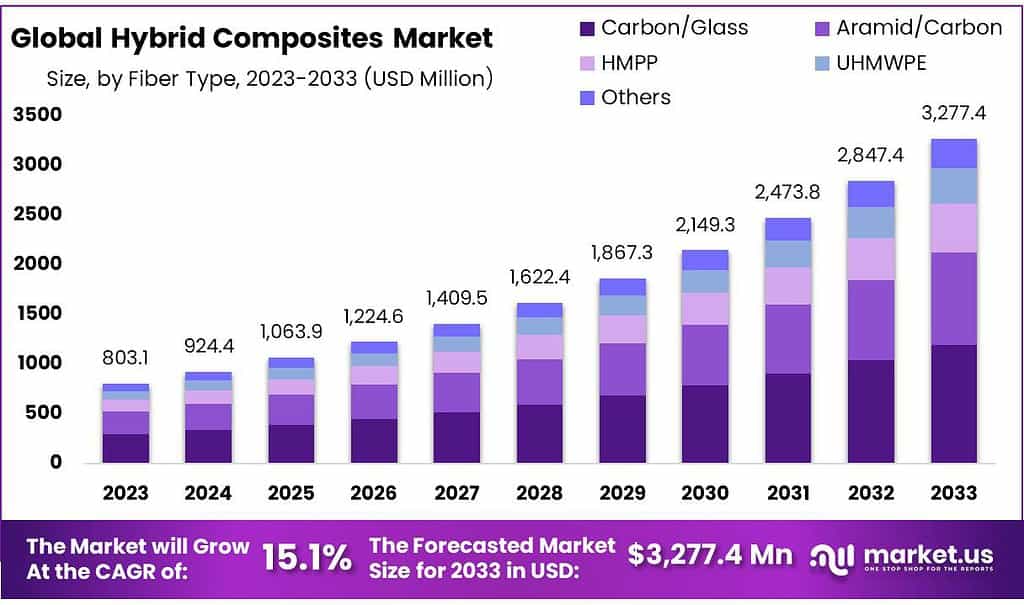
The global Hybrid Composites Market size is expected to be worth around USD 3277.4 Million by 2033, from USD 803.1 Million in 2023, growing at a CAGR of 15.1% during the forecast period from 2023 to 2033.
The Hybrid Composites Market refers to the industry surrounding the production, distribution, and application of hybrid composites. These materials are engineered by combining two or more different types of fibers into a single composite matrix. The fibers commonly used include carbon, glass, aramid, and natural fibers, among others. The purpose of blending these fibers is to optimize the properties of the composite to achieve a balance of strength, weight, durability, and cost-effectiveness that is superior to what single-fiber composites can offer.
Hybrid composites are used in a variety of industries including automotive, aerospace, construction, and sports equipment due to their enhanced mechanical properties and tailored functionalities. For instance, in the automotive industry, they are used to reduce vehicle weight while maintaining strength and safety standards, which leads to better fuel efficiency and reduced emissions. In aerospace, they are prized for their strength-to-weight ratio, which enhances aircraft performance and efficiency.
The market for hybrid composites is driven by the increasing demand for advanced materials that provide environmental benefits, cost savings, and superior performance characteristics. The development and growth of the hybrid composites market are also supported by technological advancements in material science and manufacturing processes, which improve the quality and reduce the cost of these materials.
Key Takeaways
- Market Growth Projection: Global hybrid composites market is set to reach USD 3277.4 Million by 2033, growing at 15.1% CAGR from 2023.
- Fiber Type Dominance: The carbon/Glass segment holds 36.5% market share in 2023, favored for strength and affordability.
- Resin Type Preference: Thermoset resins lead with a 62.3% market share in 2023, valued for strength and heat resistance.
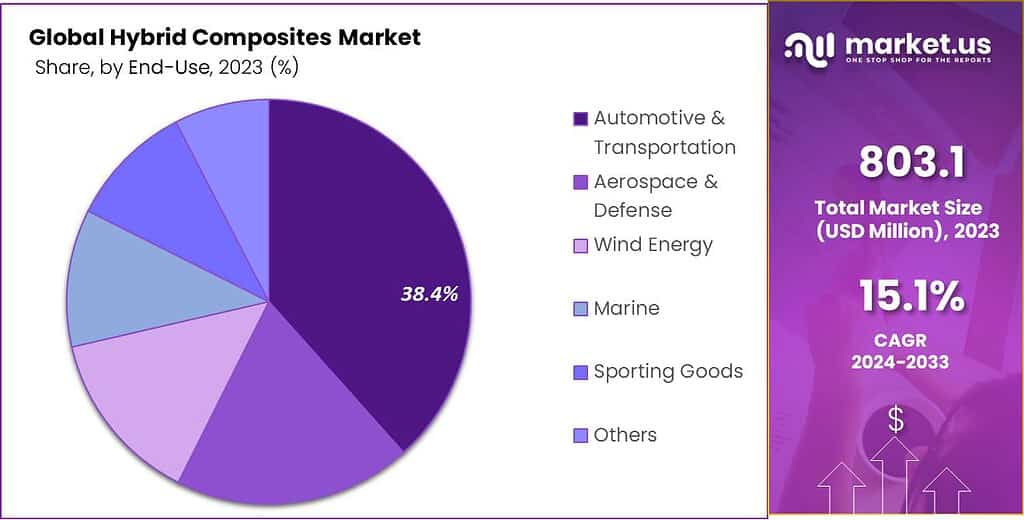
- End-Use Industry Leaders: Automotive & Transportation sector holds 38.4% market share in 2023, driven by lightweight material demand.
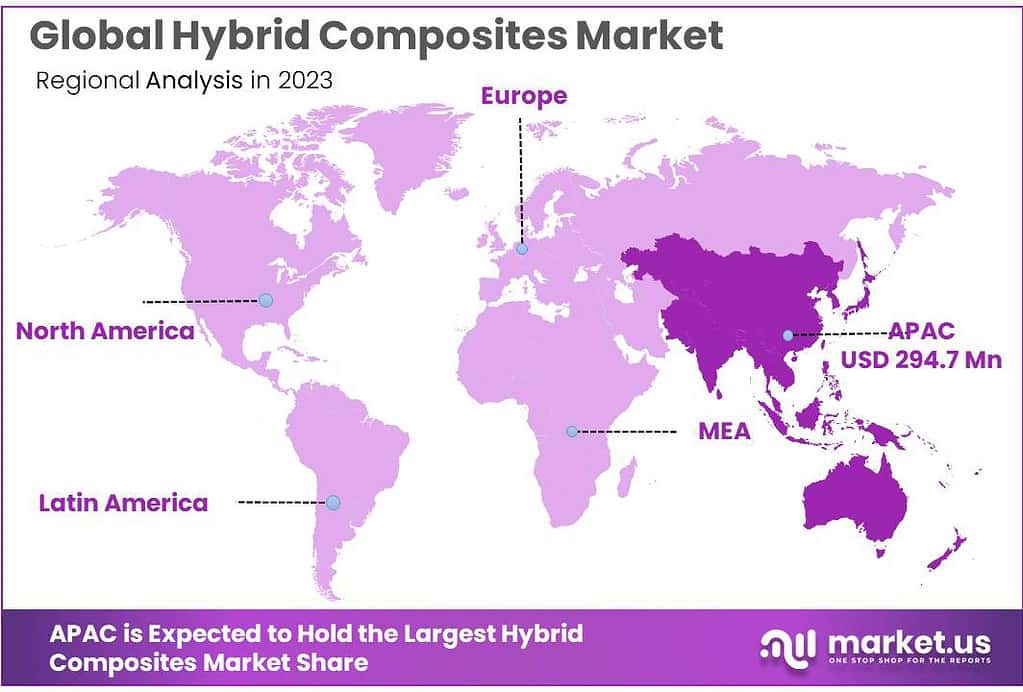
- Regional Dominance: Asia Pacific leads with 36.7% market share in 2023, fueled by rapid industrialization and infrastructure projects.
By Fiber Type
In 2023, the Carbon/Glass segment held a dominant market position in the Hybrid Composites Market, capturing more than a 36.5% share. This combination of carbon and glass fibers is highly favored due to its balanced properties of strength and stiffness provided by carbon fibers, alongside the cost-effectiveness and impact resistance of glass fibers. This makes Carbon/Glass hybrid composites ideal for applications that require a strong, yet affordable material solution, such as in automotive components and sports equipment.
The Aramid/Carbon segment also plays a crucial role in the market. This hybrid composite is prized for combining the high strength and lightweight properties of carbon fibers with the toughness and resistance to impact and abrasion of aramid fibers. This makes it particularly suitable for use in aerospace and military applications where both weight reduction and durability are paramount.
HMPP (High Modulus Polypropylene) fibers offer significant advantages in terms of their high impact resistance and ability to absorb energy, making them useful in industries like automotive and sports where safety is critical. Although this segment holds a smaller share, its unique properties are essential for specific safety-focused applications.
UHMWPE (Ultra High Molecular Weight Polyethylene) fibers are known for their high strength-to-weight ratio, excellent durability, and moisture resistance, making them ideal for marine applications and protective gear. The demand for UHMWPE hybrid composites is driven by their performance in harsh environments and safety applications.
By Resin Type
In 2023, the Thermoset segment held a dominant market position in the Hybrid Composites Market, capturing more than a 62.3% share. Thermoset resins are highly valued for their ability to create strong, durable, and heat-resistant composites, making them ideal for applications requiring robust performance, such as in the automotive and aerospace industries. Their superior mechanical strength and resistance to environmental factors are key drivers behind their widespread use and large market share.
On the other hand, the Thermoplastic segment, while holding a smaller share of the market, offers significant advantages such as recyclability and ease of processing, which make them attractive for industries looking to improve sustainability and reduce production costs. Thermoplastic resins are also known for their impact resistance and flexibility, making them suitable for a variety of applications, including consumer goods and medical devices, where these properties are in demand.
By End-Use
In 2023, the Automotive & Transportation sector held a dominant market position in the Hybrid Composites Market, capturing more than a 38.4% share. This sector heavily relies on hybrid composites for their ability to reduce vehicle weight while maintaining strength and safety, contributing to enhanced fuel efficiency and lower emissions. The demand in this segment is driven by the ongoing shift towards more sustainable automotive practices and the increasing adoption of electric vehicles, where weight reduction is crucial.
The Aerospace & Defense segment also plays a significant role in the market. Hybrid composites are utilized for their high strength-to-weight ratio and resistance to environmental stresses, making them ideal for aircraft and defense applications where performance and durability are paramount.
Wind Energy is another important sector for hybrid composites. These materials are used in the production of wind turbine blades due to their excellent fatigue resistance and ability to withstand harsh weather conditions, which is essential for long-term energy production efficiency.
The Marine industry benefits from the use of hybrid composites in the construction of boats and other marine structures. These materials resist corrosion and fatigue, enhancing the longevity and performance of marine vessels.
Sporting Goods is a dynamic segment where hybrid composites are favored for their lightweight and high-impact resistance properties, ideal for creating high-performance sports equipment such as golf clubs, bikes, and racquets.
Key Market Segments
By Fiber Type
- Carbon/Glass
- Aramid/Carbon
- HMPP
- UHMWPE
- Others
By Resin Type
- Thermoset
- Thermoplastic
By End-Use
- Automotive & Transportation
- Aerospace & Defense
- Wind Energy
- Marine
- Sporting Goods
- Others
Drivers
Rising Demand for Lightweight Materials in Various Industries
A major driver for the Hybrid Composites Market is the rising demand for lightweight materials across various industries, including automotive, aerospace, and transportation. This trend is primarily driven by the global push for energy efficiency and the need to reduce carbon emissions.
Hybrid composites, known for their exceptional strength-to-weight ratios, are increasingly favored over traditional materials like steel and aluminum because they provide significant weight reductions while maintaining or even enhancing the structural integrity and performance of components.
In the automotive industry, lightweight hybrid composites are instrumental in improving fuel efficiency and reducing emissions in conventional vehicles, and they are crucial for extending the range and performance of electric vehicles.
As regulatory pressures to meet stringent fuel efficiency standards intensify globally, automotive manufacturers are compelled to incorporate more hybrid composite materials into their designs. These materials are not only used in the body panels and frames but also in interior components and engine parts.
Similarly, in the aerospace sector, the benefits of weight reduction are even more critical. The use of hybrid composites in aircraft manufacturing significantly reduces the overall weight of the aircraft, which translates into lower fuel consumption and higher operational efficiency. The durability and resistance to environmental factors provided by hybrid composites also mean that aircraft can withstand more rigorous conditions and require less maintenance over time, enhancing their operational lifecycle and sustainability.
The transportation sector, including both public transit systems and private vehicle manufacturing, also benefits from the application of hybrid composites. Trains, buses, and even marine vessels are turning to these materials to achieve not only weight reduction but also increased resistance to corrosion and wear, extending the life of these assets and reducing the maintenance costs associated with metal parts.
Additionally, the drive towards renewable energy further exemplifies the growing demand for lightweight materials. In wind energy production, hybrid composites are used to manufacture lighter, more durable wind turbine blades. These lighter blades are more efficient at capturing wind energy, leading to higher energy output and lower costs per kilowatt-hour of energy produced. The strength and flexibility of hybrid composites allow for the design of larger blades that can operate at lower wind speeds, thus expanding the viability of wind farms to more geographic locations.
The increasing demand for hybrid composites is also supported by advancements in material science that enable the production of more cost-effective and higher-quality composites. As manufacturers continue to innovate and improve the properties of these composites, the cost barriers are gradually decreasing, making hybrid composites more accessible for a broader range of applications.
Restraints
High Costs and Complexity in Manufacturing and Recycling Hybrid Composites
A significant restraint in the Hybrid Composites Market is the high costs associated with the manufacturing and recycling of these materials. Hybrid composites are engineered by combining two or more different types of fibers within a single matrix, which can introduce complexities in both the production and end-of-life phases. These complexities often result in higher costs compared to traditional materials, which can hinder the broader adoption of hybrid composites across various industries.
The manufacturing of hybrid composites involves advanced and sometimes bespoke processes, including the precise alignment and distribution of different fibers to achieve desired properties like strength, stiffness, and weight. Ensuring uniformity and maintaining consistent quality during the production can be challenging and requires high-tech machinery and skilled labor. The initial setup for manufacturing facilities capable of producing hybrid composites is capital-intensive, and the materials themselves, particularly high-performance fibers like carbon and aramid, are significantly more expensive than conventional materials such as glass fibers or metals.
Moreover, the unique combinations of materials in hybrid composites can complicate recycling processes. Unlike single-material components, hybrid composites need to be separated into their constituent materials before they can be effectively recycled. This separation process is often technologically challenging and costly, diminishing the economic viability of recycling. In some cases, the lack of established recycling pathways for certain types of hybrid composites can lead to increased environmental impact, counteracting one of the key benefits these materials are supposed to offer.
These recycling challenges are further compounded by the current lack of standardized methods for the disposal and treatment of hybrid composites. Without uniform regulatory guidelines or widely adopted recycling technologies, the potential for scalable recycling solutions remains limited. This not only affects the lifecycle costs of products made from hybrid composites but also impacts industries’ ability to meet sustainability targets.
By Fiber Type(Carbon/Glass, Aramid/Carbon, HMPP, UHMWPE, Others), By Resin Type(Thermoset, Thermoplastic), By End-Use(Automotive and Transportation, Aerospace and Defense, Wind Energy, Marine, Sporting Goods, Others)
Opportunity
Expanding Applications in Emerging Industries: A Growth Avenue for Hybrid Composites
A major opportunity for the Hybrid Composites Market lies in its potential expansion into emerging industries that are beginning to recognize the unique benefits of hybrid materials. As new technologies and industries evolve, the demand for materials that offer superior performance while meeting sustainability and efficiency criteria is increasing. Hybrid composites, with their ability to be engineered to specific performance standards, are ideally positioned to meet these demands.
One of the most promising areas for hybrid composites is in the renewable energy sector, particularly in the production of wind turbine blades and solar panel frames. The strength-to-weight ratio and durability of hybrid composites make them perfect for these applications, where materials must withstand harsh environmental conditions while maintaining efficiency. The lightweight nature of hybrid composites can significantly enhance the performance of renewable energy systems, making energy production more efficient and cost-effective.
The automotive industry, particularly electric vehicles (EVs), presents another significant opportunity. As the global market shifts towards electric mobility, the demand for lightweight materials that do not compromise on safety or performance is crucial.
Hybrid composites can reduce the weight of vehicles, improving their range and efficiency, which is vital for battery performance and overall vehicle efficiency. Automakers are increasingly exploring hybrid composites to achieve these goals while also working to meet stringent environmental regulations regarding CO2 emissions.
The aerospace industry continues to be a leading market for hybrid composites, driven by the ongoing need for materials that reduce aircraft weight and enhance fuel efficiency. However, the opportunity extends to more than just commercial and military aircraft; it includes the burgeoning sector of space exploration and satellite deployment. Hybrid composites are being eyed for their potential to reduce the weight of spacecraft, which is a critical factor in the cost and feasibility of space missions.
Another growing field that presents substantial opportunities for hybrid composites is construction and infrastructure. With urbanization on the rise, there is a growing need for sustainable building materials that offer enhanced performance in terms of energy efficiency, durability, and resistance to environmental factors. Hybrid composites can be used in applications ranging from structural components to insulation materials, where their superior properties can significantly improve the longevity and energy efficiency of buildings.
Furthermore, the advancement of 3D printing technology opens up new avenues for using hybrid composites in customized applications. The ability to print parts and components that incorporate hybrid composites can revolutionize industries like healthcare, where customized implants and prosthetics need to be both lightweight and strong, or in manufacturing, where complex parts can be made more efficiently.
To capitalize on these opportunities, companies in the Hybrid Composites Market will need to continue investing in research and development to enhance the properties of their products and reduce production costs.
Collaborations with industries that could benefit from hybrid composites will also be crucial in fostering innovation and expanding market reach. Moreover, aligning with sustainability goals through improved recycling techniques and greener production practices will further enhance the appeal of hybrid composites in global markets.
Trends
Trend Toward Customization and Performance Optimization in Hybrid Composites
A major trend shaping the Hybrid Composites Market is the move towards customization and performance optimization of materials. As industries strive for better performance, efficiency, and specific functional attributes in their products, the demand for materials tailored to meet these exact requirements has grown significantly. Hybrid composites, with their ability to combine different fibers and resins to create materials that precisely address diverse application needs, are at the forefront of this trend.
In sectors such as automotive and aerospace, where performance, safety, and efficiency are paramount, the ability to customize hybrid composites for specific applications allows manufacturers to innovate and improve product offerings. For instance, in automotive design, hybrid composites can be engineered to offer the optimal balance of strength, weight reduction, and cost, which is crucial for manufacturing vehicles that are not only fuel-efficient but also meet rigorous safety standards. Similarly, in aerospace, hybrid composites are tailored for extreme durability and resistance to environmental stressors, ensuring the longevity and safety of aircraft components.
The trend toward customization is also evident in the sports and leisure industry, where equipment manufacturers leverage the advanced properties of hybrid composites to enhance the performance of sports gear such as bicycles, golf clubs, and racquets. The ability to fine-tune the stiffness, flexibility, and weight of these materials contributes to creating high-performance sports equipment tailored to professional athletes’ specific needs and preferences.
Moreover, the architectural and construction sectors are increasingly adopting hybrid composites for both structural applications and aesthetic purposes. Here, customization involves adjusting the mechanical properties and surface textures of materials to fit various design visions and structural requirements. Hybrid composites enable architects and builders to explore new creative possibilities while adhering to building codes and environmental standards.
The growing trend toward sustainable development is another driver influencing the customization of hybrid composites. As environmental regulations become stricter and the global emphasis on sustainability intensifies, industries are seeking materials that not only perform well but also have a lower environmental footprint. Hybrid composites can be customized with bio-based fibers and resins to enhance their biodegradability and reduce reliance on fossil-based resources, aligning product development with green initiatives.
Advancements in technology, such as the development of sophisticated simulation software and additive manufacturing (3D printing), further fuel this trend by enabling more precise and efficient customization of hybrid composites. These technologies allow for rapid prototyping and testing of customized materials, reducing development time and cost, and enhancing the ability to innovate.
To capitalize on this trend, companies in the Hybrid Composites Market are investing in research and development to expand their capabilities in creating highly specialized materials. They are also forming strategic partnerships with end-users across various industries to better understand specific needs and tailor their product offerings accordingly.
Regional Analysis
In 2023, the Asia Pacific region emerged as the dominant market for hybrid composites, capturing a substantial 36.7% market share. This growth is fueled by rapid industrialization in key countries like China, India, and Japan, driving demand across manufacturing, construction, and automotive sectors.
Infrastructure projects reliant on composite materials, coupled with a focus on energy efficiency and sustainable technologies, further propel market growth. Supportive government policies and significant investments in infrastructure development continue to bolster the market, enhancing operational capabilities and driving overall growth in the Asia Pacific hybrid composites market.
Key Regions and Countries
- North America
- The US
- Canada
- Europe
- Germany
- France
- The UK
- Spain
- Italy
- Russia & CIS
- Rest of Europe
- APAC
- China
- Japan
- South Korea
- India
- ASEAN
- Rest of APAC
- Latin America
- Brazil
- Mexico
- Rest of Latin America
- Middle East & Africa
- GCC
- South Africa
- Rest of MEA
Key Players Analysis
In the hybrid composites market, several key players drive innovation and growth. Toray Industries, Inc., renowned for its diverse range of composite materials, stands out as a leader in the field.
Market Key Players
- Hexcel Corporation
- Teijin Limited
- Toray Industries, Inc.
- Mitsubishi Chemical Corporation
- SGL Carbon SE
- Owens Corning
- Solvay SA
- SABIC
- BASF SE
- Cytec Solvay Group
- Gurit Holding AG
- Park Electrochemical Corp.
Recent Development
By April 2023, Hexcel reported a significant increase in sales revenue, driven by the growing demand for lightweight and high-performance materials across industries.
In August 2023, Teijin expanded its manufacturing facilities to meet the growing production needs, indicating its proactive approach to market demands.
Report Scope
Report Features Description Market Value (2023) US$ 803.1 Mn Forecast Revenue (2033) US$ 3277.4 Mn CAGR (2024-2033) 15.1% Base Year for Estimation 2023 Historic Period 2020-2022 Forecast Period 2024-2033 Report Coverage Revenue Forecast, Market Dynamics, COVID-19 Impact, Competitive Landscape, Recent Developments Segments Covered By Fiber Type(Carbon/Glass, Aramid/Carbon, HMPP, UHMWPE, Others), By Resin Type(Thermoset, Thermoplastic), By End-Use(Automotive and Transportation, Aerospace and Defense, Wind Energy, Marine, Sporting Goods, Others) Regional Analysis North America – The US & Canada; Europe – Germany, France, The UK, Spain, Italy, Russia & CIS, Rest of Europe; APAC– China, Japan, South Korea, India, ASEAN & Rest of APAC; Latin America– Brazil, Mexico & Rest of Latin America; Middle East & Africa– GCC, South Africa, & Rest of MEA Competitive Landscape Hexcel Corporation, Teijin Limited, Toray Industries, Inc., Mitsubishi Chemical Corporation, SGL Carbon SE, Owens Corning, Solvay SA, SABIC, BASF SE, Cytec Solvay Group, Gurit Holding AG, Park Electrochemical Corp. Customization Scope Customization for segments, region/country-level will be provided. Moreover, additional customization can be done based on the requirements. Purchase Options We have three licenses to opt for: Single User License, Multi-User License (Up to 5 Users), Corporate Use License (Unlimited User and Printable PDF) Frequently Asked Questions (FAQ)
What is the size of Hybrid Composites Market?Hybrid Composites Market size is expected to be worth around USD 3277.4 Million by 2033, from USD 803.1 Million in 2023
What CAGR is projected for the Hybrid Composites Market?The Hybrid Composites Market is expected to grow at 15.1% CAGR (2023-2033).Name the major industry players in the Hybrid Composites Market?Hexcel Corporation, Teijin Limited, Toray Industries, Inc., Mitsubishi Chemical Corporation, SGL Carbon SE, Owens Corning, Solvay SA, SABIC, BASF SE, Cytec Solvay Group, Gurit Holding AG, Park Electrochemical Corp.

-
-
- Hexcel Corporation
- Teijin Limited
- Toray Industries, Inc.
- Mitsubishi Chemical Corporation
- SGL Carbon SE
- Owens Corning
- Solvay SA
- SABIC
- BASF SE
- Cytec Solvay Group
- Gurit Holding AG
- Park Electrochemical Corp
Our Clients

- 119307
- May 2024






