


Global Hair Texturizer Market Size, Share, Growth Analysis By Product (Hair Spray, Hair Gel, Hair Cream, Hair Mousse, Hair Pomade & Paste, Shampoo, Others), By Formats (Cream, Paste), By Source (Conventional, Natural), By Distribution Channel (Supermarkets/Hypermarkets, Specialty Stores, Pharmacies/Drugstores, Salons/Parlors, Others), Region and Companies - Industry Segment Outlook, Market Assessment, Competition Scenario, Statistics, Trends and Forecast 2026-2035
- Published date: Mar 2026
- Report ID: 180909
- Number of Pages: 313
- Format:
-
keyboard_arrow_up
Quick Navigation
Report Overview
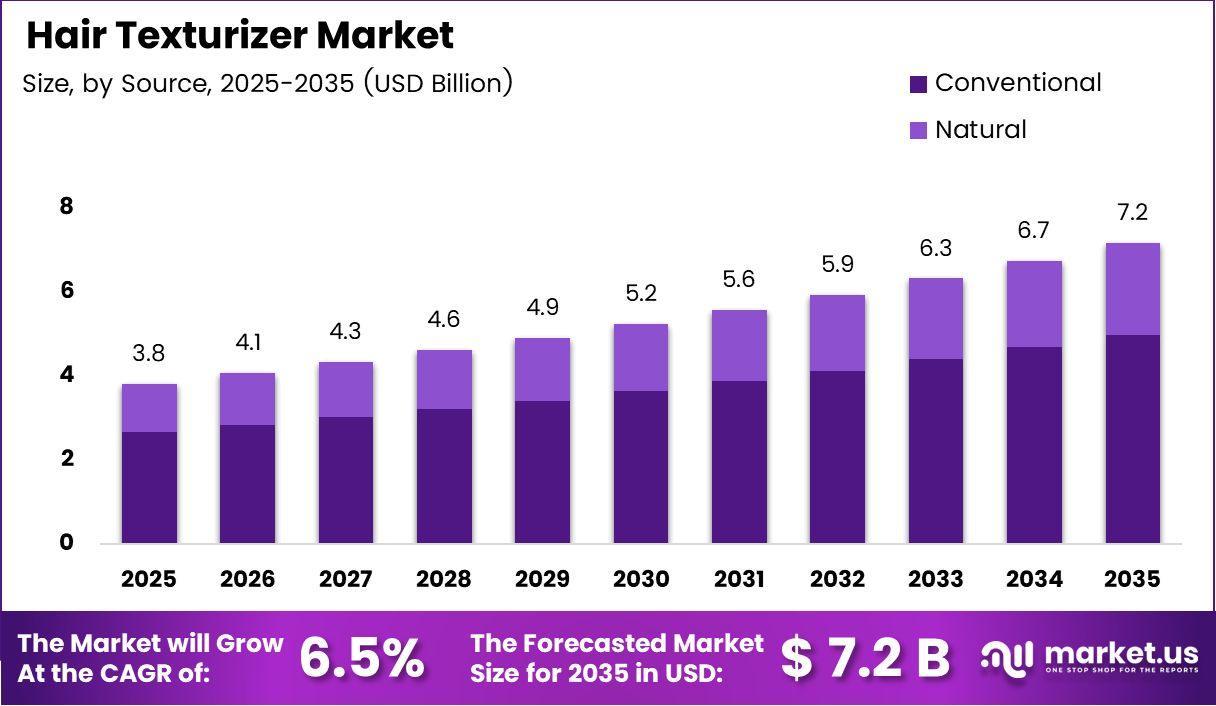
Global Hair Texturizer Market size is expected to be worth around USD 7.2 Billion by 2035 from USD 3.8 Billion in 2025, growing at a CAGR of 6.5% during the forecast period 2026 to 2035.
The hair texturizer market encompasses a broad range of products designed to modify, define, or enhance the natural texture of hair. These products include sprays, gels, creams, mousses, pomades, and pastes used across professional salons and everyday consumer routines. They serve diverse needs from frizz control to curl definition and volumizing.
Hair texture varies widely across the global population. It is commonly classified into straight, wavy, curly, and coily types. This diversity has created a strong demand for texture-specific formulations. Brands are continuously developing products that cater to unique hair structures across different ethnicities and regions.
Growth in the market is supported by rising consumer awareness around hair care and personal grooming. The growing popularity of natural and organic formulations has encouraged brands to innovate with cleaner ingredient profiles. Additionally, the expansion of e-commerce and specialty retail has made hair texturizers more accessible globally.
Government regulations on cosmetic ingredients have also shaped product development across North America and Europe. Regulatory bodies such as the FDA and EU Cosmetics Regulation have pushed brands toward safer, compliant formulations. Consequently, manufacturers are investing more in research and ingredient transparency.
Regional diversity plays a major role in shaping demand for texturizers. According to population hair studies, approximately 90–95% of people in Sub-Saharan Africa have curly or coily hair, creating significant demand for curl-enhancing and frizz-control products. In Europe, around 45% have wavy hair, 40% straight, and about 15% curly, influencing product preferences distinctly.
Moreover, studies suggest that straight hair accounts for around 40–45% of the global population, while wavy hair represents approximately 30–35%. Curly hair is estimated at about 15–20%, and coily or kinky hair makes up roughly 5–10% worldwide. These demographic insights are driving targeted product launches across key markets.
Therefore, the hair texturizer market is well-positioned for sustained growth through 2035. Increased investment from major beauty companies, supported by consumer trends favoring personalized and multi-textured hair care, continues to unlock new opportunities. The market presents strong potential for both established players and emerging brands.
Key Takeaways
- The global Hair Texturizer Market was valued at USD 3.8 Billion in 2025.
- The market is projected to reach USD 7.2 Billion by 2035, growing at a CAGR of 6.5%.
- By Product, Hair Spray dominates with a market share of 34.7% in 2025.
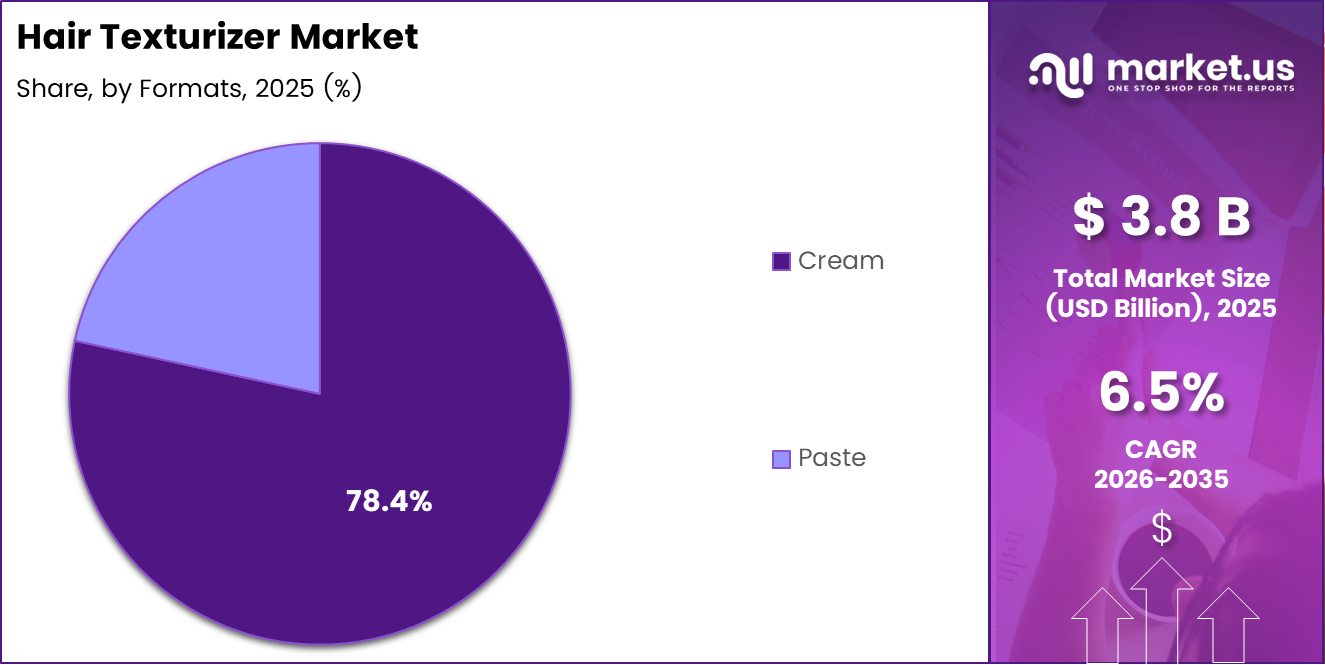
- By Format, Cream holds the leading position with a share of 78.4%.
- By Source, Conventional segment leads with a share of 69.5%.
- By Distribution Channel, Supermarkets/Hypermarkets dominate with a share of 43.6%.
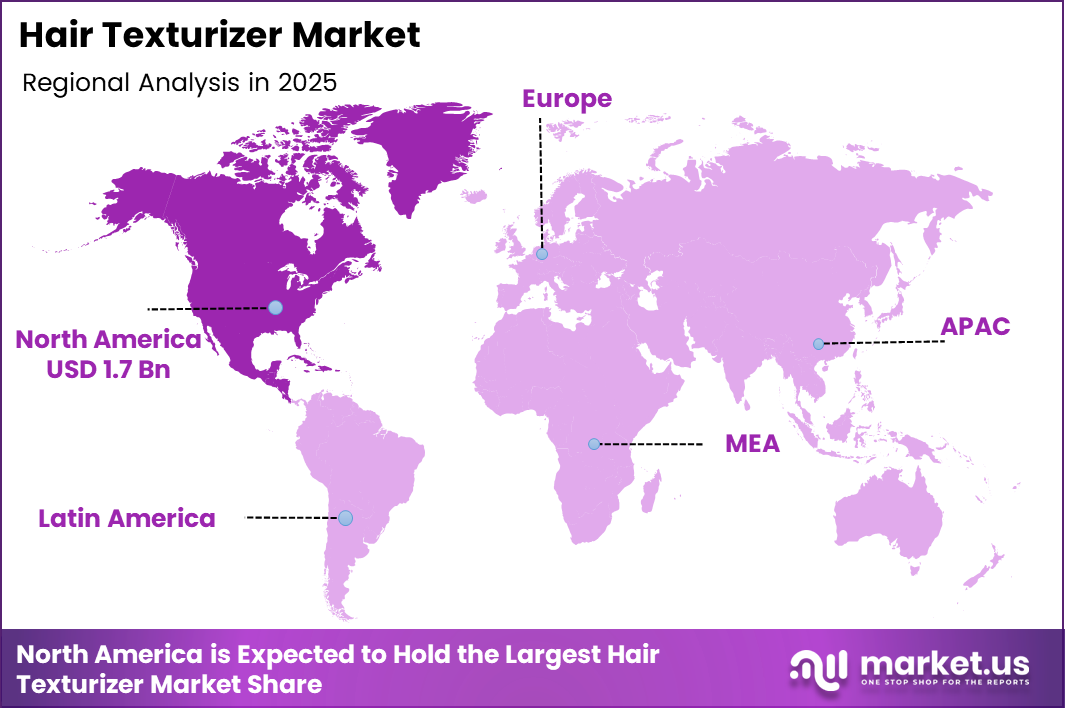
- North America dominates the regional landscape with a 45.90% share, valued at USD 1.7 Billion.
Product Analysis
Hair Spray dominates with 34.7% due to its wide consumer appeal and ease of application across all hair types.
In 2025, Hair Spray held a dominant market position in the Product segment of the Hair Texturizer Market, with a 34.7% share. Hair spray offer strong hold and flexible finish options, making them a preferred choice across professional and everyday use. Their versatility across curly, wavy, and straight hair types drives consistent demand globally.
Hair Gel remains a staple product for consumers seeking strong definition and control. It is widely used for sleek styles and curl definition, particularly in urban markets. Gel-based formulas are evolving with lighter, non-flaking textures that appeal to a broader consumer base across multiple age groups.
Hair Cream is gaining steady traction due to its moisturizing and styling dual benefits. Creams are especially popular among consumers with curly and coily hair who seek hydration alongside texture control. Additionally, the rise of leave-in creams has expanded this sub-segment’s presence in both retail and salon channels.
Hair Mousse caters to consumers looking for lightweight volume and curl enhancement. It is commonly used in professional salon settings as well as at-home styling routines. Mousse formulations continue to evolve with added conditioning ingredients that support hair health while delivering performance.
Hair pomade is widely used for achieving sleek, defined hairstyles with a polished finish. Traditionally formulated with oil- or water-based ingredients, pomades provide strong hold and noticeable shine, making them popular for classic styles such as slick backs, pompadours, and side parts. The product is especially favored in the men’s grooming segment and barbershop culture.
Hair paste is valued for delivering a flexible hold and a natural, matte finish. Unlike pomade, it offers more texture and movement, allowing users to restyle hair throughout the day without stiffness. It works well for short to medium-length hairstyles, making it a versatile option for casual and modern looks.
Texturizing shampoos are gaining traction as consumers seek products that add body and movement during the cleansing process. These shampoos are designed to enhance natural hair structure while removing excess oil and buildup. By incorporating volumizing polymers, sea salt derivatives, or lightweight conditioning agents, they help create fuller, more manageable hair.
The Others category includes emerging and hybrid styling solutions that combine multiple benefits. Examples include styling creams, texture sprays, and multifunctional products that blend hold, conditioning, and scalp care properties. These innovations reflect evolving consumer preferences for simplified routines and versatile grooming products.
Formats Analysis
Cream dominates with 78.4% due to its broad applicability and moisturizing benefits across hair textures.
In 2025, Cream held a dominant market position in the Formats segment of the Hair Texturizer Market, with a 78.4% share. Cream-based texturizers offer a balance of hold, hydration, and ease of application. Their compatibility with both natural and chemically treated hair makes them the preferred format among a wide consumer base.
Paste holds the remaining share in the Formats segment and is favored for its thick consistency and long-lasting hold. Paste formats are particularly popular in professional styling for sculpting and defining specific looks. Moreover, innovation in paste textures, including lightweight and water-soluble options, is broadening their appeal in retail markets.
Source Analysis
Conventional dominates with 69.5% due to established formulation efficacy and widespread consumer familiarity.
In 2025, Conventional held a dominant market position in the Source segment of the Hair Texturizer Market, with a 69.5% share. Conventional products benefit from proven formulations, affordable price points, and broad retail availability. Their strong foothold across mass-market channels continues to support category dominance globally.
Natural source products are gaining ground as consumers prioritize clean-label and sustainably sourced ingredients. Demand for plant-based, sulfate-free, and cruelty-free formulations is accelerating. Consequently, several major brands are expanding their natural product lines to meet this shift in consumer values and regulatory pressure on synthetic ingredients.
Distribution Channel Analysis
Supermarkets/Hypermarkets dominate with 43.6% due to high foot traffic and broad product accessibility.
In 2025, Supermarkets/Hypermarkets held a dominant market position in the Distribution Channel segment of the Hair Texturizer Market, with a 43.6% share. These retail formats offer wide product assortment and competitive pricing, making them the top choice for everyday consumers. Their extensive geographical presence further reinforces their distribution dominance.
Specialty Stores cater to consumers seeking curated, premium, or texture-specific hair care products. These outlets offer expert advice and a higher-end shopping experience, driving brand loyalty. Additionally, specialty stores play a key role in introducing newer and niche hair texturizer brands to targeted audiences.
Pharmacies and drugstores cater to health-conscious consumers seeking safe and dermatologist-recommended hair care products. These outlets often stock gentle, therapeutic, and sensitive-scalp formulations designed to support hair texture and scalp health. Their trusted reputation and professional credibility encourage consumers to purchase specialized texturizing products and treatment-based hair care solutions.
Salons and parlors act as key professional distribution channels for texture-focused hair care products. Hair stylists recommend specialized formulations based on hair type and styling needs. These establishments also influence consumer preferences by demonstrating professional results, making them important spaces for premium styling products and texture-enhancing treatments.
The Others category includes online platforms, e-commerce marketplaces, and direct-to-consumer brand websites. These channels are expanding rapidly due to digital retail growth and convenience. Consumers benefit from wider product availability, reviews, and personalized recommendations, making online channels increasingly important for hair texture and styling product sales worldwide.
Key Market Segments
By Product
- Hair Spray
- Hair Gel
- Hair Cream
- Hair Mousse
- Hair Pomade & Paste
- Shampoo
- Others
By Formats
- Cream
- Paste
By Source
- Conventional
- Natural
By Distribution Channel
- Supermarkets/Hypermarkets
- Specialty Stores
- Pharmacies/Drugstores
- Salons/Parlors
- Others
Drivers
Rising Consumer Demand for Personalized Hair Care Drives Hair Texturizer Market Growth
Growing consumer awareness around hair health and styling has significantly increased demand for texturizing products. More individuals are seeking products tailored to their specific hair type, whether curly, wavy, or coily. This shift toward personalized hair care routines is a key driver accelerating market growth across all regions.
The expansion of professional salon services has also contributed to rising product consumption. Salons increasingly use specialized texturizers as part of styling treatments, boosting B2B demand. Moreover, the influence of social media and beauty content creators has normalized textured hairstyles, encouraging more consumers to explore these product categories daily.
Additionally, growth in urban populations and rising disposable incomes are enabling consumers to invest more in premium hair care. Emerging economies in Asia Pacific and Latin America are experiencing a surge in grooming expenditure. Consequently, brands are targeting these regions with affordable yet effective texturizer product lines to capture new demand.
Restraints
Concerns Over Chemical Ingredients and Regulatory Pressures Restrain Market Expansion
Increasing scrutiny over synthetic chemicals commonly used in hair texturizers presents a significant restraint. Ingredients such as sulfates, parabens, and certain fixatives face growing restrictions from regulatory bodies in North America and Europe. Consequently, manufacturers must invest heavily in reformulation, which increases production costs and development timelines.
Consumer sensitivity to allergic reactions and scalp irritation also limits the market’s reach. A segment of the population avoids texturizer products due to concerns about long-term hair damage or adverse effects. This creates a barrier for brands, particularly when targeting health-conscious or dermatologically sensitive consumer groups in developed markets.
Moreover, the availability of low-cost counterfeit and substandard products in certain regions undermines consumer trust. These products often lack proper safety testing and can cause harm, reducing overall market credibility. Therefore, ensuring quality compliance and building brand authenticity remain ongoing challenges that restrict broader market adoption.
Growth Factors
Innovation in Natural Formulations and Digital Retail Expansion Accelerates Market Growth
The growing shift toward natural and organic hair care products is opening new growth avenues for texturizer brands. Consumers increasingly prefer plant-based ingredients such as shea butter, argan oil, and aloe vera in their styling products. This trend is pushing manufacturers to innovate with clean-label formulations that meet both performance and safety expectations.
E-commerce and direct-to-consumer platforms have significantly broadened market access for both established and emerging brands. Online channels enable brands to reach niche audiences with textured hair care needs that may be underserved by traditional retail. Additionally, digital marketing and influencer partnerships are proving highly effective in driving product discovery and purchase decisions.
The increasing representation of diverse hair textures in mainstream media and beauty advertising is also supporting market expansion. Consumers with curly, coily, and textured hair now find more targeted product options than ever before. Consequently, brands that invest in inclusive product development are experiencing stronger customer loyalty and higher repeat purchase rates.
Emerging Trends
Clean Beauty Movement and Texture-Inclusive Innovation Reshape the Hair Texturizer Market
The clean beauty movement is rapidly influencing the hair texturizer category, with consumers demanding ingredient transparency and eco-friendly packaging. Brands are responding by launching sulfate-free, paraben-free, and biodegradable product lines. Moreover, certifications such as cruelty-free and vegan are becoming important differentiators in both premium and mass-market segments.
Multi-functional hair texturizers that combine styling with conditioning or scalp care benefits are emerging as a notable trend. Consumers increasingly prefer products that simplify their routines while delivering multiple results. Additionally, hybrid formats such as texturizing shampoos and leave-in styling creams are gaining popularity across retail and salon channels worldwide.
Technology integration in product development is another emerging trend reshaping the market. Brands are using AI-powered tools to develop personalized hair care recommendations and custom formulations based on hair type and scalp condition. Therefore, the convergence of beauty and technology is expected to drive the next wave of innovation in the hair texturizer category.
Regional Analysis
North America Dominates the Hair Texturizer Market with a Market Share of 45.90%, Valued at USD 1.7 Billion
North America leads the global hair texturizer market with a dominant share of 45.90%, valued at approximately USD 1.7 Billion in 2025. The region benefits from high consumer spending on personal grooming, a strong presence of major beauty brands, and a diverse population driving demand for texture-specific products. Moreover, the growing natural hair movement in the United States continues to fuel category expansion significantly.
Europe Hair Texturizer Market Trends
Europe represents a significant and mature market for hair texturizers, supported by strong demand across the UK, Germany, and France. The region’s diverse population, particularly communities with Afro-textured and wavy hair, drives demand for specialized products. Additionally, strict EU cosmetics regulations are encouraging brands to develop cleaner and more compliant formulations.
Asia Pacific Hair Texturizer Market Trends
Asia Pacific is the fastest-growing regional market for hair texturizers, driven by rising disposable incomes and an expanding beauty and grooming culture. Countries such as China, India, and South Korea are witnessing strong product adoption. Furthermore, the influence of K-beauty trends and increased awareness of global hair care practices are shaping consumer preferences across the region.
Middle East and Africa Hair Texturizer Market Trends
The Middle East and Africa region holds strong long-term potential, particularly in Sub-Saharan Africa where a large proportion of the population has curly or coily hair types. Demand for frizz control, curl-defining, and moisturizing texturizers is growing steadily. However, market development is tempered by limited retail infrastructure and lower average consumer spending power in many countries.
Latin America Hair Texturizer Market Trends
Latin America presents a growing opportunity for hair texturizer brands, with Brazil and Mexico leading regional consumption. The region’s population reflects a wide diversity of hair textures, creating demand for versatile and multi-purpose styling products. Consequently, global brands are increasingly tailoring their product portfolios and marketing strategies to meet the specific preferences of Latin American consumers.
Key Regions and Countries
North America
- US
- Canada
Europe
- Germany
- France
- The UK
- Spain
- Italy
- Rest of Europe
Asia Pacific
- China
- Japan
- South Korea
- India
- Australia
- Rest of APAC
Latin America
- Brazil
- Mexico
- Rest of Latin America
Middle East & Africa
- GCC
- South Africa
- Rest of MEA
Key Company Insights
Unilever Plc. is a global leader in the hair care category with an extensive portfolio of texturizing and styling products sold across mass-market and premium channels. The company leverages its vast distribution network to reach consumers in over 190 countries. Unilever continues to invest in sustainable formulations and inclusive hair care innovation to strengthen its competitive position in the texturizer segment.https://www.unilever.com/
Procter & Gamble Company maintains a strong presence in the hair texturizer market through its well-established hair care brands sold globally. The company focuses heavily on research and development to deliver science-backed formulations targeting a wide range of hair textures. Additionally, P&G’s significant investment in digital marketing and consumer insights enables it to effectively address evolving preferences in textured hair care.
Oribe Hair Care LLC occupies a premium niche in the hair texturizer market, known for its high-performance, luxury styling products favored by professional stylists and discerning consumers. The brand emphasizes artisanal formulation quality and distinctive packaging that commands a premium price point. Moreover, Oribe’s strong salon channel partnerships have been central to building its brand equity in the professional texturizer market.
L’Oréal is one of the most influential players in the global hair texturizer market, with a diverse product offering that spans mass, professional, and luxury segments. The company continuously expands its texture-focused portfolio through both organic innovation and strategic acquisitions. L’Oréal’s global scale, deep research capabilities, and commitment to inclusive beauty position it as a key driver of growth and innovation in the texturizer category.
Key Players
- Unilever Plc.
- Procter & Gamble Company
- Oribe Hair Care LLC
- L’Oréal
- Hain Celestial Group
- Henkel AG & Co KGaA
- Beiersdorf, Inc
- Kavella
- Verb Products
- Forest Essentials
Recent Developments
- June 2025 – L’Oréal signed an agreement to acquire the premium haircare brand Color Wow, aiming to strengthen its portfolio of texture-focused products including frizz-control and curl-enhancing solutions. This strategic move reinforces L’Oréal’s commitment to expanding its presence in the high-growth textured hair care category.
- March 2026 – Henkel announced the acquisition of Not Your Mother’s, a U.S.-based haircare brand widely recognized for products targeting diverse hair textures including curly, wavy, and frizz-prone hair. This acquisition strengthens Henkel’s position in the affordable, texture-inclusive hair care segment in the North American market.
Report Scope
Report Features Description Market Value (2025) USD 3.8 Billion Forecast Revenue (2035) USD 7.2 Billion CAGR (2026-2035) 6.5% Base Year for Estimation 2025 Historic Period 2020-2024 Forecast Period 2026-2035 Report Coverage Revenue Forecast, Market Dynamics, Competitive Landscape, Recent Developments Segments Covered By Product (Hair Spray, Hair Gel, Hair Cream, Hair Mousse, Hair Pomade & Paste, Shampoo, Others), By Formats (Cream, Paste), By Source (Conventional, Natural), By Distribution Channel (Supermarkets/Hypermarkets, Specialty Stores, Pharmacies/Drugstores, Salons/Parlors, Others) Regional Analysis North America (US and Canada), Europe (Germany, France, The UK, Spain, Italy, and Rest of Europe), Asia Pacific (China, Japan, South Korea, India, Australia, and Rest of APAC), Latin America (Brazil, Mexico, and Rest of Latin America), Middle East & Africa (GCC, South Africa, and Rest of MEA) Competitive Landscape Unilever Plc., Procter & Gamble Company, Oribe Hair Care LLC, L’Oréal, Hain Celestial Group, Henkel AG & Co KGaA, Beiersdorf Inc, Kavella, Verb Products, Forest Essentials Customization Scope Customization for segments, region/country-level will be provided. Moreover, additional customization can be done based on the requirements. Purchase Options We have three licenses to opt for: Single User License, Multi-User License (Up to 5 Users), Corporate Use License (Unlimited User and Printable PDF) 
-
-
- Unilever Plc.
- Procter & Gamble Company
- Oribe Hair Care LLC
- L'Oréal
- Hain Celestial Group
- Henkel AG & Co KGaA
- Beiersdorf, Inc
- Kavella
- Verb Products
- Forest Essentials
Our Clients

- 180909
- Mar 2026






