


Global Glycolic Acid Market By Form (Liquid and Powder), By Purity (Glycolic Acid 99%, Glycolic Acid 70%, Glycolic Acid 30%, and Others), By Application (Personal Care And Cosmetics, Pharmaceuticals, Industrial Cleaning, Electronics, Textile, Plastics And Polymers, and Others), By Region and Companies - Industry Segment Outlook, Market Assessment, Competition Scenario, Trends and Forecast 2025-2035
- Published date: Mar 2026
- Report ID: 180623
- Number of Pages: 335
- Format:
-
keyboard_arrow_up
Quick Navigation
Report Overview
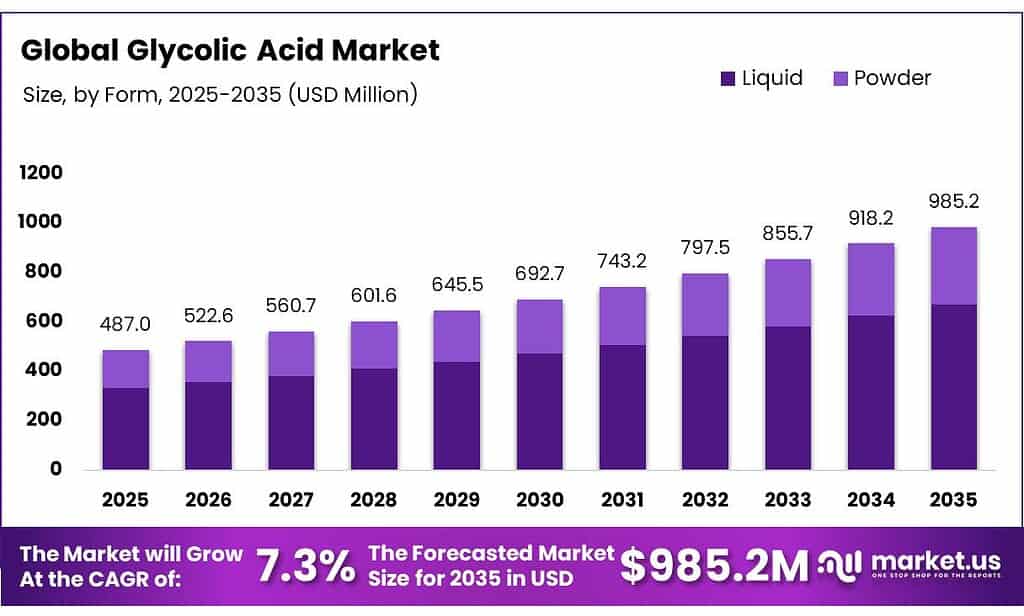
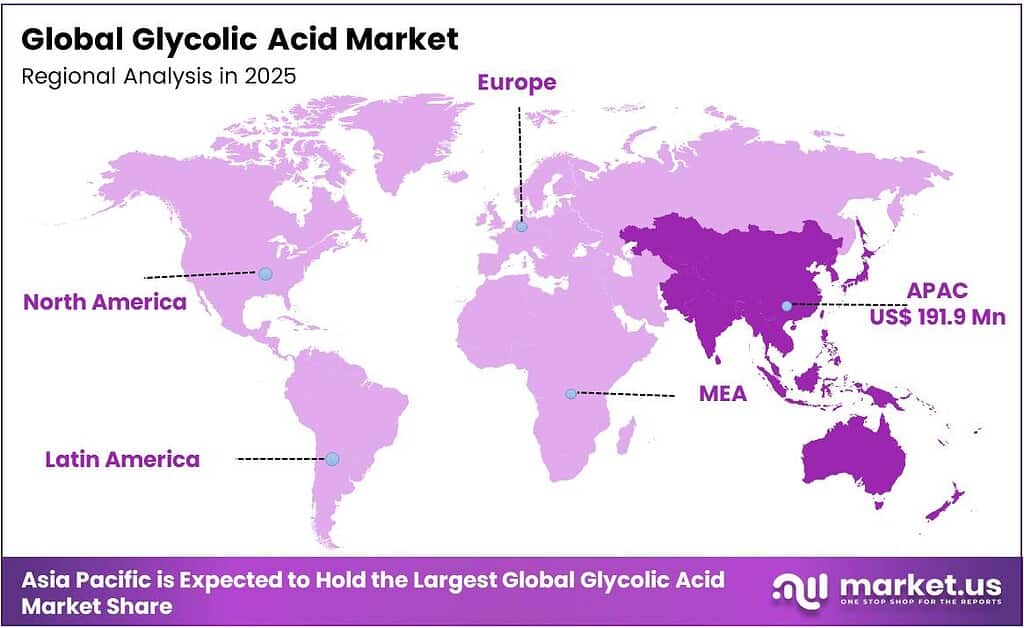
Global Glycolic Acid Market is expected to be worth around USD 985.2 Million by 2035, up from USD 487.0 Million in 2025, at a CAGR of 7.3% from 2026 to 2035. The Asia Pacific segment maintained 39.4%, supporting a Glycolic Acid value of USD 0.9 Bn.
Glycolic acid (GA) is a water-soluble alpha-hydroxy acid (AHA) derived from sugarcane that is primarily used as a chemical exfoliant in skincare. Its market is driven by its widespread use across industries such as personal care, pharmaceuticals, agriculture, and manufacturing. In the personal care and cosmetics sectors, glycolic acid is particularly valued for its exfoliating and anti-aging properties, making it a key ingredient in skincare products such as chemical peels, serums, and moisturizers.
- An article published in the Journal of the American Academy of Dermatology noted that the first worldwide survey evaluated the self-reported prevalence of pigmentary disorders (PD). According to the article, 50% of the population reports having at least one PD, marking the importance of GA in reducing pigmentation.
It has the smallest molecular weight of all AHAs, which allows it to penetrate the skin more deeply and effectively than other acids in its class. The growing demand for non-invasive skin treatments and natural products further fuels its adoption.
Glycolic acid’s versatility extends to other industries, including textile finishing, biodegradable polymer production, and agricultural applications, where it serves as a pH regulator and stabilizing agent. However, geopolitical tensions affect supply chains, particularly for raw materials and production in regions such as China, which plays a critical role in manufacturing.
Despite challenges related to health and environmental hazards, such as skin irritation and potential ecological impacts, manufacturers are focusing on sustainable production and innovative formulations to maintain a competitive edge. The Asia Pacific region remains the largest market, driven by high demand in both cosmetics and industrial applications.
Key Takeaways:
- The global glycolic acid market was valued at USD 487.0 million in 2025.
- The global glycolic acid market is projected to grow at a CAGR of 7.3% and is estimated to reach USD 985.2 million by 2035.
- On the basis of form, liquid glycolic acid dominated the market, constituting 68.2% of the total market share.
- Based on the purity, glycolic acid, which is 70% pure, led the market, comprising 38.5% of the total market.
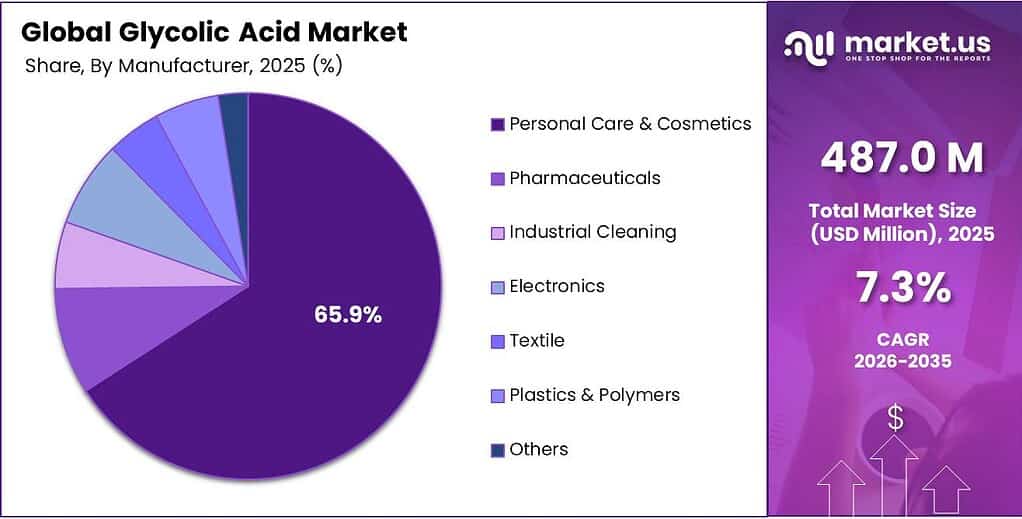
- Among the applications of the glycolic acid, the personal care & cosmetics industry is the most considerable end-use of the product, accounting for around 65.9% of the revenue.
- In 2025, the Asia Pacific was the most dominant region in the glycolic acid market, accounting for 39.4% of the total global consumption.
Form Analysis
Liquid Glycolic Acid is a Prominent Segment in the Market.
The market is segmented based on the form of glycolic acid into liquid and powder. The liquid glycolic acid led the market, comprising 68.2% of the market share, primarily due to its ease of application and formulation flexibility. As a liquid, it can be directly incorporated into cosmetic products such as serums, creams, and exfoliants, ensuring uniform distribution and consistent concentrations in end products.
Additionally, the liquid form allows for better control over dosage and is easier to mix with other active ingredients, making it suitable for a wide range of skincare and dermatological treatments. Similarly, liquid glycolic acid is more stable during storage and transport, reducing the risks of degradation or loss of effectiveness compared to powder forms. This stability and versatility in formulation make liquid glycolic acid the preferred choice for manufacturers and consumers.
Purity Analysis
Glycolic Acid 70% Dominated the Market.
Based on purity, the glycolic acid market is segmented into glycolic acid 99%, glycolic acid 70%, glycolic acid 30%, and others. The glycolic acid 70% dominated the market, comprising 38.5% of the market share, as it strikes a balance between efficacy and safety for most applications. At 70%, glycolic acid provides strong exfoliating effects, making it effective for both cosmetic treatments, such as chemical peels, and dermatological use, while still being safe for a broad range of skin types.
The 99% concentration, though more potent, is typically reserved for professional use due to its higher risk of irritation and the need for precise handling. In contrast, 30% glycolic acid is often less effective for deep exfoliation and is more commonly used in milder formulations. The 70% concentration offers an optimal balance of results, safety, and ease of use for both professionals and consumers.
Application Analysis
Glycolic Acid is Mostly Utilized in the personal care and cosmetics industry.
Among the applications of glycolic acid, 65.9% of the total global consumption of glycolic acids is in the personal care & cosmetics industry, outperforming industries, such as pharmaceuticals, industrial cleaning, electronics, textile, plastics & polymers, and others, due to its highly effective exfoliating and skin-renewing properties, which are highly valued in skincare products.
As an alpha-hydroxy acid (AHA), glycolic acid effectively removes dead skin cells, promotes collagen production, and reduces fine lines, making it a key ingredient in facial cleansers, peels, and anti-aging treatments. Its versatility, ability to provide visible skin benefits, and relatively low risk of irritation at moderate concentrations make it an ideal choice for consumer-facing cosmetic formulations.
While glycolic acid has applications in pharmaceuticals, industrial cleaning, and other sectors, these markets often require higher concentrations or specific chemical properties, limiting the broader use of glycolic acid in these industries compared to the consumer-oriented cosmetics sector.
Key Market Segments:
By Form
- Liquid
- Powder
By Purity
- Glycolic Acid 99%
- Glycolic Acid 70%
- Glycolic Acid 30%
- Others
By Application
- Personal Care & Cosmetics
- Facewash
- Cleansers
- Moisturizers
- Toners
- Serums
- Sunscreens
- Peels & Masks
- Others
- Pharmaceuticals
- Industrial Cleaning
- Electronics
- Textile
- Plastics & Polymers
- Others
Drivers
Rising Demand in Dermatological Applications Drives the Glycolic Acid Market.
The rising demand for glycolic acid in dermatological applications is primarily driven by its recognized efficacy in skin exfoliation, anti-aging treatments, and acne management. Glycolic acid is widely used in over-the-counter and professional-grade skincare products. For instance, the U.S. Food and Drug Administration (FDA) acknowledges glycolic acid as safe for topical use in concentrations up to 10% in over-the-counter formulations.
The clinical study published by the National Institutes of Health (NIH) demonstrates glycolic acid’s ability to improve skin texture and reduce fine lines, which has fueled its incorporation into mainstream skincare routines.
Half of the population reports having at least one pigmentary disorder (PD), including solar lentigo (27%), actinic hyperpigmentation (AH) (18%), post-inflammatory hyperpigmentation (PIH) (15%), pityriasis alba (POH) (15%), melasma (11%), and vitiligo (8%). As consumer consciousness regarding these increases, there is an increase in demand for products such as glycolic acid that reduce pigmentation.
Additionally, dermatologists recommend glycolic acid for managing conditions such as hyperpigmentation and acne, contributing to its increased adoption in both therapeutic and cosmetic dermatology. These factors, combined with an increasing focus on non-invasive skin treatments, highlight the growing demand for glycolic acid in dermatological applications.
Restraints
Health Impact Poses a Significant Challenge to the Glycolic Acid Market.
Environmental and health hazards associated with glycolic acid pose significant challenges to its market. The chemical is classified by the U.S. Environmental Protection Agency (EPA) as a potential irritant, particularly in high concentrations, which can lead to skin, eye, and respiratory issues when improperly handled. In agricultural contexts, where glycolic acid is used as a pH regulator in some formulations, exposure can lead to environmental toxicity, affecting aquatic life and soil quality.
Furthermore, its production process, particularly when derived from synthetic sources, may contribute to environmental degradation through the release of volatile organic compounds (VOCs) and other byproducts. Regulatory agencies such as the European Chemicals Agency (ECHA) highlight the need for controlled handling and proper waste management to mitigate these risks.
Additionally, in high doses, glycolic acid has been associated with chemical burns and dermatitis in sensitive individuals, as noted by the U.S. Food and Drug Administration, adding a layer of concern for both consumer safety and industrial usage. Furthermore, it is categorized as a DOT Class 8 Corrosive Liquid, requiring specialized containment and immediate neutralization with lime or soda ash before wastewater disposal.
Opportunity
Application Diversification Creates Opportunities in the Glycolic Acid Market.
Glycolic acid presents notable opportunities in various industrial applications, particularly in sectors such as textiles, agriculture, and polymers. It serves as a high-performance chemical intermediate in diverse industrial sectors, primarily due to its low molecular weight, biodegradability, and metal-complexing efficiency.
In the textile industry, glycolic acid is used as a finishing agent, where it aids in the removal of impurities and enhances fabric properties. Additionally, it is employed in agricultural formulations, serving as a pH modifier in herbicides and fertilizers, improving their efficacy and stability.
The compound’s role in polymer production, particularly in the synthesis of biodegradable polymers such as polyglycolic acid (PGA), is expanding. Furthermore, glycolic acid is highly effective in removing hard water scale and metal oxides. It forms stable, water-soluble complexes with metal ions, preventing the precipitation of insoluble salts during cleaning cycles. These diverse applications highlight glycolic acid’s potential as a versatile industrial chemical.
Trends
Rising Demand for Polyglycolic Acid (PGA).
The rising demand for polyglycolic acid (PGA), a high-performance biodegradable thermoplastic, is a notable trend in the market, driven by its applications in medical, agricultural, and environmental sectors. PGA is increasingly used in biodegradable medical sutures due to its biocompatibility and high tensile strength, which is supported by clinical findings published by the National Institutes of Health (NIH). Additionally, PGAs’ use in agricultural films and controlled-release fertilizers is expanding, as it offers an environmentally friendly alternative to petroleum-based polymers. The U.S. Department of Agriculture (USDA) highlights the growing interest in biodegradable polymers such as PGA for sustainable agriculture.
- The FDA has approved 25 PLGA-based (poly lactic-co-glycolic acid) long-acting drug products.
Furthermore, the potential of PGA in drug delivery systems is under investigation, as its properties allow for controlled release of active pharmaceutical ingredients. These factors illustrate the increasing preference for PGA across multiple industries, promoting its broader adoption in both commercial and scientific applications.
Geopolitical Impact Analysis
Geopolitical Tensions Have Led to Severe Disruptions of the Supply Chains of Glycolic Acid.
The geopolitical tensions, particularly between major economies such as the U.S. and China, have impacted the glycolic acid market in several ways, primarily through disruptions in global supply chains, raw material sourcing, and trade regulations. For instance, the U.S.-China trade conflict has led to the imposition of tariffs on chemicals, including certain raw materials used in glycolic acid production. The tariffs have increased costs for U.S.-based manufacturers sourcing these materials from China. This has prompted companies to seek alternative suppliers or shift production bases to other regions, such as Southeast Asia or Europe.
Additionally, geopolitical instability has contributed to fluctuations in the prices of key feedstocks for glycolic acid production, such as ethylene, which are affected by global oil prices and supply disruptions. In regions such as Europe, tensions related to energy security have affected chemical production, as gas shortages have resulted in reduced industrial output. These factors exacerbate the cost volatility of glycolic acid, potentially affecting product availability in markets that rely heavily on imports. Furthermore, the uncertainty surrounding trade policies and international relations creates a challenging environment for long-term market planning.
Regional Analysis
Asia Pacific Held the Largest Share of the Global Glycolic Acid Market.
In 2025, the Asia Pacific dominated the global glycolic acid market, holding about 39.4% of the total global consumption, driven by its strong demand across multiple sectors, including cosmetics, agriculture, and pharmaceuticals. The region’s growing middle class and increased spending on skincare products further drive this demand. Additionally, China, as a major producer and consumer, plays a crucial role in the supply chain, with the country contributing significantly to the global availability of glycolic acid derivatives.
In agriculture, glycolic acid is used as a pH regulator in fertilizers and herbicides, with agriculture-first countries such as India and China incorporating it into their agricultural practices. Moreover, the region’s expanding industrial base and increasing focus on sustainability promote the use of glycolic acid in biodegradable polymer production.
Key Regions and Countries
- North America
- The US
- Canada
- Europe
- Germany
- France
- The UK
- Spain
- Italy
- Russia & CIS
- Rest of Europe
- APAC
- China
- Japan
- South Korea
- India
- ASEAN
- Rest of APAC
- Latin America
- Brazil
- Mexico
- Rest of Latin America
- Middle East & Africa
- GCC
- South Africa
- Rest of MEA
Key Players Analysis
Manufacturers of glycolic acid focus on advancing production efficiency through the adoption of sustainable and cost-effective manufacturing processes. For instance, optimizing production methods to reduce waste and energy consumption is a priority, with some companies exploring bio-based feedstocks, as supported by regulatory trends in favor of greener chemicals.
Additionally, manufacturers are investing in product innovation, creating glycolic acid formulations with higher purity or improved performance for specialized applications such as medical or cosmetic uses. Similarly, expanding geographic reach through regional partnerships and increasing local production capacities enables companies to meet rising demand in emerging markets, such as the Asia Pacific.
The Major Players in The Industry
- PureTech Scientific Inc.
- CABB Group GmbH
- CrossChem Limited
- Fengchen Group Co., Ltd
- Mehul Dye Chem Industries
- Kishida Chemical Co., Ltd.
- Water Chemical Co., Ltd
- Zhonglan Industry Co., Ltd.
- Avid Organics Pvt. Ltd.
- Shandong Xinhua Pharmaceutical Co., Ltd.
- Phibro Animal Health Corporation
- Scimplify
- Pandora Industries Pvt. Ltd.
- Unilong Industry Co., Ltd.
- Other Key Players
Key Development:
- In August 2023, The Chemours Company, a global leader in the chemical industry with prominent market positions in Titanium Technologies, Thermal & Specialized Solutions, and Advanced Performance Materials, announced the completion of the sale of its Glycolic Acid Business to PureTech Scientific.
- In February 2026, Avid Organics, a prominent manufacturer of glycolic acid and specialty chemical intermediates in India, announced the successful completion of REACH (Registration, Evaluation, Authorisation, and Restriction of Chemicals) registration for its extensive range of glycolic acid products.
Report Scope:
Report Features Description Market Value (2025) US$487.0 Mn Forecast Revenue (2035) US$985.2 Mn CAGR (2026-2035) 7.3% Base Year for Estimation 2025 Historic Period 2021-2024 Forecast Period 2026-2035 Report Coverage Revenue Forecast, Market Dynamics, Competitive Landscape, Recent Developments Segments Covered By Form (Liquid and Powder), By Purity (Glycolic Acid 99%, Glycolic Acid 70%, Glycolic Acid 30%, and Others), By Application (Personal Care & Cosmetics, Pharmaceuticals, Industrial Cleaning, Electronics, Textile, Plastics & Polymers, and Others) Regional Analysis North America – The US & Canada; Europe – Germany, France, The UK, Spain, Italy, Russia & CIS, Rest of Europe; APAC– China, Japan, South Korea, India, ASEAN & Rest of APAC; Latin America– Brazil, Mexico & Rest of Latin America; Middle East & Africa– GCC, South Africa, & Rest of MEA Competitive Landscape PureTech Scientific Inc., CABB Group GmbH, CrossChem Limited, Fengchen Group Co., Ltd., Mehul Dye Chem Industries, Kishida Chemical Co., Ltd., Water Chemical Co., Ltd., Zhonglan Industry Co., Ltd., Avid Organics Pvt. Ltd., Shandong Xinhua Pharmaceutical Co., Ltd., Phibro Animal Health Corporation, Scimplify, Pandora Industries Pvt. Ltd., Unilong Industry Co., Ltd., and Other Players. Customization Scope Customization for segments, region/country-level will be provided. Moreover, additional customization can be done based on the requirements. Purchase Options We have three licenses to opt for: Single User License, Multi-User License (Up to 5 Users), Corporate Use License (Unlimited Users and Printable PDF) 
-
-
- PureTech Scientific Inc.
- CABB Group GmbH
- CrossChem Limited
- Fengchen Group Co., Ltd
- Mehul Dye Chem Industries
- Kishida Chemical Co., Ltd.
- Water Chemical Co., Ltd
- Zhonglan Industry Co., Ltd.
- Avid Organics Pvt. Ltd.
- Shandong Xinhua Pharmaceutical Co., Ltd.
- Phibro Animal Health Corporation
- Scimplify
- Pandora Industries Pvt. Ltd.
- Unilong Industry Co., Ltd.
- Other Key Players
Our Clients

- 180623
- Mar 2026






