


Global Glycolic Acid Beauty Products Market Size, Share, Growth Analysis By Product (Skincare [Serum, Cleanser, Toner, Exfoliant, Face Masks, Others], Haircare [Shampoo, Conditioner, Hair Serum, Others]), By Distribution Channel (Online, Hypermarkets & Supermarkets, Pharmacies & Drugstores, Specialty Stores, Others), By Region and Companies - Industry Segment Outlook, Market Assessment, Competition Scenario, Statistics, Trends and Forecast 2026-2035
- Published date: March 2026
- Report ID: 181696
- Number of Pages: 331
- Format:
-
keyboard_arrow_up
Quick Navigation
Report Overview
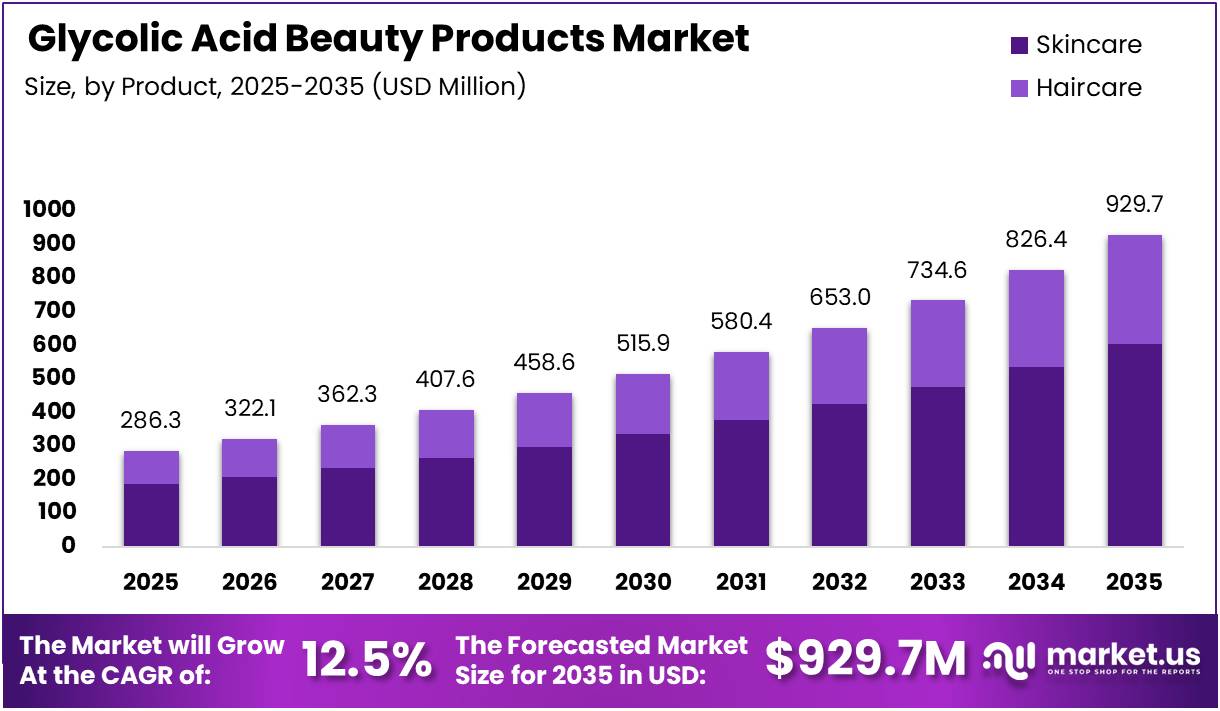
The Global Glycolic Acid Beauty Products Market size is expected to be worth around USD 929.7 Million by 2035 from USD 286.3 Million in 2025, growing at a CAGR of 12.5% during the forecast period 2026 to 2035.
Glycolic acid is a naturally derived alpha hydroxy acid (AHA) sourced primarily from sugarcane. Its small molecular size allows deep penetration into the skin, making it effective for dissolving dead skin cell bonds, promoting exfoliation, and supporting healthy cell renewal across both skincare and haircare applications.
The glycolic acid beauty products market encompasses a broad portfolio of formulations, including serums, cleansers, toners, exfoliants, face masks, and haircare solutions. These products serve diverse consumer needs ranging from acne management and anti-aging to improved skin texture. Moreover, they cater to both everyday consumer use and professional treatment contexts.
The market is expanding steadily, driven by growing consumer interest in clinically backed skincare ingredients. Dermatologist endorsements and rising awareness of active-ingredient formulations are encouraging more consumers to incorporate glycolic acid products into daily routines. Consequently, brands are investing heavily in product development to meet this growing at-home skincare demand.
Regulatory frameworks across North America, Europe, and Asia Pacific are shaping how glycolic acid products are formulated and sold. Authorities enforce strict concentration limits for over-the-counter cosmetic products. Therefore, manufacturers are prioritizing buffered and pH-balanced formulations that meet compliance standards while maintaining product efficacy for end consumers.
The market also presents significant investment opportunities supported by growing government interest in cosmetic biotechnology and innovation. Expansion of e-commerce channels, rising demand for personalized beauty solutions, and increasing access to professional-grade home-use products are collectively creating favorable conditions for sustained long-term market growth.
According to a study published in the Journal of Cutaneous and Aesthetic Surgery, glycolic acid peels can reduce acne lesions by up to 70% within 10 to 12 weeks. Additionally, according to Cleveland Clinic, daily AHA cleansers improve skin texture within just 4 to 6 weeks of consistent use.
According to Ulta, 72% of users actively seek active-ingredient serums including AHAs, retinol, and vitamin C. Moreover, according to Fillmed, clinical evaluations of the Glycopeel Mask demonstrated a 46% reduction in pore size, a 26% improvement in skin radiance, and a 32% decrease in wrinkle depth after 2 months of use.
Key Takeaways
- The Global Glycolic Acid Beauty Products Market was valued at USD 286.3 Million in 2025 and is projected to reach USD 929.7 Million by 2035.
- The market is expected to grow at a CAGR of 12.5% during the forecast period 2026 to 2035.
- By Product, the Skincare segment held a dominant market share of 61.3% in 2025.
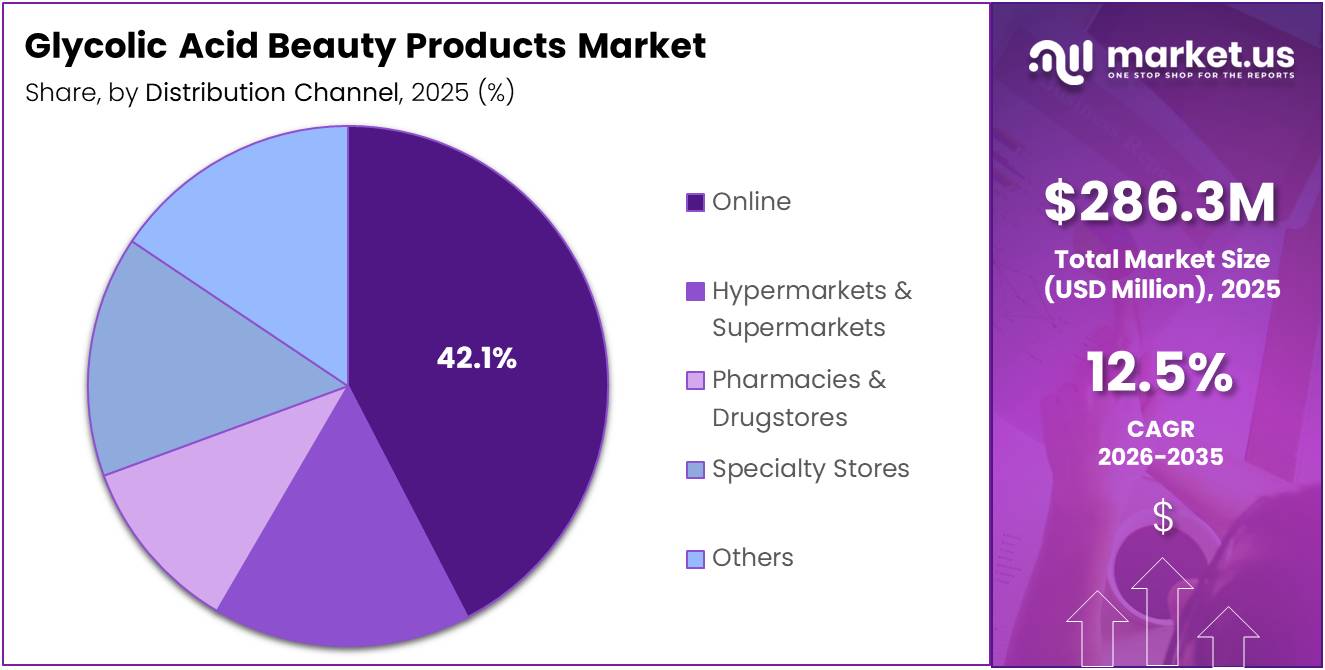
- By Distribution Channel, the Online segment accounted for 42.1% of the market in 2025.
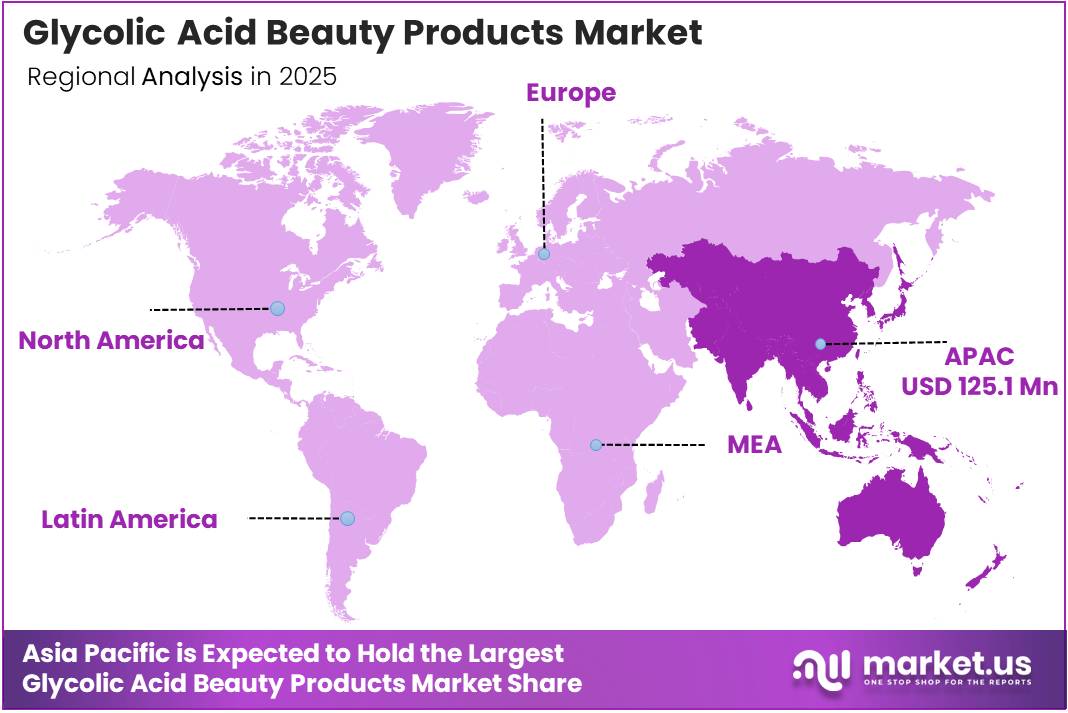
- Asia Pacific dominated the global market with a 43.7% share, valued at USD 125.1 Million in 2025.
Product Analysis
Skincare dominates with 61.3% due to broad consumer adoption across diverse daily skincare routines and ingredient-led formulations.
In 2025, Skincare held a dominant market position in the By Product segment of the Glycolic Acid Beauty Products Market, with a 61.3% share. This category covers a wide range of formulations, including serums, cleansers, toners, exfoliants, face masks, and others. Additionally, growing consumer preference for active-ingredient, results-driven skincare has firmly established this segment as the market leader.
The Haircare segment represents a growing category in this market, covering products such as shampoos, conditioners, hair serums, and other glycolic acid-enriched formulations. This segment is gaining momentum as consumers recognize the benefits of glycolic acid for scalp health and improved hair texture. Moreover, brands are launching new glycolic acid haircare lines to meet this rising consumer demand.
Distribution Channel Analysis
Online dominates with 42.1% due to broad product availability, consumer convenience, and competitive pricing across digital retail platforms.
In 2025, Online held a dominant market position in the By Distribution Channel segment of the Glycolic Acid Beauty Products Market, with a 42.1% share. E-commerce platforms offer a wide product range, consumer reviews, and easy price comparison, making them the most preferred shopping channel for beauty consumers globally.
Hypermarkets & Supermarkets serve as a major offline channel for glycolic acid beauty products, offering high product visibility and easy consumer access. High foot traffic and in-store promotions support consistent sales across mass-market brands. Moreover, product sampling and shelf placement strategies effectively drive consumer trial and repeat purchases.
Pharmacies & Drugstores are a trusted distribution channel for dermatologist-recommended and clinically validated glycolic acid formulations. Consumers seeking science-backed and medicated skincare solutions frequently prefer this channel. Additionally, pharmacist guidance plays a key role in supporting first-time purchases and building longer-term consumer confidence.
Specialty Stores focused on beauty and personal care offer a curated selection of glycolic acid products for premium-oriented consumers. These stores attract shoppers who value expert advice and personalized product recommendations. Furthermore, the specialty retail environment supports effective positioning for high-end and niche glycolic acid brands.
Others segment includes professional skincare clinics, salons, and direct sales platforms distributing glycolic acid products. While smaller in overall volume, this channel is growing steadily as dermatology clinics and professional skincare services increasingly incorporate glycolic acid treatments into their consumer-facing offerings.
Key Market Segments
By Product
- Skincare
- Serum
- Cleanser
- Toner
- Exfoliant
- Face Masks
- Others
- Haircare
- Shampoo
- Conditioner
- Hair Serum
- Others
By Distribution Channel
- Online
- Hypermarkets & Supermarkets
- Pharmacies & Drugstores
- Specialty Stores
- Others
Drivers
Rising Demand for Chemical Exfoliation and Clinically Proven Active Ingredients Drives Market Growth
Consumers are increasingly favoring chemical exfoliation over traditional physical scrubs in their daily skincare routines. Glycolic acid, as a highly effective alpha hydroxy acid, offers a gentler yet more thorough approach to skin renewal. Consequently, this growing shift in consumer preference is creating sustained demand for glycolic acid-based beauty products across global markets.
The demand for dermatologist-backed active ingredients in at-home skincare solutions has been a significant driver for this market. More consumers now seek professional-grade results without requiring clinic visits. Therefore, brands are developing accessible glycolic acid formulations that deliver proven efficacy and align with the expectations of informed and ingredient-conscious beauty consumers.
Growing awareness of skin cell turnover and its direct role in anti-aging and acne treatment continues to drive market expansion. Consumers increasingly recognize that regular exfoliation supports healthier and clearer skin. Additionally, educational content from dermatologists and beauty influencers is effectively amplifying this awareness and encouraging broader product adoption among new consumer groups.
Restraints
High Skin Sensitivity Risk and Stringent Regulatory Guidelines Limit Wider Market Adoption
High skin sensitivity and irritation remain significant barriers for consumers considering glycolic acid beauty products. Users with sensitive skin often experience redness, burning, or peeling when using high-concentration formulations. Therefore, this risk continues to limit the overall consumer base and restricts broader first-time adoption, particularly among individuals with reactive or compromised skin types.
Stringent regulatory guidelines on permissible acid concentrations in cosmetic formulations present a notable restraint for market growth. Regulatory authorities in many regions cap the allowable percentage of glycolic acid in over-the-counter products. Consequently, this limits the potency of consumer-grade formulations and makes it difficult for brands to deliver professional-level efficacy.
These regulatory constraints also increase the complexity and cost of product development for manufacturers operating across multiple markets. Brands must navigate differing compliance standards in each region they enter. Moreover, the time and investment required to gain regulatory approval can significantly slow new product launch timelines, limiting market responsiveness to emerging consumer trends.
Growth Factors
Product Innovation and Rising Demand for Professional-Grade At-Home Solutions Fuel Market Expansion
Increasing product innovation in low-irritation and buffered glycolic acid formulations is expanding access for a wider range of consumers. Brands are developing pH-balanced and encapsulated glycolic acid products that minimize skin sensitivity while maintaining efficacy. Consequently, these advancements are making glycolic acid benefits accessible to broader skin types, including sensitive skin consumers.
The rising demand for professional-grade peels in home-use formats represents a significant growth opportunity for this market. Consumers are increasingly seeking salon-quality exfoliation results at home, encouraging brands to develop targeted, high-efficacy at-home solutions. Moreover, this trend is driving premium product development and contributing meaningfully to the overall expansion of market value.
The growing integration of personalized and AI-based skincare recommendation platforms is creating new pathways for glycolic acid product discovery. These platforms help consumers identify formulations suited to their specific skin needs and concerns. Additionally, data-driven recommendations increase purchase conversion rates and support long-term consumer retention for brands participating in this evolving digital ecosystem.
Emerging Trends
Skin Cycling, Minimalist Beauty, and Clean Formulations Are Reshaping the Glycolic Acid Beauty Products Market
The surge in popularity of skin cycling routines is emerging as a defining trend in the glycolic acid beauty products market. Skin cycling involves alternating between exfoliation, retinol use, and recovery nights in a structured weekly pattern. Consequently, glycolic acid has become a foundational ingredient in these routines, driving increased demand for targeted exfoliating formulations.
The increasing adoption of minimalist skincare with ingredient-focused branding is reshaping how glycolic acid products are developed and positioned. Consumers are moving away from complex multi-step routines in favor of fewer, more effective products. Therefore, brands are increasingly leading with transparency and highlighting glycolic acid as the hero ingredient in their core product lines.
Growing demand for clean beauty formulations with transparent ingredient labeling is actively influencing product development across this market. Consumers are actively seeking products free from harmful additives and featuring clearly listed, science-backed ingredients. Additionally, clean beauty certifications and dermatologist endorsements are becoming key factors shaping consumer purchase decisions in both online and offline retail environments.
Regional Analysis
Asia Pacific Dominates the Glycolic Acid Beauty Products Market with a Market Share of 43.7%, Valued at USD 125.1 Million
Asia Pacific holds the leading position in the global glycolic acid beauty products market, accounting for 43.7% of the total market share, valued at USD 125.1 Million in 2025. The region’s strong growth is driven by rising disposable incomes, a deeply ingrained skincare culture in countries such as South Korea, Japan, and China, and the rapid expansion of digital retail channels offering active-ingredient beauty products.
North America Glycolic Acid Beauty Products Market Trends
North America is a key market for glycolic acid beauty products, supported by high consumer awareness of dermatological skincare and widespread access to professional-grade formulations. The United States leads regional demand, backed by a mature beauty and personal care industry. Moreover, strong influencer-driven marketing and dermatologist endorsements continue to sustain consistent product adoption in this region.
Europe Glycolic Acid Beauty Products Market Trends
Europe represents a well-established and highly regulated market for glycolic acid beauty products. Consumer preference for scientifically validated skincare, clean beauty standards, and transparent labeling drives product development in major markets including Germany, France, and the United Kingdom. Furthermore, strict cosmetic regulations encourage the use of tested and safety-approved glycolic acid formulations across the region.
Latin America Glycolic Acid Beauty Products Market Trends
Latin America is an emerging and rapidly developing market for glycolic acid beauty products, with Brazil and Mexico leading regional growth. Rising consumer awareness of skincare routines and growing access to international beauty brands through e-commerce are key growth drivers. Additionally, urbanization and expanding middle-class spending on personal care are supporting stronger market demand.
Middle East and Africa Glycolic Acid Beauty Products Market Trends
The Middle East and Africa market for glycolic acid beauty products is developing steadily, supported by growing consumer interest in advanced skincare among younger demographics. GCC countries, particularly the UAE and Saudi Arabia, are primary growth areas driven by a premium beauty culture. Moreover, increasing retail infrastructure and e-commerce access are improving product availability across the region.
Key Regions and Countries
North America
- US
- Canada
Europe
- Germany
- France
- The UK
- Spain
- Italy
- Rest of Europe
Asia Pacific
- China
- Japan
- South Korea
- India
- Australia
- Rest of APAC
Latin America
- Brazil
- Mexico
- Rest of Latin America
Middle East & Africa
- GCC
- South Africa
- Rest of MEA
Key Company Insights
The Ordinary is globally recognized for its science-first approach to skincare and holds a strong position in the glycolic acid beauty products market. The brand offers highly accessible formulations, including glycolic acid toning solutions and serums, at competitive price points. Moreover, its commitment to transparent ingredient labeling and evidence-based product communication has built a highly loyal and growing global consumer following.
Neutrogena is a leading mass-market skincare brand with a well-established portfolio of glycolic acid-based products, including facial cleansers and chemical exfoliants. Its broad distribution through pharmacies, supermarkets, and online platforms provides extensive market reach. Additionally, a strong dermatologist-recommended positioning and clinical product validation make it a trusted choice for consumers seeking effective and affordable active-ingredient skincare.
Alpha-H is a premium Australian skincare brand best known for its Liquid Gold glycolic acid treatment, which has earned international recognition in the professional skincare segment. The brand targets consumers seeking high-efficacy, clinical-grade at-home formulations supported by dermatological expertise. Furthermore, its growing presence across Europe and Asia Pacific reflects strong global demand for professional-quality glycolic acid solutions.
Murad is a dermatologist-founded skincare brand offering a comprehensive range of glycolic acid products designed to address aging, acne, and uneven skin texture. The brand places strong emphasis on clinical research and evidence-backed product development. Consequently, its reputation for professionally validated skincare has supported a loyal and expanding consumer base across North America and key international markets.
Key Players
- The Ordinary
- Neutrogena
- Alpha-H
- Murad
- Sunday Riley
- Kiehl’s
- La Roche-Posay
- Dermalogica
- Glytone
- Clinique
Recent Developments
- July 2025 – L’Oréal Paris launched the Elvive Glycolic + Gloss haircare line, marking a significant expansion of glycolic acid applications into the mass-market haircare segment. This launch reflects the growing consumer interest in glycolic acid-enriched haircare formulations for scalp health and enhanced shine.
- April 2025 – Cyklar introduced the 10% Glycolic Acid Exfoliating Body Spray, targeting the growing demand for body-focused chemical exfoliation products. This launch positions glycolic acid beyond facial skincare, catering to consumers seeking effective, easy-to-apply body exfoliation solutions.
- March 2024 – Clinical Skin acquired Glytone from Pierre Fabre Laboratories, expanding its portfolio of dermatologist-recommended glycolic acid skincare products. This strategic acquisition strengthens Clinical Skin’s positioning in the professional and clinical skincare segment within the broader glycolic acid beauty products market.
Report Scope
Report Features Description Market Value (2025) USD 286.3 Million Forecast Revenue (2035) USD 929.7 Million CAGR (2026-2035) 12.5% Base Year for Estimation 2025 Historic Period 2020-2024 Forecast Period 2026-2035 Report Coverage Revenue Forecast, Market Dynamics, Competitive Landscape, Recent Developments Segments Covered By Product (Skincare (Serum, Cleanser, Toner, Exfoliant, Face Masks, Others), Haircare (Shampoo, Conditioner, Hair Serum, Others)), By Distribution Channel (Online, Hypermarkets & Supermarkets, Pharmacies & Drugstores, Specialty Stores, Others) Regional Analysis North America (US and Canada), Europe (Germany, France, The UK, Spain, Italy, and Rest of Europe), Asia Pacific (China, Japan, South Korea, India, Australia, and Rest of APAC), Latin America (Brazil, Mexico, and Rest of Latin America), Middle East & Africa (GCC, South Africa, and Rest of MEA) Competitive Landscape The Ordinary, Neutrogena, Alpha-H, Murad, Sunday Riley, Kiehl’s, La Roche-Posay, Dermalogica, Glytone, Clinique Customization Scope Customization for segments, region/country-level will be provided. Moreover, additional customization can be done based on the requirements. Purchase Options We have three licenses to opt for: Single User License, Multi-User License (Up to 5 Users), Corporate Use License (Unlimited User and Printable PDF)  Glycolic Acid Beauty Products MarketPublished date: March 2026add_shopping_cartBuy Now get_appDownload Sample
 -
-
- The Ordinary
- Neutrogena
- Alpha-H
- Murad
- Sunday Riley
- Kiehl's
- La Roche-Posay
- Dermalogica
- Glytone
- Clinique
Our Clients

- 181696
- March 2026






